When using backup power sources like generators, your safety depends on CO detectors. They detect invisible, odorless carbon monoxide fumes that can build up indoors and cause serious health issues or death. Proper placement and regular testing of these detectors guarantee you’re alerted early before CO levels become hazardous. Investing in a good detector and following safety protocols protect your family during power outages. Keep going to discover essential tips to make your home even safer during emergencies.

Get backup power and energy gear delivered free with Prime
- Fast, free delivery on millions of items
- Prime Video, Amazon Music and more included
- Member-only deals all year
Key Takeaways
- CO detectors provide early warnings of dangerous carbon monoxide levels from backup generators.
- Proper placement and maintenance ensure reliable detection during power outages.
- They help prevent CO poisoning symptoms like dizziness, nausea, and death.
- Combining detectors with safety protocols enhances indoor air safety during power disruptions.
- Investing in CO detectors is a crucial safety measure for protecting health during backup power use.
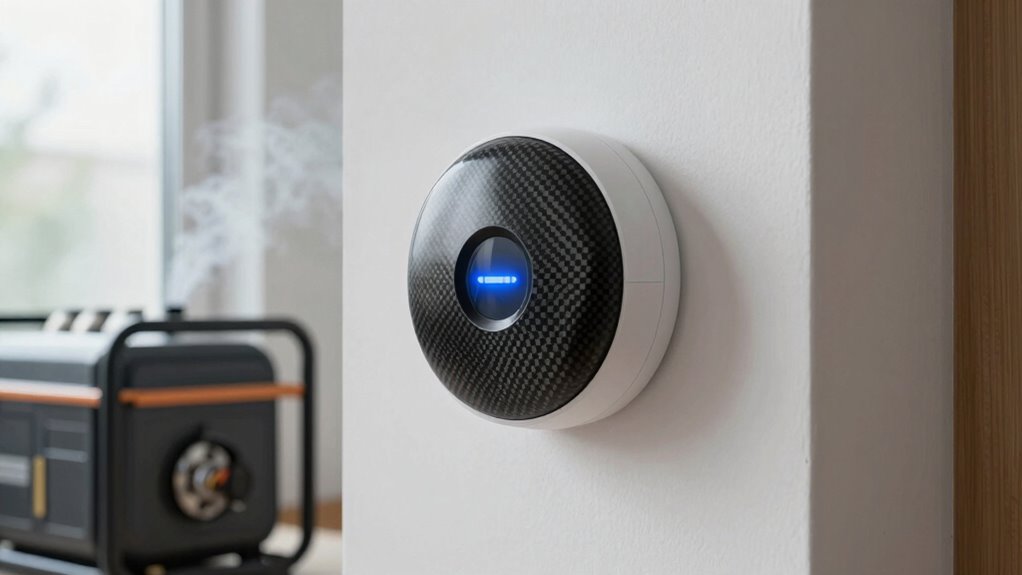
During a power outage, backup generators keep your home running, but they can also produce dangerous carbon monoxide (CO) fumes if not properly managed. This invisible, odorless gas can quickly build up indoors, threatening your health and safety. That’s why installing CO detectors is essential—they act as an early warning system, alerting you before CO levels reach hazardous thresholds. Poor air quality resulting from CO accumulation can cause symptoms like headaches, dizziness, nausea, and in severe cases, death. By having detectors in place, you give yourself the chance to act swiftly, ventilate the space, and turn off the generator before harm occurs.
Understanding the importance of safety protocols is key to protecting your household during power outages. These protocols include proper generator placement, regular maintenance, and ensuring adequate ventilation. Placing the generator outdoors, away from windows, doors, and vents, minimizes the risk of CO entering your living space. Regularly inspecting and maintaining your generator guarantees it runs efficiently and safely, reducing the chances of CO leaks. Additionally, installing CO detectors at key points in your home—near bedrooms, in hallways, and on each floor—ensures thorough coverage. When these detectors sound an alarm, you’ll have an immediate warning, allowing you to evacuate or ventilate the area promptly. Incorporating proper air circulation can further mitigate CO buildup and improve overall indoor air quality.
Proper air quality management can significantly reduce risks, making safety devices like CO detectors even more effective. You should also consider the placement and type of CO detectors you choose. Battery-operated models are convenient, especially during power outages when electricity might be unavailable. Modern detectors often come with digital displays that show real-time CO levels, giving you a clearer picture of your air quality. It’s crucial to test these devices regularly and replace batteries as needed to maintain their reliability. Regular testing of your CO detectors is vital since product reliability directly impacts your safety during emergencies. Incorporating carbon monoxide awareness into your safety routine can help you recognize symptoms early and respond more effectively. Following safety protocols also means educating everyone in your household about the significance of CO alarms and what actions to take if they activate. This knowledge can make the difference between a safe response and a tragic outcome. Recognizing the potential dangers associated with CO buildup emphasizes why these safety measures are so vital.
In the end, CO detectors are a small but essential investment in your safety during backup power use. They provide peace of mind by safeguarding your air quality and ensuring you’re alerted to potential dangers. When you combine proper safety protocols with reliable CO detection, you create a protective barrier that keeps everyone in your home safe during those vulnerable moments of a power outage. Don’t underestimate the importance of these devices—your health and life depend on them.
carbon monoxide detector for backup generator
As an affiliate, we earn on qualifying purchases.
As an affiliate, we earn on qualifying purchases.
Frequently Asked Questions
How Often Should CO Detectors Be Tested and Replaced?
You should test your CO detectors at least once a month to guarantee they’re working properly, following the installation guidelines. Replace the batteries annually, or sooner if indicated by the detector. Most units need replacement every 5 to 7 years, depending on the manufacturer’s instructions. Regular battery maintenance and timely testing help keep your detector functional, ensuring your safety during power outages or in case of carbon monoxide leaks.
Can CO Detectors Work Effectively During a Power Outage?
Yes, CO detectors can work effectively during a power outage, guaranteeing indoor safety when backup power is in use. To maximize their effectiveness, you should check that your detectors have batteries or are connected to a backup power source. Proper detector placement, like near sleeping areas and on every level, is essential for reliable detection. Regular testing and maintenance also help guarantee they function correctly during emergencies.
Are There Specific CO Detectors Recommended for Backup Power Systems?
You should opt for carbon monoxide detectors specifically designed for backup power systems, as they often feature battery backup options. Statistically, nearly 50% of CO-related incidents occur during power outages. To guarantee safety, follow installation guidelines carefully, placing detectors on every level and near sleeping areas. Regular battery maintenance is vital—test alarms monthly and replace batteries annually to keep your CO detectors effective during outages.
What Signs Indicate a CO Detector Is Malfunctioning?
If your carbon monoxide detector isn’t working properly, you’ll notice it might not beep or alert when there’s dangerous CO. You should also see warning lights or error messages. Check the detector placement—if it’s too close to appliances or vents, it may malfunction. Regularly test your detector and replace batteries or the unit itself if it fails to respond during tests, ensuring your safety during backup power use.
Do All Backup Power Sources Produce CO Risks?
Not all backup power sources produce CO risks, but many can notably impact indoor air quality and carbon monoxide safety. Generators, especially when used indoors or improperly ventilated, can emit dangerous CO fumes. Even small, portable units pose risks if not monitored carefully. Always ensure your backup power system has proper ventilation and a functioning CO detector nearby, safeguarding your home against silent, deadly CO buildup during emergencies.
battery operated CO alarm with digital display
As an affiliate, we earn on qualifying purchases.
As an affiliate, we earn on qualifying purchases.
Conclusion
Don’t overlook the importance of CO detectors during backup power use. Imagine a family relying on a generator after a storm, unaware of dangerous carbon monoxide buildup. Without a CO detector, this silent threat could turn tragic. Installing detectors isn’t just a safety tip—it’s a crucial step to protect everyone in your home. Stay proactive and make sure your backup power solutions keep you safe from unseen dangers. Your peace of mind depends on it.
hardwired carbon monoxide detector
As an affiliate, we earn on qualifying purchases.
As an affiliate, we earn on qualifying purchases.
As an affiliate, we earn on qualifying purchases.
Halloween Picks
halloween
As an affiliate, we earn on qualifying purchases.