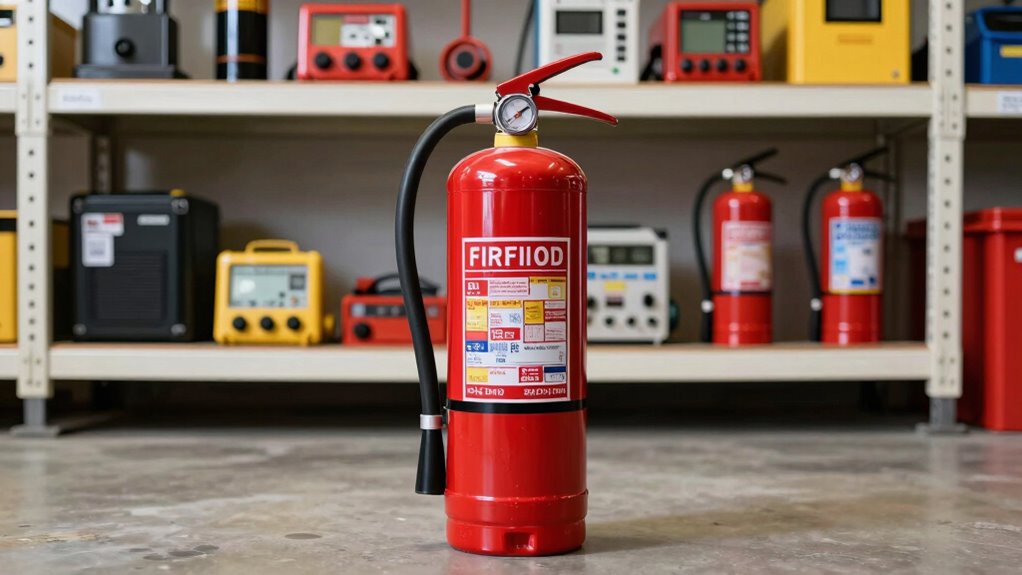

To stay ready for electrical fires, you need the right extinguisher, like CO2 or dry chemical, and guarantee it’s properly maintained. Regular inspections of pressure, physical condition, and accessibility are critical because a poorly maintained device could fail when needed most. Proper training on extinguisher use and fire safety protocols also play a crucial role in quick, effective responses. Keep exploring to discover how these practices can better protect you and your environment.

Get backup power and energy gear delivered free with Prime
- Fast, free delivery on millions of items
- Prime Video, Amazon Music and more included
- Member-only deals all year
Key Takeaways
- Regular maintenance, including pressure checks and physical inspections, ensures extinguishers are reliable during electrical fires.
- Properly rated Class C extinguishers with non-conductive agents are essential for electrical fire safety.
- Training personnel on extinguisher use and fire protocols enhances readiness and effective response.
- Storage and accessibility of extinguishers must be maintained to guarantee quick deployment in emergencies.
- Routine inspections and adherence to safety standards prevent extinguisher failure and improve overall fire safety.
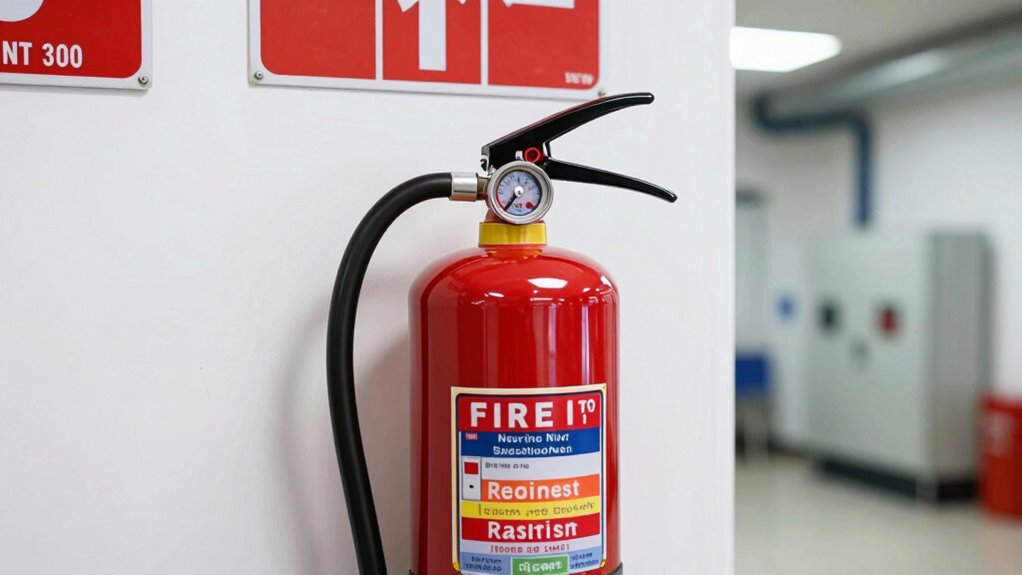
Electrical fires can ignite unexpectedly, making it essential to have fire extinguishers that are specifically rated for such emergencies. When it comes to electrical fires, using the right extinguisher is critical because traditional fire extinguishers, like water-based ones, can worsen the situation. You need extinguishers labeled for electrical fires, typically rated for Class C fires, which contain non-conductive agents like CO2 or dry chemical powders. Knowing this, you should always guarantee your fire safety protocols include clear instructions on using these specialized extinguishers. Regular training helps you respond swiftly and effectively if an electrical fire occurs, minimizing damage and personal risk.
Use Class C fire extinguishers with non-conductive agents like CO2 or dry chemical powders for electrical fires.
Maintaining your fire extinguisher is equally important. Extinguisher maintenance isn’t just about checking the pressure gauge; it involves routine inspections, proper storage, and timely replacements. A well-maintained extinguisher assures it will operate when needed. You should check the pressure gauge monthly, ensuring the needle is in the operable range. Examine the physical condition of the extinguisher, looking for corrosion, damage, or leakage. If anything appears off, it’s time to service or replace it. Remember, an extinguisher that’s overdue for maintenance won’t work during an emergency, which can be disastrous in an electrical fire. Routine extinguisher inspections are vital to ensure readiness and safety. Incorporating proper maintenance protocols can further enhance your fire safety strategy.
Your fire safety protocols should emphasize the importance of this maintenance routine and clearly specify who is responsible for inspections. It’s not enough to simply have extinguishers; you need to verify they’re functional and accessible at all times. Your protocols should also include regular fire drills and training on how to use the extinguisher correctly, especially for electrical fires. Knowing the difference between types of fires and their extinguishing methods can save lives and property. It’s essential that everyone in your environment understands these protocols and adheres to them.
Having the proper extinguishers is just one part of overall fire safety. You should also keep your workspace free of clutter, ensure electrical wiring is up to code, and avoid overloading circuits. All these measures complement your fire safety protocols and help prevent electrical fires from starting in the first place. Understanding electrical systems and their potential hazards can help identify risk factors and improve prevention strategies. Regularly reviewing fire safety standards ensures your protocols remain effective and up-to-date. Remember, the key to electrical fire extinguisher readiness isn’t just having the right equipment but guaranteeing it’s always in good condition and everyone knows how to use it. By staying diligent with extinguisher maintenance and following established fire safety protocols, you greatly reduce the risks associated with electrical fires. Additionally, understanding molecular-scale circuits and their fabrication challenges can help inform safer electrical system designs that minimize fire risks.
CO2 fire extinguisher for electrical fires
As an affiliate, we earn on qualifying purchases.
As an affiliate, we earn on qualifying purchases.
Frequently Asked Questions
How Often Should Electrical Fire Extinguishers Be Inspected?
You should inspect electrical fire extinguishers monthly to guarantee they’re in good working condition. Regular fire extinguisher maintenance includes checking for proper pressure, ensuring the safety pin is intact, and verifying accessibility. This proactive approach enhances electrical fire safety, helping you respond quickly if an emergency occurs. Remember, consistent inspections are essential to keep your fire extinguisher ready and effective in protecting your space from electrical fires.
Are There Different Types of Extinguishers for Various Electrical Fires?
Think of extinguishers like tools in a toolbox, each suited for specific jobs. Yes, there are different types of extinguishers for electrical fires, based on extinguisher classifications. For electrical fire types, use Class C extinguishers, which are designed to smother energized electrical equipment without conducting electricity. Selecting the right extinguisher guarantees you tackle the fire safely and effectively, preventing further damage and hazards.
Can I Use a Regular Fire Extinguisher on Electrical Fires?
You shouldn’t use a regular fire extinguisher on electrical fires because of fire extinguisher myths that suggest they’re all suitable. Instead, use a Class C extinguisher designed for electrical fires to guarantee safety. Remember, electrical safety tips include turning off power if possible before fighting the fire. Using the wrong extinguisher can cause electrical shock or worsen the fire, so always choose the appropriate type for electrical emergencies.
What Training Is Needed to Properly Use an Electrical Fire Extinguisher?
Think of using an electrical fire extinguisher like a carefully choreographed dance—you must know your steps. You need electrical safety training to understand how to operate it correctly, including aiming at the base of the fire and using the PASS technique. Regular extinguisher maintenance is crucial to guarantee it works properly in emergencies. With proper training, you confidently handle electrical fires, protecting yourself and others effectively.
Where Is the Safest Place to Store Electrical Fire Extinguishers?
You should store electrical fire extinguishers in easily accessible locations near potential fire hazards, like kitchens, labs, or workshops. Focus on storage safety by placing them on walls or mounts at eye level, away from extreme heat or moisture. Proper fire extinguisher placement guarantees quick access during emergencies, reducing response time and increasing safety. Always check regularly to confirm they’re in good condition and easy to reach when needed.
Class C fire extinguisher dry chemical
As an affiliate, we earn on qualifying purchases.
As an affiliate, we earn on qualifying purchases.
Conclusion
To stay truly prepared, never underestimate the power of a well-maintained electrical fire extinguisher. Regular checks and proper training can mean the difference between a minor inconvenience and a blazing catastrophe—your safety depends on it. Remember, an unready extinguisher is like a sword without a blade; it’s utterly useless in the heat of the moment. Stay vigilant, stay prepared, and keep your firefighting tools in top shape—because safety isn’t just a priority, it’s your ultimate safeguard.
electrical fire safety training kit
As an affiliate, we earn on qualifying purchases.
As an affiliate, we earn on qualifying purchases.
fire extinguisher pressure gauge tester
As an affiliate, we earn on qualifying purchases.
As an affiliate, we earn on qualifying purchases.
Fall Picks
fall essentials
As an affiliate, we earn on qualifying purchases.