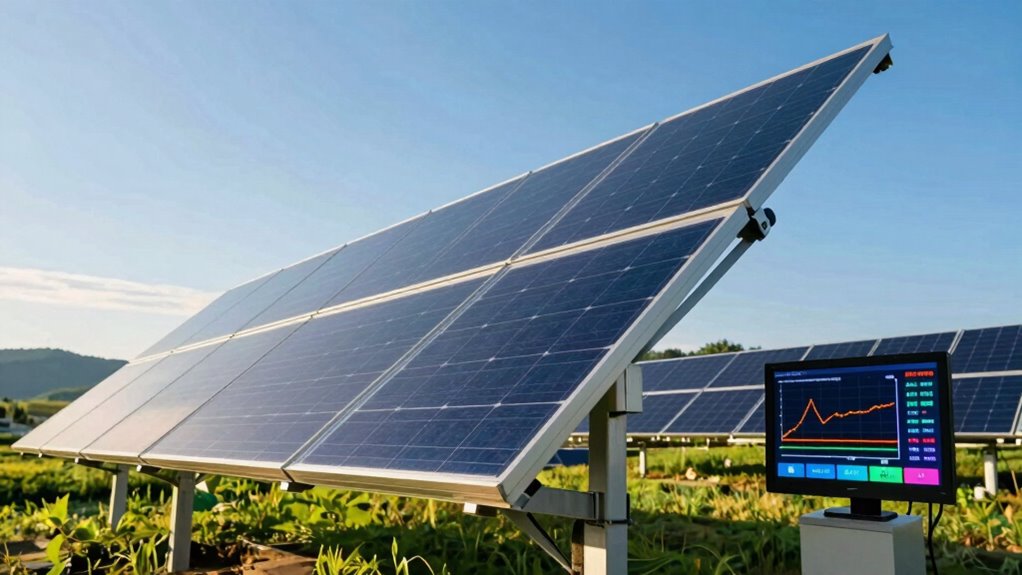

To understand your solar output expectations, consider your panel efficiency and how much sunlight your location receives throughout the year. Factors like weather, seasons, and shading from obstructions also impact energy production. Proper panel positioning and regular maintenance help guarantee maximum performance. Keep in mind that sunlight variability and system conditions cause fluctuations in output. If you want to get a clearer picture of what to expect, there are key details to explore further.

Get backup power and energy gear delivered free with Prime
- Fast, free delivery on millions of items
- Prime Video, Amazon Music and more included
- Member-only deals all year
Key Takeaways
- Consider solar panel efficiency to estimate maximum energy production from your system.
- Account for sunlight intensity variations caused by weather, time of day, and geographic location.
- Include seasonal and weather-related changes that impact overall sunlight hours and energy output.
- Ensure proper panel positioning and minimize shading to optimize performance and energy expectations.
- Regular maintenance and understanding variability factors help refine accurate solar output forecasts.
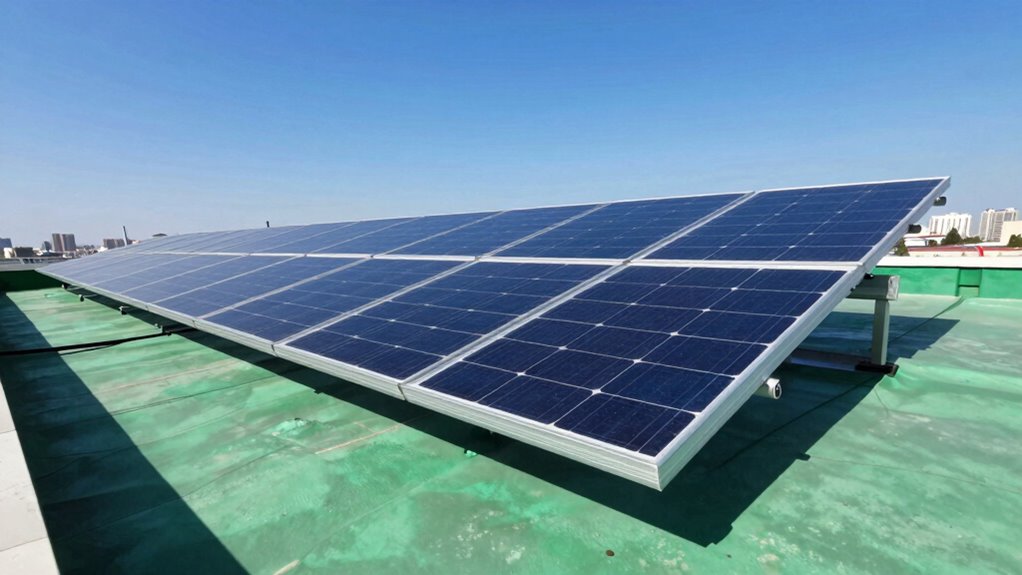
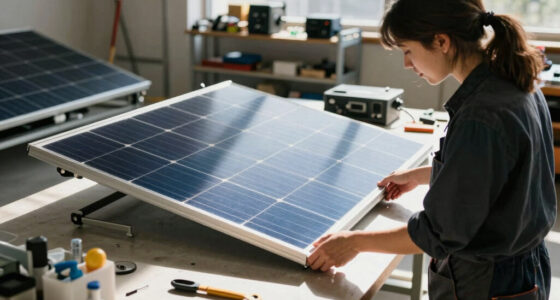
Solar output refers to the amount of energy a solar panel produces under specific conditions. When you’re trying to understand what to expect from your solar system, knowing how factors like solar panel efficiency and sunlight intensity influence energy production is essential. Solar panel efficiency determines how well your panels convert sunlight into usable electricity. Higher efficiency panels generate more power from the same amount of sunlight, meaning you’ll get better results even if space is limited. Conversely, lower efficiency panels may still work, but they’ll produce less energy for the same conditions. It’s important to consider the efficiency ratings when choosing panels, especially if your roof space is limited or if you want to maximize energy output.
Sunlight intensity plays a crucial role in solar output. The more intense the sunlight hitting your panels, the more energy they can produce. Sunlight intensity depends on factors like the time of day, weather conditions, and geographic location. During clear, sunny days, you can expect your panels to operate near their maximum potential. On cloudy days or in winter months, sunlight intensity drops, reducing energy production. Understanding this variability helps you set realistic expectations about your solar system’s output throughout the year. Additionally, solar output variability can impact your overall energy planning and system maintenance. Being aware of seasonal and weather-related changes can help you better anticipate fluctuations in energy production.
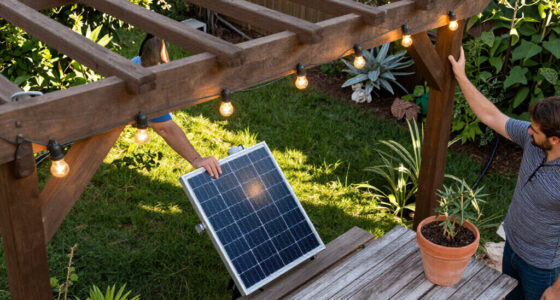
To accurately gauge your solar output expectations, you should also consider the angle and orientation of your panels. Panels facing directly toward the sun and tilted at the optimal angle for your location will perform better. Additionally, shading from trees, buildings, or other obstructions can significantly decrease sunlight intensity reaching your panels, which in turn reduces energy generation. Regularly inspecting your system for shading and ensuring optimal placement can help maintain consistent output. Proper system maintenance and positioning are vital for maximizing energy efficiency and avoiding unexpected drops in performance. Moreover, understanding common toilet flushing mechanisms and their efficiency can inspire better practices in reducing unnecessary water use, indirectly conserving energy in water heating and plumbing systems. Recognizing factors like seasonal sunlight hours can also help you set more accurate expectations for your system’s annual energy production.
As an affiliate, we earn on qualifying purchases.
Frequently Asked Questions
How Does Shading Affect Solar Panel Performance?
Shading considerably impacts solar panel performance by reducing the shade impact and causing obstruction effects. When part of your panel is shaded, it hampers the flow of sunlight, decreasing energy production. Even small obstructions like trees or debris can create shadow spots, lowering efficiency. You should trim nearby foliage and avoid placing panels where shading occurs during peak sunlight hours to maximize output.
What Is the Lifespan of Typical Solar Panels?
You might worry about solar panel lifespan, but most last around 25-30 years. While some panel degradation occurs over time, reputable brands offer warranty coverage that protects your investment. Regular maintenance can extend their life, ensuring you get the most out of your panels. So, rest assured—these panels are built to last, with warranties giving you confidence in their durability and long-term performance.
Can Solar Output Vary Seasonally?
Yes, your solar output can vary seasonally due to factors like solar panel orientation and weather variations. During winter, shorter days and lower sun angles reduce energy production, while summer offers longer days and higher sun angles. Cloud cover, rain, and snow can also diminish output temporarily. Adjusting panel orientation to maximize sunlight exposure and accounting for seasonal changes helps you better understand and optimize your solar system’s performance year-round.
How Do Inverter Efficiencies Impact Overall Output?
Inverter efficiencies directly impact your overall solar output because they determine how effectively your system converts DC power to usable AC power. Higher efficiency inverters reduce power conversion losses, meaning more energy reaches your appliances. If your inverter isn’t efficient, efficiency losses increase, lowering your total energy output. By choosing an inverter with better efficiency, you guarantee your system performs at its best, maximizing the energy you get from your solar panels.
What Maintenance Is Required for Optimal Performance?
To keep your solar system performing at its best, you should regularly check and maintain your batteries, ensuring they’re clean and functioning properly. Follow a consistent cleaning schedule to remove dust and debris from panels, maximizing sunlight absorption. Also, monitor your battery health and connections, replacing or servicing them as needed. Regular maintenance helps prevent efficiency losses, extends system lifespan, and guarantees you get the most effective solar output.
solar panel tilt and orientation kit
As an affiliate, we earn on qualifying purchases.
As an affiliate, we earn on qualifying purchases.
Conclusion
So, now you see that understanding basic solar output isn’t as intimidating as it seems. By considering your location, panel efficiency, and sunlight hours, you can accurately estimate what your system will produce. Think of it like planning a garden—you wouldn’t plant without knowing how much sunlight each spot gets. With these insights, you’ll confidently set realistic expectations, ensuring your solar investment powers your home efficiently and effectively.
solar panel shading inspection tools
As an affiliate, we earn on qualifying purchases.
As an affiliate, we earn on qualifying purchases.
As an affiliate, we earn on qualifying purchases.
Halloween Picks
halloween
As an affiliate, we earn on qualifying purchases.