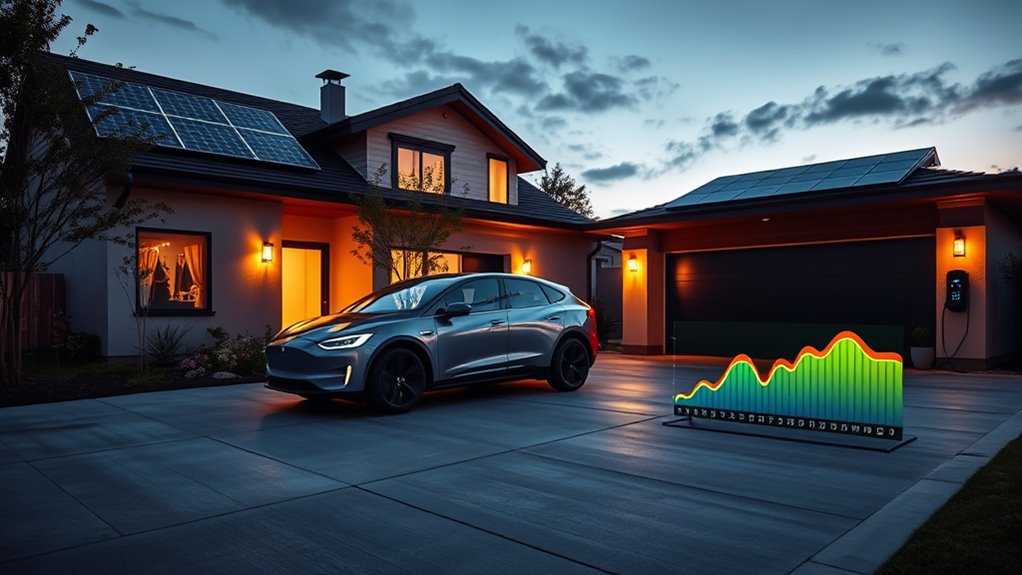
To avoid demand spikes at home, you can schedule your EV charging during off-peak hours like late at night or early mornings. Smart charging technology makes this easy by automatically optimizing your charging times based on real-time grid conditions and utility rates. By shifting your charging, you’ll lower your energy costs and help prevent overloads on your electrical system during busy periods. Keep exploring to discover how smart scheduling can benefit your home and the grid.
Key Takeaways
- Implement smart charging schedules to shift EV charging to off-peak hours, reducing demand spikes.
- Automate charging times based on real-time grid data to avoid overwhelming electrical systems.
- Use home energy management systems to optimize charging during low-demand periods automatically.
- Schedule EV charging during late night or early morning to minimize costs and grid stress.
- Integrate EV charging with home energy solutions to support grid stability and prevent peak demand issues.

Managing your EV charging schedule can prevent costly demand spikes on your home’s electrical system. When you charge your electric vehicle without planning, you risk overwhelming your electrical system during peak times, which can lead to higher energy costs and strain on the grid. By practicing effective time management, you can shift your charging habits to off-peak hours, helping to maintain grid stability and save money. This proactive approach not only benefits your wallet but also contributes to a more reliable and sustainable energy system.
Smart EV charging saves money, reduces grid stress, and supports a sustainable energy future.
Smart charging technology can further enhance your ability to optimize charging times automatically, adapting to real-time conditions and reducing manual effort. To start, familiarize yourself with your utility’s peak and off-peak hours. Most electricity providers have specific times when demand is highest—often early evenings or late afternoons—and when it’s lowest, typically late at night or early morning. Scheduling your EV charging during these off-peak windows reduces the load on your electrical system and the overall grid. Many smart chargers and utility programs offer features that automatically delay charging until these ideal times, making it easier to manage your schedule without manual intervention. This kind of time management ensures you’re not adding unnecessary stress during high-demand periods, which can lead to demand spikes that increase costs for everyone.
Effective scheduling also supports grid stability, especially as more households adopt EVs. When too many vehicles charge simultaneously during peak hours, it creates a surge in demand that can destabilize the local grid. By spreading out charging sessions over different times, you help balance the load, reducing the risk of outages or the need for utility companies to activate costly backup power sources. Your strategic time management plays a vital role in smoothing out these demand curves, making the entire system more resilient.
Furthermore, consider the benefits of integrating your EV charging with home energy management systems. These systems can automatically optimize charging times based on real-time grid conditions, weather forecasts, and your daily schedule. Using such technology, you can ensure your vehicle charges when it’s most advantageous for both your energy costs and grid health. This not only fosters grid stability but also gives you peace of mind, knowing you’re contributing to a smarter, more efficient energy future.
Frequently Asked Questions
How Do Smart Schedules Adapt to Changing Electricity Rates?
Smart schedules automatically adapt to changing electricity rates by leveraging dynamic pricing data, so you avoid high costs during peak times. They adjust your EV charging or home energy use to help maintain grid stability, preventing demand spikes. You benefit from lower energy bills and more reliable power, as your system responds in real-time to rate fluctuations, supporting a balanced grid while keeping your energy consumption efficient and cost-effective.
Can Scheduling Impact My Ev’s Battery Health Over Time?
Scheduling your EV charging can actually help improve battery longevity by promoting consistent charging habits. Studies show that avoiding frequent deep discharges and high charge rates can extend battery life. When you schedule charges during off-peak hours, you reduce stress on the battery, preserving its health over time. So, smart scheduling isn’t just good for managing energy costs; it also supports your EV’s long-term battery health.
What Are the Best Apps or Tools for Managing EV Charging Schedules?
You should check out apps like ChargePoint, EVgo, or Tesla’s charging app, which offer great scheduling flexibility. These tools let you manage your charging times easily, helping you avoid demand spikes. They also integrate with various charging station options, making it simple to set your preferred charging schedule. Using these apps, you can optimize your EV’s battery health while ensuring you’re ready to go when you need it.
How Do Demand Response Programs Influence Home Charging Strategies?
Demand response programs are like a conductor guiding your home’s energy flow, helping you hit the right notes during peak times. They influence your charging strategies by offering utility incentives for shifting your charging to off-peak hours, enabling peak shaving. You actively participate in reducing grid stress, saving money, and supporting a greener future. Embrace these programs, and you’ll turn your EV charging into a harmonious, cost-effective concert.
Are There Any Privacy Concerns With Automated EV Scheduling Systems?
Privacy concerns with automated EV scheduling systems mainly revolve around data security. You might worry about your personal usage data being accessed or shared without permission. To safeguard yourself, verify that the system uses strong encryption and secure connections. Regularly update software, and review privacy policies. Being aware of how your data is stored and used helps you maintain control and minimizes privacy risks associated with automated scheduling.
Conclusion
By scheduling your EV charge times, you prevent demand spikes that strain the grid, yet you also guarantee your vehicle’s readiness. It’s a delicate balance—like walking a tightrope between convenience and responsibility. When you plan your charging, you gain control over your energy use and help stabilize the system. In this way, your everyday choices become a quiet act of stewardship, blending modern convenience with sustainable responsibility, all without sacrificing the freedom of on-demand mobility.