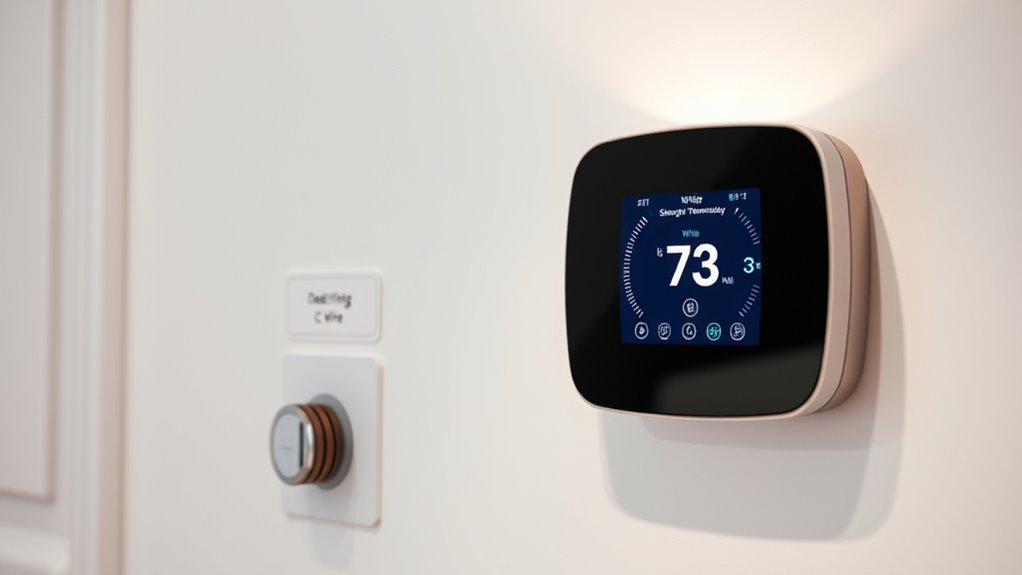

Having a C-wire guarantees your smart thermostat gets continuous power, preventing issues like power loss and Wi-Fi disconnects. Without it, you might experience unstable performance or limited features. Using a power extender kit or choosing a model designed to work without a C-wire can solve these problems and keep your system running smoothly. Keep exploring to discover more ways to make certain your smart thermostat operates reliably and efficiently.
Key Takeaways
- Installing a C-wire ensures continuous, stable power, preventing common smart thermostat power issues.
- Power extender kits and C-wire adapters offer effective solutions when wiring is unavailable or complex.
- Choosing thermostats designed for no C-wire operation can eliminate power problems without rewiring.
- Proper wiring maximizes energy efficiency, feature reliability, and prevents Wi-Fi or power loss.
- Upgrading older wiring systems or consulting professionals can resolve persistent power supply problems effectively.
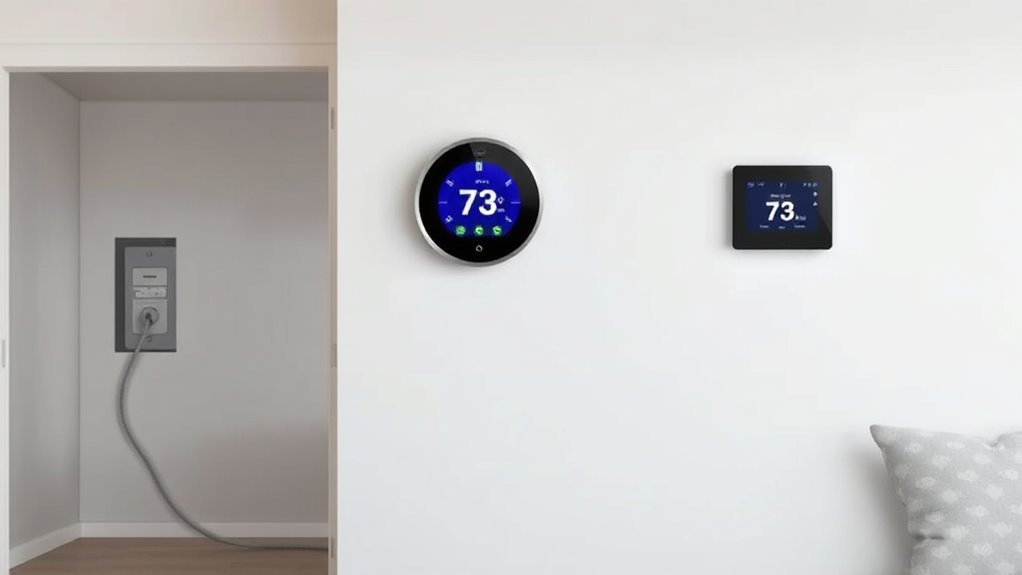
Have you ever wondered why some smart thermostats require a C-wire and others don’t? The answer lies in how these devices draw power and how they integrate with your home’s existing wiring system. A C-wire, or common wire, provides a continuous flow of power, guaranteeing your thermostat remains operational without relying on batteries. This constant power supply is imperative for maintaining energy efficiency, as it allows your smart thermostat to run its advanced features—like learning your schedule or adjusting temperatures remotely—without interruption. Additionally, the type of technology used in the thermostat can influence its dependence on a C-wire, with some relying more heavily on it than others. However, the need for a C-wire can introduce installation challenges, especially in older homes where wiring isn’t as straightforward or where the existing system wasn’t designed for modern smart devices. You might find yourself facing a situation where installing a new wire seems complicated or costly, leading to frustration and delays.
Understanding these installation challenges helps you better plan your upgrade to a smart thermostat. In many cases, the absence of a C-wire means your device has to rely on power-stealing technology or batteries, which can be less dependable over time. Power stealing works by drawing small amounts of energy from the heating and cooling system’s control signals, but it isn’t always sufficient, especially if your HVAC system has minimal control wiring or if it’s a multi-stage system. This setup can cause issues like your thermostat not powering on consistently, or losing connection with your Wi-Fi network, which hampers your ability to maximize energy efficiency. When a C-wire is present, these problems largely disappear because your thermostat gets a steady, dedicated power source, leading to more stable operations and better energy management.
If your home lacks a C-wire, you might consider alternatives like installing a power extender kit or using a smart thermostat designed to work without one. These options help overcome installation challenges and guarantee your device functions smoothly. Without the need for a C-wire, your installation process becomes simpler, less invasive, and more cost-effective, making it easier to enjoy all the benefits of a smart thermostat—like improved energy efficiency and remote control. Ultimately, whether or not you have a C-wire, understanding its role in powering your thermostat allows you to make informed decisions, avoiding common pitfalls and guaranteeing your system operates at its best. Proper wiring is essential for ensuring your smart thermostat performs reliably and efficiently, especially in complex or older wiring systems. With the right setup, you maximize energy savings, reduce utility bills, and enjoy a more comfortable home environment—no matter the wiring situation.
Frequently Asked Questions
Can a C-Wire Be Installed After the Thermostat Is Already in Use?
Yes, you can install a C-wire after your thermostat is already in use. First, check your wiring compatibility and make sure your system supports adding a C-wire. You might need to run new wiring or use a compatible adapter. Once installed, it’ll provide consistent power, improving wireless compatibility and preventing power issues. Just turn off power, follow the thermostat’s instructions, and consult a professional if needed for a safe, seamless upgrade.
Are There Wireless Alternatives if My Home Lacks a C-Wire?
If your home lacks a C-wire, you can still use a smart thermostat with wireless alternatives. Consider wireless adapters or power extenders that draw power from other sources, like your existing wiring or power outlets. These devices guarantee your thermostat stays powered without needing a dedicated C-wire. Just make sure to choose compatible options and follow installation instructions carefully to avoid power issues and ensure reliable operation.
How Do I Identify if My Existing Wiring Supports a Smart Thermostat?
You can determine if your wiring supports a smart thermostat through a quick wiring inspection and voltage testing. Turn off power, remove your thermostat cover, and look for wires connected to the terminal labels like R, W, Y, or G. Using a multimeter, test for proper voltage between the R terminal and other wires. If you see consistent voltage, your wiring likely supports a smart thermostat; if not, consider wireless options.
Will Adding a C-Wire Affect My HVAC System’s Warranty?
Adding a C-wire generally won’t affect your HVAC warranty if you guarantee proper installation and follow manufacturer guidelines. Most HVAC compatibility issues stem from incorrect wiring or modifications that void warranties. To stay safe, check your system’s warranty terms before installing a C-wire, and consider consulting a professional. Properly installing the C-wire can enhance your smart thermostat’s performance without risking warranty coverage.
What Are the Costs Associated With Installing a C-Wire?
The costs associated with installing a C-wire typically range from $50 to $150, depending on your home’s wiring setup. You might face installation costs, wiring upgrades, or professional fees if your current system needs modifications. Doing it yourself can save money, but hiring an electrician guarantees safety and proper setup. Remember, these costs can vary based on your location and existing wiring, so get a detailed estimate before proceeding.
Conclusion
Now that you know how to solve power problems with smart thermostats and the c-wire, you’re ready to upgrade your home comfort system. Think of the c-wire as the steady heartbeat of your thermostat—without it, your smart device can’t function properly. With a little troubleshooting, you’ll enjoy seamless control over your heating and cooling, making your home feel as cozy as a warm hug. Stay confident—your smart thermostat journey is just beginning!