When you combine wind and solar energy, you create a reliable, efficient hybrid system that takes advantage of their complementary patterns. Solar peaks during midday, while wind often blows stronger at night or during cloudy weather. This balance helps keep your energy supply stable and reduces reliance on fossil fuels. Proper integration of storage and smart grid technology further boosts consistency. If you’re interested, you’ll discover how these strategies work together to improve grid resilience.

Get backup power and energy gear delivered free with Prime
- Fast, free delivery on millions of items
- Prime Video, Amazon Music and more included
- Member-only deals all year
Key Takeaways
- Combining wind and solar reduces supply variability through complementary generation patterns.
- Energy storage systems balance fluctuations and ensure a steady power supply.
- Smart grid integration enhances efficient energy flow between sources and demand.
- Hybrid systems improve reliability, resilience, and environmental sustainability of renewable energy.
- The integration accelerates the transition to cleaner, more dependable, and sustainable energy future.
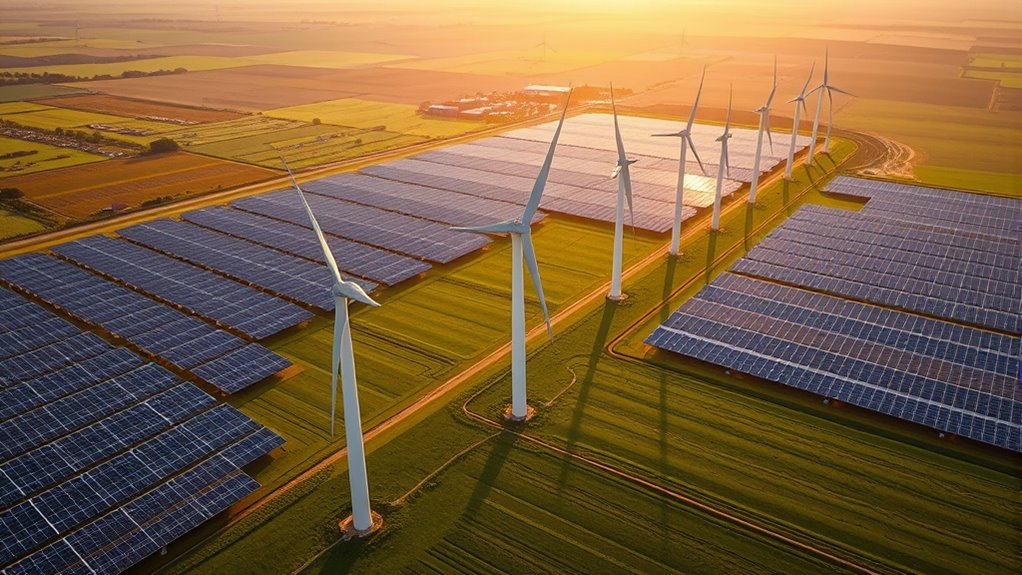
Have you ever wondered how combining wind and solar energy can boost our power supply’s reliability? The answer lies in the way these two renewable sources complement each other, creating a more stable and resilient electricity grid. When you harness both wind and solar power together, you reduce dependence on any single source, especially since their generation patterns often differ. Solar energy peaks during sunny days, typically in the middle of the day, while wind tends to be stronger during different times, sometimes at night or during cloudy periods. By integrating these sources effectively, you can balance supply and demand more efficiently.
Combining wind and solar energy creates a more reliable, balanced, and resilient power supply through complementary generation patterns.
However, to truly maximize their potential, energy storage plays a fundamental role. When solar panels generate more electricity than needed, excess power can be stored in batteries or other storage systems for later use. Similarly, wind energy that exceeds immediate demand can be stored for cloudy or windless days. With advanced energy storage solutions, you can smooth out the fluctuations inherent in renewable sources, ensuring a steady supply even when the sun isn’t shining or the wind isn’t blowing. This not only enhances reliability but also helps to manage grid stability, preventing outages caused by sudden drops in power generation. energy storage is a crucial component in making renewable energy sources more dependable and efficient.
Grid integration is another essential piece of the puzzle. It involves connecting these renewable sources seamlessly into the existing power infrastructure. When wind and solar farms are properly integrated into the grid, they can supply electricity more consistently and efficiently. Smart grid technologies enable real-time balancing of supply and demand, allowing operators to respond quickly to changes in generation levels. This integration also facilitates the use of energy storage systems, which can be charged when there’s excess power and discharged when demand peaks. As a result, you get a more resilient grid that reduces reliance on fossil fuels and minimizes environmental impact.
Together, energy storage and grid integration create a synergy that makes wind and solar power more dependable. By storing excess energy and managing its flow through a well-connected grid, you can provide a continuous power supply regardless of weather conditions. This hybrid approach not only enhances energy security but also accelerates the transition to a cleaner, more sustainable energy future. As technology advances, your ability to efficiently combine wind and solar energy will become even more indispensable, paving the way for a smarter, more reliable power system that benefits everyone.
As an affiliate, we earn on qualifying purchases.
Frequently Asked Questions
How Do Wind and Solar Hybrid Systems Impact Energy Storage Needs?
When you combine wind and solar energy, your hybrid system impacts storage needs by requiring better storage optimization and capacity planning. You need to store excess energy generated during peak times for use when production dips. This means investing in efficient storage solutions and carefully planning capacity to balance supply and demand. Properly managing storage guarantees your system remains reliable and maximizes renewable energy use, reducing reliance on fossil fuels.
What Are the Initial Costs of Integrating Wind and Solar Technologies?
Think of integrating wind and solar as planting a resilient garden—you’ll face initial costs that can feel like planting seeds for future growth. The cost estimation varies based on system size, location, and technology, usually ranging from thousands to millions. You can explore financing options like loans or grants to ease upfront expenses. While it requires investment, the long-term savings and environmental benefits make it a worthwhile venture.
How Reliable Are Hybrid Systems During Extreme Weather Events?
You’ll find hybrid systems are quite resilient during extreme weather events because they enhance storm resilience and guarantee continuous power supply. By combining wind and solar, you optimize efficiency, reducing the risk of total failure during storms. While some components may be affected, the diversified setup allows for better adaptation and quicker recovery, keeping your energy flow stable even in challenging conditions.
What Maintenance Challenges Are Unique to Hybrid Renewable Setups?
You face unique maintenance challenges with hybrid renewable setups, balancing complexity and efficiency. Corrosion issues arise from exposure to moisture and salt, especially in coastal areas, while mechanical wear affects moving parts like turbines and cleaning mechanisms. These issues demand vigilant inspections and specialized maintenance routines. Unlike single systems, hybrid setups require coordinated upkeep, ensuring both wind and solar components operate harmoniously, preventing costly downtimes and extending system lifespan.
How Do Hybrid Systems Influence Grid Stability and Power Quality?
Hybrid systems improve grid stability by better managing power fluctuation and maintaining grid synchronization. They adapt quickly to changing energy demands, reducing the risk of voltage swings and frequency variations. Your system’s ability to balance wind and solar inputs minimizes disruptions, ensuring consistent power quality. This integration supports a more reliable grid, helping you avoid outages and maintain steady electricity supply even when renewable output varies.
solar and wind energy storage batteries
As an affiliate, we earn on qualifying purchases.
As an affiliate, we earn on qualifying purchases.
Conclusion
By combining wind and solar, you create a symphony of sustainable energy, each source harmonizing to fill the gaps left by the other. This hybrid approach acts like a well-tuned orchestra, maximizing efficiency and ensuring a steady power flow. Embracing both renewables isn’t just a smart choice—it’s the key to unleashing a resilient, brighter future. Together, they weave a tapestry of clean energy that’s stronger and more adaptable than either could stand alone.
smart grid energy management system
As an affiliate, we earn on qualifying purchases.
As an affiliate, we earn on qualifying purchases.
As an affiliate, we earn on qualifying purchases.
Columbus Day / Indigenous Peoples' Day Picks
long weekend sales
As an affiliate, we earn on qualifying purchases.