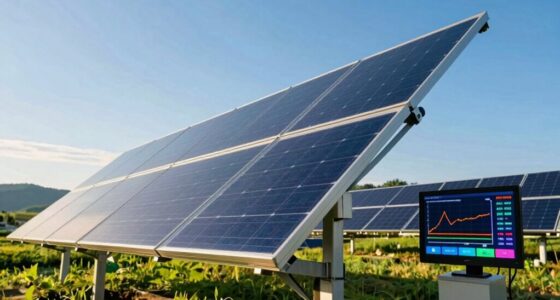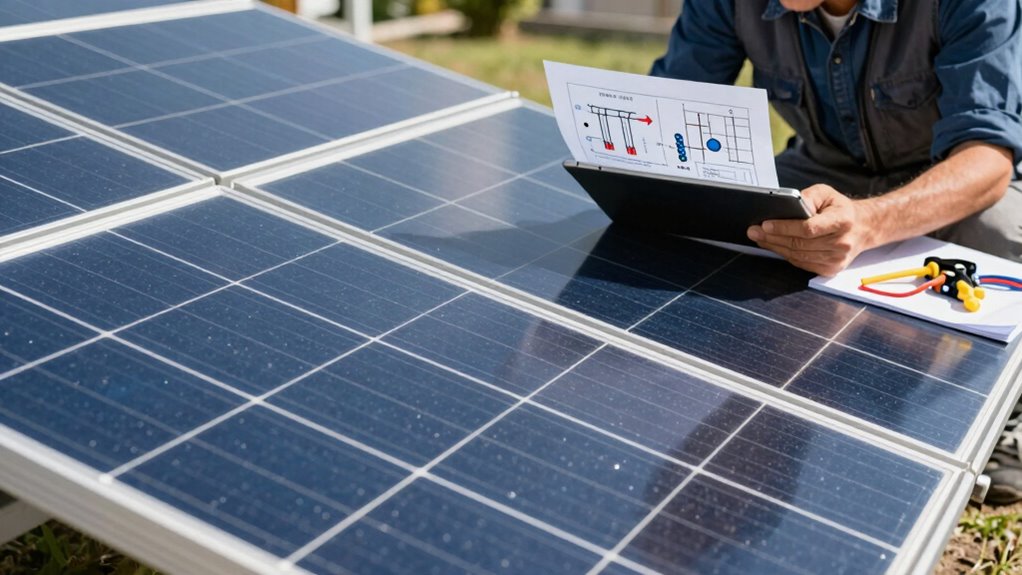

To choose the right solar panel size, start by evaluating your energy needs based on daily consumption, considering whether you’re powering a small home, large property, or mobile setup. Your system voltage should match your batteries and inverter to maximize efficiency and prevent energy loss. A properly sized system with the right voltage setup will ensure reliable power and easy expansion. If you want to learn more about optimizing your solar setup, keep exploring how these factors work together.

Get backup power and energy gear delivered free — and shop member deals
- Fast, free delivery on millions of items
- Access to Prime Big Deal Days deals on October 6–7
- Prime Video, Amazon Music and more included
Key Takeaways
- Assess your energy needs and daily consumption to determine the appropriate system size and panel capacity.
- Match the panel voltage to your inverter and battery system for optimal performance and safety.
- Consider the use case (home, RV, large property) to scale system size and storage requirements accordingly.
- Conduct shading analysis to select panel placement that maximizes sunlight exposure and efficiency.
- Design the system with future expansion in mind, ensuring voltage compatibility and adequate capacity.
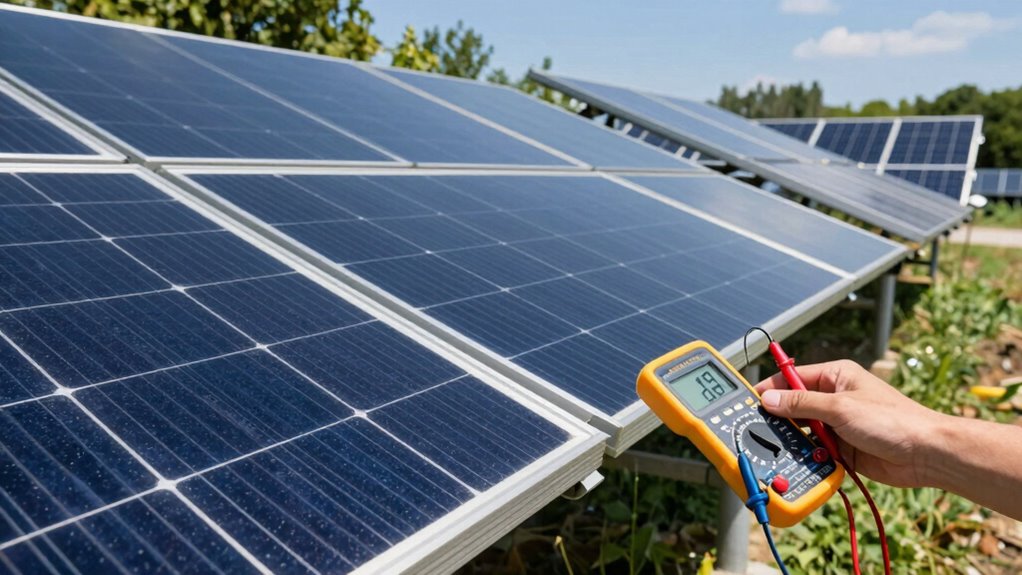
Choosing the right solar panel size and voltage can seem complex, but understanding your specific use case simplifies the process. Before selecting panels, you need to assess how you’ll use the energy—whether for a small home, a large property, or a mobile setup like RVs. Your energy needs determine the size of the system, while the voltage influences compatibility with your existing electrical setup. For example, a higher voltage system can reduce wiring costs and improve efficiency, but it must match your inverter and battery storage systems. When planning, consider how much energy you consume daily and whether you want to expand your system later. This helps you decide on the initial panel capacity and voltage configuration, ensuring you avoid under or oversizing your setup. Properly assessing your energy consumption is essential to designing an effective solar system. Battery storage plays an essential role in this process. If you want to store excess energy generated during sunny periods for use at night or during cloudy days, you’ll need to select panels that produce enough power to charge your batteries efficiently. The size of your battery bank influences this calculation. A larger battery bank requires more energy input, which means you might need bigger or more panels. Also, the voltage of your panel system should align with your battery bank’s voltage to optimize charging efficiency. Proper matching prevents energy loss and prolongs the lifespan of your batteries. Conducting a shading analysis can also help identify potential issues early on, saving you time and money in the long run. Even a small shadow cast across a solar panel can considerably reduce its output, so understanding your shading environment is essential. In addition, selecting panels with appropriate voltage ratings ensures optimal performance and safety for your entire system. A comprehensive system design that considers all these factors can significantly improve your setup’s overall efficiency and longevity. If your location has nearby trees, buildings, or other obstructions, you might need larger panels or a different layout to compensate for the shading. A shading analysis helps you position your panels in the most effective spots, maximizing sunlight exposure and overall energy production. It also influences your choice of panel size and voltage because shaded panels produce less power, which could impact your system’s size requirements and battery storage needs.
solar panel size and voltage calculator
As an affiliate, we earn on qualifying purchases.
As an affiliate, we earn on qualifying purchases.
Frequently Asked Questions
How Does Temperature Affect Solar Panel Voltage Output?
Temperature effects cause solar panel voltage output to fluctuate, typically decreasing as temperatures rise. When it’s hot outside, the voltage drops because higher temperatures reduce the efficiency of the solar cells. Conversely, cooler temperatures help maintain higher voltage levels. You should consider temperature effects when sizing your solar system, as voltage fluctuation can impact overall performance. Keep in mind that ideal voltage output happens in moderate temperatures, ensuring your system runs efficiently.
Can I Connect Different Solar Panel Sizes in One System?
Yes, you can connect different solar panel sizes in one system, but you need to guarantee panel compatibility. Mismatched panels can cause issues like uneven voltage and current, reducing efficiency. To maintain system scalability and peak performance, consider using a compatible inverter and proper wiring. Always verify that the combined voltage and current stay within your system’s limits, and consult a professional if you’re unsure.
What’s the Impact of Shading on Panel Voltage and Performance?
Shade impact can considerably reduce your panel’s voltage and overall performance. When parts of your solar panel are shaded, it decreases the sunlight reaching the cells, leading to lower panel efficiency. This drop in efficiency affects the voltage output, sometimes causing system underperformance or shutdowns. To minimize shade impact, position panels where they get maximum sun exposure and consider shading analysis during installation to optimize voltage and performance.
How Long Do Solar Panels Typically Last Before Replacement?
Ever wonder how long your solar panels will last? Usually, they last around 25 to 30 years, thanks to their durability. You’ll find that with proper maintenance requirements—like regular cleaning and inspections—they can perform efficiently for decades. So, don’t worry about their longevity; most panels are built to withstand the elements and keep generating power long after installation. Is your system ready for the long haul?
Is There a Difference Between Mono-Crystalline and Polycrystalline Panels?
Yes, there’s a difference. Mono-crystalline panels are made from single crystal silicon, offering higher solar panel efficiency, which means they produce more power in less space. Polycrystalline panels are created through different manufacturing processes, involving multiple silicon fragments, making them less efficient but usually more affordable. If space and efficiency matter, mono-crystalline panels are your best bet, but for a budget-friendly option, polycrystalline panels still perform well.
As an affiliate, we earn on qualifying purchases.
Conclusion
When choosing your solar panel size and voltage, it’s all about matching your energy needs with your setup. Sometimes, the right combination just falls into place, like a puzzle piece fitting perfectly. Trust that by understanding your use case, you’ll find the ideal panel size. After all, it’s in these small details that the bigger picture becomes clear—reminding you that harmony between your energy goals and system design is more natural than it seems.
As an affiliate, we earn on qualifying purchases.
As an affiliate, we earn on qualifying purchases.
Fall Picks
fall essentials
As an affiliate, we earn on qualifying purchases.