Outlet testers are helpful because they quickly show if an outlet is wired correctly and functioning safely, making them useful for DIY checks and immediate feedback. However, they have limitations and can’t detect complex wiring problems, loose connections, or issues behind the outlet. Relying solely on them might give you a false sense of security. To guarantee safety, it’s important to understand what outlet testers can and can’t do—more details ahead.

Get backup power and energy gear delivered free with Prime
- Fast, free delivery on millions of items
- Prime Video, Amazon Music and more included
- Member-only deals all year
Key Takeaways
- Outlet testers quickly identify basic wiring issues but cannot detect complex or hidden electrical faults.
- They are useful for immediate, simple safety checks but do not replace professional inspections.
- Testers may give false reassurance, as they cannot identify all hazards like loose connections or circuit breaker problems.
- For detailed diagnostics, tools like multimeters and expert evaluations are necessary.
- Relying solely on outlet testers risks overlooking serious electrical issues, emphasizing the need for comprehensive safety practices.
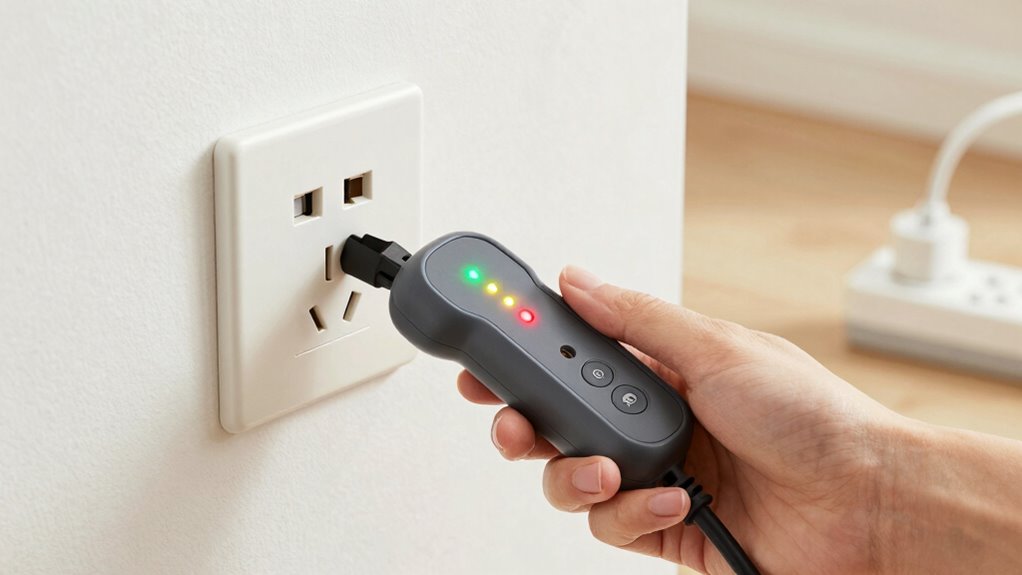
Outlet testers can be useful tools for quickly checking whether an electrical outlet is properly wired and functioning, but they have their limitations. When it comes to electrical safety, these testers are often the first line of defense. They help you identify common wiring issues like open grounds, open neutrals, or reversed hot and neutral connections. For DIY troubleshooting, they’re convenient and easy to use, allowing you to get immediate feedback without needing specialized knowledge or tools. This makes them especially handy for homeowners who want to ensure their outlets are safe before plugging in sensitive electronics or appliances.
However, while outlet testers are helpful, they don’t tell the whole story. They primarily check for basic wiring problems and do little to diagnose more complex electrical issues. For example, they can’t detect faulty wiring behind the outlet, loose connections, or issues with the circuit breaker itself. Relying solely on an outlet tester might give you a false sense of security, especially if there’s a problem that’s beyond the device’s capabilities. This is why, despite their usefulness in quick checks, outlet testers shouldn’t replace professional inspections or more comprehensive testing methods when serious electrical safety concerns arise.
In terms of DIY troubleshooting, outlet testers are invaluable for quick assessments, especially when you’re trying to determine if an outlet is dead or wired incorrectly. They’re often small, affordable, and straightforward to operate. But keep in mind, they won’t detect all potential hazards like ground faults, wiring that’s loose but still making contact, or wiring that’s damaged but not visibly obvious. If you notice any irregularities or if the outlet doesn’t behave as expected, it’s wise to take additional steps. Use a multimeter for more precise voltage readings or consult a qualified electrician for a thorough inspection. Additionally, understanding electrical testing limitations can help prevent overlooked hazards and ensure a safer environment. Being aware of the limitations of outlet testers is crucial for responsible DIY repairs. To enhance safety, it’s also important to recognize how essential oils for electrical safety can be part of a holistic approach to home safety, although they are not a substitute for proper electrical testing methods.
digital multimeter for electrical testing
As an affiliate, we earn on qualifying purchases.
As an affiliate, we earn on qualifying purchases.
Frequently Asked Questions
Can Outlet Testers Detect All Wiring Issues Accurately?
Outlet testers can’t detect all wiring issues accurately because wiring complexity sometimes exceeds their capabilities. They are great for basic problems like open ground or miswiring, but they lack advanced diagnostics needed for complex issues like faulty wiring behind walls or incorrect neutral connections. For a thorough inspection, you should consider professional testing or using more sophisticated tools. Relying solely on outlet testers might leave some issues unnoticed, risking safety and appliance damage.
Are Outlet Testers Safe to Use Without Professional Training?
You might think outlet testers are completely safe to use without training, but don’t be fooled. While they’re designed for easy use, you still need to follow safety precautions and proper usage guidelines. Always turn off power when inspecting or working on outlets, and double-check the tester’s instructions. If you’re unsure or uncomfortable, it’s smarter to call a professional—after all, a little safety goes a long way!
How Often Should I Test My Outlets?
You should test your outlets at least once every year to check for voltage fluctuations and guarantee outlet compatibility. Regular testing helps catch issues early, preventing potential electrical hazards. If you notice flickering lights or frequent resets, test more often. Keep in mind, outlet testers are helpful but limited—they don’t diagnose all problems. Always turn off power before testing and consider professional help if you detect any irregularities.
Do Outlet Testers Work With GFCI Outlets?
Outlet testers do work with GFCI outlets, but you need to check their GFCI compatibility first. Many testers can’t fully test GFCI functionality, so they only indicate basic wiring issues. Keep in mind outlet tester limitations—they can’t detect all GFCI problems or trip conditions. To guarantee safety, use a GFCI tester or test GFCIs manually with the test and reset buttons.
Can Outlet Testers Identify Harmonic or Noise Problems?
Outlet testers can’t identify harmonic interference or noise problems directly. They mainly test for proper wiring and grounding, so they won’t detect issues caused by harmonic interference or electrical noise. If you’re concerned about noise detection or harmonic interference affecting your devices, you’ll need specialized equipment like power quality analyzers. Outlet testers are helpful for basic safety checks but limited in diagnosing complex electrical noise or interference issues.
outlet tester with circuit breaker detection
As an affiliate, we earn on qualifying purchases.
As an affiliate, we earn on qualifying purchases.
Conclusion
So, next time you’re tempted to trust that shiny little outlet tester, remember it’s more of a fortune teller than a safety expert. It might tell you everything’s fine, but it can’t see behind the scenes—like faulty wiring or hidden hazards. Don’t rely solely on these gadgets; they’re your safety net’s flimsy first line, not the whole safety team. Stay cautious, stay smart, and maybe call in a pro when in doubt—your home (and your fingers) will thank you.
professional electrical outlet tester
As an affiliate, we earn on qualifying purchases.
As an affiliate, we earn on qualifying purchases.
electrical wiring inspection tools
As an affiliate, we earn on qualifying purchases.
As an affiliate, we earn on qualifying purchases.
Halloween Picks
halloween
As an affiliate, we earn on qualifying purchases.