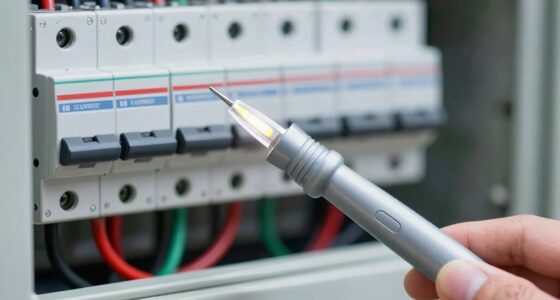
CAT ratings are essential because they show how well your test equipment can handle electrical faults and transient voltages, keeping you safe and preventing equipment failure. Higher ratings, like CAT IV, mean the tool can withstand tougher environments, ensuring durability and reliability. Using the right rating for your work environment reduces risks and prolongs your tools’ lifespan. Keep exploring to see how matching ratings to your tasks can improve safety and performance even further.

Get backup power and energy gear delivered free with Prime
- Fast, free delivery on millions of items
- Prime Video, Amazon Music and more included
- Member-only deals all year
Key Takeaways
- CAT ratings indicate a test equipment’s ability to withstand specific electrical surge levels, ensuring safety and reliability.
- Higher ratings (e.g., CAT IV) denote suitability for more demanding, outdoor, or industrial environments.
- Proper matching of CAT ratings with work environments prevents equipment damage and enhances user safety.
- They guide users in selecting the right tools for specific electrical hazards and conditions.
- Accurate understanding of CAT ratings promotes safer work practices and prolongs equipment lifespan.
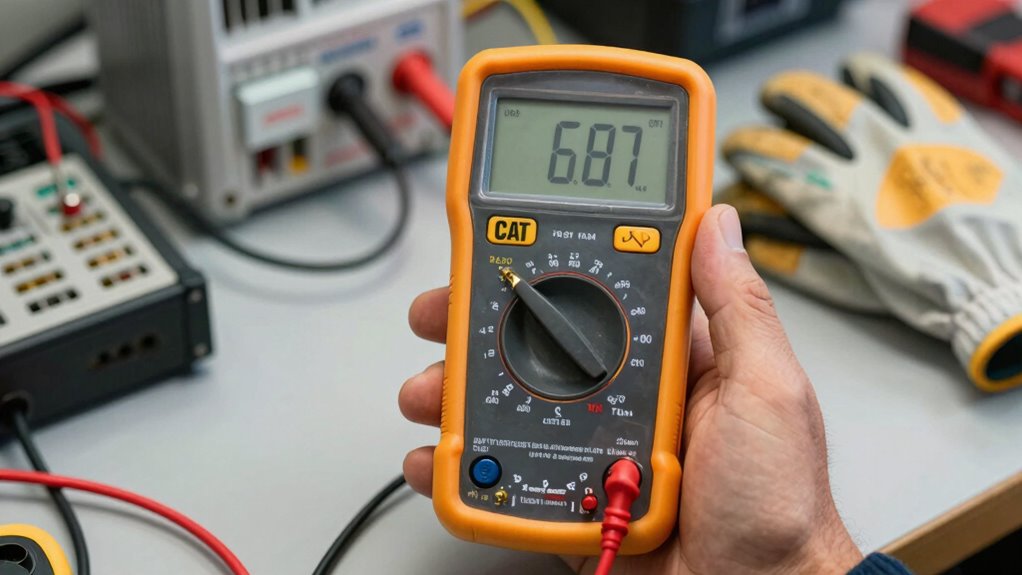
Have you ever wondered what the numbers and letters in test equipment ratings really mean? These designations, especially the CAT ratings, are vital in guaranteeing that the equipment you use meets safety standards and maintains equipment durability. When you’re working in environments with potentially hazardous conditions—like electrical work or industrial settings—knowing the significance behind CAT ratings helps you select the right tools that can handle the job safely and effectively.
The CAT rating, or Category rating, indicates the level of protection the equipment provides against transient voltages and electrical faults. It’s a standardized way to communicate how well a piece of test equipment can withstand electrical surges, helping to prevent accidents or damage. For instance, a higher CAT rating, like CAT IV, signifies that the equipment is designed to endure the most demanding environments, offering a higher safety margin. This directly ties into safety standards, as using equipment with the appropriate CAT rating minimizes the risk of electrical shock or equipment failure, protecting both you and your surroundings.
Moreover, the significance of CAT ratings extends to equipment durability. When you select test equipment with a suitable CAT rating, you’re choosing a device built to withstand the rigors of your working environment. Equipment tested and rated for higher categories undergo rigorous assessments for surge immunity, mechanical stress, and environmental conditions. This guarantees your tools won’t break down prematurely, which can save you time and money in the long run. Durability standards also ensure that tested equipment can resist environmental stressors, reaffirming their suitability for specific work environments. Using appropriate ratings for your work environment is crucial for ensuring safety and longevity, especially in harsh environments where equipment faces exposure to elements that can accelerate wear and tear. Using durable equipment can also contribute to cost savings by reducing frequent replacements.
Understanding what a specific CAT rating means for your work is essential. For example, CAT II equipment is suitable for testing appliances and outlets, but not for more exposed environments like outdoor power lines, which require CAT III or CAT IV ratings. Using equipment outside its rated environment can compromise safety and reduce durability, leading to potential accidents or equipment damage.
In essence, the CAT ratings serve as a vital guide to selecting test equipment that aligns with both safety standards and durability requirements. They guarantee you’re protected from electrical hazards and that your tools will withstand the demands of your work environment. Recognizing the importance behind these ratings allows you to make informed decisions, ultimately promoting safer work practices and extending the lifespan of your equipment. So, next time you’re choosing test tools, pay close attention to the CAT ratings—they’re your assurance of safety and durability in every measurement. Additionally, understanding test equipment ratings can help you better grasp how to match tools to specific work environments and hazards.
As an affiliate, we earn on qualifying purchases.
Frequently Asked Questions
How Are CAT Ratings Determined for Different Test Equipment?
You determine CAT ratings for test equipment based on voltage classification and equipment durability. Voltage classification assesses how much voltage the equipment can safely handle without failure, while equipment durability guarantees it withstands harsh testing environments. Manufacturers conduct rigorous testing to meet specific standards, and these ratings help you select the right device for your job, ensuring safety and reliability across different environments and voltage levels.
Can CAT Ratings Change Over Time or With Technology Updates?
Yes, CAT ratings can change over time due to historical changes and technological updates. As new safety standards emerge or advancements improve test equipment, ratings are re-evaluated to reflect these improvements. You should stay informed about these updates to make certain your equipment meets current safety regulations. Regularly checking for the latest ratings helps you maintain compliance and guarantees that your testing remains accurate and safe in evolving environments.
Are Higher CAT Ratings Always Better for All Testing Environments?
Higher CAT ratings aren’t always better for every testing environment. You need to take into account voltage compatibility and environmental conditions. For instance, a CAT III device works well for most electrical testing, but in harsh environments or higher voltage situations, a CAT IV might be necessary. Always match the CAT rating to your specific testing needs, ensuring safety and accuracy without over-specifying, which can be unnecessary and costly.
How Do CAT Ratings Impact Safety During Testing Procedures?
CAT ratings directly impact your safety during testing by ensuring the equipment can handle specific voltage levels safely. Higher ratings provide better voltage safety margins, reducing the risk of electrical shock or damage. They also indicate equipment durability, meaning it can withstand harsh testing environments. By choosing the right CAT rating, you protect yourself and your tools, maintaining safe testing procedures and preventing accidents caused by inadequate equipment.
What Are the Limitations of CAT Ratings in Real-World Applications?
Did you know that over 60% of test equipment failures in the field stem from environmental factors? CAT ratings have limitations because they don’t account for all real-world conditions like extreme weather or accidental drops. These factors can impact user experience and safety. While CAT ratings guide safety standards, they can’t fully predict how equipment performs under unpredictable environmental stresses, so always consider additional safety measures.
industrial electrical surge tester
As an affiliate, we earn on qualifying purchases.
As an affiliate, we earn on qualifying purchases.
Conclusion
Understanding CAT ratings might seem like just another technical detail, but they’re your safeguard in unpredictable environments. Just as a sturdy bridge holds steady amid rushing traffic, high CAT ratings guarantee your test equipment withstands sudden surges and harsh conditions. Without this essential rating, your measurements could falter, risking costly errors. So, as you choose your tools, remember: in testing, strength isn’t just a feature — it’s your foundation for accuracy and safety.
electrical safety CAT ratings tester
As an affiliate, we earn on qualifying purchases.
As an affiliate, we earn on qualifying purchases.
As an affiliate, we earn on qualifying purchases.
Halloween Picks
halloween
As an affiliate, we earn on qualifying purchases.