
To accurately interpret a receptacle tester, match the light pattern with the chart provided to identify wiring conditions, avoiding guesswork. Confirm the tester is properly grounded, firmly plugged in, and calibrated by testing known outlets. Turn off power before testing when possible to stay safe. Be cautious with unexpected signals; if they don’t match safe patterns, consult an electrician. Keep learning more to confidently troubleshoot electrical issues and guarantee safety.

Get backup power and energy gear delivered free with Prime
- Fast, free delivery on millions of items
- Prime Video, Amazon Music and more included
- Member-only deals all year
Key Takeaways
- Compare the tester’s light pattern precisely to the provided wiring chart before drawing conclusions.
- Always ensure the outlet is energized and the tester is firmly seated for accurate readings.
- Verify the tester’s functionality by testing a known working outlet regularly.
- Turn off power before plugging in the tester to avoid false signals and electrical hazards.
- Recognize that no or inconsistent signals may indicate the outlet isn’t energized or the tester is faulty.
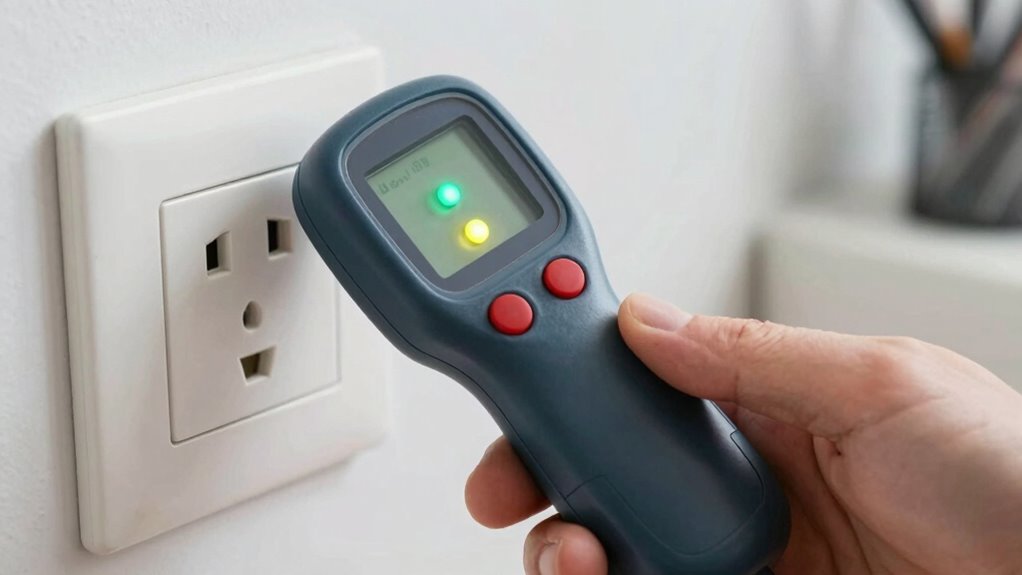
If you want to guarantee your electrical outlets are functioning correctly, understanding how to read a receptacle tester is essential. These simple devices are designed to help you quickly identify wiring issues or potential hazards without the need for complicated tools. However, to interpret the results accurately, you need to be familiar with how the tester displays different signals and what they mean. One of the most important aspects is ensuring voltage safety. A receptacle tester operates based on the presence or absence of voltage, and misreading the signals could lead you to overlook a dangerous wiring problem. Always remember that if the tester indicates a problem, you should take immediate steps to address it or consult a qualified electrician.
Another critical factor is tester calibration. Over time, even simple electrical testers can drift out of calibration, leading to false positives or negatives. Regularly checking your tester against a known working outlet can help confirm it’s providing accurate readings. If you suspect your tester isn’t calibrated properly, replace it or have it tested by a professional. Proper calibration ensures that the device’s signals correspond correctly to the wiring conditions, reducing the risk of misinterpretation and increasing your confidence in the readings. Additionally, understanding proper testing techniques can help you interpret the signals more effectively. Familiarity with voltage safety protocols is also crucial to prevent electric shocks or other hazards during testing. Recognizing the importance of electrical safety can help you avoid accidents and ensure safe testing practices.
Regularly check and calibrate your tester to ensure accurate readings and safe electrical inspections.
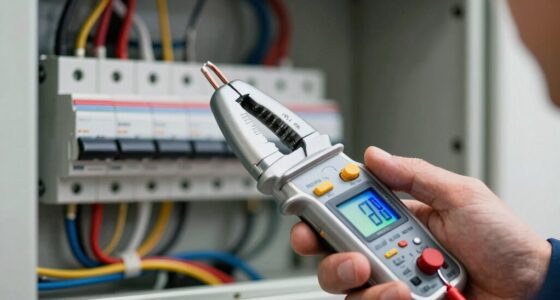
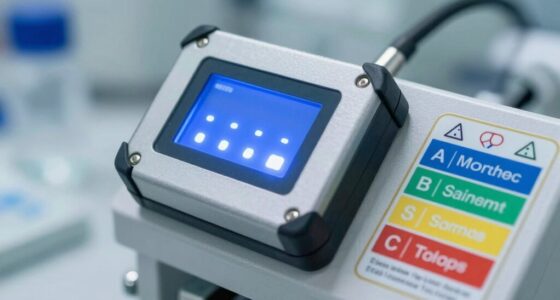
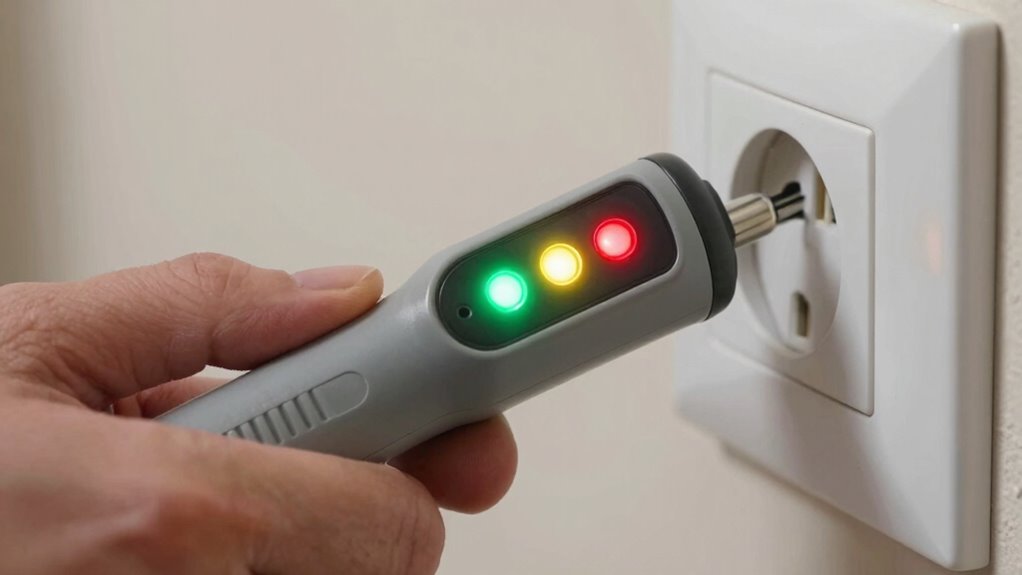
When you look at a receptacle tester, you’ll see a series of lights. Each pattern of illuminated lights corresponds to a specific wiring condition, such as correct wiring, open ground, open neutral, or reversed polarity. To read it correctly, you need to compare the pattern of lights to the chart provided with the tester. Avoid guessing—if the lights don’t match a known safe pattern or if they indicate a wiring fault, don’t use the outlet until it’s inspected and corrected. Always turn off the power before plugging in the tester and ensure it’s firmly seated in the outlet to get an accurate reading. Proper understanding of electrical wiring is also essential for correct interpretation.
Understanding that the tester’s lights reflect the actual voltage safety of the outlet is key. If the tester shows no lights or inconsistent signals, there’s a chance that the outlet isn’t energized or that the tester isn’t functioning correctly. In such cases, double-check your work, confirm the power is on, or test another outlet to rule out a faulty device. Remember, a receptacle tester is a quick tool, but it’s not a substitute for a thorough inspection by an electrician when serious issues are suspected. Proper use and interpretation can help you identify wiring problems early and keep your electrical system safe. Additionally, being aware of the proper tools and techniques for testing can further improve your safety and accuracy.
As an affiliate, we earn on qualifying purchases.
Frequently Asked Questions
Can a Receptacle Tester Detect Wiring Faults Beyond Open Grounds or Hot Wires?
A receptacle tester primarily detects common wiring faults like open grounds, open hot wires, and miswired outlets. However, it doesn’t typically identify more complex wiring faults or ground fault detection issues. To pinpoint wiring fault identification beyond basic problems, you might need specialized tools like a multimeter or GFCI tester. These can help you detect subtle or hidden wiring issues, ensuring your electrical system’s safety and proper function.
How Often Should I Test My Electrical Outlets?
You should test your electrical outlets at least once every three to six months for installation safety and maintenance tips. Regular testing helps catch potential issues early, preventing electrical hazards. Use a receptacle tester to quickly verify proper wiring and detect faults. Consistent checks guarantee your outlets are safe and functioning correctly, giving you peace of mind and maintaining a secure electrical system in your home.
Are All Receptacle Testers Compatible With GFCI Outlets?
Not all receptacle testers work with GFCI outlets. Think of it like trying to use a key designed for one lock on another—you might get stuck. Some testers can’t detect grounding issues or incorrect wiring in GFCIs, risking false readings. Always confirm your tester is compatible with GFCI outlets, especially since grounding issues or incorrect wiring can be dangerous. Check the product specifications before testing to avoid surprises.
What Do Different Color Indicators on a Tester Mean?
Different color indicators on a receptacle tester show various wiring conditions. For example, green usually means the outlet is properly grounded, while red indicates a potential wiring issue, like a hot/ground reversal. Yellow or amber might signal open grounds or open neutrals. By understanding these color codes, you can quickly interpret indicator meanings and determine if an outlet is safe or needs repair, avoiding guesswork.
Can a Receptacle Tester Work on Outdoor or Wet Outlets?
Sure, your fancy receptacle tester can bravely face outdoor or wet outlets—if it’s weatherproof and designed for such conditions. Look for weatherproof design and compatibility features to guarantee safety. Otherwise, it’s like sending a paper umbrella into a hurricane. Always verify your tester’s specs before risking a shock, because a waterproof label alone doesn’t guarantee it’ll survive a splash. Safety first, even when testing outdoors!
As an affiliate, we earn on qualifying purchases.
Conclusion
By mastering how to read a receptacle tester, you hold the key to keeping your electrical system safe and sound. Think of the tester as your trusty compass, guiding you through the maze of wiring with confidence. When you understand what each light means, you’re not just guessing—you’re steering with certainty. So, next time you approach an outlet, trust your knowledge and read that tester like a seasoned pro, steering clear of potential hazards.
electrical outlet tester with lights
As an affiliate, we earn on qualifying purchases.
As an affiliate, we earn on qualifying purchases.
As an affiliate, we earn on qualifying purchases.
Halloween Picks
halloween
As an affiliate, we earn on qualifying purchases.