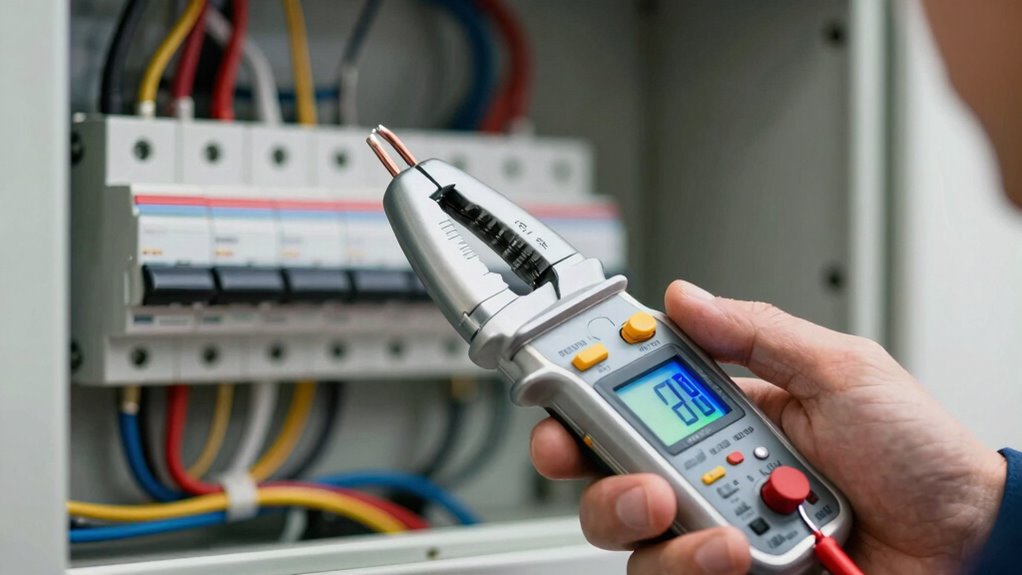

Clamp meters make electrical diagnostics faster by letting you measure current without disconnecting circuits, saving time and reducing hassle. You can quickly identify overloads, short circuits, and faulty wiring using their non-contact design. They also allow measurement of AC and DC currents directly through the clamp, eliminating complex setups. Their safety features protect you from shocks, so you can work confidently. Keep exploring to discover even more tips for optimizing your troubleshooting skills.

Get backup power and energy gear delivered free with Prime
- Fast, free delivery on millions of items
- Prime Video, Amazon Music and more included
- Member-only deals all year
Key Takeaways
- Measure current without disconnecting circuits, saving time during diagnostics.
- Quickly identify faults like overloads and shorts with direct AC/DC current readings.
- Eliminate complex test setups by using non-contact, clamp-based measurements.
- Reduce safety risks and testing interruptions with insulated, contactless design.
- Enable faster troubleshooting with accurate, real-time data and minimal system disruption.
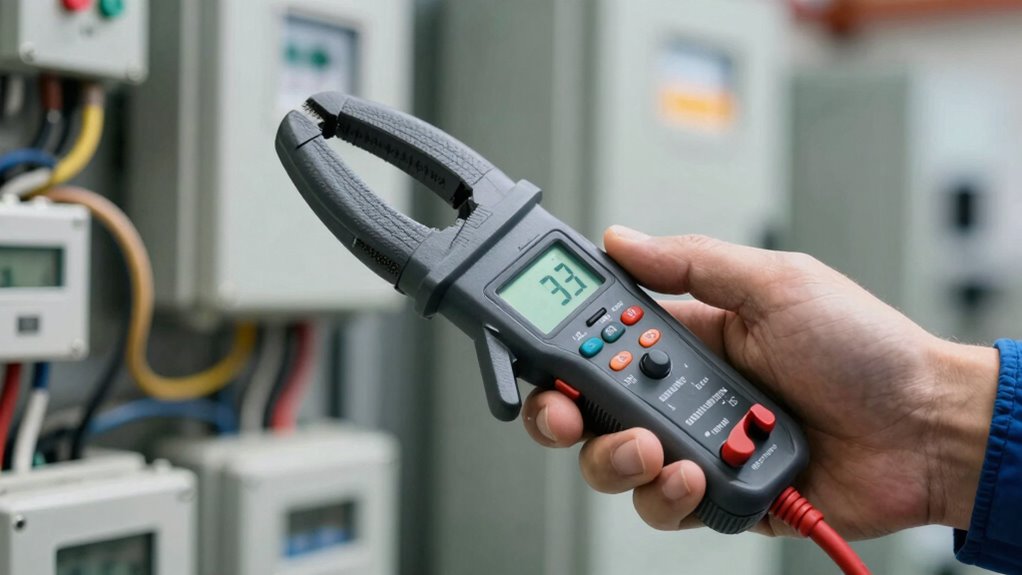
When it comes to diagnosing electrical systems, clamp meters are essential tools that simplify the process. They allow you to measure current without needing to disconnect or break the circuit, saving you time and reducing the risk of errors. With a clamp meter, you can quickly identify issues such as overloads, short circuits, or faulty wiring, making troubleshooting more efficient. This speed stems from the device’s ability to measure AC and DC currents directly through the clamp, eliminating the need to set up complex test configurations or interrupt power flow. As a result, you can focus more on pinpointing problems rather than dealing with cumbersome testing procedures.
One of the key advantages of using clamp meters is how they enhance circuit safety during diagnostics. Unlike traditional methods that require contact points or direct connection to live wires, clamp meters keep you at a safer distance. Their non-contact design reduces the risk of electrical shocks or accidental short circuits, which is especially important when working in high-voltage environments. Additionally, many clamp meters feature protective features such as overload protection and insulated probes, further increasing safety during testing. This emphasis on circuit safety not only protects you but also preserves the integrity of the system you’re working on, preventing accidental damage that could prolong downtime or lead to costly repairs. Furthermore, the resale value of quality clamp meters tends to remain strong over time, making them a worthwhile investment for professional and DIY electricians alike. Regular maintenance and calibration techniques ensure continued accuracy, which is vital for reliable diagnostics. Proper calibration techniques help maintain measurement precision, so you don’t waste time double-checking or second-guessing your results. Many professionals recommend using calibration standards or reference sources that simulate known current values, allowing you to verify the device’s accuracy periodically. Well-calibrated clamp meters give you confidence that your measurements are correct, helping you quickly identify the source of electrical issues without unnecessary guesswork. Proper calibration also minimizes errors caused by drift or wear over time, ensuring your diagnostics stay consistent and reliable. Additionally, understanding the principles behind natural currents can help in interpreting the readings more effectively, especially in complex systems. Being aware of electromagnetic interference and how it can affect measurements is also crucial for precise diagnostics. Furthermore, staying informed about measurement techniques can help optimize your troubleshooting process and improve overall accuracy.
In essence, clamp meters expedite electrical diagnostics by combining speed, safety, and accuracy. They eliminate the need for circuit disconnection, reducing troubleshooting time and minimizing risks. Proper calibration techniques keep measurements precise, further enhancing diagnostic efficiency. When you rely on a clamp meter, you’re equipped to handle electrical systems more confidently and swiftly, making your work safer and more productive.
digital clamp meter for electrical diagnostics
As an affiliate, we earn on qualifying purchases.
As an affiliate, we earn on qualifying purchases.
Frequently Asked Questions
Can Clamp Meters Measure Voltage Directly?
No, clamp meters can’t directly measure voltage. They’re mainly designed for current measurement through electrical testing, using their jaw to clamp around a conductor. To measure voltage, you’ll need a multimeter or similar device that connects probes across the points where you want to perform voltage measurement. Clamp meters excel at quick, non-contact current readings, but for voltage, you’ll need separate tools.
Are Clamp Meters Suitable for Residential and Industrial Use?
Yes, clamp meters are suitable for both residential and industrial use because they offer reliable measurements across a broad measurement range. They are designed with electrical safety in mind, allowing you to measure current without direct contact with live wires, reducing risks. Their versatility and safety features make them ideal tools for various environments, helping you quickly diagnose issues while maintaining electrical safety standards.
How Accurate Are Clamp Meters Compared to Traditional Multimeters?
Think of clamp meters as the eagle-eyed hawk of electrical testing—they’re quite accurate, but not quite as precise as traditional multimeters. During accuracy comparison, you’ll find clamp meters excel in quick, non-contact measurements, though they may need more frequent calibration to maintain reliability. Their readings are typically within a close range, but for ultra-precise tasks, a traditional multimeter might still be your best bet.
Do Clamp Meters Require Calibration Before Each Use?
No, clamp meters don’t require calibration before each use. However, performing calibration procedures periodically guarantees measurement accuracy over time. You should check the manufacturer’s guidelines for recommended calibration intervals. Proper calibration maintains the device’s precision, helping you get reliable readings during diagnostics. Regular calibration is especially important if the clamp meter is used frequently or in harsh environments, to prevent measurement errors and ensure consistent results.
What Safety Features Should I Look for in a Clamp Meter?
You should look for clamp meters with safety certifications like UL or IEC, ensuring they meet rigorous safety standards. Insulation protection is vital to prevent electrical shocks during measurements. Additionally, features like double insulation, protective rubber covers, and fuse protection enhance safety. These features help safeguard you from electrical hazards, making your diagnostic work safer and more reliable. Always prioritize safety features to protect yourself during electrical testing.
AC/DC clamp meter with safety features
As an affiliate, we earn on qualifying purchases.
As an affiliate, we earn on qualifying purchases.
Conclusion
In summary, clamp meters considerably speed up electrical diagnostics, saving you time and reducing hassle. Did you know that technicians using clamp meters report a 30% faster troubleshooting process compared to traditional tools? This efficiency means fewer delays and more accurate results. Whether you’re a professional or DIY enthusiast, embracing clamp meters can transform your approach to electrical work, making it safer, simpler, and way more efficient. Don’t get left behind—upgrade your toolkit today!
As an affiliate, we earn on qualifying purchases.
professional electrical clamp meter
As an affiliate, we earn on qualifying purchases.
As an affiliate, we earn on qualifying purchases.
Halloween Picks
halloween
As an affiliate, we earn on qualifying purchases.