
TL;DR

Get backup power and energy gear delivered free with Prime
- Fast, free delivery on millions of items
- Prime Video, Amazon Music and more included
- Member-only deals all year
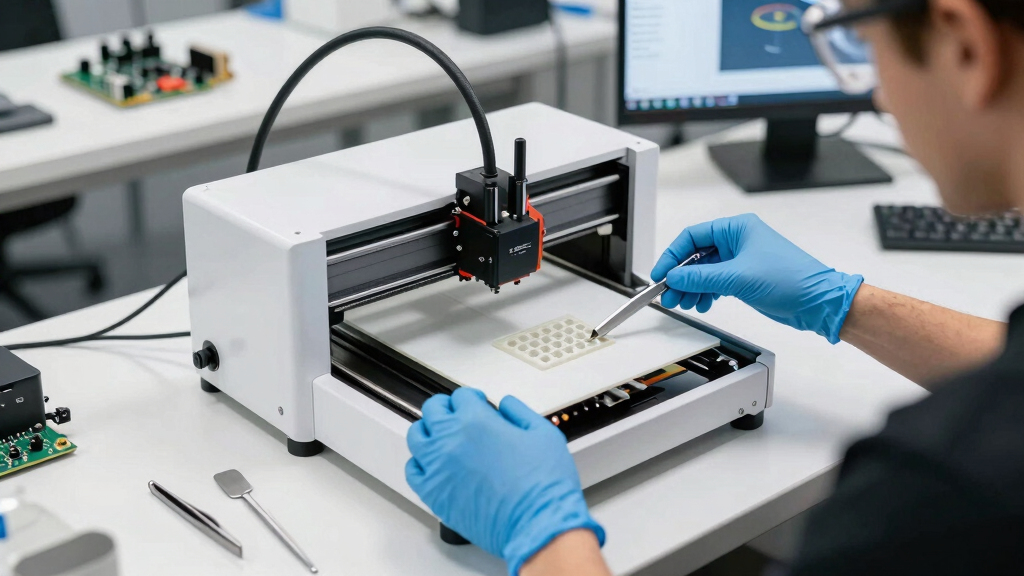
Stenchill has unveiled a 3D printable solder paste stencil generator, allowing electronics manufacturers and hobbyists to produce custom stencils at home. This development could streamline PCB assembly and reduce costs, though some technical details are still emerging.
Stenchill has introduced a new 3D printable solder paste stencil generator, aimed at simplifying the process of creating custom stencils for PCB assembly. The tool, available as a downloadable design, allows users to produce precise solder paste stencils using standard 3D printers. This development matters because it could significantly reduce costs and lead times for electronics manufacturers and hobbyists alike.
The Stenchill stencil generator is a digital design file compatible with common 3D printers, enabling users to print solder paste stencils tailored to their specific PCB layouts. The company claims that the design offers high precision and durability, suitable for both small-scale and larger production runs. According to Stenchill, the system is easy to use, requiring only basic 3D printing knowledge and access to standard filament materials.
While the company has provided detailed design files and instructions, technical experts note that the success of printing high-quality solder paste stencils depends on printer calibration and material choice. The design incorporates features to improve alignment and paste release, but real-world performance may vary based on user setup. The company has not yet released comprehensive testing data or comparisons with commercial stencils.
Potential Impact on Electronics Manufacturing and DIY PCB Assembly
This innovation could democratize access to custom solder paste stencils, traditionally a costly and time-consuming part of PCB assembly. By enabling hobbyists and small-scale manufacturers to produce their own stencils at home, the Stenchill generator may lower barriers to entry in electronics prototyping and production. It also offers potential cost savings, especially for low-volume runs, and could accelerate development cycles by reducing dependency on external suppliers.
However, the actual impact will depend on the quality and durability of printed stencils, as well as user adoption. If successful, this could shift some aspects of PCB assembly toward greater in-house customization and rapid iteration, particularly in educational, prototyping, and small-business contexts.
As an affiliate, we earn on qualifying purchases.
Background on Solder Paste Stencils and 3D Printing in Electronics
Solder paste stencils are essential for precise application of solder in PCB assembly, traditionally manufactured through chemical etching or laser cutting, which can be costly and slow for small batches. Recently, some companies and hobbyists have explored 3D printing as an alternative, but challenges remain in achieving the necessary precision and material properties.
Stenchill’s announcement builds on ongoing trends toward digital fabrication in electronics, aiming to make stencil creation more accessible. Prior efforts have included DIY laser-cut stencils and printable designs, but the new generator claims to offer a more streamlined, customizable solution that leverages the versatility of 3D printing technology.
As of now, the company has not disclosed detailed technical specifications or independent performance evaluations, leaving some questions about the practical limits of the printed stencils.
“Our 3D printable solder paste stencil generator empowers users to create precise, durable stencils at home, reducing costs and lead times in PCB assembly.”
— Stenchill spokesperson
As an affiliate, we earn on qualifying purchases.
Performance and Durability of 3D Printed Stencils Unconfirmed
It is not yet clear how well the 3D printed stencils perform in actual manufacturing conditions, particularly regarding durability, paste release quality, and repeatability. Independent testing and user feedback are still awaited to confirm the practical viability of the design for different PCB sizes and complexities.
As an affiliate, we earn on qualifying purchases.
Expected Testing, Feedback, and Potential Commercial Adoption
In the coming months, users and industry experts will likely test the printed stencils in real-world PCB assembly scenarios. Stenchill may release updates or refined designs based on initial feedback. Broader adoption will depend on verified performance, ease of use, and cost-effectiveness compared to traditional methods.
Further technical details and case studies are anticipated to clarify the stencil generator’s capabilities and limitations.
As an affiliate, we earn on qualifying purchases.
Key Questions
Can I use any 3D printer to make these stencils?
While the design is compatible with most standard 3D printers, achieving high-quality stencils requires proper calibration and suitable filament materials. Success may vary depending on your equipment and expertise.
Are these printed stencils as reliable as commercial ones?
At this stage, it is uncertain. Performance depends on printing quality, material choice, and the specific PCB application. Independent testing is needed to determine durability and precision.
Is the stencil design freely available?
Yes, Stenchill has released the design files and instructions publicly, aiming to promote DIY fabrication and experimentation.
Will this reduce costs for small-scale PCB production?
Potentially, yes. Producing stencils at home could cut expenses compared to ordering custom-made stencils, especially for low-volume runs.
What safety precautions should I take when 3D printing these stencils?
Use proper ventilation, wear PPE such as gloves and masks, and follow your printer manufacturer’s safety guidelines to avoid inhaling fumes or handling hot materials.
Source: hn
Halloween Picks
halloween
As an affiliate, we earn on qualifying purchases.