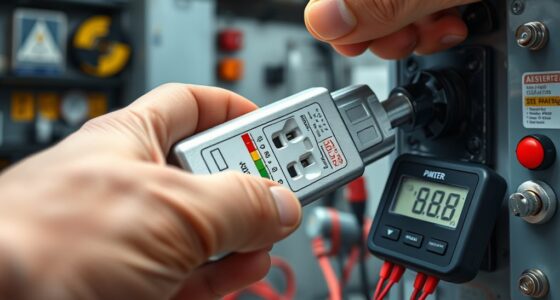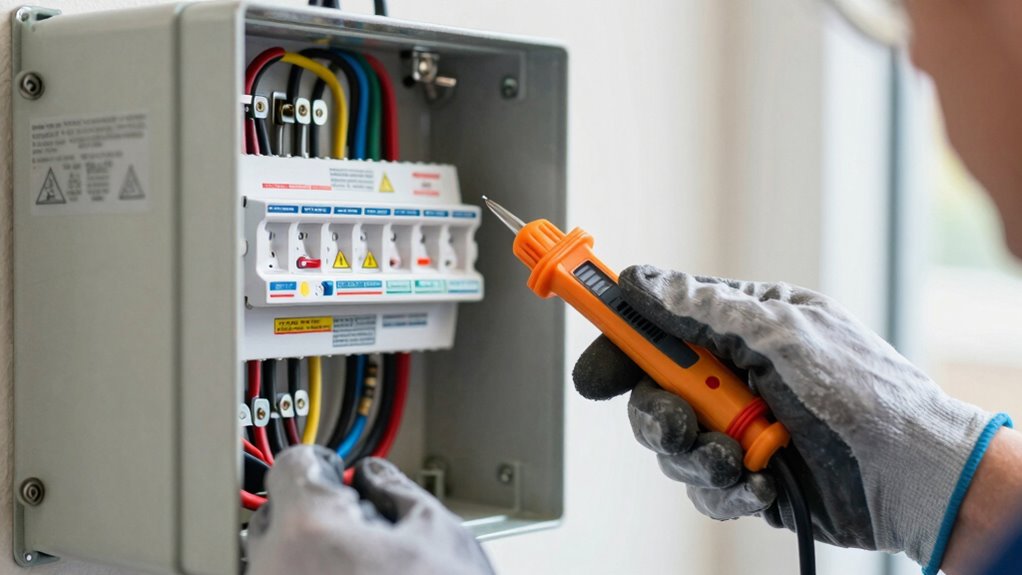

Before touching electrical components, you verify safety measures to prevent shocks, fires, and accidents. You start by testing circuits to make sure they’re de-energized and confirm proper grounding for a safe path. Wearing the right PPE protects you from electric shocks and burns. You also follow lockout/tagout procedures, check for any hazards like unsuitable jewelry, and review safety protocols. Continuing further will give you more detailed tips to keep your workspace safe and secure.
Open a free Amazon Business account
Business pricing, bulk buying and tax-exempt orders.
As an affiliate, we earn on qualifying purchases.
Key Takeaways
- To confirm circuits are de-energized and prevent electric shock.
- To ensure proper grounding, reducing voltage buildup and shock risk.
- To verify safety equipment and PPE are intact and effective.
- To identify potential electrical hazards through testing and inspection.
- To follow lockout/tagout procedures, preventing accidental power restoration.

Before electricians start working on any electrical system, they perform essential safety checks to prevent accidents and injuries. One of the first steps they take involves verifying proper grounding procedures. Grounding is critical because it provides a safe path for electrical currents to travel into the earth if a fault occurs. Electricians carefully inspect grounding connections to make sure they’re secure and up to code. If grounding isn’t done correctly, there’s a risk of electrical shock or equipment damage. They test grounding rods, wires, and connections to confirm that everything is properly grounded before proceeding further. This check is indispensable because it reduces the chance of dangerous voltage buildup and ensures a safe working environment. Ensuring proper jewelry materials are used in any electrical-related equipment can also prevent corrosion and electrical hazards. Alongside grounding procedures, electricians also prioritize the use of personal protective equipment (PPE). PPE includes items like insulated gloves, safety glasses, and flame-resistant clothing, which serve as barriers between the electrician and potential electrical hazards. Before touching any wires or components, they verify that their PPE is in good condition—no tears, cracks, or wear that could compromise its effectiveness. Wearing the right PPE isn’t just a precaution; it’s a necessity to shield against electric shocks, burns, and arc flashes. Electricians often double-check their equipment, making sure gloves are properly rated and insulation is intact, so they can work confidently and safely. Additionally, they often review circuit diagrams to understand the layout and identify potential hazards before beginning work. They also perform voltage testing to ensure circuits are de-energized, which is a crucial step in preventing accidental contact with live wires. Testing with reliable devices helps confirm the absence of voltage and minimizes the risk of electric shock. In addition to verifying grounding procedures and PPE, electricians also test the electrical system itself. They might use a multimeter or other testing devices to confirm that circuits are de-energized before they start work. This step prevents accidental contact with live wires, which can cause severe injuries. They follow strict protocols, such as locking out and tagging circuits, to make certain no one inadvertently restores power while they’re working. These safety checks form an all-encompassing barrier against electrical accidents, giving the electrician peace of mind to work efficiently.
As an affiliate, we earn on qualifying purchases.
Frequently Asked Questions
How Often Should Electrical Safety Checks Be Performed?
You should perform electrical safety checks regularly, ideally once a year, but more often if you notice issues. During these checks, make sure grounding precautions are in place and test circuit breakers to confirm they trip properly. Regular inspections help catch potential hazards early, preventing accidents. If you’re unsure or working with complex systems, consult a professional electrician to perform thorough testing, including grounding and circuit breaker assessments, for maximum safety.
What Personal Protective Equipment Do Electricians Wear?
Imagine stepping into a battlefield; you’d want armor, right? As an electrician, you wear protective clothing and safety footwear to shield yourself from electrical shocks and hazards. Protective clothing safeguards your skin and clothing from sparks or burns, while safety footwear prevents slips and protects your feet from falling objects or accidental contact with live wires. Together, they keep you safe and ready to tackle any electrical challenge.
Can Electrical Safety Checks Be Done by Homeowners?
You can perform basic DIY inspections and safety device checks at home, but it’s essential to know your limits. Always turn off power before testing outlets or switches, and use a voltage tester to guarantee safety. However, complex electrical issues or system inspections should be left to licensed electricians. They have the expertise and equipment to verify everything is safe and up to code, preventing potential hazards.
What Are Common Signs of Electrical Hazards?
You’re risking an electrical fire apocalypse if you ignore signs like burning smells, flickering lights, or sparks, which are common signs of electrical hazards. Watch out for circuit overloads that cause breakers to trip frequently and exposed wiring that may lead to shock risks. These warning signs highlight potential electrical fire risks and hazards, so you should always get a professional electrician to inspect and fix issues before any disaster strikes.
How Do Electricians Identify Hidden Wiring Issues?
You identify hidden wiring issues by inspecting cable insulation for damage or wear, which can indicate potential hazards. Electricians also use specialized tools, like circuit testers or thermal cameras, to detect circuit overloads and abnormal heat. These methods help reveal problems that aren’t visible, ensuring safety before you work on the wiring. Recognizing signs of damaged insulation or overloaded circuits prevents accidents and keeps electrical systems running smoothly.
multimeter for electrical testing
As an affiliate, we earn on qualifying purchases.
As an affiliate, we earn on qualifying purchases.
Conclusion
Before you or an electrician touch any electrical component, have you guaranteed it’s safe? Remember, verifying proper grounding, turning off power, and testing circuits are essential steps to avoid accidents. These safety checks protect you from shocks and injuries. Don’t skip these precautions—your safety depends on it. So next time you’re about to work on electrical systems, ask yourself: am I truly prepared to do this safely? Always prioritize safety first.
As an affiliate, we earn on qualifying purchases.
grounding tester for electrical systems
As an affiliate, we earn on qualifying purchases.
As an affiliate, we earn on qualifying purchases.
NFL season / tailgating Picks
team gear
As an affiliate, we earn on qualifying purchases.