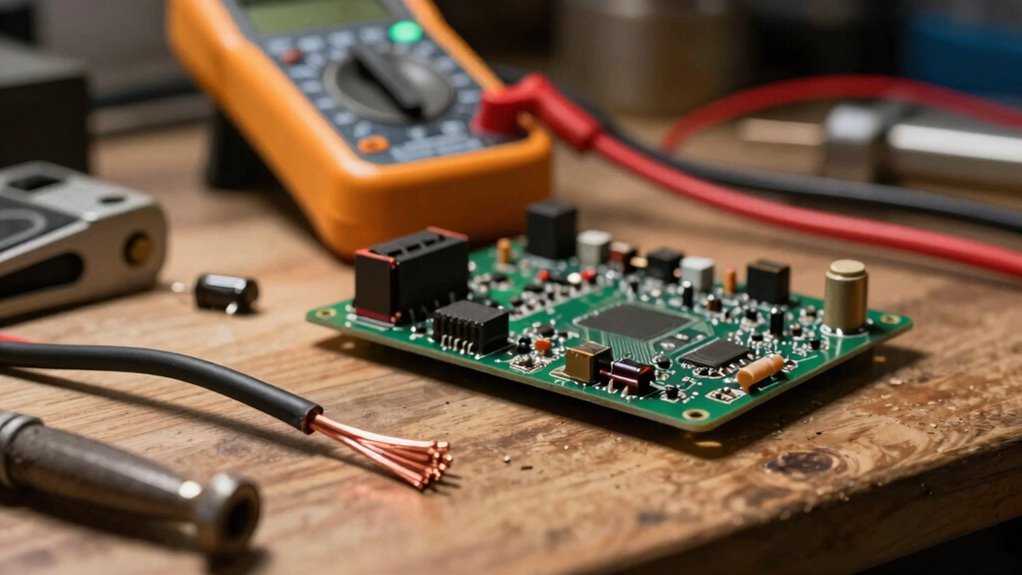

When your circuit stops working, the most common causes are power supply issues, loose or damaged connections, component failures, short circuits, or assembly mistakes. You should check if the power source is working properly, inspect wires and solder joints for damage, and test individual parts for faults. Short circuits can cause excess current, and incorrect assembly can create errors. Understanding these issues can help you fix your circuit faster—keep exploring to get detailed troubleshooting tips.
Key Takeaways
- Power supply failures, such as incorrect voltage or damaged sources, often cause circuits to stop working.
- Loose, broken, or corroded connections disrupt electrical flow and lead to circuit failure.
- Component damage from aging, surges, or static can render parts non-functional.
- Short circuits due to exposed wires or solder bridges cause excessive current and circuit shutdown.
- Assembly errors or incorrect wiring can prevent the circuit from functioning properly.
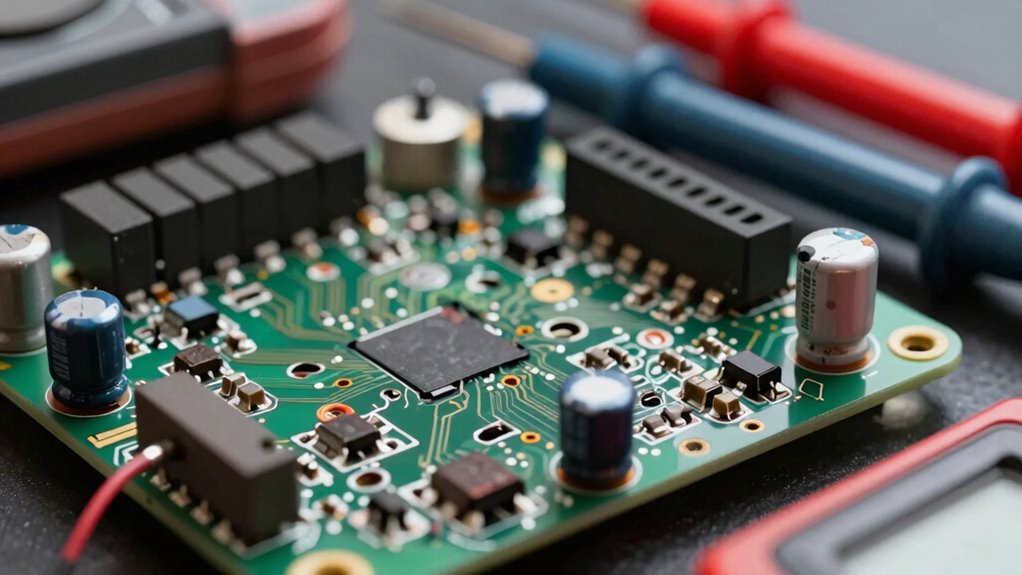
Have you ever faced a malfunctioning circuit that disrupts your project or system? When a circuit stops working unexpectedly, it can be frustrating and confusing. The first step is to identify the root cause, and that often begins with thorough circuit testing. One of the most common issues is a faulty power supply. If your power supply isn’t delivering the correct voltage or current, the entire circuit can fail to operate. Sometimes, the power source might be disconnected, damaged, or producing inconsistent output, leading to power interruptions. Ensuring your power supply is functioning properly is essential before moving on to more detailed troubleshooting. Using a multimeter during circuit testing helps confirm that voltage levels are within specifications.
A faulty power supply can cause entire circuits to fail; always verify voltage with a multimeter first.
Another frequent reason for circuit failure is a broken or loose connection. Over time, wires, solder joints, or connectors can become damaged or disconnected. This might happen due to physical stress, corrosion, or manufacturing defects. During circuit testing, inspecting all connections carefully can reveal loose or broken joints. Re-soldering or tightening connections often restores proper functionality. Similarly, damaged cables or connectors should be replaced immediately, as they can cause intermittent issues or complete failure. Paying attention to component specifications can also help prevent mismatched parts that may lead to connection issues. Additionally, environmental factors such as moisture or dust can accelerate corrosion and compromise connections over time.
Component failure also plays a significant role in circuit malfunctions. Components such as resistors, capacitors, transistors, or integrated circuits can deteriorate or be damaged by power surges, static, or manufacturing defects. When a component fails, it can cause the entire circuit to stop working or behave erratically. During troubleshooting, visually inspecting components for signs of damage—like burns, cracks, or discoloration—can provide clues. Testing individual components with specialized tools helps verify if they’re still within their operational parameters. Replacing faulty components is often the solution once the defective part is identified. Additionally, understanding component materials and their properties is crucial to ensure compatibility and proper functioning when replacing parts. Recognizing signs of aging or stress on components can help prevent future failures.
Short circuits are another common culprit. They occur when unintended connections form between conductors, often due to exposed wires or solder bridges. Short circuits can cause excessive current flow, damaging components and tripping circuit protection devices. During circuit testing, measuring resistance between conductors can reveal shorts. Fixing this issue involves removing the unintended connection and ensuring all insulation and component placements are correct. Additionally, understanding environmental impact on circuit components can help prevent issues caused by corrosion or static damage over time. Proper enclosure and environmental controls can extend the lifespan of sensitive components.
Lastly, design flaws or incorrect assembly can lead to circuit failure. Misplaced components, incorrect wiring, or incompatible parts create issues that aren’t always obvious at first glance. Carefully reviewing your schematic and verifying your assembly against it can prevent these problems. Regular circuit testing during assembly helps catch mistakes early, saving time and effort later. By systematically checking each of these common causes—power supply issues, connection problems, component failures, shorts, and design errors—you can troubleshoot effectively and restore your circuit’s functionality efficiently. Staying informed about modern technology and best practices in circuit design can further reduce the likelihood of failures.
digital multimeter for circuit testing
As an affiliate, we earn on qualifying purchases.
As an affiliate, we earn on qualifying purchases.
Frequently Asked Questions
How Can I Prevent Circuit Failures in the Future?
To prevent circuit failures, regularly inspect and replace aging components before they fail. Install surge protectors to guard against power surges that can damage circuits. Keep your system clean and dry, and avoid overloading circuits by distributing electrical loads evenly. Schedule routine maintenance and upgrades to guarantee all parts function properly. Taking these steps helps extend your circuit’s lifespan and minimizes unexpected failures.
What Tools Are Best for Circuit Troubleshooting?
Did you know that 60% of circuit failures are due to faulty components? For troubleshooting, use multimeters for component testing and a circuit diagram for analysis. A digital oscilloscope helps visualize signals, making it easier to identify issues. Combining these tools allows you to pinpoint problems quickly, ensuring safe and effective repairs. Focus on accurate readings and detailed diagram analysis to restore your circuit efficiently.
Are There Safety Precautions for Working With Circuits?
Yes, there are essential safety precautions for working with circuits. You should always turn off power before inspecting or repairing, and use insulated tools to prevent shocks. Wearing protective gear like gloves and goggles adds extra safety. Follow circuit safety guidelines and confirm power is off with a multimeter. These protective measures help prevent accidents, ensuring your safety while troubleshooting or working on electrical circuits.
How Often Should I Inspect My Electrical Circuits?
You should inspect your electrical circuits at least once a year to catch issues like deteriorating electrical insulation or signs of circuit overload early. Regular inspections help identify loose connections, worn insulation, or overloaded circuits before they cause failures or hazards. If you notice any flickering lights, tripped breakers, or warm outlets, examine immediately. Consistent checks ensure your system remains safe and functioning efficiently, preventing costly repairs or dangerous malfunctions.
Can Circuit Problems Be Caused by Environmental Factors?
Did you know that nearly 30% of circuit failures are linked to environmental factors? Yes, environmental interference can cause problems, especially when moisture damage occurs or outdoor conditions fluctuate. Exposure to humidity, rain, or extreme temperatures can lead to corrosion or short circuits. To prevent this, make sure your electrical systems are properly sealed and protected from environmental elements, reducing the risk of circuit issues caused by these environmental factors.
soldering iron kit for electronics repair
As an affiliate, we earn on qualifying purchases.
As an affiliate, we earn on qualifying purchases.
Conclusion
When your circuit stops working, it’s often due to simple issues like loose connections or blown fuses. By systematically checking these common problems, you can save time and avoid unnecessary frustration. Remember, sometimes the solution is right under your nose—don’t overlook the basics. Keep a keen eye, stay patient, and you’ll find that fixing circuits is more manageable than it seems. After all, a problem shared is a problem halved!

Klein Tools ET310KIT AC Circuit Breaker Finder Kit, Electric Tester, GFCI Tester, Leads, Adapters and Case
- Accurate Breaker Identification: Quickly locate the correct breaker
- Visual and Audible Cues: Clear signals when breaker is found
- Built-in GFCI Tester: Test GFCI outlets and wiring
As an affiliate, we earn on qualifying purchases.
As an affiliate, we earn on qualifying purchases.
As an affiliate, we earn on qualifying purchases.