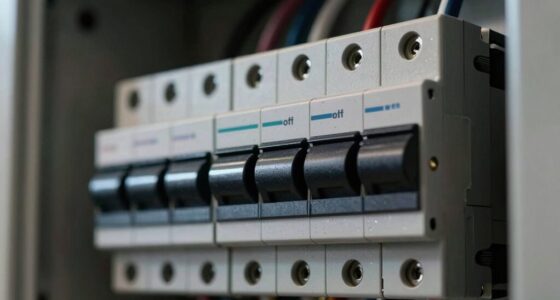
A mysterious voltage on your ground wire often signals wiring issues like damaged insulation, loose connections, or wiring mistakes that allow stray currents to flow. It can also be caused by ground loops or nearby energized circuits influencing your system. This voltage isn’t normal and can present shock risks or damage to devices. To understand the causes better and guarantee safety, explore common reasons and proper troubleshooting methods that could help identify and fix the problem.

Get backup power and energy gear delivered free — and shop member deals
- Fast, free delivery on millions of items
- Access to Prime Big Deal Days deals on October 6–7
- Prime Video, Amazon Music and more included
Key Takeaways
- Damaged or exposed insulation can cause stray voltage on the ground wire.
- Loose or faulty connections may allow voltage to leak into grounding paths.
- Contact with energized wires or wiring mistakes can induce voltage on the ground wire.
- Ground loops or multiple grounding points create potential differences resulting in voltage.
- Low-level stray currents or induced currents from nearby energized circuits can produce mystery voltage readings.

If you notice voltage on your ground wire, it’s a sign that something isn’t right with your electrical system. This unexpected voltage can be alarming, but understanding the underlying causes is essential. Often, it points to ground wire faults or issues within your wiring setup that need immediate attention. When dealing with this problem, employing proper voltage measurement techniques becomes indispensable. Using a reliable multimeter, you can carefully test the voltage between the ground wire and a known good ground point, such as a metal plumbing pipe or the main electrical grounding rod. If you detect voltage, even if it’s just a few volts, it signals potential problems that could lead to electrical shock hazards or damage to your appliances.
Ground wire faults are a common culprit behind voltage presence on what should be a safe, grounded conductor. These faults can occur from damaged insulation, loose connections, or accidental contact with other energized wires. Sometimes, a ground wire might carry current due to a wiring mistake, like miswired outlets or switches. In other cases, a ground loop—where multiple grounding paths exist—can cause voltage to appear where it shouldn’t. It’s essential to diagnose these faults accurately, because a simple voltage measurement can sometimes be misleading if you don’t understand the context. For example, voltage readings might be affected by nearby energized circuits or induced currents, which is why thorough testing and understanding of your system’s wiring layout are crucial. Additionally, using proper testing techniques ensures accurate diagnosis and safety during inspections.
Using correct voltage measurement techniques helps you determine whether the voltage on your ground wire is truly a fault or a benign issue caused by something like stray currents. Always start by turning off the power and disconnecting the circuit if possible, then carefully set your multimeter to an appropriate voltage range. Touch the black lead to a confirmed ground, like a grounding rod or water pipe, and the red lead to the ground wire. If you see a voltage reading higher than a few millivolts, it indicates a problem that warrants further investigation. Sometimes, the voltage may be very low, but persistent, which can still be problematic. In such cases, consulting a qualified electrician is recommended to conduct more in-depth tests, such as insulation resistance testing or checking for wiring errors.
digital multimeter for electrical troubleshooting
As an affiliate, we earn on qualifying purchases.
As an affiliate, we earn on qualifying purchases.
Frequently Asked Questions
Can a Ground Wire Voltage Cause Electrical Shocks?
Yes, a ground wire voltage can cause electrical shocks. Even a small voltage on the ground wire poses a serious ground wire safety concern and increases the electrical shock risk. If you feel a tingling or shock when touching appliances or outlets, it’s essential to have a professional inspect your wiring. Ensuring proper grounding prevents potential shocks and keeps your electrical system safe. Always prioritize safety and avoid handling electrical components if you’re unsure.
Is a Small Voltage on the Ground Wire Safe?
A small voltage on your ground wire is like a faint whisper of trouble—usually not dangerous but worth attention. It often signals ground wire corrosion or outdated wiring that needs upgrading. While it might seem harmless, don’t ignore it. You should have a professional inspect your wiring to verify safety. Upgrading your wiring can eliminate these tiny voltages, turning your electrical system into a well-oiled machine, safe and reliable.
How Can I Test for Voltage on the Ground Wire?
To test for voltage on the ground wire, you need to perform ground wire testing with a reliable multimeter. Set your multimeter to AC voltage, then carefully connect the black probe to the ground wire and the red probe to a known hot wire or the neutral. Observe the voltage detection reading; any voltage indicates a potential issue. Always guarantee safety and turn off power before testing to avoid shocks.
What Are the Risks of Ignoring Ground Wire Voltage?
Ignoring ground wire voltage risks electrical grounding safety. While it might seem harmless, this voltage can cause shocks or damage connected devices. You might think it’s just a minor issue, but overlooked voltage indicates potential wiring problems. Failing to address it jeopardizes your safety, increases fire risks, and can lead to costly repairs. Always prioritize ground wire safety to guarantee proper electrical grounding and prevent accidents.
When Should I Call an Electrician for Ground Wire Issues?
You should call an electrician for ground wire issues when you notice unusual voltage readings during ground wire testing or suspect electrical safety concerns. If you experience frequent electrical shocks, flickering lights, or your testing shows voltage where it shouldn’t be, don’t delay. An electrician can properly diagnose the problem, guarantee your system is safe, and fix any grounding issues to prevent potential hazards.
As an affiliate, we earn on qualifying purchases.
Conclusion
So, next time you see voltage on your ground wire, don’t panic—just remember, it’s a reminder that even the safest-looking parts of your electrical system can surprise you. Ironically, what’s meant to protect you might be signaling a problem. It’s a little nudge to stay vigilant. After all, in wiring and life, sometimes the least expected voltages reveal the biggest issues—so stay cautious, and don’t ignore the quiet warning signs.
As an affiliate, we earn on qualifying purchases.
As an affiliate, we earn on qualifying purchases.
Fall Picks
fall essentials
As an affiliate, we earn on qualifying purchases.