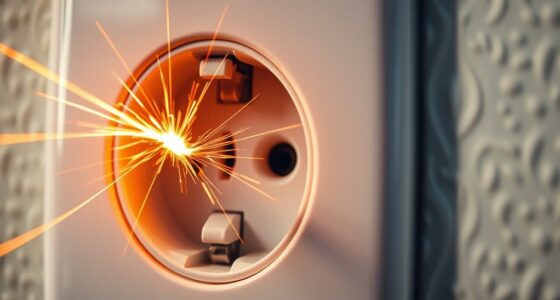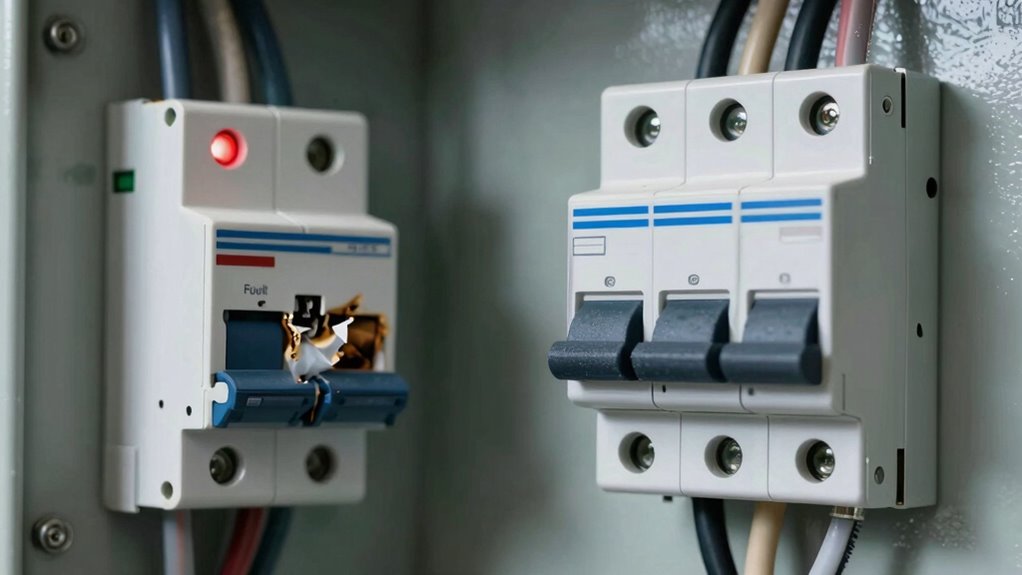
A fault happens suddenly when there’s an unintended connection between live parts and ground or between different conductors, causing a quick, dangerous surge of current. An overload, on the other hand, develops gradually if too many devices draw more current than the system can handle, risking overheating over time. Faults need immediate action to prevent hazards, while overloads give some warning before damage occurs. Keep going to uncover how these issues can be effectively managed and protected against.
Key Takeaways
- Faults cause a sudden, high surge of current, while overloads increase current gradually over time.
- Faults are due to insulation failure or damage; overloads result from excessive device usage.
- Circuit breakers trip immediately during faults, but overload protection activates after a delay.
- Faults pose immediate safety hazards like sparks and fires; overloads mainly risk overheating and long-term damage.
- Proper maintenance and device selection help prevent both faults and overloads, ensuring safety and system reliability.

Understanding the difference between a fault and an overload is essential for maintaining electrical safety and preventing equipment damage. Both issues can cause serious safety hazards and lead to costly repairs, but they originate from different problems within your electrical system. To protect your equipment and assure safety, you need to recognize how each situation behaves and how protective devices respond to them.
A fault occurs when there’s an unintended connection between live parts and ground or between different live conductors. It often results from insulation failure, damaged wiring, or accidental contact with conductive materials. Faults typically cause a sudden surge of electrical current, which can be much higher than the system’s normal operating levels. Because of this, protective devices such as circuit breakers or fuses are designed to trip immediately when a fault occurs, disconnecting power to prevent further damage or hazards. Electrical safety is a priority here; a fault can lead to sparks, fires, or electric shocks if not quickly interrupted. That’s why properly functioning protective devices are essential—they act as the first line of defense, swiftly disconnecting power when a fault is detected.
On the other hand, an overload happens when the electrical system draws more current than it was designed to handle over a period of time. This usually occurs when multiple appliances or devices are used simultaneously without considering the system’s capacity, or when a device is malfunctioning and consumes excessive current. Unlike faults, overloads develop gradually, and the current increase isn’t sudden. Protective devices like overload relays or circuit breakers are set to trip at a specific current level, but they do so after a slight delay to allow short-term surges, like turning on a high-power appliance, which are normal. Overloads can cause overheating of wires and components, risking damage or fire if left unchecked. Maintaining electrical safety involves guaranteeing that your protective devices are correctly rated and functioning properly to detect overloads before they cause harm. Implementing proper maintenance practices ensures your system remains safe and efficient. Properly selecting protective devices based on system capacity also plays a crucial role in preventing overloads and safeguarding equipment. Additionally, understanding the role of protective devices helps in preventing both faults and overloads effectively.
In essence, understanding the distinction helps you take proper precautions. Faults are sudden and dangerous, requiring immediate disconnection, while overloads develop gradually and need preventive measures to avoid overheating and damage. Proper use and maintenance of protective devices ensure that your electrical system responds correctly to both, minimizing risks. Recognizing these differences allows you to troubleshoot effectively and keep your electrical system safe, reducing the chances of accidents, equipment failures, and potential hazards.
circuit breaker for overload protection
As an affiliate, we earn on qualifying purchases.
As an affiliate, we earn on qualifying purchases.
Frequently Asked Questions
How Can I Prevent Faults and Overloads in My Electrical System?
To prevent faults and overloads, you should regularly inspect your electrical system for signs of wear and tear. Use proper grounding techniques to reduce the risk of faults, and install surge protection devices to guard against power surges that can cause overloads. Avoid overloading circuits by distributing electrical loads evenly and unplugging unused appliances. Consistent maintenance and safety measures help keep your system safe and functioning efficiently.
What Are the Common Signs of Electrical Faults and Overloads?
You’ll notice electrical faults and overloads through signs like frequent circuit breaker trips, flickering lights, burning smells, or sparks. To guarantee electrical safety, stay alert to these symptoms and don’t ignore them. Troubleshooting tips include inspecting wiring connections and avoiding overloading outlets. If you see any of these signs, promptly shut off power and call a professional electrician to prevent potential hazards and damage.
Are Faults or Overloads More Dangerous to Electrical Devices?
Think of electrical faults as hidden landmines and overloads as bursting pipes—both dangerous but in different ways. Faults pose a higher risk of electrical hazards like fires or shocks, making them more dangerous to your devices and safety. To protect yourself, always follow safety measures, such as regular inspections and using circuit breakers. Ignoring these risks can lead to severe damage or injury, so stay vigilant and proactive.
How Often Should Electrical Systems Be Inspected for Faults or Overloads?
You should inspect your electrical systems annually through circuit testing to catch faults or overloads early. Regular inspections help identify issues before they cause damage or safety hazards. Follow safety protocols during testing to protect yourself and your equipment. If you notice frequent tripping or unusual smells, consider more frequent checks. Staying proactive with inspections guarantees your system remains safe, efficient, and reliable over time.
What Is the Typical Response Time for a Circuit Breaker During Faults?
You might be surprised to learn that a circuit breaker typically responds within milliseconds during faults, ensuring quick fault detection and protection. Its operation relies on fault detection methods like thermal or magnetic sensors, which sense abnormal current flow. When a fault is detected, the breaker trips instantly, cutting off power to prevent damage or hazards. This rapid response helps keep your electrical system safe and prevents further issues.
electrical fuse for fault detection
As an affiliate, we earn on qualifying purchases.
As an affiliate, we earn on qualifying purchases.
Conclusion
Understanding the difference between a fault and an overload helps you protect your electrical system effectively. Remember, faults are like sudden surprises—unexpected shorts or breaks—while overloads happen when you push your system beyond its capacity. Did you know that over 60% of electrical fires are caused by overloads? Staying aware and maintaining your system can prevent costly damages and keep you safe. So, keep an eye on your electrical health and avoid those dangerous overloads!

Surge Protector Power Strip – 10 FT Extension Cord with 12 AC Outlets 4 USB
- Number of Outlets and USB Ports: 12 AC outlets and 4 USB ports
- Extension Cord Length: 10-foot long extension cord
- Design and Space Efficiency: 3-sided design with wide spacing
As an affiliate, we earn on qualifying purchases.
As an affiliate, we earn on qualifying purchases.
ground fault circuit interrupter (GFCI)
As an affiliate, we earn on qualifying purchases.
As an affiliate, we earn on qualifying purchases.