For a large, expandable home battery bank, my best overall pick is the ECO-WORTHY PowerMega 48V 314Ah LiFePO4 Battery and 10kW Hybrid Inverter System, which combines substantial storage with an inverter in one package. The ECO-WORTHY Cubix100 stands out for buyers who want a much larger rack-style system, while the EcoFlow DELTA Pro is a simpler portable option for backup without a fixed battery installation. The main tradeoff is between high-capacity 48V batteries that need compatible equipment and portable power stations that are easier to set up but offer less expansion flexibility. I also weigh system integration, monitoring, installation needs, and the likely cost of adding supporting equipment. Read on for the full comparison and guidance on matching a battery to your home and backup goals.

Get backup power and energy gear delivered free with Prime
- Fast, free delivery on millions of items
- Prime Video, Amazon Music and more included
- Member-only deals all year
Key Takeaways
- The ECO-WORTHY PowerMega system is my best overall pick because it pairs a 16.08 kWh-class battery with a 10kW hybrid inverter, reducing the compatibility work of assembling a system from separate parts.
- The Cubix100 is the standout for larger storage needs: its 600Ah battery system and cabinet suit buyers planning a substantial fixed installation, but its scale is excessive for simple appliance backup.
- Several listed 48V batteries share near-identical capacity claims, so voltage, communication compatibility, warranty terms, protection features, and installer support matter more than small capacity differences.
- Portable stations serve a different buyer than battery banks: the EcoFlow DELTA Pro and Jackery HomePower 3600 Plus offer integrated, movable backup, while their roughly 3.6 kWh capacity is far below the large 48V options.
- The system kit and 12V battery fill specialized roles: ECO-WORTHY’s 10 kW off-grid kit bundles generation and storage, while the EnergyRock 12V battery better suits small, low-voltage setups than whole-home backup.
| ECO-WORTHY Powermega 48V 314Ah LiFePO4 Battery |  | Best Expandable Standalone Battery | Battery chemistry: LiFePO4 | Voltage: 51.2V | Capacity: 314Ah | VIEW LATEST PRICE | See Our Full Breakdown |
| EcoFlow DELTA Pro Portable Power Station, 3600Wh, 3600W AC Output | 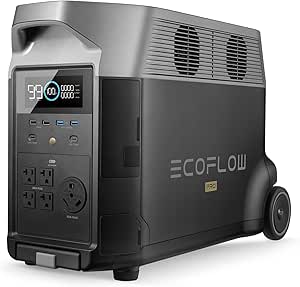 | Best Portable High-Output Power Station | Battery capacity: 3600 Wh | Battery type: LFP | AC output: 3600 W | VIEW LATEST PRICE | See Our Full Breakdown |
| SANDISOLAR 48V 300Ah LiFePO4 Battery with Bluetooth and Active Balancing |  | Best for Large-Scale Expandable Storage | Battery type: LiFePO4 | Voltage: 51.2V | Capacity: 300Ah | VIEW LATEST PRICE | See Our Full Breakdown |
| ECO-WORTHY PowerMega 48V 314Ah LiFePO4 Battery and 10kW Hybrid Inverter System |  | Best Integrated Home Backup System | Battery chemistry: LiFePO4 | Battery voltage: 51.2V | Battery capacity: 314Ah | VIEW LATEST PRICE | See Our Full Breakdown |
| EcoFlow DELTA 3 Classic Portable Power Station |  | Best Compact Backup and Fast Recharge | Capacity: 1024 Wh | Battery type: LiFePO4 | AC output: 1800 W continuous; 3600 W surge | VIEW LATEST PRICE | See Our Full Breakdown |
| ECO-WORTHY 10 kW Off-Grid Solar System Kit with Split-Phase Inverter, Batteries, and Solar Panels |  | Best Complete Off-Grid Kit | Battery storage: 20.48 kWh | Battery configuration: 4 × 48 V 100 Ah LiFePO₄ batteries | Inverter continuous output: 10,000 W | VIEW LATEST PRICE | See Our Full Breakdown |
| AOUSK 48V 314Ah LiFePO4 Battery, 16.08 kWh |  | Best for Expandable Battery Storage | Chemistry: LiFePO₄ | Nominal voltage: 48 V | Capacity: 314 Ah | VIEW LATEST PRICE | See Our Full Breakdown |
| ECO-WORTHY Cubix100 48V 600Ah LiFePO4 Battery System with RACK6 V3 Cabinet |  | Best for High-Capacity Home Backup | Battery chemistry: LiFePO₄ | System voltage: 51.2 V DC | Total capacity: 600 Ah; 100 Ah per battery | VIEW LATEST PRICE | See Our Full Breakdown |
| Jackery HomePower 3600 Plus Portable Power Station, 3584Wh, 3600W |  | Best Portable Home Backup | Battery capacity: 3,584 Wh | Output wattage: 3,600 W | Parallel output: 7,200 W | VIEW LATEST PRICE | See Our Full Breakdown |
| KEEPNOW PowerUltra 48V 314Ah LiFePO4 Battery with 16.07 kWh Capacity |  | Best Premium Single Battery | Chemistry: LiFePO₄ | Nominal voltage: 48 V; 51.2 V model | Capacity: 314 Ah | VIEW LATEST PRICE | See Our Full Breakdown |
| ECO-WORTHY EnergyRock 12V 280Ah LiFePO4 Battery with Metal Case |  | Best for RV and Camper Installations | Chemistry: LiFePO4 | Nominal voltage: 12.8V | Capacity: 280Ah | VIEW LATEST PRICE | See Our Full Breakdown |
| VPauexii 51.2V 314Ah LiFePO4 Battery, 16.07kWh |  | Best for Expandable Home Backup | Chemistry: LiFePO4 | Model: 51.2V314Ah B | Nominal voltage: 51.2V | VIEW LATEST PRICE | See Our Full Breakdown |
| home energy storage batterie | Warranty | Capacity | Weight |
|---|---|---|---|
| ECO-WORTHY Powermega 48V 314Ah | 10 years | 314Ah | — |
| EcoFlow DELTA Pro Portable Pow | — | — | 99 lb |
| SANDISOLAR 48V 300Ah LiFePO4 B | 5 years | 300Ah | 140 kg |
| ECO-WORTHY PowerMega 48V 314Ah | 10 years | — | — |
| EcoFlow DELTA 3 Classic Portab | 5 years | 1024 Wh | 26.7 lb |
| ECO-WORTHY 10 kW Off-Grid Sola | — | — | — |
| AOUSK 48V 314Ah LiFePO4 Batter | 5 years | 314 Ah | 291 lb |
| ECO-WORTHY Cubix100 48V 600Ah | 10 years | — | 636 lb |
| Jackery HomePower 3600 Plus Po | 5 years | — | 77.2 lb |
| KEEPNOW PowerUltra 48V 314Ah L | 10 years | 314 Ah | — |
| ECO-WORTHY EnergyRock 12V 280A | — | 280Ah | 68.6 pounds |
| VPauexii 51.2V 314Ah LiFePO4 B | — | 314Ah | — |
More Details on Our Top Picks
ECO-WORTHY Powermega 48V 314Ah LiFePO4 Battery
For a buyer building a substantial home-storage system around compatible equipment, the Powermega’s 16.07 kWh capacity is a more natural fit than the smaller EcoFlow DELTA Pro’s 3.6 kWh base battery. Its UL 1973 certification, built-in breaker, aerosol fire suppression, and 200A active-balancing BMS address safety and cell management in a fixed installation. I also value the touchscreen and WiFi/Bluetooth monitoring for checking system status without relying only on inverter data. Expansion to 15 units gives this battery room to grow, though adding capacity requires compatible equipment and substantial installation space. Unlike the ECO-WORTHY PowerMega battery-and-inverter package, this is a battery component, not a ready-paired 10kW system. Its 10-year warranty is a notable advantage, but pallet delivery and heavy handling make it a poor choice for casual, plug-in backup.
Pros:- 16.07 kWh capacity provides substantial storage from one battery.
- UL 1973 certification, a built-in breaker, and aerosol fire suppression add safety provisions.
- 200A active-balancing BMS and touchscreen with WiFi and Bluetooth monitoring.
- Supports expansion to 15 units and includes a 10-year warranty.
Cons:- Large, heavy format needs suitable installation space and handling.
- Pallet-truck delivery may not suit every address.
- Requires compatible inverter and system equipment, which are not included.
Best for: Homeowners planning a fixed, compatible 48V solar or backup system who want high capacity, monitoring, and room to add batteries.
Not ideal for: Apartment dwellers, buyers seeking a portable plug-and-play power station, or anyone without space and compatible installation equipment.
- Battery chemistry:LiFePO4
- Voltage:51.2V
- Capacity:314Ah
- Energy:16.07 kWh
- BMS:200A with active cell balancing
- Certification:UL 1973
- Monitoring:7-inch HD touchscreen, WiFi, and Bluetooth
- Parallel expansion:Up to 15 units
- Warranty:10 years
Our verdict“Choose this for a scalable, fixed 48V system where battery capacity and listed safety features matter more than portability or an all-in-one setup.”
EcoFlow DELTA Pro Portable Power Station, 3600Wh, 3600W AC Output
The DELTA Pro takes a different approach to home storage than the large 48V batteries here: it is a portable, ready-to-use power station with a 3.6 kWh LFP battery and 3600W AC output. That output can serve a broader mix of appliances than the 1800W EcoFlow DELTA 3 Classic, while the DELTA Pro’s multiple charging methods make it easier to recharge away from a fixed solar installation. App control and expansion to 25 kWh add flexibility for longer outages, but reaching that capacity requires compatible extra equipment. The tradeoff is weight: at 99 pounds, it is movable in principle, not convenient to carry around. Compared with the ECO-WORTHY 16.1 kWh battery-and-inverter system, it starts with far less storage and is less suited to permanent whole-home backup, but asks for a simpler portable-power setup.
Pros:- 3600W AC output supports more demanding loads than the DELTA 3 Classic.
- Expandable capacity reaches up to 25 kWh with compatible equipment.
- Supports charging from wall outlets, solar, EV stations, and car outlets.
- WiFi and Bluetooth app control provide remote monitoring and operation.
Cons:- The 99-pound weight makes routine carrying difficult.
- Base capacity is much lower than the 15–16 kWh fixed batteries in this lineup.
- Expansion requires additional compatible batteries or equipment.
Best for: Households needing a movable backup source for selected appliances, with high AC output and several ways to recharge.
Not ideal for: Buyers seeking a fixed, high-capacity home battery from the outset or a lightweight unit they can carry frequently.
- Battery capacity:3600 Wh
- Battery type:LFP
- AC output:3600 W
- Expandable capacity:Up to 25 kWh
- Voltage:120V
- USB-C output:100 W
- Charging methods:EV station, solar, wall outlet, smart outdoor generator, and car outlet
- Weight:99 lb
- Solar conversion efficiency:Up to 23%
Our verdict“Pick the DELTA Pro if you want a high-output portable station with varied charging options, not a permanent high-capacity battery installation.”
SANDISOLAR 48V 300Ah LiFePO4 Battery with Bluetooth and Active Balancing
The SANDISOLAR delivers 15.36 kWh in a single 51.2V battery, putting it close to the ECO-WORTHY Powermega’s 16.07 kWh while offering a stated cycle life of more than 6,000 cycles. Its expansion rating of up to 230.4 kWh makes it a candidate for systems that may grow well beyond a single home battery. The included 200A BMS, LCD, and Bluetooth status monitoring cover core management needs, though the ECO-WORTHY option adds WiFi, a larger touchscreen, UL 1973 certification, and a longer warranty. SANDISOLAR’s five-year warranty is a more limited commitment, and at 140 kg this is firmly a fixed-installation battery requiring a sturdy floor and careful delivery planning. It suits buyers prioritizing scalable capacity over a compact footprint or a long warranty.
Pros:- 15.36 kWh capacity is suited to substantial home storage.
- Rated for more than 6,000 cycles.
- Expansion support reaches up to 230.4 kWh.
- 200A BMS, LCD, and Bluetooth provide battery status information.
Cons:- At 140 kg, installation requires sturdy support and suitable handling.
- Its large dimensions may rule it out for tight utility spaces.
- Five-year warranty is shorter than the 10-year coverage on the ECO-WORTHY Powermega.
Best for: Homeowners and off-grid system builders planning a fixed installation that may expand to multiple high-capacity batteries.
Not ideal for: Buyers with limited floor space, difficult access for heavy freight, or a preference for a longer warranty and richer monitoring.
- Battery type:LiFePO4
- Voltage:51.2V
- Capacity:300Ah
- Energy:15.36 kWh
- BMS current:200A
- Cycle life:6000+ cycles
- Weight:140 kg
- Expansion:Up to 15 units; 230.4 kWh
- Warranty:5 years
Our verdict“Choose the SANDISOLAR when expansion potential and high single-battery capacity outweigh its heavy format and shorter warranty.”
ECO-WORTHY PowerMega 48V 314Ah LiFePO4 Battery and 10kW Hybrid Inverter System
This package earns its place for buyers who want the battery and inverter together: its 16.1 kWh usable storage is paired with a 10kW hybrid inverter and 120V/240V output. That makes it a more complete starting point for a home backup or solar-storage installation than the standalone ECO-WORTHY Powermega battery, which still needs compatible inverter equipment. The package also lists a pure sine wave output, active balancing, built-in breaker, fire suppression, and WiFi/Bluetooth monitoring. A stated 9,000-plus cycles at 80% depth of discharge and 10-year warranty add useful longevity context. This is still a substantial fixed system, not a portable station like the DELTA Pro. Buyers should account for freight delivery, confirm the inverter exterior version, and note that parallel connection cables are not included.
Pros:- Combines 16.1 kWh usable battery energy with a 10kW hybrid inverter.
- Supports both 120V and 240V output with a pure sine wave.
- Includes active balancing, a breaker, fire suppression, and WiFi/Bluetooth monitoring.
- Lists 9,000+ cycles at 80% depth of discharge and a 10-year warranty.
Cons:- Parallel connection cables are not included.
- Truck freight delivery requires an address that can receive it.
- The inverter exterior version is selected randomly.
Best for: Homeowners building a fixed solar or backup system who need 120V/240V output and want an inverter bundled with a high-capacity battery.
Not ideal for: Renters, buyers needing portable backup, or installers who require every parallel-system cable and configuration component in the package.
- Battery chemistry:LiFePO4
- Battery voltage:51.2V
- Battery capacity:314Ah
- Usable energy:16.1 kWh
- Inverter output:10,000 W
- Output voltage:120V and 240V
- Output waveform:Pure sine wave
- Cycle life:9,000+ cycles at 80% DoD
- Warranty:10 years
Our verdict“Choose this bundled system if you want substantial fixed storage and a 10kW inverter together, and can accommodate freight delivery and installation planning.”
EcoFlow DELTA 3 Classic Portable Power Station
The DELTA 3 Classic is the most compact backup option in this group: its 1024Wh capacity and 26.7-pound weight suit essential devices, short outages, RV use, or a home office better than a fixed 15–16 kWh battery. Its 1800W continuous output and 3600W surge can handle brief startup demands from some appliances, while the under-10ms UPS switch is useful for keeping compatible electronics powered through an interruption. Fast AC charging reaches 80% in 45 minutes, a practical advantage over planning around a large battery installation. By comparison, the EcoFlow DELTA Pro offers twice the AC output and much more base capacity, but weighs 99 pounds. The Classic’s limited 1.024 kWh storage cannot sustain large household loads for long, and it is not compatible with DELTA 2 or other DELTA 3 Series Smart Extra Batteries.
Pros:- 26.7-pound format is easier to relocate than the DELTA Pro or fixed 48V batteries.
- AC charging reaches 80% in 45 minutes.
- 1800W continuous output with 3600W surge supports a range of smaller loads.
- UPS switching is specified at under 10ms, with app monitoring and scheduling.
Cons:- 1024Wh capacity is limited for extended outages or multiple large appliances.
- Not compatible with DELTA 2 or other DELTA 3 Series Smart Extra Batteries.
- At 26.7 pounds, it is still a substantial load for frequent carrying.
Best for: Homeowners, RV users, and remote workers who want a compact station for essential devices, short outages, or UPS-style backup.
Not ideal for: Households seeking overnight whole-home backup, substantial solar storage, or expandable capacity using the listed Smart Extra Batteries.
- Capacity:1024 Wh
- Battery type:LiFePO4
- AC output:1800 W continuous; 3600 W surge
- AC charging:0–80% in 45 minutes
- Solar input:500 W
- UPS switch time:<10 ms
- Weight:26.7 lb
- USB-C output:100 W
- Warranty:5 years
Our verdict“Pick the DELTA 3 Classic for fast-recharging, compact backup of essential devices rather than long-duration household storage.”
ECO-WORTHY 10 kW Off-Grid Solar System Kit with Split-Phase Inverter, Batteries, and Solar Panels
For buyers who need a coordinated solar-and-storage package rather than a battery alone, this ECO-WORTHY kit stands apart from the AOUSK 48V 314Ah battery, which requires a separate inverter and charging setup. Its 20.48 kWh of LiFePO₄ storage pairs with a 10,000 W split-phase inverter, so the system can serve 120 V and 240 V loads while storing energy from the included panels. The nine bifacial panels provide 5,310 W of rated PV capacity, reducing the need to source core components separately. The tradeoff is a more involved installation: professional setup is recommended, and the large panels arrive by palletized truck. I’d choose this kit for a planned off-grid build, not for someone seeking a simple, movable backup unit like the Jackery HomePower 3600 Plus.
Pros:- Combines inverter, batteries, solar panels, and cables in one system.
- 20.48 kWh of LiFePO₄ storage supports longer backup periods than compact power stations.
- 120 V/240 V split-phase output suits a wider range of household loads.
- Bifacial panels may capture additional light under suitable installation conditions.
Cons:- Professional installation is recommended, adding planning and setup demands.
- Panels are large and ship on a truck pallet, so delivery access and installation space matter.
- The 5,310 W PV array may not replenish storage quickly during low-sun periods or heavy use.
Best for: Homeowners planning an off-grid or substantial backup system who want panels, batteries, and a split-phase inverter in one package.
Not ideal for: Renters and buyers seeking a plug-and-play or portable battery; this system needs professional installation and space for large panels.
- Battery storage:20.48 kWh
- Battery configuration:4 × 48 V 100 Ah LiFePO₄ batteries
- Inverter continuous output:10,000 W
- Inverter peak output:20,000 W
- Output:120 V/240 V split-phase
- Solar array:9 × 590 W panels; 5,310 W total PV capacity
- Panel efficiency:23.23%
- Battery safety certifications:UL 1973, UL 9540A, CEC
Our verdict“Choose this kit for a substantial off-grid system with matched solar and storage components, and skip it if you need a simple portable battery.”
AOUSK 48V 314Ah LiFePO4 Battery, 16.08 kWh
The AOUSK is a single 16.07 kWh LiFePO₄ battery for buyers building around a compatible inverter, rather than a bundled solar kit like the ECO-WORTHY 10 kW system. Its 200A BMS, dual breakers, and app/display monitoring make protection and day-to-day status checks part of the package, while support for up to 15 parallel units gives a home system room to grow. RS485 and CAN can support communication with compatible inverters, but compatibility is not automatic: buyers need to check their equipment and setup before purchasing. At 291 pounds, the built-in wheels and handles help with positioning but do not make it light to move. Compared with the KEEPNOW PowerUltra, the AOUSK offers similar capacity and monitoring, but has a shorter stated warranty and no listed IP65 enclosure.
Pros:- 16.07 kWh capacity offers substantial storage in a single battery.
- 200A BMS and dual breakers provide built-in electrical protection.
- Display, app, Bluetooth, Wi-Fi, RS485, and CAN support monitoring and system communication.
- Parallel support for up to 15 units allows capacity expansion.
Cons:- At 291 pounds, installation and placement require planning and help.
- Operation depends on a compatible inverter and correctly configured system.
- The five-year warranty is shorter than the KEEPNOW PowerUltra’s stated 10-year warranty.
Best for: Homeowners with a compatible 48 V inverter who want one substantial battery now and the option to add parallel units later.
Not ideal for: Buyers who want a ready-to-run solar package or need a battery that can be moved frequently; it requires system integration and weighs 291 pounds.
- Chemistry:LiFePO₄
- Nominal voltage:48 V
- Capacity:314 Ah
- Energy storage:16.07 kWh
- BMS:200 A
- Cycle life:Up to 6,000 cycles at 80% state of health
- Maximum parallel units:15
- Weight:291 lb
- Warranty:5 years
Our verdict“Pick the AOUSK if you need a large, expandable battery for a compatible inverter system and value monitoring more than a bundled installation.”
ECO-WORTHY Cubix100 48V 600Ah LiFePO4 Battery System with RACK6 V3 Cabinet
The Cubix100 is the capacity leader in this batch: its six batteries provide 30.72 kWh of storage, nearly twice the single-unit capacity of the AOUSK 48V 314Ah. That makes it better suited to extended backup or off-grid use, where a smaller battery may run short sooner. The included rack cabinet, 600A busbar, and rack hardware create a more organized installation than assembling loose batteries, and the 10-year warranty is longer than the AOUSK’s five years. It also offers CAN/RS485 communication and wireless monitoring, though closed-loop control depends on inverter compatibility. Scale and weight are the main costs of choosing this much storage: the system weighs 636 pounds and needs a prepared location. I’d skip it for a modest backup setup or a space where heavy equipment is hard to install.
Pros:- 30.72 kWh total storage exceeds the single-battery capacity of the AOUSK and KEEPNOW options.
- Six-battery rack system includes a cabinet, busbar, and installation hardware.
- Supports CAN/RS485 communication plus Bluetooth and Wi-Fi monitoring.
- 10-year warranty and listed ETL UL9540 DC, UL1973, and CEC standards.
Cons:- The complete system weighs 636 pounds and requires careful placement and installation planning.
- Closed-loop communication depends on inverter compatibility.
- Its high capacity and rack configuration may be excessive for buyers with limited backup needs.
Best for: Homeowners and off-grid users who need extended backup capacity and have room for a substantial rack-mounted battery system.
Not ideal for: Small homes, renters, or buyers with limited installation space; its 636-pound system needs a suitable location and compatible inverter.
- Battery chemistry:LiFePO₄
- System voltage:51.2 V DC
- Total capacity:600 Ah; 100 Ah per battery
- Energy capacity:30.72 kWh
- Number of batteries:6
- Expandable capacity:Up to 32 units; 163.8 kWh
- Communications:CAN, RS485, Bluetooth, Wi-Fi
- Weight:636 lb
- Warranty:10 years
Our verdict“Choose the Cubix100 for long-duration backup where 30.72 kWh and a rack cabinet justify the space and installation demands.”
Jackery HomePower 3600 Plus Portable Power Station, 3584Wh, 3600W
The Jackery HomePower 3600 Plus is the clearest choice here for buyers who want portable backup without assembling a fixed battery system. It stores 3,584 Wh and delivers 3,600 W, but that is far less storage than the ECO-WORTHY Cubix100’s 30.72 kWh or the AOUSK’s 16.07 kWh. In return, it offers built-in cables, wheels, a telescoping handle, and several charging routes, including solar, AC, generator, and hybrid charging. It can supply 240 V when paired in parallel, though that requires another compatible unit rather than a standalone split-phase inverter like the ECO-WORTHY 10 kW kit. At 77.2 pounds, it is movable but not effortless to lift. The solar panel is optional, so buyers should plan separately for solar charging.
Pros:- 3,600 W output supports a range of appliances and household devices.
- Wheels and telescoping handle make relocation easier than moving a fixed rack battery.
- AC, solar, gas generator, and hybrid charging offer several recharge options.
- Parallel operation supports 240 V output and greater combined capacity.
Cons:- At 3,584 Wh, storage is much lower than the ECO-WORTHY Cubix100 or the 16.07 kWh AOUSK battery.
- 240 V operation requires a second unit in parallel.
- Solar panels are optional, and the unit still weighs 77.2 pounds.
Best for: Households seeking movable backup for essential appliances, outages, or trips, with the flexibility to recharge from AC, solar, or a generator.
Not ideal for: Buyers who need multi-day whole-home storage from one unit or want included solar panels; capacity is much lower than the rack systems and panels are optional.
- Battery capacity:3,584 Wh
- Output wattage:3,600 W
- Parallel output:7,200 W
- Voltage:120 V; 240 V in parallel
- Expandable capacity:Up to 21 kWh per unit or 43 kWh with multiple units
- Charging options:Hybrid AC+DC, AC, solar, gas generator
- Battery cycle life:6,000 cycles
- Weight:77.2 lb
- Warranty:5 years
Our verdict“Choose the Jackery for movable, straightforward backup and varied recharging, not for the longest home runtime from a single purchase.”
KEEPNOW PowerUltra 48V 314Ah LiFePO4 Battery with 16.07 kWh Capacity
For a buyer who wants one large battery with added environmental protection and monitoring, the KEEPNOW PowerUltra is a stronger fit than the AOUSK 48V 314Ah, despite their similar 16.07 kWh capacity. Its IP65-rated enclosure, aerosol fire suppression, and 200A smart BMS add protection features, while the touchscreen, Bluetooth, and Wi-Fi give several ways to check system status. The stated cycle life is 8,000+ cycles at 80% depth of discharge, and its 10-year warranty is longer than the AOUSK’s five-year term. Those features do not make installation simple: at nearly 289 pounds, it needs suitable handling and an accessible freight delivery location. Like the other standalone batteries, it also needs a compatible inverter and charger. I’d favor it over a portable power station for a fixed home system, but not for occasional plug-and-play backup.
Pros:- 16.07 kWh capacity provides substantial storage in one battery.
- IP65 enclosure, aerosol fire suppression, and a 200A smart BMS add protection features.
- Touchscreen, Bluetooth, and Wi-Fi support local and remote monitoring.
- 8,000+ cycle-life claim and 10-year warranty exceed the AOUSK’s stated cycle life and warranty.
Cons:- At 288.81 pounds, delivery, handling, and placement require planning.
- Freight delivery requires an accessible delivery location.
- Needs a compatible inverter and charger; it is not a standalone power station.
Best for: Homeowners building a fixed 48 V storage system who want a large battery, IP65 protection, multiple monitoring options, and a longer stated warranty.
Not ideal for: Buyers seeking portable or ready-to-use backup, or those without freight access and a compatible inverter and charger.
- Chemistry:LiFePO₄
- Nominal voltage:48 V; 51.2 V model
- Capacity:314 Ah
- Energy:16.07 kWh
- BMS:200A smart BMS
- Ingress protection:IP65
- Cycle life:8,000+ cycles at 80% depth of discharge
- Parallel expansion:Up to 15 units
- Warranty:10 years
Our verdict“Choose the PowerUltra for a fixed home system when its enclosure, monitoring, and longer stated warranty matter more than portability.”
ECO-WORTHY EnergyRock 12V 280Ah LiFePO4 Battery with Metal Case
The ECO-WORTHY EnergyRock is the RV-oriented choice in this group: its 12.8V format, mounting feet, and reinforced metal case suit a vehicle installation better than large 51.2V home-storage batteries such as the VPauexii 51.2V 314Ah. Its 3,584Wh capacity can support a sizable 12V setup, while Bluetooth monitoring makes charge and discharge status easier to check without opening the battery compartment. A 200A BMS, low-temperature charging protection, and a discharge safety switch add practical safeguards. The tradeoff is scale and setup: at 68.6 pounds, it is a heavy unit to position, and it needs a LiFePO4-compatible charger with appropriate solar-controller settings. I’d choose it for a rugged mobile system, not as a direct substitute for a high-voltage, expandable home battery bank.
Pros:- Metal enclosure, reinforced construction, and mounting feet suit RV installation.
- Bluetooth monitoring shows voltage, capacity, and charge or discharge status.
- Built-in 200A BMS includes low-temperature charging protection.
- Safety switch can disconnect the discharge circuit.
Cons:- At 68.6 pounds, it is heavy to handle and install.
- Requires a LiFePO4-compatible charger and carefully configured solar-controller settings.
- Its 12.8V format is less suited to high-voltage home storage than 51.2V options such as the VPauexii.
Best for: RV and camper owners building a robust 12V system who want onboard monitoring and a metal case suited to vehicle use.
Not ideal for: Homeowners seeking a high-voltage battery bank for a hybrid inverter, or buyers who need a lightweight battery that is easy to lift into place.
- Chemistry:LiFePO4
- Nominal voltage:12.8V
- Capacity:280Ah
- Maximum energy:3,584Wh
- BMS:Built-in 200A
- Dimensions:8.7 × 16.6 × 9.7 inches
- Weight:68.6 pounds
- Charging voltage:14.6V
- Terminals:Bolt terminal
Our verdict“Choose the EnergyRock for a rugged, monitored 12V RV battery, but look to a 51.2V model for a stationary home backup bank.”
VPauexii 51.2V 314Ah LiFePO4 Battery, 16.07kWh
For a stationary home battery bank, the VPauexii 51.2V 314Ah offers far more storage in one unit than the ECO-WORTHY EnergyRock, whose 3,584Wh capacity and 12.8V design are aimed at RV systems. The VPauexii stores 16.07kWh and supports parallel connection of up to 15 units, giving buyers a route to grow storage as their solar or backup needs change. Its LCD, Bluetooth, and WiFi monitoring provide several ways to check system status, while CAN, RS485, and RS232 ports support communication with compatible equipment. A built-in fire suppression system is another useful safety feature. The tradeoffs are substantial: no dimensions or weight are listed, which complicates planning, and the stated five-year warranty is modest beside the claimed 12-plus-year lifespan.
Pros:- 16.07kWh capacity provides substantial storage in a single battery.
- Supports parallel expansion to as many as 15 units, with up to 241kWh total capacity stated.
- LCD, Bluetooth, and WiFi offer multiple monitoring options.
- CAN, RS485, and RS232 communication ports support use with compatible inverters.
Cons:- Product weight and dimensions are not provided, making installation planning harder.
- The listed five-year warranty is limited relative to the claimed lifespan of 12-plus years.
- Its 51.2V format and inverter communication requirements make it a poor fit for simple 12V RV setups.
Best for: Homeowners and off-grid users planning a 51.2V inverter system who want substantial storage now and the option to expand a compatible battery bank.
Not ideal for: RV owners seeking a compact 12V battery, or buyers who need published weight and dimensions before confirming installation space and handling requirements.
- Chemistry:LiFePO4
- Model:51.2V314Ah B
- Nominal voltage:51.2V
- Capacity:314Ah
- Energy storage:16.07kWh
- BMS:200A
- Breaker:250A
- Parallel expansion:Up to 15 units; up to 241kWh total capacity
- Communication:RS485, CAN, RS232
Our verdict“Pick the VPauexii for a large, expandable 51.2V home or off-grid bank if your inverter is compatible and you can verify installation dimensions.”
How We Picked
I ranked these options by how well they serve real home backup needs, not by capacity alone. The main criteria were usable storage potential, inverter output or system integration, expandability, monitoring and battery-management features, and the amount of additional equipment a buyer may need. I also separated fixed 48V battery banks from portable power stations and complete off-grid kits because they solve different problems and are not direct substitutes.
The PowerMega battery-and-inverter package leads because it combines substantial storage with a high-output hybrid inverter, giving it a strong balance of capacity and system readiness. The Cubix100 ranks highly for buyers who need much more storage, though its size and installation demands narrow its audience. Portable models rank lower for whole-home capacity but remain compelling for straightforward, movable backup. Standalone 48V batteries are judged on their value as system components, with compatibility and support carrying as much weight as headline capacity; the 12V EnergyRock is placed for smaller, specialized use rather than whole-home coverage.
Factors to Consider When Choosing Best Home Energy Storage Batteries
Before choosing a battery, I would define what needs power, for how long, and what equipment will connect it to your home. The listed products range from standalone battery modules to portable stations and a bundled off-grid system, so a capacity figure alone cannot tell you which is the better fit.
Start With Essential Loads, Not the Largest Capacity
List the circuits and appliances you want to run during an outage, then estimate both their wattage and daily energy use. A refrigerator, internet equipment, and lights can require a very different setup from electric cooking, heating, or central air conditioning. Battery capacity, usually stated in kWh, estimates stored energy; inverter output, stated in kW, limits how much power can run at once. Buyers often focus on storage and overlook startup surges from motors or pumps. That mismatch can leave a large battery unable to start a key appliance. Choose storage for runtime and inverter capacity for simultaneous loads.
Check the Full System, Not Just the Battery
A standalone 48V battery is one part of a system that may also need an inverter, transfer equipment, wiring, protection devices, and a way to charge it. A hybrid inverter can simplify solar integration, but compatibility still depends on battery voltage, communications, and approved operating settings. A portable power station includes more of the conversion hardware, which can make setup simpler, though it may not connect to home circuits in the same way as a fixed system. A frequent mistake is comparing a battery-only listing with a complete kit as if they include the same equipment. Confirm exactly what is supplied, and ask an electrician which components and permits your installation requires.
Treat Expandability and Compatibility as Separate Questions
A battery may support parallel connection without being compatible with every inverter or every other battery model. Check the manufacturer’s documented limits for the number of units, communications protocol, firmware, and cable arrangement before planning future expansion. Mixing batteries with different ages, capacities, or battery-management settings can complicate charging and reduce predictable performance. Buyers sometimes purchase one module intending to add another later, only to find that the later configuration needs a different inverter or cabinet. If staged growth matters, confirm the complete future configuration in writing before buying. A rack system can organize a larger bank, but it also calls for suitable space and installation planning.
Match Battery Chemistry and Protection to the Installation
LiFePO4 chemistry is common across these products and is often chosen for stationary storage, but chemistry alone does not establish the quality of a complete battery. Review the battery-management system’s stated protections, operating-temperature limits, enclosure rating, and charging requirements. A metal case or an active-balancing feature can be useful, yet neither replaces clear documentation about fault protection and system compatibility. Avoid placing a battery where moisture, excessive heat, or freezing conditions exceed its specified limits. For an indoor installation, check ventilation guidance, clearances, and local electrical rules rather than assuming a compact enclosure can go anywhere. Ask the seller for technical documents before relying on a battery for critical backup.
Decide Whether Portability or Home Integration Matters More
Portable stations make sense when you want backup that can move between rooms, travel with you, or power devices without building a fixed battery bank. Fixed 48V systems are usually better suited to planned solar storage or backup connected to selected home circuits, but they bring more installation work. A portable unit’s AC output and stored energy still determine which loads it can support and for how long. Do not assume that a power station can safely feed a home electrical panel without the right transfer equipment and installation. Likewise, a large stationary battery is not automatically convenient if your main need is a grab-and-go source. Choose around how you will use the power, not just where the battery sits.
Compare Ownership Support Alongside Capacity
Home batteries are long-term electrical equipment, so warranty scope, service access, replacement availability, and clear troubleshooting documentation can affect ownership as much as capacity. Check whether the warranty covers the battery alone or also connected system components, and read any limits on cycling, temperature, or installation. Monitoring apps and Bluetooth can help track battery status, but they cannot compensate for unclear support or an incompatible inverter. For a large system, ask who handles commissioning and what happens if the battery-management system reports a fault. A lower-component-count package may save coordination, while separate components can offer more choice if each part is well supported. Compare the support pathway before committing your home backup plan to a product.
Frequently Asked Questions
Can I connect a 48V battery directly to my home electrical panel?
Usually not by connecting the battery alone. A home installation typically needs a compatible inverter, appropriate transfer equipment, overcurrent protection, and wiring installed to local electrical requirements. The inverter must match the battery’s voltage and supported communications or operating settings. Have a qualified installer confirm the design before purchase, especially if you want selected circuits to switch over during an outage. A portable power station also should not feed household wiring unless the connection method and equipment are specifically designed for that use.
Is a 16 kWh battery enough to run an entire home during an outage?
It depends on the home’s energy use, the loads you run, and the inverter’s output. A 16 kWh-class battery may cover essential circuits for a period, but high-draw heating, cooling, cooking, or vehicle charging can use stored energy quickly. The battery’s kWh figure estimates energy available, while the inverter’s kW rating determines how much power can be drawn at once. Estimate daily use for the circuits you want backed up, then account for conversion losses and reserve capacity. A whole-home design may also need solar or another charging source for longer outages.
Should I choose a portable power station or a fixed 48V battery system?
Choose a portable station if you value simple, movable backup for devices and selected appliances, and its output and capacity match your loads. A fixed 48V system is a stronger fit when you want a larger battery bank, planned solar integration, or backup tied to household circuits. Portable products generally reduce the number of separate components you must source, but they may offer less capacity and less flexibility for a permanent installation. Fixed systems can scale further, though they require careful inverter matching and professional electrical planning. Decide first whether mobility or home integration is the priority.
Can I add another battery later, even if it has the same voltage?
Matching voltage alone does not guarantee safe or supported expansion. The batteries may need compatible battery-management communications, matching charge settings, and explicit approval for parallel operation. Differences in age, capacity, or firmware can also affect how a bank charges and shares load. Check the manufacturer’s expansion limits and the inverter’s supported battery list before buying the first unit. If future growth is part of your plan, have the intended final configuration reviewed by the installer rather than assuming another module will simply connect.
What should I verify before using a home battery with rooftop solar?
Confirm that the battery, inverter, and solar equipment work together as a documented system, including compatible voltage ranges, charging limits, and communications. Find out whether the inverter can charge the battery from solar during normal operation and whether it can provide backup power during a grid outage; some grid-tied systems shut down without suitable backup equipment. Check how much solar input the system accepts and whether that matches your array. Ask about required disconnects, permits, and utility rules for your location. A battery’s capacity by itself does not confirm solar or outage compatibility.
Conclusion
For most buyers building a substantial home backup system, I recommend the ECO-WORTHY PowerMega 48V 314Ah Battery and 10kW Hybrid Inverter System as the best overall choice, thanks to its combination of storage and inverter integration. For larger fixed installations, the ECO-WORTHY Cubix100 is my premium pick, while the standalone 48V 314Ah-class batteries are better value for buyers who already have a compatible inverter and system plan. Beginners who want a more approachable, movable setup should compare the EcoFlow DELTA Pro and Jackery HomePower 3600 Plus, choosing by output, expansion options, and the equipment they need to power. For a bundled off-grid design, consider the ECO-WORTHY 10 kW system kit; for small low-voltage applications, the EnergyRock 12V battery is the more suitable specialist option. Before ordering any fixed battery, confirm the complete installation design and equipment compatibility with a qualified professional.