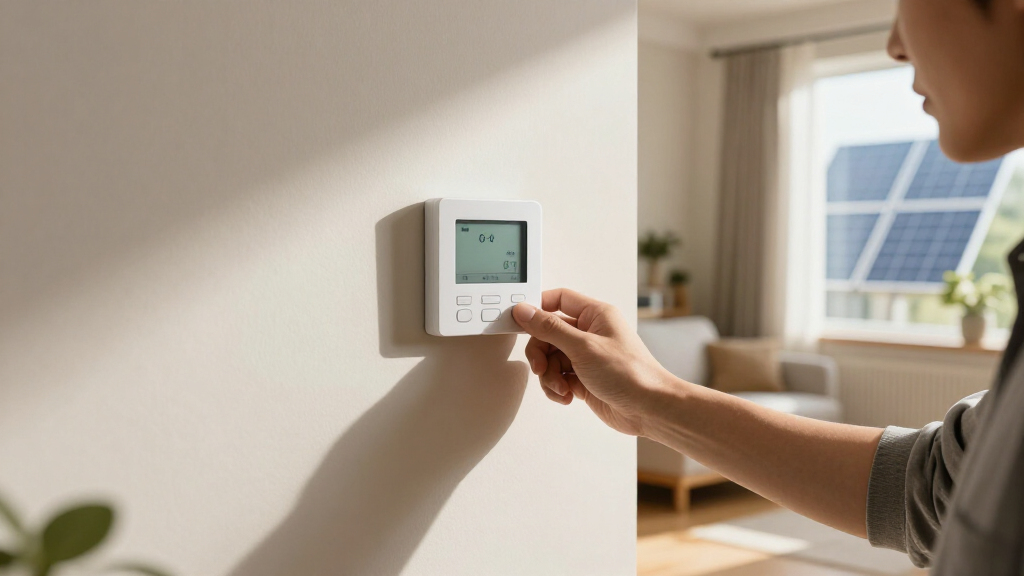

The best smart home climate systems depend on whether you need whole-home thermostat control or a connected solution for one room. I’d put the ecobee Smart Thermostat Enhanced first for its mix of smart scheduling, automation, and broad household fit; the Google Nest Smart Thermostat is a simpler choice for Google-centered homes, while the ecobee Premium adds room sensing and built-in voice assistants. The main tradeoffs are system compatibility, installation needs such as a C-wire, and how much control you want through apps and sensors. This lineup also includes basic thermostats and standalone heating and cooling appliances, which solve different problems. Read on for the full breakdown and help matching a pick to your home.

Get backup power and energy gear delivered free — and shop member deals
- Fast, free delivery on millions of items
- Access to Prime Big Deal Days deals on October 6–7
- Prime Video, Amazon Music and more included
Key Takeaways
- ecobee Enhanced earns the overall spot by balancing smart scheduling and connected controls without requiring the extra room sensor and voice hardware bundled with Premium.
- ecobee Premium is the stronger fit for households that need room-by-room temperature awareness and built-in voice assistant features.
- Google Nest and Amazon Smart Thermostat make the most sense when your home already relies on their respective ecosystems; ecosystem fit can matter more than a long feature list.
- The two amazon.com/dp/B0DNDS8PKF?tag=highervoltage-20&ascsubtag=dc-1102626″ target=”_blank” rel=”nofollow sponsored noopener”>non-programmable digital thermostats prioritize straightforward manual control, but they lack the scheduling and app features that define most connected picks here.
- The ROVSUN wall AC and heater and Pasapair panel heater control individual spaces; they are not direct replacements for a central HVAC thermostat.
| Google Nest Smart Thermostat, Programmable Wi-Fi, Fog |  | Best for Google Home Households | Color: Fog | Connectivity: Wi-Fi | Voice assistant compatibility: Google Assistant, Alexa, and Matter-certified voice assistants | VIEW LATEST PRICE | See Our Full Breakdown |
| Non-Programmable Digital Thermostat for Single-Stage Home Systems, 1 Heat/1 Cool, White Backlight |  | Best Basic Replacement | Controller: Push button | System compatibility: Single-stage heating and cooling, up to 1 heat/1 cool | Temperature accuracy: +/-1°F | VIEW LATEST PRICE | See Our Full Breakdown |
| Honeywell Home Lyric T6 Pro Wi-Fi Programmable Thermostat (TH6220WF2006/U) |  | Best for Multi-Stage HVAC | Model: TH6220WF2006 | Connectivity: Wi-Fi | Compatibility: Up to 2 Heat/1 Cool heat pump or 2 Heat/2 Cool conventional | VIEW LATEST PRICE | See Our Full Breakdown |
| Non-Programmable Digital Thermostat for Single-Stage Systems, 1 Heat/1 Cool, Blue Backlight |  | Best for a Clear Blue Display | Model: 3001-Blue | System type: Single-stage, 1 Heat/1 Cool | Programmable: No | VIEW LATEST PRICE | See Our Full Breakdown |
| ecobee Smart Thermostat Essential Wi-Fi Thermostat |  | Best Smart-Home Flexibility | Connectivity: Wi-Fi | Display: Color touchscreen | Compatibility: Most 24 VAC HVAC systems; supports 85% of systems | VIEW LATEST PRICE | See Our Full Breakdown |
| ecobee Smart Thermostat Premium with Wi-Fi, SmartSensor, and Built-In Siri and Alexa |  | Best for Room-by-Room Comfort | Connectivity: Wi-Fi | Voice assistants: Siri and Alexa built in | Included sensor: SmartSensor for room occupancy and temperature | VIEW LATEST PRICE | See Our Full Breakdown |
| Sensi Smart Wi-Fi Thermostat, DIY Installation, Alexa Compatible, ENERGY STAR Certified (ST55) |  | Best for Straightforward DIY Setup | Model: ST55 | Connectivity: Wi-Fi | Voice assistant: Alexa compatible | VIEW LATEST PRICE | See Our Full Breakdown |
| ecobee Smart Thermostat Enhanced – Programmable Wi-Fi Thermostat |  | Best for Multi-Platform Smart Homes | Connectivity: Wi-Fi | HVAC compatibility: Compatible with 90% of HVAC systems | Smart home compatibility: Amazon Alexa, Google Assistant, Apple HomeKit, and SmartThings | VIEW LATEST PRICE | See Our Full Breakdown |
| Amazon Smart Thermostat with Alexa and Ring Support |  | Best for Alexa-First Homes | Smart home compatibility: Alexa and Ring | Installation: DIY with Alexa app guidance | Wiring requirement: C-wire required | VIEW LATEST PRICE | See Our Full Breakdown |
| Honeywell Home RTH9600WF Smart Color Thermostat, ENERGY STAR Wi-Fi Programmable Touchscreen, Alexa Compatible (C-Wire Required) |  | Best for At-a-Glance Control | Model: RTH9600WF | Connectivity: Wi-Fi | Display: Customizable high-definition color touchscreen | VIEW LATEST PRICE | See Our Full Breakdown |
| ROVSUN 12000 BTU Through-the-Wall Air Conditioner with Heat, Smart Wall AC & Heater Combo with Remote, App & Voice Control |  | Best for Year-Round Room Climate | Cooling capacity: 12,000 BTU | Heating capacity: 10,600/8,600 BTU | Coverage area: Up to 550 sq ft | VIEW LATEST PRICE | See Our Full Breakdown |
| Pasapair 1500W Convection Panel Heater with Remote, WiFi App & Alexa Control |  | Best Quiet Smart Space Heater | Heat output: 1,500W | Heating method: Electric convection | Coverage area: Up to 215 sq ft | VIEW LATEST PRICE | See Our Full Breakdown |
More Details on Our Top Picks
Google Nest Smart Thermostat, Programmable Wi-Fi, Fog
The Nest is my pick for households that want remote control and schedule suggestions without stepping up to a more feature-heavy thermostat. Its Google Home app lets you adjust temperatures away from home, while compatible voice assistants add hands-free control. Compared with the Honeywell Home Lyric T6 Pro, the Nest emphasizes energy-saving schedule guidance and reports that may flag HVAC issues; the Lyric supports more complex multi-stage setups. The Nest works with many common systems, but its stated 85% compatibility means checking your wiring and HVAC type still matters. A C wire may be needed in some homes, and app features rely on a working Wi-Fi connection. Choose it for a straightforward connected climate setup; skip it if your system needs broader heat pump or multi-stage support.
Pros:- Remote temperature adjustments through the Google Home app
- Schedules and energy-saving suggestions can reduce routine manual adjustments
- Can monitor HVAC systems and send potential issue alerts
- Supports Google Assistant, Alexa, and Matter-certified voice assistants
Cons:- Some systems may need a C wire or compatible power accessory
- Remote and voice features depend on compatible devices and connectivity
- Compatibility should be checked against the specific HVAC system before purchase
Best for: Google Home households with a compatible conventional HVAC system that want app control, schedules, and energy-saving suggestions.
Not ideal for: Owners of less common or multi-stage systems who need confirmed compatibility, or households that want a thermostat that works without Wi-Fi or app access.
- Color:Fog
- Connectivity:Wi-Fi
- Voice assistant compatibility:Google Assistant, Alexa, and Matter-certified voice assistants
- System compatibility:Compatible with 85% of heating and cooling systems
- C-wire:Not required in most homes; may be needed for some systems
- Installation time:Typically 30 minutes or less
Our verdict“Choose the Nest for app-guided climate control in a compatible Google Home household; pick the Honeywell Lyric T6 Pro if multi-stage HVAC support matters more.”
Non-Programmable Digital Thermostat for Single-Stage Home Systems, 1 Heat/1 Cool, White Backlight
This thermostat is for buyers who want simple, local temperature control and have a compatible single-stage system. Its backlit LCD, push buttons, and large terminal blocks keep setup and daily adjustments uncomplicated. Against the Google Nest Smart Thermostat, it gives up app access, voice control, and scheduling, but it also avoids relying on Wi-Fi for ordinary operation. Its narrow compatibility is the main constraint: it does not support heat pumps, multi-stage systems, or electric baseboard heating, and the wiring is limited to two to five wires. Dual power through 24VAC or AA batteries can help in homes without a C wire, though heat-only or cool-only systems may still need one. I’d choose it as a practical replacement for a compatible basic system, not as a route to smarter climate automation.
Pros:- Backlit LCD is easy to read
- Large terminal blocks support straightforward DIY installation
- Runs on 24VAC or two AA batteries
- Temperature accuracy is specified at +/-1°F
Cons:- No programming or schedule features
- Incompatible with heat pumps, multi-stage systems, and high-voltage baseboard heating
- Limited to two to five wires, so careful system and wiring checks are needed
Best for: Homeowners replacing a basic thermostat on a verified single-stage system who prefer direct controls and a readable display.
Not ideal for: Buyers with heat pumps, multi-stage HVAC, electric baseboard heating, or a need for app control and automatic schedules.
- Controller:Push button
- System compatibility:Single-stage heating and cooling, up to 1 heat/1 cool
- Temperature accuracy:+/-1°F
- Room temperature display range:41°F to 95°F
- Temperature control range:44°F to 90°F
- Wiring:2-5 wires maximum
- Power:24VAC or 2 AA batteries
- C-wire:Not required on most systems; required for heat-only or cool-only systems
Our verdict“Pick this for an uncomplicated replacement on a compatible single-stage system, while the Nest suits buyers who want connected scheduling.”
Honeywell Home Lyric T6 Pro Wi-Fi Programmable Thermostat (TH6220WF2006/U)
The Lyric T6 Pro earns its place for homes where HVAC compatibility matters more than the simplest setup. It supports up to 2 Heat/1 Cool heat pump systems or 2 Heat/2 Cool conventional systems, giving it a broader system range than the single-stage digital models in this batch. Wi-Fi and app control bring remote adjustments, while Alexa and Apple HomeKit fit households already using those platforms. Compared with the Google Nest Smart Thermostat, the Lyric is the stronger match for specified multi-stage equipment; the Nest instead highlights schedule suggestions and HVAC monitoring. The tradeoff is a more limited feature description here: it requires two AA batteries, and its manual display may feel less convenient than the ecobee Essential’s color touchscreen. Check wiring and system compatibility before choosing it.
Pros:- Supports up to 2 Heat/1 Cool heat pumps and 2 Heat/2 Cool conventional systems
- Wi-Fi enables app-based remote control
- Works with Alexa and Apple HomeKit
- Compact wall-mounted design
Cons:- Requires two AA batteries
- Manual display lacks the touchscreen convenience of the ecobee Smart Thermostat Essential
- System and wiring compatibility still need to be verified
Best for: Households with a compatible multi-stage conventional system or heat pump that want Wi-Fi control and Alexa or Apple HomeKit integration.
Not ideal for: Buyers seeking a color touchscreen, or owners of systems outside its stated heat pump and conventional compatibility.
- Model:TH6220WF2006
- Connectivity:Wi-Fi
- Compatibility:Up to 2 Heat/1 Cool heat pump or 2 Heat/2 Cool conventional
- Smart home compatibility:Amazon Alexa and Apple HomeKit
- Power:AC/DC, 30 volts
- Batteries:2 AA batteries required
- Display size:11.4 centimeters
- Dimensions:1.09 inches deep x 4.06 inches wide x 4.06 inches high
Our verdict“Choose the Lyric T6 Pro when your compatible HVAC setup needs multi-stage support; the Nest is a better fit for Google Home users prioritizing schedule guidance.”
Non-Programmable Digital Thermostat for Single-Stage Systems, 1 Heat/1 Cool, Blue Backlight
The 3001-Blue is a straightforward single-stage thermostat for buyers who value an easy-to-read display and direct controls over automation. Its blue backlight, adjustable heating and cooling swing, and dual power options cover everyday basics without requiring an app. Like the white-backlit single-stage model, it supports only 1 Heat/1 Cool and up to five wires; the blue display is the practical distinction, not expanded system capability. Compared with the ecobee Smart Thermostat Essential, it lacks schedules, remote control, humidity detection, and smart-home integration. That makes it a poor fit for climate routines you want to manage while away, but a simpler choice for a compatible home where manual adjustment is fine. Verify that your system is not a heat pump or high-voltage setup before buying.
Pros:- Blue backlit LCD is easy to read in varied lighting
- Adjustable heating and cooling swing settings
- Power options include 24VAC or two AA batteries
- DIY installation is described as taking about 30 minutes
Cons:- Non-programmable, with no scheduling or app control
- Not compatible with heat pumps, multi-stage systems, or 120-240V equipment
- Base supports only two to five wires
Best for: Buyers replacing a thermostat on a compatible single-stage system who want a bright, legible display and basic manual control.
Not ideal for: Households that need programmable schedules, remote access, smart-home control, or support for heat pumps and multi-stage HVAC.
- Model:3001-Blue
- System type:Single-stage, 1 Heat/1 Cool
- Programmable:No
- Temperature accuracy:+/-1°F
- Room temperature display range:41°F to 95°F
- Temperature control range:44°F to 90°F
- Power:24VAC or 2 AA batteries
- Display:Blue backlit LCD
Our verdict“Choose the 3001-Blue for clear manual control on a compatible single-stage system; choose ecobee Essential for app-based scheduling and broader smart features.”
ecobee Smart Thermostat Essential Wi-Fi Thermostat
The ecobee Essential is the most flexible pick here for buyers who want touchscreen control and broad smart-home support. Its color display and app let you adjust temperatures and schedules, while humidity detection and time-of-use preheating or precooling add climate information and timing options beyond the basic single-stage thermostats. It supports Apple HomeKit, Google Assistant, and Alexa, giving it wider stated ecosystem coverage than the Honeywell Home Lyric T6 Pro, which lists Alexa and Apple HomeKit. The tradeoff is that compatibility varies across HVAC systems, so the broad support claim does not replace a system check. Homes without a C wire may need the separately sold Power Extender Kit, and the SmartSensor is also optional. This is the smart-feature choice when those add-ons and setup checks fit your needs.
Pros:- Color touchscreen and app provide two ways to adjust settings
- Supports Apple HomeKit, Google Assistant, and Alexa
- Humidity detection adds indoor climate information
- Scheduling and time-of-use preheating or precooling support more tailored operation
Cons:- Compatibility varies by HVAC system and should be checked
- Power Extender Kit may be needed without a C wire and is sold separately
- SmartSensor is optional and sold separately
Best for: Smart-home households with compatible 24 VAC HVAC that want a touchscreen, app scheduling, humidity readings, and multiple voice ecosystems.
Not ideal for: Buyers who want a complete setup without separately purchased accessories, or owners whose HVAC compatibility has not been confirmed.
- Connectivity:Wi-Fi
- Display:Color touchscreen
- Compatibility:Most 24 VAC HVAC systems; supports 85% of systems
- Supported systems:Gas, oil, electric, dual fuel, forced air, conventional, heat pump, and boilers
- Smart-home compatibility:Apple HomeKit, Google Assistant, and Alexa
- Climate features:Indoor humidity detection and schedule assistant
- Time-of-use feature:Preheating and precooling
- C-wire:Power Extender Kit available separately for homes without a C wire
Our verdict“Choose ecobee Essential for touchscreen scheduling and broad ecosystem support; choose the Nest if schedule suggestions and HVAC alerts are your priority.”
ecobee Smart Thermostat Premium with Wi-Fi, SmartSensor, and Built-In Siri and Alexa
The ecobee Smart Thermostat Premium is the strongest fit here for households where one hallway thermostat misses how different rooms feel. Its included SmartSensor can account for room occupancy and temperature, while built-in air quality monitoring adds information the simpler Sensi ST55 does not provide. Siri and Alexa voice control are built in, though Siri needs an Apple home hub. That broader comfort and monitoring feature set makes this a more capable pick than the ecobee Smart Thermostat Enhanced, which lacks the Premium model’s included room sensor and air quality monitoring. The tradeoff is that some functions, such as smoke alarm alerts, depend on a subscription, and buyers still need to verify HVAC compatibility. I’d choose it for connected homes that will use its extra sensing and controls.
Pros:- Included SmartSensor accounts for room occupancy and temperature
- Built-in air quality monitoring and filter reminders
- Built-in Siri and Alexa voice control
- Power Extender Kit, trim kit, and three-year warranty included
Cons:- Siri features require an Apple home hub
- Smoke alarm alerts require an ecobee Smart Security subscription
- HVAC compatibility should be confirmed before purchase
Best for: Households with rooms that heat or cool unevenly and buyers who want room sensing, air quality monitoring, and built-in voice control.
Not ideal for: Shoppers seeking a straightforward thermostat or anyone unwilling to check HVAC compatibility or rely on an Apple home hub for Siri.
- Connectivity:Wi-Fi
- Voice assistants:Siri and Alexa built in
- Included sensor:SmartSensor for room occupancy and temperature
- Air quality monitoring:Built in
- HVAC compatibility:Compatible with 95% of HVAC systems
- Installation accessories:Power Extender Kit and trim kit included
- Warranty:3 years
- Energy certification:ENERGY STAR certified
Our verdict“Choose the Premium if room-level sensing and air quality monitoring matter more than keeping smart features simple.”
Sensi Smart Wi-Fi Thermostat, DIY Installation, Alexa Compatible, ENERGY STAR Certified (ST55)
The Sensi ST55 puts practical control ahead of the broader sensing features found on the ecobee models. Its app-guided installation, built-in level, and common-wire-free setup in most installations can make it a sensible choice for homeowners replacing a basic thermostat. Once installed, remote access, flexible schedules, and energy reports cover everyday needs, while alerts and maintenance reminders help track system upkeep. Compared with the Amazon Smart Thermostat, the Sensi is less tightly centered on Alexa and does not require a C-wire in most applications. It also offers an explicit privacy commitment: it does not sell personal information to third parties. The tradeoff is a more limited feature set, with Alexa compatibility but no included room sensor or built-in air quality monitoring. Confirm wiring and HVAC fit before starting.
Pros:- App-guided DIY installation with a built-in level
- Common wire is not required in most installations
- Remote access, flexible scheduling, and energy usage reports
- States that personal information is not sold to third parties
Cons:- A common wire may still be needed for some installations
- Specific HVAC compatibility details are limited
- Alexa compatibility is narrower than the multi-assistant support of the ecobee Smart Thermostat Enhanced
Best for: Homeowners replacing a conventional thermostat who want app-guided installation, scheduling, and remote access without a C-wire in most setups.
Not ideal for: Buyers who want room-by-room sensing, built-in air quality monitoring, or support across several voice assistant ecosystems.
- Model:ST55
- Connectivity:Wi-Fi
- Voice assistant:Alexa compatible
- Certification:ENERGY STAR
- Installation:DIY with app instructions and built-in level
- Common wire:Not required in most applications
- Controls and reports:Remote access, flexible scheduling, and energy usage reports
Our verdict“Pick the Sensi ST55 for core smart scheduling and an approachable DIY setup, provided your HVAC system is compatible.”
ecobee Smart Thermostat Enhanced – Programmable Wi-Fi Thermostat
The ecobee Smart Thermostat Enhanced is the flexible middle ground for a home that uses more than one smart home platform. Its support for Alexa, Google Assistant, Apple HomeKit, and SmartThings reaches beyond the Alexa-focused Sensi and Amazon models, while occupancy sensing can adjust temperatures when people are away or asleep. The listed potential savings of up to 26% per year come from those automatic adjustments, not a guarantee for every home. Compared with the ecobee Smart Thermostat Premium, this model costs some capability in exchange for a simpler setup: it lacks the Premium’s included SmartSensor and built-in air quality monitoring. Its included Power Extender Kit can help homes without a C-wire, but room-by-room comfort requires a separately purchased SmartSensor. Check HVAC compatibility before choosing it.
Pros:- Works with Alexa, Google Assistant, Apple HomeKit, and SmartThings
- Occupancy sensing supports automatic adjustments when away or asleep
- Power Extender Kit and trim kit included
- Three-year warranty
Cons:- SmartSensors for room-by-room comfort are sold separately
- HVAC compatibility needs checking
- Up to 26% annual savings is a stated potential, not a guaranteed result
Best for: Households using a mix of Alexa, Google Home, Apple HomeKit, or SmartThings devices who want occupancy-based temperature control.
Not ideal for: Buyers who need an included remote room sensor or built-in air quality monitoring, or whose HVAC setup is outside its compatibility range.
- Connectivity:Wi-Fi
- HVAC compatibility:Compatible with 90% of HVAC systems
- Smart home compatibility:Amazon Alexa, Google Assistant, Apple HomeKit, and SmartThings
- Included accessories:Power Extender Kit and trim kit
- Sensors:Built-in occupancy sensing
- Warranty:3 years
- Potential energy savings:Up to 26% per year on heating and cooling
Our verdict“Choose the Enhanced for broad smart home compatibility and automatic scheduling without paying for the Premium’s extra sensing features.”
Amazon Smart Thermostat with Alexa and Ring Support
The Amazon Smart Thermostat is a focused choice for households already managing devices through Alexa. Schedules, Alexa automation, and remote control in the Alexa app cover the main ways many buyers adjust heating and cooling. With select Alexa devices, it can also support comfort zones, though that depends on having compatible equipment. Compared with the Sensi ST55, this thermostat is more closely tied to Alexa and Ring, and its C-wire requirement is a less forgiving fit for homes with uncertain wiring. It also has a narrower feature set than the ecobee Smart Thermostat Enhanced, which supports multiple smart home ecosystems and occupancy sensing. App-guided DIY installation helps with setup, but the wiring prerequisite should be checked first. I’d favor it when Alexa integration matters more than platform flexibility or room sensing.
Pros:- Schedules and Alexa automation support temperature control
- Remote control through the Alexa app
- App-guided DIY installation
- ENERGY STAR certified
Cons:- Requires a C-wire
- Comfort zones need compatible Alexa devices
- Less flexible across smart home platforms than the ecobee Smart Thermostat Enhanced
Best for: Alexa and Ring households with a confirmed C-wire that want scheduled and app-based heating and cooling control.
Not ideal for: Homes without a C-wire or buyers who want broad ecosystem support, included room sensing, or features beyond basic smart control.
- Smart home compatibility:Alexa and Ring
- Installation:DIY with Alexa app guidance
- Wiring requirement:C-wire required
- Thermostat technology:Honeywell Home technology
- Controls:Schedules, Alexa automation, and remote control through the Alexa app
- Certification:ENERGY STAR certified
Our verdict“Pick this thermostat if Alexa is already the center of your smart home and your wiring includes a C-wire.”
Honeywell Home RTH9600WF Smart Color Thermostat, ENERGY STAR Wi-Fi Programmable Touchscreen, Alexa Compatible (C-Wire Required)
The Honeywell Home RTH9600WF stands apart with its customizable color touchscreen, making local adjustments and status checks more prominent than on the app-centered Amazon Smart Thermostat. Smart Response learns a home’s heating and cooling cycles, which can help it reach scheduled temperatures at the intended time; app control, assistant support, and energy-saving tips add remote convenience. It supports Alexa, Google Assistant, and Microsoft Cortana, so it is less tied to one ecosystem than Amazon’s thermostat. Its compatibility with forced-air systems, hot water, steam, and some heat pumps is useful, but the exclusions matter: it does not support 120–240V electric baseboard heat and requires a C-wire, sometimes with an adapter. This is a strong fit for buyers who value the display and broader system types, provided wiring and HVAC fit check out.
Pros:- Customizable high-definition color touchscreen
- Smart Response learns heating and cooling cycle timing
- Works with Alexa, Google Assistant, and Microsoft Cortana
- App control, energy-saving tips, and smart system alerts
Cons:- Requires a C-wire, and some homes may need a power adapter
- Incompatible with 120–240V electric baseboard heat
- Heating-only oil furnace systems without a C-wire are unsupported
Best for: Homeowners with compatible forced-air, hot-water, steam, or heat-pump systems who want a prominent customizable touchscreen and cycle-aware scheduling.
Not ideal for: Homes with electric baseboard heat, oil heating without a C-wire, or wiring that cannot provide the required power.
- Model:RTH9600WF
- Connectivity:Wi-Fi
- Display:Customizable high-definition color touchscreen
- Voice assistants:Amazon Alexa, Google Assistant, and Microsoft Cortana
- Supported systems:Forced air (gas, oil, electric), hot water and steam, and heat pumps with electric backup
- Power requirement:C-wire required; a C-wire power adapter may be needed
- Certification:ENERGY STAR certified
Our verdict“Choose the RTH9600WF if you want clear touchscreen control and your HVAC system and wiring meet its specific requirements.”
ROVSUN 12000 BTU Through-the-Wall Air Conditioner with Heat, Smart Wall AC & Heater Combo with Remote, App & Voice Control
The ROVSUN combines cooling and heating in one through-the-wall unit, making it a better fit for a room that needs seasonal temperature control than the thermostat-focused Nest or ecobee models elsewhere in this roundup. Its 12,000 BTU cooling capacity is specified for spaces up to 550 square feet, while app, remote, and voice controls let you adjust the unit without relying on a central HVAC system. Heat, Cool, Auto, Dry, and Fan modes add flexibility across changing conditions. The tradeoff is a more involved installation: it needs 230V power, and the wall sleeve is sold separately. At 63 dB, it may also be too loud for buyers who prioritize a quiet bedroom. I’d choose it for a dedicated room where built-in heating and cooling outweigh installation work.
Pros:- Provides both 12,000 BTU cooling and built-in heat
- App, remote, and Alexa or Google Assistant controls
- Five operating modes and a 24-hour timer
- Front-access washable filter simplifies routine cleaning
Cons:- Wall sleeve is not included
- 230V wiring may require professional installation
- 63 dB noise level may be disruptive in quiet rooms
Best for: Homeowners who need app-controlled heating and cooling for a room up to 550 square feet without extending central HVAC
Not ideal for: Renters or buyers seeking a quiet, simple plug-in setup, since it requires through-wall installation, 230V power, and a separate wall sleeve
- Cooling capacity:12,000 BTU
- Heating capacity:10,600/8,600 BTU
- Coverage area:Up to 550 sq ft
- Voltage:230V/60Hz
- Wattage:1,570W
- Noise level:63 dB
- Modes:Heat, Auto, Cool, Dry, Fan
- Installation:Through-the-wall; 25.5-inch sleeve required, not included
Our verdict“Choose the ROVSUN for a larger room that needs a permanent, smart-controlled heating and cooling unit and can accommodate its installation requirements.”
Pasapair 1500W Convection Panel Heater with Remote, WiFi App & Alexa Control
The Pasapair is the quiet, room-by-room heating pick in a roundup otherwise dominated by thermostats such as the Sensi Smart Wi-Fi Thermostat, which manages compatible central HVAC rather than warming a room on its own. This 1,500W convection panel is specified for areas up to 215 square feet and offers app, remote, and voice control, so it suits a bedroom or home office where a central system leaves one space chilly. Its freestanding or wall-mounted design gives more placement choice than the ROVSUN wall AC, though it only heats and cannot cool. A 41–99°F thermostat range, timer, ECO mode, and sleep mode support scheduled use; convection can take longer to warm a large or cold space than fan-forced heat. I’d favor it where low noise and flexible placement matter more than whole-room cooling.
Pros:- Quiet convection operation rated as low as 30 dB, with sleep mode
- WiFi app, remote, and Alexa or Google Assistant control
- Can stand on caster wheels or mount on a wall
- Includes child lock, tip-over shutoff, and overheat protection
Cons:- Heating only, with no cooling function
- Convection may warm large or very cold rooms more slowly
- Coverage is limited to up to 215 sq ft
Best for: People who want quiet, app-controlled supplemental heat in a bedroom, office, or other room up to 215 square feet
Not ideal for: Buyers who need cooling, whole-home climate management, or rapid heat for a large, open area
- Heat output:1,500W
- Heating method:Electric convection
- Coverage area:Up to 215 sq ft
- Temperature range:41–99°F
- Noise level:As low as 30 dB
- Mounting:Freestanding with wheels or wall-mounted
- Smart home compatibility:WiFi app, Alexa, Google Assistant
- Water resistance:IP24 splash-proof
Our verdict“Pick the Pasapair for quiet, flexible smart heating in a modest-sized room when you do not need cooling.”

How We Picked
I ranked these products by how well they serve a distinct smart climate control need: central HVAC scheduling, simpler connected control, basic manual operation, or heating and cooling for a single room. I weighed compatibility and installation requirements alongside app and voice control, scheduling, room sensing, and the practical scope of each device. A thermostat with more features does not automatically rank higher if those features add setup demands or do not match the buyer’s system.
Whole-home usability and useful automation carry the most weight because they shape daily comfort across multiple rooms. That puts ecobee Enhanced first as a balanced central thermostat, with Premium above it for buyers who specifically benefit from its added sensing and voice functions. Ecosystem-focused options follow, while simpler controls and single-room appliances rank lower for this roundup’s broad smart home climate goal. The basic thermostats remain relevant for buyers who want dependable manual adjustment, but their limited connectivity reduces their fit for connected automation.
Factors to Consider When Choosing Best Smart Home Climate Systems
Before choosing a model, I’d define what you want to control and how your home is wired. Smart climate products span central thermostats, basic replacements, and standalone room appliances, so comparing feature lists alone can lead to a poor fit.
Match the Device to Your Heating and Cooling Setup
Start by identifying whether your home has central HVAC, a single-stage system, or a separate room unit. Thermostats designed for conventional heating and cooling may not support every heat pump, multi-stage system, or specialized setup. Check the equipment labels and current thermostat wiring before ordering, then compare them with the maker’s compatibility information. A single-stage thermostat can be a good fit for a simple system, but it may not control additional stages or accessories. Standalone units such as a wall AC or panel heater manage their own room and should not be treated as whole-home controls. If your system type is unclear, a qualified HVAC technician can identify it before installation.
Check Wiring and Installation Before Choosing Smart Features
Connected thermostats need reliable power, and some installations require a C-wire or an approved adapter. Do not assume the wire colors or labels at the old thermostat tell the whole story; record the terminal connections and verify the system’s wiring diagram. Installation difficulty also depends on the equipment at the other end of the wire, not only on how many terminals the new thermostat has. If you rent, confirm that you can alter the thermostat and keep the original unit for move-out. Room appliances usually avoid thermostat wiring but introduce their own needs, such as a suitable outlet and safe clearance. Planning this step first can prevent buying a feature-rich thermostat you cannot install as intended.
Choose an Ecosystem You Will Actually Use
Voice control and routines are most useful when the thermostat works with the assistants and smart home platform already in your household. A device aligned with Google, Alexa, or another supported platform can make daily adjustments easier, while a mismatch can leave features stranded in a separate app. Check which functions remain available if your internet connection drops, since local controls and schedules can matter during an outage. Also review whether household members need separate app access or can comfortably use the wall controls. A broad set of integrations may sound appealing, but reliable control in the apps you already use is often more valuable. Avoid choosing by assistant branding alone; confirm the specific commands and automations you need are supported.
Decide Whether Room Sensors Solve a Real Problem
A thermostat in a hallway may not reflect the temperature in a sunny bedroom or upstairs office. Remote sensors can help a system account for occupied rooms, but they add devices to place, configure, and maintain. Consider whether your discomfort comes from a room-temperature imbalance or from weak airflow, insulation, or solar heat; sensors cannot repair those underlying issues. Sensor features are most useful when the system can act on their readings through schedules or occupancy settings. For one consistently uncomfortable room, a room-specific heater or AC may be more direct, though it will not coordinate central heating. Think through which rooms and times matter before paying for sensing hardware.
Set Expectations for Energy Savings and Automation
Smart scheduling can reduce unnecessary heating or cooling when the home is empty, but savings depend on your habits, climate, equipment, and utility rates. Automation works best when schedules reflect real routines and comfort limits rather than frequent manual overrides. Start with a modest setback that your household can tolerate and observe how long the system takes to recover. Some homes recover slowly, so aggressive settings can reduce comfort or prompt costly auxiliary heating. Energy reports may help you spot patterns, but they do not guarantee lower bills by themselves. Buy automation for the control it gives you, and treat energy reduction as a result to monitor rather than a promised outcome.
Know When a Room Appliance Is the Better Fit
A central thermostat is the right control point when you want to manage a compatible HVAC system across the home. A connected wall AC or portable-style heater instead targets a particular room or zone, which can help when central equipment does not reach that space well. These appliances require attention to electrical capacity, ventilation, mounting or placement, and the room’s insulation. Heating one room locally may be more practical than changing the whole-home schedule, but it will not balance temperatures elsewhere. Check whether the appliance’s app control remains available if the network is unavailable, and keep physical controls accessible. Choose a room unit for a defined zone problem, not as a substitute for a central thermostat upgrade.
Frequently Asked Questions
Can I replace my current thermostat with any smart thermostat in this list?
No. Compatibility depends on your HVAC type, wiring, and whether the thermostat supports features such as heat pumps or multiple stages. The single-stage digital models are intended for a narrower set of systems than many connected thermostats. Check the product’s compatibility guide against your equipment and wire terminals before purchase. If you cannot identify the system confidently, ask an HVAC professional to confirm it.
Do I need a C-wire for a smart thermostat?
Some smart thermostats need a C-wire for continuous power, while requirements vary by model and system. The Honeywell RTH9600WF listing specifically calls for a C-wire, so buyers without one should account for that before selecting it. Other models may support an adapter or alternate wiring arrangement, but that depends on the HVAC equipment. Verify the exact model’s installation guide rather than relying on the presence of an unused wire at the wall.
Should I choose ecobee Premium or ecobee Enhanced?
Choose Premium if room sensing and built-in voice assistant capability are features you expect to use. Enhanced is a more focused choice for buyers who want connected scheduling and thermostat control without those added functions. The extra hardware in Premium is most useful when the thermostat’s location does not reflect comfort in occupied rooms. If your home is small or already has voice devices, Enhanced may cover the core need with less complexity.
Can a smart thermostat fix uneven temperatures between rooms?
It can help only when the system and thermostat support useful remote sensing or occupancy-based control. Uneven temperatures can also come from duct balance, insulation, sun exposure, or airflow problems that a thermostat cannot correct. Identify which rooms are uncomfortable and when the difference occurs before buying sensors. If the imbalance is persistent, an HVAC inspection may address the cause more directly than adding automation.
Are the ROVSUN and Pasapair products alternatives to a smart thermostat?
They serve different jobs. The ROVSUN is a room-focused through-the-wall air conditioner and heater, while the Pasapair is a Wi-Fi panel heater for supplemental room warmth. Neither is a direct central HVAC thermostat replacement, and their app controls apply to the appliance itself. Choose one when you need climate control in a specific space; choose a thermostat when you want to manage compatible whole-home heating and cooling.
Conclusion
For most central HVAC households, I recommend the ecobee Smart Thermostat Enhanced as the best overall balance of connected control and practical automation. The Amazon Smart Thermostat is the value-minded choice for Alexa households, while the ecobee Premium is the best premium fit for buyers who will use room sensing and built-in voice features. Beginners who want a familiar, streamlined connected option should look at the Google Nest Smart Thermostat, after checking system compatibility. For manual simplicity, choose a single-stage digital thermostat only when its limited controls match your setup; for a specific room, consider the ROVSUN wall unit or Pasapair heater. The right pick is the one that matches both your equipment and the space you want to control.
Fall Picks
fall essentials
As an affiliate, we earn on qualifying purchases.