Whole house standby generators differ most in power capacity, whether a transfer switch is included, and how much monitoring they offer. My best overall pick is the Generac 18 kW with a 200 Amp Transfer Switch and Cellular Connectivity, which pairs a midrange capacity with a clearly specified switch. The Generac 22 kW with a Transfer Switch is a stronger fit for buyers planning to support more household loads, while the Generac 10 kW with a Transfer Switch suits a smaller, prioritized backup plan. Higher output can support more simultaneous demand, but it may bring greater installation and fuel requirements; lower-capacity options call for more deliberate load management. Read on for the full comparison and guidance on sizing, installation, and choosing the right configuration.

Get backup power and energy gear delivered free with Prime
- Fast, free delivery on millions of items
- Prime Video, Amazon Music and more included
- Member-only deals all year
Complete the kit


Key Takeaways
- Transfer switch details separate otherwise similar listings: several Generac models are offered with a switch, while their similarly rated counterparts list cellular connectivity without one; confirm what the installer will supply.
- Capacity is not a substitute for a load calculation: the lineup spans 10 kW to 28 kW, but the right output depends on starting loads and which appliances must run together.
- The 18 kW and 22 kW options form the most useful middle ground: they offer more capacity than the 10 kW models without jumping to the lineup’s highest-output units.
- Cellular connectivity appears across many picks: it can help with remote status checks, but it does not replace routine service or local installation planning.
- Higher-output picks suit different priorities, not every home: 24–28 kW models may better match larger loads, while buyers who can prioritize circuits may not need that added capacity.


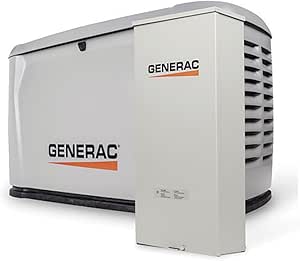

| whole house standby generator | Fuel | Dimensions | Power output | Voltage |
|---|---|---|---|---|
| Generac 10 kW Whole-Home Stand | Natural gas or liquefied petroleum gas | 47.3 × 25.6 × 30.7 inches | 10,000 watts | 120 volts |
| Generac 18 kW Whole-Home Stand | Natural gas or propane | 46.4 × 26.3 × 30.7 inches | — | 240 V |
| Generac 14 kW Whole-Home Stand | LP or natural gas | 46.4 × 26.3 × 30.7 inches | 14,000 watts | 240 volts |
| Honeywell 14 kW Home Standby G | Natural gas or propane | 48 × 25 × 29 inches | 14,000 watts | 120 volts |
| Generac 22 kW Whole-Home Stand | Natural gas or liquefied petroleum gas | 46.4 × 26.3 × 30.7 inches | 22,000 watts | 240 volts |
| Generac 22 kW Whole-Home Stand | Natural gas or propane | 46.4 × 26.3 × 30.7 inches | 22 kW | 240 volts |
| Generac 26 kW Whole-Home Stand | Natural gas or propane | 46.4 × 26.3 × 30.7 inches | 26 kW | 240 volts |
| Generac 28 kW Whole Home Stand | LP or natural gas | 46.4 × 26.3 × 30.7 inches | 28 kW | 240 volts |
| Generac 24 kW Whole-Home Stand | Propane or natural gas | 46.4 × 26.3 × 30.7 inches | 24 kW | 240 volts |
| Generac 18 kW Whole-Home Stand | Natural gas or LP | 46.4 × 26.3 × 30.7 inches | 18 kW | 240 volts |
| Generac 26 kW Whole-Home Stand | Propane or natural gas | 46.4 × 26.3 × 30.7 inches | 26 kW (26,000 watts) | — |
| Generac 10kW Whole Home Standb | Natural gas or propane (LP) | 46.3 × 24.6 × 30.7 inches | 10,000 watts | 120 volts |
More Details on Our Top Picks
Generac 10 kW Whole-Home Standby Generator with Transfer Switch and Cellular Connectivity
The 10 kW output makes this the most modest-capacity choice in this group, so it suits a plan focused on essential circuits rather than running every large household load at once. It automatically starts after an outage and can use natural gas or propane, a useful fit for homes already set up for either fuel. Compared with the Generac 14 kW, it offers less headroom for simultaneous appliances, but its 16-circuit transfer switch gives buyers a defined way to prioritize loads. Built-in cellular monitoring adds remote status and maintenance information, though the premium subscription is required for remote features. At 384 pounds, it also calls for careful delivery and installation planning.
Pros:- Automatically detects utility outages and starts backup power
- Runs on natural gas or liquid propane
- Automatic 16-circuit transfer switch supports selected-load planning
- Built-in cellular connectivity supports remote monitoring, with a premium subscription
Cons:- Lower 10 kW output offers less load headroom than the 14 kW and 18 kW options
- Remote monitoring and control features require a Mobile Link premium subscription
- Weighs 384 pounds, adding delivery and installation demands
Best for: Households with a modest backup-load plan that want automatic operation and cellular monitoring without sizing for many high-demand appliances at once.
Not ideal for: Homes expecting to power multiple large appliances simultaneously; the 10 kW capacity may require strict circuit prioritization.
- Power output:10,000 watts
- Fuel:Natural gas or liquefied petroleum gas
- Transfer switch:Automatic, 16-circuit
- Voltage:120 volts
- Frequency:60 hertz
- Connectivity:Built-in cellular; premium subscription required for remote monitoring and control
- Weight:384 pounds
- Dimensions:47.3 × 25.6 × 30.7 inches
- Warranty:5-year limited
Our verdict“Choose this Generac if your priority is automatic backup for selected household circuits rather than broad capacity for high simultaneous loads.”
Generac 18 kW Whole-Home Standby Generator with Cellular Connectivity
At 18 kW, this model sits between the 14 kW options and the 22 kW Generac, giving households more room for concurrent loads than the smaller units without moving to the lineup’s higher-capacity tier. It automatically detects an outage and runs on natural gas or propane, while built-in cellular connectivity can support remote monitoring and control. That remote access is not free of conditions: real-time updates and maintenance alerts require a premium Mobile Link subscription. The listed starting-wattage figure is 180,000 W, an unusual value relative to the 18 kW running output, so I would verify the rating with the seller or installer before using it for load planning. At 426 pounds, it is also a substantial installation.
Pros:- 18 kW output provides more capacity than the 10 kW and 14 kW options
- Automatically detects outages and starts residential backup power
- Compatible with natural gas or propane
- Built-in cellular connectivity enables remote monitoring and control
Cons:- Real-time app updates and maintenance alerts require a premium subscription
- At 426 pounds, it requires planning for delivery and installation
- Listed 180,000 W starting wattage appears inconsistent with the 18 kW output and merits verification
Best for: Homeowners who need more capacity than a 14 kW unit offers but do not have a clear need for the Generac 22 kW model.
Not ideal for: Buyers who need confirmed starting-capacity details before comparing motor loads, or who want remote app alerts without a subscription.
- Running output:18 kW
- Listed starting wattage:180,000 W
- Fuel:Natural gas or propane
- Voltage:240 V
- Engine:Internal combustion
- Connectivity:Built-in cellular; premium subscription required for real-time updates and maintenance alerts
- Weight:426 pounds
- Dimensions:46.4 × 26.3 × 30.7 inches
Our verdict“Pick this model for a middle ground in capacity, but confirm the starting-wattage specification and account for subscription-based app features.”
Generac 14 kW Whole-Home Standby Generator with 200 Amp Transfer Switch and Cellular Connectivity
This 14 kW Generac pairs moderate output with an automatic 200-amp transfer switch, a combination that may suit homes whose service setup calls for that switch rating. The generator starts when utility power fails and runs on an existing natural-gas or LP supply. Its sloped roof and rear intake are specified to help limit snow or ice intrusion, while oil-level sensing and cold-start support address readiness in cold conditions. Compared with the Honeywell 14 kW, this model adds cellular connectivity and a 200-amp switch, but its remote updates and alerts require a paid Mobile Link subscription. The 14 kW output is also below the 18 kW and 22 kW Generac options, so larger or simultaneous loads may need careful planning.
Pros:- Automatic 200-amp transfer switch is included
- Runs on LP or natural gas
- Sloped roof and rear intake are designed to help reduce snow or ice intrusion
- Cellular connectivity, oil-level sensing, and cold-start support are included
Cons:- 14 kW output is lower than the 18 kW and 22 kW Generac models
- Remote updates and maintenance alerts require a Mobile Link premium subscription
- Requires an LP or natural-gas fuel supply
Best for: Homeowners with a natural-gas or LP connection and a 200-amp service setup who want cellular monitoring and weather-focused design features.
Not ideal for: Households with heavy simultaneous loads, or buyers seeking app alerts without an ongoing subscription.
- Power output:14,000 watts
- Fuel:LP or natural gas
- Transfer switch:Automatic, 200 amp
- Voltage:240 volts
- Frequency:60 hertz
- Connectivity:Built-in cellular; premium subscription required for real-time updates and alerts
- Weight:391 pounds
- Dimensions:46.4 × 26.3 × 30.7 inches
- Construction:Fully enclosed stainless steel
Our verdict“Choose this 14 kW unit when its 200-amp switch and weather-readiness features fit your installation better than the higher-output alternatives.”
Honeywell 14 kW Home Standby Generator with 16-Circuit Transfer Switch
The Honeywell’s standout detail is not a higher output than its competitors, but its included composite mounting pad, which is specified for direct soil installation without a concrete base. That can simplify site preparation where the ground and local requirements permit it. Its 14 kW output and 16-circuit transfer switch support a selected-circuit backup plan, rather than guaranteeing that every home load can run together. Unlike the similarly rated Generac 14 kW, this model does not list cellular monitoring; its LCD control panel offers local status instead. The aluminum weather-resistant enclosure and automatic outage response are practical strengths, but the three-year limited warranty is shorter than the five-year coverage listed for the Generac options. Fuel access is still required.
Pros:- Includes a composite mounting pad specified for soil installation without a concrete base
- Automatic 16-circuit transfer switch supports selected-circuit backup
- Aluminum weather-resistant enclosure with enhanced locks
- Runs on natural gas or propane
Cons:- No cellular connectivity is listed, unlike the Generac 14 kW option
- Backup coverage depends on the selected circuits and system configuration
- Three-year limited warranty is shorter than the five-year Generac warranties listed
Best for: Homeowners who want a 14 kW standby generator with an included soil-installation pad and a 16-circuit transfer setup.
Not ideal for: Buyers who want cellular remote monitoring, a longer listed warranty, or backup beyond the circuits selected for the system.
- Model:G00723110
- Power output:14,000 watts
- Fuel:Natural gas or propane
- Transfer switch:16-circuit
- Enclosure:Aluminum
- Included components:Transfer switch and composite mounting pad
- Dimensions:48 × 25 × 29 inches
- Voltage:120 volts
- Warranty:3-year limited
Our verdict“Choose the Honeywell if the included soil-ready pad and 16-circuit setup matter more than cellular monitoring or a longer listed warranty.”
Generac 22 kW Whole-Home Standby Generator with Transfer Switch and Cellular Connectivity
Among the reviewed models, this 22 kW Generac offers the greatest stated output, making it the strongest fit for homes that need more load headroom than the 10, 14, or 18 kW choices provide. Its automatic 200-amp transfer switch and natural-gas or propane compatibility support a permanent standby installation, while cellular monitoring, oil-level monitoring, and cold-start support add readiness features. The tradeoff is that remote monitoring and control require a Mobile Link premium subscription, and a fuel supply connection is necessary. It also weighs 451 pounds, the heaviest unit in this five-product group, so access and installation logistics deserve attention. Buyers with a smaller essential-circuit plan may find the 14 kW options a closer match.
Pros:- 22 kW output exceeds the capacity of the other four models reviewed here
- Automatic 200-amp transfer switch is included
- Runs on natural gas or liquefied petroleum gas
- Built-in cellular and oil-level monitoring with cold-start support
Cons:- Remote monitoring features require a Mobile Link premium subscription
- Requires a connection to natural gas or propane
- At 451 pounds, it is heavy to deliver and install
Best for: Households with a larger backup-load plan that want 22 kW output, an automatic 200-amp transfer switch, and natural-gas or propane operation.
Not ideal for: Homes that only need selected essential circuits, or buyers unable to connect the generator to natural gas or propane.
- Power output:22,000 watts
- Fuel:Natural gas or liquefied petroleum gas
- Transfer switch:Automatic, 200 amp
- Voltage:240 volts
- Frequency:60 hertz
- Connectivity:Built-in cellular; Mobile Link premium subscription required for remote monitoring features
- Weight:451 pounds
- Dimensions:46.4 × 26.3 × 30.7 inches
- Warranty:5-year limited
Our verdict“Choose this Generac for the most stated capacity in this group if your household loads justify the added size and installation demands.”
Generac 22 kW Whole-Home Standby Generator with Cellular Connectivity
The 22 kW output makes this a sensible middle ground for households that need more capacity than the 18 kW Generac models but do not have a clear need for the 26 kW or 28 kW versions. It automatically responds to an outage and can run on natural gas or propane, while built-in cellular connectivity lets owners check status remotely. That monitoring is a practical readiness aid, but app features require a Mobile Link premium subscription, so it is not a no-cost extra. Cold-start support and oil-level monitoring add useful upkeep cues, and the enclosed housing is designed to limit snow or ice intrusion. At 451 pounds, it is still a substantial installation, and unlike the 24 kW model, this listing does not include a transfer switch. I’d shortlist it when capacity and remote visibility matter more than a bundled switch.
Pros:- 22 kW output sits between the lineup’s 18 kW and 26 kW choices
- Runs on natural gas or propane
- Cellular monitoring, oil-level sensing, and cold-start support aid readiness
- Enclosed design is shaped to reduce snow or ice intrusion
Cons:- Mobile Link remote features require a premium subscription
- Transfer switch is not listed as included
- 451-pound weight calls for careful delivery and installation planning
Best for: Homeowners who need a step up from an 18 kW unit, want cellular status checks, and already have a transfer-switch plan.
Not ideal for: Buyers who want a transfer switch included or prefer to avoid a paid subscription for remote app features.
- Power output:22 kW
- Fuel:Natural gas or propane
- Voltage:240 volts
- Connectivity:Built-in cellular; Mobile Link premium subscription required
- Weight:451 pounds
- Dimensions:46.4 × 26.3 × 30.7 inches
- Warranty:5-year limited
Our verdict“Choose this 22 kW model if you want more capacity than the 18 kW options and can arrange a separate transfer switch.”
Generac 26 kW Whole-Home Standby Generator with Cellular Connectivity
Among these five, the 26 kW capacity is the clearest reason to choose this model: it offers more output than the 22 kW version without moving to the 28 kW unit. That extra headroom may suit homes with heavier simultaneous demands, though a qualified installer should match generator capacity to the actual load. Automatic outage response, natural gas or propane operation, cellular monitoring, oil-level checks, and cold-start support cover the core standby needs. Compared with the Generac 24 kW model, this one provides more rated output, but the supplied information does not list a transfer switch; the 24 kW listing specifies a 200-amp automatic switch. The Mobile Link app’s remote functions also require a premium subscription. At 524 pounds, this is a major installation rather than a casual add-on.
Pros:- 26 kW output exceeds the 22 kW and 24 kW options in this batch
- Accepts natural gas or propane
- Cellular monitoring pairs with oil-level checks and cold-start support
- Automatic outage detection provides hands-off backup startup
Cons:- Mobile Link remote monitoring and control require a premium subscription
- Transfer switch is not listed as included
- 524-pound weight adds delivery and installation complexity
Best for: Owners of larger homes with substantial electrical loads who want 26 kW capacity and remote generator status.
Not ideal for: Households with modest backup needs, buyers requiring a listed included transfer switch, or anyone avoiding subscription-based app features.
- Power output:26 kW
- Fuel:Natural gas or propane
- Voltage:240 volts
- Connectivity:Cellular; Mobile Link app monitoring and control
- Weight:524 pounds
- Dimensions:46.4 × 26.3 × 30.7 inches
- Warranty:5-year limited
Our verdict“Pick this model when a load assessment supports 26 kW and you value extra capacity more than a bundled transfer switch.”
Generac 28 kW Whole Home Standby Generator with Transfer Switch and Cellular Monitoring
This is the lineup’s highest-output option in this batch, and the included transfer switch makes it a more complete package than the 26 kW Generac listed here, which does not specify one. The 28 kW rating is aimed at homes with demanding backup loads; it should not be treated as a substitute for a load calculation or professional installation planning. Automatic voltage regulation, low-oil shutdown, and automatic outage response support steady operation and protection, while cellular monitoring adds remote status checks. As with the other connected models, Mobile Link’s remote features require a premium subscription. Its 524-pound weight matches the 26 kW unit, so the extra capacity does not come with a lighter installation. I’d favor it over the 24 kW model when the added output is justified and the switch included in this package is useful.
Pros:- 28 kW output is the highest among these five products
- Transfer switch is included
- Automatic voltage regulation and low-oil shutdown are listed
- Runs on LP or natural gas with cellular monitoring
Cons:- Mobile Link remote functions require a premium subscription
- At 524 pounds, delivery and installation need substantial planning
- The high output may exceed the needs of homes with smaller backup loads
Best for: Owners with high backup-power demands who want the strongest listed output here and a transfer switch in the package.
Not ideal for: Homes with moderate loads, buyers seeking a lighter installation, or owners unwilling to pay for cellular app features.
- Power output:28 kW
- Fuel:LP or natural gas
- Transfer switch:Included
- Voltage:240 volts
- Features:Automatic voltage regulation and low-oil shutdown
- Weight:524 pounds
- Dimensions:46.4 × 26.3 × 30.7 inches
- Warranty:5-year limited
Our verdict“Choose this package for a professionally sized, high-demand setup where 28 kW output and an included transfer switch justify the larger installation.”
Generac 24 kW Whole-Home Standby Generator with 200 A Transfer Switch and Cellular Connectivity
The 24 kW rating and automatic 200-amp transfer switch make this a balanced package for buyers who want substantial output without stepping up to the 26 kW or 28 kW Generac models. The switch is a meaningful distinction from the 22 kW and 26 kW listings in this batch, where a switch is not specified as included. Automatic outage detection, propane or natural gas compatibility, cellular monitoring, cold-start improvements, and oil-level sensors cover practical standby needs. Automatic voltage regulation and low-oil shutdown are also listed. The tradeoff is that remote app monitoring and control require a Mobile Link premium subscription, and the 461-pound unit still needs professional delivery and installation planning. I’d favor it over the 28 kW package when a 200-amp switch and a more restrained capacity rating matter more than maximum output.
Pros:- Includes a 200-amp automatic transfer switch
- 24 kW output offers more capacity than the 22 kW model
- Compatible with propane or natural gas
- Cellular connectivity, oil-level monitoring, and cold-start improvements support readiness
Cons:- Mobile Link remote monitoring and control require a premium subscription
- 461-pound weight requires planning for delivery and installation
- Offers less output than the 26 kW and 28 kW models
Best for: Homeowners seeking a substantial standby system with a listed 200-amp automatic transfer switch and less output than the 28 kW model.
Not ideal for: Buyers whose load assessment calls for more than 24 kW or who want remote app controls without a premium subscription.
- Power output:24 kW
- Fuel:Propane or natural gas
- Transfer switch:200-amp automatic
- Voltage:240 volts
- Connectivity:Built-in cellular; Mobile Link premium subscription required
- Weight:461 pounds
- Dimensions:46.4 × 26.3 × 30.7 inches
- Warranty:5-year limited
Our verdict“Choose this 24 kW package if you want a built-in 200-amp transfer switch and do not need the lineup’s highest output.”
Generac 18 kW Whole-Home Standby Generator with 200 Amp Transfer Switch and Cellular Connectivity
This 18 kW model with a 200-amp automatic transfer switch is the most restrained package here, making it a candidate for households whose load assessment does not call for the 22–28 kW models. The included switch sets it apart from the 18 kW Generac listing elsewhere in the roundup, which does not specify one, and can simplify planning around the automatic handoff during an outage. It runs on an existing natural gas or LP connection and adds cellular monitoring, oil-level sensors, and cold-start improvements. Compatibility with certain ecobee by Generac thermostats and PWRcell systems may appeal to owners already building around that ecosystem. The tradeoff is less output than the 24 kW model, and Mobile Link app features require a premium subscription. At 426 pounds, it is the lightest of these five, but still substantial.
Pros:- Includes a 200-amp automatic transfer switch
- 18 kW output may suit homes with more modest backup requirements
- Compatible with certain ecobee by Generac thermostats and Generac PWRcell systems
- Lightest listed unit among these five at 426 pounds
Cons:- Less output than the 22–28 kW models in this batch
- Requires an existing natural gas or LP fuel connection
- Mobile Link app features require a premium subscription
Best for: Homeowners with moderate backup loads who want an 18 kW generator, an included 200-amp switch, and Generac ecosystem compatibility.
Not ideal for: Owners with high simultaneous electrical loads or properties without an existing natural gas or LP supply.
- Power output:18 kW
- Fuel:Natural gas or LP
- Transfer switch:200-amp automatic
- Voltage:240 volts
- Connectivity:Built-in cellular
- Weight:426 pounds
- Dimensions:46.4 × 26.3 × 30.7 inches
- Material:Stainless steel
Our verdict“Choose this package for moderate, professionally calculated backup needs when the included 200-amp switch matters more than higher generator capacity.”
Generac 26 kW Whole-Home Standby Generator with Transfer Switch and Cellular Connectivity
With 26 kW of output and an included 200-amp automatic transfer switch, this model is suited to households that need more capacity than the 10 kW option can provide. It runs on natural gas or propane and starts automatically when utility power fails, reducing the need for manual intervention during an outage. Built-in cellular connectivity adds remote monitoring and control through Mobile Link, though those remote features require a premium subscription. Cold-start support and oil-level sensors help with readiness, while the five-year limited warranty adds a defined coverage period. Compared with the Generac 22 kW models in this roundup, its higher output gives more room for larger household loads, but its 524-pound weight makes delivery and installation planning especially important. Buyers seeking a lower-capacity, lighter unit should look at the 10 kW alternatives instead.
Pros:- 26 kW output offers more capacity than the 10 kW and 22 kW options in this roundup.
- Included 200-amp automatic transfer switch starts backup power when an outage is detected.
- Runs on either natural gas or propane.
- Cellular monitoring, oil-level sensors, and cold-start support add readiness and remote oversight.
Cons:- Remote monitoring and control require a Mobile Link premium subscription.
- At 524 pounds, it calls for careful delivery and professional installation planning.
- Its higher capacity may be unnecessary for homes with limited backup loads.
Best for: Owners of larger homes who want automatic backup, a 200-amp transfer switch, and capacity for more household loads.
Not ideal for: Households with modest backup needs, limited installation access, or no interest in paying for a premium subscription for remote features.
- Power output:26 kW (26,000 watts)
- Fuel:Propane or natural gas
- Voltage and frequency:240 volts; 60 hertz
- Transfer switch:Automatic, 200 amp
- Connectivity:Built-in cellular; Mobile Link premium subscription required for remote features
- Weight:524 pounds
- Dimensions:46.4 × 26.3 × 30.7 inches
- Warranty:5-year limited warranty
Our verdict“Choose this 26 kW model when your home needs more backup capacity than the 22 kW options provide and you can accommodate its weight and subscription-based remote features.”
Generac 10kW Whole Home Standby Generator with Cellular Connectivity
This 10 kW standby generator is the lower-capacity choice in this pair, making it a better fit for homeowners prioritizing selected essentials over broad, high-demand whole-home coverage. It detects an outage and starts automatically, using natural gas or propane as its fuel supply. Cellular connectivity supports remote monitoring and control through Mobile Link, but access to those remote features requires a premium subscription. Cold-start support and oil-level monitoring contribute to readiness, while the sloped roof and rear intake are designed to help limit snow or ice intrusion. Compared with the 26 kW Generac in this roundup, this model is substantially lighter at 344 pounds, but its 10 kW rating leaves less capacity for simultaneous household loads. Its listed 120-volt output and lack of a specified included transfer switch also mean buyers should confirm electrical compatibility and transfer equipment with an installer.
Pros:- Automatic outage detection and startup reduce the need for manual operation.
- Dual-fuel capability supports natural gas or propane.
- Cellular connectivity enables remote monitoring and control, subject to subscription requirements.
- Cold-start support, oil-level monitoring, and snow-conscious enclosure details support readiness.
Cons:- 10 kW output is far below the 26 kW model and may limit which loads can run together.
- Remote features require a Mobile Link premium subscription.
- The supplied product data does not specify an included transfer switch, so buyers should confirm system components and compatibility.
Best for: Homeowners who want automatic backup for a limited set of essential loads and have a compatible natural-gas or propane supply.
Not ideal for: Owners seeking broad backup for a large home or many simultaneous loads; the 26 kW Generac offers much more output.
- Power output:10,000 watts
- Starting and running wattage:10,000 watts each
- Fuel:Natural gas or propane (LP)
- Voltage:120 volts
- Connectivity:Built-in cellular; Mobile Link premium subscription required for remote features
- Weight:344 pounds
- Dimensions:46.3 × 24.6 × 30.7 inches
- Enclosure material:Aluminum
- Warranty:5-year limited warranty
Our verdict“Pick this 10 kW model for automatic essential-load backup in a smaller or lower-demand home, not for broad coverage of a large household.”
How We Picked
I compared the 12 listed generators by the factors that change a standby system’s day-to-day usefulness: rated output, the clarity of the included transfer-switch configuration, and the availability of cellular monitoring. I also considered how each capacity tier could fit different household load plans, from selected essentials to broader simultaneous use. Since the supplied product names do not establish fuel consumption, sound levels, warranty terms, or installation details, I do not use those claims to rank the models.
The order favors options with a practical balance of stated capacity and configuration clarity, then separates near-duplicates by their output and listed accessories. Models with a named transfer switch rank ahead of otherwise similar listings where the switch is not specified, because buyers need to plan that component and its cost with an installer. The lineup does not provide enough information to declare a single unit right for every home, so the rankings are starting points; a licensed electrician’s load calculation and confirmation of the exact package should guide the final choice.
| whole house standby generator | Fuel |
|---|---|
| Generac 10 kW Whole-Home Stand | Natural gas or liquefied petroleum gas |
| Generac 18 kW Whole-Home Stand | Natural gas or propane |
| Generac 14 kW Whole-Home Stand | LP or natural gas |
| Honeywell 14 kW Home Standby G | Natural gas or propane |
| Generac 22 kW Whole-Home Stand | Natural gas or liquefied petroleum gas |
| Generac 22 kW Whole-Home Stand | Natural gas or propane |
| Generac 26 kW Whole-Home Stand | Natural gas or propane |
| Generac 28 kW Whole Home Stand | LP or natural gas |
| Generac 24 kW Whole-Home Stand | Propane or natural gas |
| Generac 18 kW Whole-Home Stand | Natural gas or LP |
| Generac 26 kW Whole-Home Stand | Propane or natural gas |
| Generac 10kW Whole Home Standb | Natural gas or propane (LP) |
Factors to Consider When Choosing Whole House Standby Generators
Choosing a standby generator starts with how you expect to use it, not with the largest number on the label. I would settle the load plan and installation scope before comparing models, since both can change what a listed capacity means for your home.
Size for Starting Loads, Not Just Everyday Use
Make a list of the equipment you need during an outage, including heating or cooling, refrigeration, pumps, lighting, and any medical devices. Motors can draw more power when they start than while they run, so adding appliance running watts alone can understate demand. Ask an electrician to calculate both starting and sustained loads, then discuss whether you want to run everything together or manage certain loads. A smaller generator can work when high-draw appliances are scheduled or excluded, but that plan needs clear expectations. Choosing extra capacity without a load study may mean paying to support loads you rarely need.
Define What “Whole House” Means for Your Household
The phrase “whole house” does not guarantee that every appliance can run at once; actual coverage depends on generator capacity, the transfer equipment, and the home’s electrical loads. Some households mean uninterrupted essentials, while others expect central heating or cooling, cooking, and laundry to operate together. Write down which circuits matter most during a long outage and which can wait. If your priorities are flexible, a managed or prioritized load plan may let you avoid buying capacity for rare peak use. If uninterrupted operation of many large loads is the goal, have the installer confirm that plan against your service and load calculations.
Verify the Transfer Switch and Its Circuit Coverage
A transfer switch connects the generator to selected home circuits and prevents unsafe backfeeding into utility lines. Product names in this roundup vary: some explicitly list a transfer switch, while others mention cellular connectivity without specifying one. Ask whether the quoted package includes the switch, installation, wiring, permits, and any needed panel work; a product listing alone may not settle the full scope. Confirm the switch’s amperage and circuit coverage match the intended backup plan. A named 200 Amp switch is not, by itself, proof that a generator can supply every load at full demand.
Match Fuel and Runtime Plans to Local Conditions
Check which fuel options the exact model supports and whether your home has a suitable natural-gas connection or propane setup. Fuel availability can matter more than extra rated output during an extended outage, especially if roads are blocked or deliveries are delayed. Ask an installer to estimate consumption at likely loads and explain how cold weather or peak demand could affect fuel use. Propane storage adds space and refill planning; a natural-gas connection depends on the utility and available supply. Do not assume two generators with similar capacity have identical runtime or fuel requirements.
Treat Installation and Service as Part of the Purchase
A standby unit is a permanent electrical and fuel installation, so the site, clearances, local permits, and qualified labor all affect whether a model is practical. Get a site assessment before settling on a location; noise rules, exhaust direction, snow or flood exposure, and access for service can narrow the choices. Ask who handles permits, utility coordination, startup, and future maintenance. Cellular monitoring can provide useful status information, but it cannot fix a neglected service schedule or guarantee that a unit will start under every condition. Compare written installation scopes rather than comparing generator labels alone.
Pay for Capacity You Can Use
Moving from 10 kW toward the 24–28 kW models may allow more simultaneous loads, but added capacity only helps when the home’s electrical plan can use it. A smaller system may be a better fit if you are comfortable prioritizing essentials and limiting overlapping high-draw appliances. Before choosing a larger unit, ask whether load management or circuit selection could meet the same needs. Also compare packages carefully: a model listing a transfer switch and one that lists only the generator and monitoring may require different planning. Choose the capacity and included equipment that match a documented use case, not a general assumption that bigger is always safer.
Frequently Asked Questions
How do I know whether a 10 kW standby generator can cover my home?
Start with a load calculation that includes the appliances you expect to operate at the same time and the extra starting demand from motors. A 10 kW model may suit a plan focused on selected essentials, but the product name alone cannot confirm coverage for your home. Tell the electrician which loads are non-negotiable and which can be switched off during an outage. Ask how the proposed circuit plan handles heating, cooling, pumps, and other large loads. If you want several high-demand appliances running together, compare the calculated demand with the higher-capacity options.
Should I choose a generator listing that includes a transfer switch?
A listing that names a transfer switch gives you a clearer starting point, but it does not confirm that the package covers every part of installation. Check the switch rating, circuit coverage, compatibility with your electrical service, and whether wiring, permits, and labor are included. Several products here list a switch while similar-capacity models do not, so compare the exact package rather than relying on the model family name. If your electrician recommends a different switch or panel setup, ask for the reason in writing. The final choice should fit your home’s service and intended backup loads.
Is a 200 Amp transfer switch enough to run every appliance?
No. The switch rating describes the electrical service it can handle, not the generator’s power output or the amount of load the generator can support at once. A generator paired with a 200 Amp switch still has a finite capacity, and the connected loads may need prioritization or management. Have an electrician check the generator output against your starting and running loads. Ask which circuits can operate together and what happens when demand exceeds the generator’s capacity. This distinction helps prevent buyers from reading a switch rating as a promise of unlimited backup power.
Is cellular monitoring worth prioritizing over more generator capacity?
These features solve different problems: cellular monitoring can make status checks easier, while capacity determines which loads the generator can support. If you regularly travel or want remote alerts, monitoring may add convenience, provided the service and connectivity work at your site. If your load calculation shows the generator is undersized for your priorities, connectivity will not make up the difference. Check what alerts and ongoing service are included with the exact model. I would settle capacity and transfer equipment first, then compare monitoring details.
Should I buy a 22–28 kW unit if I want whole-home backup?
Not automatically. A higher-output unit may suit a larger household or a plan that runs several major loads at once, but the correct size depends on measured demand and starting loads. A smaller generator paired with a realistic circuit plan may cover the needs of a household that can defer some appliances. Ask an electrician to model the loads you expect during an outage and identify any need for load management. Also check fuel supply, installation requirements, and the exact transfer-switch package before choosing a larger model. The best fit is the unit that supports your defined backup plan without relying on assumptions about “whole home” coverage.
Conclusion
For most buyers comparing this lineup, I would start with the Generac 18 kW with a 200 Amp Transfer Switch and Cellular Connectivity as the best overall balance of midrange output and a clearly named switch. The best value depends on the home’s load plan: the Generac 10 kW with a Transfer Switch is the lower-capacity choice for buyers willing to prioritize essential circuits, while the 18 kW model is a stronger middle-ground candidate when the load calculation supports it. For a best premium direction, look at the Generac 28 kW with Transfer Switch and Cellular Monitoring when a documented load plan calls for the lineup’s highest listed output; it is not a default choice for smaller homes. Beginners may find the Generac 10 kW with a Transfer Switch easier to evaluate because its stated configuration is explicit, though professional sizing is still needed. For homes with broader simultaneous loads, compare the Generac 22 kW with a Transfer Switch and the 24–28 kW options against an electrician’s calculation, then confirm fuel, installation, and switch details before deciding.