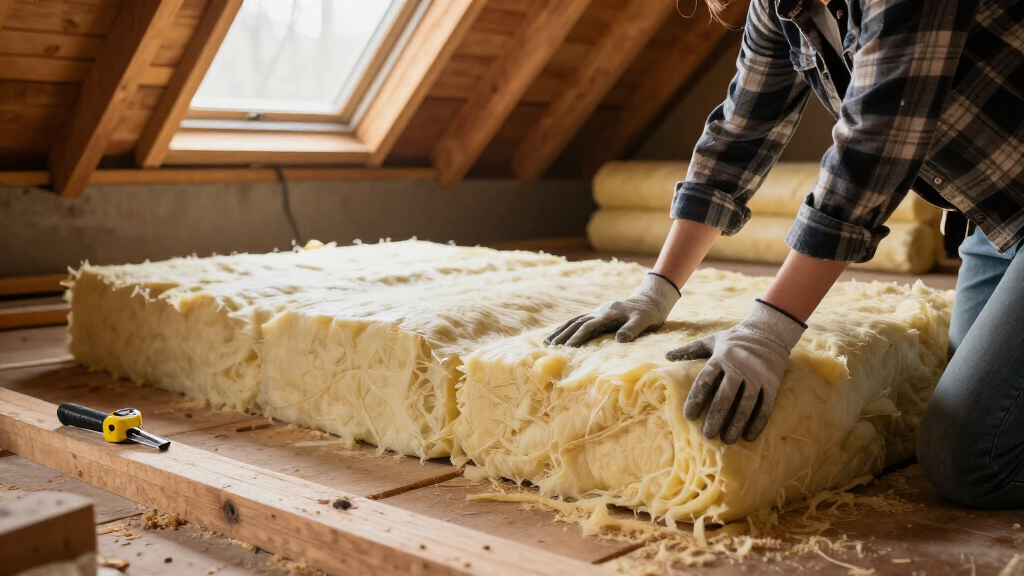

Finding the best home insulation products comes down to matching the material to the job: radiant barriers like the US Energy Products 1000 sq. ft. Perforated Radiant Barrier excel in hot attics, while Owens Corning R-19 Fiberglass Batts remain the workhorse for walls and ceilings that need true thermal resistance. For quick, beginner-friendly wins, the Duck MAX Strength Window Insulation Kit and Loctite Tite Foam sealants stop drafts in an afternoon without special tools. The main tradeoff in this category is between bulk R-value (fiberglass and foam) and radiant heat reflection (foil and bubble products), which solve completely different problems — a mistake that wastes a lot of money. Coverage per dollar, fire ratings, and whether a product blocks moisture or traps it also separate the winners from the rest. Keep reading for the full breakdown of all 13 products and which one fits your project.

Get backup power and energy gear delivered free — and shop member deals
- Fast, free delivery on millions of items
- Access to Prime Big Deal Days deals on October 6–7
- Prime Video, Amazon Music and more included
Key Takeaways
- Reflective foil products dominated the lineup by coverage — the two US Energy Products radiant barriers each cover 1,000 sq. ft., roughly double what bubble insulation rolls offer at similar effort levels.
- Only the Owens Corning R-19 fiberglass batt provides conventional R-value; every foil and bubble product in this roundup works by reflecting radiant heat, not slowing conduction — so they complement rather than replace traditional insulation.
- Perforated versus non-perforated foil was a hidden deciding factor: the perforated US Energy Products barrier breathes and suits humid attics, while the non-perforated version doubles as a vapor barrier and risks trapping moisture in the wrong climate.
- For small-gap sealing, the two Loctite Tite Foam cans split the work — Big Gaps fills large cavities with more expansion, while Gaps & Cracks is the safer choice around window and door frames where over-expansion can warp frames.
- Beginner-friendly niche products (Duck window kit, magnetic door curtain, DGSL attic tent) deliver fast comfort improvements but address symptoms of heat loss, not the structural insulation underneath.
| US Energy Products Commercial Grade Solid White Foil Non-Perforated No Tear Radiant Barrier (1000 sq ft, 4ft Wide) |  | Best for Large Attic Projects | Coverage: 1,000 sq ft (4ft x 250ft roll) | Material: 5-layer aluminum foil with woven polyethylene scrim | Thickness: 8 mils | VIEW LATEST PRICE | See Our Full Breakdown |
| Duck MAX Strength Window Insulation Kit (62 in. x 210 in.) |  | Best Budget Draft Fix | Roll Size: 62 in. x 210 in. shrink film | Included Tape: 0.5 in. x 84 ft double-sided roll | Coverage: Up to 5 standard 3′ x 5′ windows | VIEW LATEST PRICE | See Our Full Breakdown |
| LSGCQ Reflective Insulation Roll, Double Reflective Bubble Sheet (23.6 in x 10 ft) |  | Best for RV and Small-Space Use | Dimensions: 23.6 in x 10 ft (approx. 20 sq ft) | Construction: Double-sided aluminum foil with bubble core | Included Accessories: Double-sided mounting tape | VIEW LATEST PRICE | See Our Full Breakdown |
| EcoFoil Single Bubble Reflective Foil Insulation Roll, 48 in x 125 ft (500 sq ft) |  | Best Value Multipurpose Roll | Coverage: 500 sq ft (48 in x 125 ft) | Thickness: Approx. 1/8 in (3.175 mm) | Construction: Single bubble core, white facing one side / foil other | VIEW LATEST PRICE | See Our Full Breakdown |
| US Energy Products R-8 HVAC Duct Wrap Insulation, 2 ft x 25 ft |  | Best for Ductwork | Size: 2 ft x 25 ft (50 sq ft) | R-Value: R-8 | Thickness: 1/4 in (5 mm) | VIEW LATEST PRICE | See Our Full Breakdown |
| Magnetic Thermal Insulated Door Curtain, 38 x 84 in |  | Best for Drafty High-Traffic Doorways | Curtain dimensions: 38 x 84 inches | Maximum door size: 36 x 82 inches (excluding frame) | Outer material: Waterproof Oxford fabric | VIEW LATEST PRICE | See Our Full Breakdown |
| DGSL Double Reflective Bubble Foil Insulation Foam, 23.6 in x 10 FT |  | Best for Windows and Small Spot Applications | Roll size: 23.6 in x 10 ft | Construction: Double-sided aluminum foil over bubble core | Weight: 200 g (10.76 sq ft) | VIEW LATEST PRICE | See Our Full Breakdown |
| US Energy Products Radiant Barrier Insulation, 1000 sqft (4ft Wide), Commercial Grade Perforated |  | Best Large-Scale Radiant Barrier | Coverage: 1,000 sq ft | Roll dimensions: 4 ft wide x 250 ft long | Reflectivity: 99.7%, double-sided | VIEW LATEST PRICE | See Our Full Breakdown |
| Reflectix BP24025 24-Inch by 25-Feet Bubble Pack Insulation |  | Best Multi-Purpose Reflective Insulation | Roll dimensions: 24 in x 25 ft | Coverage: 7,200 sq in (50 sq ft) | Thickness: 0.31 in (5/16 in) | VIEW LATEST PRICE | See Our Full Breakdown |
| Owens Corning R-19 Unfaced Fiberglass Insulation Batt, 15 in x 93 in, 77.5 Sq. Ft Coverage |  | Best for Real R-Value in Walls and Attics | R-Value: R-19 | Batt dimensions: 93 in L x 15 in W | Thickness: 6.5 inches | VIEW LATEST PRICE | See Our Full Breakdown |
| DGSL Attic Door Insulation Cover, Attic Tent 25 x 54 x 11 in | 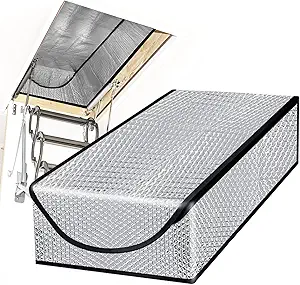 | Best Attic Hatch Fix | Dimensions: 25 x 54 x 11 in | Coverage: 9.38 sq ft | Material: Double-layer aluminum foil with bubble core | VIEW LATEST PRICE | See Our Full Breakdown |
| Loctite Tite Foam Big Gaps Spray Foam Sealant, 12 fl oz, 1 Pack |  | Best for Large Gaps | Volume: 12 fl oz | Pack size: 1 can | Material: Polyurethane expanding foam | VIEW LATEST PRICE | See Our Full Breakdown |
| Loctite Tite Foam Gaps & Cracks Spray Foam Sealant, 12 fl oz, 1 Pack |  | Best for Small Cracks | Size: 12 fl oz | Quantity: 1 can | Type: Polyurethane expanding foam sealant | VIEW LATEST PRICE | See Our Full Breakdown |
| home insulation product | Coverage |
|---|---|
| US Energy Products Commercial | 1,000 sq ft (4ft x 250ft roll) |
| Duck MAX Strength Window Insul | Up to 5 standard 3′ x 5′ windows |
| LSGCQ Reflective Insulation Ro | — |
| EcoFoil Single Bubble Reflecti | 500 sq ft (48 in x 125 ft) |
| US Energy Products R-8 HVAC Du | — |
| Magnetic Thermal Insulated Doo | — |
| DGSL Double Reflective Bubble | — |
| US Energy Products Radiant Bar | 1,000 sq ft |
| Reflectix BP24025 24-Inch by 2 | 7,200 sq in (50 sq ft) |
| Owens Corning R-19 Unfaced Fib | 77.5 sq ft per bag (8 batts, 9.69 sq ft each) |
| DGSL Attic Door Insulation Cov | 9.38 sq ft |
| Loctite Tite Foam Big Gaps Spr | — |
| Loctite Tite Foam Gaps & Crack | — |
More Details on Our Top Picks
US Energy Products Commercial Grade Solid White Foil Non-Perforated No Tear Radiant Barrier (1000 sq ft, 4ft Wide)
For a whole-attic radiant barrier job, this roll’s 1,000 square feet of coverage and near-impossible-to-tear scrim construction make it the serious-project choice. Unlike the EcoFoil Single Bubble, which adds a bubble layer for a thermal break, this is a pure 5-layer reflective barrier — its job is to bounce 97% of radiant heat before it enters the living space, not to slow conductive heat. The non-perforated design doubles as a vapor barrier, which is a real advantage in cold climates but a liability in humid attics where trapped moisture can condense. Compared with the perforated green US Energy Products barrier elsewhere in this roundup, this solid version trades breathability for moisture blocking. Installation is a two-person attic job, and a 250-foot roll is genuinely unwieldy.
Pros:- Enormous 1,000 sq ft coverage handles whole attics in one purchase
- Woven polyethylene scrim makes it effectively tear-proof during installation
- Blocks 97% of radiant heat with double-sided 99.9% pure aluminum
- Class 1/Class A fire rating and ASTM E84 compliance for building-code acceptance
Cons:- Non-perforated design can trap moisture in humid climates if installed without an air gap plan
- A 4ft x 250ft roll is heavy and awkward to maneuver solo in tight attic spaces
Best for: Homeowners in cold or mixed climates tackling a full attic, roof, or house-wrap project who want maximum coverage from a single roll
Not ideal for: Anyone with a small draft or window problem — this is bulk construction material, overkill next to the Duck Max window kit or a spray foam sealant
- Coverage:1,000 sq ft (4ft x 250ft roll)
- Material:5-layer aluminum foil with woven polyethylene scrim
- Thickness:8 mils
- Radiant Heat Blocked:97%
- Vapor Permeability:0.0 perms (non-breathable vapor barrier)
- Best Use:Attics, roofs, sheds, warehouses, house wrap
Our verdict“Buy this if you’re insulating a whole attic or roofline in one go; skip it for anything smaller than a room-scale radiant-heat problem.”
Duck MAX Strength Window Insulation Kit (62 in. x 210 in.)
Not every insulation problem needs a 500-foot roll. The Duck Max Strength kit targets the single most common cold-room culprit: leaky window seals. The shrink film is twice as thick as standard kits and puncture-resistant, which matters if you have pets or kids near the glass. Compared with the LSGCQ reflective bubble roll, which blocks radiant heat year-round but darkens or mirrors your windows, this film goes on crystal clear and peels off at the end of the season — you keep your view. The tradeoff is honest: this is a seasonal patch, not a permanent fix. It does nothing for wall or attic heat loss, and the hairdryer shrink step takes patience to get wrinkle-free. But for five drafty windows on a budget, nothing else here is this fast.
Pros:- Covers up to five standard 3′ x 5′ windows from one roll
- Film is double the thickness of standard kits and resists punctures
- Installs indoors with just scissors and a hair dryer, includes 84 feet of tape
- Removes cleanly at season’s end, making it renter-friendly
Cons:- Purely seasonal — it’s a draft patch, not structural insulation
- Shrinking the film evenly takes practice; wrinkles and re-adhesion are common first-time frustrations
Best for: Renters and homeowners with multiple drafty windows who want an inexpensive, removable winter fix without tools or renovation
Not ideal for: Anyone addressing attic, wall, or duct heat loss — this only seals the window itself and does nothing for radiant or conductive heat elsewhere
- Roll Size:62 in. x 210 in. shrink film
- Included Tape:0.5 in. x 84 ft double-sided roll
- Coverage:Up to 5 standard 3′ x 5′ windows
- Film Strength:2x thicker than standard window kits, puncture-resistant
- Tools Required:Scissors and hair dryer
- Removability:Peels off cleanly at end of season
Our verdict“The fastest, cheapest way to stop window drafts this winter, as long as you accept it’s a temporary seal rather than real insulation.”
LSGCQ Reflective Insulation Roll, Double Reflective Bubble Sheet (23.6 in x 10 ft)
This roll occupies the middle ground between the Duck window kit’s seasonal film and the EcoFoil’s bulk construction roll. At roughly 20 square feet, it’s sized for RV windows, windshield covers, and garage doors — jobs where you want radiant blocking and reusability rather than a one-winter throwaway. The double-sided foil plus bubble structure reflects heat in both directions, and the included double-sided tape means a screwdriver-free install. The scratch-resistant surface is a thoughtful touch for something you’ll handle repeatedly. What holds it back is scale and clarity: 10 feet disappears fast on anything bigger than a single garage door, and like any foil-faced product it blocks light and views, unlike Duck’s clear film. For hot-climate RV owners, though, that reflectivity is exactly the point.
Pros:- Double-sided reflective foil blocks heat in both summer and winter directions
- Cuts with scissors and mounts with the included double-sided tape — no fasteners needed
- Foldable and reusable across seasons, unlike shrink-film window kits
- Waterproof and suitable for vehicles, greenhouses, and damp outbuildings
Cons:- Only about 20 sq ft per roll, so costs multiply quickly on larger surfaces
- Opaque foil blocks light and views, making it wrong for windows you want to see through
Best for: RV owners, greenhouse keepers, and anyone needing reusable radiant blocking for a few windows or a single garage door
Not ideal for: Whole-room or attic projects — at 10 feet per roll you’d need many rolls, where the US Energy Products 1,000 sq ft barrier makes far more sense
- Dimensions:23.6 in x 10 ft (approx. 20 sq ft)
- Construction:Double-sided aluminum foil with bubble core
- Included Accessories:Double-sided mounting tape
- Cutting:Standard scissors
- Waterproof:Yes
- Best Use:RV windows, cars, garages, sheds, greenhouses, attics
Our verdict“A sensible pick for mobile and small-area radiant control where reusability beats one-season film; buy bigger rolls for anything structural.”
EcoFoil Single Bubble Reflective Foil Insulation Roll, 48 in x 125 ft (500 sq ft)
This is the roll I’d point most DIYers toward when the project is bigger than a window but smaller than a full attic retrofit. The bubble core adds a thermal break that the flat US Energy Products radiant barrier lacks, so it slows conductive heat slightly rather than only reflecting radiant energy. At 500 square feet, it splits the difference between the tiny LSGCQ roll and the 1,000 sq ft commercial barrier — enough for a pole barn wall, crawl space, or metal building without leftover material you’ll never use. The white facing on one side is a real quality-of-life feature for finished spaces where exposed foil would look industrial. It’s fiber-free and needs no protective gear, unlike the Owens Corning fiberglass batts in this roundup. The catch: single bubble is thin, and EcoFoil itself notes it performs best in warmer, low-snow regions.
Pros:- Reflects 96% of radiant heat while the bubble layer adds a thermal break pure foil barriers lack
- White facing looks acceptable in semi-finished spaces where foil would not
- Fiber-free, non-toxic, no off-gassing, and cuts with household scissors
- Acts as a vapor barrier when seams are taped, controlling condensation
Cons:- Low inherent R-value — it supplements rather than replaces conventional insulation in cold climates
- Requires foil tape (sold separately) to achieve the promised vapor-barrier performance
Best for: DIYers insulating pole barns, metal buildings, crawl spaces, or basement walls who want manageable 500 sq ft coverage without fiberglass handling
Not ideal for: Cold-climate homeowners seeking primary insulation — the single bubble layer has minimal R-value on its own and shouldn’t replace fiberglass batts in heating-dominated regions
- Coverage:500 sq ft (48 in x 125 ft)
- Thickness:Approx. 1/8 in (3.175 mm)
- Construction:Single bubble core, white facing one side / foil other
- Radiant Reflection:96% (4% emissive)
- Safety:Non-toxic, non-carcinogenic, fiber-free, no off-gassing
- Installation:Staple gun, fasteners, or adhesive; seal seams with foil tape
Our verdict“The best balance of coverage, versatility, and ease for outbuildings and辅助 spaces in warmer regions; pair it with fiberglass if real winter R-value is the goal.”
US Energy Products R-8 HVAC Duct Wrap Insulation, 2 ft x 25 ft
Every other product here addresses walls, windows, or attics; this one solves the problem of conditioned air losing temperature inside your ducts. With a stated R-8 rating, it’s the only pick in this batch with a conventional R-value you can cite against code requirements for duct insulation — the radiant barriers and bubble rolls can’t make that claim. The 1/4-inch foam core with double-sided reflective faces handles both conducted heat and radiant gain, and its condensation-inhibiting design matters on cold-air ducts running through humid basements, where foil-only wraps would sweat. Compared with the Loctite spray foams in this roundup, which seal gaps but can’t wrap a round duct, this conforms to the pipe geometry cleanly. The limitation is blunt: 50 square feet per roll. A typical basement duct run will demand two or three rolls.
Pros:- R-8 rating meets typical HVAC duct insulation code requirements
- Class 1/A fire rated and ASTM certified for fire-code compliance
- Fiber-free and non-toxic — cuts with a utility knife, no gloves or mask needed
- Waterproof core inhibits condensation on cold duct runs
Cons:- Only 50 sq ft per roll, so multi-roll purchases are the norm for real duct systems
- 1/4-inch foam is thin; long unsupported spans may need extra fastening to stay snug
Best for: Homeowners wrapping exposed HVAC ducts in basements, crawl spaces, or attics who need code-friendly R-8 rating and condensation control
Not ideal for: Large duct systems or whole-house projects — at 50 sq ft per roll, costs and joins multiply; attic and wall projects belong to the bigger rolls here
- Size:2 ft x 25 ft (50 sq ft)
- R-Value:R-8
- Thickness:1/4 in (5 mm)
- Core:Double-sided reflective foam
- Waterproof:Yes; inhibits condensation
- Installation:Staple, nail, glue, or spray adhesive
Our verdict“The right tool when the ducts themselves are the problem — buy it by the roll count your runs actually require.”
Magnetic Thermal Insulated Door Curtain, 38 x 84 in
Most insulation products in this roundup demand a permanent installation, but this magnetic door curtain takes the opposite approach: it is a renter-friendly, no-construction fix for a single problem door. The triple-layer construction — waterproof Oxford fabric over cotton filling — creates a real air gap that slows drafts, while 36 magnets plus four weighted bottom bars snap the seam shut behind you. That hands-free closure is what separates it from something like the Duck MAX window kit, which seals a surface but can’t be walked through. The 90% blackout rating is a bonus for sliding doors in bedrooms. The tradeoff is fundamental, though: a hung curtain will never match the R-value of an Owens Corning fiberglass batt, and it only covers doors up to 36 x 82 inches. Think of this as a fast, reversible comfort upgrade, not a whole-house strategy.
Pros:- Renter-friendly installation with no construction or permanent modification
- Automatic magnetic closure keeps the seal intact even with frequent hands-free passage
- Waterproof Oxford fabric wipes clean and stands up to pet traffic
- 90% blackout performance adds light control the foil products can’t match
Cons:- Only fits doors up to 36 x 82 inches, excluding the frame
- A temporary curtain delivers far less insulation than a permanent door or wall assembly
Best for: Renters and pet owners who battle drafts at a frequently used door and can’t modify framing
Not ideal for: Homeowners planning permanent energy upgrades — the insulation performance falls well short of batt or radiant-barrier installations
- Curtain dimensions:38 x 84 inches
- Maximum door size:36 x 82 inches (excluding frame)
- Outer material:Waterproof Oxford fabric
- Filling:Cotton
- Closure:36 magnets
- Bottom weights:4 gravity bars
- Light blocking:90% blackout
Our verdict“Buy this if you need an immediate, reversible fix for one drafty, high-traffic door — skip it if you’re insulating an entire house.”
DGSL Double Reflective Bubble Foil Insulation Foam, 23.6 in x 10 FT
Where the US Energy Products radiant barrier covers 1,000 square feet of attic, this DGSL roll is built for precision work: single windows, garage doors, and RV cutouts. The double-sided aluminum foil over bubble core bounces sunlight before it becomes interior heat, and the opaque surface doubles as privacy screening — something no fiberglass batt offers. Cutting it with scissors and mounting it with the 60 included adhesive pads takes minutes, which makes it the least intimidating product here for a first-time DIYer. Compared with EcoFoil’s 500-square-foot roll, the coverage is tiny, so the per-square-foot value is weaker, and the adhesive-pad mounting means it’s a semi-temporary solution rather than a code-compliant building layer. It also won’t add meaningful R-value the way Owens Corning batts do; this is radiant heat rejection, plain and simple.
Pros:- Cuts to size with ordinary scissors and mounts with 60 included adhesive pads
- Opaque foil surface adds privacy alongside heat rejection
- Works across windows, garage doors, RVs, and roofs
- Lightweight and removable without damaging surfaces
Cons:- Only about 20 square feet of coverage, poor value for large areas
- Adhesive mounting is semi-temporary and not suitable for permanent wall cavities
- No meaningful R-value against conductive heat loss in winter
Best for: Apartment dwellers and RV owners who need to block solar heat and glare on specific windows
Not ideal for: Whole-attic or new-construction projects — the narrow roll and adhesive mounting can’t scale economically
- Roll size:23.6 in x 10 ft
- Construction:Double-sided aluminum foil over bubble core
- Weight:200 g (10.76 sq ft)
- Mounting hardware:60 self-adhesive pads included
- Applications:Windows, garage doors, RVs, roofs
- Light blocking:Opaque foil surface
Our verdict“This roll makes sense for targeted sun-facing windows or an RV, not as a primary home insulation strategy.”
US Energy Products Radiant Barrier Insulation, 1000 sqft (4ft Wide), Commercial Grade Perforated
This is the attic-scale workhorse of the lineup. With 1,000 square feet of perforated, tear-resistant foil on a 250-foot roll, it is designed to lay across rafters and slash radiant heat gain in hot climates — the manufacturer cites potential cooling-cost reductions of 10–45% depending on region. The 99.7% double-sided reflectivity beats EcoFoil’s 96%, and the perforations let moisture pass through, which matters in humid attics where a solid vapor barrier would trap condensation. Unlike the DGSL roll, this is a code-oriented product with a Class A/Class 1 fire rating and ASTM E2599 and E84 compliance. The catch: radiant barriers do almost nothing against conductive heat loss, so pairing this with Owens Corning R-19 batts is the smarter whole-home play. Handling a 250-foot roll solo in a cramped attic is also genuinely awkward.
Pros:- 1,000 square feet of coverage from a single roll for large attics and roofs
- 99.7% double-sided reflectivity outperforms competing foil rolls
- Perforated design allows moisture to escape, preventing condensation buildup
- Class A/Class 1 ASTM fire rating meets most state and local building codes
Cons:- Provides no meaningful R-value against conductive heat transfer
- A 250-foot, 4-foot-wide roll is physically cumbersome for one person to install
Best for: Homeowners in hot, sunny climates who want to cut summer cooling loads across a large attic
Not ideal for: Cold-climate buyers seeking winter heat retention — a radiant barrier alone won’t stop conductive loss
- Coverage:1,000 sq ft
- Roll dimensions:4 ft wide x 250 ft long
- Reflectivity:99.7%, double-sided
- Design:Perforated for breathability
- Material weight:70 gram
- Origin:Made in USA
Our verdict“If your priority is beating summer attic heat over a large area, this is the coverage-per-roll champion — combine it with batts for year-round performance.”
Reflectix BP24025 24-Inch by 25-Feet Bubble Pack Insulation
Reflectix occupies the middle ground between the DGSL spot-treatment roll and the massive US Energy Products attic barrier. Its seven-layer build — foil, polyethylene, bubbles, a center strength layer, then mirrored back — gives it more structure than single-bubble products like the EcoFoil roll, so it resists crushing and holds up in tight cavities. The 24-inch width suits crawl spaces, rim joists, and behind radiant heaters where a 4-foot attic roll would be overkill. Being fiber-free sets it apart from Owens Corning fiberglass: no gloves, no respirator, no itching, which makes it the most pleasant material in this roundup to handle. The limitation is the same one all bubble products share — real R-value is modest and depends heavily on an adjacent air gap. In a cavity without one, performance drops off sharply.
Pros:- Seven-layer construction with foil-bonded polyethylene for durability
- Fiber-free and lightweight — installable without gloves or a respirator
- Versatile across crawl spaces, attics, walls, and post-frame buildings
- Reflects up to 97% of radiant heat from both outer foil layers
Cons:- Modest real-world R-value that depends on a sealed air gap to perform
- Only 50 square feet per roll, so larger projects need multiple purchases
Best for: DIYers tackling crawl spaces, rim joists, and metal outbuildings who want fiberglass-free handling
Not ideal for: Buyers expecting high R-value wall insulation — bubble products can’t substitute for 6.5-inch fiberglass batts
- Roll dimensions:24 in x 25 ft
- Coverage:7,200 sq in (50 sq ft)
- Thickness:0.31 in (5/16 in)
- Construction:7 layers: foil, polyethylene, double bubble, center polyethylene
- Radiant reflectance:Up to 97%
- Material:Aluminum foil and polyethylene
- Recommended uses:Crawl spaces, attics, walls, metal buildings, post-frame structures
Our verdict“A dependable, itch-free middle option for odd cavities and crawl spaces — just don’t expect it to replace proper batts in walls.”
Owens Corning R-19 Unfaced Fiberglass Insulation Batt, 15 in x 93 in, 77.5 Sq. Ft Coverage
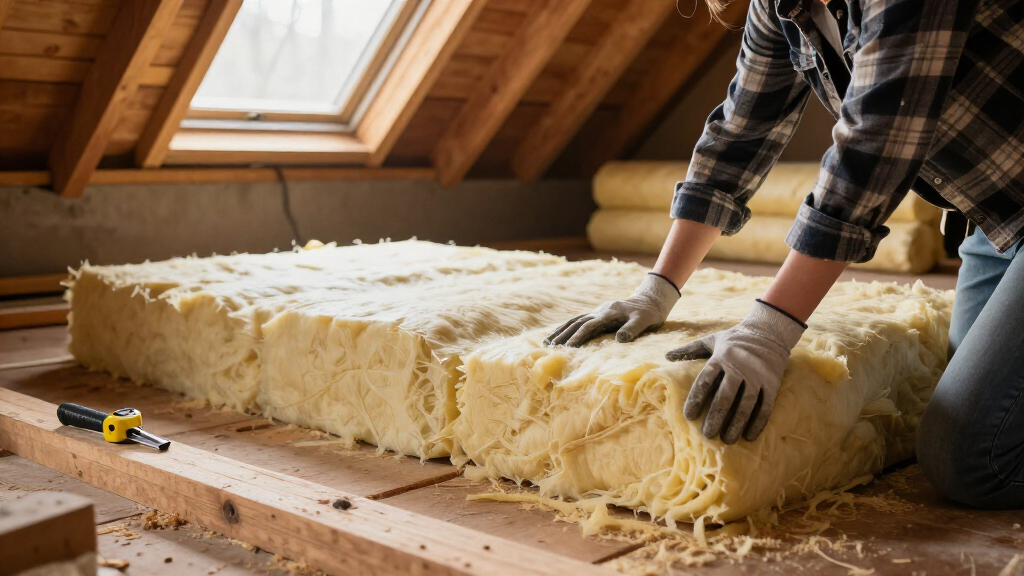
Everything else in this roundup reflects or blocks radiant heat; this is the only pick that delivers true R-19 thermal resistance against conductive heat flow — the metric that actually governs winter heating bills. Sized at 15 inches wide and 6.5 inches thick, the batts slot precisely into 2×6 wall framing, floors, and attic joists, and one bag covers 77.5 square feet. Compared with Reflectix or the US Energy Products foil, fiberglass also adds meaningful sound dampening, which none of the reflective products provide. The unfaced design is deliberate: it relies on a separate vapor barrier in the wall assembly, giving builders moisture-control flexibility that kraft-faced batts remove. That flexibility is also the drawback for DIYers — you must plan your own vapor management. And fiberglass demands gloves, long sleeves, and a mask; it’s the least pleasant material here to handle despite being the most effective insulator.
Pros:- True R-19 thermal rating far exceeds any reflective or bubble product in this lineup
- Cuts easily, recovers quickly, and friction-fits securely in framing
- Adds acoustic dampening that foil and bubble products cannot
- Resists moisture absorption for reliable long-term performance
Cons:- Unfaced design requires a separate vapor barrier or moisture-control strategy
- Installation demands protective gear due to skin and lung irritation
Best for: Homeowners and builders insulating 2×6 walls, floors, or attics who want genuine R-value plus sound reduction
Not ideal for: Renters or quick DIY patch jobs — it requires protective gear, framing access, and a separate moisture-control plan
- R-Value:R-19
- Batt dimensions:93 in L x 15 in W
- Thickness:6.5 inches
- Coverage:77.5 sq ft per bag (8 batts, 9.69 sq ft each)
- Material:Fiberglass
- Facing:Unfaced (no vapor barrier)
- Recommended use:Attics, floors, and 2×6 walls in wood and metal framing
- Brand / Model:Owens Corning E55
Our verdict“If permanent winter performance — not summer radiant heat — is the goal, this is the structural workhorse the rest of the list orbits around.”
DGSL Attic Door Insulation Cover, Attic Tent 25 x 54 x 11 in
Most insulation projects target big surfaces, but the attic stair opening is often the single leakiest spot in a house. This cover attacks that problem directly: a zippered foil-bubble tent that staples to the door frame and claims an R-value of 14.5 by reflecting radiant heat. Compared with something like the Owens Corning R-19 batts, which require cutting and fitting around awkward ladder mechanisms, this is a fifteen-minute staple-gun job a homeowner can finish solo. The zipper also means attic access stays functional, unlike a rigid foam board retrofit. The tradeoff is size — it fits openings only up to 25 x 54 inches, so non-standard hatches or oversized pull-down stairs won’t work, and stapling to a metal frame takes extra effort.
Pros:- Tool-free zipper access keeps the attic usable after installation
- Reflects radiant heat year-round for both summer and winter savings
- Also blocks dust and pollutants from filtering down through the hatch
- Installs with just a staple gun in minutes, no cutting or measuring of batts
Cons:- One-size fit won’t cover oversized or non-standard attic stair openings
- Staple-mounted design works best on wood framing; metal frames complicate installation
Best for: Homeowners with standard pull-down attic stairs who want a fast, DIY-friendly fix for a drafty hatch
Not ideal for: Houses with oversized or non-standard attic openings — the 25 x 54 inch fit limit will exclude them
- Dimensions:25 x 54 x 11 in
- Coverage:9.38 sq ft
- Material:Double-layer aluminum foil with bubble core
- Claimed R-Value:14.5
- Radiant Heat Reflection:97%
- Installation:Staple to door frame; zipper access
- Best Use:Attic stairs, hatch doors, ladder openings
Our verdict“If your attic hatch is a standard 25 x 54 inches or smaller, this is the cheapest per-hour energy upgrade you can make without touching a roll of fiberglass.”
Loctite Tite Foam Big Gaps Spray Foam Sealant, 12 fl oz, 1 Pack
When a crack is wider than an inch, caulk and weatherstripping give up — that’s where this can earns its spot. The 3-inch gap capacity means it can seal around pipe penetrations, rim joists, and rough-in holes that the standard Loctite Tite Foam Gaps & Cracks version simply can’t fill in one pass. The polyurethane formula stays flexible after curing, so it moves with seasonal wood expansion instead of cracking apart the way rigid fills do, and its UV resistance means exposed spots won’t degrade the way ordinary foam does in sunlight. The catch is expansion itself: this foam bulges well beyond the bead you lay down, so anything near finished surfaces needs masking, and cured excess has to be trimmed back with a knife. Compared with the DGSL attic cover, which solves one specific leak, this is the grab-and-go tool for scattered holes anywhere in the envelope.
Pros:- Fills and insulates gaps up to 3 inches wide in a single application
- Flexible cured foam accommodates building movement without cracking
- Bonds to wood, concrete, brick, stone, metal, and PVC
- Resists UV exposure, so partially sealed spots hold up over time
Cons:- Expansion makes application messy without careful masking
- Cured foam requires trimming for a flush finish
- One 12 oz can limits coverage for whole-home air sealing
Best for: DIYers sealing rim joists, pipe and wire penetrations, and other oversized gaps during weatherization projects
Not ideal for: Precision work near finished trim or visible interiors — expansion and trimming make it messy for cosmetic areas
- Volume:12 fl oz
- Pack size:1 can
- Material:Polyurethane expanding foam
- Maximum gap size:3 inches
- Compatible surfaces:Wood, concrete, brick, stone, metal, PVC, and more
- UV resistance:Resists UV exposure
- Flexibility:Remains flexible after curing
Our verdict“This is the can to reach for when the hole is too big for caulk and too awkward for anything else on this list.”
Loctite Tite Foam Gaps & Cracks Spray Foam Sealant, 12 fl oz, 1 Pack
Not every gap needs the heavy artillery. This sibling to the Big Gaps formula is tuned for openings up to 1 inch, and its high-density, uniform cell structure produces a tighter, more consistent seal — which matters most in fine work like window perimeters and sill plates where a coarse foam would leave voids. It shares the same polyurethane flexibility and UV durability as its bigger counterpart, bonding to wood, concrete, brick, stone, metal, and PVC, so it handles the same range of materials with less aggressive expansion to manage. The tradeoffs mirror all expanding foams: application gets messy fast without gloves and drop cloths, and cured beads stand proud of the surface until you trim them. If you’re deciding between the two Loctite cans, think of this as the finishing tool and Big Gaps as the structural filler — most weatherization projects genuinely need both.
Pros:- High-density uniform cell structure delivers a tighter, more consistent seal
- Bonds strongly to most common building materials
- Withstands building movement and UV exposure for long service life
- Controlled size suits precision crack work around windows and doors
Cons:- Expanding foam can be messy to apply without prep
- Requires trimming after curing for a clean finish
- Capped at 1-inch gaps, limiting use on bigger penetrations
Best for: Homeowners doing detailed air-sealing around windows, doors, sill plates, and other narrow cracks under an inch
Not ideal for: Larger penetrations over 1 inch — the Big Gaps version handles those in fewer passes
- Size:12 fl oz
- Quantity:1 can
- Type:Polyurethane expanding foam sealant
- Max gap size:Up to 1 inch
- UV resistance:Yes
- Bonds to:Wood, concrete, brick, stone, metal, PVC, and more
- Foam structure:High-density with uniform cells
Our verdict“For cracks under an inch, this denser foam gives a cleaner, tighter seal than its Big Gaps sibling — just plan on trimming.”
How We Picked
I evaluated each product against the criteria that actually determine whether an insulation purchase pays off: thermal performance type (R-value versus radiant reflection), coverage area per package, fire safety ratings, vapor behavior, and installation difficulty. Products that solve the most common homeowner problems — hot attics, cold rooms, leaky ducts, and drafty openings — ranked higher than niche performers with limited applications. I also weighed durability factors like tear resistance and whether a product can function as both insulation and an air or vapor barrier.
The ranking logic favors versatility and whole-house impact: large-coverage radiant barriers and fiberglass batts lead because they address the biggest surfaces in a home, while targeted products like door curtains and window kits rank lower despite doing their jobs well, because their scope is narrow. Within similar categories, I differentiated on practical details — perforation for breathability, scrim reinforcement for tear resistance, and expansion behavior for spray foams — since these details decide whether an installation succeeds or creates new problems.
Factors to Consider When Choosing Best Home Insulation Products
Before choosing from the products above, it helps to understand the broader insulation landscape — because the most expensive mistake in this category isn’t buying the wrong product, it’s buying the right product for the wrong problem.Radiant Barrier vs. R-Value: Know Which Problem You’re Solving
The single biggest source of confusion in home insulation is conflating two different mechanisms. Fiberglass batts and foam work by conduction resistance — they slow heat passing through a material, measured as R-value. Radiant barriers and reflective foils work by emission — they bounce radiant energy back before it becomes heat in your living space, which matters most in attics under a hot roof. If your upstairs rooms overheat in summer, a radiant barrier in the attic is often the higher-impact purchase. If your rooms are cold in winter with high heating bills, R-value products like the Owens Corning batts do the heavy lifting. A common mistake is installing reflective bubble insulation in a wall cavity expecting it to perform like R-19 fiberglass — it won’t, because there’s no radiant heat source inside a wall to reflect. Ideally, a well-insulated home uses both approaches in different locations.
Coverage Area and Cost Planning
Insulation is sold by coverage, and misjudging square footage is how projects stall halfway through. Measure your target surface — attic floor, roof deck, or wall cavities — and add 10–15% for waste and cutting errors, especially around joists, wiring, and ductwork. The difference between a 500 sq. ft. roll and a 1,000 sq. ft. roll matters more than it appears: shipping multiple smaller rolls often costs more than one large one, and color or batch variations between rolls can be visible in unfinished spaces. For spray foam, estimate your linear feet of gaps honestly — a single 12 oz. can covers far less than most buyers expect, and running out mid-jobs leaves half-sealed gaps that leak air all winter. When comparing products at similar performance levels, calculate cost per covered square foot rather than comparing package prices directly.
Moisture and Vapor Behavior
Insulation that traps moisture creates mold, rot, and degraded performance — sometimes worse than no insulation at all. Non-perforated foils act as vapor barriers, which is desirable on the warm side of a wall in cold climates but dangerous on cold surfaces where condensation forms. Perforated radiant barriers allow moisture to escape, making them the safer default for attic installations in humid regions. Fiberglass batts come faced or unfaced for exactly this reason: the facing (usually kraft paper) provides the vapor barrier, and choosing unfaced batts where a barrier is needed (or vice versa) is a classic DIY error. If you’re insulating a basement, crawlspace, or ductwork, check the product’s stated vapor permeance before buying. When in doubt in a mixed climate, breathable products with supplemental air sealing outperform sealed products installed incorrectly.
Fire Ratings and Safety Classifications
Insulation products carry fire ratings that directly affect where they can legally and safely be installed. Look for ASTM Class 1/A ratings — the US Energy Products duct wrap in this lineup carries one, and it’s what most local codes require for exposed or semi-exposed installations. Bare bubble foil without a fire rating should never be left exposed in living spaces, garages, or near heat sources like flues and recessed lighting. Fiberglass is naturally non-combustible, one of its enduring advantages over foam products. Spray foams, once cured, are generally fire-resistant, but the uncured product is flammable and requires ventilation during application. If your project involves an area that will be inspected, verify the rating documentation before purchasing — retrofitting non-compliant insulation means pulling it back out.
Skill Level and Installation Reality
Match the product to your willingness to do the work, because insulation only performs if installed correctly. Beginner-tier projects include window shrink kits, magnetic door curtains, attic stair covers, and gap-filling spray foam — all achievable in an afternoon with a utility knife and tape measure. Intermediate projects include staple-up radiant barriers and duct wrap, which demand protective clothing, patience with large material sheets, and comfort working in tight attic spaces. Fiberglass batt installation looks simple but demands careful cutting around obstructions and full cavity fill without compression — compressed fiberglass loses R-value in direct proportion to how much you squash it. Professional installation makes sense for whole-home fiberglass or any project involving existing insulation removal, old wiring, or suspected asbestos in older homes. A realistic self-audit of your skill and available time prevents the half-finished insulation project, which is the most common outcome of overambitious DIY planning.
Sealing Before Insulating
Air leakage accounts for a large share of home energy loss, and insulation over an unsealed gap performs dramatically below its rating. The correct sequence is always air-seal first, insulate second — which is why spray foam sealants pair so well with every other product in this roundup. Priority sealing targets include attic hatches, rim joists, plumbing and electrical penetrations, duct joints, and the gaps around window and door frames. Products like the Duck window kit and magnetic door curtain are essentially pure air-sealing products, and their comfort payoff often exceeds their modest insulation value. Skipping the sealing step and adding more insulation is like wearing a thick coat left unzipped: the material rating is there, but the heat escapes anyway. Budget roughly a quarter of your project time and money toward sealing products before buying bulk insulation.
Frequently Asked Questions
Can I use reflective bubble insulation instead of fiberglass in my walls?
Generally, no — and understanding why saves a costly mistake. Bubble foil products like EcoFoil or Reflectix reflect radiant heat, which requires an air gap facing a heat source, typically a hot roof or sun-exposed surface. Inside a wall cavity, there’s no radiant load to reflect, so the product contributes very little compared to even modest R-value materials. Fiberglass batts like the Owens Corning R-19 slow conductive heat flow through the wall itself, which is the actual mechanism of wall heat loss. Some builders do layer bubble foil as a supplemental product over studs, but only with an air gap and never as the sole wall insulation. For walls, fiberglass, mineral wool, or spray foam are the materials that deliver real thermal performance.
Should I choose the perforated or non-perforated radiant barrier for my attic?
The choice hinges on your climate and where you’re installing it. Perforated barriers allow moisture to pass through, preventing condensation buildup on the foil surface — this makes them the safer pick for humid climates and for attic-floor installations where the barrier sits near the living space. Non-perforated barriers block moisture entirely, functioning as combined radiant and vapor barriers, which suits dry climates or applications where you deliberately want vapor blocking, such as under slabs or against masonry. Installing non-perforated foil in a humid attic over living space risks trapping moisture against the roof deck or ceiling drywall, potentially causing mold and rot over time. If you’re unsure of your home’s moisture behavior, perforated is the lower-risk default.
What’s the difference between Loctite Big Gaps and Gaps & Cracks spray foam?
The two cans differ mainly in expansion volume and bead size, which determines where each belongs. Big Gaps expands more aggressively and fills larger voids — rim joists, large penetrations around pipes, and holes bigger than an inch across — where a low-expansion product would simply not fill the cavity. Gaps & Cracks expands less and dispenses in a more controlled bead, making it the right choice around window and door frames, where over-expansion can bow the framing and jam the operation of the unit. Using Big Gaps around a window frame is a common DIY error that can push frames out of square. If buying only one, Gaps & Cracks is the more versatile everyday can, but homes with older construction or major penetrations benefit from having both on hand.
Do window insulation kits and door curtains actually make a difference?
Yes, but with clear expectations about what they do. Shrink-film kits like the Duck MAX create an air-sealed pocket over the window, eliminating the convective draft and cold-radiation effect of single-pane glass — most users feel the difference in comfort within a day, and the effect on a whole drafty room can be surprising. They’re seasonal solutions, removed in spring, and do nothing for heat lost through walls or the attic. Magnetic door curtains similarly block the draft column through a frequently used exterior door, though they’re a compromise product — they work best on doors you use often, where a fixed insulation panel isn’t practical. Neither substitutes for storm windows or proper weatherstripping, but as low-cost, renter-friendly, immediate-relief products, they punch above their weight.
Is an attic stair cover worth it if my attic already has insulation?
Very often, yes — the attic hatch is one of the worst thermal weak points in a typical home, because pull-down stairs can’t be buried under floor insulation without blocking access. A cover like the DGSL attic tent sits over the folded ladder assembly, creating a sealed insulating box that stops the stack-effect airflow pulling heated air out of your home all winter. Even with a well-insulated attic floor, an uncovered hatch functions as a roughly door-sized hole in your thermal envelope. The payoff is largest in cold climates and in homes where the hatch sits in a hallway or bedroom ceiling. Installation takes under an hour, and combining the cover with perimeter weatherstripping on the hatch frame multiplies the effect.
Conclusion
After comparing all 13 products, the right pick depends entirely on the job you’re tackling. For best overall, the US Energy Products Perforated Radiant Barrier stands out — 1,000 sq. ft. of tear-resistant coverage that addresses the single largest radiant heat source in most homes, with perforation that keeps installation safe in humid climates. The Owens Corning R-19 Fiberglass Batt is my best value for true thermal insulation, delivering conventional R-value that no foil product in this lineup can match for winter heating performance. For beginners, start with the Duck MAX Window Kit paired with Loctite Gaps & Cracks foam — an afternoon of work with immediate, noticeable comfort results and zero risk. The premium-minded buyer should layer the non-perforated US Energy Products barrier with the R-8 duct wrap for a whole-envelope approach. Specific needs map cleanly to the niche picks: the DGSL attic tent for hatch heat loss, the magnetic door curtain for high-traffic exterior doors, and the EcoFoil and Reflectix rolls for ductwork, RVs, and crawlspaces. Whatever you choose, seal air gaps before adding insulation — that sequencing decision matters more than any single product choice in this roundup.
Fall Picks
fall essentials
As an affiliate, we earn on qualifying purchases.