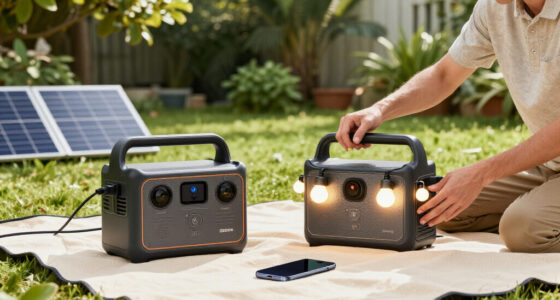

Choosing the right portable power station depends heavily on whether you need lightweight gear for weekend camping or heavy-duty backup for home emergencies. My top overall pick is the Anker SOLIX C1000 Gen 2 because it balances rapid charging with a robust 1024Wh LiFePO4 battery that handles high-wattage appliances without breaking a sweat. For those prioritizing portability, the Jackery Explorer 300 remains the gold standard for ease of use and compact design, while the EF ECOFLOW DELTA 3 Ultra stands out for users needing massive capacity and expandability. The main tradeoff in this category is between weight and output; smaller units are easy to carry but cannot run heavy tools, while large units require significant storage space and time to recharge. Continue reading for a detailed breakdown of how these models compare in real-world scenarios.

Get backup power and energy gear delivered free with Prime
- Fast, free delivery on millions of items
- Prime Video, Amazon Music and more included
- Member-only deals all year
Complete the kit


Key Takeaways
- LiFePO4 battery chemistry has become the standard for durability, with most mid-to-high-tier models in this roundup offering over 3,000 charge cycles compared to the shorter lifespan of older lithium-ion models.
- Charging speed is a major differentiator; the Anker SOLIX C1000 Gen 2 and EcoFlow DELTA 3 series recharge in under an hour from a wall outlet, whereas budget-friendly units like the HOWEASY 120W can take several hours.
- Pure sine wave output is no longer a premium feature; even entry-level models like the MARBERO M82 now offer cleaner power, which is safer for sensitive electronics like laptops and CPAP machines.
- Expandability is key for long-term value; models like the EF ECOFLOW DELTA 3 Ultra and Anker SOLIX S2000 allow users to add battery modules later, avoiding the need to buy a larger unit immediately.
- Solar input capabilities vary widely; while many stations accept solar panels, the ZeroKor 300W and Jackery Explorer 300 bundles offer better integrated efficiency for off-grid users compared to standalone units requiring separate controllers.
| HOWEASY Portable Power Station, 120W (240W Peak), 88Wh |  | Best Ultra-Lightweight Pick | Capacity: 88Wh | Continuous output: 120W | Peak output: 240W | VIEW LATEST PRICE | See Our Full Breakdown |
| BLUETTI Elite 30 V2 Portable Power Station, 288Wh, 600W |  | Best for Fast-Recharging Compact Backup | Capacity: 288Wh | Continuous output: 600W | Power Lifting output: 1500W | VIEW LATEST PRICE | See Our Full Breakdown |
| BailiBatt 300W Portable Power Station, 266Wh |  | Best for Multi-Device Camping | Capacity: 266Wh | Maximum output: 300W | AC outlets: 2 × 110V pure sine wave | VIEW LATEST PRICE | See Our Full Breakdown |
| MARBERO M82 Portable Power Station, 88Wh |  | Best Compact Station for Campsite Lighting | Battery capacity: 88Wh | Battery capacity: 24,000mAh | Surge power: 120W | VIEW LATEST PRICE | See Our Full Breakdown |
| Anker SOLIX C1000 Gen 2 Portable Power Station |  | Best for High-Capacity Backup | Battery capacity: 1,024Wh | Battery type: LiFePO4 | Output wattage: 2,000W | VIEW LATEST PRICE | See Our Full Breakdown |
| EF ECOFLOW DELTA 3 Ultra 3072Wh Portable Power Station |  | Best for Whole-Home Backup | Battery capacity: 3,072Wh | Battery type: LiFePO4 | Continuous output: 3,600W | VIEW LATEST PRICE | See Our Full Breakdown |
| Jackery Explorer 300 Portable Power Station with 40W Solar Panel |  | Best Small Solar Bundle | Battery capacity: 292Wh | Peak output: 600W | Battery chemistry: LiFePO4 | VIEW LATEST PRICE | See Our Full Breakdown |
| Jackery Explorer 300 Portable Power Station, 292Wh |  | Best Compact Pick | Capacity: 292Wh | Peak output: 600W | AC outlets: 2 | VIEW LATEST PRICE | See Our Full Breakdown |
| ZeroKor 300W Portable Power Station with 60W Solar Panel |  | Best for Basic Outdoor Charging | Maximum power output: 300W | Solar panel: 60W monocrystalline; 20.5% conversion efficiency | AC outlets: 2, 300W maximum | VIEW LATEST PRICE | See Our Full Breakdown |
| EBL Acc2400 Portable Power Station, 1843.2Wh LiFePO4 Battery, 2400W Output |  | Best for Multi-Device Worksites | Battery chemistry: LiFePO4 | Capacity: 1,843.2Wh | Maximum output: 2,400W | VIEW LATEST PRICE | See Our Full Breakdown |
| Jackery Explorer 1000 v2 Portable Power Station |  | Best for Solar Integration | Battery Capacity: 1,070Wh | Battery Type: LFP (LiFePO4) | AC Output: 1,500W | VIEW LATEST PRICE | See Our Full Breakdown |
| EcoFlow DELTA 3 Classic Portable Power Station, 1024Wh, 1800W |  | Best Overall for Home Backup | Capacity: 1,024Wh | Output Wattage: 1,800W | Surge Output: 3,600W | VIEW LATEST PRICE | See Our Full Breakdown |
| DJI Power 1000 V2 Portable Power Station, 1024Wh LFP Battery |  | Best High-Performance Output | Battery Capacity: 1,024Wh | Output Wattage: 2,600W | Charging Time: 0–80% in 37 minutes | VIEW LATEST PRICE | See Our Full Breakdown |
| STARYLINE 1000W Portable Power Station, 1024Wh LiFePO4 Battery |  | Best Value for Basic Needs | Battery Capacity: 1,024Wh | Continuous Output: 1,000W | Peak Output: 2,000W | VIEW LATEST PRICE | See Our Full Breakdown |
| Anker SOLIX S2000 Portable Power Station, 2,010Wh, 1,500W |  | Best for Extended Runtime | Capacity: 2,010Wh | Continuous Output: 1,500W | Peak Output: 3,000W | VIEW LATEST PRICE | See Our Full Breakdown |
| portable power station | Weight | Battery capacity |
|---|---|---|
| HOWEASY Portable Power Station | 2.3 lb | — |
| BLUETTI Elite 30 V2 Portable P | 9.5 lb | — |
| BailiBatt 300W Portable Power | 6.5 lb | — |
| MARBERO M82 Portable Power Sta | 3.2 lb | 88Wh |
| Anker SOLIX C1000 Gen 2 Portab | 11.3kg | 1,024Wh |
| EF ECOFLOW DELTA 3 Ultra 3072W | 72.1 pounds | 3,072Wh |
| Jackery Explorer 300 Portable | — | 292Wh |
| Jackery Explorer 300 Portable | 7.1 pounds | — |
| ZeroKor 300W Portable Power St | — | — |
| EBL Acc2400 Portable Power Sta | 54 pounds listed in specifications; 55 pounds in description | — |
| Jackery Explorer 1000 v2 Porta | 23.8 pounds | 1,070Wh |
| EcoFlow DELTA 3 Classic Portab | 26.7 pounds | — |
| DJI Power 1000 V2 Portable Pow | — | 1,024Wh |
| STARYLINE 1000W Portable Power | 27.7 lbs | 1,024Wh |
| Anker SOLIX S2000 Portable Pow | 35.7 lbs | — |
More Details on Our Top Picks
HOWEASY Portable Power Station, 120W (240W Peak), 88Wh
At just 2.3 pounds, the HOWEASY is the easiest option here to tuck into a daypack for phones, small electronics, and emergency lighting. Its 88Wh capacity and 120W continuous output suit low-draw gear, but they rule out many household appliances and limit runtime compared with the BLUETTI Elite 30 V2, which has more than three times the capacity and 600W continuous output. Eight ports give this small unit useful flexibility for several devices, though the number of sockets does not increase the modest amount of stored energy. I also like that it can recharge from an outlet, car socket, or compatible solar panel. The tradeoff is that the panel is separate, and buyers needing appliance-level backup should choose a larger station.
Pros:- Very light at 2.3 pounds with a compact footprint
- Eight ports cover AC, USB, USB-C, and DC connections
- Can recharge from AC, a car socket, or a compatible solar panel
- Built-in light offers steady, flash, and SOS modes
Cons:- 120W continuous output excludes many appliances
- 88Wh capacity provides limited runtime for anything beyond small electronics
- Compatible solar panel is not included
Best for: Hikers, commuters, and car-camping users who want a very light backup for phones, lights, and other low-wattage electronics.
Not ideal for: Anyone needing to run a refrigerator, cooking appliance, or multiple high-draw devices; its 120W continuous limit and 88Wh capacity are restrictive.
- Capacity:88Wh
- Continuous output:120W
- Peak output:240W
- AC outlets:2 × 110V
- Other ports:18W USB-C, 2 QC 3.0 USB, 1 USB (5V/2.4A), 2 DC (12V/10A)
- Recharge methods:AC outlet, compatible 15V–24V solar panel, 12V/24V car socket
- Weight:2.3 lb
- Dimensions:6.6 × 4 × 3 in
- Lighting:Steady, flash, and SOS modes
Our verdict“Choose the HOWEASY for a highly portable, low-power charging kit, not for household backup or appliance use.”
BLUETTI Elite 30 V2 Portable Power Station, 288Wh, 600W
The BLUETTI Elite 30 V2 offers a useful step up from the 88Wh HOWEASY: 288Wh of capacity and 600W continuous output make it suitable for a broader range of small devices, while its 9.5-pound weight remains manageable for car camping or moving around the house. Its standout advantage is fast AC charging, reaching 80% in 45 minutes, so it can be replenished quickly between outages or outings. The UPS function, with a switch time of up to 10ms, also makes it a better fit than the BailiBatt 300W for users seeking backup for sensitive electronics. The catch is that 288Wh still limits runtime, and the 1500W Power Lifting figure is a special mode—not continuous output. I would not treat it as a substitute for a large home backup unit.
Pros:- 600W continuous output supports more devices than the 88Wh HOWEASY
- AC charging reaches 80% in 45 minutes
- UPS switch time of up to 10ms supports brief power interruptions
- Multiple charging methods include AC, solar, car, lead-acid, and generator
Cons:- 288Wh capacity limits runtime for power-hungry equipment
- 1500W Power Lifting output is not continuous output
- At 9.5 pounds, it is heavier than the smallest stations in this roundup
Best for: Apartment dwellers and campers who need a portable station for small appliances and electronics, plus rapid AC recharging or short-interruption UPS backup.
Not ideal for: Buyers seeking long runtimes for high-wattage appliances; the 288Wh battery is modest, and 1500W is available only in Power Lifting mode.
- Capacity:288Wh
- Continuous output:600W
- Power Lifting output:1500W
- AC charging:380W or 200W adjustable
- AC charge time:0–80% in 45 minutes; 0–100% in 70 minutes
- UPS switch time:≤10ms
- Weight:9.5 lb
- Dimensions:9.8 × 7 × 6.6 in
- Charging methods:AC, solar, car, lead-acid, and generator
Our verdict“Pick the BLUETTI for a portable mid-power station that recharges quickly, while accepting that its battery is not built for extended appliance use.”
BailiBatt 300W Portable Power Station, 266Wh
The BailiBatt is a practical middle ground for camping kits: its 266Wh battery and 300W maximum output provide more headroom than the HOWEASY’s 120W continuous rating, without moving into the heavier, higher-output class of the Anker SOLIX C1000 Gen 2. The mix of pure sine wave AC, USB-C, USB-A, car, and DC outputs makes it easier to support different small devices from one unit, and the LCD display gives a clear readout while packing or checking remaining power. At 6.5 pounds, it is still portable for car-based trips, though less suited to carrying long distances than the HOWEASY. Its capacity remains limited for sustained appliance use, and its solar panel is sold separately. The supplied dimensions also conflict, so I would verify the unit’s footprint before planning a tight storage space.
Pros:- 300W maximum output exceeds the HOWEASY’s 120W continuous rating
- Pure sine wave AC outlets suit compatible electronics
- Two USB-C outputs, two QC3.0 USB-A ports, car port, and DC output
- LCD display and three-mode flashlight add practical campsite utility
Cons:- 266Wh capacity limits runtime for higher-draw devices
- Solar panel is sold separately
- Listed dimensions differ between product details, making fit harder to confirm
Best for: Car campers and RV travelers who need several output types for phones, lights, and small electronics in a single portable unit.
Not ideal for: Backpackers who prioritize minimum weight or households needing extended appliance backup; it weighs 6.5 pounds and stores only 266Wh.
- Capacity:266Wh
- Maximum output:300W
- AC outlets:2 × 110V pure sine wave
- USB-C outputs:2 (24W and 18W)
- Other outputs:2 QC3.0 USB-A, 1 × 12V car port, 1 DC output
- Weight:6.5 lb
- Dimensions:8.7 × 5.1 × 7.9 in (description); 8.66 × 8.66 × 7.87 in (product information)
- Display and light:LCD; bright, strobe, and SOS modes
- Warranty:24 months
Our verdict“Choose the BailiBatt for flexible ports and moderate output on car-based trips, but not for long appliance runtimes or ultralight travel.”
MARBERO M82 Portable Power Station, 88Wh
The MARBERO M82 is a compact pick for buyers who want basic device charging and a useful built-in light in one package. Its 88Wh capacity puts it in the same small-battery class as the HOWEASY, but at 3.2 pounds it is heavier, while its three-level LED and SOS mode make it appealing for a campsite or emergency kit. The stated two-hour charge to 80% gives it a clear convenience advantage over a slow-recharging small station, and compatible 30W or 60W MARBERO panels offer a solar option. The main limitation is output: its 80W running wattage is below the HOWEASY’s 120W continuous rating, so fewer devices are within reach. I’d choose it for lighting and low-power electronics, not for appliance backup; its solar panel is not listed as included.
Pros:- Eight output ports support several connected devices
- Charges to 80% in about two hours with the included adapter
- Three-level LED light includes SOS mode and up to 68 hours of stated runtime
- Battery management, short-circuit, overload, and automatic-shutdown protections
Cons:- 80W running wattage limits appliance compatibility
- 88Wh capacity is suited to small electronics rather than extended backup
- Compatible solar panel is not listed as included
Best for: Car campers and emergency-kit owners who want a small light source with charging for phones and other low-wattage devices.
Not ideal for: Users who need more than 80W of running output or want the lightest 88Wh option; the HOWEASY weighs less and has a higher stated continuous output.
- Battery capacity:88Wh
- Battery capacity:24,000mAh
- Surge power:120W
- Running wattage:80W
- Output ports:8
- Charging time:0–80% in about 2 hours
- Solar compatibility:Compatible with 30W or 60W MARBERO solar panels
- Weight:3.2 lb
- Dimensions:6.5 × 4.6 × 3.1 in
Our verdict“Choose the M82 for compact lighting and low-power charging, but prefer the HOWEASY if lower weight and higher stated continuous output matter more.”
Anker SOLIX C1000 Gen 2 Portable Power Station
The Anker SOLIX C1000 Gen 2 is the clear choice in this group for buyers who need to run more than small electronics: its 1,024Wh LiFePO4 battery and 2,000W output put it far ahead of the 288Wh BLUETTI Elite 30 V2 in both stored energy and continuous power. Fast recharging adds practical value for outage preparation, with AC charging listed at 49 minutes at 1,600W and solar charging at 1.8 hours under the stated conditions. Its under-10ms UPS switchover also suits essential devices that need near-continuous power. This capacity comes with a bigger, heavier unit at 11.3kg, so it is less convenient for frequent carrying than the compact stations. The port count is also inconsistent: the description says 10, while the specifications list 9 total power outlets. I’d confirm the layout against the intended devices before buying.
Pros:- 1,024Wh LiFePO4 battery and 2,000W output support much more demanding use than the compact options
- AC recharge listed at 49 minutes at 1,600W
- Solar recharge listed at 1.8 hours with up to 600W solar input
- UPS mode switches over in under 10ms
Cons:- At 11.3kg, it is substantially less portable than the HOWEASY, MARBERO, and BailiBatt
- Port count is inconsistent: 10 ports in the description versus 9 total power outlets in the specifications
- Solar input is limited to 600W
Best for: Homeowners and frequent campers who need substantial portable backup for several devices or moderate-power appliances, with fast recharge and UPS support.
Not ideal for: Backpackers and buyers who only need phone charging; its 11.3kg weight and 1,024Wh capacity are more station than those uses require.
- Battery capacity:1,024Wh
- Battery type:LiFePO4
- Output wattage:2,000W
- Peak output:3,000W
- AC recharge time:49 minutes at 1,600W
- Solar input:600W maximum (60V)
- Solar recharge time:1.8 hours
- UPS switchover:Under 10ms
- Weight:11.3kg
Our verdict“Choose the Anker SOLIX C1000 Gen 2 when capacity, appliance-level output, and quick recharging matter more than carry weight.”
EF ECOFLOW DELTA 3 Ultra 3072Wh Portable Power Station
I’d put the EcoFlow DELTA 3 Ultra at the top for buyers who need more than phone and laptop charging: its 3,072Wh capacity and 3,600W continuous output give it a broader household and power-tool role than the smaller Jackery Explorer 300 models. A sub-10ms backup switch can help keep sensitive equipment running through a brief outage, while 25dB operation is better suited to a quiet room or RV than a noisier generator. Wall, solar, car, and Smart Generator charging provide useful options when one source is unavailable. The tradeoff is portability: at 72.1 pounds, it is better moved occasionally than carried on a trip, and the supplied details don’t state charging times or include solar panels.
Pros:- 3,072Wh capacity and 3,600W continuous output suit a wider range of household loads than the Jackery Explorer 300.
- Under-10ms UPS switching helps protect power continuity for sensitive devices.
- 25dB operation is suited to overnight use and quieter settings.
- Can recharge from wall power, solar, a car input, or an EcoFlow Smart Generator.
Cons:- At 72.1 pounds, it is difficult to carry and reposition often.
- Charging times are not specified in the supplied product details.
- No solar panel is listed as included.
Best for: Homeowners or RV users who need substantial appliance capacity, fast backup switching, and multiple ways to recharge.
Not ideal for: Campers seeking a lightweight station to carry by hand, or buyers who need a stated recharge time and solar panel included.
- Battery capacity:3,072Wh
- Battery type:LiFePO4
- Continuous output:3,600W
- Surge output:7,200W
- UPS switching time:Under 10ms
- Noise level:25dB under load
- Charging options:Wall outlet, solar panels, car input, EcoFlow Smart Generator
- Weight:72.1 pounds
- Warranty:5 years
Our verdict“Choose the DELTA 3 Ultra for substantial, quiet backup power and skip it if easy carrying matters more than capacity.”
Jackery Explorer 300 Portable Power Station with 40W Solar Panel
This Explorer 300 bundle is for buyers who want a small station and a solar panel in one package, rather than assembling a kit separately. Its 292Wh capacity and 300W rated output are suited to personal electronics and modest camping loads, not household appliances. Compared with the standalone Jackery Explorer 300, the included 40W panel gives this version an out-of-the-box solar option, but its modest wattage means replenishing the battery can take patience; the product details cite about 7.5 hours to reach 80%. The LiFePO4 battery’s stated cycle rating supports repeated use, and the port selection covers common devices. I’d check the carrying details before buying: the supplied information lists both 7.5 and 12.9 pounds, a meaningful difference for pack-and-go use.
Pros:- Includes a 40W solar panel, unlike the standalone Jackery Explorer 300.
- USB-C PD, USB-A, AC, and car outputs accommodate several common device types.
- LiFePO4 cells are rated for over 4,000 cycles to 70% capacity.
- 300W rated output is appropriate for personal electronics and other modest loads.
Cons:- The included 40W panel is slow, with about 7.5 hours stated to reach 80%.
- Product information gives conflicting weights of 7.5 and 12.9 pounds.
- The 292Wh capacity and 300W output are not suited to larger appliances.
Best for: Campers and day-trip users who want a compact electronics station with a basic solar panel already included.
Not ideal for: Buyers who need fast solar replenishment, power-hungry appliances, or a confidently stated carry weight.
- Battery capacity:292Wh
- Peak output:600W
- Battery chemistry:LiFePO4
- Charge cycles:Over 4,000 to 70% capacity
- Ports:2 AC outlets, 1 USB-C PD (100W), 2 USB-A, 1 car port (120W)
- Included solar panel:40W
- Listed weight:12.9 pounds in specifications; 7.5 pounds in description
- Warranty:3+2 years
Our verdict“Pick this bundle for a ready-to-use, small solar setup, but choose a higher-output station for appliances or quicker recharging.”
Jackery Explorer 300 Portable Power Station, 292Wh
The standalone Jackery Explorer 300 earns its place for buyers who value a small, light station more than an all-in-one solar kit. At 7.1 pounds, it is easier to carry than the 12.9-pound specification listed for the Explorer 300 bundle, while keeping the same 292Wh capacity and 300W rated output. Its ports can serve several small devices, and the stated LiFePO4 cycle life makes it a reasonable fit for regular trips. Unlike the bundle, though, this version does not include a solar panel; a compatible 100W panel is described as taking it to 80% in about 2.8 hours. That gives buyers a faster solar path than the bundle’s 40W panel, but adds a separate purchase and still won’t make this a station for high-draw appliances.
Pros:- At 7.1 pounds, it is lighter than the Explorer 300 bundle’s listed 12.9-pound specification.
- Multiple AC, USB, and car outputs support several small devices.
- LiFePO4 battery is rated for over 4,000 cycles to 70% capacity.
- A 100W solar panel is stated to recharge it to 80% in about 2.8 hours.
Cons:- Solar panels are sold separately, unlike the 40W-panel Explorer 300 bundle.
- The 300W rated output limits the appliances it can run.
- Its 292Wh capacity is better suited to short trips than extended backup.
Best for: Lightweight-minded campers, photographers, and day-trip users who mainly need to charge small electronics.
Not ideal for: Buyers who want a solar panel included, need to run appliances above 300W, or want enough capacity for extended household backup.
- Capacity:292Wh
- Peak output:600W
- AC outlets:2
- Other ports:100W USB-C PD, 2 USB-A, 120W car port
- Battery chemistry:LiFePO4
- Solar charging:80% in approximately 2.8 hours with a 100W panel
- Weight:7.1 pounds
- Solar panel:Not included
Our verdict“Choose this Explorer 300 when low carry weight matters most and you’re comfortable buying a solar panel separately.”
ZeroKor 300W Portable Power Station with 60W Solar Panel
The ZeroKor makes most sense as a basic outdoor charging kit: it pairs a 300W maximum-output station with an included 60W monocrystalline panel, AC and DC outputs, USB ports, and an SOS flashlight. That panel is more capable on paper than the 40W panel bundled with the Jackery Explorer 300, though the supplied details don’t give a recharge time for the ZeroKor. Its built-in MPPT and multiple input options allow charging from AC, a car, or a compatible panel. I’d keep its role firmly to small devices and low-draw gear: the 300W ceiling rules out larger appliances, and the product warns that loads above it may damage the unit. The solar panel junction box also needs to stay dry, so this kit calls for more care outdoors than its bundled panel might suggest.
Pros:- Includes a 60W monocrystalline panel, compared with the 40W panel in the Jackery Explorer 300 bundle.
- AC, DC, and USB outputs cover common small-device charging needs.
- Can recharge from AC, a 12V car port, or a compatible solar input with built-in MPPT.
- Includes an SOS flashlight and several battery protection features.
Cons:- Loads above 300W may damage the unit, limiting its use with appliances.
- The solar panel junction box is not waterproof and must be kept dry.
- Product guidance recommends keeping the battery between 60% and 80%, which limits routine charging flexibility.
Best for: Occasional campers who want an included solar panel, basic device charging, and an SOS light in one kit.
Not ideal for: Travelers expecting to run appliances above 300W, or users who need a weather-ready solar panel without extra protection.
- Maximum power output:300W
- Solar panel:60W monocrystalline; 20.5% conversion efficiency
- AC outlets:2, 300W maximum
- DC output:9V–12.6V, 10A maximum
- USB ports:3 USB ports (5V/3A maximum) and 1 quick-charge USB port
- Recharging methods:AC outlet, 12V car port, or DC5521 solar input (13V–23V); built-in MPPT
- Solar panel outputs:USB-A, USB-C, and DC 18V/3.3A; 60W maximum
- Safety features:Short-circuit, over-current, over-voltage, overload, and overheating protection
- Included accessories:AC adapter, cigarette lighter adapter, 12V car charging cable, 60W solar panel kit, and user manuals
Our verdict“Choose the ZeroKor for modest outdoor charging with a bundled panel, but avoid it for larger appliances or wet-weather solar use.”
EBL Acc2400 Portable Power Station, 1843.2Wh LiFePO4 Battery, 2400W Output
The EBL Acc2400 is the lineup’s more connection-focused large station: it combines 1,843.2Wh of capacity with 2,400W output and a mix of AC, USB, DC, car, and wireless charging options. That gives it a practical job-site or group-camping role for running equipment while keeping many personal devices topped up. Compared with the EcoFlow DELTA 3 Ultra, it has less capacity and lower continuous output, but its stated support for up to 12 devices and wireless charging may suit a shared setup better. Its 0.1-second backup mode is useful, though slower than the EcoFlow’s under-10ms switch. At roughly 54–55 pounds it is still a substantial load, and the conflicting weight figures plus a two-year warranty make it a less compelling pick for frequent transport or long-term ownership reassurance.
Pros:- 1,843.2Wh capacity and 2,400W output support larger loads than the Jackery Explorer 300 models.
- AC, USB-A, USB-C, DC, car, and wireless charging provide flexible connection options.
- Rated for over 3,500 charge-discharge cycles with a LiFePO4 battery.
- 0.1-second emergency backup mode and built-in battery protections add useful backup functions.
Cons:- At about 54–55 pounds, it is heavy to carry frequently.
- The listed weight differs between product details and description.
- Its two-year warranty is shorter than the EcoFlow DELTA 3 Ultra’s five-year warranty.
Best for: Work crews and group campers who need substantial output, varied ports, and a station that can charge many devices at once.
Not ideal for: People who need a lightweight carry-on station, the fastest listed backup switching, or a longer stated warranty.
- Battery chemistry:LiFePO4
- Capacity:1,843.2Wh
- Maximum output:2,400W
- AC ports:4
- USB ports:2 USB-A and 2 USB-C (up to 100W PD)
- Other charging ports:1 car port, 2 DC ports, 1 wireless charging panel
- Battery cycle life:Over 3,500 charge-discharge cycles
- Emergency backup switching:0.1 seconds
- Weight:54 pounds listed in specifications; 55 pounds in description
Our verdict“Choose the Acc2400 for a shared work or camping setup with varied charging needs, but pick a lighter model for frequent carrying.”
Jackery Explorer 1000 v2 Portable Power Station
This model stands out for its dedicated solar ecosystem, making it the strongest choice if you already own Jackery panels or plan to build a consistent solar setup. Unlike the EcoFlow DELTA 3 Classic, which offers broader third-party compatibility, the Jackery locks users into its proprietary panel line, limiting flexibility but guaranteeing optimized charging curves. The 1,070Wh LFP battery provides reliable endurance for weekend trips, though it trails the Anker SOLIX S2000 in raw capacity. Its 1,500W output handles most small appliances, but the 3,000W surge is lower than competitors like the DJI Power 1000 V2, meaning it may struggle with high-startup tools. The app-controlled emergency charge is a clever feature for urgent top-ups, yet it requires active user intervention via the app, which adds a layer of complexity compared to simpler plug-and-play rivals. I find this unit best suited for those who value brand consistency over universal compatibility.
Pros:- Optimized charging when paired with Jackery solar panels
- Long-lasting LFP battery rated for 4,000 cycles
- App-controlled emergency charging mode for rapid top-ups
- Multiple output types support simultaneous device charging
Cons:- Solar charging is restricted to Jackery-brand panels only
- Lower surge capacity compared to high-output competitors
- Emergency fast charge requires manual activation in the app
Best for: Campers who already own Jackery solar panels or prioritize a unified, app-managed charging ecosystem.
Not ideal for: Users seeking universal solar panel compatibility or those needing higher surge power for heavy power tools.
- Battery Capacity:1,070Wh
- Battery Type:LFP (LiFePO4)
- AC Output:1,500W
- Surge Peak:3,000W
- Weight:23.8 pounds
- Ports:3 AC, 2 USB-C, 1 USB-A, 1 DC
- USB-C Output:Up to 100W
- Solar Compatibility:Jackery panels only
Our verdict“Choose this if you are invested in the Jackery solar ecosystem and prefer a curated, app-driven charging experience.”
EcoFlow DELTA 3 Classic Portable Power Station, 1024Wh, 1800W
The EcoFlow DELTA 3 Classic earns its spot as the best overall choice for home backup due to its under-10ms UPS switching, which keeps sensitive electronics running without interruption. Compared to the Jackery Explorer 1000 v2, this unit offers a higher 1,800W continuous output and faster AC charging, reaching 80% capacity in just 45 minutes. The X-Boost technology extends this to 2,600W for certain appliances, a feature absent in the STARYLINE 1000W model. However, this performance comes with a significant limitation: it is not compatible with DELTA 2 or DELTA 3 Series Smart Extra Batteries, locking you into the base capacity. The 26.7-pound weight makes it less portable than the Jackery, but its robust build and 5-year warranty justify the bulk for stationary backup roles. I recommend this for users who prioritize reliability and speed over modular expandability.
Pros:- Ultra-fast UPS switching prevents device shutdowns
- Rapid AC charging from 0 to 80% in 45 minutes
- High 1,800W output with X-Boost for heavier loads
- Long-lasting LiFePO4 battery rated for 10+ years
Cons:- Incompatible with EcoFlow DELTA 2/3 Smart Extra Batteries
- Heavier than comparable Jackery and Anker models
- Solar panel is sold separately
Best for: Homeowners needing a reliable, fast-charging backup for computers, routers, and small appliances.
Not ideal for: Users who want to expand capacity with external batteries or need a lightweight unit for frequent hiking.
- Capacity:1,024Wh
- Output Wattage:1,800W
- Surge Output:3,600W
- AC Charging:0–80% in 45 minutes
- UPS Switching Time:Under 10ms
- Battery Type:LiFePO4
- Weight:26.7 pounds
- Warranty:5 years
Our verdict“This is the definitive pick for home backup scenarios where uninterrupted power and fast recharging are paramount.”
DJI Power 1000 V2 Portable Power Station, 1024Wh LFP Battery
Designed for professionals and demanding users, the DJI Power 1000 V2 delivers an impressive 2,600W continuous output, far exceeding the Jackery Explorer 1000 v2 and the STARYLINE 1000W. This power level allows it to run high-draw tools and appliances that other 1kWh units simply cannot handle. The unit also boasts ultra-quiet operation at 26 dB, making it suitable for indoor environments or quiet campsites where the fan noise of the EcoFlow DELTA 3 Classic might be intrusive. Charging is rapid, hitting 80% in 37 minutes, though it requires a separate adapter for solar and car charging, adding hidden costs. While the dual 140W USB-C ports are excellent for powering laptops, the need for extra accessories for alternative charging methods is a notable drawback. I view this as the premium choice for those who need raw power and silence.
Pros:- Industry-leading 2,600W continuous output
- Extremely quiet 26 dB operation
- Fast charging to 80% in just 37 minutes
- Dual 140W USB-C ports for high-power device charging
Cons:- Requires separate adapters for solar and car charging
- Higher price point reflects premium positioning
- Limited expansion options compared to modular systems
Best for: Professionals and tech-savvy users who need high wattage for tools and prefer quiet operation.
Not ideal for: Budget-conscious buyers or those who want plug-and-play solar/car charging without extra adapters.
- Battery Capacity:1,024Wh
- Output Wattage:2,600W
- Charging Time:0–80% in 37 minutes
- Noise Level:As low as 26 dB
- UPS Switch Time:10 ms
- USB-C Ports:2 × 140W
- Warranty:Up to 5 years
- Included Components:Power station, AC cable
Our verdict“Ideal for users who demand maximum power and low noise, provided they are willing to purchase additional charging accessories.”
STARYLINE 1000W Portable Power Station, 1024Wh LiFePO4 Battery
The STARYLINE 1000W presents itself as a cost-effective alternative to premium brands like EcoFlow and Jackery, offering a 1,024Wh LiFePO4 battery at a potentially lower entry point. While it shares similar capacity with the DJI Power 1000 V2, its 1,000W continuous output is significantly lower, restricting it to smaller appliances and electronics. The inclusion of six-layer battery protection is a reassuring feature for safety-conscious buyers. However, the 27.7-pound weight makes it one of the heavier units in this class, less portable than the Jackery Explorer 1000 v2. Furthermore, the 60W USB-C PD port is underpowered compared to the 140W ports on the DJI, meaning it charges laptops slowly. I recommend this for users on a strict budget who prioritize safety features over high performance or fast charging.
Pros:- Cost-effective alternative to major brand competitors
- Robust six-layer battery management system
- Supports solar input up to 300W
- LiFePO4 chemistry ensures long battery life
Cons:- Heavy at 27.7 pounds for its output class
- Lower 1,000W output limits appliance compatibility
- 60W USB-C port is slow for high-power devices
Best for: Budget-focused users who need basic backup power and safety features without high-performance demands.
Not ideal for: People who need to run high-wattage appliances or require fast charging for modern laptops.
- Battery Capacity:1,024Wh
- Continuous Output:1,000W
- Peak Output:2,000W
- USB-C Output:60W PD
- Solar Input:Up to 300W
- Weight:27.7 lbs
- AC Outlets:2 × 110V
- Battery Cycle Life:3,000+ cycles
Our verdict“A solid, budget-friendly option for basic power needs, provided you don’t need high wattage or rapid charging.”
Anker SOLIX S2000 Portable Power Station, 2,010Wh, 1,500W
With a massive 2,010Wh capacity, the Anker SOLIX S2000 offers double the endurance of the EcoFlow DELTA 3 Classic and Jackery Explorer 1000 v2, making it the clear winner for extended off-grid stays. This larger battery translates to longer runtimes for refrigerators and medical devices, though its 1,500W continuous output is lower than the DJI Power 1000 V2, limiting its ability to drive high-startup tools. The eight outlets provide superior connectivity compared to the STARYLINE 1000W, allowing many devices to charge simultaneously. At 35.7 pounds, it is the heaviest unit in this group, significantly reducing portability. The lack of a 12V DC port is a notable omission for car-camping enthusiasts who rely on 12V accessories. I recommend this for users who prioritize runtime over peak power and don’t mind the bulk.
Pros:- Double the capacity of most 1kWh competitors
- Eight outlets allow extensive simultaneous charging
- Supports up to 400W solar input
- Compact footprint for its large capacity
Cons:- Heavy at 35.7 pounds, limiting portability
- No 12V DC port for car accessories
- Lower 1,500W output compared to high-performance rivals
Best for: Long-term campers or off-grid users who need maximum runtime for low-to-moderate draw appliances.
Not ideal for: Those needing high surge power for power tools or frequent transport due to its heavy weight.
- Capacity:2,010Wh
- Continuous Output:1,500W
- Peak Output:3,000W
- Solar Input:Up to 400W
- Number of Outlets:8
- Weight:35.7 lbs
- UPS Switchover:<10 ms
- Warranty:5 years
Our verdict“Choose this if your primary need is extended runtime for multiple devices and you can manage its significant weight.”
How We Picked
To curate this list, I evaluated each portable power station based on four critical metrics: battery chemistry, output wattage, charging speed, and build quality. I prioritized models using LiFePO4 batteries because they offer significantly longer lifespans and better safety profiles than traditional NMC lithium-ion cells, which is a major factor for long-term value. Output wattage was assessed not just by peak numbers, but by sustained performance under load, ensuring the units could handle appliances like space heaters or microwaves without overheating or shutting down unexpectedly.
Charging speed was another decisive factor, as waiting days for a recharge defeats the purpose of a portable backup. I favored units with proprietary fast-charging technologies that can reach 80% capacity in under an hour. Finally, I considered the ecosystem; models that integrate well with their own solar panels and expansion batteries received higher rankings for versatility. This approach ensures that the recommendations align with actual user needs, whether for light camping or serious home backup.
Factors to Consider When Choosing Portable Power Stations
Understanding the specs on a spec sheet can be overwhelming, but focusing on a few key areas helps clarify which unit fits your lifestyle. Here is what you need to weigh before making a purchase.Battery Capacity vs. Weight
There is a direct correlation between capacity and portability. A 1000Wh station can run a coffee maker and a laptop, but it will weigh over 20 pounds. If you plan to hike to a campsite, you might sacrifice capacity for a 250Wh unit that weighs under 7 pounds. Mistake to avoid: Buying a small unit for home backup because it is cheaper, only to find it cannot run your refrigerator for more than an hour. Always calculate your essential load: add up the wattage of the devices you must run and multiply by the hours you need them to stay on.
Battery Chemistry Matters
Most modern stations use LiFePO4 (Lithium Iron Phosphate) batteries, which last up to 3,000 cycles. Older or cheaper models often use Li-ion (NMC), which may only last 500-800 cycles. Why this matters: If you use your power station daily, an NMC battery might degrade within two years, while an LFP battery could last a decade. For occasional camping, NMC might suffice, but for emergency preparedness, LFP is the safer long-term investment despite a higher upfront cost.
Recharging Speed and Methods
Wall charging is the fastest method, but not all stations are equal. Proprietary fast-charging tech can fill a 1000Wh battery in under an hour, while standard units might take 5-7 hours. Consider your access: If you are car camping, you can rely on a 12V car charger, but this is slow. If you are off-grid, solar input speed is critical; check the maximum solar input wattage. A station with a 500W solar input will charge much faster on sunny days than one capped at 200W.
Output Outlets and Waveform
Always choose a pure sine wave inverter over a modified sine wave. Pure sine wave is necessary for sensitive electronics like medical devices, laptops, and modern appliances with digital controls. Modified sine wave can damage motors or cause buzzing in lights. Check the ports: Look for USB-C PD ports with high wattage (100W+) so you can charge laptops directly without needing bulky AC adapters. This reduces the total gear you need to carry.
Expandability and Ecosystem
Some power stations allow you to plug in additional battery packs to double or triple the capacity. This is valuable if your needs grow. However, this often locks you into a specific brand’s ecosystem. Strategic buying: If you think you might need more power later, buy a smaller unit from a brand with strong expansion options (like EcoFlow or Anker) rather than a larger, non-expandable unit from a generic brand. This allows you to start small and scale up without replacing the whole system.
Frequently Asked Questions
Can a portable power station run a standard household refrigerator?
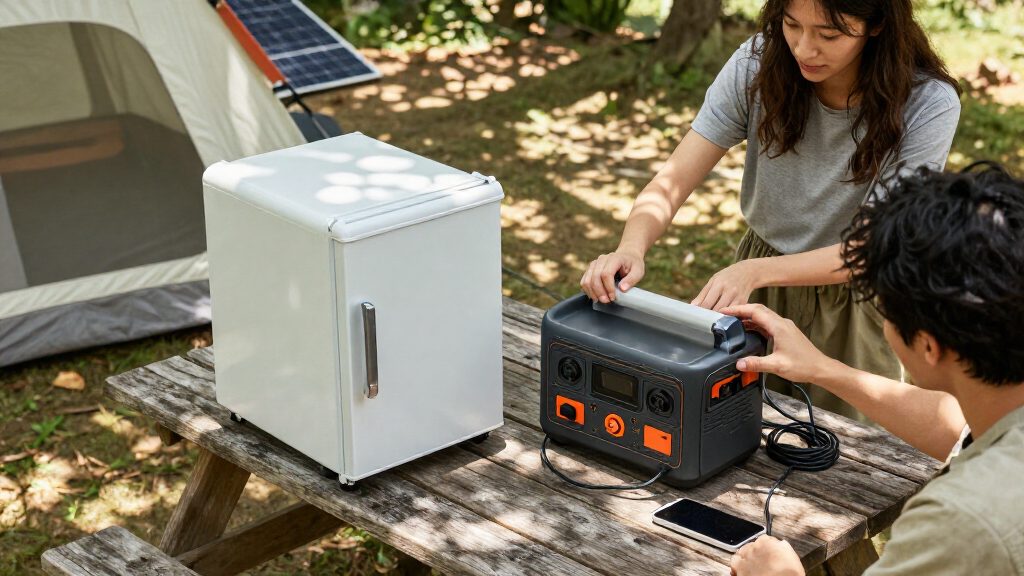
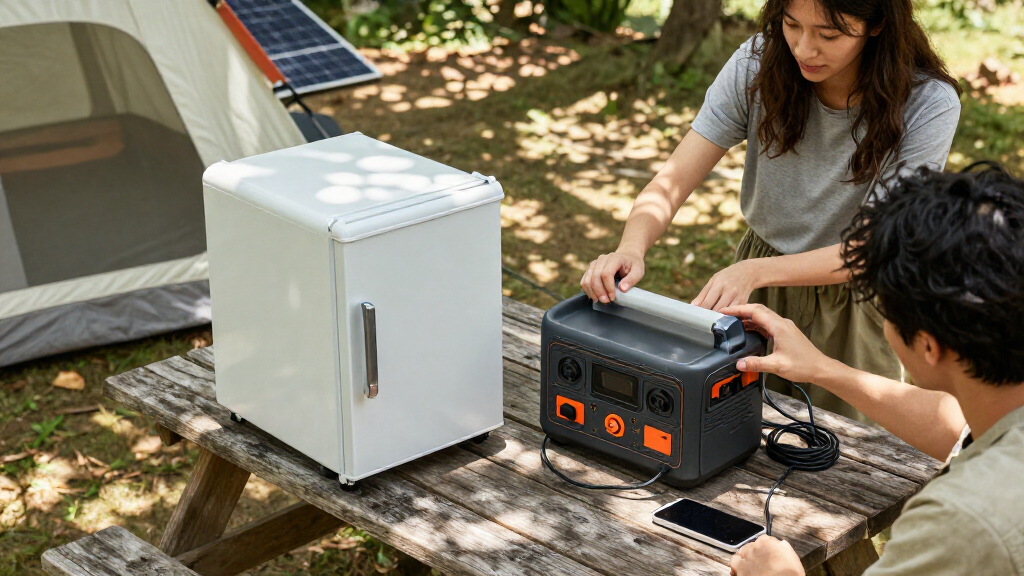
Yes, but you need a unit with sufficient output wattage and capacity. A typical refrigerator uses 100-200 watts when running but can surge to 800-1200 watts when the compressor starts. Therefore, you need a station with at least a 1000W continuous output and a 1500W+ surge rating. Models like the Anker SOLIX C1000 Gen 2 or EcoFlow DELTA 3 Classic handle this easily. A small 250Wh unit will not have the surge capacity to start the compressor and will likely shut down immediately.
How long do LiFePO4 batteries actually last compared to other types?
LiFePO4 batteries are rated for 3,000 to 6,000 charge cycles to 80% capacity. In practical terms, if you fully discharge and recharge the station once a day, it could last 8 to 16 years. Traditional Li-ion (NMC) batteries typically last 500 to 800 cycles, meaning they might degrade significantly in 1.5 to 2 years of daily use. For a device intended as a long-term emergency backup, the longevity of LiFePO4 makes it the preferred choice despite the higher initial price.
Is it safe to leave a portable power station plugged into a wall outlet constantly?
Most modern stations with LiFePO4 batteries have sophisticated Battery Management Systems (BMS) that prevent overcharging. However, keeping a battery at 100% charge for extended periods can accelerate degradation. Best practice: Many apps allow you to set a charge limit, such as 80% or 90%, which extends battery life when used as a stationary backup. If the station does not have this feature, it is better to unplug it when full and recharge it before use, rather than leaving it plugged in 24/7.
Do I need to buy solar panels from the same brand as my power station?
Not necessarily, but it is often easier. Most power stations use standard MC4 connectors for solar input, so third-party panels with the correct voltage and amperage ratings will work. However: Using the same brand ensures compatibility with proprietary fast-charging protocols and simplifies warranty claims. If you use a third-party panel, you must verify that the panel’s voltage range matches the station’s input limits to avoid damaging the charge controller. For beginners, sticking to the same brand reduces setup friction.
What is the difference between ‘surge’ and ‘rated’ wattage?
Rated wattage is the continuous power the station can supply. Surge wattage is the short-term peak power it can handle to start devices with motors, like refrigerators, pumps, or power tools. Example: A station might have a 1000W rated output but a 2000W surge. This means it can run a 1000W heater continuously but can also start a 1500W microwave that requires a brief burst of extra power. If the surge rating is too low, high-demand devices will trigger the safety shutdown.
Conclusion
Selecting the right portable power station comes down to matching your specific power demands with the right battery capacity and portability profile. For most users seeking a balance of power, speed, and longevity, the Anker SOLIX C1000 Gen 2 is the best overall choice due to its rapid charging and reliable LiFePO4 chemistry. If you are on a tight budget or need something lightweight for weekend trips, the Jackery Explorer 300 offers unmatched simplicity and portability. For those preparing for serious home outages or off-grid living, the EF ECOFLOW DELTA 3 Ultra provides the necessary capacity and expandability to keep essential systems running for days. Evaluate your typical load, storage space, and charging access to make the final decision.
Halloween Picks

8.5 Foot Halloween Inflatable Haunted House Castle with Skeleton, Ghost & Skulls

Panefright Halloween Window Projector – Scary Projector for Spooky Decor

Haunted Hill Farm 2-Ft. Zombie Raccoon Halloween Animatronic
As an affiliate, we earn on qualifying purchases.