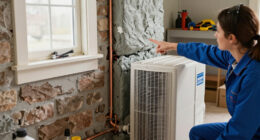
The best cold climate heat pumps pair strong heating performance in low temperatures with a system that fits your home, electrical service, and installation needs. My best overall pick is the Cooper & Hunter Hyper Heat 12,000 BTU, whose cold-climate positioning makes it the strongest match in this lineup for buyers focused on winter heating. The DELLA 12,000 BTU 25 SEER2 stands out for smart controls, while TOSOT’s Aoraki models offer different capacity and voltage configurations. The main tradeoffs are cold-weather capacity, room coverage, electrical requirements, and whether you need a ductless unit or a whole-home system. Read on for how the eight options compare and what to verify before choosing.

Get backup power and energy gear delivered free with Prime
- Fast, free delivery on millions of items
- Prime Video, Amazon Music and more included
- Member-only deals all year
Key Takeaways
- Cold-weather claims are not interchangeable: the Cooper & Hunter is the lineup’s clearest cold-climate-focused option, but buyers should confirm its rated output at their local design temperature.
- Efficiency figures do not establish winter performance on their own: the DELLA and TOSOT SEER2 ratings describe cooling efficiency, so check low-temperature heating capacity separately.
- Voltage can narrow your choices early: the TOSOT Aoraki 110–120V model may suit a different electrical setup than the 208–230V models, but capacity and circuit requirements still need verification.
- System format matters as much as the brand: the Goodman packaged heat pump serves a different installation need from the wall-mounted mini-splits, while COSTWAY’s dual-zone design addresses multiple rooms.
- Capacity should follow a load calculation, not a guess: the 12,000 BTU and 18,000 BTU options suit different heating loads, and oversizing can create comfort and cycling problems.


| cold climate heat pump | Efficiency | Voltage | Refrigerant | Capacity |
|---|---|---|---|---|
| Cooper & Hunter 12,000 BTU Hyp | 24 SEER2 | 230 V | R-454B | 1 ton |
| DELLA 12,000 BTU Ductless Mini | 25 SEER2; 10.5 HSPF2 | 230 V | — | — |
| DELLA Optima 18,000 BTU Mini-S | 23 SEER2; 10 HSPF2 | 230 V | — | — |
| TOSOT Aoraki 12,000 BTU Mini-S | 24.5 SEER2 | 208–230 V | R-32 | — |
| TOSOT 12,000 BTU 24.5 SEER2 Mi | 24.5 SEER2 | 110–120 V | R-32 | 1 ton |
| TOSOT Aoraki 18,000 BTU Ductle | 24.5 SEER2 | 208–230V | R-32 | 18,000 BTU |
| Goodman 2.5 Ton 13.4 SEER2 Pac | 13.4 SEER2 | — | R-32 | 2.5 tons |
| COSTWAY 20,000 BTU Dual-Zone M | 23 SEER2 | — | — | — |
More Details on Our Top Picks
Cooper & Hunter 12,000 BTU Hyper Heat Wall-Mount Mini Split, 230V, 24 SEER2
For buyers whose main concern is keeping a room warm through hard freezes, the Cooper & Hunter Hyper Heat stands out with heating operation rated down to -22°F. That gives it a colder-weather advantage over the DELLA Optima 18,000 BTU, which is rated down to -13°F, though the DELLA serves a larger stated area. This Cooper & Hunter is a 12,000 BTU single-zone system with a 24 SEER2 rating, inverter compressor, and quiet operation as low as 22.5 dB. Wi-Fi control and a 16-foot installation kit are included, but the system still calls for licensed professional installation. Its line set may also limit placement flexibility compared with longer-run setups, and freight delivery is coordinated to an accessible point outside the home. Choose it for cold-weather capability, not a do-it-yourself installation.
Pros:- Heating operation rated down to -22°F
- Quiet indoor operation listed at 22.5 dB
- Inverter compressor supports variable output for changing heating and cooling loads
- Wi-Fi control and a 16-foot installation kit are included
Cons:- Requires installation by a licensed technician
- Freight delivery is coordinated to the nearest accessible point outside the home
Best for: Owners of a well-insulated single room or small zone who need heat-pump operation down to very low outdoor temperatures and can arrange licensed installation.
Not ideal for: DIY installers and buyers who need to heat a large open area; professional installation is required, and the 12,000 BTU capacity is smaller than the DELLA Optima’s.
- Cooling power:12,000 BTU
- Capacity:1 ton
- Voltage:230 V
- Efficiency:24 SEER2
- Heating operation:As low as -22°F
- Noise level:22.5 dB
- Refrigerant:R-454B
- Included line set:16 feet
Our verdict“Choose this Cooper & Hunter when very-low-temperature operation matters more than DIY setup or large-zone capacity.”
DELLA 12,000 BTU Ductless Mini Split Heat Pump, 25 SEER2, 230V, Wi-Fi and Alexa, 16.4 ft Installation Kit
The DELLA 12,000 BTU is a strong fit for buyers balancing cold-weather heating with lower stated energy use: its 25 SEER2 rating is the highest among the 12,000 BTU models here, and it is rated to heat down to -22°F. Compared with the Cooper & Hunter Hyper Heat, it adds a slightly longer 16.4-foot pre-flared line set and Alexa control, while its listed 30 dB mute mode is not as quiet as the Cooper & Hunter’s 22.5 dB figure. The stated coverage is up to 550 square feet, so this is a more natural choice for a bedroom, office, or modest living area than the 18,000 BTU DELLA Optima. Installation still requires vacuuming and a 20A fuse, and buyers need a new outdoor unit. Its efficiency and controls are appealing, but it is not a plug-in replacement.
Pros:- 25 SEER2 and 10.5 HSPF2 ratings
- Heating operation rated down to -22°F
- Wi-Fi app and Alexa controls alongside a remote
- Includes a 16.4-foot pre-flared copper line set and drain hose
Cons:- Installation requires vacuuming and a 20A fuse
- Requires a new outdoor unit and a 230V supply
- 30 dB mute-mode figure is higher than the Cooper & Hunter’s listed 22.5 dB
Best for: Homeowners heating and cooling a single room up to the stated 550 square feet who want Alexa or app control and high listed efficiency.
Not ideal for: Buyers without a suitable 230V electrical supply, those seeking a self-install setup, or anyone needing capacity for a larger area than the stated coverage.
- Cooling capacity:12,000 BTU
- Heating capacity:12,000 BTU/h
- Coverage:Up to 550 sq. ft.
- Efficiency:25 SEER2; 10.5 HSPF2
- Voltage:230 V
- Minimum heating temperature:-22°F
- Mute-mode noise:30 dB
- Installation kit:16.4-foot pre-flared copper line set and drain hose
Our verdict“Pick the DELL A when you want high listed efficiency and voice controls in a modest-size zone, and can handle the required electrical and installation work.”
DELLA Optima 18,000 BTU Mini-Split Heat Pump, 23 SEER2, Wi-Fi and Alexa, 230V
When a single room is too large for a 12,000 BTU system, the DELL A Optima offers 18,000 BTU cooling and 19,000 BTU/h heating, with stated coverage up to 1,000 square feet. That added capacity is its main distinction from the DELL A 12,000 BTU model, but cold-weather buyers give up some low-temperature reach: the Optima is rated to operate down to -13°F, rather than -22°F. Its 23 SEER2 and 10 HSPF2 ratings are also below the smaller DELL A’s 25 SEER2 and 10.5 HSPF2. For a spacious zone in a climate where outdoor temperatures rarely fall below its operating limit, the larger capacity may matter more than those differences. App, remote, and Alexa controls add convenience; installation still needs a 230V supply, vacuuming, and a 20A fuse.
Pros:- 18,000 BTU cooling and 19,000 BTU/h heating capacity
- Stated coverage up to 1,000 square feet
- Inverter compressor with app, remote, and Alexa controls
- Includes a 16.4-foot pre-flared copper line set and drain hose
Cons:- Rated for heating operation only down to -13°F, warmer than the -22°F limits of the smaller DELL A and Cooper & Hunter models
- 23 SEER2 rating is lower than the DELL A 12,000 BTU’s 25 SEER2
- Requires 230V power, installation vacuuming, and a 20A fuse
Best for: Owners of a larger, open single zone—up to the stated 1,000 square feet—who want ductless heating and cooling with app or voice control.
Not ideal for: Households in areas that regularly drop below -13°F, or buyers heating a small room who may not need the added 18,000 BTU capacity.
- Cooling capacity:18,000 BTU
- Heating capacity:19,000 BTU/h
- Coverage:Up to 1,000 sq. ft.
- Efficiency:23 SEER2; 10 HSPF2
- Voltage:230 V
- Heating operating temperature:Down to -13°F
- Mute-mode noise:34 dB
- Included line set:16.4-foot pre-flared copper
Our verdict“Choose the Optima for a larger single room in a climate that stays within its -13°F heating limit, rather than for the coldest locations.”
TOSOT Aoraki 12,000 BTU Mini-Split Air Conditioner and Heat Pump
The TOSOT Aoraki pairs cold-climate certification with unusually low stated indoor noise, making it a compelling 12,000 BTU option for a bedroom or other quiet space. Its listed operating range reaches -22°F, matching the Cooper & Hunter Hyper Heat and DELL A 12,000 BTU on low-temperature reach. At 24.5 SEER2, it sits between the DELL A’s 25 SEER2 and the Cooper & Hunter’s 24 SEER2, so it does not lead the group on efficiency but remains competitive on the supplied figures. The indoor noise rating starts at 20 dB, quieter than either comparator’s listed level. Wi-Fi is built in, and an optional ERV can add fresh-air ventilation; that accessory costs extra and needs additional wall vents. Professional installation is recommended, which makes this less appealing for DIY buyers.
Pros:- Listed to operate from -22°F to 122°F
- Indoor noise as low as 20 dB
- ENERGY STAR, COLD CLIMATE, ETL, and AHRI certifications listed
- Wi-Fi included, with optional ERV compatibility
Cons:- Professional installation is recommended
- Optional ERV is sold separately and requires additional wall vents
- 24.5 SEER2 is below the DELL A 12,000 BTU’s 25 SEER2
Best for: Homeowners prioritizing quiet operation and cold-weather credentials in a 12,000 BTU single-zone system, especially for a bedroom or study.
Not ideal for: DIY installers or buyers who expect fresh-air ventilation to come in the box; the ERV is optional and requires added wall vents.
- Cooling capacity:12,000 BTU
- Heating capacity:12,000 BTU
- Efficiency:24.5 SEER2
- Voltage:208–230 V
- Operating temperature range:-22°F to 122°F
- Indoor noise level:As low as 20 dB
- Refrigerant:R-32
- Certifications:ENERGY STAR, COLD CLIMATE, ETL, AHRI
Our verdict“Choose the TOSOT Aoraki if quiet indoor operation and listed cold-climate certification matter more than DIY installation or included ventilation.”
TOSOT 12,000 BTU 24.5 SEER2 Mini Split Aoraki Series 110-120V White
This Aoraki’s defining difference is its listed 110–120V supply, unlike the 208–230V TOSOT Aoraki 12,000 BTU and the 230V DELL A and Cooper & Hunter systems. That can make it a better match for buyers whose electrical setup favors this voltage, though the product data still calls for professional split-system installation. It shares the other TOSOT’s 24.5 SEER2 rating, 20 dB indoor noise figure, R-32 refrigerant, and optional ERV compatibility. Its stated temperature range reaches -22°F, making it a strong cold-climate candidate on paper, while the listed coverage is 750 square feet. The tradeoffs are physical and practical: the unit is listed at 103.1 pounds, and the ERV requires extra wall vents and is not included. Confirm electrical and site requirements with an installer before choosing it.
Pros:- Listed 110–120V supply differs from the 208–230V Aoraki and 230V alternatives
- 24.5 SEER2 efficiency rating
- Indoor noise listed at 20 dB with outdoor night-mode noise at 52 dB
- Wi-Fi control and optional ERV integration
Cons:- Listed weight of 103.1 pounds can complicate handling and setup
- Professional split-system installation is required
- Optional ERV needs additional wall vents that are not included
Best for: Homeowners seeking a 12,000 BTU ductless system with a listed 110–120V supply and quiet operation for a zone up to the stated 750 square feet.
Not ideal for: Buyers who need a lightweight, easy-to-handle installation or want fresh-air ventilation included; this unit is listed at 103.1 pounds and ERV components are optional.
- Cooling power:12,000 BTU
- Capacity:1 ton
- Coverage:750 sq. ft.
- Voltage:110–120 V
- Efficiency:24.5 SEER2
- Refrigerant:R-32
- Temperature range:-22°F to 122°F
- Indoor noise level:20 dB
- Weight:103.1 lbs
Our verdict“Choose this Aoraki if its 110–120V specification fits your electrical plan and you can accommodate a heavy, professionally installed system.”
TOSOT Aoraki 18,000 BTU Ductless Mini Split Air Conditioner and Heat Pump, 24.5 SEER2, 208–230V, Black
The TOSOT Aoraki stands out in this group for its stated heating range down to -22°F, making it a stronger cold-weather candidate than the COSTWAY dual-zone system, which lists heating operation only to -4°F. Its 18,000 BTU capacity and 24.5 SEER2 rating suit buyers seeking a single-zone system that can handle both winter heating and summer cooling without sacrificing efficiency. App controls and indoor sound as low as 29 dB add useful day-to-day convenience, while the self-cleaning evaporator can reduce routine upkeep.
The tradeoff is installation: this is a split system, and professional installation is recommended. The optional ERV for fresh-air ventilation costs extra and calls for additional wall vents. Compared with the Goodman packaged unit, the Aoraki offers a more clearly specified low-temperature operating range, but it is not a packaged, all-in-one installation.
Pros:- Specified operating range reaches -22°F for heating
- 24.5 SEER2 rating and inverter compressor
- App and remote controls, plus a self-cleaning evaporator
- Indoor noise as low as 29 dB
Cons:- Professional installation is recommended
- ERV ventilation accessory is sold separately and requires additional wall vents
- Requires 208–230V power
Best for: Homeowners in very cold regions who need a single-zone ductless system with a stated heating range below zero and app control.
Not ideal for: Buyers who want a packaged unit or a system with included fresh-air ventilation; the ERV accessory is separate, and professional split-system installation is recommended.
- Capacity:18,000 BTU
- Efficiency:24.5 SEER2
- Operating temperature range:-22°F to 122°F
- Voltage:208–230V
- Refrigerant:R-32
- Noise level:As low as 29 dB indoor; 59 dB outdoor in night mode
- Controls:App and remote
- Included line set:16 ft copper line set
- Model:SU-AORAKI18-230
Our verdict“Choose the TOSOT Aoraki if severe-winter heating capability is your priority and a professionally installed single-zone system fits your home.”
Goodman 2.5 Ton 13.4 SEER2 Packaged Heat Pump GPHH33031
Unlike the wall-mounted mini-splits in this roundup, the Goodman GPHH33031 is a packaged heat pump rated at 2.5 tons, a format that may suit homes or light commercial spaces planned around packaged equipment. Its scroll compressor, multi-speed ECM motor, and all-aluminum evaporator coil provide a conventional central-system setup rather than room-by-room ductless control. The listed 10-year parts limited warranty can add reassurance, but it depends on qualified installation and online registration.
This pick ranks below the TOSOT Aoraki for buyers focused specifically on severe cold: the Goodman product data does not provide a low-temperature heating limit, so I would not choose it on an assumption of extreme-weather performance. Its 13.4 SEER2 rating is also below the mini-splits listed here, including the Aoraki at 24.5 SEER2. Check system compatibility and installation requirements before choosing this format.
Pros:- Packaged format serves residential and light commercial applications
- 2.5-ton capacity with a scroll compressor
- Multi-speed ECM motor and all-aluminum evaporator coil
- 10-year parts limited warranty is available with qualified installation and registration
Cons:- 13.4 SEER2 is lower than the listed ratings of the mini-splits in this roundup
- Product data does not specify a minimum heating temperature
- Warranty coverage requires qualified installation and online registration
Best for: Homeowners or light commercial buyers seeking a 2.5-ton packaged heat pump and whose project is designed for this equipment format.
Not ideal for: Buyers in severe-cold areas who need a documented low-temperature heating range, or those seeking the higher listed SEER2 ratings of the ductless options.
- Capacity:2.5 tons
- Efficiency:13.4 SEER2
- Refrigerant:R-32
- Voltage and phase:208/230V, single phase
- Compressor:Scroll
- Motor:Multi-speed ECM
- Coil:All-aluminum evaporator coil
- Dimensions:66.25 in W × 34 in D × 22 in H
- Warranty:10-year parts limited, with qualified installation and online registration
Our verdict“Choose the Goodman when a packaged 2.5-ton system fits your project, but favor a mini-split with a stated low-temperature limit if cold-weather performance is the deciding factor.”
COSTWAY 20,000 BTU Dual-Zone Mini-Split Air Conditioner and Heat Pump
The COSTWAY is the clearest fit here for buyers who want two separately controlled indoor zones from one outdoor unit. Its Wi-Fi control, washable filters, and self-clean function add practical convenience, while inverter operation and a listed 23 SEER2 rating put it closer to the efficient ductless options than the Goodman packaged system. Compared with the single-zone TOSOT Aoraki, it can serve two areas independently, but its stated heating limit is only -4°F, not the Aoraki’s -22°F.
That gap matters for homes with long, harsh winters: the COSTWAY’s published temperature range gives less cold-weather headroom. There is also a capacity discrepancy in the supplied data: the title and system description say 20,000 BTU, while the configuration lists two 12,000 BTU indoor units and cooling capacity as 9,000 BTU. I would confirm capacity and room compatibility with the seller and installer before purchase.
Pros:- Dual-zone design allows separate room temperature settings
- 23 SEER2 rating with inverter technology
- Wi-Fi control and Google Assistant compatibility
- Washable filters and self-clean function support routine maintenance
Cons:- Listed heating range stops at -4°F, warmer than the TOSOT Aoraki’s stated -22°F limit
- Capacity figures conflict across the supplied listing details
- Professional installation by a licensed HVAC technician is recommended
Best for: Households seeking separate temperature control for two rooms and willing to confirm the listed capacity details before installation.
Not ideal for: Buyers in very cold climates who need a documented heating range below -4°F, or anyone who needs unambiguous capacity specifications before selecting equipment.
- Configuration:Dual zone; listed indoor units are 12,000 + 12,000 BTU
- Listed system capacity:20,000 BTU heating and cooling
- Listed cooling capacity:9,000 BTU
- Efficiency:23 SEER2
- Operating temperature:Heating to -4°F; cooling to 127°F
- Voltage and power:208/230V; 1,200 W
- Noise level:38 dB
- Controls and features:Wi-Fi, inverter, 4D swing, 7 modes, 8 fan speeds, 24-hour timer, child lock, self-clean function
- Model:11161US-CYFP
Our verdict“Choose the COSTWAY for two-zone control in a climate that suits its -4°F stated heating limit, after verifying its capacity with the seller or installer.”
How We Picked
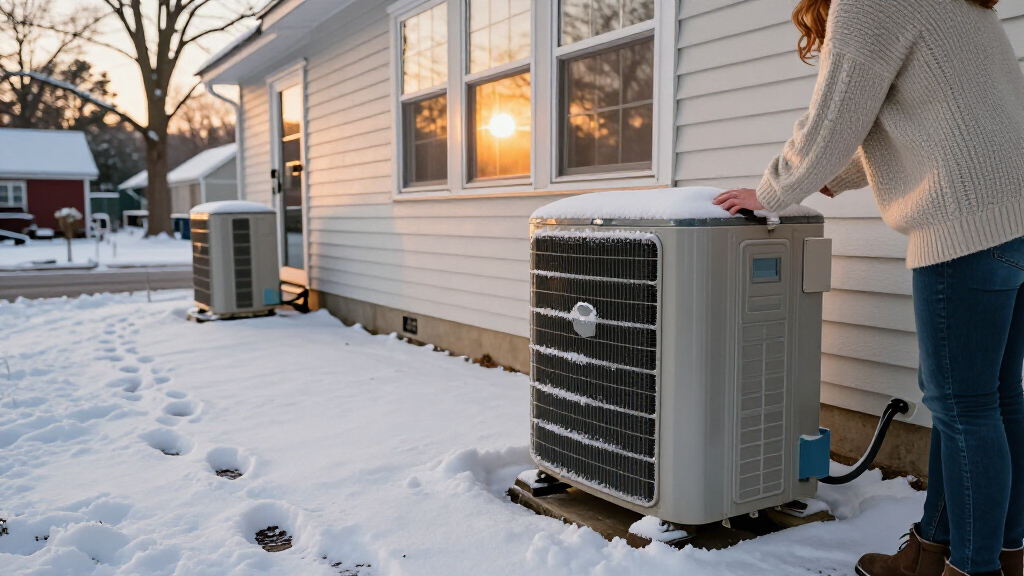
I ranked these eight options by how clearly their listed design, configuration, and specifications match the needs of someone shopping for winter heating. I gave more weight to explicit cold-climate positioning and the information a buyer needs to check heating performance in low outdoor temperatures than to cooling-efficiency numbers alone. I also compared capacity, voltage, system format, zone coverage, and practical features such as Wi-Fi controls, since each can affect fit, installation planning, and day-to-day use.
The ranking favors products with a clearer match to cold-weather heating, then separates the rest by use case rather than treating high SEER2 figures as proof of winter strength. The Cooper & Hunter leads for its Hyper Heat positioning, while the DELLA and TOSOT units earn attention for controls, electrical options, or capacity. The Goodman packaged system and COSTWAY dual-zone model serve distinct installation and room-coverage needs, but neither should be selected without confirming heating data, sizing, and installer compatibility. Where the supplied product details do not establish low-temperature output, I treat that as a point buyers need to verify—not as evidence of performance.
Factors to Consider When Choosing Best Cold Climate Heat Pumps
Choosing a heat pump for a cold region calls for more than comparing model names or efficiency labels. I would begin with the home’s winter heating requirement, then check the unit’s output at cold outdoor temperatures and the practical demands of installation. These broader checks can prevent a mismatch that a product feature list cannot resolve.
Check Heating Capacity at Your Local Winter Design Temperature
Ask for the manufacturer’s heating capacity at several outdoor temperatures, especially the design temperature used for your area. A unit’s nominal BTU rating does not tell you how much heat it can deliver during the coldest stretches. Compare that output with a room-by-room or whole-home load calculation rather than relying on floor area alone. Windows, insulation, air leakage, ceiling height, and sun exposure all change the required capacity. A common mistake is choosing a larger unit as insurance; oversizing can cause short cycling and uneven comfort during milder weather. If output falls below the home’s demand at low temperatures, ask whether backup heat is required and how often it may run.
Separate Cold-Weather Heating Data From Cooling Efficiency
SEER2 is a cooling-efficiency measure, so a strong SEER2 figure by itself does not show how well a heat pump heats in a deep freeze. Look for low-ambient heating limits, capacity-retention data, and any published coefficient of performance at temperatures relevant to your climate. Also ask whether the unit can maintain its rated output or whether capacity drops as outdoor temperatures fall. Defrost cycles are part of normal winter operation, but their frequency and effect on comfort can vary with conditions and equipment. If a seller cannot provide cold-weather performance data, treat the gap as a reason to pause and get manufacturer documentation. This check is especially useful when comparing models whose listings emphasize cooling efficiency more than heating specifications.
Match the System Format to Your Home and Installation
A ductless mini-split can heat a targeted room or zone without relying on existing ductwork, while a packaged heat pump is designed around a different whole-system installation. Decide whether you need one conditioned space, several independently served rooms, or a central solution before comparing equipment. Multi-zone systems can reduce the need for separate outdoor units, but the indoor heads must be placed where air can circulate effectively. A single wall-mounted head may not distribute heat through closed doors or around multiple floors. Check whether your home already has compatible ducts, where an outdoor unit can sit, and whether local permitting or structural work will apply. Installation constraints can rule out an otherwise appealing model.
Confirm Electrical Service, Circuit, and Installation Requirements
Voltage is an early compatibility check, not a minor spec: a model designed for one supply may require electrical work in a home without the matching circuit. Verify the unit’s voltage, minimum circuit ampacity, maximum overcurrent protection, and wiring requirements against your panel and the manufacturer’s installation manual. A lower-voltage option is not automatically simpler, since circuit capacity and installation instructions still matter. Mini-split listings that include an installation kit do not necessarily include every material, tool, permit, or professional service needed for a compliant installation. Ask a qualified installer to confirm the site conditions and warranty requirements before ordering. This can prevent a delayed project or unexpected electrical upgrades.
Plan for Backup Heat, Defrost, and Winter Maintenance
Even a heat pump built for cold-weather use may need a backup plan for unusually low temperatures, power interruptions, or equipment faults. Decide whether existing electric resistance heat, a furnace, or another source will cover the gap, and ask how the controls prioritize each system. Outdoor coils need room for airflow and a clear path for meltwater, so avoid locations where snow, ice, or roof runoff can block the unit. Keep filters clean and follow the manufacturer’s inspection schedule; restricted airflow can reduce comfort and raise operating demand. Ask about service access and local technician familiarity before choosing a less common system. These practical details can matter more over a winter than an extra feature on a specification sheet.
Use a Load Calculation to Choose Capacity and Zone Count
Do not map BTU capacity directly to a simple square-foot rule: two homes of equal size can have very different heating loads. A professional load calculation accounts for the local climate, insulation, air leakage, windows, and the way rooms connect. For a dual-zone system, confirm both the total outdoor-unit capacity and the allowed capacity of each indoor head; the total rating does not mean every zone receives that output at once. Oversizing can reduce comfort at part load, while undersizing can leave the system leaning heavily on backup heat. If you plan to add rooms later, ask whether the selected system supports that configuration rather than assuming another head can be added. Accurate sizing is more useful than picking the biggest listed number.
Frequently Asked Questions
Does a high SEER2 rating mean a heat pump will perform well in very cold weather?
No. SEER2 measures seasonal cooling efficiency and does not establish heating capacity at low outdoor temperatures. Ask for the manufacturer’s heating output at the temperatures your home is likely to experience, along with the unit’s operating limit and any capacity-retention data. A model with a lower SEER2 figure could still be a better winter fit if its cold-weather heating performance better matches your needs. Compare heating specifications and cooling efficiency as separate questions.
Can a 12,000 BTU mini-split heat my entire home?
It depends on the home’s heat loss, layout, and how freely air can move from the indoor unit to other rooms. A single wall-mounted head often works best for a defined open area rather than a multi-floor home with closed bedrooms. Have a load calculation done and ask an installer to assess room-by-room distribution before treating a nominal capacity as whole-home coverage. If the calculated load exceeds the unit’s low-temperature output, plan for additional zones or backup heat rather than expecting the system to make up the difference.
Should I choose a 110–120V heat pump if my home has limited electrical capacity?
A lower-voltage model may be compatible with some homes that cannot readily support a 208–230V unit, but voltage alone does not establish whether an existing circuit is suitable. Check the required circuit rating, wiring, disconnect, and installation instructions with a licensed electrician. Also compare the model’s heating capacity and low-temperature performance; an easier electrical fit is not helpful if its output does not meet the home’s winter load. Get a site-specific electrical assessment before making the equipment choice.
When does a dual-zone mini-split make more sense than two single-zone systems?
A dual-zone system can be a practical fit when two rooms need separate indoor units and there is a suitable place for one outdoor unit. It may simplify outdoor placement, but the combined capacity and each head’s output must match the rooms’ loads. Two single-zone systems can offer more independent sizing and may keep one area heated if the other system needs service, though they require space for two outdoor units. Compare installed system designs, not just the listed BTU total, and check whether both zones need simultaneous heating during cold periods.
What should I verify before choosing a heat pump for a cold-climate home?
Start with the rated heating capacity at your local winter design temperature, the equipment’s minimum operating temperature, and any expected capacity reduction in colder conditions. Then confirm the home’s load calculation, electrical compatibility, installation clearances, and whether backup heat is needed. Ask the installer which parts of the system and labor the warranty covers and whether local service support is available. For a packaged system or ductless mini-split, also verify that the format suits your existing ducts, room layout, and installation site.
Conclusion
For the clearest cold-climate focus in this group, I recommend the Cooper & Hunter Hyper Heat 12,000 BTU as best overall, provided its documented low-temperature output matches your load. The DELLA 12,000 BTU 25 SEER2 is my value-oriented pick for shoppers who want Wi-Fi controls and a compact ductless setup, but I would confirm winter heating data before buying. For a premium or larger-room choice, compare the TOSOT Aoraki 18,000 BTU with the DELLA Optima 18,000 BTU using capacity at cold temperatures and installation requirements—not efficiency ratings alone. Beginners may find a straightforward single-zone mini-split easier to plan than a dual-zone or packaged system, though a qualified installer should verify sizing and electrical needs. Choose the COSTWAY dual-zone when two rooms need separate indoor heads, or the Goodman packaged heat pump when a packaged configuration suits the property; for every model, make the final decision only after checking its cold-weather specifications and a professional load calculation.
Fall Picks
fall essentials
As an affiliate, we earn on qualifying purchases.