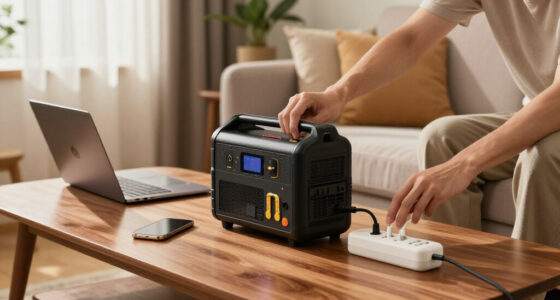
Solar panel backup systems range from small RV starter kits under $300 to whole-home off-grid setups exceeding $5,000, and the right choice depends almost entirely on what you’re backing up. For most homeowners wanting genuine blackout protection, the ECO-WORTHY 10KW Off Grid Solar System Kit stands out as the best overall pick, pairing 2,340W of panels with a 10kW inverter and lithium storage in one package. Budget-minded buyers should look at the SUNGOLDPOWER 6500W kit, which delivers a complete system at a lower cost per watt, while campers and apartment dwellers will prefer the plug-and-play simplicity of the Jackery Solar Generator 1000 V2. The main tradeoffs in this category come down to installed-versus-portable design, battery chemistry and capacity, and whether you want expandability later or a fixed system now. Keep reading for the full breakdown of all 13 systems and who each one suits best.
Key Takeaways
- ECO-WORTHY dominates this lineup with six of the 13 entries, but its kits vary widely in quality of components — the 10KW whole-home kit and the 200W starter kit are the strongest of the bunch, while the mid-tier 1200W system offers less storage per dollar than SUNGOLDPOWER rivals.
- Portable all-in-one systems (Jackery HomePower 3600 Plus, ABOK Ark3600) cost more per watt-hour than installed kits, but they work out of the box with no wiring, permits, or electrician — a fair premium for renters and occasional users.
- Battery capacity, not panel wattage, is the real bottleneck in every system here; several kits advertise impressive inverter sizes (8,000W–10,000W) while shipping with barely enough storage to run them for a few hours.
- The SUNGOLDPOWER SGR-8K10E is the best value in whole-home backup, undercutting comparable ECO-WORTHY 10KW kits while including 10.24kWh of LiFePO4 storage.
- Sub-300W kits (ECO-WORTHY 200W starter kits) are learning tools and battery maintainers, not backup power — buyers expecting to run a fridge during an outage from a 200W panel will be disappointed.
| ECO-Worthy 780W Off-Grid Solar Panel Kit for RV |  | Best for RV Life | Total Solar Power: 780W (4×195W bifacial) | Inverter: 3000W 12V inverter charger | Battery Capacity: 2×12.8V 280Ah lithium (≈7.1kWh) | VIEW LATEST PRICE | See Our Full Breakdown |
| ABOK Ark3600 Portable Power Station with 3×200W Solar Panels |  | Best Plug-and-Play Home Backup | Capacity: 3840Wh (expandable to 11520Wh) | Rated Output: 3600W | Battery: LiFePO4, 4000+ cycles | VIEW LATEST PRICE | See Our Full Breakdown |
| ECO-WORTHY 10KW Off Grid Solar System Kit with 2340W Solar Panels, 10KW Inverter, and Lithium Batteries |  | Best Whole-Home Off-Grid Foundation | Inverter: 10KW, 120V/240V split-phase | Solar Array: 12×195W bifacial panels (2340W) | Battery: 2×48V 100Ah lithium (9.6kWh) | VIEW LATEST PRICE | See Our Full Breakdown |
| ECO WORTHY 10,000W Off-Grid Solar Panel Kit for Home with 48V 314Ah Battery and 10kW Inverter |  | Best Premium Storage Capacity | Inverter: 10kW continuous / 20kW peak, 120V/240V split-phase | Solar Array: 2950W (5×590W monocrystalline) | Battery: 48V 314Ah LiFePO4 (16.1kWh) | VIEW LATEST PRICE | See Our Full Breakdown |
| 3000W 24V Solar Power System Complete Kit with 1440W Solar Panels, 5.12KWh LiFePO4 Battery, MPPT Controller, and Pure Sine Wave Inverter |  | Best Value Mid-Size Kit | Inverter: 3000W pure sine wave (6kW peak) | Solar Array: 1440W (12×120W) | Battery: 5.12kWh LiFePO4 | VIEW LATEST PRICE | See Our Full Breakdown |
| ECO-WORTHY 200 Watt 12V Complete Solar Panel Starter Kit for RV Off Grid |  | Best Starter Kit for RV Owners | Solar Power: 200W (2 x 100W panels) | System Voltage: 12V | Battery: 12.8V 100Ah lithium | VIEW LATEST PRICE | See Our Full Breakdown |
| Jackery HomePower 3600 Plus Portable Power Station with 2x200W Solar Panels |  | Best Portable Home Backup | Capacity: 3584Wh | Output: 3600W (7200W parallel) | Voltage: 120V; 240V in parallel | VIEW LATEST PRICE | See Our Full Breakdown |
| SUNGOLDPOWER SGR-8K10E Off-Grid Solar Kit with 10.24kWh Battery and 8,000W Inverter |  | Best Premium Whole-Home System | Solar Array: 8 x 450W bifacial panels (3,600W) | Inverter: 8,000W, 120V/240V | Battery Capacity: 10.24kWh LiFePO4 | VIEW LATEST PRICE | See Our Full Breakdown |
| ECO-WORTHY 1200W 24V 4.68KWH Lithium Battery Solar System Off Grid |  | Best Smart Mid-Size System | Solar Generation: 4.68KWH/day (6 x 195W panels) | System Voltage: 24V | Battery: 7.168KWh Li-ion, 12.8V | VIEW LATEST PRICE | See Our Full Breakdown |
| SUNGOLDPOWER 6500W Off Grid Solar Power System Kit with 6 Monocrystalline Panels, 100Ah LiFePO4 Battery, and 6500W Inverter |  | Best Value High-Power System | Inverter: 6500W | Solar Array: 6 x 370W monocrystalline (2,220W) | Battery: 100Ah 51.2V LiFePO4 (~5.1kWh) | VIEW LATEST PRICE | See Our Full Breakdown |
| ECO-WORTHY Solar Panel Kit with LiFePO4 Energy Storage System for Home Backup |  | Best Premium Whole-Home Backup | Solar Panels: 6 x 590W N-type panels (3,540W total) | Inverter: 10kW hybrid inverter | Batteries: 2 x 48V 314Ah LiFePO4 | VIEW LATEST PRICE | See Our Full Breakdown |
| ECO-WORTHY 200 Watts 12V/24V Solar Panel Kit with 30A PWM Charge Controller |  | Best Budget Entry Point | Power: 200W (2 x 100W) | Voltage: 12V/24V auto-detect | Panel Type: Monocrystalline, up to 21.5% efficiency | VIEW LATEST PRICE | See Our Full Breakdown |
| Jackery Solar Generator 1000 V2 with 200W Solar Panel, 1070Wh, 1500W AC |  | Best Portable Emergency Pick | Capacity: 1070Wh LFP | AC Output: 1500W (3000W surge peak) | Ports: 3 AC, 2 USB-C, 1 USB-A, 1 DC car port | VIEW LATEST PRICE | See Our Full Breakdown |
| solar panel backup system | Inverter | Battery |
|---|---|---|
| ECO-Worthy 780W Off-Grid Solar | 3000W 12V inverter charger | — |
| ABOK Ark3600 Portable Power St | — | LiFePO4, 4000+ cycles |
| ECO-WORTHY 10KW Off Grid Solar | 10KW, 120V/240V split-phase | 2×48V 100Ah lithium (9.6kWh) |
| ECO WORTHY 10,000W Off-Grid So | 10kW continuous / 20kW peak, 120V/240V split-phase | 48V 314Ah LiFePO4 (16.1kWh) |
| 3000W 24V Solar Power System C | 3000W pure sine wave (6kW peak) | 5.12kWh LiFePO4 |
| ECO-WORTHY 200 Watt 12V Comple | 1100W | 12.8V 100Ah lithium |
| Jackery HomePower 3600 Plus Po | — | — |
| SUNGOLDPOWER SGR-8K10E Off-Gri | 8,000W, 120V/240V | — |
| ECO-WORTHY 1200W 24V 4.68KWH L | 3000W pure sine wave | 7.168KWh Li-ion, 12.8V |
| SUNGOLDPOWER 6500W Off Grid So | 6500W | 100Ah 51.2V LiFePO4 (~5.1kWh) |
| ECO-WORTHY Solar Panel Kit wit | 10kW hybrid inverter | — |
| ECO-WORTHY 200 Watts 12V/24V S | — | — |
| Jackery Solar Generator 1000 V | — | — |
More Details on Our Top Picks
ECO-Worthy 780W Off-Grid Solar Panel Kit for RV
This option stands out for RV owners who want a genuinely complete system rather than a piecemeal build. With four bifacial panels, a 3000W inverter charger, and two lithium batteries included, it covers everything except the mounting surface — something the smaller ECO-WORTHY 200W Starter Kit can’t claim, since that kit is really just an entry point for keeping a battery topped off. Here, 25.2% panel efficiency translates into harvesting more power from a limited RV roof, which matters when panel real estate is capped. The dual AC/solar charging also means the batteries can be conditioned before a trip. Compared with the 3000W 24V Complete Kit, this package is better tuned to mobile use: 12V architecture, RV-friendly appliance support, and a simpler install. The tradeoff is that wiring knowledge is still required, and total capacity won’t run air conditioning indefinitely.
Pros:- Truly complete kit: panels, MPPT controller, inverter, batteries, and cables in one purchase
- Bifacial 195W panels with 25.2% efficiency squeeze more output from limited roof space
- Charges via solar or shore power, so batteries stay conditioned between trips
- 4-step installation is approachable for mechanically inclined RVers
Cons:- Still requires comfort with DC wiring and load calculations to set up safely
- Sun-dependent output makes winter or shaded campsites noticeably weaker
- Too little inverter headroom for sustained high-draw appliances like roof AC units
Best for: RV and travel-trailer owners who want a pre-matched solar, battery, and inverter kit for boondocking
Not ideal for: Homeowners seeking whole-house backup — 780W of solar and 7.1kWh of storage are sized for mobile loads, not a house
- Total Solar Power:780W (4×195W bifacial)
- Inverter:3000W 12V inverter charger
- Battery Capacity:2×12.8V 280Ah lithium (≈7.1kWh)
- Charge Controller:60A MPPT
- Panel Efficiency:25.2%
- Charging Inputs:Solar and AC mains
Our verdict“This is the pick for RV travelers who want an all-in-one off-grid kit they can install in a weekend, not a starting point they’ll outgrow.”
ABOK Ark3600 Portable Power Station with 3×200W Solar Panels
For buyers who want backup power without touching a breaker panel, this option makes the most sense. The Ark3600 pairs a 3840Wh LiFePO4 power station with three 200W panels, so it works out of the box the way the Jackery Solar Generator 1000 V2 does — just with roughly three and a half times the capacity and 3600W of output instead of 1500W. That difference is the whole story: 1500W runs a fridge and some lights, while 3600W plus a 30A outlet can carry a fridge, freezer, well pump basics, and medical devices through an outage. The 1.29-hour recharge from combined AC and solar is faster than most competitors, and expansion to 11520Wh gives it room to grow. The tradeoffs: it’s heavy and bulky despite the ‘portable’ label, and 600W of included solar recharges slowly without grid help.
Pros:- True plug-and-play operation with no wiring or installation required
- Fast 1.29-hour recharge when combining AC and solar input
- Expandable from 3840Wh to 11520Wh, delaying the need for a second unit
- LiFePO4 chemistry rated for 4000+ cycles and roughly 10 years of service
Cons:- Heavy and awkward to move despite being marketed as portable
- Included 600W of solar is undersized for the battery’s capacity
- Premium price per watt-hour compared with wired kits like the ECO-Worthy systems
Best for: Suburban homeowners who want outage insurance they can set up themselves in minutes, no electrician needed
Not ideal for: Off-grid homesteaders — 600W of panel can’t sustain daily 3.8kWh-plus consumption without long recharge cycles
- Capacity:3840Wh (expandable to 11520Wh)
- Rated Output:3600W
- Battery:LiFePO4, 4000+ cycles
- Recharge Time:1.29 hrs AC+solar; 3 hrs AC only
- Max Input:1500W AC / 2000W PV
- Key Ports:1× AC 30A, 4× AC 20A, USB-C PD 100W, XT60, 12V
Our verdict“The best choice for anyone who values zero-installation home backup over the lower cost-per-watt of a hardwired system.”
ECO-WORTHY 10KW Off Grid Solar System Kit with 2340W Solar Panels, 10KW Inverter, and Lithium Batteries
This kit is better suited to buyers building a permanent off-grid home or cabin than anyone dabbling in backup power. Its core strength is the 10KW split-phase inverter with UL 1741 and UL 9540A certifications — the kind of paperwork that matters for permitting and insurance, and something the budget SUNGOLDPOWER 6500W kit doesn’t match. Real-time WiFi and Bluetooth monitoring lets owners watch battery state from anywhere, and parallel support up to 60KW means the system won’t become obsolete as needs grow. Compared with the 10,000W ECO WORTHY kit with 48V 314Ah battery, this version carries less storage (9.6kWh vs 16.1kWh) but more panel count and certified hardware. The honest tradeoff: 2340W of solar struggles to refill 9.6kWh daily in weak sun, and twelve large panels demand serious roof or ground space plus professional installation.
Pros:- UL 1741/1973/9540A certifications support permitting and insurer requirements
- Scalable to 60KW via parallel connection as household demands grow
- Split-phase 120V/240V output runs well pumps, shop tools, and HVAC components
- WiFi and Bluetooth monitoring provides real-time battery visibility remotely
Cons:- Professional installation is realistically required given system complexity
- 9.6kWh of battery is modest relative to the 10KW inverter’s capability
- Twelve full-size panels require substantial mounting space
Best for: Off-grid cabin, home, or farm owners planning a certified, expandable whole-property power system
Not ideal for: DIY beginners or occasional-use buyers — the cost, complexity, and 12-panel footprint are wasted on intermittent backup needs
- Inverter:10KW, 120V/240V split-phase
- Solar Array:12×195W bifacial panels (2340W)
- Battery:2×48V 100Ah lithium (9.6kWh)
- Daily Output:Up to 9.36kWh under optimal sun
- Scalability:Parallel up to 60KW
- Certifications:UL 1741, UL 1973, UL 9540A, CEC
- Monitoring:WiFi and Bluetooth
Our verdict“A certified, expandable foundation for a genuine off-grid household — overkill for backup, right-sized for full-time independence.”
ECO WORTHY 10,000W Off-Grid Solar Panel Kit for Home with 48V 314Ah Battery and 10kW Inverter
Where the sibling 10KW ECO-WORTHY kit emphasizes certified scalability, this option stands out for raw battery capacity: 16.1kWh of LiFePO4 storage in a single matched package. For off-grid households, storage is what carries you through cloudy stretches, and that extra 6.5kWh over the other 10KW kit is the difference between two and three-plus days of autonomy for typical loads. The five 590W panels also pack more wattage into fewer mounts — 2950W across five panels versus 2340W across twelve — which simplifies racking on a standard roofline. A 20,000W surge rating handles motor starts that trip lesser inverters, and expansion to 15 parallel units covers future growth. The costs are real, though: this is the priciest tier of system here, components arrive heavy enough to need freight delivery planning, and an electrician is non-negotiable for a split-phase home install.
Pros:- 16.1kWh of LiFePO4 storage delivers genuine multi-day autonomy
- 2950W of solar in just five large panels reduces racking complexity
- 20kW surge power starts demanding motors without tripping
- Scalable up to 15 parallel battery units for future expansion
Cons:- Highest cost tier — a serious investment before installation labor
- Heavy, bulky components may require special delivery arrangements
- Professional installation is effectively mandatory at this system size
Best for: Full-time off-grid families who prioritize multi-day battery autonomy over lowest cost per component
Not ideal for: Budget-conscious or part-time cabin owners — paying for 16kWh of storage you only use on weekends makes no financial sense
- Inverter:10kW continuous / 20kW peak, 120V/240V split-phase
- Solar Array:2950W (5×590W monocrystalline)
- Battery:48V 314Ah LiFePO4 (16.1kWh)
- Max Parallel Units:15
- Monitoring:Bluetooth, Wi-Fi, PC
- Panel Highlight:Shading-tolerant 590W modules
Our verdict“The pick when cloudy-day autonomy matters more than price — a true whole-home off-grid workhorse.”
3000W 24V Solar Power System Complete Kit with 1440W Solar Panels, 5.12KWh LiFePO4 Battery, MPPT Controller, and Pure Sine Wave Inverter
This kit occupies the sensible middle ground between starter kits and whole-home systems, and that positioning is its whole appeal. Compared with the ECO-WORTHY 1200W 24V system, it doubles the solar input to 1440W while adding a pure sine wave inverter — the feature that matters for running TVs, laptops, and anything with a motor without waveform-induced hum or damage. And unlike the ABOK Ark3600, every watt-hour here costs meaningfully less because you’re buying components rather than a finished product. The 5.12kWh LiFePO4 battery with a >99% efficient MPPT controller covers a cabin’s evening loads or an off-grid workshop’s daytime use comfortably. Modular construction and an LCD fault display make troubleshooting less painful. The tradeoffs are the flip side of component pricing: you supply the labor and the wiring knowledge, and 3000W of output caps what appliances can run simultaneously.
Pros:- Pure sine wave output safely runs sensitive electronics and motor-driven appliances
- Strong cost-per-watt-hour versus portable stations like the ABOK Ark3600
- Modular design with LCD fault indicators eases installation and diagnosis
- Full protection suite: overvoltage, short circuit, overload, and reverse connection
Cons:- Real assembly and wiring work required — not beginner-friendly without help
- 3000W output limits simultaneous high-draw appliance use
- 1440W of solar stretches to refill 5.12kWh in poor weather
Best for: Hands-on cabin or shed owners who want real off-grid capacity at the lowest cost per watt-hour and don’t mind wiring it themselves
Not ideal for: Buyers who want instant backup during an outage — assembly and setup mean this can’t be deployed mid-emergency
- Inverter:3000W pure sine wave (6kW peak)
- Solar Array:1440W (12×120W)
- Battery:5.12kWh LiFePO4
- Charge Controller:MPPT, >99% efficiency
- System Voltage:24V DC to 120V AC
- Display:LCD with operating info and fault icons
Our verdict“The best bang-for-buck path to legitimate off-grid power for anyone willing to pick up a wire crimper.”
ECO-WORTHY 200 Watt 12V Complete Solar Panel Starter Kit for RV Off Grid
Most complete solar kits force buyers to source a battery and inverter separately, but this ECO-WORTHY package bundles panels, lithium storage, an 1100W inverter, and a charge controller in one box — a genuine rarity at this price tier. The tradeoff is scale: 200W of generation is enough to run lights, a fridge overnight, and device charging, but nothing like the 4.68KWH daily output of the ECO-WORTHY 1200W system further down this list. Compared with the plug-and-play Jackery HomePower 3600 Plus, this kit demands some basic wiring comfort, though the four-step install is about as gentle as hardwired systems get. The 30A PWM controller is the budget weak point — an MPPT unit would squeeze noticeably more from the same panels.
Pros:- True all-in-one kit: panels, 100Ah lithium battery, inverter, and controller included
- Simple four-step installation that genuinely suits beginners
- 24/7 customer service support for setup questions
- Lithium battery rather than cheaper AGM at this price
Cons:- 30A PWM charge controller wastes harvest compared to MPPT alternatives
- 200W ceiling is quickly outgrown once you add appliances
Best for: RV owners and shed/cabin tinkerers who want one purchase to cover everything and only need modest daily power
Not ideal for: Anyone hoping to run appliances like microwaves or power tools regularly — 200W of panel input recharges too slowly for that load
- Solar Power:200W (2 x 100W panels)
- System Voltage:12V
- Battery:12.8V 100Ah lithium
- Inverter:1100W
- Charge Controller:30A PWM
- Installation:4-step beginner-friendly setup
Our verdict“Buy this if you want the simplest possible path from cardboard box to working RV power, and skip it if your energy appetite extends beyond lights and a fridge.”
Jackery HomePower 3600 Plus Portable Power Station with 2x200W Solar Panels
Where every other system here is a permanent installation, the Jackery HomePower 3600 Plus treats backup power as luggage — literally, with wheels and a telescopic handle. That changes who it’s for: apartment dwellers and renters can’t bolt eight panels to a roof like the SUNGOLDPOWER 8K kit demands, but they can roll 3584Wh of capacity into a closet and recharge it from a wall outlet in 2.5 hours. The cost of that convenience is solar speed: the included 400W of panels refills this battery in roughly four hours of strong sun, and full-home backup means stacking parallel units, which gets expensive fast. Compared with the smaller Jackery 1000 V2 elsewhere in this roundup, the 3600 Plus can actually carry a refrigerator through a multi-day outage instead of just phones and laptops.
Pros:- 3584Wh capacity with 3600W output, expandable to 7200W in parallel
- Fastest recharge flexibility: AC in 2.5 hours, hybrid in 2
- Wheels and telescopic handle make 3.5kWh genuinely movable
- 6000-cycle battery lifespan rated for 10 years
Cons:- Only 400W of included solar — slow to refuel off-grid
- Scaling to whole-home capacity requires buying multiple stations
Best for: Renters and suburban homeowners who want zero-installation emergency backup they can move themselves
Not ideal for: Off-grid homesteaders — 400W of panel input can’t sustain daily whole-cabin loads the way a wired 6-panel kit can
- Capacity:3584Wh
- Output:3600W (7200W parallel)
- Voltage:120V; 240V in parallel
- Battery Lifespan:6,000 cycles / 10 years
- Recharge Time:AC 2.5 hrs, solar 4 hrs, hybrid 2 hrs
- Solar Panels:2 x 200W (ship separately)
- Design:Luggage-style with wheels and handle
Our verdict“This is the pick for buyers who value mobility and fast wall recharging over raw solar throughput.”
SUNGOLDPOWER SGR-8K10E Off-Grid Solar Kit with 10.24kWh Battery and 8,000W Inverter
This is the heavy artillery of the batch: 3,600W of bifacial solar panels feeding a 10.24kWh LiFePO4 bank and an 8,000W inverter at 120V/240V split phase — enough to start well pumps and run a real household, not just a cabin’s lights. Bifacial panels are the quiet differentiator here, harvesting reflected light from the ground that the standard monocrystalline modules in the SUNGOLDPOWER 6500W kit can’t capture. The same comparison cuts the other way on batteries: 10.24kWh of storage versus roughly 5kWh means this system carries you through two cloudy days where the cheaper kit gives you one. The price of that headroom is installation — this is electrician territory, with heavy components and a genuinely technical setup that no beginner should attempt solo.
Pros:- 10.24kWh LiFePO4 storage covers multi-day cloudy stretches
- 8,000W split-phase inverter runs 240V well pumps and heavy appliances
- Bifacial panels capture reflected light for extra daily yield
- Scalable to multiple inverters and batteries as needs grow
Cons:- Complex setup realistically requires an electrician
- Large, heavy components complicate transport and mounting
Best for: Off-grid homeowners or cabin builders who need 240V appliance power and multi-day storage autonomy
Not ideal for: Weekend RV users and first-time solar buyers — the cost and installation complexity dwarf their actual needs
- Solar Array:8 x 450W bifacial panels (3,600W)
- Inverter:8,000W, 120V/240V
- Battery Capacity:10.24kWh LiFePO4
- Battery Voltage:51.2V
- Scalability:Supports multiple inverters and batteries
- Dimensions:30″L x 20″W x 50″H
Our verdict“If your backup plan is ‘power the whole house,’ this kit’s capacity and split-phase output justify its premium — smaller needs should look down this list.”
ECO-WORTHY 1200W 24V 4.68KWH Lithium Battery Solar System Off Grid
This ECO-WORTHY system earns its spot through intelligence rather than brute force. The 60A MPPT controller with 99% tracking efficiency and Bluetooth monitoring let owners check charge status from a phone — something neither SUNGOLDPOWER kit in this roundup offers out of the box. Compared with the ECO-WORTHY 200W starter kit, this is the natural upgrade path: 4.68KWH of daily generation and a 7.168KWH battery multiply usable capacity several times over while staying manageable for a cabin or large RV. The mismatch worth flagging is the spec sheet itself — a 1200W headline paired with a 3000W pure sine wave inverter means the battery can discharge faster than the panels can refill it, so heavy appliance users should budget sunlight carefully. Placement matters too: the 25%-efficient panels reward precise aiming more than average modules.
Pros:- Bluetooth monitoring for remote system management from a phone
- 60A MPPT controller with 99% tracking efficiency
- 7.168KWh lithium battery supports multi-day moderate use
- High-efficiency panels with 25% conversion rate
Cons:- Installation complexity realistically calls for professional help
- Daily solar harvest can lag behind inverter draw under heavy use
- Output drops sharply without favorable panel placement and sun
Best for: Cabin owners and tech-comfortable RV users who want app-based monitoring and a solid capacity step up from starter kits
Not ideal for: Hands-off buyers unwilling to optimize panel positioning or hire an installer for the wiring
- Solar Generation:4.68KWH/day (6 x 195W panels)
- System Voltage:24V
- Battery:7.168KWh Li-ion, 12.8V
- Charge Controller:60A MPPT, 99% tracking
- Inverter:3000W pure sine wave
- Monitoring:Bluetooth
- Panel Efficiency:25% conversion rate
Our verdict“The smart middle choice for buyers who want monitoring and MPPT efficiency without paying for whole-home capacity.”
SUNGOLDPOWER 6500W Off Grid Solar Power System Kit with 6 Monocrystalline Panels, 100Ah LiFePO4 Battery, and 6500W Inverter
Sitting between the smart mid-size ECO-WORTHY 1200W system and the premium SGR-8K10E, this kit strikes the lineup’s best power-per-dollar balance: a 6500W inverter backed by UL1741 and UL1973 certifications — the safety paperwork that matters if an inspector or insurer ever looks at your setup. The 51.2V 100Ah battery works out to roughly 5kWh of storage, half of the 8K10E’s capacity, but the 15-year, 7,000+ cycle LiFePO4 chemistry matches its bigger sibling for longevity. Six 370W monocrystalline panels (2,220W total) keep daily refills reasonable, and RS485 communication plus parallel support leave headroom to expand later. The honest caveat: a 6500W inverter with 5kWh of storage means high-draw appliances drain the bank quickly, so heavy users should plan on adding batteries sooner rather than later.
Pros:- UL1741/UL1973 certified inverter and battery for safety compliance
- LiFePO4 battery rated for 15 years and 7,000+ deep cycles
- Parallel connection support for future expansion
- Supports up to 2 x 5000W of PV array input
Cons:- ~5kWh storage drains fast under the full 6500W inverter load
- Professional installation effectively required given system complexity
Best for: Budget-conscious off-grid builders who want certified, whole-house-grade inverter power at a mid-tier price
Not ideal for: Small-scale users like van lifers — the inverter capacity and price are wasted on modest loads
- Inverter:6500W
- Solar Array:6 x 370W monocrystalline (2,220W)
- Battery:100Ah 51.2V LiFePO4 (~5.1kWh)
- Battery Lifespan:15 years, 7,000+ deep cycles
- Max PV Array:2 x 5000W
- Communication:RS485
- Certification:UL1741, UL1973
Our verdict“The value play for serious off-grid power: certified components and expansion headroom without the 8K kit’s premium price tag.”
ECO-WORTHY Solar Panel Kit with LiFePO4 Energy Storage System for Home Backup
This is the most serious system in the lineup, with over 30kWh of usable storage and 3,540W of solar input — enough to run a household through extended outages rather than just bridging a few hours. Compared with the SUNGOLDPOWER SGR-8K10E, which tops out at 10.24kWh, this kit roughly triples the runtime, and its 9000+ cycle battery rating should outlast most competing LiFePO4 packs by years. The smart BMS with active balancing, fire suppression, and WiFi/Bluetooth monitoring brings commercial-grade oversight to a residential setup. The tradeoffs are real: freight delivery, serious installation labor, and a reported quirk where two inverter versions ship randomly — buyers should confirm which one arrives before wiring. This is a whole-home commitment, not a starter experiment.
Pros:- Over 30kWh usable storage covers multi-day whole-home outages
- 9000+ cycle LiFePO4 batteries with smart BMS and fire suppression
- WiFi, Bluetooth, and LCD monitoring for real-time management
- Battery wheels and split-phase support ease setup and wiring flexibility
Cons:- Large and heavy system requiring freight truck delivery
- Two inverter versions ship randomly, creating compatibility confusion
- Demands substantial installation space and labor compared with plug-and-play rivals
Best for: Homeowners who want true whole-house backup for multi-day outages or off-grid living and can handle a permanent installation
Not ideal for: Renters or anyone without dedicated space and an electrician — this system arrives by truck and needs a real installation plan
- Solar Panels:6 x 590W N-type panels (3,540W total)
- Inverter:10kW hybrid inverter
- Batteries:2 x 48V 314Ah LiFePO4
- Total Usable Energy:30kWh+
- Cycle Life:9000+ cycles at 80% DoD
- Monitoring:WiFi, Bluetooth, LCD display
- Protection:Active Balancing Smart BMS, circuit breaker, fire suppression, alarms
- Output:Split-phase and single-phase supported
Our verdict“If a multi-day grid failure at your house is the scenario you’re preparing for, this is the kit that actually covers it — everyone else should buy something smaller and cheaper.”
ECO-WORTHY 200 Watts 12V/24V Solar Panel Kit with 30A PWM Charge Controller
At the opposite end of this roundup from the ECO-WORTHY 30kWh home kit, this 200W setup costs a fraction of the price and teaches you the fundamentals without a five-figure commitment. The monocrystalline panels hit 21.5% efficiency, the aluminum frame handles 2400Pa wind and 5400Pa snow loads, and everything needed to wire it up — brackets, cables, the 30A PWM controller — ships in one box. The honest limitation is power: 200W keeps a battery topped off for lights, a fridge, or an RV’s basics, but it cannot run a household, and the PWM controller wastes energy compared with the MPPT units in the 3000W 24V complete kit. A one-year warranty is also thin next to competitors. As a learning platform or trickle-charging solution, though, it earns its slot.
Pros:- Complete out-of-the-box kit with panels, controller, brackets, and cables
- High-efficiency monocrystalline cells in a weather-rated IP65 package
- Series or parallel wiring supports 12V or 24V bank configurations
- One of the most affordable genuine solar entries available
Cons:- 200W ceiling rules out appliance-level or whole-home loads
- PWM controller is less efficient than MPPT alternatives
- Only a one-year warranty, shorter than most rivals in this roundup
Best for: RV owners, boaters, and beginners who want a low-cost, complete kit to keep 12V batteries charged off-grid
Not ideal for: Anyone expecting meaningful home backup — 200W won’t run appliances or sustain a household load
- Power:200W (2 x 100W)
- Voltage:12V/24V auto-detect
- Panel Type:Monocrystalline, up to 21.5% efficiency
- Controller:30A PWM
- Frame:Corrosion-resistant aluminum alloy
- Load Ratings:2400Pa wind, 5400Pa snow
- Includes:2 panels, mounting brackets, charge controller, cables, connectors
Our verdict“The right first purchase for learning solar or maintaining an RV battery bank — just don’t mistake it for a backup system for your house.”
Jackery Solar Generator 1000 V2 with 200W Solar Panel, 1070Wh, 1500W AC
For buyers who want backup power they can actually carry, this is the pick. At 23.8 lbs with a foldable handle, it goes where the ECO-WORTHY 30kWh kit simply cannot — a car trunk, a campsite, an apartment closet. The 1070Wh LFP battery is rated for 4000+ cycles and a decade of use, a big durability jump over older NMC power stations, and the 1500W AC output (3000W surge) runs a mini-fridge, CPAP, or microwave without strain. Compared with the ABOK Ark3600, capacity is roughly a third, so runtime-heavy users should spend up; in exchange, you get one-hour fast charging and true portability. Annoyances exist: the panel ships separately, the fastest charge mode needs app activation, and PO Box delivery isn’t available.
Pros:- Genuinely portable at 23.8 lbs with a foldable handle
- 1500W AC output with 3000W surge handles most small appliances
- LFP chemistry rated for 4000+ cycles and 10+ years of use
- Fast charging to full in about one hour with emergency mode
Cons:- 1070Wh capacity limits multi-day outage coverage
- Solar panel and generator ship separately, complicating delivery
- Super fast charging requires app activation before first use
Best for: Campers, road-trippers, and apartment dwellers who need grab-and-go emergency power for essentials
Not ideal for: Households prepping for long outages — 1070Wh runs a fridge for hours, not days, and can’t be expanded
- Capacity:1070Wh LFP
- AC Output:1500W (3000W surge peak)
- Ports:3 AC, 2 USB-C, 1 USB-A, 1 DC car port
- Weight:23.8 lbs
- Charging Time:1 hr fast charge, 3 hrs (600W charger), 6 hrs (200W solar)
- Battery Lifespan:4000+ cycles, 10+ years
Our verdict“The best choice when backup power needs to move with you — skip it if you’re sizing a system to run a house.”
How We Picked
I evaluated each system against the criteria that actually determine satisfaction with solar panel backup systems: usable battery capacity in kWh, inverter output relative to realistic household loads, panel wattage and whether it can realistically recharge the battery in a single day, battery chemistry (LiFePO4 over older lithium-ion for lifespan), and completeness of the kit — whether you get charge controller, inverter, panels, and batteries or just some of the pieces. I also weighed expandability, since many buyers start small and add capacity later, and warranty support, which varies sharply between established brands like Jackery and budget kit assemblers.
The ranking logic favors systems that match their advertised power to real storage capacity. A 10kW inverter paired with 5kWh of battery is a mismatched system that will frustrate buyers, so those kits ranked lower despite flashy headline numbers. Portable power stations were judged on a different curve — convenience and speed of deployment matter more than cost per watt for that category — but every pick still had to justify its price against at least one directly comparable alternative in the lineup.
Factors to Consider When Choosing Solar Panel Backup Systems
Before committing to any of these systems, it helps to understand the bigger picture — how backup sizing actually works, where buyers commonly overspend, and which specs are marketing noise rather than meaningful capability.Size Your Load Before You Size Your System
The single most common mistake in this category is buying based on inverter wattage instead of actual energy needs. A 10,000W inverter sounds impressive, but if your essential loads during an outage — fridge, lights, router, phone charging — total 600W and run 12 hours a day, you need about 7.2kWh of daily storage, not 10kW of surge capacity. Start by listing what you want to keep running during an outage and how many hours per day each item runs, then multiply. That number, in kilowatt-hours, is your real buying target, and it will immediately eliminate half the kits on the market as either overkill or undersized. Buyers who skip this step end up either paying thousands extra for capacity they never use or discovering mid-outage that their ‘whole home’ system can’t run the well pump.
Panel Wattage Must Match Your Battery
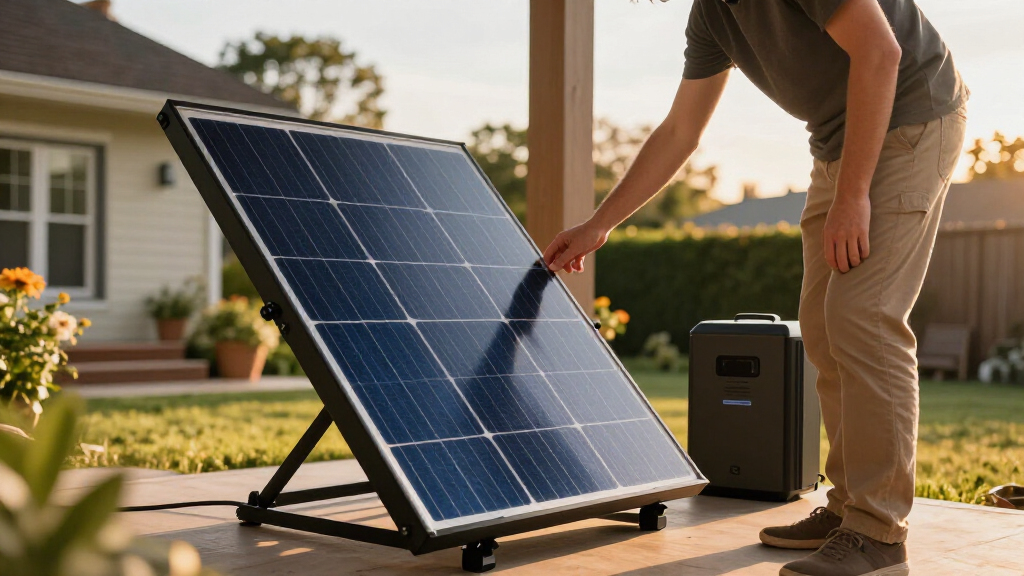
Storage without recharge capacity is just a battery that dies once. A useful rule of thumb: you want enough panel wattage to fully recharge your battery bank in one reasonably sunny day, which in most of the US means roughly 4–5 peak sun hours. A 5kWh battery therefore wants around 1,200–1,500W of panels. Several kits in this roundup ship with undersized arrays relative to their storage, which works fine for partial daily cycling but fails during multi-day outages when the battery drains faster than the panels refill it. Also remember that rated wattage assumes ideal conditions — real-world output typically runs 70–80% of the sticker number due to heat, angle, and shading, so build in that margin when comparing kits on paper.
Installed Kits vs. Portable Power Stations
These two product types solve different problems, and mixing them up is the second most common buying error. Installed kits like the ECO-WORTHY and SUNGOLDPOWER systems connect to your electrical panel, can run 240V appliances like well pumps and HVAC, and recharge from rooftop panels automatically — but they require wiring knowledge or an electrician, possible permit approval, and a permanent mounting location. Portable systems like the Jackery and ABOK units deploy in ten minutes, need zero installation, and can travel to a campsite or rental property — but they max out around 3,600W, cost 2–3x more per watt-hour, and require you to manually plug in panels outdoors during an outage. If you own your home and outages are your concern, installed wins on economics. If you rent, move often, or want flexible power, portable wins on practicality.
Battery Chemistry and Cycle Life
Every system in this roundup uses lithium storage, but chemistry and cycle ratings still matter for long-term value. LiFePO4 batteries — used in all the installed kits here — typically rate for 3,000–6,000 charge cycles, which translates to 8–15 years of daily use. That’s why a LiFePO4 kit at a slightly higher price usually beats a cheaper system with lower cycle-life cells: the cost per usable kilowatt-hour over the battery’s life can differ by a factor of two. Check whether the battery is expandable, too. Some kits let you add battery modules later without replacing the inverter or controller; others lock you into the shipped capacity. For buyers who expect growing energy needs — an EV, a heat pump, a home office — expandability is worth paying extra for up front.
Hidden Costs Beyond the Box
The sticker price of a kit is rarely the final cost. Installed systems need mounting hardware for panels (rooftop racking, ground-mount frames), appropriately sized cabling, breakers, and often a transfer switch if you want automatic switchover during an outage — budget another 10–25% on top of the kit price, plus electrician labor if you’re not comfortable with 48V DC and 240V AC wiring. Permitting requirements vary by jurisdiction and can add weeks to an installation timeline. Portable systems have fewer hidden costs, but extra solar panels are a common add-on since bundled panels rarely recharge the station at full speed. When comparing prices across this roundup, compare the complete system cost, not just the kit price.
When to Pay More — and When Not To
Paying more makes sense for three things: capacity headroom, expandability, and brand support. Systems from established brands carry real warranties and replacement-part availability, which matters when a charge controller fails in year three. Where paying more doesn’t make sense: surge wattage you’ll never use, app connectivity you’ll check twice, and name-brand panels when the budget alternative uses identical cells. Beginners should also resist buying whole-home systems as a first project — a $300 starter kit teaches you the fundamentals, and the lessons cost far less when learned on a 200W system than a 10kW one. Match your spend to your actual outage risk, not your worst-case fantasy scenario.
Frequently Asked Questions
Can a solar panel backup system run my whole house during an outage?
Is a portable power station like the Jackery a real backup system or just a gadget?
Why are two 10kW ECO-WORTHY kits priced so differently?
Do I need an electrician to install one of these kits?
What happens to these systems on cloudy days?
Conclusion
For best overall, the ECO-WORTHY 10KW Off Grid Solar System Kit earns the top spot — it pairs genuine whole-home inverter capacity with meaningful lithium storage and enough panel wattage to keep the battery cycling, all at a coherent price. The best value pick is the SUNGOLDPOWER SGR-8K10E, which delivers 10.24kWh of storage and an 8,000W inverter for less than comparable ECO-WORTHY systems, making it the smart buy for budget-conscious homeowners. For best premium, the Jackery HomePower 3600 Plus justifies its higher cost-per-watt with polished usability, fast solar input, and brand support that budget kit assemblers can’t match. Beginners should start with the ECO-WORTHY 200 Watt 12V Complete Starter Kit — it teaches the fundamentals for under $300 with zero installation risk. For specific needs: RV owners get the best fit from the ECO-Worthy 780W RV kit, renters and occasional users from the Jackery Solar Generator 1000 V2, and mid-size off-grid cabins from the 3000W 24V complete kit. Whatever you choose, size the battery to your actual outage loads first — that single step separates satisfied owners from disappointed ones more than any brand decision.