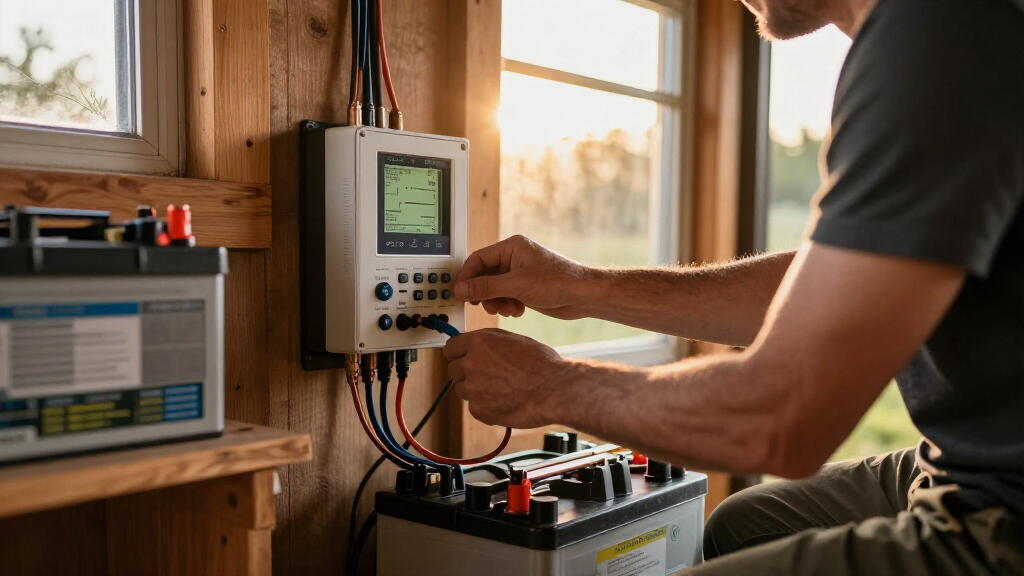

Off-grid solar charge controllers are the component standing between your panels and your batteries, and choosing the wrong one means either wasted harvest or dead cells. For most buyers building a serious off-grid setup, the POWLAND 120A MPPT stands out as the best overall pick thanks to its wide 12V–96V auto-sensing range and 230V solar input ceiling, which gives it headroom few competitors in this lineup can match. If your budget is tighter, the Renogy Rover 40A MPPT delivers the core efficiency benefits of MPPT tracking in a proven, beginner-friendly package, while the Victron SmartSolar 100V 50A is the premium choice for anyone who wants app-based monitoring and rock-solid reliability. The main tradeoff you’ll face in this category is MPPT efficiency versus PWM price, followed by amperage headroom versus cost. Keep reading for the full breakdown of all 14 controllers and which one belongs in your system.

Get backup power and energy gear delivered free with Prime
- Fast, free delivery on millions of items
- Prime Video, Amazon Music and more included
- Member-only deals all year
Key Takeaways
- MPPT controllers dominated the top of this comparison because they convert voltage mismatches into usable charging current, typically harvesting 20–30% more energy than the PWM options in the lineup (the Renogy Wanderer units and HilapriSol 10A).
- The 120A tier (POWLAND and the two generic 120A models) offers the best cost-per-amp for large 48V battery banks, but the no-name units lack the warranty and documentation backing that brands like Victron and Renogy provide.
- Victron‘s Bluetooth app monitoring was the clearest premium differentiator in the lineup — once you’ve adjusted charge parameters from your phone, manual LCD navigation (as on the PowMr and Qigreesol) feels dated.
- For small 12V systems under 150W, PWM is still the smarter buy: the SOLPERK 8A and HilapriSol 10A cost a fraction of an MPPT unit and the efficiency gap barely matters at that scale.
- Input voltage limits varied more than any other spec — from 50V on small PWM units to 230V on the POWLAND — and exceeding this limit is the fastest way to destroy a controller, so match it to your panel array’s open-circuit voltage first.
| POWLAND 120A MPPT Solar Charge Controller, 12V-96V Auto-Sensing, Max 230V Solar Input, LCD Display |  | Best for High-Voltage Systems | Maximum charging current: 120A | System voltage: 12V–96V, automatic detection | Maximum solar input voltage: 230V | VIEW LATEST PRICE | See Our Full Breakdown |
| Qigreesol SA100A 100A MPPT Solar Charge Controller, 12V–48V |  | Best for Built-In Load Controls | Model: SA100A | System voltage: 12V, 24V, 36V, or 48V, automatic recognition | Maximum PV input voltage: 100V | VIEW LATEST PRICE | See Our Full Breakdown |
| Victron Energy SmartSolar MPPT Solar Charge Controller 100V 50A 12/24V |  | Best for Connected, Expandable Systems | Model: SmartSolar MPPT | Maximum PV voltage: 100V | Charge current: 50A | VIEW LATEST PRICE | See Our Full Breakdown |
| Renogy Wanderer Li 30A PWM Solar Charge Controller for 12V Systems |  | Best for Simple 12V Setups | Controller type: PWM | System voltage: 12V | Maximum PV input voltage: 25V | VIEW LATEST PRICE | See Our Full Breakdown |
| Renogy Rover 40A MPPT Solar Charge Controller for 12V/24V Batteries |  | Best for Mid-Size 12V/24V Systems | System voltage: 12V/24V, automatic detection | Maximum charging current: 40A | Battery types: Gel, AGM, flooded, lithium | VIEW LATEST PRICE | See Our Full Breakdown |
| PowMr 100A MPPT Solar Charge Controller, 12V–48V |  | Best for Expandable Systems | Controller current: 100A | Supported system voltages: 12V, 24V, 36V, 48V | Maximum PV input voltage: 160V | VIEW LATEST PRICE | See Our Full Breakdown |
| Victron Energy SmartSolar MPPT 100V 30A 12/24V Solar Charge Controller with Bluetooth |  | Best for App-Based Monitoring | Model: SCC110030210 | System voltage: 12V/24V | Maximum solar voltage: 100V | VIEW LATEST PRICE | See Our Full Breakdown |
| 120A MPPT Solar Charge Controller with LCD Display and Dual USB Ports |  | Best for Built-In Device Charging | Controller current: 120A | Supported system voltages: 12V, 24V, 36V, 48V | Maximum PV input voltage: 100V | VIEW LATEST PRICE | See Our Full Breakdown |
| HilapriSol 10A PWM Solar Charge Controller, 12V/24V Auto-Detect with LCD Display and Dual USB |  | Best for Small DIY Setups | Maximum current: 10A | System voltage: 12V/24V auto-detect | Controller type: PWM | VIEW LATEST PRICE | See Our Full Breakdown |
| Renogy Wanderer 10A PWM Solar Charge Controller, 12V/24V |  | Best Compact Controller | Maximum current: 10A | System voltage: 12V/24V | Controller type: PWM | VIEW LATEST PRICE | See Our Full Breakdown |
| SUNAPEX 12V 10A MPPT Solar Charge Controller for LiFePO4, AGM, Gel, and Lead-Acid Batteries |  | Best for Small Device Charging | Controller Type: MPPT | Battery Voltage: 12V only | Charging Current: 10A | VIEW LATEST PRICE | See Our Full Breakdown |
| Dyness 40A MPPT Solar Charge Controller with Bluetooth App Control |  | Best Smart Monitoring Value | Charging Current: 40A | System Voltage: 12V/24V | Maximum Solar Input: 600W at 12V; 1200W at 24V | VIEW LATEST PRICE | See Our Full Breakdown |
| 120A MPPT Solar Charge Controller for 12V–96V Battery Systems |  | Best for High-Voltage Systems | Supported Battery Voltages: 12V–96V (auto-detect) | Maximum PV Input Voltage: 230V | Maximum Solar Panel Power: 1440W (12V) up to 11,520W (96V) | VIEW LATEST PRICE | See Our Full Breakdown |
| SOLPERK 8A 12V Waterproof Solar Charge Controller |  | Best for Outdoor Trickle Charging | Maximum Current: 8A | System Voltage: 12V | Battery Compatibility: LiFePO4, AGM, GEL, and other 12V rechargeable batteries | VIEW LATEST PRICE | See Our Full Breakdown |
| off-grid solar charge controller | System voltage | Battery compatibility |
|---|---|---|
| POWLAND 120A MPPT Solar Charge | 12V–96V, automatic detection | — |
| Qigreesol SA100A 100A MPPT Sol | 12V, 24V, 36V, or 48V, automatic recognition | — |
| Victron Energy SmartSolar MPPT | — | — |
| Renogy Wanderer Li 30A PWM Sol | 12V | — |
| Renogy Rover 40A MPPT Solar Ch | 12V/24V, automatic detection | — |
| PowMr 100A MPPT Solar Charge C | — | Lead-acid, sealed, gel, AGM, flooded, lithium, user-defined |
| Victron Energy SmartSolar MPPT | 12V/24V | — |
| 120A MPPT Solar Charge Control | — | Sealed, gel, flooded, LiFePO4 |
| HilapriSol 10A PWM Solar Charg | 12V/24V auto-detect | Flooded, AGM, GEL, lithium-ion, LiFePO4 |
| Renogy Wanderer 10A PWM Solar | 12V/24V | AGM, Gel, Flooded, Lithium |
| SUNAPEX 12V 10A MPPT Solar Cha | — | — |
| Dyness 40A MPPT Solar Charge C | 12V/24V | Lithium, AGM/sealed, gel, flooded, user-defined |
| 120A MPPT Solar Charge Control | — | LiFePO4, FLD, SLD, gel, AGM |
| SOLPERK 8A 12V Waterproof Sola | 12V | LiFePO4, AGM, GEL, and other 12V rechargeable batteries |
More Details on Our Top Picks
POWLAND 120A MPPT Solar Charge Controller, 12V-96V Auto-Sensing, Max 230V Solar Input, LCD Display
The POWLAND 120A is the broadest fit here for an off-grid system whose battery bank may run above 48V: it auto-detects voltages up to 96V and accepts solar input up to 230V. That gives it more room for larger, higher-voltage arrays than the Renogy Rover 40A, which is limited to 12V or 24V batteries. Its LCD and three-stage charging make basic system status visible at the controller, and it supports LiFePO4 as well as common lead-acid batteries. The tradeoff is that the description does not mention app or remote monitoring, and installation extras such as cables and mounting hardware are not included. I would shortlist it for a large system only after confirming its ratings suit the planned array and battery bank.
Pros:- Auto-detects systems from 12V through 96V
- Supports up to 120A charging current and 230V solar input
- Works with LiFePO4 and several lead-acid battery types
- LCD shows operating information and diagnostics
Cons:- No remote monitoring or app connectivity is specified
- Cables and mounting hardware are not included
- Broad voltage range and high current call for careful system compatibility checks
Best for: Off-grid owners designing higher-voltage battery banks or large arrays who want broad voltage compatibility and local LCD status.
Not ideal for: Buyers who need app-based remote monitoring or a ready-to-mount kit with cables and hardware.
- Maximum charging current:120A
- System voltage:12V–96V, automatic detection
- Maximum solar input voltage:230V
- Conversion efficiency:Up to 98%
- Battery types:LiFePO4, AGM, GEL, flooded lead-acid
- Charging stages:Bulk, absorption, float
- Display:LCD
- Protections:Reverse polarity, overload, open circuit
Our verdict“Choose the POWLAND for a large off-grid system that needs support beyond 48V and can do without remote monitoring.”
Qigreesol SA100A 100A MPPT Solar Charge Controller, 12V–48V
The Qigreesol SA100A adds practical off-grid conveniences: two 5V USB ports and configurable light and timed load controls alongside its LCD. Those controls can suit a small cabin or shed where lights and low-power devices are managed at the controller. It covers 12V to 48V systems and supports LiFePO4 and several lead-acid chemistries, while the Victron SmartSolar 100V 50A puts more emphasis on app data, system synchronization, and battery protection through its load output. One qualification matters here: the supplied description says MPPT optimization is paired with PWM-style hardware execution, and gives no independent performance verification. I would treat its 100A label and MPPT claim as points to confirm against the manufacturer’s documentation before matching it to a substantial array.
Pros:- Automatically recognizes 12V, 24V, 36V, and 48V systems
- Supports LiFePO4, sealed, GEL, and flooded batteries
- Two 5V USB ports provide local charging for small devices
- LCD, error codes, and configurable load controls aid basic operation
Cons:- Description pairs its MPPT claim with PWM-style hardware execution
- No independent performance verification is provided in the supplied product information
- Maximum PV input voltage is 100V
Best for: Cabin and shed owners with a 12V–48V system who want controller-mounted USB charging and timed or light-based load control.
Not ideal for: Buyers choosing primarily for verified MPPT performance, detailed remote monitoring, or a large array without confirming the controller’s ratings.
- Model:SA100A
- System voltage:12V, 24V, 36V, or 48V, automatic recognition
- Maximum PV input voltage:100V
- Battery types:Sealed, GEL, flooded, LiFePO4
- USB ports:2 × 5V
- Display:Backlit LCD
- Load controls:Configurable light and timed controls
- Warranty:2 years
Our verdict“Consider the Qigreesol for a modest off-grid setup that benefits from built-in USB and load controls, after verifying its MPPT and current ratings.”
Victron Energy SmartSolar MPPT Solar Charge Controller 100V 50A 12/24V
For an off-grid setup where visibility and coordinated expansion matter, the Victron SmartSolar 100V 50A offers the most developed monitoring story in this group. Bluetooth and the VictronConnect app provide live data, a 30-day history, configuration, and firmware updates; multiple controllers can synchronize as one charging system. Its fast tracking is also described as useful under partial shade, where panel output can shift during the day. Compared with the POWLAND 120A, Victron has less stated charging current and tops out at 12V/24V batteries, but it supplies clearer connected-system tools and an intelligent load output to limit deep discharge. The cost and setup complexity are the tradeoffs. This makes more sense for an owner who values monitoring and planned expansion than for someone seeking the widest voltage range.
Pros:- Bluetooth app provides live data, configuration, and 30-day history
- Multiple controllers can synchronize for coordinated charging
- Fast MPPT tracking is designed to respond to partial shade
- Intelligent load output can disconnect devices at low battery voltage
Cons:- Limited to 12V and 24V battery systems
- 50A charge current is below the POWLAND 120A and Qigreesol 100A claims
- Advanced configuration may take more setup knowledge
Best for: Off-grid owners with 12V or 24V banks who want app monitoring, charge history, and the option to synchronize multiple controllers.
Not ideal for: Buyers with 36V–96V battery banks or those prioritizing maximum charging current over connected monitoring features.
- Model:SmartSolar MPPT
- Maximum PV voltage:100V
- Charge current:50A
- Battery voltage:12V/24V
- Connectivity:Bluetooth via VictronConnect app
- App features:Real-time data, 30-day history, configuration, firmware updates
- Load output:Automatic low-voltage device disconnect
- Synchronization:Multiple controllers can operate in coordination
Our verdict“Pick the Victron for a 12V or 24V off-grid system where app visibility and synchronized expansion matter more than maximum current.”
Renogy Wanderer Li 30A PWM Solar Charge Controller for 12V Systems
The Renogy Wanderer Li 30A is the straightforward choice for a compact 12V installation with a modest panel array. Its four-stage charging and support for lithium, AGM, gel, and flooded batteries cover common off-grid battery choices, while the IP32 housing can mount on a wall or DIN rail. Its PWM design is the key distinction: it lacks the MPPT tracking approach used by the Renogy Rover 40A, so buyers focused on extracting more from their panels should look at that model instead. The Wanderer’s 25V maximum PV input also constrains array configuration. Bluetooth monitoring and temperature compensation require separately sold modules, which limits its appeal for owners who want a complete connected system. I’d choose it when simple, local control matters more than advanced tracking or remote access.
Pros:- Supports lithium, AGM, gel, and flooded batteries
- Four-stage charging covers bulk, boost, float, and equalization
- Compact IP32 enclosure mounts on a wall or DIN rail
- Includes protections against reverse polarity, overcharge, overload, and short circuit
Cons:- PWM design lacks the MPPT tracking offered by the Renogy Rover 40A
- Limited to 12V systems and 25V maximum PV input
- Bluetooth monitoring and temperature compensation require separate modules
Best for: Owners of small 12V off-grid systems who want a compact controller with broad battery chemistry support and simple local operation.
Not ideal for: Buyers with 24V banks, higher-voltage panel strings, or a strong need for MPPT performance and built-in remote monitoring.
- Controller type:PWM
- System voltage:12V
- Maximum PV input voltage:25V
- Maximum charging current:30A
- Battery types:Lithium, AGM, gel, flooded
- Charging stages:Bulk, boost, float, equalization
- Ingress protection:IP32
- Dimensions:5.5 × 3.9 × 1.8 in
- Mounting:DIN rail or wall
Our verdict“Choose the Wanderer Li for a compact, uncomplicated 12V installation when PWM operation and separate monitoring accessories fit your plans.”
Renogy Rover 40A MPPT Solar Charge Controller for 12V/24V Batteries
The Renogy Rover 40A hits a useful middle ground for an off-grid 12V or 24V system: it brings MPPT tracking, automatic battery-voltage detection, and support for lithium and common lead-acid chemistries without stepping up to the POWLAND’s 120A capacity. A remote temperature sensor and mounting brackets are included, which gives it a more installation-ready package than the Renogy Wanderer Li. It also supports app monitoring and settings through Renogy DC Home, though Bluetooth requires the separately sold BT-2 module. Lead-acid charging uses four stages, while lithium uses two, so battery-specific behavior is covered. Its 40A ceiling and 12V/24V range make it a fit for medium systems rather than high-voltage banks; the listed efficiency figures do not remove the need to size it against the actual array.
Pros:- Automatically detects 12V or 24V systems
- Supports gel, AGM, flooded, and lithium batteries
- Includes a remote temperature sensor and four mounting brackets
- App supports monitoring and settings; RS485 is available with optional BT-2
Cons:- Limited to 40A and 12V/24V battery systems
- Bluetooth connectivity requires the separately sold BT-2 module
- Charging stages differ by chemistry: four-stage for lead-acid and two-stage for lithium
Best for: Owners of medium-sized 12V or 24V off-grid systems who want MPPT charging, multiple battery options, and included temperature sensing.
Not ideal for: Buyers with 36V or higher battery banks, arrays requiring more than 40A charging, or those expecting Bluetooth without an add-on.
- System voltage:12V/24V, automatic detection
- Maximum charging current:40A
- Battery types:Gel, AGM, flooded, lithium
- Conversion rate:98%
- Tracking efficiency:99%
- Charging stages:4-stage for lead-acid; 2-stage for lithium
- Connectivity:Renogy DC Home App; RS485 with optional BT-2
- Operating temperature:-40°F to 149°F
- Warranty:3 years
Our verdict“Choose the Rover 40A for a mid-size 12V or 24V system that needs MPPT charging and included temperature sensing, with Bluetooth as an optional add-on.”
PowMr 100A MPPT Solar Charge Controller, 12V–48V
Wide voltage support and room to expand give the PowMr a distinct role among these options. It handles 12V through 48V battery systems, with up to 160V PV input and provision for as many as 12 controllers in parallel. That makes it a better fit for a growing cabin or larger off-grid bank than the 30A Victron SmartSolar, which offers app-based monitoring but less current capacity per unit. The PowMr also lists lead-acid and lithium battery profiles, so it can suit mixed system plans.
The tradeoff is that its allowable PV power changes with battery voltage, from 1200W at 12V to 4800W at 48V. The supplied details also omit dimensions and installation requirements, making system planning harder. I’d shortlist it for scalable installations, but buyers who value clear app monitoring may prefer Victron.
Pros:- Supports 12V, 24V, 36V, and 48V battery systems
- Allows up to 12 units to be connected in parallel
- Lists lead-acid and lithium battery compatibility
- Provides up to 160V PV input
Cons:- Recommended PV power varies substantially with battery voltage
- Product details do not specify dimensions or installation requirements
- No Bluetooth monitoring or app features are listed
Best for: Off-grid cabin owners planning a 12V–48V battery system that may grow through parallel controllers
Not ideal for: Small-system owners who want a compact, fully specified installation or built-in app monitoring
- Controller current:100A
- Supported system voltages:12V, 24V, 36V, 48V
- Maximum PV input voltage:160V
- Recommended PV power:1200W at 12V; 2400W at 24V; 3600W at 36V; 4800W at 48V
- Tracking efficiency:Up to 99%
- Peak conversion efficiency:Up to 97%
- Parallel units:Up to 12
- Battery compatibility:Lead-acid, sealed, gel, AGM, flooded, lithium, user-defined
Our verdict“Choose the PowMr when you need high current capacity and a path to expand across multiple battery voltages.”
Victron Energy SmartSolar MPPT 100V 30A 12/24V Solar Charge Controller with Bluetooth
Monitoring and control are the Victron’s main strengths. Its Bluetooth connection to VictronConnect provides live system data, history, configuration, firmware updates, and alarms, which gives an off-grid owner more visibility than the PowMr 100A, whose listed appeal is capacity and parallel expansion. The Victron also supports synchronized charging with other SmartSolar controllers, making it useful in a coordinated multi-controller setup. Its MPPT operation is described as helping maintain solar output when panels are partly shaded.
The limit is scale: 30A output and 100V maximum solar voltage suit smaller 12V or 24V systems better than a high-capacity installation. The app is needed for connected monitoring and configuration, so buyers who want controls on the unit itself may prefer a display-equipped option such as the 120A LCD controller. I’d choose this for system visibility and coordinated charging, not for a large battery bank served by one controller.
Pros:- Bluetooth app provides system data, history, configuration, updates, and alarms
- Supports synchronized charging with other SmartSolar controllers
- MPPT operation is designed to help with partially shaded panels
- Configurable load output can disconnect devices at low battery voltage
Cons:- Limited to 12V and 24V systems and 30A controller current
- Connected monitoring and configuration require the VictronConnect app
- Maximum solar voltage is 100V
Best for: RV and cabin owners with a 12V or 24V system who want Bluetooth monitoring, alarms, and coordinated charging
Not ideal for: Owners of high-current 36V or 48V systems who need more than 30A or a higher PV voltage limit
- Model:SCC110030210
- System voltage:12V/24V
- Maximum solar voltage:100V
- Connectivity:Bluetooth via VictronConnect
- Charging technology:MPPT
- Load output:Configurable low-voltage disconnection
- Warranty:2 years
Our verdict“Pick the Victron SmartSolar 30A for app visibility and coordinated charging in a modest 12V or 24V system.”
120A MPPT Solar Charge Controller with LCD Display and Dual USB Ports
The LCD and two USB ports make this controller practical for simple off-grid setups where device charging and local status checks matter. It supports 12V, 24V, 36V, and 48V systems, giving it broader voltage coverage than the 30A Victron SmartSolar, which focuses on 12V and 24V systems with Bluetooth app monitoring. Timer and lighting controls also suit installations that run lights on a schedule.
Its stated 120A capacity and four system voltages look appealing, but the charging hardware description is internally mixed: it refers to an MPPT-based algorithm with PWM-style hardware execution. The supplied information does not clarify what that means for real-world tracking, nor does it give full protection thresholds or operating limits. I’d treat it as a feature-rich option for a basic installation, while buyers who prioritize clearly described MPPT behavior may prefer the PowMr or Victron.
Pros:- Supports 12V, 24V, 36V, and 48V systems
- Backlit LCD shows system data and error codes
- Dual 5V USB ports allow direct charging of small devices
- Includes adjustable timer and lighting controls
Cons:- Description mixes MPPT algorithm claims with PWM-style hardware execution
- Protection thresholds and operating limits are not fully specified
- Maximum PV input voltage is 100V
Best for: DIY cabin and shed owners who want an onboard display, scheduled lighting, and direct USB charging
Not ideal for: Buyers who need well-documented MPPT hardware, clear protection limits, or verified operating specifications
- Controller current:120A
- Supported system voltages:12V, 24V, 36V, 48V
- Maximum PV input voltage:100V
- Charging description:MPPT-based algorithm with PWM-style hardware execution
- Battery compatibility:Sealed, gel, flooded, LiFePO4
- Display:Backlit LCD
- USB ports:Dual 5V
- Protection:Surge, short-circuit, and over-temperature
Our verdict“Consider this controller when local display and USB charging matter more than having a clearly documented charging design.”
HilapriSol 10A PWM Solar Charge Controller, 12V/24V Auto-Detect with LCD Display and Dual USB
Automatic 12V/24V detection and direct USB charging give this HilapriSol a straightforward role in small off-grid systems. Its LCD displays charging information, and the two 5V/2A ports let a camper charge small devices without running an inverter. It also lists six protections and memory for settings after battery disconnection. Compared with the 10A Renogy Wanderer, it adds a second USB port and automatic voltage recognition; the Renogy instead lists a compact enclosure, an LCD, and an RS232 port for optional Bluetooth monitoring.
The main compromise is PWM charging at only 10A, which makes it a poor match for larger arrays or buyers seeking MPPT performance. Its battery compatibility list is broad, but the product details do not explain how settings differ among battery chemistries. I’d keep it to modest panel and device loads rather than building a larger cabin system around it.
Pros:- Automatically recognizes 12V and 24V systems
- Two 5V/2A USB ports charge small devices directly
- LCD reports charging status, temperature, and power generation
- Lists six safety protections and power-off memory
Cons:- PWM technology is less efficient than the MPPT options in this roundup
- 10A current limits it to small solar systems
- Battery-specific configuration details are not provided
Best for: Campers and DIY users with a small 12V or 24V lead-acid or lithium battery setup who want direct USB charging
Not ideal for: Off-grid owners with larger arrays who need MPPT tracking or more than 10A of charging current
- Maximum current:10A
- System voltage:12V/24V auto-detect
- Controller type:PWM
- Charging stages:Bulk, Absorption, Float
- Battery compatibility:Flooded, AGM, GEL, lithium-ion, LiFePO4
- Safety protections:Overcurrent, short circuit, open circuit, reverse polarity, low voltage, overcharge
- USB ports:2 × 5V/2A
- Operating temperature:-31°F to 140°F
Our verdict“Choose the HilapriSol for a small DIY or camping setup where auto-detection and two USB ports are useful.”
Renogy Wanderer 10A PWM Solar Charge Controller, 12V/24V
Compact dimensions and a defined 4-stage charging sequence make the Renogy Wanderer a tidy choice for an RV or marine cabinet with limited room. It supports 12V and 24V systems and lists AGM, Gel, Flooded, and Lithium compatibility. Compared with the HilapriSol 10A, it has a specified 5.2 × 3.1-inch footprint and an RS232 port for optional remote monitoring; the HilapriSol instead supplies two USB ports and automatic voltage detection.
The limits are typical of this small PWM class: 10A capacity and lower efficiency than MPPT controllers narrow it to modest solar systems. Bluetooth monitoring also requires the separately sold BT-1 module, and lithium activation involves manual settings. Its listed protection functions and backlit LCD help with basic operation, but buyers scaling a cabin array should step up to an MPPT controller such as the PowMr.
Pros:- Compact 5.2 × 3.1-inch dimensions suit tight electrical cabinets
- Four-stage charging supports AGM, Gel, Flooded, and Lithium batteries
- Backlit LCD and 5V/2A USB port provide local status and device charging
- RS232 port supports an optional Bluetooth module
Cons:- PWM charging is less efficient than MPPT controllers
- Bluetooth monitoring requires a separately sold BT-1 module
- Lithium battery support requires manual activation settings
Best for: RV and marine owners who need a compact 10A controller with a specified footprint and optional remote monitoring
Not ideal for: Owners of larger off-grid arrays or buyers who want built-in Bluetooth and straightforward lithium setup
- Maximum current:10A
- System voltage:12V/24V
- Controller type:PWM
- Charging stages:Bulk, Boost, Float, Equalization
- Battery compatibility:AGM, Gel, Flooded, Lithium
- Dimensions:5.2 × 3.1 inches
- USB port:5V/2A
- Connectivity:RS232; optional BT-1 Bluetooth module
- Self-consumption:<10mA
Our verdict“Pick the Wanderer for a compact RV or marine installation with modest solar loads and optional monitoring.”
SUNAPEX 12V 10A MPPT Solar Charge Controller for LiFePO4, AGM, Gel, and Lead-Acid Batteries
This option stands out for its USB and USB-C output ports, a feature most controllers at this amperage skip. That makes it less of a pure battery charger and more of a compact power hub for cabins, sheds, or gear kits where you also want to top up a phone or run a small device. Compared with the SOLPERK 8A, the SUNAPEX trades away weatherproofing — it’s an indoor-style unit — but gains MPPT tracking and a proper LCD voltage and current display, which the SOLPERK’s simple LEDs can’t match. Against the HilapriSol 10A PWM, the MPPT advantage means noticeably more harvest from the same panel in low light. The tradeoff is narrow scope: 12V batteries only, no 24V support, and it refuses to work with panels that have built-in controllers.
Pros:- MPPT tracking extracts more power than PWM units like the HilapriSol 10A in variable light
- USB and USB-C ports double as device charging outputs
- LCD shows real-time voltage and current, not just status LEDs
- Covers overcharge, reverse polarity, short-circuit, and over-temperature faults
Cons:- Locked to 12V batteries with no 24V upgrade path
- Incompatible with panels that have built-in charge controllers
Best for: Owners of small 12V LiFePO4 or AGM setups who want battery charging plus USB device power in one box
Not ideal for: Anyone planning a 24V system or using all-in-one solar panels with integrated controllers — this unit won’t work with either
- Controller Type:MPPT
- Battery Voltage:12V only
- Charging Current:10A
- Supported Batteries:LiFePO4, lead-acid, gel, AGM
- Charging Stages:Bulk, absorption, float, equalization
- Display:LCD voltage/current; LED charging status
- Protection:Overcharge, over-voltage, reverse current, reverse polarity, short-circuit, over-temperature
- Warranty:1 year
Our verdict“This pick makes the most sense for small 12V off-grid kits where a built-in display and USB outputs matter more than expansion room.”
Dyness 40A MPPT Solar Charge Controller with Bluetooth App Control
Bluetooth app control is usually the territory of pricier units like the Victron SmartSolar 50A, but the Dyness 40A brings it to a mid-range price point while matching the Renogy Rover 40A on raw capacity. The payoff is convenience: you can adjust charge parameters, switch load modes, and review up to 300 days of operating history from your phone instead of button-mashing through an LCD menu. Its 20A DC load output with light-control, timer, and manual modes makes it genuinely useful for RV and marine lighting circuits. The tradeoff versus the Victron is polish and ecosystem — this model also requires you to manually select lithium voltage settings, and the 100Voc PV ceiling demands careful string planning so you don’t exceed it in cold weather.
Pros:- Bluetooth app supports remote monitoring, settings changes, and load management
- Handles both 12V and 24V systems with up to 1200W of solar input at 24V
- Multiple load modes (light-control, timer, manual) suit off-grid lighting
- 300 days of operating history helps diagnose long-term performance
Cons:- Lithium battery voltage must be set manually rather than auto-detected
- PV input capped below 100Voc limits series panel configurations
Best for: RV and marine owners running 12V or 24V systems who want app-based monitoring without Victron-level pricing
Not ideal for: Large array builders — the 100Voc input limit restricts series string configurations compared with 230V-input units like the POWLAND 120A
- Charging Current:40A
- System Voltage:12V/24V
- Maximum Solar Input:600W at 12V; 1200W at 24V
- PV Input Limit:Below 100Voc
- Battery Compatibility:Lithium, AGM/sealed, gel, flooded, user-defined
- Connectivity:Bluetooth app control; RS485 Modbus
- DC Load Output:20A with light-control, timer, and manual modes
- Operating History:Up to 300 days
Our verdict“A strong middle-weight choice for mobile off-grid setups that want smart control and load scheduling on a budget.”
120A MPPT Solar Charge Controller for 12V–96V Battery Systems
Where most controllers in this roundup stop at 48V, this unit covers 12V through 96V battery systems with automatic recognition, putting it ahead of the similar POWLAND 120A and PowMr 100A for anyone running 60V–96V battery banks. That voltage range matters because it allows up to 11,520W of panel input on a 96V bank — serious capacity for full-time off-grid homes rather than weekend cabins. The 230V maximum PV input also permits longer series strings than the Dyness 40A, cutting wiring losses on large arrays. The tradeoffs are practical rather than electrical: at this amperage you’re dealing with a heavy-duty unit that demands large-gauge cabling and proper fusing, and the seller publishes no dimensions or weight, so enclosure planning requires extra diligence before purchase.
Pros:- Auto-senses every common bank voltage from 12V to 96V
- Up to 230V PV input allows long series strings with reduced wiring loss
- Handles up to 11,520W of panel power on a 96V system
- Includes low-temperature charging protection alongside standard electrical safeguards
Cons:- Maximum panel power varies widely by system voltage, requiring careful array sizing math
- No published dimensions or weight complicates enclosure planning
Best for: Full-time off-grid households with 48V–96V battery banks and large solar arrays
Not ideal for: Small 12V cabin or RV setups — the capacity goes unused and the physical size likely overwhelms a compact install
- Supported Battery Voltages:12V–96V (auto-detect)
- Maximum PV Input Voltage:230V
- Maximum Solar Panel Power:1440W (12V) up to 11,520W (96V)
- Tracking Efficiency:At least 99%
- Peak Conversion Efficiency:Up to 98%
- Battery Compatibility:LiFePO4, FLD, SLD, gel, AGM
- Protections:PV overcurrent, battery discharge, overvoltage, load overload, over-temperature, low-temperature charging
Our verdict“This model is better suited to high-voltage whole-home off-grid builds than anything smaller — buyers with modest systems should look at the Renogy Rover 40A instead.”
SOLPERK 8A 12V Waterproof Solar Charge Controller
The IP67 waterproof rating is what separates this unit from everything else here — the SUNAPEX 10A and Renogy Wanderer 10A both assume sheltered mounting, while the SOLPERK is built to sit outside, rain or shine. That makes it a natural fit for maintaining boat batteries, gate openers, or fence chargers where running wiring indoors isn’t practical. The SAE connector speeds up installs on trickle-charger panels, and zero battery drain at night means a neglected battery won’t quietly go flat through the controller itself. The honest tradeoff is capacity and visibility: 8A limits you to roughly 100–130W of panel, the LED-only interface gives no voltage readout, and 12V is the only system voltage supported. Compared with PWM units like the Wanderer, it also lacks any programmable features.
Pros:- IP67 waterproof housing tolerates direct outdoor exposure
- Six safety protections cover common battery and circuit faults
- Zero battery drain when sunlight is absent
- SAE connector simplifies hookup to maintainer-style panels
Cons:- 8A maximum current limits arrays to small maintenance-scale panels
- LED indicators only — no voltage or current readout
Best for: Boat, RV, and equipment owners who need a weatherproof battery maintainer mounted outdoors year-round
Not ideal for: Anyone building a real power system — 8A caps array size and there’s no 24V support or detailed display
- Maximum Current:8A
- System Voltage:12V
- Battery Compatibility:LiFePO4, AGM, GEL, and other 12V rechargeable batteries
- Connector:SAE
- Warranty:1 year
Our verdict“This pick makes the most sense for exposed outdoor trickle-charging jobs where waterproofing beats features.”

How We Picked
I ranked these controllers by weighing four factors in order of importance: charging technology and efficiency (MPPT versus PWM, and conversion quality), voltage and amperage flexibility (battery chemistry support, system voltage range, and solar input ceiling), usability (display quality, app connectivity, and how easily charge parameters can be adjusted), and brand support and documentation (warranty terms, manual quality, and long-term availability). Because off-grid systems often live in remote cabins, vans, or boats where a failed controller means days of lost charging, I treated reliability track record and vendor support as heavily as raw specs.
The ranking logic follows system size: high-amperage MPPT controllers for whole-cabin battery banks sit at the top, mid-range MPPT units for vans and small homes fill the middle, and PWM controllers for small 12V maintenance and trickle-charging jobs round out the list. This ordering reflects how buyers actually shop — by system scale first, feature set second. Where two controllers had similar specs, the one with better monitoring, wider chemistry support, or stronger brand backing ranked higher.
Factors to Consider When Choosing Off-grid Solar Charge Controllers
Before you pick a controller from the list above, it helps to understand the decisions that shape every off-grid build. The factors below explain where money is well spent, where it’s wasted, and the mistakes that most often kill controllers in their first year.MPPT vs. PWM: Where the Efficiency Gap Actually Matters
The PWM-versus-MPPT decision comes down to voltage mismatch. If your panel’s voltage is close to your battery voltage — say an 18V panel feeding a 12V battery — a PWM controller loses very little, which is why the inexpensive PWM units in this roundup still make sense for small setups. The moment you run higher-voltage panels (30V and up) or long wire runs, MPPT’s ability to down-convert excess voltage into extra charging current pays for itself quickly. A common mistake is buying MPPT for a single 100W panel; the energy gain rarely justifies the price difference under about 200W of array. Conversely, pairing a 40V panel with a PWM controller wastes a third or more of your potential harvest. Match the technology to your array voltage, not to marketing claims about efficiency percentages.
Sizing Amperage and Input Voltage Headroom
Controllers should be sized to your array’s short-circuit current with at least 25% headroom, since cold sunny mornings can push panel output above rated specs. Just as critical is the maximum solar input voltage: add up the open-circuit voltage of your panels in series, then apply a 20% cold-weather margin. This is the single most common way controllers die — a 100V-limit unit fed by three 45V panels in series fails instantly and usually without warning. The wide-range units in this list, like the POWLAND’s 230V ceiling, exist precisely so you can series-wire panels and keep wire gauge (and cost) down on long runs. When in doubt, undersize your series string rather than flirt with the limit.
Battery Chemistry Compatibility and Custom Charging Profiles
Lithium batteries — especially LiFePO4 — have changed what buyers should demand from a controller. Lithium banks need adjustable absorption and float voltages and, ideally, a programmable low-temperature cutoff, because charging lithium below freezing permanently damages the cells. Many budget controllers claim lithium support but only offer a generic profile; check whether voltages are fully adjustable or limited to presets. Lead-acid buyers have it easier, but gel and AGM batteries still need distinct profiles to avoid overcharging. If you plan to upgrade from lead-acid to lithium later, spending slightly more now on a chemistry-flexible controller avoids a redundant purchase down the road.
Monitoring and Remote Access
In an off-grid setup, your controller is often the only window into system health, so interface quality matters more than it does in grid-tied gear. Bluetooth connectivity — as on the Victron and Dyness units — lets you check charging status, historical yield, and fault codes without walking out to the equipment shed, which is genuinely valuable in winter when a problem can drain your bank overnight. LCD displays work fine for set-and-forget installs, but cheap panels can be unreadable in direct sun and frustrating to menu-navigate without the manual. If your controller will live inside a locked compartment or on a vehicle roofline, prioritize app access or a remote-display option. Buyers who skip monitoring entirely usually end up adding it later at greater cost.
Build Quality, Cooling, and Environmental Protection
High-amperage MPPT controllers generate real heat, and heat is what shortens their lifespan. Look for substantial heatsinks, fan-free passive cooling where possible, and generous clearance requirements in the manual — a 100A controller crammed into a tiny sealed box will throttle or fail. For outdoor or marine installs, ingress protection matters: fully potted, waterproof units like the SOLPERK 8A are built for direct exposure, while most large MPPT controllers must be mounted in a protected enclosure. Cheap no-brand controllers often cut costs on internal components, which doesn’t show up in the specs but does show up in year two. When a brand publishes real warranty terms and downloadable manuals, that’s usually a sign the hardware behind them is equally serious.
Hidden Costs: Fuses, Breakers, and Temperature Sensors
The sticker price of a controller is rarely the full cost of the install. Every serious setup needs a DC breaker or fused disconnect between panel and controller, and another between controller and battery — a requirement most buyers discover only after reading the manual post-purchase. Battery temperature sensors, sold separately by some brands and bundled by others, protect lead-acid banks from incorrect charging in cold conditions. Some budget controllers also require a specific USB dongle or adapter for programming, adding cost and friction. Budget ten to twenty percent of your controller spend on these accessories when comparing options, because a controller that includes a sensor and standard connectors can be cheaper overall than a bare unit that doesn’t.
Frequently Asked Questions
Can I use a 12V/24V controller on a 48V battery bank?
No — unless the controller explicitly lists 48V support. Auto-sensing controllers like the PowMr and Qigreesol units in this roundup detect 12V or 24V banks automatically, but they cannot step up to a 48V system, and connecting one will typically destroy the unit or trigger a permanent fault. For 48V banks you need a controller rated for that voltage, such as the POWLAND 120A or the second 120A model, both of which cover 12V through 96V. This matters because 48V is increasingly the standard for larger off-grid cabins, so if you expect to expand your bank later, buying a wide-voltage controller now saves replacing it entirely. Always confirm the battery voltage range in the spec sheet before wiring anything.
Is a bigger amp rating always better?
Amp rating should match your array’s output with headroom, not exceed it by a wide margin. Oversizing dramatically costs you money and gains nothing — a 120A controller on a 400W array is wasted capacity. However, undersizing is worse, because an overdriven controller will current-limit, throttle your charging, or overheat and fail. The practical rule is to take your array wattage, divide by battery voltage, and add 25% headroom for cold-weather output spikes. Also check the input voltage limit independently of the amp rating: a high-amperage controller with a low voltage ceiling can still be destroyed by a series-wired panel string. Amperage tells you how much power it can handle; voltage rating tells you what it can survive.
Do these controllers work with LiFePO4 batteries?
Most MPPT units in this roundup support LiFePO4, but the depth of that support varies. True lithium compatibility means fully adjustable absorption, float, and low-voltage-disconnect settings — not just a generic lithium preset. The Victron SmartSolar and Renogy Rover both offer detailed programmable profiles through their apps or PC software, which is what a lithium bank really needs to be charged correctly. Some budget MPPT and most basic PWM controllers only offer fixed presets, which may charge a LiFePO4 bank acceptably but not optimally. One caution: none of these controllers include battery heating, so lithium banks in freezing climates still need a self-heating battery or external temperature management to prevent charging damage below 0°C.
Can I connect multiple controllers to one battery bank?
Yes, and this is often smarter than buying one giant controller. Multiple charge controllers can share a battery bank as long as each has its own panel array and each is programmed with the correct charge profile for that battery. This approach is popular for staged expansions — you can add a second Victron or Renogy unit later rather than replacing an undersized controller. The caveats: the controllers won’t coordinate with each other, so each reaches absorption and float on its own schedule, and mixed-brand setups can behave slightly differently at the end of charge. It also means more fusing and wiring. For most growing systems, though, paralleling two mid-size controllers beats gambling everything on a single high-amperage unit.
What size controller do I need for a 400W solar array on a 12V battery?
A 400W array on a 12V bank produces roughly 33A at full output (400 ÷ 12), so with 25% headroom you want a 40A-class controller — which points directly to the Renogy Rover 40A MPPT in this lineup. Going smaller risks throttling on peak sun days, while going much larger just wastes money. You’ll also want to check the input voltage: two 200W panels in series at around 45V open-circuit each stay comfortably under the Rover’s 100V limit. If you later expand to 800W, you’d be at the Rover’s ceiling, so planning a bigger system from day one justifies jumping to a 60A-plus or wide-range unit like the PowMr 100A. Sizing to your realistic expansion plan is cheaper than buying twice.
Conclusion
The right controller depends entirely on the scale of your off-grid build. For a whole-cabin or large 48V system, the POWLAND 120A MPPT is my best overall pick — its 12V–96V range and 230V input ceiling give it room to grow with almost any array, at a cost per amp the mid-size units can’t touch. The best premium option is the Victron SmartSolar 100V 50A: less raw amperage than the POWLAND, but unmatched app monitoring, programmability, and brand support for buyers who consider reliability worth paying for. On the value side, the Renogy Rover 40A MPPT hits the sweet spot for vans, sheds, and small homes, while the Renogy Wanderer 10A PWM and HilapriSol 10A are the smart picks for small 12V projects where MPPT would be overkill. Beginners should start with the Rover 40A or the Bluetooth-equipped Victron SmartSolar 30A, since guided app setup prevents the wiring and profile mistakes that plague first installs. And for a specific niche — outdoor, exposed, low-wattage maintenance charging — the waterproof SOLPERK 8A has no real rival here. Match the controller to your battery voltage, your array wattage, and your expansion plans in that order, and you won’t go wrong with any of the top picks.