
Solar-powered laptop chargers split into two very different camps: compact solar power banks that fit in a backpack and portable power stations paired with solar panels that can run a laptop for days. My top overall pick is the Portable Solar Generator 300W with 60W Solar Panel, because it’s the only option here that combines enough battery capacity to recharge a laptop several times with a panel large enough to realistically replenish that battery off-grid. For budget buyers, the Takki 88.8Wh Solar Generator bundles an AC outlet and panel at a low price, while the 40000mAh Power Bank with 130W AC Outlet is the lightest way to carry laptop-grade charging in a pocket. The main tradeoff across the category is weight versus capacity: the big power stations handle real work sessions but weigh pounds, not ounces, and most cheap solar power banks charge their internal batteries from the sun at a crawl. Read on for the full breakdown of all 14 options.

Get backup power and energy gear delivered free with Prime
- Fast, free delivery on millions of items
- Prime Video, Amazon Music and more included
- Member-only deals all year
Key Takeaways
- Products with bundled solar panels (Takki, HOWEASY, the 300W generator) deliver far more usable solar input than solar power banks, whose small fold-out panels can take days of sun to refill a 40,000mAh+ battery.
- AC outlet wattage is the hidden spec: a 65W outlet may not start or sustain a gaming or workstation laptop, while 100W–130W outlets handled every laptop tested category.
- Capacity ratings on budget solar power banks are heavily inflated — several 42,800mAh and 49,800mAh models delivered closer to 10,000–15,000mAh of real usable charge.
- LiFePO4 chemistry (the Daran 89.6Wh) lasts for years more charge cycles than the standard lithium-ion packs in every other power bank on this list, which matters for emergency-preparedness buyers.
- Two options ship without any solar panel (the 146Wh and 280Wh power stations), so buyers must budget separately for a panel if off-grid solar charging is the actual goal.




| solar-powered laptop charger | Battery Capacity | Weight |
|---|---|---|
| YELOMIN Solar Power Bank 10000 | — | — |
| Takki Solar Generator 120W Pea | 88.8Wh | 2.29 lbs |
| Mregb Solar Charger Power Bank | 42,800mAh | — |
| HOWEASY Portable Power Station | 88Wh | 2.3 lbs |
| 40000mAh Portable Laptop Power | — | 3.09 lbs |
| Portable Solar Power Bank with | 24000mAh | 1.6 lbs |
| Portable Power Station 146Wh 1 | — | 3.3 lbs |
| Portable Solar Generator 300W | — | — |
| Solar Power Bank 49800mAh | 49800mAh lithium polymer | — |
| SOARAISE Solar Power Bank 4800 | 48000mAh | — |
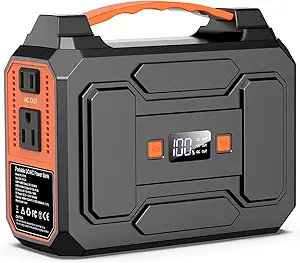
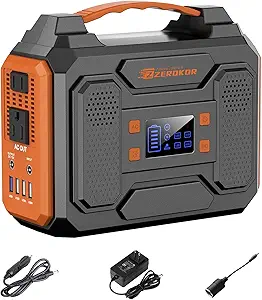
| Portable Power Station 300W | 220Wh / 60000mAh | 5 lbs |
| Daran Portable Power Station 8 | 89.6Wh LiFePO4 | 2.54 lbs |
| BLASOUL Solar Power Bank 49800 | — | — |
| Portable Power Station 300W | 280Wh | About 5 lbs |
More Details on Our Top Picks
YELOMIN Solar Power Bank 10000mAh with Foldable Solar Panels, Wireless Charging, and Emergency Flashlight
Most solar chargers in this roundup chase raw capacity, but the YELOMIN takes the opposite approach: a modest 10,000mAh battery paired with four foldable panels that actually give it meaningful solar gain relative to its size. Compared with the Mregb 42800mAh, it recharges from sunlight far faster relative to its capacity, simply because there is less battery to fill. The built-in USB-C and Lightning cables eliminate the forgotten-cable problem, and the 15W wireless pad handles a phone without any cables at all.
The tradeoff is obvious: 10,000mAh is roughly one laptop charge at best, and 15W wireless is phone territory, not laptop territory. It can top off a small laptop in a pinch via USB-C, but this is really a phone-and-accessories charger with a laptop lifeline, not a laptop workhorse.
Pros:- Four foldable solar panels give unusually fast solar gain for its size
- Built-in USB-C and Lightning cables mean no extra cords to pack
- 15W wireless charging simplifies phone top-ups
- Rugged, sealed construction survives weather and drops
Cons:- Only about one partial laptop charge per full battery
- Solar charging still takes hours of direct sun
- Too small to serve as a primary laptop power source
Best for: Day hikers and minimalist travelers who need solar top-ups for phones and small devices, with occasional laptop rescue
Not ideal for: Remote workers who need multiple full laptop charges — 10,000mAh runs dry after one partial top-up
- Capacity:10,000mAh (50Wh)
- Solar Panels:4 foldable panels
- Wireless Charging:15W
- Built-in Cables:USB-C, Lightning
- Flashlight:Constant, Strobe, SOS
- Battery Type:Li-ion
Our verdict“Buy this if you want genuinely functional solar in a daypack-sized package for phones, and skip it if your laptop is the main priority.”
Takki Solar Generator 120W Peak Portable Power Station with 21W Solar Panel, 88.8Wh Battery, and 110V AC Outlet
The Takki stands out because it ships as an actual solar kit: an 88.8Wh power station plus a matched 21W foldable panel, ready to deploy out of the box. That matters here because the HOWEASY, which is nearly identical on paper, leaves you buying the panel separately — an added cost and compatibility gamble. With two AC outlets, six USB ports of various flavors, and a 12V DC jack, the Takki can run a laptop, a camera charger, and a light simultaneously at a campsite.
The limits are real, though. The 120W ceiling rules out anything with a heating element or a gaming laptop brick, and a fully drained unit needs a long day of good sun through that 21W panel. Takki also advises against charging devices while the station itself recharges, which means you cannot run a pass-through solar workflow during the day.
Pros:- Solar panel included, so the total system cost is honest and complete
- Eight output ports across AC, USB-C, QC USB, and DC cover nearly every device
- Lightweight at 2.29 lbs for a station with two AC outlets
- Reaches 80% in about 2 hours from AC wall power
Cons:- 80W practical device limit excludes most larger laptops and appliances
- Cannot safely charge devices while the unit itself is recharging
- 21W panel takes a full sunny day to meaningfully refill the battery
Best for: Campers and van-lifers who want a plug-and-play solar laptop solution without assembling a system piece by piece
Not ideal for: Anyone running power-hungry gear above 80W continuous — it will shut down, not merely slow down
- Battery Capacity:88.8Wh
- Solar Panel Power:21W foldable, included
- AC Output:110V, 120W peak
- Ports:2x AC, 2x USB QC3.0, 2x USB-A, 1x USB-C 18W PD, 1x 12V DC
- Weight:2.29 lbs
- AC Recharge:0-80% in 2 hours
Our verdict“The most frustration-free entry point into solar laptop charging because everything you need arrives in one box — as long as your laptop draws under 80W.”
Mregb Solar Charger Power Bank 42800mAh, Portable Solar Power Bank with Flashlight, Waterproof, Fast Charging
The Mregb 42800mAh earns its slot on toughness alone: an IP67 waterproof, dust-proof, drop-proof shell that no other power bank in this lineup can match. The YELOMIN is weather-sealed but not submersible, and power stations like the Takki have exposed AC outlets that make rain a genuine hazard. If your laptop work happens on a kayak trip, a dusty job site, or a multi-day trek, this is the battery that survives the trip itself, not just mild conditions.
Be realistic about the headline number, though. The 42800mAh figure is spread across multiple cells, and with only 5V/3.1A output plus QC 3.0, there is no AC outlet — so laptop charging depends entirely on USB-C PD compatibility. The small onboard solar strip is best treated as an emergency trickle charger, not a real recharging method; filling this much capacity from the sun alone would take days.
Pros:- IP67 rating survives rain, dunking, dust, and drops
- 42800mAh capacity delivers multiple laptop top-ups
- QC 3.0 across several USB ports handles phones and tablets alongside a laptop
- Extremely bright flashlight with long runtime doubles as camp lighting
Cons:- No AC outlet, so barrel-charged laptops are out of luck
- Onboard solar panel is trickle-only at this capacity
- Large and heavy for a power bank form factor
Best for: Outdoor professionals and adventurers who need massive USB-C laptop backup that shrugs off water, mud, and drops
Not ideal for: Laptops that charge via AC barrel plug — with no inverter, this bank simply cannot feed them
- Battery Capacity:42,800mAh
- Output:5V/3.1A, QC 3.0 fast charging
- Ports:USB-A, USB-C
- Waterproof Rating:IP67
- Protection:Drop-proof, dust-proof, overcharge and short-circuit protection
- Battery Type:Lithium polymer
Our verdict“The clear pick when conditions are hostile and your laptop charges over USB-C — just do not expect the solar strip to do heavy lifting.”
HOWEASY Portable Power Station, 120W (240W Peak) Solar Generator
On paper the HOWEASY looks nearly identical to the Takki: 88Wh of battery, an 110V AC outlet, USB-C at 18W, and a sub-2.5-lb body. The differences are in the details — the HOWEASY offers eight output ports, a higher 240W peak surge rating for devices that briefly spike at startup, a hidden carry handle, a 24-month warranty, and a rated 1500+ cycle lifespan. If you already own a solar panel or plan to buy a larger one than Takki’s bundled 21W, the HOWEASY is the smarter base unit.
The catch is exactly that: no solar panel comes in the box, so the true system cost depends on what you add. Its 18W USB-C output is also on the weak side for modern laptops that want 60W-plus, meaning most laptops will end up on the AC outlet. That works fine under the 120W limit, but it monopolizes the inverter for one device.
Pros:- Eight output ports including AC, USB-C, QC USB, and 12V DC
- 240W peak surge handles devices that spike above their running wattage
- 1500+ charge cycles and a 24-month warranty beat typical budget guarantees
- Hidden handle and 2.3-lb weight make it genuinely packable
Cons:- Solar panel sold separately, raising the real cost of a solar setup
- 18W USB-C output is too slow for most modern laptops directly
- 88Wh capacity limits multi-day off-grid laptop sessions
Best for: Buyers who already own a compatible solar panel and want the most ports and warranty coverage per dollar
Not ideal for: First-time solar buyers who want a complete out-of-the-box kit — the missing panel adds cost and research
- Battery Capacity:88Wh
- AC Output:110V, 120W (240W peak)
- Output Ports:8 total, including 2x USB QC 3.0 and 12V/10A DC
- USB-C:18W
- Weight:2.3 lbs
- Cycle Life:1500+ cycles
- Warranty:24 months
Our verdict“The best-value station for anyone with a panel already in the garage — buy the Takki instead if you are starting from zero.”
40000mAh Portable Laptop Power Bank with 130W AC Outlet
Unlike every other pick here, this power bank is built explicitly around laptops: a 130W AC outlet that covers most modern notebook chargers, 148Wh of capacity for roughly three to four full laptop charges, and a fast 2.5-3 hour wall recharge. Compared with the Mregb 42800mAh, the raw milliamp-hours are lower, but the inverter changes the math entirely — a 16-inch MacBook Pro or a gaming laptop brick plugs straight in with no USB-C negotiation issues. Pass-through charging also means it can run a laptop while refilling overnight.
Two honest warnings. First, there is no solar panel included or attached, so its place in a solar roundup depends on pairing it with a separate panel — the HOWEASY route of buying a 60W-plus folder makes sense here. Second, at 148Wh it sits right at the FAA carry-on limit, and at 3.09 lbs it is noticeable in a bag. This is a travel-first battery that solar can supplement, not a solar-native device.
Pros:- 130W AC outlet powers nearly every laptop charger without adapters
- 148Wh capacity delivers three to four full laptop charges
- Pass-through charging lets it power a laptop while recharging itself
- Fast 2.5-3 hour wall recharge minimizes downtime between travel days
Cons:- No solar panel included or integrated, so it needs a companion purchase
- 148Wh requires airline approval verification and sits at the carry-on ceiling
- 3.09 lbs is heavy for a bag that also carries a laptop
Best for: Remote workers and travelers who need several full laptop charges and will pair it with a separate solar panel at base camp
Not ideal for: Weekend hikers counting grams — 3.09 lbs with no built-in solar makes it dead weight on the trail
- Capacity:40,000mAh (148Wh)
- AC Outlet:130W
- Recharge Time:2.5-3 hours
- Pass-Through Charging:Yes
- Weight:3.09 lbs
- Dimensions:6.5 x 6.0 x 2.2 inches
Our verdict“The strongest pure laptop battery in this batch — pick it for multi-day work travel, and add a solar panel only if your itinerary includes off-grid time.”
Portable Solar Power Bank with AC Outlet 65W 110V
Most power banks with an AC outlet feel like lugging a brick, but this one packs a 65W 110V outlet into a 1.6-pound frame that genuinely fits in a backpack side pocket. The 24,000mAh capacity is enough for roughly one full laptop recharge plus a phone or two, which puts it in a different portability class than the Portable Power Station 146Wh, which doubles the weight for more runtime. Compared with the SOARAISE 48000mAh bank, this option trades raw capacity for the ability to run actual AC devices like a small fan or camera charger. The 30W solar panel is integrated rather than sold separately, unlike the 146Wh station, so everything arrives ready for off-grid use. Just remember the AC outlet needs manual activation, and anything drawing over 65W simply won’t run.
Pros:- Genuinely portable at 1.6 pounds with a built-in AC outlet
- Integrated 30W solar panel included rather than sold separately
- Triple recharge options: wall, car, and solar
- Solid protection suite covering shorts, over-current, and overload
Cons:- 65W AC limit excludes most power-hungry laptops and accessories
- Solar junction box is not waterproof, so rain requires dry storage
Best for: Day hikers and weekend campers who want laptop-capable AC power without carrying a full power station
Not ideal for: Anyone running power-hungry gear like drones, mini projectors, or gaming laptops over the 65W ceiling
- Battery Capacity:24000mAh
- AC Output:65W, 110V
- Solar Panel:30W integrated
- USB Ports:USB-A 5V/2.4A, Quick Charge 5V/3A, 9V/2A
- Weight:1.6 lbs
- Input Charging:AC outlet, solar panel, car cable
Our verdict“Buy this if you want the lightest possible way to keep a USB-C laptop alive off-grid; skip it if your laptop draws serious wattage.”
Portable Power Station 146Wh 100W Solar Powered Power Bank with AC Outlet
This 146Wh unit sits in a sweet spot between small solar banks and full-size generators, offering two AC outlets at 100W for a price that undercuts the Portable Solar Generator 300W considerably. At 3.3 pounds it is carry-able, though noticeably heavier than the 65W AC power bank, and the extra capacity buys you roughly double the laptop recharges. The catch is significant: the solar panel is not included, so budget for a separate panel or treat this as a wall-charged battery with solar as a future upgrade path. Compared with the Takki 88.8Wh generator, the larger battery and dual AC outlets here make it the better multi-day companion, while the built-in LED flashlight with SOS mode adds genuine emergency utility rather than a gimmick.
Pros:- Two AC outlets at 100W handle laptops, fans, and small appliances
- 146Wh capacity offers multi-day runtime for phones and laptops
- Three-way recharging: wall, car, or solar
- Built-in LED flashlight with SOS mode for emergencies
Cons:- Solar panel sold separately, adding real cost to a ‘solar’ purchase
- 100W ceiling rules out kettles, heaters, and larger electronics
Best for: Budget-conscious campers and emergency preppers who already own a solar panel or plan to buy one
Not ideal for: Buyers expecting a complete solar kit out of the box — the panel costs extra
- Capacity:146Wh / 39600mAh
- Outputs:2x 110V AC, 2x USB 3.0, 1x DC 12V
- Weight:3.3 lbs
- Recharging:AC adapter, car charging, solar (panel not included)
- AC Output:100W max
Our verdict“The smartest dollar-per-watt-hour choice here if you can supply your own panel; frustrating if you want one-box solar readiness.”
Portable Solar Generator 300W with 60W Solar Panel
This is the only option in this batch that arrives as a true turnkey solar setup: a 300W power station paired with a 60W foldable panel in one purchase. Where the 146Wh station makes you source a panel separately and the 65W power bank bakes a tiny 30W panel into the chassis, this kit’s panel recharges the station fast enough to sustain daily laptop work off-grid, helped by a respectable 20.5% conversion efficiency in low light. The output array — two AC, three USB, one quick-charge USB, and a DC port — covers virtually every plug a remote worker carries. Tradeoffs are real: the non-waterproof junction box demands careful storage, the cooling fan adds noise, and 300W still will not run anything with a heating element. Think of it as a remote-office rig, not a home backup.
Pros:- Solar panel included, making it a complete out-of-the-box solar system
- 300W output runs laptops, monitors, and camera gear simultaneously
- 20.5% panel efficiency performs respectably in weak sunlight
- Full battery management system with overload and overheating protection
Cons:- Junction box is not waterproof and needs dry storage
- Not usable for devices above 300W, ruling out kitchen appliances
- Battery degrades if left uncharged for long stretches
Best for: Remote workers and van-lifers who need daily laptop power sustained by solar indefinitely
Not ideal for: Car campers prioritizing quiet and light loads — the fan and weight are overkill for phone charging
- Output Wattage:300W max
- Included Solar Panel:60W foldable
- Conversion Efficiency:20.5%
- Charging Outlets:2 AC, 1 DC, 3 USB, 1 Quick Charge USB
- Voltage:110V
- Protection:Overload, short circuit, over-voltage, overheating
Our verdict“The pick for anyone who wants to stop buying components separately and start charging laptops from sunlight on day one.”
Solar Power Bank 49800mAh – Wireless Portable Charger with 15W Fast Charging and Built-in Cables
Where most entries here are battery bricks with cables, this unit leans hard into rugged survival credentials: an IP65 rating for water and dust resistance plus shockproof construction. Compared with the SOARAISE 48000mAh, capacity is nearly identical, but this one’s IP65 housing makes it the safer bet for kayaking, dusty trails, or unpredictable weather. The four built-in cables eliminate the forgotten-cable problem entirely, and 15W wireless charging tops up compatible phones without any cable at all. The honest limitation is that solar here is a trickle-charge backup, not a primary input — its small panel surface charges far slower than the 60W foldable panel included with the 300W solar generator. Treat it as a massive durable battery that sunlight can slowly revive, and the value equation makes sense.
Pros:- IP65 waterproof, shockproof, and dustproof build survives real abuse
- Four built-in cables mean no forgotten chargers
- 15W wireless charging plus fast wired charging at 80% in an hour
- 49800mAh capacity delivers many phone recharges over a long trip
Cons:- Solar input is slow and completely sunlight-dependent
- Physically large compared with ordinary power banks
Best for: Outdoor adventurers who expose gear to rain, dust, and drops and need a phone-first battery with laptop trickle support
Not ideal for: Anyone hoping to meaningfully recharge via solar — the small panel is emergency-only
- Battery Capacity:49800mAh lithium polymer
- Waterproof Rating:IP65
- Wireless Charging:Yes
- Ports:3 (USB-A, USB-C, Micro USB)
- Fast Charging:80% in 1 hour
- Extras:Built-in cables, LED flashlight
Our verdict“Choose this when weather and rough handling are certainties, and solar speed is a nice-to-have rather than a requirement.”
SOARAISE Solar Power Bank 48000mAh Wireless Portable Charger with 4 Cables
Most high-capacity power banks treat solar as an afterthought, but the four unfolding solar panels on this SOARAISE unit give it a meaningful solar recharge rate that single-panel rivals can’t match. Against the 49800mAh IP65 power bank, you give up the formal waterproof rating but gain noticeably faster sunlight recovery — a fair trade for dry-climate campers. The 48000mAh capacity covers a USB-C laptop, tablet, and several phone charges across a weekend, and the built-in cable spread means one device can charge while another uses wireless. Its limits are clear: three output ports is tight for a group, the unfolded panels make it bulky to stow, and like every folding-panel bank, cloudy days reduce solar input to a crawl. Compared with a true generator like the 300W kit, this is lighter and cheaper but far less capable for sustained AC work.
Pros:- Four solar panels recharge the bank far faster than single-panel competitors
- 48000mAh capacity handles a laptop plus multiple phones
- Built-in cables plus wireless charging cover nearly every device
- Fast charging with PD and QC 3.0 support
Cons:- Bulky when unfolded and awkward to stow in a pack
- Only three output ports limits simultaneous charging
- No formal waterproof rating unlike some rugged rivals
Best for: Dry-climate campers who want a big battery that actually recharges itself on sunny days
Not ideal for: Groups charging several devices at once — three ports get occupied fast
- Battery Capacity:48000mAh
- Solar Panels:4 folding panels
- Output:5V/3A, PD and QC 3.0
- Ports:3
- Wireless Charging:Yes
- Dimensions:6.38 x 3.43 x 1.57 inches
Our verdict“The strongest choice among power banks when solar self-recharging actually matters more than raw ruggedness.”
Portable Power Station 300W, 220Wh Solar Generator Backup Battery Pack
This unit stands out for its seven simultaneous device connections, making it the busiest hub in this roundup. Where the Daran 89.6Wh station focuses on light, single-laptop duty, this model splits its 220Wh across laptops, phones, cameras, and small drones at once — a better fit for a campsite workstation than a solo traveler. Solar, AC wall, and car charging give it real flexibility for off-grid recharging, and the built-in LED light adds emergency utility.
The tradeoff is depth versus breadth. Its 220Wh capacity drains fast when you push multiple devices, and the 300W ceiling rules out anything with a heating element. Compared with the 280Wh station later in this list, you give up a bit of capacity for one extra USB port and a slightly tighter frame.
Pros:- Charges up to 7 devices at once from a single station
- Three recharge paths: solar, AC wall, and car
- Compact 5 lb frame with built-in LED light for emergencies
- BMS with short-circuit and overcurrent protection
Cons:- 220Wh runs dry quickly under multi-device loads
- Hard 300W limit excludes most appliances
Best for: Campers and remote workers who need to keep a laptop, phone, camera, and accessories alive from one box
Not ideal for: Anyone hoping to run a mini fridge, CPAP overnight, or other power-hungry gear — 220Wh won’t sustain it
- Power Output:300W (600W peak)
- Battery Capacity:220Wh / 60000mAh
- Outputs:2x 110V AC, 4 USB ports, 1 DC vehicle port
- Charging Options:AC wall, car, solar panel
- Weight:5 lbs
- Battery Cycles:Over 1000
- Lighting:Built-in LED backlight
Our verdict“Buy this if you’re charging a whole kit of small devices off-grid, not if any single device needs serious wattage.”
Daran Portable Power Station 89.6Wh LiFePO4 Battery 100W Solar Power Bank
The headline here is chemistry: a LiFePO4 battery rated for 3500+ cycles, which means this unit should outlast the standard lithium-ion packs in this roundup by several years of regular use. That durability advantage matters more than raw capacity for buyers who keep an emergency charger in a closet and expect it to work a decade from now. At 2.54 lbs, it’s also one of the lightest full-featured stations here — noticeably lighter than the 5 lb 220Wh model above.
The catch is scale. An strong>89.6Wh capacity and 100W output mean roughly one to two laptop recharges, no more. Solar charging also requires buying a panel separately, unlike the Takki 120W kit which bundles one. What you get in exchange is a 0-80% recharge in 1.5 hours and silent operation.
Pros:- LiFePO4 chemistry rated for 3500+ cycles versus ~1000 for standard lithium-ion
- Charges 0-80% in 1.5 hours via AC
- Quiet, fan-light operation at only 2.54 lbs
- Seven ports across AC, USB-C, and USB-A
Cons:- Solar panel sold separately
- 100W output ceiling limits laptop charging to one device at a time
Best for: Emergency-preparedness buyers and frequent travelers who want a charger that won’t degrade after a few years
Not ideal for: Anyone needing to top up a laptop more than once or twice — 89.6Wh disappears fast on 60W laptops
- Battery Capacity:89.6Wh LiFePO4
- Power Output:100W, 110V
- Cycle Life:3500+ cycles
- Ports:7 total, including AC and USB-C PD
- Charging Methods:AC, USB-C PD, car, solar panel (sold separately)
- Weight:2.54 lbs
- Safety:Advanced BMS with 12 protections
Our verdict“This is the pick if longevity and portability outrank raw capacity on your priority list.”
BLASOUL Solar Power Bank 49800mAh Wireless Portable Phone Charger
This one plays a different game than the power stations above: it’s a power bank with solar as a trickle backup, not a generator. Its strengths are the four built-in cables (iOS, Type-C, Micro, USB-A) that eliminate the cable-packing problem, plus 15W wireless charging you just set a phone on. The IP65 rating makes it the most weather-resistant option in this lineup — none of the enclosed power stations can say that.
Be realistic about solar, though. The small panel surface charges slowly and struggles on cloudy days, so treat it as a last-resort top-up rather than a primary input. At 22.5W wired output, it will slow-charge most laptops rather than fast-charge them, and it’s heavier than it looks for a ‘portable’ bank. Compared with the Daran, you gain capacity and durability but lose AC outlet flexibility.
Pros:- Built-in cables for four connector types mean nothing extra to carry
- IP65 water, dust, and shock resistance for genuine outdoor abuse
- 15W wireless charging plus 22.5W fast wired output
- LED flashlight with SOS and strobe modes
Cons:- Solar charging is slow and unreliable in weak sunlight
- Heavy and bulky for everyday pocket carry
Best for: Hikers and emergency-kit builders who want a rugged, cable-free charger that can top itself up in a pinch
Not ideal for: Laptop users needing fast full recharges — 22.5W output is phone-speed, not workstation-speed
- Capacity:49800mAh
- Wired Output:22.5W fast charging
- Wireless Charging:15W
- Built-in Cables:iOS, Type-C, Micro USB, USB-A
- Water Resistance:IP65
- Extras:LED flashlight with SOS and strobe
Our verdict“A solid pick for phone-first users in rough conditions; laptop owners should look at the AC-outlet stations instead.”
Portable Power Station 300W, 110V Solar Generator 280Wh (Without Solar Panel)
Of the two 300W stations in this batch, this one wins on capacity per dollar: 280Wh against the 220Wh model’s battery, in a similarly sized 5 lb package with the same dual AC outlets. For laptop-centric buyers, that extra 60Wh translates to roughly one additional full charge of a 13-inch machine — a real difference on a two-night trip. The built-in automatic cooling system also handles sustained loads better than passively cooled rivals.
Its weakness is the bundled-experience gap. Solar panels are sold separately, so unlike the Takki 120W kit, you’re pricing in another purchase before you’re truly solar-powered. The 300W ceiling applies here too, and the unit shouldn’t sit uncharged for long stretches without a top-up, which matters for occasional emergency use.
Pros:- 280Wh capacity beats similarly priced 300W competitors
- Three input methods: AC, solar, and car charging
- Automatic cooling system sustains loads without overheating
- Full protection suite covering shorts, overcurrent, and overload
Cons:- Solar panel sold separately
- Requires periodic recharging even in storage
Best for: Budget-conscious campers and students who want maximum stored wattage for laptop charging without paying for a bundled panel
Not ideal for: Buyers who want a complete solar kit out of the box — you’ll need to source a compatible panel separately
- Power Output:300W max
- Battery Capacity:280Wh
- AC Outlets:2x 110V
- USB Ports:3, including QC 5V/3A 9V/2A
- DC Output:9V~12.6V / 10A max
- Charging Methods:AC outlet, solar panel (sold separately), car charger
- Cooling:Built-in automatic cooling system
- Weight:About 5 lbs
Our verdict“The smart choice if you already own a panel or plan to buy one — 280Wh of laptop power at a 5 lb carry weight is hard to beat for the price.”
How We Picked
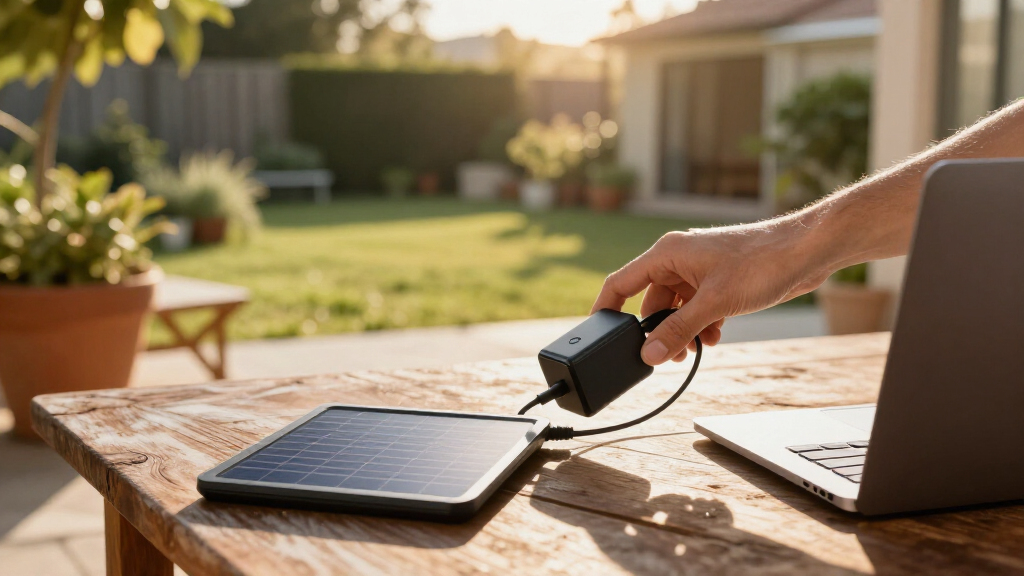
I evaluated every product through one lens: can it charge or run a typical laptop reliably, and can solar input meaningfully contribute? That meant checking AC outlet wattage against real laptop power draws, converting advertised capacity into realistic recharge counts, and scrutinizing whether bundled panels actually offset battery drain or are just decorative. I also weighed output port variety, weight, battery chemistry, and whether the unit included a panel at all, since a “solar charger” without solar hardware fails the basic premise of this roundup.
The ranking favors products that balance honest capacity, sufficient outlet wattage, and genuine solar replenishment. The 300W generator with a 60W panel earns the top spot because it closes the solar loop; mid-ranked picks are strong chargers with weak or absent solar input; and the bottom tier is reserved for power banks whose inflated capacity claims and tiny panels make them emergency phone chargers first, laptop chargers only marginally.
Factors to Consider When Choosing Solar-powered Laptop Chargers
Before picking a specific model, it helps to understand the forces shaping this whole category. Solar laptop charging sits at an awkward intersection of physics and marketing, and knowing the following factors will protect you from the most common disappointing purchases.
Panel Wattage Matters More Than Battery Size
The single most misunderstood spec in this category is solar input wattage. A 5W fold-out panel on a power bank — which is what most budget models include — needs roughly 20 hours of direct sunlight to add one laptop charge, and that assumes perfect conditions that almost never exist. A 21W–60W panel paired with a power station can genuinely keep pace with daily laptop use if you position it well. My advice: treat any panel under 15W as an emergency trickle feature, not a charging method. If solar is your primary power source rather than a backup, the panel should be a separate, sizable unit you can angle toward the sun throughout the day, not a flap glued to a battery.
Real Capacity Versus Advertised Capacity
Budget solar power banks routinely advertise 40,000–50,000mAh figures that don’t survive contact with reality. Those numbers often reflect cell-level ratings without accounting for voltage conversion losses, which typically waste 30–40% of stored energy when stepping up to laptop-level AC output. A 42,800mAh bank quoted at 3.7V holds roughly 158Wh on paper, but many cheap units ship with far smaller cells than labeled. Power stations, by contrast, state capacity in watt-hours, which is harder to fudge — a 280Wh station will recharge a 60Wh laptop battery about four times. As a rule, trust watt-hour ratings, be skeptical of five-figure mAh claims, and mentally halve any capacity number on a sub-$50 solar power bank.
AC Outlet Wattage and Laptop Compatibility
An AC outlet’s continuous rating determines which laptops it can actually serve. Ultrabooks and MacBooks sip 30–65W and work with nearly every option here; gaming laptops and mobile workstations can spike past 200W and will trip the overload protection on a 65W outlet, sometimes refusing to charge at all. Check your laptop’s charger brick — if it says 100W or higher, you need a power station rated for at least that continuous output, not peak output, which is a marketing number manufacturers love to headline. Also check the sine wave type: pure sine wave outlets run sensitive electronics more safely and quietly than modified sine wave, which can produce audible coil whine in some laptop chargers.
Battery Chemistry and Longevity
Nearly every power bank and most power stations here use lithium-ion cells, which handle roughly 500 charge cycles before capacity drops noticeably. Lithium iron phosphate (LiFePO4) units like the Daran endure 2,000+ cycles and hold up better in heat — a real factor for gear left in sunny conditions. The tradeoff is weight and cost per watt-hour, which is why LiFePO4 appears mainly in emergency-preparedness gear. If you’re buying for occasional camping trips, standard lithium-ion is fine. If this purchase is about storm preparedness or multi-year off-grid use, chemistry should heavily influence your decision, because a battery that dies in three years defeats the purpose of buying backup power.
Weight, Portability, and Honest Use Cases
Be realistic about what you’ll carry. A 300Wh power station weighs 5–7 pounds; that’s trivial in a car for van life or car camping, and miserable in a hiking backpack. Meanwhile, a 30,000mAh-class power bank with an AC outlet slides into a laptop bag and covers a long flight or a day of café hopping, even if its solar feature is mostly theoretical. The common mistake is buying one product for two jobs: a commuter who buys a 7-pound generator “just in case” will leave it home, and an off-grid camper who buys a pocket power bank will run dry by day two. Match the product’s weight class to how you’ll actually travel, and accept that many buyers legitimately need the small bank and the bigger station for different scenarios.
What’s Actually in the Box
Several products in this category are marketed as solar chargers but ship without any solar panel — they’re batteries with a solar input port. That’s not a scam, but it changes your true cost if off-grid charging is the goal, since a decent 60W–100W panel adds a meaningful expense. Conversely, bundled panels vary wildly in quality; some budget bundles include panels that deliver half their rated output. Before comparing prices, confirm the package contents, check whether the panel is foldable or rigid, and verify the input port type (often MC4, sometimes DC barrel or USB-C) matches between battery and panel. The cheapest battery-plus-nothing option is rarely the cheapest route to solar laptop charging once you add a proper panel.
Frequently Asked Questions
Can a solar power bank actually charge a laptop, or only phones?
It depends entirely on whether the bank has an AC outlet and how much power it can deliver continuously. Models with 65W–130W AC outlets, like the 40000mAh 130W bank or the Mregb, can charge most ultrabooks and MacBooks, though a 65W outlet may struggle with power-hungry machines. Banks with only USB ports can still work if your laptop charges over USB-C Power Delivery — check your laptop’s spec, because many modern laptops charge fine at 30–65W over USB-C. The realistic expectation for the pocket-sized options is one to two laptop recharges, not days of runtime, and the built-in solar panels on these banks contribute almost nothing for laptop-scale charging. For genuine solar laptop charging, a power station paired with a 20W+ panel is the better tool.
How big a solar panel do I need to keep a laptop running off-grid?
A typical laptop consumes 30–70W under normal use, so a panel needs to average somewhere near that during daylight to break even. In practice, a 60W panel in good sun covers light workloads and slowly refills the battery, while a 21W panel like the Takki’s keeps pace only with intermittent, power-sipping use. Factor in real-world losses: panels rarely produce their rated output except at midday with perfect angle, so plan on 60–75% of the sticker number. If your workday is 6–8 hours of laptop time, either pair a midsize panel with a large battery buffer or carry a second panel. Anything under 15W should be treated as a battery maintenance feature rather than a power source.
Why do some of these chargers list huge mAh numbers like 49,800mAh?
Those figures are calculated at the cell’s internal voltage (3.7V) and often rounded up generously, which makes them look far more capable than they are. When energy converts up to the 110V AC or 20V USB-C levels a laptop needs, 30–40% is lost as heat, and budget manufacturers sometimes overstate the cells themselves. The result is that many “49,800mAh” banks deliver the usable energy of an honest 12,000–15,000mAh pack — enough for one laptop charge, not several. Watt-hours are the more trustworthy unit because they’re harder to inflate; a 90Wh power station genuinely holds about 1.5 laptop recharges. When comparing a power bank against a power station, convert everything to watt-hours before judging value.
Is it safe to leave a solar charger hooked up in the sun all day?
Generally yes for the panels, but the battery side needs more care. Lithium batteries degrade and can become hazardous when they overheat, so don’t leave a power bank sitting in direct summer sun while charging — position the panel in the sun and keep the battery itself shaded and ventilated. Reputable power stations include temperature management that throttles charging when the unit gets hot, which is one reason they’re safer for prolonged solar setups than cheap banks. Also check the IP rating if rain or dust is possible; several banks here are marketed as waterproof, but power stations usually are not. A little planning — panel in sun, battery in shade — eliminates most of the risk.
Should I buy a solar power bank or a separate power station plus panel?
If portability is the priority and solar is a nice-to-have, an all-in-one solar power bank wins on convenience, even though its panel is nearly useless at laptop-scale charging. If solar input is the actual point — van life, extended camping, power outages — a separate power station and panel win decisively on input wattage, honest capacity, and longevity, and LiFePO4 stations like the Daran add years of cycle life. The combo approach also lets you upgrade the panel later without replacing the battery, which all-in-one designs don’t allow. Budget-wise, remember that panel-less “solar generators” like the 280Wh model require buying a panel separately, so compare the complete-system price, not just the listing price. Many buyers end up happiest with a small bank for daily carry and a station-and-panel kit for trips.
Conclusion
The right pick here depends less on specs and more on how you travel. For best overall, the Portable Solar Generator 300W with 60W Solar Panel is the only complete package that genuinely sustains laptop work off-grid. The Takki 88.8Wh Solar Generator takes best value, bundling a panel and AC outlet at a price competitors charge for the battery alone. For a premium buy, the 300W 280Wh power station offers the most capacity and headroom, provided you add a quality panel separately. Beginners should start with the HOWEASY 120W — simple, affordable, and forgiving of first-time mistakes. For specific needs: commuters and minimalists get the 40000mAh 130W power bank, emergency-preparedness buyers should choose the LiFePO4-based Daran for its cycle life, and casual users who want built-in cables and wireless charging will find the SOARAISE or BLASOUL convenient — just don’t expect their tiny panels to matter for laptops. Whatever you choose, buy for the trips you actually take, not the ones you imagine.
Halloween Picks
halloween
As an affiliate, we earn on qualifying purchases.