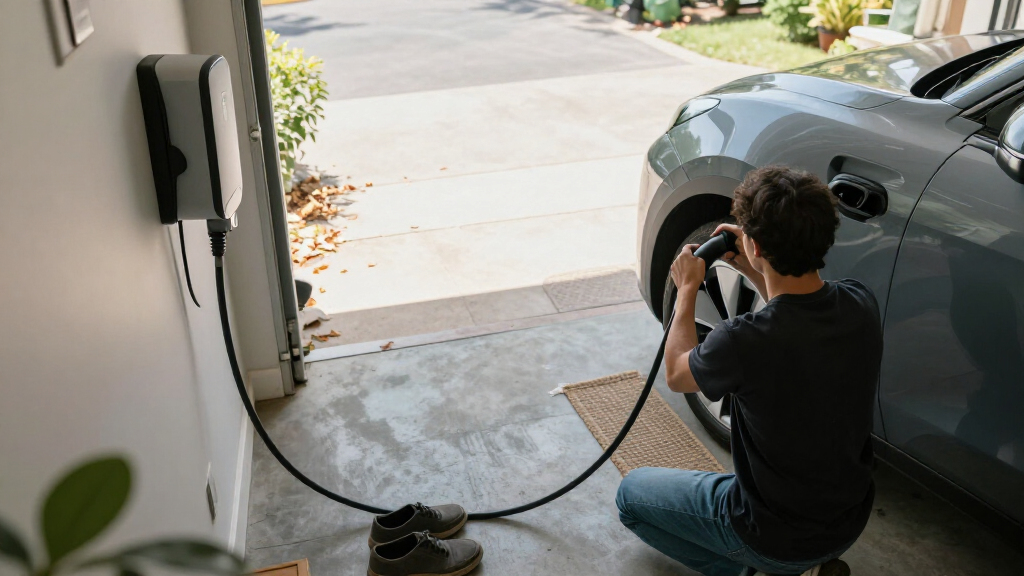

The best EV home charging stations balance charging speed, electrical compatibility, cable reach, and ease of installation. My best overall pick is the Autel Level 2 Charger up to 50A, J1772, hardwired for its high power ceiling, long cable, and indoor/outdoor flexibility; the ChargePoint HomeFlex stands out for buyers who value a familiar charging ecosystem, while the Tesla 40A NACS charger suits compatible Tesla drivers who want a plug-in setup. The main tradeoffs are plug-in convenience versus hardwired installation, J1772 versus NACS connectors, and paying for higher amperage your car or home circuit may not use. I compare all 15 options by those practical differences, so keep reading to find the right fit for your vehicle and electrical setup.

Get backup power and energy gear delivered free with Prime
- Fast, free delivery on millions of items
- Prime Video, Amazon Music and more included
- Member-only deals all year
Key Takeaways
- The Autel 50A J1772 hardwired model leads this lineup for buyers who want a high power ceiling, a 25-foot cable, and indoor/outdoor flexibility without choosing a niche form factor.
- Connector choice changes the shortlist: the lineup includes J1772 models for broad compatibility and NACS options aimed at Tesla drivers, so confirm your car’s port and adapter needs before comparing features.
- Higher amperage is not automatically faster at home. The 80A Autel MaxiCharger has the highest output listed, but it only makes sense when the vehicle and electrical service can use it.
- Plug-in units favor simpler installation and portability, while hardwired options can support higher output but require a dedicated electrical installation.
- Smart features vary more than the product names suggest: several chargers offer Wi-Fi or app control, while the basic 50A J1772 listing does not specify connected features.




| EV home charging station | Connector | Cable length | Warranty | Voltage |
|---|---|---|---|---|
| Level 2 EV Charger 50Amp J1772 | J1772 | — | — | 240 V |
| Autel Level 2 EV Charger up to | J1772 | 25 ft | 3 years | — |
| EVIQO Level 2 EV Charger J1772 | J1772 | 25 ft | — | 240 V |
| Autel MaxiCharger Level 2 EV C | NEMA 14-50 | 25 ft | 3 years | — |
| Level 2 EV Charger | SAE J1772 | 25 ft | — | 240 V |
| AIMILER Level 2 Electric Vehic | J1772 | 25 ft | — | 240 V |
| ChargePoint HomeFlex Level 2 E | J1772 | — | 3 years | 240 V |
| Autel Level 2 Home Smart EV Ch | NACS | 25 ft | 3 years | 240 V |
| EMPORIA Pro Level 2 EV Charger | J1772 | 25 ft | 3 years | — |
| Autel Home Level 2 EV Charger | — | 25 ft | — | 240 V |
| Level 2 EV Charger with WiFi A | J1772 | 25 feet | 3 years | — |
| ChargePoint HomeFlex Level 2 E | NACS (Tesla) | — | 3 years | — |
| Autel MaxiCharger Level 2 EV C | SAE J1772 | — | 5 years | — |
| Tesla Level 2 Charger NACS 40A | NACS | 25 feet | 3 years | 240 V |
| Leviton Level 2 Smart EV Charg | SAE J1772 | 25 feet | — | — |
More Details on Our Top Picks
Level 2 EV Charger 50Amp J1772, NEMA 14-50/Hardwire 240V Charging Station
This charger’s main advantage is the choice between a NEMA 14-50 plug and hardwiring, which lets buyers match the unit to an existing outlet or a planned permanent installation. Its up to 50-amp output also gives it more charging headroom than the 40-amp EVIQO and Autel MaxiCharger options in this group, provided the home’s circuit and vehicle support that rate. The slim, weather-resistant design suits a tight garage wall or an outdoor parking spot, while app controls add scheduling and remote management. The tradeoff is that Tesla drivers need a separate adapter, and hardwiring calls for professional installation. Buyers who want clearly stated certifications or warranty details may prefer the Autel options, whose supplied data specifies those points.
Pros:- Supports up to 50 amps at 240 volts.
- Can be installed with a NEMA 14-50 plug or hardwired.
- Weather-resistant design suits indoor or outdoor placement.
- Slim profile can fit narrower installation spaces.
Cons:- Tesla compatibility requires a separate adapter.
- Hardwired installation requires professional electrical work.
- Warranty and certification details are not provided in the supplied product data.
Best for: EV owners who want the choice of a plug-in setup or hardwiring and have electrical capacity for charging above 40 amps.
Not ideal for: Tesla owners who want a ready-to-connect NACS charger, or buyers who need a clearly specified warranty and certification record before choosing.
- Maximum amperage:50 A
- Voltage:240 V
- Connector:J1772
- Installation:NEMA 14-50 plug or hardwired
- Tesla compatibility:Requires an adapter
- Weather resistance:Yes
- Wiring material:Oxygen-free pure copper
Our verdict“Choose this model if installation flexibility and higher stated amperage matter more than a documented warranty or included Tesla adapter.”
Autel Level 2 EV Charger up to 50Amp, 240V, Indoor/Outdoor Car Charging Station with J1772 Connector, Wi-Fi and Bluetooth Enabled EVSE, Hardwired, 25-Foot Cable with Separate Holster, Dark Gray
The Autel pairs up to 50-amp charging with a 25-foot cable, a useful combination when a parking spot sits far from the installation point. Its Wi-Fi and Bluetooth support app-based scheduling and management, and the NEMA Type 4 weather rating gives buyers a defined level of protection for indoor or outdoor placement. Compared with the plug-in Autel MaxiCharger, this unit is hardwired, so it suits a permanent setup rather than a home where the owner wants to move or unplug the charger. It also lists CSA certification and a three-year warranty, details not supplied for the 50-amp charger in this roundup. The costs of that more fixed installation are electrician work and limited connector reach if the vehicle’s port is awkwardly positioned.
Pros:- Up to 50 A and 12 kW output.
- 25-foot cable offers reach across varied parking layouts.
- NEMA Type 4 weather rating supports indoor and outdoor installation.
- Includes Wi-Fi, Bluetooth, CSA certification, and a three-year warranty.
Cons:- Hardwired installation requires professional electrical work.
- J1772 connector limits direct compatibility with vehicles using other connector standards.
- Higher charging capacity may be unusable if the home circuit or vehicle supports less.
Best for: Homeowners planning a permanent outdoor or garage installation who need a long cable and want specified warranty and certification details.
Not ideal for: Renters or owners who need a plug-in charger they can remove easily, or drivers whose vehicles do not use a J1772 connector.
- Maximum amperage:50 A
- Input and output voltage:240 V
- Maximum power:12 kW
- Connector:J1772
- Cable length:25 ft
- Connectivity:Wi-Fi and Bluetooth
- Warranty:3 years
Our verdict“Pick this Autel for a fixed installation that needs a long cable, outdoor protection, and a documented warranty.”
EVIQO Level 2 EV Charger J1772 40A NEMA 14-50 – 240V Wall Charging Station
EVIQO makes a strong case for buyers who want a 40-amp plug-in charger with a clear set of certifications. Its 25-foot cable and weatherproof construction leave more placement options than a short-reach garage unit, while Wi-Fi enables app-based control and scheduling. The included glow-in-the-dark holster is a small practical touch for finding the connector in a dim garage. Compared with the 50-amp Autel hardwired model, EVIQO gives up some maximum output but avoids a hardwired-only installation; compared with the plug-in Autel MaxiCharger, it lists UL, ETL, FCC, and Energy Star certifications. Buyers should confirm they have the required dedicated 50-amp NEMA 14-50 circuit, and the app setup may take more effort for less technical users.
Pros:- Up to 40 A at 240 V with a plug-in NEMA 14-50 setup.
- 25-foot cable accommodates varied parking positions.
- Lists UL, ETL, FCC, and Energy Star certifications.
- Weatherproof design and Wi-Fi app control support flexible use.
Cons:- Requires a dedicated 50-amp NEMA 14-50 outlet.
- App setup may be challenging for buyers unfamiliar with connected devices.
- 40-amp output is lower than the 50-amp Autel and 50-amp plug-or-hardwire option in this roundup.
Best for: Owners of J1772 EVs or plug-in hybrids who want a certified, weather-ready charger for an existing NEMA 14-50 outlet.
Not ideal for: Drivers seeking the highest available charging output, or households without a dedicated 50-amp NEMA 14-50 outlet.
- Maximum amperage:40 A
- Voltage:240 V
- Connector:J1772
- Installation:NEMA 14-50
- Cable length:25 ft
- Wi-Fi:2.4 GHz
- Certifications:UL, ETL, FCC, Energy Star
- Weight:21 lb
Our verdict“Choose EVIQO if you have the right outlet and value a certified 40-amp plug-in unit over maximum charging capacity.”
Autel MaxiCharger Level 2 EV Charger up to 40Amp, 240V, Indoor/Outdoor Fast Electric Vehicle Charging Station with 25-Foot Cable and NEMA 14-50 Plug
The MaxiCharger is the plug-in counterpart to Autel’s 50-amp hardwired model: it delivers up to 40 amps and connects through a NEMA 14-50 receptacle, avoiding a hardwired-only commitment. A 25-foot cable helps with awkward parking layouts, while adjustable amperage can help match charging to the available circuit. Smart app control and RFID security make it a better fit for households that want control over charger access than the simpler EVIQO plug-in option. The tradeoff is that it still needs a suitable NEMA 14-50 outlet, and its single port serves one vehicle at a time. Buyers who need more output can look to the 50-amp Autel, but that model requires hardwiring and may call for a more involved installation.
Pros:- Up to 40 A at 240 V with adjustable amperage.
- NEMA 14-50 plug offers a less permanent installation than hardwiring.
- 25-foot cable and indoor/outdoor design suit varied parking arrangements.
- App control and RFID security add management options.
Cons:- Requires a suitable NEMA 14-50 receptacle.
- Single-port design cannot charge two vehicles simultaneously.
- Maximum output is lower than the 50-amp Autel hardwired model.
Best for: Households with a NEMA 14-50 outlet that want adjustable charging and RFID access control in an indoor or outdoor setup.
Not ideal for: Drivers without a NEMA 14-50 receptacle, or households that need to charge two vehicles at the same time.
- Maximum amperage:40 A
- Input and output voltage:240 V
- Connector:NEMA 14-50
- Cable length:25 ft
- Ports:1
- Dimensions:12 × 16 × 5 in
- Warranty:3 years
- Security and control:App control and RFID
Our verdict“Pick the MaxiCharger if you want a 40-amp plug-in setup with app and RFID controls and already have the required outlet.”
Level 2 EV Charger, 40Amp/9.6KW/240V, NEMA 14-50P, Wi-Fi (2.4 GHz)
The IYILO stands out for combining a compact 13.45-pound body with adjustable 6–40-amp charging, app controls, and energy tracking. Its 9.6 kW maximum output matches the 40-amp class represented by EVIQO and the Autel MaxiCharger, while the 25-foot cable provides useful reach without requiring hardwiring. Automatic overheat protection and listed UL, ETL, Energy Star, and CSA certifications add practical safety and compliance details. Unlike EVIQO, this model specifies adjustable current and dynamic load balancing, features that can help owners tailor charging to household electrical use. The compromises are a 2.4 GHz-only Wi-Fi connection and a required 50-amp breaker; Tesla owners also need an adapter that is not included. Its claimed range-per-hour figure will vary by vehicle and conditions.
Pros:- Adjustable current from 6 A to 40 A with up to 9.6 kW output.
- 25-foot cable and 13.45-pound weight make placement more manageable.
- App offers remote control and energy tracking.
- Lists UL, ETL, Energy Star, and CSA certifications, plus overheat protection.
Cons:- Wi-Fi supports 2.4 GHz only.
- Requires professional installation with a 50-amp breaker.
- Tesla adapter is not included.
Best for: Drivers who want adjustable charging, app-based energy tracking, and a lighter plug-in unit for a 50-amp circuit.
Not ideal for: Households with only 5 GHz Wi-Fi, Tesla owners who expect an included adapter, or buyers who cannot provide the specified breaker.
- Maximum power:9.6 kW
- Voltage:240 V
- Current range:6–40 A
- Connector:SAE J1772
- Cable length:25 ft
- Wi-Fi:2.4 GHz
- Certifications:UL, ETL, Energy Star, CSA
- Dimensions and weight:9.8 × 8.7 × 4.4 in; 13.45 lb
Our verdict“Choose IYILO if you want adjustable, app-connected 40-amp charging in a compact unit and can meet its circuit and Wi-Fi requirements.”
AIMILER Level 2 Electric Vehicle (EV) Charger 32A, 25ft Cable, Wi-Fi App Control, NEMA 14-50P Plug, ETL Certified, 220V-240V, Portable Home Charging Station
The AIMILER makes a practical case for home charging when a 50-amp hardwired setup would be more capacity than you need. Its 32-amp output and NEMA 14-50P plug suit a compatible 240-volt outlet, while the adjustable amperage can help match charging to the circuit. The 25-foot cable also gives more parking flexibility than a short lead. Wi-Fi app controls add scheduling and remote monitoring, features the ChargePoint HomeFlex also offers, but the AIMILER pairs them with a lower 32-amp ceiling rather than ChargePoint’s stated 50 amps. That means slower charging for vehicles or routines that benefit from higher output. Its J1772 connector needs an adapter for Tesla vehicles, and installation or circuit requirements may call for an electrician.
Pros:- Adjustable output up to 32 amps can suit different circuit capacities.
- Wi-Fi app control supports remote operation, scheduling, and monitoring.
- 25-foot cable allows more flexibility when parking.
- ETL and FCC certifications are listed, along with NEMA Type 4 protection.
Cons:- J1772 connector requires an adapter for Tesla vehicles.
- 32-amp output is below the ChargePoint HomeFlex and the 48- to 50-amp options in this group.
- Requires a suitable 240-volt circuit, and setup may need professional help.
Best for: Drivers with a compatible NEMA 14-50 outlet who want app scheduling and a long cable without choosing a higher-output charger.
Not ideal for: Tesla owners who do not want to use an adapter, or drivers seeking the faster charging potential of a 48- or 50-amp hardwired station.
- Amperage:32 A
- Voltage:240 V
- Connector:J1772
- Plug:NEMA 14-50P
- Cable length:25 ft
- Ports:1
- Certifications:ETL, FCC
Our verdict“Choose the AIMILER if you have a compatible 240-volt outlet and value app control and cable reach more than maximum charging speed.”
ChargePoint HomeFlex Level 2 EV Charger J1772 – NEMA 14-50 Plug
The ChargePoint HomeFlex is a strong fit for drivers who want a familiar app-led charging setup and the option of faster charging than the AIMILER’s 32 amps. Rated for up to 50 amps, it can support higher charging output when paired with an appropriately rated circuit and installation. Its UL-certified, weather-resistant build suits indoor or outdoor placement, while the mobile app handles charging management. Compared with the EMPORIA Pro, the HomeFlex is presented as a plug-in NEMA 14-50 model, which may fit homes that already have a suitable receptacle; the EMPORIA offers PowerSmart load balancing and energy tracking instead. The HomeFlex still calls for an electrician, and Tesla drivers need an adapter. Its higher output also depends on the home’s electrical capacity, not just the charger.
Pros:- Up to 50-amp capability can support faster home charging when the circuit allows it.
- Mobile app provides charging control and management.
- UL-certified, weather-resistant construction is suited to indoor or outdoor installation.
- Three-year warranty is specified.
Cons:- Professional electrical work may be needed for installation or circuit suitability.
- J1772 connector requires an adapter for Tesla vehicles.
- Higher output depends on available home-circuit capacity.
Best for: EV owners with a suitable NEMA 14-50 outlet who want a recognized app-based charging system and the option of higher output.
Not ideal for: Buyers seeking a low-complexity, lower-output charger or Tesla owners who want a native NACS connector without an adapter.
- Amperage:50 A
- Voltage:240 V
- Connector:J1772
- Plug:NEMA 14-50
- Ports:1
- Weight:13.8 lb
- Warranty:3 years
- Installation:Indoor or outdoor
Our verdict“Pick the HomeFlex if you want app-managed charging and a high-output plug-in option, and your outlet and electrical service can support it.”
Autel Level 2 Home Smart EV Charger NACS, Up to 50Amp, Hardwired 240V EV Charge Station, Indoor/Outdoor Car Charging Station, Flexible 25-Foot Cable, Compatible with Tesla
This Autel’s clearest advantage is its NACS connector, making it a direct-fit choice for compatible Tesla vehicles rather than requiring the J1772 adapter used by the AIMILER or ChargePoint HomeFlex. Its up-to-50-amp, 12 kW output and 25-foot cable offer strong charging capacity and useful reach, while the Autel Charge app supports scheduling and remote management. Compared with the other Autel charger in this batch, this model explicitly identifies NACS and Tesla compatibility; the other Autel’s product data gives less connector detail. The tradeoff is that this is a hardwired station, so installation is less flexible than a plug-in unit and may require an electrician and a suitable circuit. The listed connectivity information is also unclear, so buyers should verify app connection requirements before purchase.
Pros:- NACS connector is specified for Tesla compatibility.
- Up to 50 amps and 12 kW offer substantial charging capacity.
- 25-foot flexible cable supports varied parking positions.
- Autel Charge app supports scheduling and remote management.
Cons:- Hardwired installation can require an electrician and suitable electrical capacity.
- Product data gives limited detail about compatibility with non-Tesla vehicles.
- Connectivity specifications are unclear despite app-control claims.
Best for: Tesla owners seeking a hardwired home station with a native NACS connector, long cable, and app scheduling.
Not ideal for: Drivers who need a plug-in charger, or non-Tesla owners who want clearly documented connector compatibility before buying.
- Amperage:Up to 50 A
- Power:12 kW
- Voltage:240 V
- Connector:NACS
- Cable length:25 ft
- Mounting:Wall mount
- Installation:Hardwired
- Warranty:3 years
Our verdict“Choose this Autel if you own a compatible Tesla and want a high-output hardwired NACS station rather than a J1772 charger that needs an adapter.”
EMPORIA Pro Level 2 EV Charger with PowerSmart – 48 Amp Fast Home Charging Station with J1772 Connector and 25′ Cable
The EMPORIA Pro is the most compelling choice here for households that want to coordinate charging with their electrical capacity rather than simply maximize amperage. Its PowerSmart load balancing, app-based scheduling, and energy tracking add useful control beyond the basic charging functions of the AIMILER. At 48 amps, it also sits close to the 50-amp ChargePoint and Autel options, with a 25-foot cable and J1772 connector for compatible vehicles. The stated hardwire-or-NEMA installation flexibility can help match the setup to a home, though the product data also says it is limited to 240-volt power; this is not a standard-outlet solution. Professional installation may be needed, and Tesla drivers should check adapter needs. Choose it for its energy-management features, not because it is the highest-output charger in this lineup.
Pros:- PowerSmart load balancing can help manage charging alongside other household electrical demand.
- App supports smart scheduling and energy tracking.
- 48-amp output is close to the 50-amp models in this group.
- Listed installation options include hardwire or NEMA plug.
Cons:- Requires a 240-volt supply and cannot use a standard household outlet.
- Professional installation may be needed for the electrical setup.
- J1772 connector may require an adapter for Tesla vehicles.
Best for: Households with multiple electrical loads that want app-based load balancing, scheduled charging, and energy tracking.
Not ideal for: Drivers who need a standard household-outlet charger, a native NACS connector, or the highest stated output available here.
- Amperage:48 A
- Input voltage:240 V
- Connector:J1772
- Cable length:25 ft
- Installation options:Hardwire or NEMA plug
- Dimensions:3 in D × 8.25 in W × 12.25 in H
- Warranty:3 years
- Color:Black
Our verdict“Choose the EMPORIA Pro if load balancing and energy insights matter more to your household than having the lineup’s highest amperage.”
Autel Home Level 2 EV Charger up to 50Amp, 240V, Indoor/Outdoor Car Charging Station, 25-Foot Cable, Hardwired, Silver
This Autel suits buyers who want a high-output charger mounted outdoors and value explicit weather protection. It delivers up to 50 amps and 12 kW, with a NEMA 4 rating and CSA certification listed for the unit. The 25-foot cable gives it practical reach around a driveway or garage, and app control adds scheduling and management. Compared with the Autel NACS model in this batch, this product’s connector type is not clearly specified in the supplied data, so vehicle compatibility deserves a check before ordering; the NACS version is the clearer Tesla match. This model is also hardwired, unlike the AIMILER plug-in charger, making it less suited to renters or anyone who wants to move the unit easily. The high output only helps when the home circuit can support it.
Pros:- Up to 50 amps and 12 kW support high-capacity Level 2 charging.
- NEMA 4 rating is suited to outdoor exposure.
- 25-foot cable offers useful reach for driveway and garage layouts.
- CSA certification and a three-year warranty are listed.
Cons:- Hardwired installation may require an electrician and suitable circuit capacity.
- Connector type is not clearly identified in the supplied product specifications.
- Higher-output capability may be unnecessary or unavailable on homes with limited electrical capacity.
Best for: Homeowners planning a permanent outdoor charging point who have a compatible vehicle and electrical service for a 50-amp station.
Not ideal for: Renters, buyers who need a plug-in unit, or anyone unwilling to confirm the connector and vehicle compatibility before purchase.
- Amperage:Up to 50 A
- Voltage:240 V
- Power:12 kW
- Cable length:25 ft
- Installation:Hardwired
- Indoor/outdoor use:Yes
- Certification:CSA
Our verdict“Pick this Autel for a permanent, weather-protected outdoor installation only after confirming its connector matches your vehicle.”
Level 2 EV Charger with WiFi App, 48A NEMA 14-50P, 25ft Cable, ETL Certified, J1772 Connector
This charger pairs a 25-foot cable with Wi-Fi controls, making it a practical fit when the parking spot is awkwardly positioned relative to the outlet. Its stated charging rate of up to 46 miles of range per hour puts it near the ChargePoint HomeFlex NACS, while the J1772 connector suits many North American EVs and plug-in hybrids without needing a Tesla-specific plug. The tradeoff is that its NEMA 14-50P connection is less straightforward than choosing a hardwired unit if you do not already have the right receptacle, and the product notes recommend professional installation. I would also be cautious about exposed locations: the listed NEMA Type 3 protection and warning about direct sun or rain make it a less convincing outdoor pick than chargers explicitly described as weatherproof.
Pros:- 25-foot cable can reach vehicles parked farther from the outlet.
- Wi-Fi app supports remote management and monitoring.
- Stated output offers up to 46 miles of range per hour.
- ETL, FCC, and Energy Star certifications are listed.
Cons:- Professional installation is recommended for safety.
- Tesla vehicles need an adapter for the J1772 connector.
- The product is not recommended for direct sun or rainy outdoor conditions.
Best for: J1772 EV and plug-in-hybrid owners whose vehicles park far from an existing 240-volt NEMA 14-50 outlet and who want app controls.
Not ideal for: Drivers who need a charger for an exposed outdoor location, Tesla owners without an adapter, or households seeking a hardwired installation.
- Output voltage:240 volts
- Input voltage:240 volts
- Amperage:48 A
- Connector:J1772
- Cable length:25 feet
- Warranty:3 years
- Certifications:ETL, FCC, Energy Star
Our verdict“Choose it for a long cable and app control with a J1772 vehicle, but look elsewhere for a weather-exposed charging spot.”
ChargePoint HomeFlex Level 2 EV Charger, Hardwired NACS Charging Station – Tesla Compatible, Fast Charge Solution for Electric Vehicles
The ChargePoint HomeFlex is the clearest match here for drivers who want a hardwired NACS charger rather than a plug-in unit. Its stated rate reaches up to 45 miles of range per hour, and the ChargePoint app adds remote management without requiring a separate plug-in receptacle. Compared with the Tesla Level 2 Charger 40A, this model is the hardwired option and is described for indoor or outdoor installation; the Tesla unit instead plugs into a NEMA 14-50 outlet and offers a 25-foot cable. That distinction makes the HomeFlex a better fit for a planned permanent installation, but it also means budgeting for professional electrical work. The NACS connector is a plus for compatible Tesla and NACS vehicles, while owners of J1772 cars should check adapter needs before buying.
Pros:- NACS connector directly suits compatible Tesla vehicles.
- Hardwired format avoids relying on a NEMA 14-50 receptacle.
- Indoor and outdoor installation options are listed.
- ChargePoint mobile app provides smart management.
Cons:- Professional installation is required for the hardwired setup.
- J1772 vehicles may need an adapter.
- The product is limited to the North American market.
Best for: Tesla and other NACS-vehicle owners planning a permanent hardwired home charging setup with app-based controls.
Not ideal for: Renters, DIY-focused buyers, or households that need a plug-in NEMA 14-50 charger or a J1772 connector without an adapter.
- Output voltage:240 volts
- Input voltage:240 volts
- Connector:NACS (Tesla)
- Ports:1
- Installation:Hardwired
- Dimensions:7.06 × 11.19 × 5.2 inches
- Warranty:3 years
- App control:ChargePoint mobile app
Our verdict“Pick the HomeFlex if you want a permanent, app-controlled NACS installation and are prepared for professional wiring.”
Autel MaxiCharger Level 2 EV Charger, 80 Amp Fast Charging, Indoor/Outdoor, J1772, Hardwired
With a stated maximum of 80 A and 19.2 kW, this Autel is the lineup’s high-capacity choice for homes that can support a large charging circuit. The listed rate of about 70 miles of range per hour is well above the ChargePoint HomeFlex NACS’s stated 45, but that advantage depends on both a suitable 100 A circuit and a vehicle able to accept the power. That electrical requirement can make the installation more involved than choosing a plug-in 40 A option such as the Tesla Level 2 Charger. Autel adds app scheduling, temperature monitoring, theft protection, and a five-year warranty, giving it a more feature-rich profile than a basic high-output unit. It is hardwired and J1772, though Tesla drivers need to supply an adapter.
Pros:- Up to 80 A and 19.2 kW output for compatible vehicles.
- App supports scheduling and remote management.
- Temperature monitoring and theft protection add useful safeguards.
- Five-year warranty is longer than the listed warranties on the ChargePoint and Tesla options.
Cons:- Full 80 A output requires a 100 A circuit, which can complicate installation.
- Hardwired installation calls for professional electrical work.
- Tesla adapter is not included.
Best for: Owners with a compatible high-rate EV and a home electrical system that can support a dedicated 100 A circuit.
Not ideal for: Drivers with limited electrical capacity, vehicles that cannot use the higher output, or buyers who want a plug-in installation.
- Output voltage:240 volts
- Input voltage:240 volts
- Maximum amperage:80 A
- Power output:Up to 19.2 kW
- Connector:SAE J1772
- Ports:1
- Installation:Hardwired
- Certifications:CSA, UL
- Warranty:5 years
Our verdict“Choose this Autel when your electrical service and vehicle can make use of its unusually high output; otherwise, a lower-capacity charger may be easier to install.”
Tesla Level 2 Charger NACS 40A – Plug-in NEMA 14-50 240V EV Charger
This model makes a straightforward case for NACS drivers who already have, or plan to install, a 240 V NEMA 14-50 outlet. Its 40 A plug-in design avoids the hardwired installation required by the ChargePoint HomeFlex, while built-in Wi-Fi offers remote start, stop, and scheduling. The 25-foot cable adds flexibility around the driveway, and the sealed, weatherproof housing is a better match for outdoor use than the Level 2 EV Charger with WiFi App, whose listing cautions against rain and direct sun. The main compromise is capacity: at 40 A, it falls below the 48 A J1772 charger in this batch and far below Autel’s 80 A unit. Non-Tesla vehicles need a compatible adapter, and charging still depends on having a dedicated receptacle.
Pros:- Built-in NACS connector suits compatible Tesla vehicles.
- Plug-in NEMA 14-50 format avoids a hardwired charger installation.
- Weatherproof housing supports indoor and outdoor use.
- Wi-Fi app controls and a 25-foot cable offer day-to-day flexibility.
Cons:- Requires a dedicated 240 V NEMA 14-50 outlet.
- Non-Tesla vehicles may need an adapter that is not included.
- 40 A output is lower than the 48 A and 80 A options in this batch.
Best for: Tesla and other NACS-port owners who want a weatherproof, app-connected charger that plugs into a NEMA 14-50 outlet.
Not ideal for: Drivers without a dedicated NEMA 14-50 receptacle, J1772 vehicle owners who do not want to use an adapter, or buyers seeking the highest charging capacity.
- Voltage:240 V
- Amperage:40 A
- Connector:NACS
- Outlet connection:NEMA 14-50 plug
- Cable length:25 feet
- Connectivity:Wi-Fi (2.4 GHz)
- Housing:Sealed, weatherproof
- Certifications:UL, ETL, FCC, Energy Star
- Warranty:3 years
Our verdict“Choose this for convenient plug-in NACS charging where a NEMA 14-50 outlet is available, not for maximum output.”
Leviton Level 2 Smart EV Charger with Wi-Fi, 40 Amp, 9.6kW, 25′ Cable, NEMA 14-50P, Indoor/Outdoor
Leviton’s 40 A charger is a sensible choice for households that want a familiar J1772 plug-in setup with app scheduling, rather than the greater output and installation demands of the 80 A Autel MaxiCharger. Its 9.6 kW rating and 25-foot cable suit routine overnight charging for many EVs, while the weather-resistant enclosure supports indoor or outdoor placement. The My Leviton app handles remote control, scheduling, and monitoring; those smart functions depend on Wi-Fi, so this is a less appealing fit where the signal is unreliable. It also requires a NEMA 14-50 receptacle, which limits installation flexibility compared with hardwired chargers such as the ChargePoint HomeFlex. Buyers with Tesla or NACS vehicles should confirm adapter compatibility before choosing this J1772 model.
Pros:- J1772 connector works with a wide range of EVs.
- My Leviton app offers remote control, scheduling, and monitoring.
- Weather-resistant enclosure is suited to indoor or outdoor installation.
- 25-foot cable provides useful reach from the outlet.
Cons:- Smart features depend on a Wi-Fi connection.
- NEMA 14-50P plug limits use to homes with the matching receptacle.
- 40 A output is lower than the 48 A charger and 80 A Autel in this batch.
Best for: J1772 EV owners with a NEMA 14-50 outlet who want app scheduling and a weather-resistant charger from a familiar electrical brand.
Not ideal for: Households without reliable Wi-Fi or a NEMA 14-50 receptacle, and drivers seeking hardwired installation or more than 40 A output.
- Input voltage:240 volts
- Amperage:40 A
- Power output:9.6 kW
- Connector:SAE J1772
- Ports:1
- Cable length:25 feet
- Outlet connection:NEMA 14-50P
- Certifications:UL, Energy Star
Our verdict“Choose the Leviton for app-managed J1772 charging from a NEMA 14-50 outlet, but skip it if your Wi-Fi or receptacle setup is uncertain.”

How We Picked
I compared these 15 stations by the factors that shape everyday home charging: stated amperage, plug-in or hardwired installation, connector type, cable length, indoor/outdoor suitability, and listed smart functions. I also looked at whether the product details make its intended buyer clear, including Tesla-focused NACS models, portable plug-in units, and higher-output hardwired equipment. Where a listing leaves a feature unclear, I treat that as a limitation rather than assuming it is included.
The ranking gives priority to useful capability without asking every buyer to pay for or install more power than they can use. That places versatile, clearly specified stations ahead of models aimed at narrower needs, while still recognizing standout options for beginners, budget-conscious buyers, Tesla owners, and homes with suitable electrical capacity. The 80A Autel model ranks for a specific high-capacity use, not as a default choice; plug-in and lower-amperage chargers remain stronger fits for many homes.
| EV home charging station | Connector |
|---|---|
| Level 2 EV Charger 50Amp J1772 | J1772 |
| Autel Level 2 EV Charger up to | J1772 |
| EVIQO Level 2 EV Charger J1772 | J1772 |
| Autel MaxiCharger Level 2 EV C | NEMA 14-50 |
| Level 2 EV Charger | SAE J1772 |
| AIMILER Level 2 Electric Vehic | J1772 |
| ChargePoint HomeFlex Level 2 E | J1772 |
| Autel Level 2 Home Smart EV Ch | NACS |
| EMPORIA Pro Level 2 EV Charger | J1772 |
| Autel Home Level 2 EV Charger | — |
| Level 2 EV Charger with WiFi A | J1772 |
| ChargePoint HomeFlex Level 2 E | NACS (Tesla) |
| Autel MaxiCharger Level 2 EV C | SAE J1772 |
| Tesla Level 2 Charger NACS 40A | NACS |
| Leviton Level 2 Smart EV Charg | SAE J1772 |
Factors to Consider When Choosing Best EV Home Charging Stations
Before choosing a station, I would match it to the car, the home’s electrical setup, and the parking layout. A charger’s headline amperage alone cannot tell you whether it will charge faster or install more easily in your situation.
Match the Connector to Your Vehicle
Start with the charging port on your vehicle, then confirm whether the station’s connector works directly or needs an adapter. This roundup includes both J1772 and NACS models, and connector compatibility is more than a convenience detail: it affects which cars can plug in without extra equipment. A Tesla-focused NACS station may be a neat match for one vehicle but less flexible for a household with different EVs. J1772 can suit many non-Tesla vehicles, but buyers should still confirm the car’s specifications and any adapter requirements. If you expect to change vehicles or share charging with another driver, prioritize a setup that accommodates both cars rather than buying around only the current one. Check that any needed adapter is approved for the vehicle and charging use before relying on it.
Choose Amperage Around the Circuit and Car
A charger’s maximum amperage is only one part of the charging-speed equation; the vehicle’s onboard charging limit and the home circuit set the usable ceiling too. A 40A or 48A station may already meet overnight needs, while a 50A or 80A model can add little if the car cannot accept that output. Have an electrician confirm the circuit capacity and installation requirements before selecting a unit. Do not assume an existing outlet can support continuous EV charging at the charger’s maximum setting. A lower-output station can be the more sensible purchase when it fits the car and avoids costly electrical work. Choose extra capacity only when your service, wiring, and vehicle can make practical use of it.
Decide Between Plug-In and Hardwired Installation
Plug-in chargers can be easier to remove or relocate and may suit a home with a compatible dedicated outlet. Hardwired models can support a cleaner fixed installation and, depending on the equipment and circuit, higher output, but they call for permanent electrical work. A common mistake is treating a NEMA 14-50 outlet as proof that any plug-in unit will work at its full listed amperage; the circuit and installation still need to be checked. Ask an electrician about the breaker, wiring, outlet condition, and local requirements rather than relying on the outlet shape alone. Think about whether you may move, remodel, or change the charging location before committing to hardwiring. The installation method is part of the total decision, not a detail to settle after purchase.
Measure Cable Reach and Parking Position
Cable length matters most when the charge port and parking spot do not line up neatly. A 25-foot cable, listed on many products here, can give more flexibility for different vehicle positions, but it will not solve every garage layout. Measure from the planned charger mounting point to the car’s inlet with the vehicle parked as it normally will be, and leave room to route the cable without stretching or creating a trip hazard. Consider which side of the car has the port and whether you need to reach a second parking space. A short cable can force awkward parking; an unnecessarily long one needs more careful storage. Check that the listing includes a practical holster or plan where the connector will rest between sessions.
Value Smart Features Only If You Will Use Them
Wi-Fi, Bluetooth, and app controls can help with scheduling, charging status, and remote access, but the value depends on the functions actually provided. Do not treat “smart” as a guarantee of every feature; check the product details for the controls you want and whether the charger needs a reliable signal where it will be installed. If your utility offers off-peak rates, scheduled charging may matter more than a broad app feature list. If you set a charging routine in the car already, duplicate controls may add little benefit. For a garage with weak Wi-Fi, a charger that depends on a stable connection can be less convenient than its listing suggests. Compare the app’s role in your routine, not just the presence of a wireless connection.
Check Certification, Location Rating, and Support Details
For equipment handling substantial electrical loads, verify the exact model’s safety certification and installation instructions rather than relying on broad product-family claims. Outdoor placement calls for a charger and mounting location rated for the conditions it will face, including weather exposure and cable storage. Listings that specify indoor/outdoor use offer a useful starting point, but buyers should still confirm the installation limits in the manual. Review warranty coverage, service access, and replacement parts before choosing a model that will be difficult to remove once installed. A low-feature charger from a clear, supported product line may be a better long-term fit than a unit whose specifications or support path are vague. Keep the manual and installation records with the home’s electrical documentation.
Frequently Asked Questions
Will a 48A or 50A charger charge my EV faster than a 40A model?
Only if the vehicle and the home electrical circuit can both use the extra output. The onboard charger in the car can cap the charging rate, so a higher-rated station may deliver no practical speed gain for that vehicle. The circuit and installation also need to support the charger’s settings; a plug or breaker should not be assumed to permit maximum output. Compare the car’s AC charging limit with the station and have an electrician verify the planned circuit. If overnight charging already covers your daily driving, a 40A model may be a more practical fit.
Should I choose a J1772 charger or a NACS charger?
Choose based on the port on the vehicle you plan to charge and whether the manufacturer supports an adapter for the other connector. This roundup has J1772 stations for broad compatibility across many EVs and NACS models aimed particularly at Tesla drivers. For a household with more than one EV, think about both vehicles and any approved adapters before deciding. Also check the connector at the exact charger listing rather than relying on a product family name, since similar models may be sold in different versions. If you expect to replace your car soon, connector flexibility may matter more than a small difference in charger output.
Is a plug-in charger a better choice than a hardwired station?
Neither installation style is right for every home. A plug-in station can be easier to remove or relocate when a suitable dedicated outlet and circuit are already available, while hardwiring creates a fixed installation and may support higher output on a suitable circuit. An existing outlet still needs inspection for condition, wiring, and correct circuit capacity before use. Hardwiring involves electrician work and is less convenient to take along if you move. Ask an electrician to compare both installation options at your home before buying, especially if you are choosing a high-amperage model.
Do I need a Wi-Fi-enabled EV charger?
No; Wi-Fi is useful when you want the charger’s app features, such as remote status checks or scheduling, but it is not required for home charging itself. First check whether your vehicle can already schedule charging and whether your electricity plan makes timed charging worthwhile. A garage with unreliable wireless coverage can limit the benefit of app-dependent functions. Bluetooth and Wi-Fi also are not interchangeable, so read the individual listing for the controls and connection methods included. If you mainly plug in overnight and use the car’s own charge settings, a simpler station may suit you better.
Is the 80A Autel MaxiCharger a sensible choice for a typical home?
It is a specialized choice, not a default upgrade for every household. The 80A output only helps if the vehicle can accept that charging rate and the home’s electrical service and installation support the required equipment. Many owners can replenish overnight with a lower-output station, making the additional capacity unnecessary for daily use. Ask an electrician to assess the service, circuit, and installation cost before choosing it. If you have multiple charging needs or a vehicle suited to higher AC output, it may deserve a closer look; otherwise, a 40A to 50A model may be a more practical match.
Conclusion
For most buyers, I would start with the Autel 50A J1772 hardwired charger as the best overall option in this group: it combines a high power ceiling, a 25-foot cable, and indoor/outdoor use. The best value depends on your installation and desired controls; the EVIQO 40A plug-in model is a straightforward candidate when its listed setup matches your home, while the AIMILER 32A is better suited to buyers who prioritize a portable plug-in format over maximum output. For a best premium or high-capacity pick, consider the Autel 80A MaxiCharger only after confirming your car and electrical service can use it. Beginners should favor a clearly specified plug-in model, such as the Autel MaxiCharger 40A, and get the outlet and circuit checked before installation. Tesla drivers seeking NACS can compare the Tesla 40A plug-in with the NACS Autel and hardwired ChargePoint; buyers with mixed-vehicle households should begin with connector compatibility and adapter needs. The best station is the one your car can use, your home can safely support, and your parking layout can accommodate.