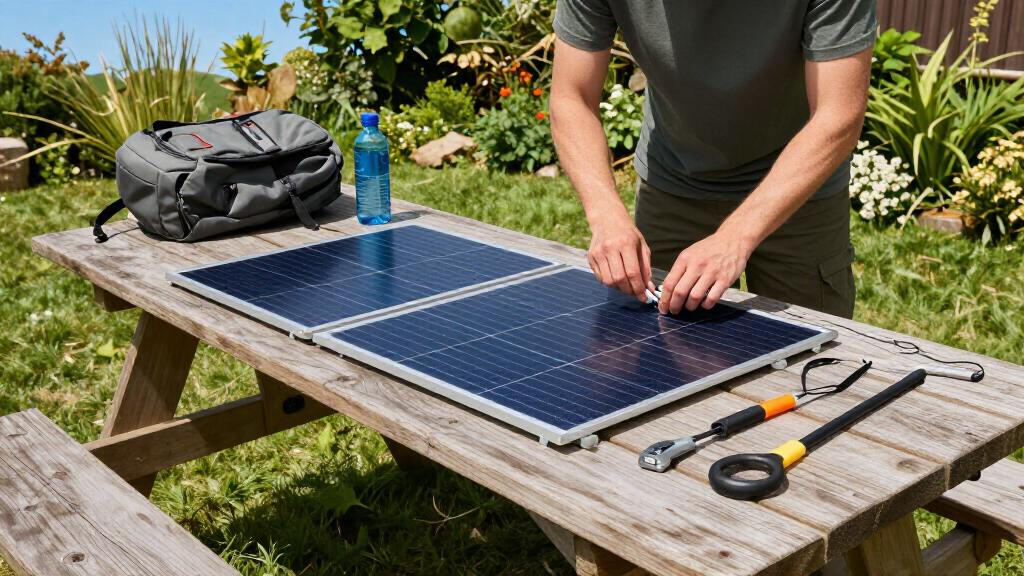

Among portable solar panel kits, I rank the Renogy 200W 12V Solar Panel Suitcase as the best overall because it pairs useful output with a waterproof charge controller and a battery-ready suitcase design. The DOKIO 150W kit with charge controller is my value pick, while the Renogy 400W Portable Solar Panel suits buyers willing to carry more gear for higher charging potential. The main choices are between easy transport and greater output, complete battery kits and panel-only designs, and lower-cost PWM controllers and more refined charging hardware. A larger wattage label can shorten charging time, but only when the battery or power station accepts that input and the panel can be positioned well. Continue reading for the full breakdown of which kit fits each buyer, power source, and travel style.

Get backup power and energy gear delivered free with Prime
- Fast, free delivery on millions of items
- Prime Video, Amazon Music and more included
- Member-only deals all year
Key Takeaways
- The Renogy 200W suitcase offers the best balance of battery-ready hardware, practical output, and durable construction, which places it ahead of lighter but less complete folding panels.
- About 200W is the lineup’s practical middle ground: it offers a meaningful charging gain over 100W and 150W kits without reaching the storage and handling demands of 300W or 400W panels.
- DOKIO supplies the strongest low-cost variety, yet its higher-output kits trade some refinement for lighter folding construction and basic PWM charge control.
- Renogy separates battery and power-station use more clearly than most brands here, with controller-equipped suitcase kits for 12V batteries and panel-focused models for compatible power stations.
- The 300W generator bundle is a different proposition: its included 60W panel provides an all-in-one starting point, but it gathers solar energy far more slowly than the dedicated 200W to 400W panels.


| portable solar panel kit | Rated Power | Weight |
|---|---|---|
| Renogy 400W Portable Solar Pan | 400W | 30.2 lbs |
| DOKIO 150W Portable Foldable S | 150W | 7.3 lbs |
| DOKIO 200W Portable Foldable S | 200W | 9.7 lbs |
| DOKIO 150W Portable Foldable S | 150W | 7.3 lbs |
| Go Power GP-PSK-130 130W Porta | 130W | — |
| Renogy 200W 12V Portable Solar | 200W | 28.46 lbs |
| Renogy 200W Portable Solar Pan | 200W | 13.89 lbs |
| N-Type 16BB 200W Portable Fold | 200W | 16.97 lbs |
| DOKIO 100W Portable Foldable S | 100W | 6 lbs |
| DOKIO 300W Foldable Solar Pane | 300W | 15.2 lbs |
| Renogy 100W Portable Solar Pan | 100W | 17.42 lbs |
| Portable Solar Generator 300W | — | — |
| DOKIO 200W Portable Foldable S | 200W | 9.7 lbs |
| Voltset 100W 12V Solar Panel K | 100W | — |
| DOKIO 300W Portable Foldable S | 300W | 15.2 lbs |
More Details on Our Top Picks
Renogy 400W Portable Solar Panel
I rank the Renogy 400W Portable Solar Panel highest for buyers who want substantial generation without installing rigid panels. Its 400W output and 23% efficiency give it twice the rated power of the DOKIO 200W kit, making it better suited to larger power stations and energy-heavy RV routines. The one-minute, tool-free setup also reduces friction when campsites change frequently, while partial-shade performance adds resilience around trees. That capability comes with a portability penalty: at 30.2 pounds, it is far heavier than DOKIO’s 9.7-pound 200W model, and its folded footprint still demands meaningful storage space. I also see the three-year warranty as modest for a panel positioned for repeated outdoor travel. This is the performance-led choice, but smaller charging jobs do not justify its bulk.
Pros:- 400W rated output suits larger portable power stations and higher daily energy use
- 23% efficiency helps produce more power from the available panel area
- Tool-free setup takes about one minute
- ETFE-coated, hail-resistant construction supports demanding outdoor use
Cons:- 30.2-pound weight is cumbersome beside lower-output DOKIO kits
- Folded dimensions require more vehicle storage space than compact 150W or 200W panels
- Three-year warranty is relatively short for frequent outdoor use
Best for: RV travelers and overlanders carrying a medium-to-large power station who want high solar output without a permanent roof installation
Not ideal for: Tent campers and solo travelers who must carry their panel far from a vehicle, since the 30.2-pound package is relatively heavy
- Rated Power:400W
- Efficiency:23%
- Weight:30.2 lbs
- Folded Dimensions:33.7 x 27.95 inches
- Base Material:Fiberglass
- Surface Coating:ETFE
- Setup:Tool-free, approximately 1 minute
- Warranty:3 years
Our verdict“I recommend this to vehicle-based travelers who value maximum portable output more than low carrying weight.”
DOKIO 150W Portable Foldable Solar Panel Kit for 12V Battery Charging
The DOKIO 150W Portable Foldable Solar Panel Kit earns my starter-kit slot because it combines a 12V PWM controller, USB charging, and a long cable in a package weighing only 7.3 pounds. Compared with the DOKIO 200W kit, it gives up 50W but sheds 2.4 pounds, a useful exchange for campers who move equipment by hand. Its 9.85-foot cable lets the panel stay in direct sun while the battery remains sheltered. I would still treat this as a light-duty charging system: 150W is modest for larger RV loads, and a connected power station may accept less than the panel’s rated output. Direct USB current can also fluctuate without a battery acting as a buffer. For beginners maintaining a 12V battery or charging smaller devices, the included controller makes the learning curve more manageable.
Pros:- Very low 7.3-pound weight makes the kit easy to carry
- Included PWM controller supports safer 12V battery charging
- 9.85-foot cable provides flexibility when positioning the panel
- USB ports can power small devices during outages or camping trips
Cons:- 150W rating leaves limited headroom for energy-intensive RV equipment
- Some power stations may cap the usable solar input below the panel rating
- Direct USB output may fluctuate when no battery is connected
Best for: First-time solar buyers, car campers, and emergency-preparedness users who need a light kit for maintaining a 12V battery
Not ideal for: RV owners running refrigerators, inverters, or other sustained loads that call for more than 150W of rated generation
- Rated Power:150W
- System Voltage:12V battery charging
- Weight:7.3 lbs
- Dimensions:20 x 21 x 1.1 inches
- Controller:PWM
- Cable Length:9.85 ft
- Device Charging:USB ports
Our verdict“I would choose this kit for lightweight 12V battery maintenance, not as the main power source for a demanding RV setup.”
DOKIO 200W Portable Foldable Solar Panel Kit with Charge Controller
I place the DOKIO 200W Portable Foldable Solar Panel Kit between ultralight and high-output choices because its 9.7-pound body supplies more charging headroom without becoming difficult to carry. It delivers 50W more rated power than the DOKIO 150W B07WX6L3V6, yet remains far lighter than the 30.2-pound Renogy 400W panel. The standalone PWM controller, USB ports, and bundled accessories make it practical for 12V batteries, campsite electronics, and backup charging. Its 9.85-foot cable also helps separate sunny panel placement from protected battery storage. The tradeoff is weather protection: the panel surface handles splashes, but the fabric case is unsuitable for heavy rain. Buyers should also match their power station’s input ceiling, since a restrictive port can waste the extra capacity. For mixed camping duties, I find its 200W-to-9.7-pound ratio especially persuasive.
Pros:- 200W rating offers a useful middle ground for charging speed and portability
- 9.7-pound weight remains manageable for frequent setup
- Standalone PWM controller supports 12V battery charging
- USB ports and included accessories broaden emergency and campsite use
Cons:- Fabric case is not suitable for heavy rain despite the splash-resistant panel surface
- A power station with a low solar-input ceiling may not accept the full output
- USB current can fluctuate when devices are charged without a battery buffer
Best for: Car campers and RV owners who want more charging capacity than a 150W kit while keeping the folded panel under 10 pounds
Not ideal for: Campers expecting to leave the kit deployed through heavy rain, because the fabric case lacks full wet-weather protection
- Rated Power:200W
- System Voltage:12V
- Weight:9.7 lbs
- Folded Size:19.3 x 26.4 x 1.1 inches
- Controller Type:PWM
- Cable Length:9.85 ft
- Device Charging:Multiple USB ports
- Weather Protection:Splash-resistant panel surface
Our verdict“I see this as the strongest middle-ground DOKIO kit for buyers who want 200W capacity without a heavy suitcase panel.”
DOKIO 150W Portable Foldable Solar Panel Kit with Charge Controller
For buyers who want fewer accessory purchases, I favor the DOKIO 150W B07Y8CT1W9. Its package includes a PWM controller, multiple cables, adapters, and a storage bag, giving it a more complete travel setup than a panel-only alternative. Against DOKIO’s 200W kit, this model is 2.4 pounds lighter and folds into a shorter 19.3-by-20.9-inch package, though the 50W reduction means slower battery recovery. The 9.8-foot cable provides useful placement freedom, and the weather-resistant surface suits ordinary campsite exposure. Its weak point is the fabric enclosure, which should not remain in heavy rain or prolonged sun. I would also verify a power station’s input limit because real intake may be capped around 60W to 100W. My ranking reflects its bundle convenience, not class-leading power or all-weather durability.
Pros:- Broad accessory bundle reduces the need to source cables and adapters separately
- 7.3-pound weight and compact folded size simplify vehicle storage
- Standalone PWM controller is designed for 12V battery charging
- 9.8-foot cable permits flexible placement away from the battery
Cons:- Some power stations may restrict actual input to roughly 60W to 100W
- Fabric case is unsuitable for heavy rain or prolonged sunlight
- Direct device-charging current may vary without a battery connected
Best for: Occasional RV and car campers who want a compact 12V kit with cables, adapters, controller, and storage bag supplied together
Not ideal for: Full-time off-grid users who need fast battery recovery or a panel that can remain exposed during prolonged rain and sun
- Rated Power:150W
- Battery System:12V
- Weight:7.3 lbs
- Folded Dimensions:19.3 x 20.9 x 1.1 inches
- Controller:Standalone PWM
- Cable Length:9.8 ft (3 m)
- Weather Resistance:Weather-resistant panel surface
- Included Storage:Storage bag
- Included Connections:Multiple cables and adapters
Our verdict“I recommend this version to occasional campers who prioritize an all-in-one accessory bundle over faster 200W charging.”
Go Power GP-PSK-130 130W Portable RV Solar Panel Kit
The Go Power GP-PSK-130 takes my RV-versatility role because it supports both AGM and lithium batteries and supplies Anderson-style, SAE, XLR, ring-terminal, and clamp connections. That connection range makes it easier to fit different RV, marine, and off-grid battery arrangements than the DOKIO 150W kits, whose main advantage is lower weight and USB convenience. The Go Power panel also has adjustable legs, helping buyers aim its 130W surface toward the sun rather than laying it at a fixed angle. Weather-resistant panels and a nylon case reinforce its travel focus. Yet 130W is the lowest output among these five picks, so battery recovery will be slower than with the DOKIO 200W or Renogy 400W. Proper leg angle and placement also demand more setup attention. I rank it for connection flexibility, not raw generation.
Pros:- Supports both AGM and lithium battery setups
- Wide selection of connectors fits varied RV, marine, and portable arrangements
- Adjustable legs allow better panel positioning as sunlight changes
- Weather-resistant panels and nylon case suit regular transport
Cons:- 130W rating provides slower battery recovery than the 150W, 200W, and 400W alternatives
- Correct leg angle and orientation require hands-on adjustment
- Lower output offers little reserve for larger off-grid electrical loads
Best for: RV and boat owners with AGM or lithium batteries who need several connection methods for changing off-grid setups
Not ideal for: High-consumption campers who need rapid charging, since 130W trails every other panel in this five-product group
- Rated Power:130W
- Panel Format:Compact folding design
- Panel Support:Adjustable legs
- Battery Compatibility:AGM and lithium
- Primary Connectors:Anderson-style, SAE, and XLR
- Battery Connections:Ring terminals and battery clamps
- Construction:Weather-resistant panels
- Carry Case:Nylon
- Intended Uses:RVs, camping, and marine applications
Our verdict“I would buy this for connector-rich RV or marine battery charging, while power-hungry users should move to a higher-wattage panel.”
Renogy 200W 12V Portable Solar Panel Suitcase with Waterproof 20A Charge Controller
I rank the Renogy 200W 12V Suitcase as the battery-ready leader because it combines a rigid folding panel, adjustable legs, and a waterproof 20A PWM controller in one field-ready package. Its 25% N-Type cells give it a stronger low-light case than the DOKIO 100W kit, while double the rated power better suits RV house batteries and longer off-grid stays. Against the Renogy 200W Portable Solar Panel for Power Stations, this model is far heavier at 28.46 pounds, but its tempered-glass frame and included charge controller make it better for repeated 12V battery charging. The compromises are real: PWM control wastes more potential than MPPT, the suitcase is cumbersome for walk-in camps, and 12V-only use narrows flexibility. I place it highest for buyers who value a complete, durable kit over low carrying weight.
Pros:- 25% N-Type cell efficiency supports stronger generation when light conditions are less favorable
- Included waterproof 20A PWM controller makes it ready for 12V battery charging
- Tempered-glass panel and aluminum frame provide greater rigidity than fabric-backed folding panels
- Adjustable kickstand simplifies positioning throughout the day
Cons:- At 28.46 pounds, it is the hardest panel in this batch to carry far from a vehicle
- PWM control captures less available energy than an MPPT controller
- Its charging system is limited to 12V batteries
Best for: RV and car-camping owners who want a durable, self-contained kit for charging a 12V house battery
Not ideal for: Hikers, tent campers, and power-station users who need a lighter panel or broader voltage flexibility
- Rated power:200W
- System voltage:12V
- Cell efficiency:25%
- Cell technology:N-Type
- Charge controller:20A PWM
- Weight:28.46 lbs
- Construction:Tempered glass and aluminum frame
- Weather rating:IP65
Our verdict“This is my pick for vehicle-based buyers who want a rugged 200W suitcase with its own 12V charge controller.”
Renogy 200W Portable Solar Panel for Power Stations
The Renogy 200W Portable Solar Panel earns my lightweight role by delivering the same 200W rating and 25% efficiency as Renogy’s suitcase while cutting the listed weight from 28.46 to 13.89 pounds. That difference matters when a panel must move between a campsite, vehicle, and storage compartment. It is also more device-friendly than the N-Type 16BB panel: USB-C PD, two USB-A ports, and MC4 output cover phones, laptops, and compatible power stations without tying every task to a battery controller. Three kickstand angles help match seasonal sun height. This is not the stronger battery kit, however, because no charge controller is listed, and its IP65 protection trails the 16BB model’s IP68 rating. I also expect the premium cell technology and certifications to cost more than basic folding panels.
Pros:- 13.89-pound weight makes it much easier to move than the rigid Renogy 200W suitcase
- 25% cell efficiency packs strong generation potential into a portable format
- USB-C PD, dual USB-A, and MC4 outputs support several charging routes
- Three kickstand angles provide useful positioning choices
Cons:- No battery charge controller is listed, so direct 12V battery users need extra hardware
- Likely costs more than simpler 200W folding panels
- IP65 protection is less robust than the IP68 rating of the N-Type 16BB model
Best for: Power-station owners and car campers who want 200W generation without carrying a rigid suitcase
Not ideal for: Buyers charging a bare 12V battery who need an included controller, or users expecting immersion-grade water protection
- Rated power:200W
- Cell efficiency:25%
- Weight:13.89 lbs
- Dimensions:23.72 x 22.99 x 1.97 inches
- USB-C output:45W Power Delivery
- USB-A outputs:18W and 15W
- Solar output:MC4
- Kickstand angles:40°, 50°, and 60°
- Weather rating:IP65
Our verdict“I favor this panel for power-station users who want a light, versatile 200W charging source and can accept the missing battery controller.”
N-Type 16BB 200W Portable Foldable Solar Panel
I choose the N-Type 16BB 200W Foldable Panel for exposed campsites because its IP68 rating offers a higher stated protection level than either Renogy 200W option’s IP65 rating. The ETFE-coated surface also makes more sense around dust, rain, and frequent packing than a panel built only for fair-weather outings. Its 25% efficiency matches the two Renogy models, while the MC4-to-5-in-1 connector set gives it broader generator compatibility than a single-output design. Portability sits in the middle: at 16.97 pounds, it is easier to handle than the 28.46-pound Renogy suitcase but less appealing for long carries than Renogy’s 13.89-pound power-station panel. The main omission is an included controller, so it is not a complete bare-battery kit. Buyers must also confirm that their generator accepts one of the supplied connectors and the panel’s input.
Pros:- IP68 rating provides the strongest stated water and dust protection in this batch
- ETFE coating is suited to repeated outdoor handling
- 25% conversion efficiency matches the leading 200W panels here
- MC4-to-5-in-1 connector package supports many solar generators
Cons:- No charge controller is included for direct battery charging
- At 16.97 pounds, it is heavier than the comparable lightweight Renogy panel
- Generator input and connector compatibility still need verification before purchase
Best for: Overlanders and campers using a compatible solar generator in rainy, dusty, or changeable outdoor conditions
Not ideal for: Bare-battery users seeking an all-in-one charging kit, since no charge controller is specified
- Rated power:200W
- Cell type:N-Type 16BB monocrystalline silicon
- Conversion efficiency:Up to 25%
- Weight:16.97 lbs
- Folded dimensions:20.66 x 23 x 1.37 inches
- Surface material:ETFE coating
- Weather rating:IP68
- Connectors:MC4 to 5-in-1 connectors
Our verdict“This is my weather-focused choice for generator owners who prioritize IP68 protection over the lowest possible weight.”
DOKIO 100W Portable Foldable Solar Panel Kit for 12V Battery Charging
The DOKIO 100W Portable Kit is my starter choice for buyers who need a controller and battery leads without hauling a rigid suitcase. At only six pounds, it weighs less than half as much as the Renogy 200W power-station panel and roughly one-fifth as much as Renogy’s 200W suitcase. Its 9.84-foot cable lets a tent, vehicle, or battery remain in shade while the panel reaches sunlight, and the PWM controller covers basic 12V battery management. USB ports add emergency phone charging, though their output may fluctuate when no battery buffers the system. The obvious sacrifice is generation: its 100W rating is one-third of the DOKIO 300W kit’s capacity, so recovery from substantial battery use will take longer. Some power stations may also cap accepted input below the panel rating. I see this as portable backup power, not a high-demand RV solution.
Pros:- Six-pound weight is the lowest in this five-product batch
- Included PWM controller supports basic 12V battery charging
- Long cable allows useful separation between the panel and shaded equipment
- USB ports provide a direct route for charging small devices
Cons:- 100W output is slow for large batteries and sustained RV loads
- Some power stations may accept less than the panel’s rated output
- USB current may be unstable when the system is used without a battery
Best for: Budget-minded tent and car campers who need a six-pound kit for maintaining a 12V battery and charging small devices
Not ideal for: High-consumption RV owners or power-station users who need fast recovery after running appliances
- Rated power:100W
- Battery system:12V
- Weight:6 lbs
- Dimensions:19 x 26 x 0.5 inches
- Cable length:9.84 ft (3 m)
- Controller type:PWM
- Device charging:USB ports
Our verdict“I recommend this kit for light-duty campers who prize low weight and simple 12V charging over fast energy recovery.”
DOKIO 300W Foldable Solar Panel Kit with PWM Controller and USB Ports
I assign the DOKIO 300W Foldable Kit the high-output value role because it pairs the largest rating in this group with a manageable 15.2-pound weight. Compared with the DOKIO 100W kit, it offers three times the rated generation while adding only 9.2 pounds, making it better suited to larger batteries, RV loads, and shorter charging windows. The supplied PWM controller, clips, adapters, and storage bag reduce the number of separate purchases, while dual USB ports handle small electronics. It is not automatically the fastest choice for every power station: the station’s solar-input ceiling may discard much of that 300W potential, and connector compatibility needs checking. It also lacks the N-Type efficiency figure and IP68 rating claimed by the 200W 16BB panel. My ranking favors its power-to-weight balance, provided the buyer has equipment capable of accepting the output.
Pros:- 300W rating provides the highest generation potential among these five products
- 15.2-pound weight is modest relative to its rated output
- Controller, clips, adapters, storage bag, and manual create a broadly equipped package
- Dual USB ports support direct charging of small devices
Cons:- Low-input power stations may bottleneck the 300W panel
- Compatibility with particular power stations and connectors requires checking
- No weather-resistance rating or conversion-efficiency percentage is supplied
Best for: RV travelers and emergency-preparedness buyers whose compatible battery or power station can make use of a 300W solar input
Not ideal for: Owners of power stations with low solar-input limits, since much of the panel’s rated capacity may go unused
- Rated power:300W
- Cell type:Monocrystalline
- Weight:15.2 lbs
- Dimensions:19.3 x 37.4 x 1.1 inches
- Cable length:9.85 ft
- Charge controller:PWM
- Device charging:Dual USB ports
- Included accessories:Alligator clips, adapters, storage bag, and manual
Our verdict“This is my value pick for buyers who can use 300W and want a controller-equipped package without the weight of a rigid suitcase.”
Renogy 100W Portable Solar Panel Kit with 20A Charge Controller
I rank the Renogy 100W Portable Solar Panel Kit as the balanced choice for buyers who want manageable output, broad 12V battery support, and sturdier construction than fabric-backed panels. Its 25% N-Type cell efficiency should help when light is less than perfect, while the adjustable kickstand makes campsite positioning easier. Compared with the Voltset 100W kit, this Renogy is better shaped for repeated setup and pack-away use; the Voltset makes more sense for a mounted installation. It is also far lighter on output than the DOKIO 300W, but less cumbersome and easier to match with modest charging needs. My main reservation is the 20A PWM controller, which leaves some harvest on the table versus MPPT hardware. The 17.42-pound weight may also feel heavy for carrying far from a vehicle.
Pros:- 25% N-Type cell efficiency supports better energy collection under weaker light
- Adjustable kickstand speeds up positioning at campsites
- Tempered-glass and aluminum construction suits repeated outdoor use
- Supports Gel, AGM, Flooded, and Lithium 12V batteries
Cons:- PWM controller is less efficient than an MPPT alternative
- 17.42-pound weight is substantial for a 100W portable panel
- Cannot directly serve 24V battery systems
Best for: Car campers and RV owners who want a durable, self-supporting 100W kit for charging common 12V battery types
Not ideal for: Backpackers or buyers building a 24V system, since the framed kit weighs 17.42 pounds and is limited to 12V batteries
- Rated Power:100W
- Cell Type:N-Type
- Efficiency:25%
- Weight:17.42 lbs
- Battery Compatibility:12V Gel, AGM, Flooded, and Lithium
- Construction:Tempered glass and aluminum frame
- Waterproof Rating:IP65
- Charge Controller:20A PWM
Our verdict“I recommend this kit to vehicle-based travelers who value durable construction and easy positioning more than maximum watts per pound.”
Portable Solar Generator 300W with 60W Solar Panel
The Portable Solar Generator 300W with 60W Solar Panel is the only pick here that combines solar collection with onboard power storage and AC outlets, so I see it as the simplest route for first-time emergency or camping use. Unlike the Renogy 100W and DOKIO 200W kits, it can run phones, laptops, and low-draw AC devices without requiring a separate battery or power station. That convenience comes with a clear mismatch: the 60W panel will replenish the generator more slowly than the larger panels in this group. The 300W output ceiling also rules out heaters, kettles, and many cooking appliances. Multiple recharge methods add flexibility when sunlight fails, but the solar junction box is not waterproof. I would choose this for small-device backup, not as a high-demand off-grid system.
Pros:- Combines a 300W generator and 60W folding panel in one package
- Supports AC, solar, and car recharging
- Multiple AC, USB, and DC connections cover common portable electronics
- Battery management system adds short-circuit and over-voltage protection
Cons:- 60W panel provides slower solar replenishment than the 100W to 300W alternatives
- Cannot operate devices drawing more than 300W
- Solar-panel junction box is not waterproof
Best for: First-time campers and apartment residents who want one package for charging phones, laptops, lights, and other sub-300W devices
Not ideal for: Buyers hoping to power heating or cooking appliances, since loads above 300W exceed the generator’s output limit
- Maximum Power Output:300W
- Solar Panel:60W monocrystalline
- Conversion Efficiency:20.5%
- AC Outlets:2 × 300W max
- Standard USB Ports:3 × 5V/3A
- Quick-Charge USB Port:5V/3A or 9V/2A max
- DC Port:9V–12.6V/10A max
- Recharge Methods:AC, solar, and car power
- Battery Management System:Included
Our verdict“I would pick this bundle for convenient low-power backup when buying and matching a separate battery feels unnecessarily complicated.”
DOKIO 200W Portable Foldable Solar Panel Kit for 12V Battery Charging
I see the DOKIO 200W Portable Foldable Solar Panel Kit as the sweet spot for buyers who want more charging potential than a 100W panel without hauling a rigid suitcase. At 9.7 pounds, it weighs far less than the 17.42-pound Renogy 100W despite carrying twice the stated wattage. The 9.84-foot cable also lets me place the panel in sun while keeping a battery or power station in shade. Compared with the DOKIO 300W, this version gives up peak output but is smaller, lighter, and easier to match with lower-input power stations. Its tradeoffs come from the PWM controller and variable direct-solar USB current. Buyers must also verify connector and input compatibility before purchase. This is a strong portability play, but not a plug-in match for every power station.
Pros:- 200W rated output in a light 9.7-pound folding package
- 9.84-foot cable allows flexible placement away from the battery
- Included PWM controller supports safer 12V battery charging
- Dual USB ports can charge small devices without extra hardware
Cons:- Power-station compatibility and input limits require checking before use
- PWM regulation sacrifices some efficiency compared with MPPT
- Direct-solar USB current can fluctuate with changing light
Best for: RV, boat, and car campers who want a lightweight 200W folding panel for a compatible 12V battery or modest-input power station
Not ideal for: Buyers unwilling to verify voltage, connector, and solar-input limits before connecting the kit to a power station
- Rated Power:200W
- Weight:9.7 lbs
- Dimensions:20 × 27 × 1.1 inches
- Cable Length:9.84 ft (3 m)
- Controller Type:PWM
- USB Ports:2
- Battery System:12V
Our verdict“I favor this model for buyers who prioritize a low carrying weight while still wanting a meaningful step up from 100W panels.”
Voltset 100W 12V Solar Panel Kit with 20A Smart Charge Controller
The Voltset 100W 12V Solar Panel Kit earns its place as a practical setup for RVs, boats, and trailers that need ongoing battery support rather than a panel carried around camp each day. Its IP67 rating, mounting brackets, and stated 25-year lifespan favor a longer-term outdoor installation. The 20A controller adds an LCD, making system status easier to read than on basic controller bundles. Compared with the folding Renogy 100W, however, the Voltset is less convenient for frequent packing and sun tracking; the Renogy’s kickstand better serves mobile camps. The Voltset also supplies no battery, so it is not an all-in-one power source like the 300W solar generator bundle. I would buy it for straightforward 12V charging, while accepting that 100W output limits recovery speed on larger battery banks.
Pros:- IP67 weather protection suits exposed vehicle installations
- 20A smart controller provides an LCD for charging information
- Mounting brackets and alligator-clip cable are included
- Monocrystalline panel provides useful output in a compact 100W class
Cons:- Fixed-panel format is less convenient for frequent transport and repositioning
- 100W output may restore large RV battery banks slowly
- No battery or power station is included
Best for: RV, boat, and trailer owners who want an approachable 100W panel kit for maintaining a permanently installed 12V battery
Not ideal for: Tent campers seeking a folding panel with its own stand or anyone who needs included energy storage
- Rated Power:100W
- System Voltage:12V
- Panel Type:Monocrystalline
- Charge Controller:20A smart controller with LCD
- Waterproof Rating:IP67
- Stated Lifespan:Up to 25 years
- Included Connections:Alligator-clip cable
- Mounting Hardware:Brackets included
Our verdict“I recommend the Voltset for vehicle owners who want a simple, weather-ready 12V maintenance kit more than a carry-anywhere camping panel.”
DOKIO 300W Portable Foldable Solar Panel Kit with Charge Controller
For buyers chasing the most rated output in a carryable format, I place the DOKIO 300W Portable Foldable Solar Panel Kit ahead of the DOKIO 200W. The extra 100W can shorten charging windows when conditions and the connected system allow full intake, yet its 15.2-pound weight remains manageable for vehicle-based trips. A 9.85-foot cable, adapters, and storage bag make the bundle flexible across campsites and emergency setups. There are catches: many power stations cap solar input below 300W, so paying for this panel only makes sense after checking those limits. Its PWM controller is serviceable for 12V batteries but less productive than MPPT hardware. Weather protection also trails the IP65 Renogy 100W and IP67 Voltset, making prolonged heavy rain a poor fit. I view this as high output with compatibility homework.
Pros:- 300W rated output offers the strongest charging potential in this batch
- Foldable 15.2-pound design is practical for vehicle transport
- 9.85-foot cable supports panel placement away from shaded equipment
- Adapters, PWM controller, and storage bag create a useful bundled setup
Cons:- Some power stations cannot accept the full 300W rated output
- Limited weather resistance makes prolonged heavy rain risky
- Charging current may fluctuate when no battery buffers the connection
Best for: Vehicle campers and emergency-preparedness buyers whose compatible battery or power station can accept close to 300W of solar input
Not ideal for: Buyers with low-input power stations or wet-weather camps, since input caps can waste panel capacity and heavy rain exposure is discouraged
- Rated Power:300W
- Cell Type:Monocrystalline
- Folded Dimensions:19.3 × 37.4 × 1.1 inches
- Weight:15.2 lbs
- Cable Length:9.85 ft
- Controller Type:PWM
- Included Accessories:Multiple adapters and storage bag
Our verdict“I would choose this kit when high portable output matters and the receiving system has been checked for both electrical and connector compatibility.”
How We Picked
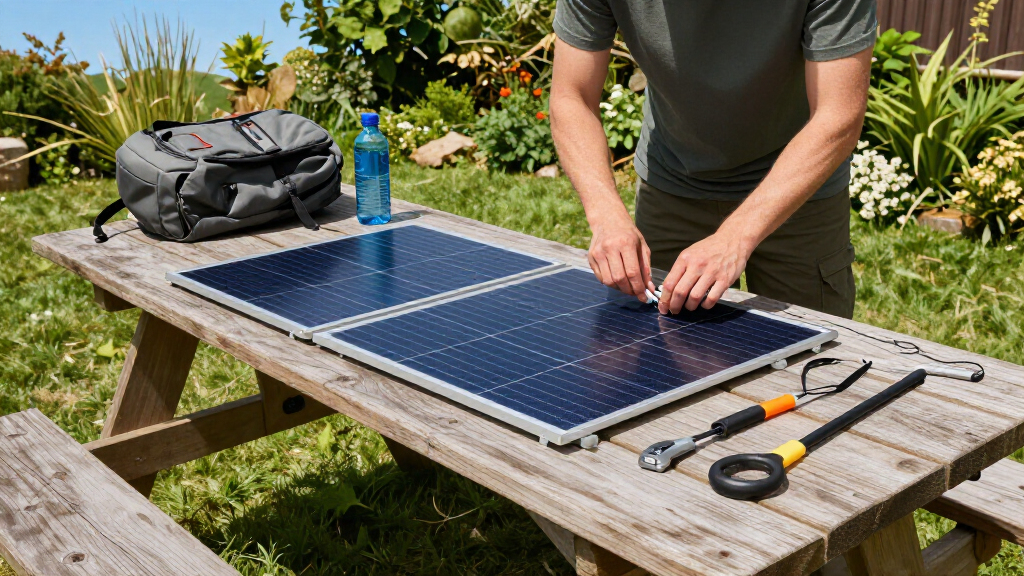
I ranked these kits by how well each one works as a complete portable charging solution, rather than treating advertised wattage as the only measure of quality. My criteria included usable power class, controller type, battery and power-station compatibility, cable requirements, setup effort, folded size, weather protection, and likely durability. I gave higher positions to models that reduce compatibility guesswork while providing enough output for their intended role.
I also compared products within their natural buyer groups. A 100W beginner kit was judged on simplicity and manageable size, while 300W and 400W panels needed enough charging advantage to justify their greater bulk. Complete battery kits gained credit for included controllers and connections, but panel-only products could still rank well when they offered better power-station flexibility. Price mattered alongside hardware quality, and I favored a clear advantage per dollar over bundles containing extras that add little charging value.
Factors to Consider When Choosing Portable Solar Panel Kits
Choosing between these portable solar panel kits starts with the device being charged, not the largest wattage number on the box. I would match the panel’s electrical output to the battery or power station before comparing portability, controller quality, and price. The right kit leaves enough charging headroom for imperfect sunlight without adding weight or hardware that rarely gets used.
Match Panel Wattage to Daily Energy Use
I treat panel wattage as a capacity estimate rather than a promise of continuous output. A 100W or 150W kit is easier to carry and can handle battery maintenance, lights, phones, and modest camping loads, but recovery becomes slow after heavy use. A 200W panel is a better general-purpose size for portable power stations and active RV battery use. Moving to 300W or 400W makes sense when daily consumption is high and charging time matters more than compact storage. Real output drops with clouds, heat, shade, poor panel angle, and cable loss, so planning around the full nameplate rating leaves little margin. I would also check the power station’s solar-input ceiling, because extra panel capacity provides no charging benefit once that limit is reached.
Decide Whether You Need a Charge Controller
A portable panel cannot always connect directly to a 12V battery, which makes the included charge controller a defining part of a true battery kit. PWM controllers keep costs down and work for basic charging, but they capture less available panel power than a well-matched MPPT controller under many conditions. Power stations normally contain their own solar regulation, so an external controller may be unnecessary or incompatible. I would choose a controller-equipped suitcase for direct battery charging and a panel-focused model for a power station. Battery chemistry settings also matter because lithium, AGM, gel, and flooded lead-acid batteries have different charging profiles. A kit is only convenient when its controller supports the intended battery and its voltage and current ratings match the panel array.
Check Connectors, Voltage, and Polarity
Connector compatibility causes more failed purchases than small differences in rated efficiency. Two products may both claim power-station support while using different plugs, polarity layouts, or operating-voltage ranges. I would verify the panel’s open-circuit voltage, the device’s accepted solar-input window, and the maximum input current before ordering an adapter. An adapter changes the plug shape but cannot correct an unsafe electrical mismatch. Cable length affects placement as well: a longer lead can reach a sunny area while the battery remains shaded, though thin extension cables waste more power. Kits with clearly specified cables and adapters deserve a price premium when they remove the need for trial-and-error accessory purchases.
Judge Portability After the Panel Is Folded
The word portable covers everything from slim fabric panels to rigid suitcases that occupy a large section of an RV compartment. I compare folded dimensions, total weight, handle design, and setup time because wattage alone says little about travel convenience. Soft folding panels often pack flatter, while rigid suitcase panels usually stand more securely and protect their cells better during transport. Large 300W and 400W designs can still be moved by one person, but repeated campsite setup may become tiresome. Kickstands need enough adjustment for changing sun angles, and a wide panel may require anchoring in wind. For short trips or frequent relocation, I would accept slower charging in exchange for a panel that is easy to deploy every day.
Pay More for the Hardware You Will Use
Price per watt is useful, but it can hide differences in controller quality, support, cables, hinges, and protective cases. Budget kits make sense for occasional charging when the owner is comfortable checking compatibility and adding accessories. I would pay more for a rugged suitcase frame when the panel will be transported often or deployed around an RV for long periods. A better controller can also justify added cost for expensive batteries because charging accuracy and configuration matter more there. By contrast, paying for an included controller adds little value when a power station already handles solar regulation internally. The best purchase is the one with fewer unused components and fewer missing essentials, not automatically the cheapest bundle or the largest panel.
Frequently Asked Questions
What Panel Wattage Should I Pair With a Portable Power Station?
I would start with the power station’s maximum solar-input wattage, voltage range, and current limit. A panel rated slightly above the accepted wattage can help during weak sunlight, but its open-circuit voltage must remain safely inside the station’s limit. For smaller power stations, 100W or 150W is often proportionate, while medium and large units can benefit from 200W to 400W panels. Buying a 400W panel for a station capped at 200W adds bulk without improving peak charging speed. The correct connector still matters even when every electrical rating matches.
Can One Solar Kit Charge Both Lithium and Lead-Acid Batteries?
It can, provided the charge controller has selectable profiles for both battery chemistries. Lithium batteries usually require different voltage behavior from flooded, gel, or AGM lead-acid models, and some older controllers lack a suitable lithium mode. I would confirm the exact battery type in the controller manual instead of relying on a broad 12V compatibility claim. The controller’s current rating must also handle the panel’s output. If batteries will be swapped regularly, a controller with clear settings and retained configuration is easier and safer to manage.
Is a 300W or 400W Folding Panel Still Truly Portable?
Yes, but it belongs to a different portability class than a 100W folding kit. Higher-output panels generally require more surface area, storage room, and setup effort, even when their fabric construction keeps weight down. They suit base camps, RV stops, and emergency setups where the panel stays deployed for hours. A smaller kit is easier for car-to-campsite carrying or frequent moves, though charging takes longer. I would choose 300W or 400W only when faster energy recovery outweighs everyday handling convenience.
Is an MPPT Controller Worth Paying More for Than PWM?
An MPPT controller is most valuable when solar charging is frequent, panel capacity is substantial, or available sunlight is limited. It can convert excess panel voltage into additional charging current, while a basic PWM controller operates closer to battery voltage and may leave some panel capability unused. For occasional battery maintenance with a small panel, PWM offers a lower-cost, simpler setup. For daily off-grid use or a larger battery bank, MPPT can provide better energy harvest and greater configuration flexibility. I would compare controller limits and battery profiles as carefully as the control technology itself.
Can Portable Solar Panel Kits Be Left Outside in the Rain?
Waterproof or weather-resistant panel surfaces do not mean every part of a kit can remain exposed. Controllers, USB modules, junction boxes, connectors, and fabric seams may have different water-resistance ratings. I would keep the controller and connection points sheltered unless the manufacturer provides a clear outdoor rating for those exact parts. Panels also need secure anchoring because wind can damage kickstands or turn a broad folding panel into a sail. For repeated outdoor deployment, rigid frames and protected electrical components are usually better choices than the lightest fabric design.
Conclusion
For most buyers, my best overall choice is the Renogy 200W 12V Portable Solar Panel Suitcase because its output, controller, and suitcase format create the most balanced battery-charging package. The DOKIO 150W kit with charge controller is the best value for lighter-duty use, though buyers give up some power and hardware refinement. I place the Renogy 400W Portable Solar Panel in the premium power role for buyers who prioritize faster charging potential and have enough storage space. Beginners should start with the Renogy 100W Portable Solar Panel Kit, which keeps output and setup demands manageable.
For RV-specific charging, I favor the Go Power GP-PSK-130 because its package is centered on the needs of a portable RV setup. Power-station owners are better served by the Renogy 200W Portable Solar Panel for Power Stations, while the DOKIO 100W kit fits buyers who place compact transport ahead of charging speed. The DOKIO 300W kit with PWM controller is the high-output budget choice, but its basic controller makes it less appealing for buyers seeking refined battery management. Anyone wanting a battery and panel in one purchase can choose the 300W solar generator with 60W panel, provided slower solar replenishment is acceptable.
Fall Picks
fall essentials
As an affiliate, we earn on qualifying purchases.