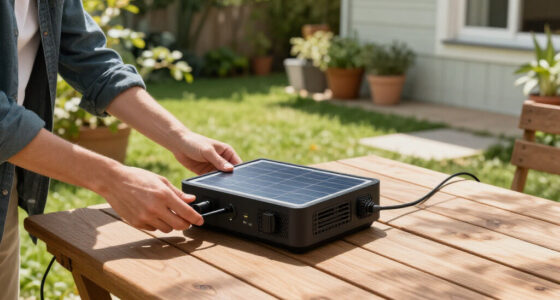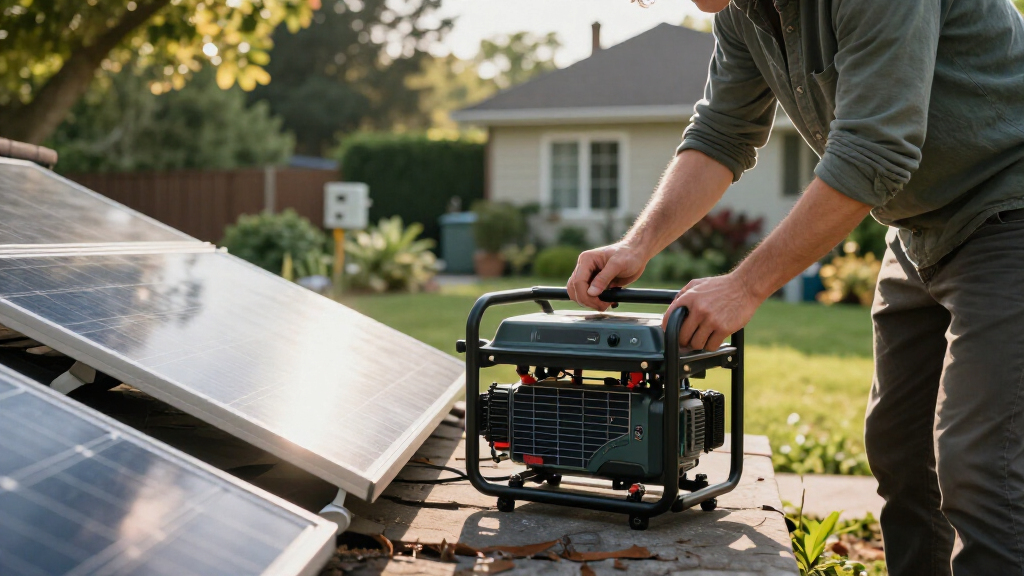
Solar-powered backup generators pair a battery power station with solar panels so you can keep essentials running during outages or off-grid trips without gas, fumes, or engine maintenance. The Jackery HomePower 3600 Plus stands out as the best overall choice because its 3600W output and dual 200W panels can genuinely back up a home, not just a campsite. For tighter budgets and smaller loads, the OSCAL PowerMax 6000 delivers massive capacity and 1200W of solar input, while the Jackery Solar Generator 1000 v2 balances portability and power better than anything else in this lineup. The core tradeoff you’ll face: high-capacity home backup units cost and weigh far more than compact kits, and small built-in-panel generators recharge slowly no matter what the listing suggests. Keep reading for the full breakdown of all 15 options.

Get backup power and energy gear delivered free — and shop member deals
- Fast, free delivery on millions of items
- Access to Prime Big Deal Days deals on October 6–7
- Prime Video, Amazon Music and more included
Complete the kit


Key Takeaways
- Watt-hour capacity was the single biggest differentiator: options ranged from 88Wh (enough for a phone and a fan) to roughly 2.7kWh in the OSCAL PowerMax 6000, and that gap determines whether a unit handles a fridge overnight or just recharges devices.
- Generators with built-in solar panels (the BROWEY and BLAVOR models) win on convenience but lose badly on recharge speed — a 40W integrated panel needs days of full sun to refill a 1kWh battery, so they work best as supplemental chargers, not primary ones.
- Jackery appears four times in this roundup for good reason: consistent pure sine wave output, reliable battery management, and expandability — but you pay a premium per watt-hour compared to lesser-known brands.
- The 300W-class budget kits (MARBERO 237Wh, the generic 300W stations with 40W panels) are camping tools, not home backup. Buyers expecting them to run a refrigerator during an outage will be disappointed.
- Solar input wattage matters as much as battery size: the PowerMax 6000’s 3×400W panel array refills in hours, while a 292Wh Jackery Explorer 300 paired with no panel at all requires you to buy charging separately — always check whether panels are actually included.
| Jackery Solar Generator 1000 v2 with 200W Solar Panel, 1070Wh, 1500W AC |  | Best Overall | Capacity: 1070Wh | AC Output: 1500W (3000W surge) | Battery Type: LFP | VIEW LATEST PRICE | See Our Full Breakdown |
| Jackery Solar Generator 300 with 40W Solar Panel |  | Best Ultra-Portable Pick | Capacity: 292Wh | AC Output: 300W, 2 outlets | Battery Type: LiFePO4 | VIEW LATEST PRICE | See Our Full Breakdown |
| BROWEY 1600W Portable Power Station with Built-in Solar Panel |  | Best Self-Contained Design | Capacity: 1024Wh | Output: 1600W (3200W peak) | Battery Type: LiFePO4 | VIEW LATEST PRICE | See Our Full Breakdown |
| BROWEY 1600W Portable Power Station with Built-in Solar Panel |  | Best Documented All-in-One Backup | Capacity: 1024Wh | Output: 1600W running, 3200W peak, pure sine wave | Battery Type: LiFePO4 | VIEW LATEST PRICE | See Our Full Breakdown |
| BLAVOR 1600W Solar Generator with 1024Wh Capacity and Built-In 40W Panel |  | Best Expansion Potential | Capacity: 1024Wh | Output Power: 1600W (3200W peak) | Battery Type: LiFePO4 | VIEW LATEST PRICE | See Our Full Breakdown |
| OSCAL PowerMax 6000 Solar Generator with 3×400W Solar Panels |  | Best for Whole-Home Backup | Capacity: 3600Wh | AC Output: 4 outlets, 120V/240V, 6000W (9000W peak) | Charging Power: 2200W AC, 2400W solar | VIEW LATEST PRICE | See Our Full Breakdown |
| Portable Solar Generator with 300W Power Station and 40W Solar Panel |  | Best Budget Starter Kit | Power Output: 300W (600W peak) | Battery Capacity: 220Wh (60000mAh) | Weight: 5 lbs | VIEW LATEST PRICE | See Our Full Breakdown |
| Jackery Explorer 300 Portable Power Station, 292Wh |  | Best Brand-Name Reliability | Capacity: 292Wh | Output: 300W (600W peak surge) | Outlets: 2 AC, 1 USB-C PD, 2 USB-A, 1 car port | VIEW LATEST PRICE | See Our Full Breakdown |
| MARBERO 237Wh Solar Generator with Solar Panel Included |  | Best Solar Charging Efficiency | Battery Capacity: 237Wh / 64000mAh | Output Power: 300W (375W peak) | AC Outlets: 2 (pure sine wave) | VIEW LATEST PRICE | See Our Full Breakdown |
| Solar Powered Generator 100W with 40W Solar Panels |  | Best Ultralight Emergency Kit | Running Wattage: 100W (200W peak) | Battery Capacity: 146Wh | Solar Panel Power: 40W | VIEW LATEST PRICE | See Our Full Breakdown |
| Jackery HomePower 3600 Plus Portable Power Station with 2x200W Solar Panels |  | Best for Whole-Home Backup | Capacity: 3584Wh | AC Output: 3600W | Parallel Output: 7200W at 120V/240V | VIEW LATEST PRICE | See Our Full Breakdown |
| BROWEY 1600W Portable Power Station with Built-in Solar Panel |  | Best All-in-One Design | Battery Capacity: 1024Wh LiFePO4 | Output Wattage: 1600W (3200W peak) | Outlets: 8 | VIEW LATEST PRICE | See Our Full Breakdown |
| MARBERO Solar Powered Generator 88Wh with 21W Solar Panel Kit |  | Best Budget Starter Kit | Capacity: 88Wh | Solar Panel Power: 21W | Kit Configuration: Generator plus folding solar panel | VIEW LATEST PRICE | See Our Full Breakdown |
| Portable Solar Generator with Panel, 300W Power Station and 40W Foldable Solar Panel |  | Best Value Middle Ground | Output Wattage: 300W running, 550W starting | Solar Panel: 40W foldable | Total Outlets: 4 | VIEW LATEST PRICE | See Our Full Breakdown |
| Portable Solar Generator 300W with 60W Solar Panel | 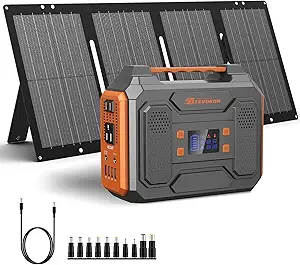 | Best Solar Recharge in Its Class | Power Output: 300W | Solar Panel: 60W monocrystalline, 20.5% conversion efficiency | AC Outlets: 2 | VIEW LATEST PRICE | See Our Full Breakdown |
More Details on Our Top Picks
Jackery Solar Generator 1000 v2 with 200W Solar Panel, 1070Wh, 1500W AC
This pairing makes the strongest case in the roundup for a do-everything home backup kit. The 1070Wh station runs a fridge, lights, and chargers simultaneously thanks to its 1500W inverter, and the bundled 200W panel recharges it in roughly six hours of good sun — far faster than the 40W built-in panels on the BROWEY and BLAVOR units, which would need days for the same job. The LFP chemistry rated for 4,000 cycles means this kit can sit on a shelf for a decade and still perform. Compared with the Jackery Solar Generator 300, it trades away grab-and-go lightness (23.8 lbs versus 7.5 lbs) but gains the capacity to matter during an outage.
Pros:- 1500W AC output with 3000W surge handles appliances most compact units can’t touch
- Full solar recharge in about 6 hours with the included 200W panel
- LFP battery rated for 4,000 cycles — over 10 years of typical use
- Fast AC charging takes it from empty to full in 3 hours
Cons:- Fastest charging mode requires app activation, which frustrates buyers who want plug-and-play simplicity
- Panel and station ship separately, so deliveries can arrive split
Best for: Homeowners who want real emergency backup power that also works for camping and road trips
Not ideal for: Hikers or anyone carrying gear on foot — at nearly 24 pounds it stays in the car or closet
- Capacity:1070Wh
- AC Output:1500W (3000W surge)
- Battery Type:LFP
- Solar Recharge Time:~6 hours with 200W panel
- AC Recharge Time:3 hours full, 1 hour fast charge
- Weight:23.8 lbs
- Ports:3 AC, 2 USB-C, 1 USB-A, 1 DC car port
- Lifespan:4,000+ charge cycles
Our verdict“If one kit has to carry both everyday portability and genuine outage duty, this is the most balanced option here.”
Jackery Solar Generator 300 with 40W Solar Panel
At 7.5 pounds, this is the kit you actually carry. The 292Wh capacity and 300W output rule out refrigerators or power tools, but for phones, laptops, cameras, and a camp light it’s plenty — and unlike the BROWEY 1600W at 26.5 pounds, it fits in a backpack. The LiFePO4 chemistry is a real upgrade over older NMC units at this size, promising 4,000+ cycles instead of a few hundred. The honest tradeoff is solar speed: the 40W panel needs about 7.5 hours of sun, and the BLAVOR 1600W‘s identical built-in 40W wattage suffers the same slow-crawl problem. Anyone who needs faster off-grid recovery should buy a separate 100W panel, which cuts that to under three hours.
Pros:- Genuinely portable at 7.5 pounds with a compact footprint
- LiFePO4 battery rated for 4,000+ cycles, rare at this size class
- Versatile ports including a 100W USB-C PD for fast laptop charging
- Solar recharge drops to ~2.8 hours with an optional 100W panel
Cons:- 300W output can’t run high-draw appliances like kettles or fridges
- Included 40W panel takes roughly 7.5 hours for a full solar recharge
Best for: Campers, hikers, and van-lifers who prioritize carrying weight over raw capacity
Not ideal for: Home backup shoppers — 292Wh won’t keep a fridge or CPAP running through a night
- Capacity:292Wh
- AC Output:300W, 2 outlets
- Battery Type:LiFePO4
- Weight:7.5 lbs
- Ports:2 AC, 1 USB-C (100W PD), 2 USB-A, 1 car port (120W)
- Solar Recharge Time:~7.5 hrs (40W panel), ~2.8 hrs (100W panel)
- Cycle Life:4,000+ cycles
Our verdict“The right choice when the trip involves walking — just don’t expect it to anchor home emergency prep.”
BROWEY 1600W Portable Power Station with Built-in Solar Panel
The core idea here is convenience: a 1024Wh station with a 40W panel built right into the chassis, so nothing gets lost in a closet and no separate panel needs carrying. For short outages or topping off between uses, that integrated panel with its MPPT controller quietly trickles in free power. Compared with the Jackery 1000 v2, you give up serious solar speed — 40W built-in versus a 200W bundled panel — but you gain a simpler one-box system. The 1600W output is genuinely useful for a fridge or CPAP during emergencies. My main hesitation is transparency: the listing omits weight and dimensions, which makes planning for storage or vehicle space a guess before it arrives.
Pros:- Built-in 40W solar panel with MPPT controller — no separate panel to store or forget
- 1600W output with 3200W peak runs refrigerators and medical devices
- 1024Wh LiFePO4 battery with 3,000+ cycles to 80% capacity
- Fast AC/USB-C charging reaches 80% in about 3 hours
Cons:- Weight and dimensions aren’t published, complicating portability and storage planning
- Built-in solar is a trickle charger in practice, not a primary recharge method
Best for: Buyers who want one integrated box for emergency essentials without managing separate panels
Not ideal for: Anyone needing fast solar recovery — 40W built-in wattage means multi-day recharges from empty
- Capacity:1024Wh
- Output:1600W (3200W peak)
- Battery Type:LiFePO4
- Built-In Solar:40W panel with MPPT controller
- AC Charging:~3 hours to 80% via AC and USB-C
- Cycle Life:3,000+ cycles to 80%
- Ports:AC, DC, USB-C PD 100W
Our verdict“A sensible one-box emergency unit if slow solar top-ups are acceptable and you confirm the size fits your space.”
BROWEY 1600W Portable Power Station with Built-in Solar Panel
This is the same 1024Wh/1600W formula as the other BROWEY 1600W in the lineup, but with full published specs — 26.5 pounds, eight outlets, and a 5.7 x 13.3 x 17.2-inch body — which makes it far easier to buy with confidence. The digital display and BMS protection round out a package aimed squarely at emergency preparedness. Against the Jackery Solar Generator 300, it’s a different animal entirely: four times the capacity and more than five times the output, at the cost of being a car-camping-and-home device rather than a carry-along. Its built-in 40W panel shares the same limitation as the BLAVOR’s — fine for maintenance charging, slow for full recovery — so budget for an external panel if off-grid living is the goal.
Pros:- Eight total outlets let you power many devices at once during an outage
- Clear published weight and dimensions — rare among built-in-panel competitors
- Pure sine wave 1600W output safe for sensitive electronics and CPAP machines
- Advanced BMS protection plus digital display for monitoring charge levels
Cons:- At 26.5 pounds it’s a two-handed lift, not genuinely backpack-portable
- 120V-only output restricts use to North American-style grids
- Built-in 40W solar is too slow to be the sole recharge method
Best for: Preppers and campers who want a fully specified 1kWh backup unit with eight outlets for multiple devices
Not ideal for: Anyone outside North America or planning international travel — 120V-only output limits where it works
- Capacity:1024Wh
- Output:1600W running, 3200W peak, pure sine wave
- Battery Type:LiFePO4
- Built-In Solar:40W panel
- Total Outlets:8
- Weight:26.5 lbs
- Dimensions:5.7 x 13.3 x 17.2 inches
- Voltage:120V
Our verdict“The better-documented BROWEY for buyers who want a known quantity for home and RV backup duty.”
BLAVOR 1600W Solar Generator with 1024Wh Capacity and Built-In 40W Panel
What separates the BLAVOR from the two BROWEY 1600W units is the 200W external solar input alongside its built-in 40W panel — meaning it can actually recharge at useful speed off-grid once you add a panel, rather than trickling like its built-in-only rivals. The bundled accessory kit is unusually generous too: a carrying case, car cable, DC cord, and ten adapter connectors that most competitors make you buy separately. With a 4000+ cycle LiFePO4 battery, it matches the Jackery 1000 v2 on longevity while offering slightly higher output. The catch is that the realistic solar experience out of the box is that 40W panel, so the fast off-grid setup this unit deserves costs extra and requires planning.
Pros:- Accepts up to 200W of external solar for genuinely practical off-grid recharging
- 4000+ cycle LiFePO4 battery matches the best longevity ratings in this lineup
- Rich accessory bundle includes carrying case and 10 adapter connectors
- 1600W output with 3200W peak and 100W USB-C fast charging
Cons:- External panel needed for fast solar charging is sold separately
- Built-in 40W panel alone means multi-day recharges from empty
Best for: Off-grid campers and RV owners willing to add an external panel for fast solar recharging
Not ideal for: Buy-and-forget shoppers — without an added panel, solar recharging is limited to the slow built-in 40W
- Capacity:1024Wh
- Output Power:1600W (3200W peak)
- Battery Type:LiFePO4
- Cycle Life:4,000+ cycles
- Built-In Solar:40W panel
- External Solar Input:Up to 200W (panel sold separately)
- USB-C:100W fast charging
- Included Accessories:DC cord, car cable, carrying case, 10 adapters, manual
Our verdict“The strongest foundation for a serious off-grid setup — provided you budget for the external panel it’s built around.”
OSCAL PowerMax 6000 Solar Generator with 3×400W Solar Panels
This is the only option in this batch that can genuinely back up household circuits rather than just phones and lanterns. With 3600Wh of capacity and a 6000W output with 120V/240V dual voltage, the PowerMax 6000 sits in a different class from compact picks like the Jackery Explorer 300 — it can run a well pump, a refrigerator, or power tools, not just charge devices. The bundled 3×400W panel array and 2200W AC input mean you can refill the battery reasonably fast instead of waiting days on a small panel. The tradeoff is weight and complexity: this is a two-person lift at minimum, and wiring 240V circuits safely calls for some electrical know-how. Compared with the Jackery HomePower 3600 Plus, the OSCAL counters with higher surge tolerance and more included solar wattage.
Pros:- 3600Wh capacity with 6000W output handles major appliances
- 120V/240V dual voltage supports well pumps and heavy tools
- 1200W of included solar panels speeds up off-grid recharging
- LiFePO4 cells rated for up to 3500 cycles for years of service
Cons:- Heavy and bulky, requiring a dedicated storage spot and help to move
- 240V wiring and panel setup demand technical knowledge most casual users lack
Best for: Homeowners who want true emergency backup for appliances and 240V devices during outages
Not ideal for: Campers and anyone without help moving gear — this is far too heavy for casual portability
- Capacity:3600Wh
- AC Output:4 outlets, 120V/240V, 6000W (9000W peak)
- Charging Power:2200W AC, 2400W solar
- Battery Type:LiFePO4
- Charge Cycles:Up to 3500
- Included Panels:3×400W solar panels
- App Control:Remote monitoring and management
Our verdict“Buy this if a power outage means keeping your fridge, well pump, or heater running — skip it if your needs stop at phones and a lantern.”
Portable Solar Generator with 300W Power Station and 40W Solar Panel
For a first dip into solar power without a big commitment, this kit covers the basics in one box: a 220Wh power station, a 40W panel, and seven ports for charging small devices at once. At 5 lbs total, it undercuts the Jackery Explorer 300 on weight and — unlike the Jackery — includes the solar panel, which matters a lot when the whole point is off-grid charging. The built-in 300-lumen floodlight running 30+ hours is a genuinely useful emergency feature rather than a gimmick. The catch is scale: 300W continuous output and 220Wh capacity mean no kettles, no hair dryers, and no laptop-and-everything-else marathons. Weather resistance is also unaddressed, so this is fair-weather solar. Compared with the MARBERO 237Wh kit, you give up some battery capacity in exchange for the floodlight and lighter load.
Pros:- Complete kit with solar panel included, no extra purchases needed
- Ultra-light 5 lb total weight for easy packing
- Seven ports allow charging six devices simultaneously
- Integrated 300-lumen floodlight with 30+ hours of runtime
Cons:- 220Wh capacity runs dry quickly for anything beyond phones and small gadgets
- No stated waterproofing or weather resistance for outdoor exposure
Best for: Budget-conscious first-time buyers who want a complete panel-plus-station kit for camping basics
Not ideal for: Anyone planning to run anything beyond small electronics — 300W and 220Wh fill up fast
- Power Output:300W (600W peak)
- Battery Capacity:220Wh (60000mAh)
- Weight:5 lbs
- Solar Panel Power:40W
- Ports:2 AC, 3 USB, 1 USB-C, 1 DC carport
- LED Floodlight:300 lumens, 30+ hours runtime
- Dimensions:8.5×6.7×4.1 in
Our verdict“The most sensible low-cost entry point if you want the full solar experience in one affordable package.”
Jackery Explorer 300 Portable Power Station, 292Wh
The Explorer 300 earns its spot on polish rather than raw numbers. Its LiFePO4 chemistry rated for over 4,000 cycles is the standout here — that’s more rated cycles than the OSCAL PowerMax, which means this little unit will likely outlast stations costing several times more. Compared with the 300W budget kit, the Jackery offers cleaner build quality, a 4-hour full recharge, and the backing of the most established brand in the category, but you pay for that and get no solar panel in the box, so budget for one separately. Output is limited to 300W continuous, which rules out most kitchen appliances. For someone who wants a dependable, grab-and-go station from a name with a real support ecosystem — and plans to add panels later — this pick makes more sense than a cheaper bundled kit.
Pros:- LiFePO4 battery rated for over 4,000 charge cycles
- Lightweight 7.5 lb design with a sturdy carrying handle
- Six versatile outlets including USB-C PD and a car port
- Full recharge in about 4 hours
Cons:- No solar panel included, adding to the real cost of a solar setup
- 300W output ceiling excludes most household appliances
Best for: Buyers who prioritize brand support and battery longevity over included accessories
Not ideal for: Anyone expecting a complete solar generator out of the box — the panel is sold separately
- Capacity:292Wh
- Output:300W (600W peak surge)
- Outlets:2 AC, 1 USB-C PD, 2 USB-A, 1 car port
- Battery Cell Type:LiFePO4
- Charge Cycles:Over 4,000
- Charge Time:4 hours
- Weight:7.5 lbs
- Dimensions:15.43 x 9.92 x 11.89 inches
Our verdict“The right choice if you’d rather buy a proven, long-lived station now and add panels on your own schedule.”
MARBERO 237Wh Solar Generator with Solar Panel Included
What separates the MARBERO from other budget kits is its 60W foldable panel with a 21.5–23.5% conversion rate — 50% more panel wattage than the 40W kits elsewhere in this lineup, which translates to meaningfully faster recharges when you’re off the grid. That matters more than the slightly smaller 237Wh battery, because a station that refills faster effectively provides more usable energy per day. The pure sine wave AC output is also a step above the modified sine wave found on some cheap competitors, making it safer for sensitive electronics like cameras and CPAP accessories. Compared with the Jackery Explorer 300, you get the panel included and true sine wave power, at the cost of a lower surge rating and a less established brand. It’s still a 300W-class device, so high-draw appliances are off the table.
Pros:- 60W foldable panel recharges noticeably faster than bundled 40W kits
- Pure sine wave output protects sensitive electronics
- Four USB ports including USB-C and Quick Charge 3.0
- Compact folding design built for backpack-style trips
Cons:- 237Wh capacity is on the smaller side for multi-day use
- Solar charging effectiveness depends heavily on direct sunlight alignment
Best for: Campers and outdoor photographers who need fast solar recharges and clean power for sensitive gear
Not ideal for: Households eyeing emergency fridge or medical-equipment backup — capacity and wattage fall well short
- Battery Capacity:237Wh / 64000mAh
- Output Power:300W (375W peak)
- AC Outlets:2 (pure sine wave)
- USB Ports:4 (including USB-C and QC3.0)
- DC Output:12-16.8V/10A
- Solar Panel Power:60W
- Panel Conversion Rate:21.5-23.5%
Our verdict“The smart pick when recharge speed in the field matters more than raw battery size.”
Solar Powered Generator 100W with 40W Solar Panels
At 146Wh and 100W output, this is the smallest full solar setup in the roundup — and that’s exactly its value. It weighs less and packs smaller than the MARBERO 237Wh kit, fitting into a car console bin or emergency go-bag where nothing else here would. The seven power outlets let you keep a phone, headlamp, and small fan running at once, and the multi-mode built-in LED flashlight covers basic emergency lighting. Build quality is a pleasant surprise at this size, with an aluminum housing, monocrystalline cells, and tempered glass panel rather than all-plastic construction. The limitation is firm: this charges devices, not appliances — a single laptop recharge takes a noticeable bite out of the battery. Think of it as insurance for communications and light, not a power substitute.
Pros:- Smallest and most packable complete solar kit in this lineup
- Aluminum body and tempered glass panel feel more durable than plastic rivals
- Seven outlets support multiple small devices at once
- Multi-mode LED flashlight built in for emergencies
Cons:- 100W output and 146Wh capacity restrict use to phones, tablets, and small lights
- Fully dependent on clear sunlight for meaningful recharging
Best for: Car campers and emergency-prep builders assembling a lightweight go-bag for phones and lights
Not ideal for: Anyone expecting to run a mini-fridge, laptop workstation, or any appliance — 100W is device-charging power only
- Running Wattage:100W (200W peak)
- Battery Capacity:146Wh
- Solar Panel Power:40W
- Total Power Outlets:7
- Frequency:60 Hz
- Materials:Aluminum, monocrystalline silicon, tempered glass
- Dimensions:7.5″L x 3.7″W x 6.1″H
- Support:12-month customer support
Our verdict“A grab-and-go emergency kit for staying connected and visible — not a power station for running gear.”
Jackery HomePower 3600 Plus Portable Power Station with 2x200W Solar Panels
When the question shifts from keeping phones alive to running a refrigerator through a multi-day outage, this is where the lineup changes character. With 3584Wh of capacity and a 3600W AC output, the HomePower 3600 Plus can carry real household appliances, something no other kit in this roundup approaches — the Jackery Solar Generator 1000 v2 offers less than a third of the capacity. Two features stand out for outage scenarios: 240V support when paired in parallel (relevant for well pumps or dryers) and a rated 6,000-cycle lifespan, which means this is a decade-scale purchase rather than a seasonal gadget. A two-hour AC recharge also makes it practical for short outages that repeat.
The tradeoffs are real, though. Two 200W panels translate to roughly four hours of full solar recharge only under ideal sun, and off-grid households will want to add more panels. Expansion beyond 3584Wh requires buying additional battery units, which multiplies cost fast.
Pros:- 3584Wh capacity and 3600W output handle major appliances, not just gadgets
- Parallel capability unlocks 7200W and 240V for whole-home scenarios
- 6,000-cycle LiFePO4-class lifespan makes it a long-term investment
- Wheels and telescopic handle keep it movable despite the capacity
Cons:- Solar recharge with the included 400W of panels is slow for this much capacity
- Meaningful expansion requires purchasing additional battery units
- Panels ship separately, complicating delivery and setup
Best for: Homeowners who want serious backup for refrigerators, medical devices, and HVAC-adjacent loads during extended outages
Not ideal for: Campers and casual users — this is far more capacity, weight, and cost than a weekend trip justifies
- Capacity:3584Wh
- AC Output:3600W
- Parallel Output:7200W at 120V/240V
- Lifespan:6,000 cycles, 10 years
- Recharge (AC+DC):2 hours
- Recharge (Solar):Approximately 4 hours
- Included Panels:2x 200W
- Design:34% smaller and 29.3% lighter than comparable models, with wheels
Our verdict“If a blackout means spoiled food or a cold house rather than a dead phone, this is the kit in the roundup that actually covers your household.”
BROWEY 1600W Portable Power Station with Built-in Solar Panel
Most solar generator kits treat the panel and the battery as two things you carry, connect, and inevitably forget one of. BROWEY collapses that into a single unit: a 1024Wh LiFePO4 power station with a 40W panel built right into the chassis. That integration is the whole point here — compared with the BLAVOR 1600W Solar Generator, which takes a similar integrated approach, this model pairs the concept with a genuinely strong 1600W pure sine wave inverter that runs power tools and kitchen appliances, not just laptops.
The catch is arithmetic. A 40W panel feeding a 1024Wh battery means days of full sun for a complete solar recharge — the built-in panel is a trickle charger for topping off, not a primary recharging method. Anyone planning real off-grid time needs external panels. At 26.5 pounds, it’s also heavier than it looks, sitting awkwardly between grab-and-go units like the MARBERO 88Wh kit and wheeled home backups.
Pros:- Built-in solar panel eliminates separate panel storage and setup
- 1024Wh LiFePO4 battery offers long cycle life and real overnight capacity
- 1600W pure sine wave output runs demanding appliances safely
- Eight outlets support simultaneous charging of multiple devices
Cons:- 40W integrated solar input makes full solar recharges extremely slow
- 26.5 pounds is awkward for a design pitched on portability
- 230V voltage rating may not match standard North American household devices
Best for: Campers and van lifers who want one self-contained unit for occasional off-grid trips and home emergency backup without managing separate panels
Not ideal for: Off-grid users relying mainly on solar — the 40W integrated panel recharges far too slowly to sustain the battery
- Battery Capacity:1024Wh LiFePO4
- Output Wattage:1600W (3200W peak)
- Outlets:8
- Built-in Solar Panel:40W
- Charging Time:3 hours to 80%
- Weight:26.5 pounds
- Dimensions:17.2 x 13.3 x 5.7 inches
- Voltage:230V
Our verdict“This pick makes the most sense for buyers who value a single carry-it-all unit over serious solar throughput.”
MARBERO Solar Powered Generator 88Wh with 21W Solar Panel Kit
Sometimes you don’t need to power a house — you need to keep a phone, a headlamp, and a GPS alive on a three-day backpacking loop. The MARBERO 88Wh kit is the smallest, simplest entry point in this roundup, and its strength is exactly that restraint. Where the MARBERO 237Wh Solar Generator triples the capacity for car campers, this 88Wh version stays genuinely packable, and its 21W folding panel is proportionate to the battery rather than an afterthought. Paired together, the panel can realistically keep the battery topped up on a sunny trip.
The ceiling, however, is low and hard. 88Wh will not run a refrigerator, a CPAP machine overnight, or most anything with a heating element. Compared with the 300W-class kits elsewhere in this guide, this is a device-charging solution, full stop. Buyers expecting outage insurance for anything beyond phones and radios will be disappointed fast.
Pros:- Genuinely lightweight and packable for backcountry use
- Panel and generator are matched in scale for realistic solar top-ups
- Low cost makes it an easy first step into solar power
- Zero-fuss operation with no separate components to manage
Cons:- 88Wh capacity limits use to phones, lights, and small electronics
- Cannot power appliances or medical devices during outages
- Solar charging stalls completely under cloud cover
Best for: Hikers, road-trippers, and first-time solar buyers who want an affordable, low-commitment kit for charging phones and small devices
Not ideal for: Anyone shopping for home outage backup — 88Wh cannot support appliances or sustained loads
- Capacity:88Wh
- Solar Panel Power:21W
- Kit Configuration:Generator plus folding solar panel
- Best Use:Camping, road trips, device backup
Our verdict“A sensible, low-risk first solar kit for device charging outdoors — just don’t mistake it for emergency home backup.”
Portable Solar Generator with Panel, 300W Power Station and 40W Foldable Solar Panel
This kit occupies the useful gap between the MARBERO 88Wh starter kit and the BROWEY’s 1024Wh powerhouse. With a 300W output and a 40W folding panel, it handles the loads that matter most in a short outage — a router, LED lights, a fan, a laptop — while staying light enough to toss in a trunk. The foldable panel design is a practical touch: it packs flat against the unit, which the Jackery Explorer 300 can’t match since it ships without a panel at all.
The honest limitation is the 300W ceiling. Anything with a motor surge or heating element — a microwave, a sump pump, even some blenders — will trip it or simply refuse to start, and the seven-hour runtime figure only holds for light loads. The Portable Solar Generator 300W with 60W panel covers similar territory with a larger panel, so the case for this one rests on its outlet layout and safety protections rather than raw solar speed.
Pros:- 300W output comfortably covers lights, routers, fans, and chargers
- Foldable 40W panel stores compactly with the unit
- Four outlets plus built-in safety protections
- Lightweight enough for car camping and cabin use
Cons:- 300W limit excludes most kitchen appliances and anything with motor surge
- 40W panel means multi-day recharges under real-world sun
- Runtime varies sharply with load — heavy use drains it well under the quoted figure
Best for: Budget-minded campers and apartment dwellers who want modest outage coverage for lights, phones, and small electronics
Not ideal for: Households needing fridge or medical-device backup — the 300W output can’t start or sustain those loads
- Output Wattage:300W running, 550W starting
- Solar Panel:40W foldable
- Total Outlets:4
- Battery Type:Lithium-ion
- Frequency:60Hz
- Runtime:Up to 7 hours depending on load
- Recommended Uses:Camping, residential, commercial light duty
Our verdict“A sensible middle-ground kit if your emergency plan is lights and communication, not refrigeration.”
Portable Solar Generator 300W with 60W Solar Panel
What separates this kit from the otherwise similar 300W/40W generator above is the panel: a 60W monocrystalline unit with 20.5% conversion efficiency, which roughly halves solar recharge time compared with 40W competitors. For buyers whose whole reason for choosing solar is independence from wall outlets, that difference is the decision. The port selection is also generous for the class — two AC outlets, three USB ports plus quick charge, and a DC port — with a battery management system and cooling keeping things stable under sustained use.
It shares the 300W class ceiling, so the usual exclusions apply: no microwaves, no pumps, no hair dryers. One quirk deserves attention — the panel’s junction box is not waterproof, so it needs dry storage and careful placement, an annoyance the MARBERO kit’s simpler panel avoids. Performance also degrades if the battery sits unused for long stretches, so this is a kit you should cycle regularly, not bury in a closet for emergencies only.
Pros:- 60W monocrystalline panel recharges notably faster than 40W rivals
- Seven output ports cover phones, laptops, and small AC devices simultaneously
- Battery management system and active cooling protect under sustained loads
- SOS flashlight adds genuine emergency utility at no extra bulk
Cons:- Non-waterproof junction box requires dry storage and careful panel placement
- Battery performance declines if not charged and discharged regularly
- 300W cap rules out appliances and high-draw tools
Best for: Off-grid campers and beach-day users who recharge primarily by sunlight and want the fastest panel-to-battery ratio at this size
Not ideal for: Set-and-forget emergency preppers — the non-waterproof junction box and degradation from long storage demand regular attention
- Power Output:300W
- Solar Panel:60W monocrystalline, 20.5% conversion efficiency
- AC Outlets:2
- USB Ports:3, plus 1 quick-charge port
- DC Ports:1
- Battery Management System:Yes
- Extras:SOS flashlight, AC adapter, car charging cable, solar panel kit
Our verdict“The pick for sun-powered users who want faster recharging than any other 300W kit here — provided they’ll maintain it.”
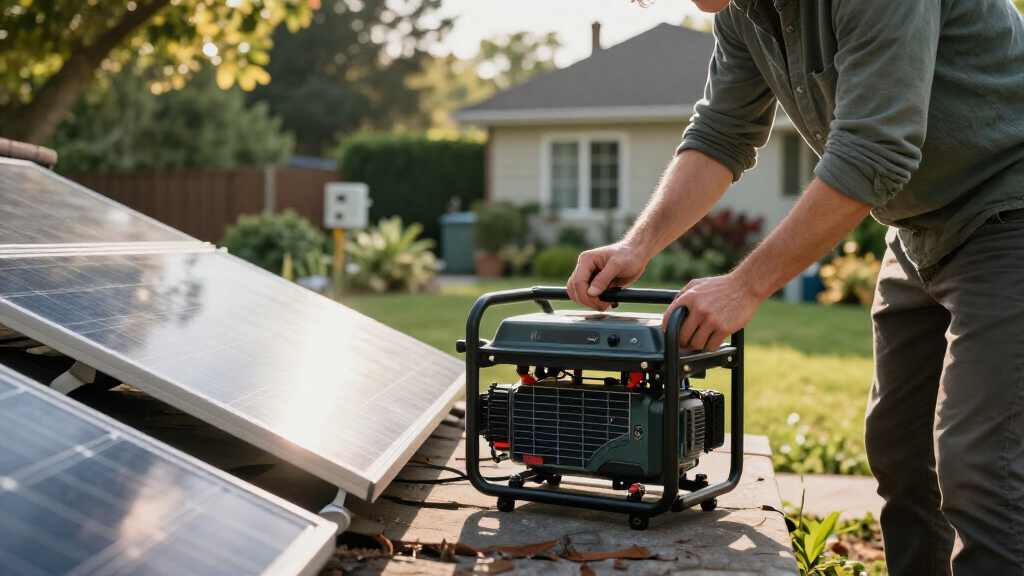
How We Picked
I evaluated each product through one lens: how well it performs as a solar-powered backup generator, which means the battery, the panels, and the relationship between them all had to work. Capacity in watt-hours came first, because it defines what the unit can actually back up — a medical device overnight is a different purchase than a phone charger. Second, I weighed solar recharge speed, comparing included panel wattage against battery size, since a big battery with a tiny panel is only useful if you have days to wait. Third, I looked at AC output wattage and whether the inverter produces pure sine wave power, which sensitive electronics require.
Beyond the specs, I considered portability, build quality, included accessories, and value per watt-hour. Products were ranked by how cleanly they serve a defined buyer — whole-home backup, budget emergency prep, camping, or beginner-friendly entry — rather than by raw numbers alone. Units with inflated marketing claims, duplicate listings (the BROWEY appears three times under slightly different bundles), or mismatched panel-to-battery ratios were flagged and ranked accordingly, because those details are exactly where buyers get burned.
Factors to Consider When Choosing Solar-powered Backup Generators
Before picking a specific model, it helps to understand the category itself — because solar generators are sold on big headline numbers that don’t always translate to real backup performance. These are the factors that actually change what you should buy.Match Capacity to What You Actually Need to Run
The most common mistake in this category is buying capacity you’ll never use — or drastically underestimating what you need. A refrigerator draws roughly 150W running but surges higher at startup, meaning it consumes 1,000–1,500Wh per day on its own; that rules out every sub-300Wh unit in this roundup for fridge duty. Start by listing your must-have devices, their wattage, and how many hours you need them, then multiply with a 20% buffer for inverter losses. A 1,000Wh station like the Jackery 1000 v2 covers lights, a modem, a laptop, and a CPAP machine for a night. Whole-home comfort — furnace blower, fridge, some lights — pushes you toward 3,000Wh or more. Be honest about your scenario: occasional short outages call for a small unit, while multi-day grid failures or medical equipment demand the big batteries.
Panel Wattage Determines Recovery Speed, Not Battery Size
Buyers fixate on watt-hours and ignore solar input, then discover mid-outage that their generator can’t refill itself. Divide battery capacity by total panel wattage and multiply by about 1.3 for real-world sun conditions to estimate recharge time. A 1,000Wh battery with a 40W panel needs over 30 hours of sunlight — multiple days — while the same battery with 400W of panels refills in an afternoon. This is why the built-in-panel generators in this roundup, despite their convenience, are a trap as sole backup solutions. If you live somewhere with frequent storms or short winter days, prioritize models with expandable solar input and buy panels sized to refill the battery in one good day. As a rule, aim for panel wattage equal to at least 30–40% of your battery capacity.
Pure Sine Wave Matters for Sensitive Electronics
Inverter quality separates cheap stations from good ones, and it’s invisible in product photos. Modified sine wave power — common in budget units — can cause motors to run hot, speakers to buzz, and CPAP machines or laptops to behave erratically. Pure sine wave output, which the Jackery and MARBERO units in this lineup advertise, matches grid power closely enough for anything you’d plug into a wall outlet. If your backup plan includes medical devices, this isn’t optional. It’s also worth checking surge capacity: a 300W inverter cannot start most refrigerators regardless of how healthy the battery is. Manufacturers who don’t clearly state inverter type are usually hiding something, so treat vague listings as a red flag.
Battery Chemistry and Lifespan
Most modern units use LiFePO4 (lithium iron phosphate) cells rated for 3,000+ charge cycles, while cheaper or older designs use standard lithium-ion rated closer to 500–800 cycles. Over a 10-year ownership period, that difference decides whether your generator still holds a useful charge in year six or needs replacement. LiFePO4 also handles heat better and is less prone to thermal issues, which matters for a device sitting in a garage or car. Check the cycle rating in the spec sheet — reputable brands publish it prominently. One caution: some listings in this category duplicate the same hardware under different names, so verify the actual chemistry rather than trusting the brand badge. The upfront premium for LiFePO4 usually pays for itself in longevity alone.
Portability Versus Permanence
Decide early whether your generator lives in a closet until an outage or travels with you, because that answer eliminates half the options. Units above 2,000Wh often weigh 60+ pounds and belong on a shelf or cart, permanently plugged into their panels; the OSCAL PowerMax 6000 is that kind of product. Sub-300Wh kits like the MARBERO or Jackery Explorer 300 slip into a backpack and shine for camping, tailgating, and van life. Mid-size 1,000Wh stations are the awkward middle — portable in theory at 25–30 pounds, but heavy enough that you won’t move them casually. Also consider whether you’ll need to carry the panels separately; foldable 40–60W panels travel easily, while rigid 400W arrays require mounting hardware and a fixed install.
Expandability and the True Cost of Ownership
The cheapest generator on the shelf is rarely the cheapest over five years. Look for expandable systems — the Jackery HomePower line supports add-on batteries, and some stations accept extra panels — because your needs will grow after the first real outage. Calculate total cost by adding any missing panels, cables, and a second battery if you’ll want one. Watch for duplicate listings: the BROWEY 1600W appears three times in this category with different bundles, and comparing them line by line is the only way to know which actually includes the panels you expect. Finally, confirm the warranty terms and whether the brand has a service presence, because a failed battery management system two years in is worthless without support.
Frequently Asked Questions
Can a solar generator actually run my refrigerator during a power outage?
Only the larger units in this roundup can, and the math matters more than the marketing. A typical fridge uses 1,000–1,500Wh per day and needs an inverter surge rating above 800W to handle compressor startup, which rules out every 300W-class station here. The Jackery HomePower 3600 Plus and OSCAL PowerMax 6000 both clear that bar comfortably and can keep a fridge running for a day or more on battery alone. The catch is recovery: during a multi-day outage, you need enough panel wattage to refill the battery daily, which the PowerMax’s 1,200W array handles but a single 200W panel setup struggles with in winter conditions. If fridge backup is your main goal, size for at least 2,000Wh of capacity and 400W of panels.
Are built-in solar panels better than separate foldable panels?
Built-in panels, like those on the BROWEY and BLAVOR models, win on convenience — there’s nothing extra to carry or connect — but they lose on physics. A 40W integrated panel needs multiple full days of sun to refill a 1,000Wh battery, while a separate 200W foldable panel does it in one afternoon. Integrated panels also can’t be angled toward the sun independently, and shading on part of the unit drags down the whole array. My advice is to treat built-in panels as trickle chargers that keep the battery topped off in storage, not as your primary recharge method. If you expect real outages, buy the biggest separate panel bundle you can afford and use the built-in panel as a bonus.
How long do these solar generators hold a charge when not in use?
Most quality units self-discharge at only a few percent per month, so a fully charged station stored in a cool, dry place retains most of its capacity after six months to a year. That said, lithium batteries degrade fastest when stored at 100% charge or at temperature extremes, so some manufacturers recommend long-term storage around 50–80%. The practical habit that matters: top off your generator every two to three months, both to keep the battery healthy and to confirm it still works before you need it. Units with built-in panels, like the BROWEY and BLAVOR models, solve this passively by trickle-charging near a window. Also remember that cycle life is consumed by use, not by sitting — a 3,000-cycle LiFePO4 battery used for a few outages a year will outlast the electronics around it.
Why do several identical products appear under different names in this category?
This is a real pattern in the budget solar generator market, and this roundup itself contains the BROWEY 1600W listed three times under slightly different bundles. Generic factories produce the same power station hardware for multiple brands, which then sell it with different panel combinations, warranties, and price points. The practical implication is that you should compare the actual specs — watt-hours, inverter rating, battery chemistry, and included panels — rather than the brand name, because two listings can be physically identical. Where they genuinely differ is in warranty support and after-sales service, where established brands like Jackery have a real advantage. Before buying a lesser-known label, confirm who handles warranty claims and whether replacement parts exist.
Is a small 300W solar generator enough for emergency home backup?
It depends entirely on how you define ‘backup.’ A 300W station in the 250–300Wh range will run LED lights, charge phones and laptops, and power a router for several hours — which genuinely covers the most common short outage scenario. What it cannot do is run a refrigerator, a space heater, a microwave, or any medical equipment beyond a small CPAP on conservative settings. If your outages are rare, brief, and your priority is staying connected rather than comfortable, a small kit like the MARBERO or a Jackery Explorer 300 with a panel is a legitimate and affordable choice. But if losing fridge contents or heat is the concern, spending on a 1,000Wh-plus system is the only honest answer.
Conclusion
After comparing all 15 options, the right pick depends less on specs and more on what kind of buyer you are. For best overall, the Jackery HomePower 3600 Plus earns the top spot — it’s the only kit here with enough output and panel capacity for genuine home backup, backed by a brand with real support. The best value pick is the OSCAL PowerMax 6000, which delivers more battery and far more solar input per dollar than anything else in the lineup, provided you’re comfortable with a lesser-known label. For best mid-size balance, the Jackery Solar Generator 1000 v2 handles overnight essentials with the portability and polish smaller brands can’t match.
Beginners and casual users should start with the MARBERO 237Wh kit or the Jackery Solar Generator 300 — both are affordable, simple, and honest about being small. Campers and ultralight travelers get the best fit from the MARBERO 88Wh or the generic 300W foldable-panel kits, while anyone drawn to the built-in-panel convenience of the BROWEY or BLAVOR units should understand they’re buying a trickle-charging design, not a fast solar refuel. Whatever you choose, size for the outage you actually fear, not the price tag you like — the difference between a charged phone and a running fridge is measured in watt-hours you didn’t buy.
Fall Picks
fall essentials
As an affiliate, we earn on qualifying purchases.