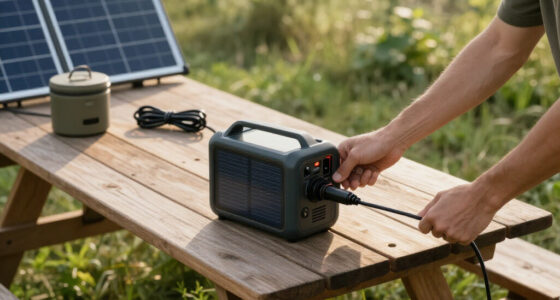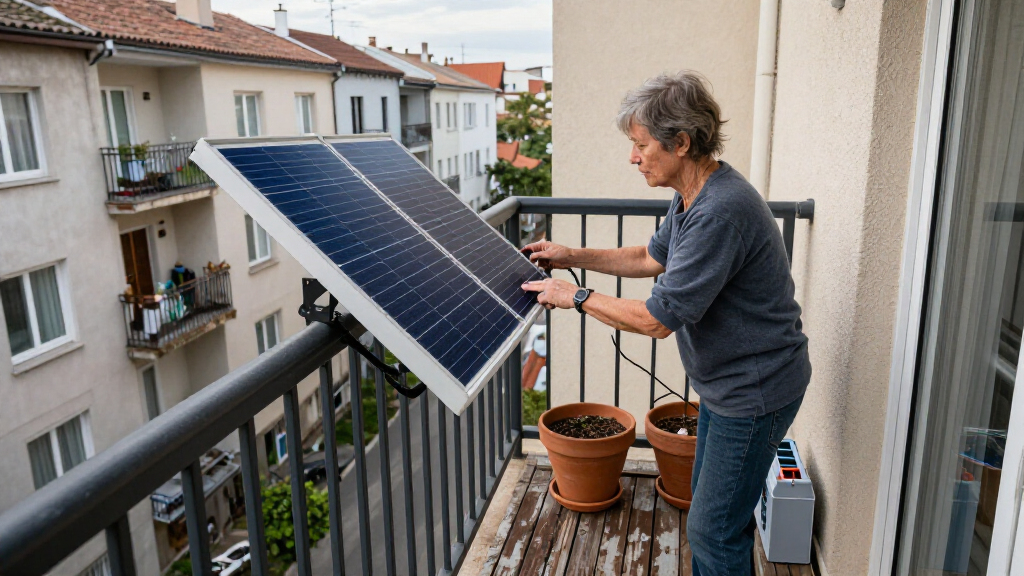
Choosing among balcony solar panel systems depends on whether you need a complete kit, panels for a system you already own, or an inverter to build around. I rank the PLUGGEDSOLAR 800W kit first for buyers seeking panels, inverter, cord, and monitoring in one package. The Callsun bifacial panels suit a custom build where panel choice matters, while the Cosmoxstar 1200W microinverter is for shoppers who already have compatible panels and need the conversion hardware.

Get backup power and energy gear delivered free with Prime
- Fast, free delivery on millions of items
- Prime Video, Amazon Music and more included
- Member-only deals all year
Those roles are not interchangeable. PLUGGEDSOLAR is the most ready-to-assemble option, but it still requires a suitable outlet, sunlight, and attention to local rules. Callsun supplies panels only, so mounting, inverter or power station, and wiring remain the buyer’s responsibility. Cosmoxstar has the highest stated inverter output, but that figure alone does not make it a complete 1200W solar system. I compare the three on completeness, compatibility, monitoring, and the practical work left after purchase.
Key Takeaways
- PLUGGEDSOLAR is the most complete choice here: it includes four 200W panels, an APsystems microinverter, Wi-Fi monitoring, and a 50-foot cord.
- Callsun is a panel set, not a ready-to-plug balcony system; buyers need compatible conversion equipment, mounting, and a plan for wiring.
- Cosmoxstar offers a 1200W-rated microinverter with dual MPPT, but its input range and panel compatibility must be checked before connecting modules.
- Bifacial gains from Callsun depend on reflected light reaching the rear of the panels, so a close wall or opaque mounting surface can limit that benefit.
- All three require a site and setup check: available sunlight, structural support, electrical compatibility, and local balcony or grid-connection rules.
| PLUGGEDSOLAR 800W Plug-In Balcony Solar Kit with APsystems Microinverter |  | Best Overall: the most complete kit for a straightforward balcony setup | Total panel power: 800 watts | Panel arrangement: 4 × 200W monocrystalline panels | Panel dimensions: 4.5 × 2.2 ft each | VIEW LATEST PRICE | See Our Full Breakdown |
| Callsun 400W Bifacial N-Type Solar Panel Set (2 × 200W) |  | Best for Custom Builds: higher-spec panels for buyers sourcing the rest | Total maximum power: 400 watts | Panel arrangement: 2 × 200W bifacial panels | Cell type: N-type monocrystalline | VIEW LATEST PRICE | See Our Full Breakdown |
| Cosmoxstar 1200W Grid-Tie Micro Inverter with Dual MPPT and Wi-Fi Monitoring |  | Best Inverter Upgrade: for buyers who already have compatible panels | Output power: 1,200 watts | MPPT: Dual | DC input range: 16–60V | VIEW LATEST PRICE | See Our Full Breakdown |
| balcony solar panel system | Panel arrangement | Weight |
|---|---|---|
| PLUGGEDSOLAR 800W Plug-In Balc | 4 × 200W monocrystalline panels | 90 lb listed item weight |
| Callsun 400W Bifacial N-Type S | 2 × 200W bifacial panels | 23.8 lb each |
| Cosmoxstar 1200W Grid-Tie Micr | — | — |
More Details on Our Top Picks
PLUGGEDSOLAR 800W Plug-In Balcony Solar Kit with APsystems Microinverter
I place the PLUGGEDSOLAR 800W kit first because it is the only option here that brings the core generation pieces together: four 200W monocrystalline panels, an APsystems grid-tie microinverter, Wi-Fi monitoring, and a 50-foot cord for a 110/120V outlet. For a buyer who wants one coordinated package instead of sourcing panels and conversion equipment separately, that completeness is a meaningful advantage over both Callsun and Cosmoxstar.
The cord length gives more flexibility when the usable outlet is not immediately beside the panels, though buyers still need to plan the route safely and check that the chosen outlet and circuit are suitable. The kit is described as requiring no batteries or hardwiring, which keeps the basic arrangement simpler than an off-grid build. Its Wi-Fi monitoring also gives buyers a way to view system production rather than relying only on an estimate. The system’s stated UL 3700 certification and inverter compliance with UL 1741 are useful details to verify against the exact equipment and local installation requirements before use.
Compared with the Callsun panel set, PLUGGEDSOLAR saves the work of selecting a compatible inverter, but its four panels are large pieces: each is listed at 4.5 by 2.2 feet, and the total item weight is 90 pounds. Balcony dimensions, railing rules, wind exposure, and the strength of the mounting surface all matter. The listing also says panels may arrive in separate shipments, which can delay a complete installation. Buyers should not assume that plug-and-play means no planning or approvals.
Its ability to stack up to three systems on one dedicated plug could appeal to someone planning expansion, but that should not be read as automatic permission to connect multiple kits to any outlet. Electrical limits and local rules still apply. I rank it above Cosmoxstar because it includes panels as well as the inverter; I rank it above Callsun for beginners because it removes more sourcing decisions. Its main limitation is that it is a bulky, fixed-output kit rather than a flexible set of individual components.
Pros:- Includes four 200W panels, an APsystems microinverter, and a 50-foot cord.
- Wi-Fi monitoring provides visibility into system output.
- Designed to operate without batteries or hardwiring.
- Listed UL 3700 certification and inverter compliance with UL 1741.
Cons:- Four panels take substantial balcony area and the listed total weight is 90 pounds.
- Requires a suitable 110/120V outlet, adequate sunlight, and checks of local electrical and building rules.
- Panels may arrive separately, so the full setup may not be available at once.
Best for: Buyers who want panels, a microinverter, monitoring, and a long AC cord in one balcony-oriented package.
Not ideal for: Renters or apartment residents without permission for panel mounting, buyers without a suitable dedicated outlet, or people who need a compact or battery-based system.
- Total panel power:800 watts
- Panel arrangement:4 × 200W monocrystalline panels
- Panel dimensions:4.5 × 2.2 ft each
- AC output:120V AC
- Cord length:50 ft
- Weight:90 lb listed item weight
- Certifications:UL 3700; inverter complies with UL 1741
- Estimated annual generation:1,500 kWh; actual output varies by site and conditions
Our verdict“I recommend PLUGGEDSOLAR for buyers who want the most complete balcony-ready package in this comparison and can accommodate its panels and outlet requirements.”
Callsun 400W Bifacial N-Type Solar Panel Set (2 × 200W)
The Callsun 400W set is the panel-focused pick, not a plug-in balcony system by itself. It includes two 200W bifacial N-type monocrystalline modules, each listed at 25.6% efficiency, with tempered-glass faces, aluminum frames, and IP68-rated junction boxes. That construction and the option to capture reflected light can appeal to buyers building a system around an existing compatible inverter or power station. Unlike PLUGGEDSOLAR, however, this package does not include the conversion equipment or AC connection needed to use panel power in a home grid.
Its dual-module design is described as limiting the effect of partial shading. This may help where one panel gets a different amount of sun from the other, but it should not be treated as a guarantee against balcony shade. A nearby wall, railing, overhang, or neighboring building can still reduce output. The bifacial feature is similarly dependent on installation: the rear side needs useful reflected light, so a panel mounted close to an opaque wall may not realize much extra generation. The stated 25.6% efficiency is a panel specification, not a promise of a particular daily yield.
Each panel measures 51.3 by 30.3 inches and weighs 23.8 pounds. That is substantial for a balcony, where both available area and secure mounting can be more limiting than the nominal wattage. The pre-drilled holes are useful only if the buyer’s mounting hardware matches and the balcony structure can support the arrangement. Callsun’s electrical values also need careful matching: the listed maximum and series-configuration figures mean a buyer should check the input limits of the inverter or power station before wiring the modules in series.
Compared with Cosmoxstar, Callsun supplies the solar modules but leaves the conversion choice open; compared with PLUGGEDSOLAR, it offers fewer parts and more responsibility. That is a sensible trade for technically confident shoppers who want to select each component, but a poor fit for someone expecting to open one box and connect a complete balcony setup. The listed 10 years of technical support and 25-year performance commitment are product claims to review alongside the applicable warranty terms. I give it a distinct role as the custom-build panel choice, not as the simplest or most complete option.
Pros:- Two 200W bifacial N-type monocrystalline panels provide a 400W panel set.
- Dual-module design is intended to reduce the impact of partial shading.
- Tempered-glass faces, aluminum frames, and IP68-rated junction boxes.
- Pre-drilled mounting holes and stated long-term performance commitment.
Cons:- Panels alone do not provide a microinverter, AC cable, or complete balcony grid connection.
- Bifacial output gains depend on reflected light and mounting clearance.
- At 23.8 pounds per panel, handling, balcony space, and secure mounting need careful planning.
Best for: DIY buyers who already have, or plan to source, compatible conversion equipment and can mount two full-size panels securely.
Not ideal for: First-time buyers seeking a complete grid-tie kit, anyone unable to support panels of this size and weight, or systems without compatible voltage and current limits.
- Total maximum power:400 watts
- Panel arrangement:2 × 200W bifacial panels
- Cell type:N-type monocrystalline
- Stated efficiency:25.6%
- Dimensions:51.3 × 30.3 × 1.4 in each
- Weight:23.8 lb each
- Junction box:IP68-rated
- Series configuration values:47.48V Vmp; 54.62V Voc, as listed
Our verdict“I recommend Callsun for buyers building a custom system who value panel-level choice, not for anyone expecting a ready-to-use balcony kit.”
Cosmoxstar 1200W Grid-Tie Micro Inverter with Dual MPPT and Wi-Fi Monitoring
The Cosmoxstar 1200W microinverter is the conversion-hardware pick. It offers a stated 1200W output rating, dual MPPT tracking, Wi-Fi app monitoring, and IP67 weather protection in a compact unit. This makes it relevant to a balcony build where a buyer already has suitable panels and wants separate tracking for two input paths. It is not a panel kit, though, and the headline output rating should not be mistaken for the amount of solar power a specific panel array will produce.
Compatibility is the decision point. The inverter lists a 16–60V DC input range, a 22V start voltage, and a 60V maximum. Buyers need to compare those limits with the panel’s voltage and current under the planned wiring arrangement, then check the inverter’s full specifications and applicable connection requirements. Callsun, for example, lists series values of 47.48V Vmp and 54.62V Voc; those figures appear within the stated maximum, but a buyer still needs to check operating conditions, current limits, and the manufacturer’s connection guidance. Never choose panel wiring from voltage alone.
The dual MPPT and Wi-Fi monitoring distinguish it from a basic conversion unit, while the included 16.4-foot AC cable may simplify placement near an outlet. But that cable is much shorter than PLUGGEDSOLAR’s 50-foot cord, and the unit’s 1200W rating does not make it a complete system. Panels, mounting, and any other required components must be sourced separately. Its up-to-96% conversion efficiency is a stated peak figure, not a guaranteed whole-system efficiency or energy yield. The two-year warranty is also shorter than the long performance commitment listed for the Callsun panels.
Compared with PLUGGEDSOLAR, Cosmoxstar offers more flexibility for a custom design but demands more knowledge and component matching. Compared with Callsun, it supplies the conversion stage but no solar modules. Its compact dimensions and 2.5kg listed weight may be easier to accommodate than a pair of large panels, yet balcony location, outdoor exposure, and secure wiring still need planning. The product description lists built-in safety protections, but does not enumerate them, so I would verify their details rather than assume a particular protection set. I rank this third for general buyers because it is the least complete choice, while recognizing it may be the right component for a compatible existing array.
Pros:- 1200W stated output rating with dual MPPT tracking.
- Wi-Fi app monitoring offers a view of inverter operation.
- IP67 weather protection and listed operating range from -40°C to 65°C.
- Includes a 16.4-foot AC cable for placement flexibility.
Cons:- Panels, mounting hardware, and other system components must be sourced separately.
- Panel voltage and current must be checked against the inverter’s input limits and wiring guidance.
- The 16.4-foot cable is shorter than the cord supplied with PLUGGEDSOLAR, and the listed warranty is two years.
Best for: Experienced buyers who already own suitable panels or are assembling a custom grid-tie balcony setup and need a microinverter with dual MPPT.
Not ideal for: Beginners looking for a complete kit, buyers unable to verify panel electrical compatibility, or anyone expecting the inverter alone to supply solar generation.
- Output power:1,200 watts
- MPPT:Dual
- DC input range:16–60V
- Start voltage:22V
- Maximum input voltage:60V
- Stated conversion efficiency:Up to 96%
- Weather protection:IP67
- AC cable and warranty:16.4 ft; 2 years
Our verdict“I recommend Cosmoxstar as a component for a carefully matched custom array, not as a standalone balcony solar system.”
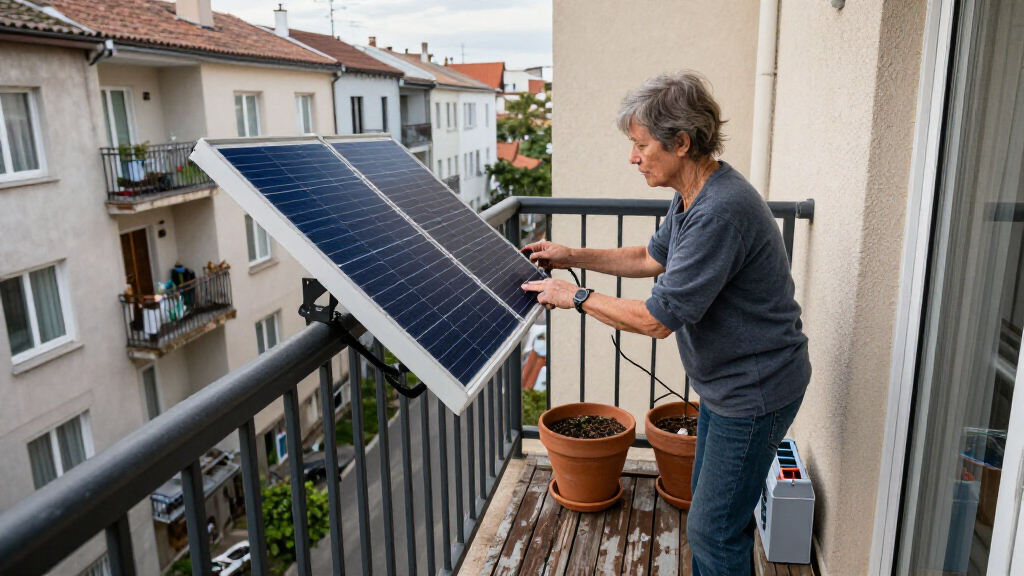
How We Picked
I ranked these products by how well they serve a specific balcony solar buying need, rather than comparing unlike components as if they were complete kits. PLUGGEDSOLAR includes panels and a microinverter, Callsun supplies panels, and Cosmoxstar supplies an inverter. That distinction shapes the ranking: a component can be well suited to a custom build without being the easiest route for someone starting from scratch.
I looked at the information provided for system completeness, electrical fit, mounting practicality, monitoring, and stated protections. For the panel set, I weighed its bifacial construction, published electrical values, dimensions, and weight against the extra equipment needed. For the inverter, I focused on its input range, dual MPPT, output rating, weather protection, cable length, and the need to verify that a chosen panel arrangement stays within its limits. For the complete kit, I considered the included hardware, cord reach, outlet requirement, listed certifications, and the claim that systems can be stacked.
I also treated performance figures as manufacturer-provided specifications, not a promise of what every balcony will produce. Solar output changes with direction, shade, season, weather, and mounting angle. The stated annual generation for PLUGGEDSOLAR is an estimate, while Callsun’s bifacial benefit depends on reflected light and Cosmoxstar’s conversion figure is listed as up to 96%. I do not infer guaranteed output from those numbers. I also do not treat a plug-in design as permission to connect without checking applicable electrical rules, landlord or building policies, and utility requirements. These picks are ordered by usefulness for the stated role, not by a claim that one component fits every home.
Factors to Consider When Choosing Balcony Solar Panel Systems
I would choose a balcony solar setup by starting with the balcony and electrical connection, then selecting equipment to fit those constraints. These three listings cover different parts of that process: a near-complete plug-in kit, a set of panels, and a microinverter. Before comparing wattage, decide whether you need a complete package or are comfortable sourcing and matching components.
Start with completeness, not the biggest wattage
PLUGGEDSOLAR is the clearest route if you want panels and a microinverter together. Callsun supplies just two panels, while Cosmoxstar supplies just an inverter. Their wattage figures describe different things, so they cannot be compared as if each were a finished system. A 1200W inverter does not generate 1200W without a suitable array, and a 400W panel set still needs compatible conversion equipment and a safe way to connect it.
For a custom build, write down every missing part before buying: mounting hardware, cables, inverter or power station, and any monitoring or protection components required by the manufacturer and local rules. A complete-looking collection of parts is not necessarily a compatible system. Check each specification against the next component in the electrical path.
Check balcony area, shade, and mounting
Measure the usable area and consider where shadows fall over the day, not just at noon. PLUGGEDSOLAR’s four panels are each listed at 4.5 by 2.2 feet; the two Callsun modules measure about 51.3 by 30.3 inches each. These are not small accessories, and panel placement can affect access, views, wind exposure, and the ability to open doors or windows.
Confirm that a railing or balcony structure can support the intended mount and that the mounting arrangement is allowed by the building owner or association. Callsun’s bifacial construction can benefit from reflected light reaching the back of each panel, but placement close to an opaque wall can limit that advantage. Shade reduction from its dual-module layout is not a substitute for checking actual shade patterns. Where sunlight is obstructed for much of the day, a larger stated wattage may not deliver the expected energy.
Match panel voltage and current to the inverter
Electrical compatibility is especially important when combining Callsun panels with the Cosmoxstar inverter. Cosmoxstar lists a 16–60V DC input range, a 22V start voltage, and a 60V maximum. Callsun provides panel and series values, but the buyer must also review current limits, temperature effects, wiring configuration, and the full manufacturer documentation. Do not rely on a single voltage number or assume two panels can be connected in series or parallel without checking the equipment limits.
With PLUGGEDSOLAR, the inverter is included with its specified panel set, reducing the number of component-matching choices. That does not remove the need to follow the kit’s installation instructions or check that the outlet and circuit suit the system. If a specification is unclear, ask the manufacturer or a qualified electrician before connecting equipment.
Treat output and efficiency figures as estimates
Panel wattage and inverter ratings are useful for understanding equipment capacity, but they do not predict a balcony’s actual generation by themselves. Direction, tilt, shade, temperature, weather, and season all change output. PLUGGEDSOLAR’s stated annual generation of 1,500 kWh is an estimate; actual results can differ substantially at a particular site. Callsun’s 25.6% efficiency and Cosmoxstar’s up-to-96% conversion efficiency are listed product figures, not whole-system guarantees.
I would compare manufacturer specifications with the conditions where the equipment will sit, and avoid planning household savings around a best-case number. Monitoring can help show what the system produces after installation, but it cannot make a shaded or poorly oriented panel perform like one in stronger sunlight.
Check outlet, building, and local requirements
A plug-in design can reduce installation complexity, but it does not mean every outlet is suitable or every balcony permits panels. PLUGGEDSOLAR specifies a 110/120V outlet and says systems can be stacked on one dedicated plug. Before expansion, verify the manufacturer’s instructions, circuit capacity, and local electrical requirements. Also check utility interconnection rules and any building, landlord, or fire-safety restrictions that apply to panels, cables, and balcony mounting.
Do not run a cable where it can be pinched, tripped over, exposed to damage, or routed contrary to the instructions. If the setup involves an unfamiliar grid connection or electrical limit, seek qualified guidance. Treat certification references as product information to verify for the exact components and jurisdiction, rather than as blanket approval for any installation.
Decide how much support and flexibility you need
PLUGGEDSOLAR suits buyers who value having the key generating components in one package. Callsun provides more freedom to choose the inverter and mounting approach, but that flexibility means more research. Cosmoxstar may fit an existing compatible array, although its two-year warranty and shorter included cable are worth weighing against the bundled convenience of PLUGGEDSOLAR. Callsun lists 10 years of technical support and a 25-year performance commitment; read the actual terms to understand what is covered and under what conditions.
For a first balcony system, fewer separate purchasing decisions can be a real benefit. For a buyer with existing solar components or a specific design, component-level purchasing may make more sense. The best fit is the one that matches your site and experience, not the one with the most impressive isolated rating.
Frequently Asked Questions
Which of these products is a complete balcony solar system?
PLUGGEDSOLAR is the most complete option in this comparison because it includes four panels, an APsystems microinverter, Wi-Fi monitoring, and a 50-foot cord. Callsun is a panel set, and Cosmoxstar is a microinverter; each needs other compatible components before it can operate as part of a complete balcony setup. Even with the PLUGGEDSOLAR kit, buyers still need to check mounting, outlet suitability, local rules, and installation instructions.
Can I use the Callsun panels with the Cosmoxstar inverter?
The listed figures suggest a possible area of compatibility, but they are not enough by themselves to confirm a safe, supported pairing. Cosmoxstar lists a 16–60V DC input range and a 60V maximum, while Callsun lists panel and series voltage values. You must also check current limits, the precise panel configuration, temperature effects, the manufacturers’ wiring instructions, and all relevant inverter input requirements. If any limit or connection method is unclear, confirm it with the manufacturers or a qualified electrician before connecting the equipment.
Does a bifacial panel produce more power on every balcony?
No. A bifacial panel can collect light on its rear side, but useful gains depend on light being reflected onto that side and on how the panels are mounted. A close wall, opaque backing, or limited clearance may leave little reflected light available. Balcony shade, orientation, and surrounding surfaces also matter. Callsun’s bifacial design is best treated as a potential advantage in a suitable installation, not as a guaranteed increase over a conventional panel.
Do plug-in balcony panels work without batteries?
PLUGGEDSOLAR describes its grid-tie kit as operating without batteries, so battery storage is not presented as a requirement for that setup. That is different from an off-grid system, which generally needs a way to store or directly use the generated power. A grid-tie connection has its own equipment and local requirements, and a plug-in arrangement does not mean energy will be stored for use after sunlight fades. Check the instructions and applicable rules for the exact system you plan to install.
What should I check before installing a balcony solar system?
Measure the available area, observe shade throughout the day, confirm that the balcony and mounting hardware can safely support the panels, and check building or landlord rules. Verify panel and inverter voltage and current compatibility, outlet and circuit suitability, cable routing, and all manufacturer instructions. Also check local electrical and utility requirements before grid connection. These checks are particularly relevant here because PLUGGEDSOLAR has four large panels, Callsun panels weigh 23.8 pounds each, and Cosmoxstar requires a separately selected compatible panel array.
Conclusion
For most buyers seeking a straightforward starting point, I recommend PLUGGEDSOLAR: it combines panels, inverter, monitoring, and a long cord, though its size and outlet requirements need to fit the site. Choose Callsun if you are building a custom system and want to select the panels separately; skip it if you expect a complete kit. Choose Cosmoxstar if you already have compatible panels and want a dual-MPPT inverter with app monitoring; it is not the right purchase on its own for a first-time system. My ranking reflects readiness and buyer effort as much as ratings: match the equipment to your balcony, verify compatibility and local rules, and treat production estimates as site-dependent.
Fall Picks
fall essentials
As an affiliate, we earn on qualifying purchases.