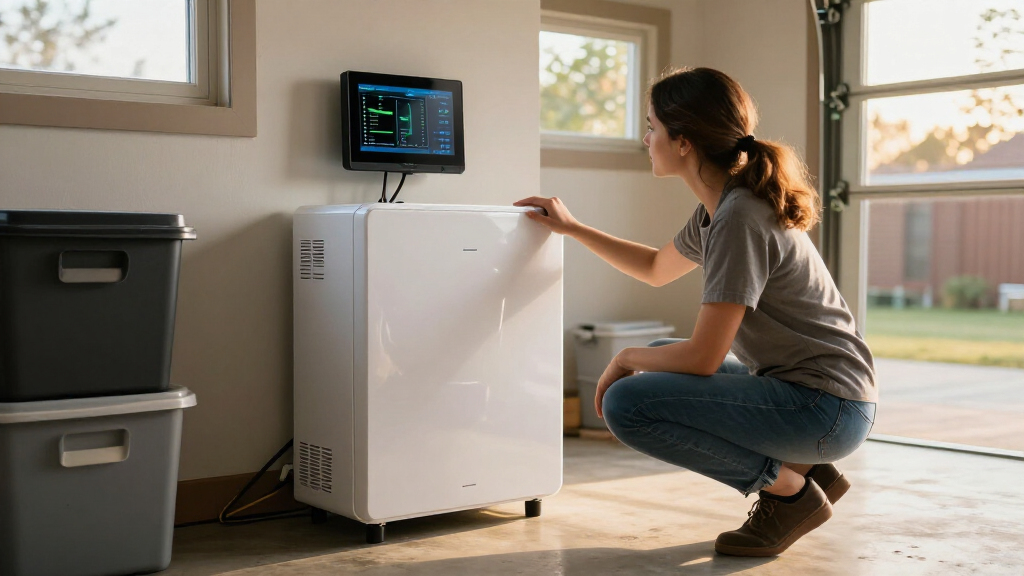

Choosing a home battery in 2026 mostly comes down to one question: do you want a plug-and-play backup system, or are you building your own storage bank from raw lithium cells? Those two paths lead to very different products, and mixing them up is the fastest way to overspend or end up underpowered. My top pick for whole-home backup is the Jackery Solar Generator 5000 Plus, because its 7200W output and expandable 60kWh capacity cover the appliances that actually matter during an outage. For DIY solar builders on a budget, the ROSINLI 12V 100Ah 2-pack delivers LiFePO4 chemistry and a 5-year warranty at a far lower entry cost. The main tradeoff in this category is convenience versus control: all-in-one stations like the Jackery handle everything for you, while 12V batteries from ROSINLI, ECO-WORTHY, and VATRER POWER demand separate inverters, chargers, and wiring know-how but scale more cheaply. Below, I break down which battery fits which household, and where each one falls short.

Get backup power and energy gear delivered free — and shop member deals
- Fast, free delivery on millions of items
- Access to Prime Big Deal Days deals on October 6–7
- Prime Video, Amazon Music and more included
Complete the kit


Key Takeaways
- The Jackery 5000 Plus is the only plug-and-play whole-home option here — its 7200W output runs a 5-ton AC, while the 12V batteries require you to build a system around them.
- All four products use LiFePO4 chemistry, so cycle life and safety are table stakes; the real differences are capacity per dollar, monitoring features, and cold-weather behavior.
- Cold performance separates the field: VATRER POWER self-heats down to -4°F, ECO-WORTHY and ROSINLI simply cut off charging, and Jackery sidesteps the issue with indoor installation.
- The ROSINLI 2-pack is the cheapest entry point but only suits low-draw loads — its 100A BMS cannot feed heavy household appliances the way a 300A BMS can.
- Bluetooth or app monitoring (ECO-WORTHY and VATRER POWER) is genuinely useful for home backup, since you can check charge state without walking to the battery bank.
- Every option here has an add-on cost trap: Jackery’s solar panels and transfer switch are separate, and all three 12V batteries need a dedicated LiFePO4 charger or inverter.
| Jackery Solar Generator 5000 Plus Portable Power Station, 5040Wh LiFePO4, 7200W Output |  | Best Overall for Whole-Home Backup | Capacity: 5040Wh (expandable to 60kWh) | Surge Power: 14,400W | Voltage: 120V/240V AC, 60 Hz | VIEW LATEST PRICE | See Our Full Breakdown |
| ROSINLI 2-Pack 12V 100Ah BCI Group 24 LiFePO4 Battery with 100A BMS |  | Best Value for DIY Storage Builders | Voltage: 12V (12.8V nominal) | Capacity: 2 x 100Ah (200Ah total) | Chemistry: LiFePO4, automotive-grade cells | VIEW LATEST PRICE | See Our Full Breakdown |
| ECO-WORTHY 12V 314Ah LiFePO4 Battery with Bluetooth Monitoring and Low-Temperature Protection |  | Best Mid-Capacity Balance of Storage and Smarts | Voltage: 12.8V | Capacity: 314Ah | Energy: 4019.2Wh | VIEW LATEST PRICE | See Our Full Breakdown |
| VATRER POWER 12.8V 460Ah Self-Heating LiFePO4 RV Battery with App Monitoring |  | Best Premium Pick for Cold Climates and Heavy Loads | Chemistry: LiFePO4 | Voltage: 12.8V | Capacity: 460Ah | VIEW LATEST PRICE | See Our Full Breakdown |
| home batterie | Capacity | Voltage | Chemistry | Expansion |
|---|---|---|---|---|
| Jackery Solar Generator 5000 P | 5040Wh (expandable to 60kWh) | 120V/240V AC, 60 Hz | — | — |
| ROSINLI 2-Pack 12V 100Ah BCI G | 2 x 100Ah (200Ah total) | 12V (12.8V nominal) | LiFePO4, automotive-grade cells | Up to 4S/4P (400Ah or 48V) |
| ECO-WORTHY 12V 314Ah LiFePO4 B | 314Ah | 12.8V | LiFePO4 | Up to 4P2S or 2P4S |
| VATRER POWER 12.8V 460Ah Self- | 460Ah | 12.8V | LiFePO4 | Up to 4P4S |
More Details on Our Top Picks
Jackery Solar Generator 5000 Plus Portable Power Station, 5040Wh LiFePO4, 7200W Output
The Jackery Solar Generator 5000 Plus earns the top spot because it is the only product in this lineup that works as a complete home backup solution out of the box. With 5040Wh of capacity and a 7200W rated output — surging to 14,400W — it can run the appliances that break lesser power stations: a 5-ton air conditioner, a water heater, or a well pump. Compare that to the ROSINLI 2-pack, which combines for 2560Wh of storage but cannot come close on discharge power without a separate high-output inverter, and the gap in readiness becomes obvious.
The expandability to 60kWh is what turns this from a weekend gadget into a serious blackout asset. At base capacity you get roughly a day of typical household use; with expansion batteries, Jackery claims runtime stretching up to 13 days. That scaling path matters because most buyers underestimate how quickly capacity drains once a furnace blower and refrigerator cycle on and off overnight. The roughly 2-hour solar recharge at up to 4000W input is also unusually fast, meaning you can genuinely live off solar through a multi-day grid outage rather than rationing stored power.
The tradeoffs are real, though. Only two built-in outlets exist, so whole-home integration depends on the separately sold 60A Smart Transfer Switch, which routes power to up to 12 circuits. Solar panels are also a separate purchase. This pick makes the most sense for homeowners who want professional-grade backup without hiring an installer to commission a custom system — but it is overkill for someone who just wants to keep a router and a fridge alive.
Pros:- 7200W output with 14,400W surge runs major appliances, including a 5-ton AC unit or water heater
- Expandable from 5040Wh up to 60kWh for outages lasting well over a week
- Fast solar recharging at up to 4000W input in roughly 2 hours
- Durable LiFePO4 cells with ChargeShield 2.0 rated for up to 11 years of daily use
Cons:- Solar panels sold separately, adding substantial cost to an off-grid setup
- Whole-home circuit integration requires the separately purchased 60A Smart Transfer Switch
- Only 2 built-in power outlets limits use without the switch or accessories
Best for: Homeowners who want whole-house blackout protection, including heavy appliances like air conditioning, without designing a custom battery system.
Not ideal for: Budget buyers, renters, or anyone comfortable building a DIY 12V bank — the total cost once panels and the transfer switch are added is far higher than component-grade alternatives.
- Capacity:5040Wh (expandable to 60kWh)
- Surge Power:14,400W
- Voltage:120V/240V AC, 60 Hz
- Battery Chemistry:LiFePO4
- Solar Input:Up to 4000W
- Recharge Time:Approx. 2 hours (solar)
- Max Runtime:Up to 336 hours (expanded)
Our verdict“If your goal is keeping an entire house running through an extended outage, this is the most complete and capable option in the comparison — provided you budget for the switch and panels.”
ROSINLI 2-Pack 12V 100Ah BCI Group 24 LiFePO4 Battery with 100A BMS
Where the Jackery is an appliance, the ROSINLI 2-pack is a raw ingredient — and that is exactly its appeal. You get two 12V 100Ah Group 24 batteries delivering a combined 2560Wh of storage, automotive-grade LiFePO4 cells rated for up to 15,000 deep cycles, and a 5-year warranty, all at the lowest entry cost in this comparison. For someone already owning an inverter and charge controller, this is the cheapest way to add meaningful home or RV storage.
What stands out is the flexibility of the 4S/4P wiring support: stack up to sixteen of these batteries for 400Ah at 48V, which is a legitimate whole-home bank if you grow into it. At 22.6 pounds each, they are also dramatically easier to maneuver than the VATRER POWER 460Ah, which weighs over 130 pounds as a single block — relevant if your storage spot is a crawl space or an RV compartment with awkward access.
The limitations come from the 100A BMS. That discharge ceiling rules out engine starting and struggles with high-surge household loads unless you parallel multiple batteries. Compared with the ECO-WORTHY’s 200A BMS or VATRER’s 300A, this pack is clearly positioned for lighting, electronics, and moderate-draw appliances rather than power-hungry equipment. There is also no Bluetooth monitoring, so you will need a separate shunt or battery monitor to track state of charge. This option stands out for tinkerers who value cost per watt-hour over convenience.
Pros:- Lowest-cost entry into LiFePO4 home storage in this comparison, with two batteries included
- Automotive-grade cells rated for up to 15,000 deep cycles with a 5-year warranty
- Lightweight 22.6 lb units are easy to place and wire in series or parallel up to 4S/4P
- Built-in smart BMS with over-charge, over-discharge, over-current, and low-temperature protection
Cons:- Not suitable for engine starting or high-surge appliances due to the 100A BMS limit
- Requires a dedicated 14.6V LiFePO4 charger for proper performance
- No app or Bluetooth monitoring — charge tracking needs third-party equipment
Best for: DIY solar hobbyists and RV owners who already have inverters and chargers and want the lowest-cost way to add reliable LiFePO4 storage.
Not ideal for: Anyone who wants appliance-grade discharge power, app monitoring, or a turnkey system — the 100A BMS and bare-bones feature set will disappoint.
- Voltage:12V (12.8V nominal)
- Capacity:2 x 100Ah (200Ah total)
- Chemistry:LiFePO4, automotive-grade cells
- BCI Group:Group 24
- BMS:100A built-in smart BMS
- Cycle Life:Up to 15,000 deep cycles
- Weight:22.6 lbs each
- Expansion:Up to 4S/4P (400Ah or 48V)
- Warranty:5 years
Our verdict“The most affordable path to a scalable LiFePO4 bank, as long as you supply the surrounding system and keep your power expectations modest.”
ECO-WORTHY 12V 314Ah LiFePO4 Battery with Bluetooth Monitoring and Low-Temperature Protection
The ECO-WORTHY 314Ah sits neatly between the ROSINLI pair and the VATRER flagship. With 4019Wh of storage in a single case, it nearly matches the Jackery’s base capacity — but as a bare 12V battery, it costs far less per watt-hour and can feed an off-grid inverter system the Jackery was never designed for. The 200A BMS doubles the ROSINLI’s discharge ceiling, which is the difference between running a small fridge and compressor comfortably versus tripping protection circuits.
Its signature advantage over the ROSINLI is visibility. The Bluetooth app plus an onboard LED display means you can check state of charge from your phone instead of guessing or installing a shunt. For a home backup bank tucked in a utility corner, that convenience is more practical than it sounds — you notice a problem before it becomes an outage-day surprise. Compared to the VATRER, ECO-WORTHY trades away raw power (200A versus 300A) and self-heating, but gains a lighter 60.4-pound package that one person can muscle into place.
The low-temperature charging cutoff at -7°C (19.4°F) protects the cells but stops charging entirely in real cold — a protective stop, not a workaround. And a practical annoyance: orders may arrive in multiple packages on different days, which matters if you are wiring a multi-battery bank on a schedule. This model makes the most sense for buyers who want a single, high-capacity battery with monitoring at a mid-tier price, and whose climate does not regularly dip below freezing.
Pros:- 4019Wh of storage in one battery simplifies wiring versus multi-battery packs
- Bluetooth app plus LED display give easy charge-state visibility
- 200A BMS handles moderately demanding loads that overwhelm 100A units
- Low-temperature charging protection safeguards cells in marginal cold
Cons:- Charging stops entirely below -7°C rather than self-heating like the VATRER
- Multi-battery orders may arrive in separate packages on different days
- No self-heating means winter solar charging windows shrink in cold regions
Best for: Off-grid cabin or home-backup builders who want a single large battery with app monitoring and a stronger discharge rating than budget 100Ah options.
Not ideal for: Buyers in genuinely cold climates who need winter charging — the cutoff halts charging rather than warming the cells — or those needing 300A-class discharge for big inverters.
- Voltage:12.8V
- Capacity:314Ah
- Energy:4019.2Wh
- Chemistry:LiFePO4
- BMS:200A
- Low-Temp Cutoff:-7°C (19.4°F) charging protection
- Weight:60.4 lbs
- Expansion:Up to 4P2S or 2P4S
Our verdict“A sensible middle ground that pairs near-Jackery capacity with DIY pricing — ideal if cold winters are not part of your equation.”
VATRER POWER 12.8V 460Ah Self-Heating LiFePO4 RV Battery with App Monitoring
The VATRER POWER 460Ah is the most capable component-grade battery here, and its two headline features justify the premium role. First, automatic self-heating between -4°F and 41°F means the battery can actually accept charge in winter — something neither ROSINLI nor ECO-WORTHY can do, since both simply shut down charging in the cold. For anyone storing solar energy through a northern winter, that difference is not a luxury; it determines whether your system functions at all for a third of the year.
Second, the 300A continuous-discharge BMS is the strongest in this lineup. It can feed a sizeable inverter running microwaves, power tools, or even a small air conditioner — loads that would trip the ROSINLI’s 100A BMS without paralleling several units. The app rounds things out with current, voltage, temperature, and cycle-life readouts, and the steel SPCC case feels built for years of mobile vibration in an RV bay.
The tradeoffs are physical and procedural. At 18.9 × 10.82 × 9.84 inches and well over 130 pounds, this is a two-person lift and demands a thought-out installation plan — the ROSINLI’s modular 22.6-pound units are far friendlier if access is tight. Monitoring also requires installing the companion app, which is a small friction point for anyone who prefers dumb, always-working hardware. Compared with the Jackery, this battery stores comparable base energy for less money, but you still need to buy and configure the inverter, charger, and wiring around it. This pick makes the most sense for a serious off-grid or cold-climate builder who wants maximum capacity per battery and refuses to babysit it through winter.
Pros:- Automatic self-heating from -4°F to 41°F enables charging where other LiFePO4 batteries shut down
- 300A continuous discharge powers high-draw appliances through a suitably sized inverter
- App monitoring tracks current, voltage, temperature, and cycle life
- 460Ah capacity plus 4P4S expansion supports very large storage banks
Cons:- Large, heavy single-unit design makes installation a two-person job
- App download required to unlock monitoring features
- Premium capacity means a higher commitment than budget multi-battery alternatives
Best for: Cold-climate off-grid homeowners and full-time RVers who need winter charging capability, heavy 300A discharge, and deep storage in one battery.
Not ideal for: Casual users or anyone without installation help — the size, weight, and required surrounding equipment make it overkill for light backup needs.
- Chemistry:LiFePO4
- Voltage:12.8V
- Capacity:460Ah
- Continuous Discharge:300A BMS
- Self-Heating Range:-4°F to 41°F
- Case Material:SPCC steel
- Dimensions:18.9 × 10.82 × 9.84 in
- Expansion:Up to 4P4S
- Warranty:5-year limited
Our verdict“The strongest raw battery of the group — choose it when winter performance and high discharge matter more than plug-and-play simplicity.”

How We Picked
I organized this comparison around how a buyer actually intends to use a home battery, because that single decision determines everything else. Someone who wants blackout protection for a refrigerator, furnace, and air conditioner needs an entirely different product from someone slowly assembling an off-grid solar array in a garage. So I split the field into two camps: integrated power stations and component-grade 12V LiFePO4 batteries.
Within each camp, I judged products on four criteria. First, usable capacity and power delivery — a battery that stores plenty of energy but cannot discharge fast enough to start a compressor is useless for home backup. Second, chemistry and cycle life; every product here uses LiFePO4, which I treat as a baseline rather than a bonus, since it has become the standard for residential storage. Third, scalability, meaning how far capacity can grow as needs change, whether through expansion batteries or series/parallel wiring. Fourth, real-world friction: hidden costs like separate transfer switches, chargers, or solar panels, plus practical concerns like cold-weather charging behavior and monitoring access.
I also held every pick to a honesty standard. No battery on this list is right for everyone, and I flag who should skip each one — the ROSINLI, for example, is a poor match for anyone expecting whole-house coverage. That negative-space guidance is often more useful than the praise.
| home batterie | Chemistry | Expansion |
|---|---|---|
| Jackery Solar Generator 5000 P | — | — |
| ROSINLI 2-Pack 12V 100Ah BCI G | LiFePO4, automotive-grade cells | Up to 4S/4P (400Ah or 48V) |
| ECO-WORTHY 12V 314Ah LiFePO4 B | LiFePO4 | Up to 4P2S or 2P4S |
| VATRER POWER 12.8V 460Ah Self- | LiFePO4 | Up to 4P4S |
Factors to Consider When Choosing Best Home Batteries
Before choosing between these four batteries, it helps to understand the categories and specs that actually drive the decision. Here is the framework I used, distilled into the questions that matter most.Power Station or Component Battery?
This is the single biggest fork in the road. A power station like the Jackery 5000 Plus bundles the battery, inverter, outlets, and charging logic into one unit — you unbox it, plug things in, and it works. A component battery like the ROSINLI, ECO-WORTHY, or VATRER is just storage: you must supply an inverter to make household AC power, a charger, and appropriate cabling. Stations cost more per watt-hour but eliminate design risk. Components reward you with lower long-term cost and full control, but they demand electrical competence and shift all safety and compatibility decisions onto you.
Capacity Versus Power: Know the Difference
Capacity (watt-hours) tells you how long a battery can run things; power (watts or amps) tells you which things it can run at all. A refrigerator might need only 150W to run but over 1,000W for a second to start its compressor. That surge demand is why the Jackery’s 14,400W surge rating and the VATRER’s 300A BMS matter — they absorb startup spikes that would trip a ROSINLI’s 100A protection. Match both numbers to your loads: capacity to your outage duration, power to your most demanding appliance.
Chemistry and Cycle Life
All four products use LiFePO4 chemistry, which offers better thermal stability and far more charge cycles than older lithium-ion or lead-acid designs. Cycle ratings range up to 15,000 for the ROSINLI cells, which in daily cycling terms means a battery that can outlast a decade of typical use. Because chemistry is equal across this lineup, I treated it as a baseline and focused comparison on the features that genuinely differ — a good reminder not to pay extra for a ‘lithium’ label alone.
Cold-Weather Behavior
Lithium iron phosphate cells can be damaged if charged below freezing, so every manufacturer handles cold differently. The VATRER self-heats and keeps charging down to -4°F. The ECO-WORTHY and ROSINLI use cutoffs that protect the cells but stop charging entirely in cold conditions. The Jackery sidesteps the problem because a whole-home station typically lives indoors in conditioned space. If your battery will face a garage or RV bay in a freezing climate, this single feature can outweigh every other spec on the sheet.
Hidden Costs to Budget For
Every pick here carries costs beyond the sticker. The Jackery needs solar panels and the 60A transfer switch for whole-home function. Every 12V battery needs a compatible LiFePO4 charger, likely an inverter, fusing, and cabling — often totaling as much as the batteries themselves. My advice: price the complete system, not the battery, before comparing options. A cheap battery plus an expensive supporting cast can cost more than an integrated station that includes everything.
Monitoring and Expansion
For home backup, knowing your state of charge is half the battle during an outage. The ECO-WORTHY’s Bluetooth app and LED display and the VATRER’s app monitoring give you that visibility natively; the ROSINLI requires a third-party battery monitor. On growth, consider where you might be in three years: the Jackery expands to 60kWh with proprietary add-on batteries, while the 12V units expand through series/parallel wiring — cheaper per added watt-hour, but each expansion adds wiring complexity and points of failure.
Frequently Asked Questions
Can a 12V LiFePO4 battery power my whole house during an outage?
A single 12V battery cannot, no — but a properly sized bank of them can get close. The batteries themselves only store energy; you need an inverter to convert their 12V DC output into the 120V AC your household appliances use. The discharge rating of the BMS is the limiting factor: the VATRER’s 300A BMS can feed a large inverter running heavy appliances, while the ROSINLI’s 100A BMS is better suited to lighting, electronics, and small loads unless you wire multiple batteries in parallel. If you want true whole-house coverage including air conditioning without designing any of this yourself, the Jackery 5000 Plus with its transfer switch is the simpler route, since it integrates the battery and inverter in one package rated for 7200W of output.
Why can’t I charge a LiFePO4 battery below freezing?
Charging lithium iron phosphate cells below 0°C (32°F) causes lithium plating on the anode, which permanently reduces capacity and can create safety risks over time. Manufacturers handle this in two ways: protective cutoffs that simply block charging until the battery warms up, as on the ECO-WORTHY and ROSINLI, or built-in heating elements that warm the cells before charging begins, as on the VATRER POWER. If your battery lives in a heated space, the cutoff approach costs you nothing. If it sits in an unheated garage, shed, or RV through a real winter, self-heating is worth paying for, because a cutoff battery is effectively offline for months at a time in cold climates.
Is a portable power station or a DIY battery bank cheaper in the long run?
Up front, a DIY bank built from batteries like the ROSINLI or ECO-WORTHY almost always wins on cost per watt-hour of storage. The catch is the surrounding system: a quality inverter, charger, fusing, monitoring, and cabling can double your total investment, and expansion means buying more batteries and redoing wiring. An integrated station like the Jackery costs more per watt-hour but includes the inverter, charging logic, and safety systems, and expansion is as simple as stacking compatible add-on batteries. My general rule: if you enjoy building and already own some of the supporting equipment, go DIY. If you value your weekends or want a system a family member can operate during an outage, pay the premium for integration.
How much battery capacity do I actually need for backup?
Start by adding up the essential loads you want to keep running and how long you want to run them. A refrigerator uses roughly 1–2 kWh per day, a furnace blower a few more, lights and electronics perhaps 1 kWh, and a window air conditioner can consume 1–2 kWh per hour of use. A practical minimum for a day of basics is around 3–5 kWh, which is why the Jackery’s 5040Wh base capacity and the ECO-WORTHY’s 4019Wh both sit right at that threshold. If you want to cover a 5-ton central air conditioner or an electric water heater — appliances drawing thousands of watts — you need both the capacity for runtime and the discharge power to start them, which narrows the field to the Jackery or a large multi-battery bank built around something like the VATRER.
Do I really need app or Bluetooth monitoring on a home battery?
It is more useful than most people expect, especially for backup systems that sit idle most of the year. Without monitoring, you have no easy way to confirm your batteries are actually holding charge until the moment you need them — which is the worst possible time to discover a problem. The ECO-WORTHY’s Bluetooth app and LED display and the VATRER’s app let you check voltage, state of charge, and temperature at a glance from your phone, and cycle-life data helps you spot degradation early. That said, monitoring is a convenience rather than a necessity: the ROSINLI works perfectly well with a third-party battery monitor or shunt installed in the circuit, which many DIY builders prefer because it displays data at the system level rather than per battery.
Conclusion
The right pick here depends less on which battery is ‘best’ and more on which type of buyer you are. If you are a homeowner who wants the fridge, furnace, and air conditioner to keep running through an extended outage with zero design work, the Jackery 5000 Plus is my clear overall recommendation — just budget for the transfer switch and panels. If you are a hands-on DIY builder assembling an off-grid system and every watt-hour of cost matters, the ROSINLI 2-pack gets you reliable LiFePO4 storage and a 5-year warranty at the lowest entry point, with modular sizing that fits tight spaces. For the middle-ground builder who wants near-Jackery capacity in a single DIY-friendly battery with phone-based monitoring and a moderate climate, the ECO-WORTHY 314Ah is the balanced choice. And if you live somewhere with real winters or need serious discharge power for an RV or large inverter, the VATRER 460Ah with self-heating is worth its premium, because it keeps working in conditions that shut every other battery in this comparison down. Whatever you choose, price the complete system — batteries, inverter, charger, and accessories — before you commit, because that total, not the sticker price, is what you will actually pay for peace of mind.
Fall Picks
fall essentials
As an affiliate, we earn on qualifying purchases.