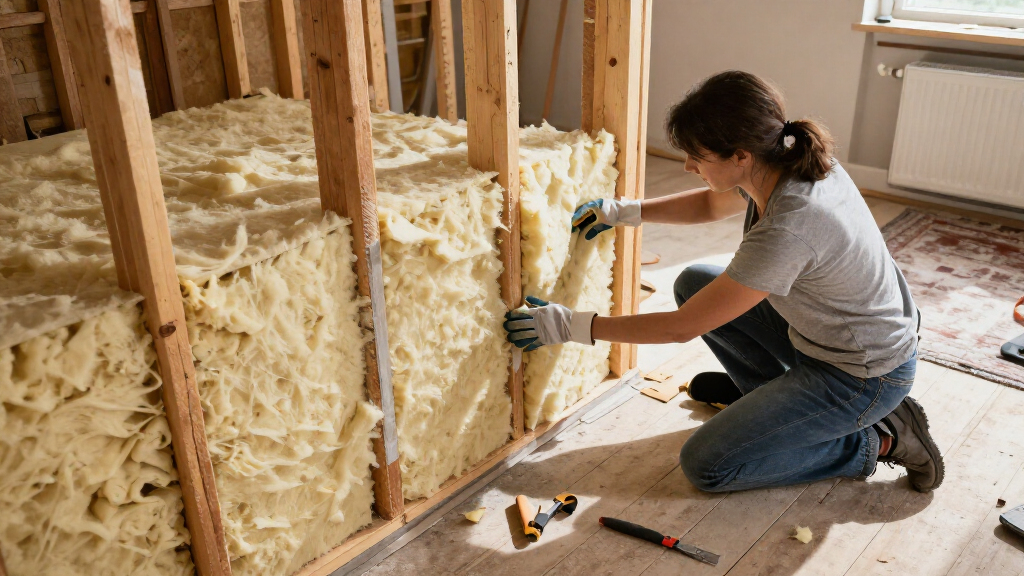

Choosing the best insulation for existing walls depends less on a single R-value than on how you can reach the wall cavity. For a finished wall you want to keep intact, I would start with the Vega Bond Open-Cell Injection Foam Kit: its slow-rise foam is designed for closed cavities and can reach behind existing fiberglass. If the wall is already open and framed for 2×6 lumber, the Owens Corning R-19 Unfaced Batts offer a clearer fit-and-performance match. For standard 2×4 framing, the Owens Corning R-13 Kraft-Faced Roll is the more appropriate batt option.

Get backup power and energy gear delivered free with Prime
- Fast, free delivery on millions of items
- Prime Video, Amazon Music and more included
- Member-only deals all year
Those picks solve different problems, and that distinction matters. Injection foam avoids removing full drywall sheets, but it requires suitable access holes and careful cavity filling. Fiberglass batts are familiar and easier to inspect, yet they are useful only when the wall is open or the material can be installed without gaps or compression. The BEEST spray foam kit is better for exposed cracks and small accessible areas than for filling an entire closed wall. I also include the RU41 fiberglass item, but its supplied details do not state a conventional batt R-value, so I would not choose it over the clearly specified R-13 or R-19 options for a whole-wall project.
Before buying, I would confirm the wall’s framing depth, whether the cavity already contains insulation, and whether the work calls for cavity filling or surface air sealing. The right choice follows from those conditions—not from treating all five products as interchangeable.
Key Takeaways
- For finished, closed walls: Vega Bond is the lineup’s purpose-built injection option, with slow-rise foam and an extended tube for reaching cavity voids or areas behind existing fiberglass.
- For open 2×6 framing: Owens Corning R-19 batts are sized for deeper cavities and state both their R-value and coverage, but they need separate moisture-control planning because they are unfaced.
- For standard 2×4 framing: the R-13 kraft-faced roll is the most straightforward batt match; its stated wall fit is more useful here than the R-19 batt’s higher rating.
- For exposed gaps rather than whole cavities: BEEST includes an applicator and protective gear, but its 2-inch R-value and narrow application temperature range make it a targeted air-sealing choice.
- Check specifications before choosing RU41: the listing gives a 0.25-inch thickness but no R-value or clear wall-cavity application, so I would verify the exact product and intended use before buying.
| Vega Bond Open-Cell Injection Foam Insulation Kit, 100 cu. ft. |  | Best Overall for Finished, Closed Walls | Brand / model: Vega Bond VG-100 | Foam type: Open-cell injection foam | Coverage: 100 cubic feet | VIEW LATEST PRICE | See Our Full Breakdown |
| Owens Corning R-19 Unfaced Fiberglass Insulation, 77.5 sq. ft., 15 x 93 in. |  | Best for Open 2×6 Wall Framing | Brand: Owens Corning | Material: Fiberglass | R-value: R-19 | VIEW LATEST PRICE | See Our Full Breakdown |
| Owens Corning R-13 Kraft-Faced Fiberglass Insulation Roll, 15 in. x 32 ft. (3-Pack) |  | Best for Standard 2×4 Wall Bays | Brand: Owens Corning | Insulation type: Kraft-faced fiberglass roll | R-value: R-13 | VIEW LATEST PRICE | See Our Full Breakdown |
| BEEST FullStop Spray Foam Insulation Kit, 120 Board Feet |  | Best for Exposed Gaps and Local Air Sealing | Brand: BEEST | Coverage: Up to 120 board feet | R-value: 8.24 at 2-inch thickness | VIEW LATEST PRICE | See Our Full Breakdown |
| Owens Corning RU41 Unfaced Fiberglass Insulation, Pink |  | Best Only After Verifying the Listing Details | Brand / model: Owens Corning RU41 | Material: Fiberglass | Finish: Unfaced | VIEW LATEST PRICE | See Our Full Breakdown |
| insulation for existing wall | R-value | Coverage | Brand |
|---|---|---|---|
| Vega Bond Open-Cell Injection | 4.4 per inch | 100 cubic feet | — |
| Owens Corning R-19 Unfaced Fib | R-19 | 77.5 square feet; 8 batts | Owens Corning |
| Owens Corning R-13 Kraft-Faced | R-13 | — | Owens Corning |
| BEEST FullStop Spray Foam Insu | 8.24 at 2-inch thickness | Up to 120 board feet | BEEST |
| Owens Corning RU41 Unfaced Fib | Not provided in the supplied specifications | — | — |
More Details on Our Top Picks
Vega Bond Open-Cell Injection Foam Insulation Kit, 100 cu. ft.
For a wall that is already drywalled, Vega Bond is the clearest match in this group. It is specifically designed for closed wall cavities and uses slow-rise open-cell foam that expands over two to four minutes. That slower rise is meant to reduce pressure on the wall compared with fast-expanding foam, while giving the installer time to fill voids. The extended injection tube and multiple nozzles also speak directly to retrofit access, including reaching behind existing fiberglass.
Its stated R-value of 4.4 per inch gives buyers a useful basis for comparing cavity depth, but actual results depend on complete, even filling and the wall assembly. Compared with the R-13 and R-19 batts, this kit does not require an open wall bay for placement; that is its main advantage, not a claim that foam is always superior. Unlike the BEEST kit, which is described as a surface-applied gap filler, Vega Bond is intended to enter a closed cavity. It also offers sound absorption, a relevant benefit when the wall separates noisy rooms.
The tradeoff is a more specialized and less forgiving installation. This is not a product for spraying exposed walls or ceilings, and injecting through access points requires a good understanding of cavity layout, existing obstructions, and how much foam is being delivered. A finished wall can still need drilled holes and patching. I would skip this if the framing depth is unknown, the cavity has moisture issues, or the project is a small exposed crack better handled with a targeted foam product.
Pros:- Designed for injection into existing closed wall cavities.
- Slow 2–4 minute rise is intended to limit pressure on wall surfaces.
- Extended tube and eight nozzles support access to voids and areas behind existing fiberglass.
- Provides stated thermal resistance and sound absorption.
Cons:- Not intended for open spraying on walls or ceilings.
- Injection requires planning and careful control; access holes may still need patching.
- The supplied details do not specify a per-wall coverage estimate or installation temperature range.
Best for: Homeowners insulating dry, closed wall cavities who want to avoid removing full drywall sheets and can plan injection access carefully.
Not ideal for: Buyers insulating open framing, exposed wall surfaces, or cavities where moisture, wiring, or obstructions have not been checked.
- Brand / model:Vega Bond VG-100
- Foam type:Open-cell injection foam
- Coverage:100 cubic feet
- R-value:4.4 per inch
- Rise time:2–4 minutes
- Kit components:Spray gun, hose, 8 nozzles, gloves, goggles, cleaner, extended injection tube
- Recommended use:Thermal insulation, sound control, and air sealing in closed wall cavities
Our verdict“I rank Vega Bond first for finished walls because it is the only option here purpose-built to fill closed cavities without removing full drywall sheets.”
Owens Corning R-19 Unfaced Fiberglass Insulation, 77.5 sq. ft., 15 x 93 in.
When the wall is open and uses 2×6 framing, this R-19 batt is the strongest straightforward fiberglass match in the lineup. Its 6.5-inch thickness is designed for a deeper framing cavity, and the stated R-19 rating makes its thermal performance easier to compare with the R-13 roll. The bag covers 77.5 square feet across eight batts, so I can also plan materials against a known area instead of relying on an unclear quantity.
Unlike Vega Bond, these batts are not a way to insulate an intact wall without access. They make the most sense when drywall has already been removed, during a renovation, or in an accessible framed wall. Compared with the R-13 kraft-faced roll, R-19 is the deeper-cavity choice, not a drop-in upgrade for standard 2×4 walls. Compressing a batt into a shallower cavity can undermine the intended fit, so I would match the product to the framing rather than select by rating alone. The batts are also described as easy to cut and capable of recovering quickly, which can help with fitting around standard framing details.
The important compromise is that these batts are unfaced and have no vapor barrier. That does not make them unsuitable, but it means moisture control must be handled as part of the wall assembly, with a strategy appropriate to the climate and local requirements. They are also a poor pick when the wall is finished and the goal is to avoid demolition. For a closed cavity, Vega Bond is more purpose-built; for a 2×4 bay, the R-13 roll is the better depth match.
Pros:- R-19 rating is stated for thermal-performance comparison.
- 6.5-inch thickness is designed for deeper 2×6 framing.
- Eight batts provide a stated total coverage of 77.5 square feet.
- Can be cut to fit framing and is also listed for floors and attics.
Cons:- Unfaced construction provides no vapor barrier or built-in moisture-control layer.
- Requires an open or otherwise accessible cavity; it is not an injection retrofit product.
- Its 6.5-inch thickness is not a suitable match for many 2×4 wall cavities.
Best for: Renovators with open 2×6 wall framing who want a specified R-19 batt and can provide a separate, suitable moisture-control approach.
Not ideal for: Finished-wall retrofits without cavity access, or standard 2×4 framing where the 6.5-inch batt will not fit correctly.
- Brand:Owens Corning
- Material:Fiberglass
- R-value:R-19
- Thickness:6.5 inches
- Batt dimensions:93 × 15 inches
- Coverage:77.5 square feet; 8 batts
- Facing:Unfaced; no vapor barrier
- Recommended use:Thermal insulation for walls, floors, and attics
Our verdict“I would choose this batt over the R-13 roll only when the wall is open and the framing depth supports its 6.5-inch, R-19 format.”
Owens Corning R-13 Kraft-Faced Fiberglass Insulation Roll, 15 in. x 32 ft. (3-Pack)
For an accessible wall with standard 2×4 framing, this R-13 roll is the most directly specified fit among the fiberglass choices. At 3.5 inches thick, it is designed for those shallower cavities, while the kraft facing gives it a built-in facing layer that the R-19 and RU41 unfaced products do not have. That distinction can simplify planning, but the facing should not be treated as a universal answer to moisture control; the right vapor-control strategy depends on location and wall construction.
Compared with the R-19 batts, this roll gives up stated thermal resistance but avoids forcing a deeper batt into a smaller cavity. Compared with Vega Bond, it is easier to inspect and position when the wall is open, but it cannot solve the central access problem of a finished wall. The three-pack format and 15-inch width are useful for matching common framing layouts, and the product is described as suitable for residential or commercial walls and roofs. Its formaldehyde-free fiberglass and noise-control claim may also matter to buyers insulating interior partitions.
The listing has a coverage ambiguity: it gives roll dimensions and a three-pack count, yet the coverage field says only one bag rather than a square-foot total. I would verify the package coverage before estimating quantities. This is not the right option for a cavity that is too deep, a finished wall with no access plan, or a project that needs a specified higher R-value. For those situations, the R-19 batt or Vega Bond injection foam may fit the job better, depending on access.
Pros:- 3.5-inch thickness is designed for standard 2×4 wall cavities.
- States an R-13 rating for thermal-performance comparison.
- Kraft-faced design includes a facing layer, unlike the unfaced batt options.
- Described for residential or commercial walls and roofs, with sound-control benefits.
Cons:- Requires cavity access and is not designed for injection into a finished wall.
- Its stated fit is specific to 2×4 framing and may not suit deeper cavities.
- The listing does not give a clear square-foot total for the three-pack.
Best for: Buyers working with open or accessible 2×4 walls who want an R-13 fiberglass roll sized for a standard cavity.
Not ideal for: Finished walls without access, deeper 2×6 framing, or buyers who need a clearly stated total square-foot coverage before ordering.
- Brand:Owens Corning
- Insulation type:Kraft-faced fiberglass roll
- R-value:R-13
- Thickness:3.5 inches
- Roll dimensions:15 inches × 32 feet
- Pack count:3
- Material note:Formaldehyde-free fiberglass
- Recommended uses:Residential or commercial walls and roofs
Our verdict“I would pick the R-13 roll for accessible 2×4 walls when the framing fit matters more than the higher rating of a deeper batt.”
BEEST FullStop Spray Foam Insulation Kit, 120 Board Feet
The BEEST kit stands out for targeted foam work, not for insulating a full closed wall cavity. It includes six foam cans, an applicator gun, cleaner, gloves, goggles, and a coverall, giving a DIY user more of the basic application equipment in one package. The foam adheres to wood, metal, drywall, concrete, and brick, and is intended to expand into gaps. That makes it more relevant to accessible cracks, joints, and small exposed areas than to replacing an entire wall’s insulation.
Its listed R-value of 8.24 at 2 inches is tied to a specific thickness, so I would not read that figure as the performance of a thin bead or a shallow application. The product is described as a moisture-cured polyurethane hybrid foam and has a Class A surface-burning classification in the supplied specifications. Compared with Vega Bond, BEEST is not designed to inject behind drywall; Vega is the more suitable choice when the objective is filling a closed cavity. Compared with fiberglass batts, BEEST can seal irregular gaps, but it does not offer the same clear wall-bay sizing and coverage planning.
Application conditions are a real limitation: the recommended range is 68–77°F, and the stated R-value requires a 2-inch thickness. Temperature outside the stated window may affect application, so I would follow the maker’s directions rather than improvise. Its up-to-120-board-foot coverage is useful for estimating a limited project, but board-foot coverage should not be confused with a blanket wall-area rating. Skip this kit if you need cavity-scale insulation behind an intact wall or a simple, broad-area batt installation.
Pros:- Includes applicator gun, cleaner, gloves, goggles, and coverall.
- Stated R-value of 8.24 at a 2-inch thickness.
- Adheres to wood, metal, drywall, concrete, and brick.
- Designed to expand into gaps and help reduce air leaks.
Cons:- Recommended application temperature is limited to 68–77°F.
- The stated R-value requires a 2-inch thickness.
- Better suited to accessible gaps than filling an entire closed wall cavity.
Best for: DIYers sealing accessible gaps and localized areas on compatible building surfaces who can work within the stated application-temperature range.
Not ideal for: Whole-wall cavity insulation behind finished drywall, large open wall bays that need batts, or work outside the recommended temperature range.
- Brand:BEEST
- Coverage:Up to 120 board feet
- R-value:8.24 at 2-inch thickness
- Foam type:Moisture-cured polyurethane hybrid foam
- Recommended thickness:2 inches for stated R-value
- Application temperature:68–77°F
- Surface-burning classification:Class A; flame spread index 0, smoke developed index 120
- Included components:6 foam cans, applicator gun, cleaner, gloves, goggles, coverall
Our verdict“I would use BEEST for localized air sealing on exposed, compatible surfaces, while choosing Vega Bond for an existing closed cavity.”
Owens Corning RU41 Unfaced Fiberglass Insulation, Pink
RU41 is the most difficult product in this comparison to recommend for a wall retrofit because the supplied details do not explain its wall-cavity fit clearly. The listing describes a 0.25-inch thickness, a 93-by-23-inch size, and thermal and acoustic uses, but it does not give a conventional R-value. That leaves a buyer without the information needed to compare it fairly with the R-13 roll or R-19 batt. The name suggests fiberglass insulation, yet the stated dimensions and thickness do not read like a typical full-depth wall batt.
Its unfaced material is described as easy to cut and install, and the product is presented as helping with heat and sound control. Those points may make it useful for a limited application once the exact product format is confirmed. But for an existing wall, I would favor the R-13 roll for a known 2×4 cavity or the R-19 batt for a suitable 2×6 bay, since both provide a stated R-value and clearer wall-fit information. If the wall is closed, Vega Bond is the purpose-built injection option; RU41’s supplied description does not establish that it can be injected or installed through small access holes.
The main downside is not simply that the product is unfaced. The bigger issue is missing performance and fit information, which makes it hard to calculate whether it can meet the insulation needs of a particular wall. I would ask the seller or manufacturer to confirm the true thickness, R-value, packaging, and intended assembly before purchase. Until those details are clear, I would not select RU41 as the primary insulation for a whole-wall project.
Pros:- Fiberglass material is described as easy to cut and install.
- Listed for thermal and acoustic control.
- Unfaced format can suit assemblies where a separate moisture-control plan is specified.
Cons:- The provided specifications do not state an R-value.
- The listed 0.25-inch thickness does not clarify suitability as a wall batt.
- No clear method is given for retrofitting it into a closed wall cavity.
Best for: A buyer who has verified the exact RU41 product dimensions, R-value, and intended application and needs a small, cuttable fiberglass piece.
Not ideal for: Anyone insulating a full existing wall who needs a confirmed R-value, known cavity fit, or a documented closed-wall installation method.
- Brand / model:Owens Corning RU41
- Material:Fiberglass
- Finish:Unfaced
- Listed thickness:0.25 inches
- Dimensions:93 inches long × 23 inches wide
- Item weight:18 pounds
- Stated uses:Thermal insulation and acoustical control
- R-value:Not provided in the supplied specifications
Our verdict“I would verify RU41’s actual R-value and intended format before buying; the R-13 and R-19 options are clearer choices for whole-wall insulation.”
How We Picked
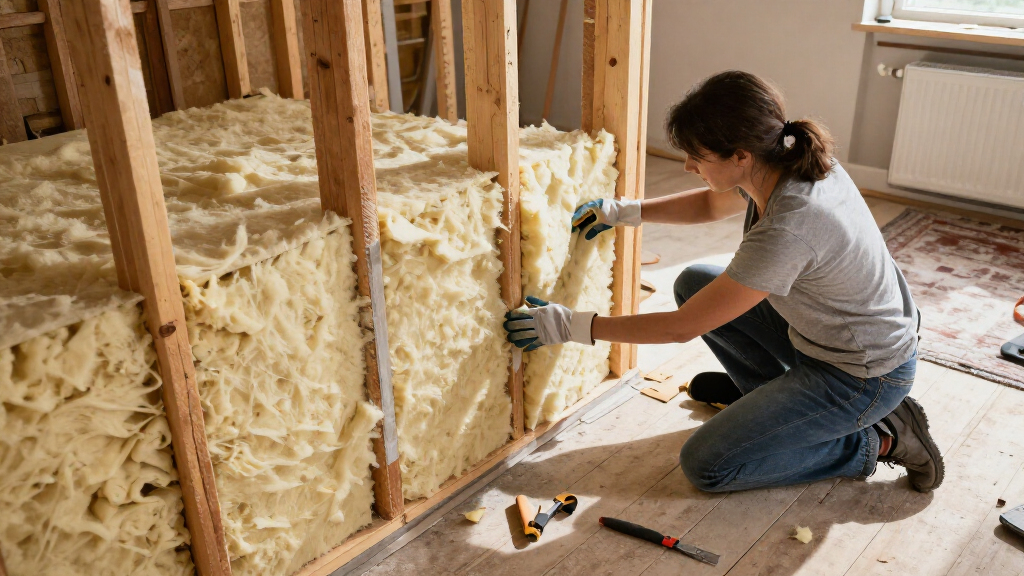
I ranked these products by how well their stated design matches the specific challenge of insulating existing walls. A product meant for an open framing bay is not automatically useful in a finished wall, even if it has a strong stated R-value. I gave the most weight to access method, framing fit, stated thermal performance, and whether the supplied details explain how the insulation can be used without creating new problems.
That is why the Vega Bond injection kit ranks first for the closed-wall scenario: its intended use is injecting foam into existing cavities, rather than spraying an exposed surface. The R-19 and R-13 fiberglass options rank next for their distinct framing situations—2×6 and 2×4, respectively. I placed BEEST below those choices for whole-wall work because its description emphasizes gap filling and surface adhesion, not injection throughout a sealed cavity. RU41 ranks last for this particular roundup because its supplied listing lacks a conventional R-value and a clear description of cavity fit.
I also weighed tradeoffs rather than treating higher R-value as an automatic win. Installation access, depth, moisture control, and product purpose can matter more than a headline number. These rankings are based on the provided product details, not hands-on testing. For any retrofit, I would also check local code, climate needs, existing moisture conditions, and manufacturer installation directions; an insulation product cannot compensate for water intrusion, poor wiring practices, or an unsuitable wall assembly.
| insulation for existing wall | Brand |
|---|---|
| Vega Bond Open-Cell Injection | — |
| Owens Corning R-19 Unfaced Fib | Owens Corning |
| Owens Corning R-13 Kraft-Faced | Owens Corning |
| BEEST FullStop Spray Foam Insu | BEEST |
| Owens Corning RU41 Unfaced Fib | — |
Factors to Consider When Choosing Best Insulation For Existing Walls
I would start an existing-wall insulation decision with the construction, not the product aisle. These five options fall into three different groups: closed-cavity injection foam, foam for exposed gaps, and fiberglass for accessible framing. Choosing between them means identifying which group fits the job before comparing ratings or package contents.
Decide whether the wall is closed or accessible
If drywall is intact, conventional batts cannot be placed properly without opening the wall or finding another access method. In this lineup, Vega Bond is the only product explicitly designed for closed-cavity injection. That does not mean injection is automatically the right retrofit: the installer needs to understand the cavity, locate suitable access points, and account for wiring, pipes, blocking, and existing insulation. A wall that has moisture damage should be diagnosed before any cavity is filled.
When the framing is open, batts are easier to position and inspect. The Owens Corning R-13 and R-19 options make sense in that situation, matched to cavity depth. BEEST occupies a separate role: it is more appropriate for accessible gaps and joints than for filling an entire sealed cavity. RU41 needs product-detail verification before I would assign it a whole-wall role.
Match insulation thickness to framing depth
Do not compress a batt to make it fit. The R-13 roll is 3.5 inches thick and described for 2×4 walls; the R-19 batt is 6.5 inches thick and intended for deeper 2×6 framing. Their ratings are useful only when the product is installed in a cavity that allows the intended thickness and fit. A deeper batt is not automatically an upgrade in a shallower wall if fitting it means compression or gaps.
For injection foam, cavity depth and fill are also central. Vega Bond states R-4.4 per inch, while BEEST gives R-8.24 at 2 inches, but the products serve different installation types. I would compare ratings only alongside application method and the thickness at which the rating is stated.
Treat facing and moisture control as part of the wall assembly
The R-13 roll is kraft-faced, while the R-19 batt and RU41 are unfaced. Facing can affect how an insulation product is installed and how moisture moves through a wall, but it should not be treated as a universal vapor-control solution. Climate, exterior layers, indoor humidity, and local code all affect the correct assembly. Unfaced insulation may be appropriate where a separate control layer is specified, but buyers should not assume the product itself includes one.
Before installing any insulation, I would address leaks, condensation, and damp materials. Filling a wet or poorly detailed cavity can hide the symptom while leaving the underlying problem in place. For unusual wall assemblies or uncertain vapor-control requirements, I would consult local building guidance or a qualified professional.
Use coverage figures carefully
Product coverage is not always expressed in the same unit. BEEST lists up to 120 board feet, which describes foam volume rather than a direct wall-area figure. Vega Bond lists 100 cubic feet. The R-19 package specifies 77.5 square feet, while the R-13 listing gives roll dimensions and a three-pack count but only describes coverage as one bag. RU41 lists dimensions but not a clear project coverage quantity.
I would calculate the wall area, subtract openings where appropriate, and check the package label or manufacturer details before deciding how much to buy. For injection foam, also allow for cavity partitions and obstructions that can affect distribution. A coverage number is a planning aid, not a guarantee that every irregular cavity will be filled evenly.
Plan for installation skill and safety
Fiberglass batts are relatively simple to measure and cut when framing is open, but they still need to fit snugly without voids or compression. Foam products demand attention to instructions, protective equipment, application limits, and cleanup. BEEST supplies gloves, goggles, a coverall, cleaner, and an applicator, and it specifies an application range of 68–77°F. Vega Bond includes protective equipment and injection hardware, but the method is more specialized because material is delivered into a concealed space.
I would not treat a kit’s included gear as a substitute for reading safety directions. Check ventilation, surface preparation, temperature, curing requirements, and disposal instructions. When a retrofit involves electrical components, fire-rated assemblies, or uncertain cavities, professional guidance can prevent a small insulation project from becoming a larger repair.
Choose by project rather than by headline R-value
For a finished wall where preserving the drywall is the priority, start with Vega Bond and verify that the cavity is suitable for injection. For an open 2×6 wall, the R-19 batt offers the clearest deeper-cavity fit; for open 2×4 framing, the R-13 roll is more appropriately sized. If the task is sealing exposed cracks or localized gaps, BEEST has a more relevant application than either batt. RU41 should wait until its missing performance and fit details are confirmed.
That project-first approach keeps the comparison practical. A well-matched R-13 batt in a 2×4 cavity may serve the job better than a higher-rated batt that does not fit, while an injection kit has little value if the wall is open and a straightforward batt installation is available.
Frequently Asked Questions
What is the best insulation for an existing wall that is already finished?
From this lineup, Vega Bond Open-Cell Injection Foam is the most directly suited to a finished, closed wall because it is designed to fill existing cavities through access points. It may avoid removing full drywall sheets, but the wall can still need drilled holes and later repairs. I would first confirm the cavity is dry, identify obstructions, and follow the kit instructions. If the wall can be opened during a renovation, the R-13 or R-19 fiberglass options may be easier to fit and inspect.
Should I choose R-13 or R-19 fiberglass for wall insulation?
I would match the batt to the framing depth rather than choose the larger rating by itself. The R-13 roll is 3.5 inches thick and designed for 2×4 walls, while the 6.5-inch R-19 batt is intended for deeper 2×6 framing. A batt that is too thick for the cavity may be compressed, which can interfere with its intended performance and fit. Both products require access to the wall cavity for placement.
Can I use BEEST spray foam to insulate an entire existing wall?
The supplied product details make BEEST a better fit for accessible gaps and localized air sealing than for filling a whole closed wall cavity. Its stated R-value applies at a 2-inch thickness, and the kit is recommended for use between 68–77°F. For an intact wall cavity, Vega Bond is the product in this comparison specifically described for injection. For large open framing bays, the fiberglass options offer clearer cavity dimensions and coverage information.
Does unfaced fiberglass need a vapor barrier?
Unfaced fiberglass does not include a facing layer, but whether a separate vapor-control layer is appropriate depends on the climate, wall assembly, and local building requirements. The R-19 batt is explicitly unfaced, and the RU41 is also listed as unfaced; neither should be assumed to manage moisture on its own. I would review the full assembly before adding a vapor retarder, since placing control layers incorrectly can contribute to moisture problems rather than prevent them.
Is Owens Corning RU41 a good choice for a whole existing wall?
I would not choose RU41 for a whole-wall project until the manufacturer or seller confirms its R-value, actual thickness, and intended installation format. The supplied details list a 0.25-inch thickness but no R-value, which makes it hard to compare with the R-13 roll or R-19 batt. If those details cannot be verified, I would select a product with a stated cavity fit and thermal rating, based on whether the wall uses 2×4 framing, 2×6 framing, or a closed-cavity retrofit method.
Conclusion
My recommendation depends on how much access the wall allows. For a finished, closed wall, I would start with Vega Bond because injection is its stated purpose, while taking care to inspect the cavity and plan access. For a renovation with open 2×6 framing, I would choose the R-19 unfaced batts; for open 2×4 framing, the R-13 kraft-faced roll is the better depth match. If the job is limited to cracks and exposed gaps, BEEST is the more targeted foam kit, not my pick for a full wall.
I would hold off on RU41 as a primary wall product until its missing R-value and unclear thickness are confirmed. Whichever option fits the project, I would resolve moisture issues first, follow local requirements for the wall assembly, and buy only after checking cavity depth and package coverage. The best insulation here is the one that can be installed correctly in the wall you actually have.