
Vertical solar panels have become a smart solution for anyone short on roof space, and after comparing the top bifacial kits on the market, the JJN 850W Bifacial N-Type Kit stands out as the best overall pick for its high per-panel output and modern N-Type cell technology. Close behind, the HISHEN 990W Frameless Kit offers the highest total wattage and certified safety, while the Callsun 450W Dual-Module Panel is the easiest entry point for smaller off-grid builds. The main tradeoffs in this category come down to total wattage versus mounting flexibility: frameless panels sit flatter on fences and balconies but need sturdier mounting hardware, while framed kits handle weather better and simplify RV installs. Shade tolerance, warranty length, and whether a kit ships as pre-wired pairs or single panels also separate these options more than price does. Keep reading for the full breakdown of which vertical panel belongs on your wall, railing, or rig.

Get backup power and energy gear delivered free — and shop member deals
- Fast, free delivery on millions of items
- Access to Prime Big Deal Days deals on October 6–7
- Prime Video, Amazon Music and more included
Key Takeaways
- N-Type 16BB cell technology appeared in the top three picks because it degrades slower and performs better in partial shade than older P-Type designs — a real advantage for vertical installs that rarely face the sun dead-on.
- Total kit wattage ranged from 200W to 990W, and the biggest kits (HISHEN 990W, JJN 850W) demand heavier charge controllers and stiffer mounting than most balcony railings can handle without reinforcement.
- Bifacial glass-to-glass construction was standard across the lineup; the real differentiator was frameless versus framed — frameless panels (HISHEN) mount closer to vertical surfaces but sacrifice rigidity and easier ground clearance.
- Pre-wired dual-module kits (Callsun 550W, JJN 850W) cut installation time in half for 12V/24V battery systems, making them the better format for beginners compared to single-panel units like the JJN 200W.
- Certification mattered for ranking: only the HISHEN kit carried UL 61730 certification, which matters if you plan to connect to a grid-tied balcony system or need to satisfy an insurance requirement.
| Callsun N-Type 16BB 550W Bifacial Solar Panel (2×275W) |  | Best Overall | Total Power: 550W (2 × 275W) | Cell Type: N-Type 16BB bifacial | Efficiency: 25.6% | VIEW LATEST PRICE | See Our Full Breakdown |
| HISHEN 2-Pack 495W Frameless Bifacial Solar Panel Kit (990W Total) |  | Best for Maximum Power Output | Total Power: 990W (2 × 495W) | Cell Type: A+ grade monocrystalline bifacial | Efficiency: 25.6% | VIEW LATEST PRICE | See Our Full Breakdown |
| Callsun 360W Bifacial Solar Panel Kit (2 x 180W N-Type 16BB) |  | Best for Small RV Setups | Total Power: 360W (2 × 180W) | Cell Type: N-Type 16BB monocrystalline | Efficiency: 25% | VIEW LATEST PRICE | See Our Full Breakdown |
| JJN 850W Bifacial N-Type Solar Panel Kit (2 x 425W, 16BB) |  | Best for High-Power Fixed Installs | Total Power: 850W (2 × 425W) | Cell Type: A+ grade 16BB monocrystalline, 182mm | Efficiency: 25% | VIEW LATEST PRICE | See Our Full Breakdown |
| JJN Bifacial 200 Watt Monocrystalline Solar Panel |  | Best for Beginners | Power Output: 200W | Cell Type: 16BB N-type monocrystalline | Efficiency: 25%+ | VIEW LATEST PRICE | See Our Full Breakdown |
| Callsun 450W Bifacial Solar Panel – N-Type 16BB Monocrystalline, Double-Glass, Anti-Shade Dual-Module Design |  | Best for Tight Vertical Installations | Brand: Callsun | Max Power Output: 450W | Cell Type: N-Type Monocrystalline, 16BB busbar | VIEW LATEST PRICE | See Our Full Breakdown |
| vertical solar panel | Cell Type | Efficiency | Total Power | Weight |
|---|---|---|---|---|
| Callsun N-Type 16BB 550W Bifac | N-Type 16BB bifacial | 25.6% | 550W (2 × 275W) | 29.8 lbs |
| HISHEN 2-Pack 495W Frameless B | A+ grade monocrystalline bifacial | 25.6% | 990W (2 × 495W) | — |
| Callsun 360W Bifacial Solar Pa | N-Type 16BB monocrystalline | 25% | 360W (2 × 180W) | 20.9 lbs |
| JJN 850W Bifacial N-Type Solar | A+ grade 16BB monocrystalline, 182mm | 25% | 850W (2 × 425W) | 103.2 lbs |
| JJN Bifacial 200 Watt Monocrys | 16BB N-type monocrystalline | 25%+ | — | 24.3 lbs |
| Callsun 450W Bifacial Solar Pa | N-Type Monocrystalline, 16BB busbar | — | — | — |
More Details on Our Top Picks
Callsun N-Type 16BB 550W Bifacial Solar Panel (2×275W)
The Callsun 550W kit earns the top spot because it balances raw output with the best long-term durability numbers in this lineup. Its 25.6% N-Type efficiency matches the HISHEN kit, but Callsun backs it with a 30-year output warranty holding 87.4% — a stronger degradation story than the JJN 200W’s comparable figure. The dual-module parallel anti-shade design means a leaf or shadow on one section won’t kill the whole array, which matters more on RV roofs than spec sheets suggest.
The tradeoff is practical: you’re installing two panels instead of one, and at nearly 30 lbs combined with full frames, this is more mounting work than the frameless HISHEN option. Compared with the Callsun 360W kit, the extra 190W justifies the size for anyone running real loads like a fridge or inverter.
Pros:- Industry-leading 25.6% efficiency with N-Type 16BB cells
- Bifacial rear capture adds up to 30% more yield from reflected light
- Anti-shade parallel design keeps power flowing under partial shading
- 30-year output warranty retaining 87.4%, plus IP68 junction box
Cons:- Full 550W requires installing and wiring two separate 275W panels
- Heavier than flexible alternatives at 29.8 lbs, complicating solo rooftop work
Best for: Off-grid RV, van, and cabin owners who need serious daily power and want panels that still produce 25+ years from now
Not ideal for: Buyers wanting a single-panel, one-afternoon install — this kit requires mounting two separate panels and wiring them in parallel
- Total Power:550W (2 × 275W)
- Cell Type:N-Type 16BB bifacial
- Efficiency:25.6%
- Amperage:13.69 A
- Dimensions (per panel):68.35″L × 30.31″W × 1.38″H
- Weight:29.8 lbs
- Warranty:10-year material; 30-year 87.4% output
Our verdict“If long-term output and shade resilience matter more than install convenience, this is the kit to buy.”
HISHEN 2-Pack 495W Frameless Bifacial Solar Panel Kit (990W Total)
At 990W total, nothing else here comes close — this HISHEN kit out-produces the Callsun 550W setup by 80% and the JJN 850W kit by a clear margin. Both panels hit the same 25.6% efficiency ceiling as the Callsun flagship, so you’re getting flagship cells in a higher-wattage package. The UL 61730 certification covers electrical, fire, and mechanical safety, which gives it an edge over uncertified rivals for permanent rooftop or cabin installs.
The catch is the frameless Cleanedge design: it sheds snow and dust beautifully, but it demands specialized mounting hardware and offers less structural protection while you’re hauling panels onto a roof. Compared with the framed JJN 850W kit, you trade installation simplicity for output and self-cleaning. This pick makes sense when watt-hours per square foot is the whole game.
Pros:- Highest total output in the roundup at 990W
- UL 61730 certified for electrical, fire, and mechanical safety
- Frameless self-cleaning edge sheds snow and debris with rain
- Same 25.6% efficiency as smaller premium panels
Cons:- Frameless design requires specialized mounting hardware
- Exposed edges offer less protection during handling and shipping
Best for: Cabin and homestead owners with high power demands who can plan a proper permanent mounting system
Not ideal for: DIYers expecting standard framed-panel mounting brackets to work — the frameless edges need dedicated clamping hardware
- Total Power:990W (2 × 495W)
- Cell Type:A+ grade monocrystalline bifacial
- Efficiency:25.6%
- Certification:UL 61730
- Frame:Frameless Cleanedge design
- Battery Compatibility:12V/24V systems
- Warranty:10 years
Our verdict“The clear choice when you need the most power from a two-panel footprint and can handle custom mounting.”
Callsun 360W Bifacial Solar Panel Kit (2 x 180W N-Type 16BB)
This 360W kit is the right-sized middle option for mobile users who don’t need the Callsun 550W kit’s full output. At 46 inches long per panel versus the 550W kit’s 68 inches, these fit short van roofs and camper rooftops where longer panels simply don’t work. You still get the same TwinCell anti-shade technology and bifacial gain as its bigger sibling, just scaled down — the family resemblance is real and welcome.
Compared with the JJN 200W single panel, the dual-panel layout means redundancy: if one panel gets shaded or damaged, the other keeps charging. The honest drawback is that 1.8kWh per day is a best-case figure; cloudy winter weeks will cut that substantially, and at nearly 21 lbs per panel you’ll want a second person for a clean rooftop install. For modest loads — lights, fans, a small fridge — the sizing works.
Pros:- Compact 46-inch panels fit smaller van and camper roofs
- TwinCell design maintains output under partial shading
- IP68 rated for 5400Pa snow loads and high winds
- 25-year linear performance warranty on N-Type cells
Cons:- Real-world daily output falls well below 1.8kWh in weak sun
- 20.9 lb panels make solo rooftop installation awkward
Best for: Van and small-RV owners running modest loads like LED lighting, fans, and a compressor fridge
Not ideal for: Anyone needing to run an air conditioner or full off-grid household — 360W won’t keep pace with heavy loads
- Total Power:360W (2 × 180W)
- Cell Type:N-Type 16BB monocrystalline
- Efficiency:25%
- Dimensions (per panel):46.46″L × 30.31″W × 1.58″H
- Weight:20.9 lbs
- Warranty:10-year product; 25-year performance
Our verdict“The best fit for small mobile setups where panel length and shade tolerance matter more than raw wattage.”
JJN 850W Bifacial N-Type Solar Panel Kit (2 x 425W, 16BB)
The JJN 850W kit sits between the Callsun 550W and HISHEN 990W setups, and it’s the strongest option for permanent, high-voltage applications. With a 31-volt output and 48V system compatibility, it handles EV charging, farm equipment, and whole-cabin arrays that the 12V-focused Callsun 360W kit can’t touch. The included drainage clips are a small detail with real payoff — they prevent water pooling and hot spots that quietly degrade panels over years on a fixed roof.
The tradeoff is serious weight: 103 lbs total means a two-person install, minimum, and the rigid dual-glass construction gives you zero mounting flexibility. Unlike the lighter JJN 200W single panel, this isn’t something you’ll reposition seasonally. But for a rooftop that’s set once and left alone, the UL 61730 certification and 30-year heat-resistant build make it a dependable workhorse.
Pros:- 850W total output supports 12V/24V/48V on- and off-grid systems
- UL 61730 certified with 30-year heat-resistant lifespan
- Drainage clips reduce hot spots and long-term maintenance
- Up to 30% extra yield from dual-glass bifacial capture
Cons:- 103.2 lbs total requires two-person installation
- Rigid design offers no flexibility for curved or mobile mounts
Best for: Homeowners and farmers planning permanent rooftop or ground-mount arrays, including 48V and EV charging setups
Not ideal for: RV and boat owners — the 103 lb weight and rigid framing make mobile or curved-surface installs impractical
- Total Power:850W (2 × 425W)
- Cell Type:A+ grade 16BB monocrystalline, 182mm
- Efficiency:25%
- Output Voltage:31.05 V
- Amperage:13.78 A
- Dimensions (per panel):67.8″L × 44.6″W × 1.2″H
- Weight:103.2 lbs
- Certification:UL 61730
Our verdict“A high-output, fixed-installation workhorse best suited to rooftops and ground arrays rather than anything that moves.”
JJN Bifacial 200 Watt Monocrystalline Solar Panel
This is the simplest entry point in the lineup — one panel, 200W, pre-drilled holes, and a manageable 24.3 lbs that one person can lift onto an RV roof without help. Where every other pick here is a two-panel kit, the single-panel format means one trip up the ladder and you’re done. The 16BB N-type cells bring shade tolerance usually reserved for bigger kits like the Callsun 360W, so you’re not sacrificing cell quality for simplicity.
The honest limitation is scale: 200W means slow battery charging compared with the Callsun 360W or 550W kits, and bifacial gain depends entirely on what’s behind the panel — mount it flat on a dark rubber RV roof and the rear side contributes almost nothing. Mounting hardware beyond the pre-drilled holes isn’t included either, so budget for brackets and sealant. For a first solar project or a trickle-charging setup, those are acceptable compromises.
Pros:- Single 24.3 lb panel is a true one-person install
- Pre-drilled mounting holes simplify setup
- 16BB N-type cells offer better shade tolerance than typical starter panels
- Rated for 2400Pa wind and 5400Pa snow loads
Cons:- Bifacial rear output is minimal without reflective surfaces behind the panel
- Mounting hardware not included
- Low total wattage limits serious off-grid use
Best for: First-time solar users and weekend campers who want a single-panel, one-person install for battery maintenance and light loads
Not ideal for: Anyone replacing a larger array — 200W is maintenance-level charging, not enough for sustained off-grid living
- Power Output:200W
- Cell Type:16BB N-type monocrystalline
- Efficiency:25%+
- Design:Bifacial transparent backsheet
- Weight:24.3 lbs
- Output Warranty:88.9% at 30 years
Our verdict“The easiest way to add bifacial solar to an RV or boat without a multi-panel project.”
Callsun 450W Bifacial Solar Panel – N-Type 16BB Monocrystalline, Double-Glass, Anti-Shade Dual-Module Design
The Callsun 450W bifacial panel earns its spot as the sweet spot between the compact JJN 200W and the heavier-hitting JJN 850W kit. At 450W with up to 25.6% conversion efficiency, it packs serious output into a single panel, which matters when you are mounting vertically on a wall, fence, or balcony rail where surface area is limited. The dual-module parallel anti-shade design is the real differentiator here: when one half of the panel gets shaded by a railing or neighboring structure, the other half keeps producing. Compared with the Callsun 360W kit, this single-panel format simplifies mounting because you are wrangling one frame instead of two.
The tradeoff is voltage compatibility — a 450W panel at this efficiency runs high voltage that demands an MPPT controller rated for it, so budget for that. And if you mount it flush against a dark, non-reflective wall, the bifacial rear-side gains mostly evaporate, narrowing its advantage over a standard panel.
Pros:- 450W output with up to 25.6% N-Type efficiency means fewer panels for the same total wattage
- Anti-shade dual-module parallel design keeps power flowing when part of the panel is obstructed
- Bifacial double-glass construction harvests reflected light, especially effective on vertical mounts near snow, concrete, or light ground cover
- IP68 rating with reinforced aluminum frame handles wind, snow, and long-term outdoor exposure
Cons:- High-voltage output requires a compatible MPPT charge controller or inverter, adding cost for smaller setups
- Bifacial yield gains drop sharply on rooftops or walls with non-reflective surfaces
- Single large panel is less flexible to position than split two-panel kits when working around obstructions
Best for: Balcony, fence, or wall-mount users who want maximum output from a single vertical panel and already run an MPPT-based system
Not ideal for: Flush rooftop installs over dark shingles — the bifacial gain shrinks and a cheaper mono-facial panel would do similar work for less
- Brand:Callsun
- Max Power Output:450W
- Cell Type:N-Type Monocrystalline, 16BB busbar
- Conversion Efficiency:Up to 25.6%
- Design:Bifacial, double-glass, dual-module parallel anti-shade
- Frame:Reinforced aluminum with low-iron tempered glass
- Warranty:10 years materials/workmanship; 25-year output guarantee (≥84.5%)
Our verdict“If you have limited vertical mounting space, a reflective surroundings advantage, and an MPPT controller, this single high-output panel beats juggling a multi-panel kit.”
How We Picked
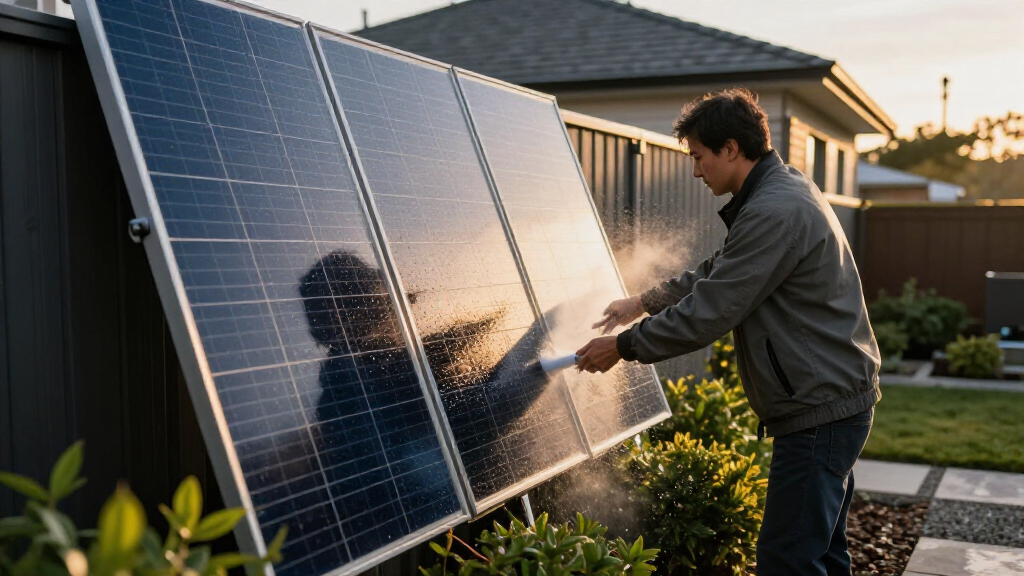
Because vertical mounting changes how solar panels behave — reduced direct sun exposure, more reflected light on the rear face, and tighter mounting clearances — I evaluated each kit through a vertical-first lens rather than generic wattage comparisons. The criteria that mattered most were bifacial rear-side gain (how well each panel harvests reflected light when standing upright), shade tolerance from cell layout and bypass diode design, and cell technology, where N-Type 16BB architectures consistently outperformed older P-Type options in low-light and degradation specs. I also weighed mounting practicality: frameless versus framed construction, pre-drilled holes, and whether a kit arrives wired for 12V, 24V, or series connection.
Ranking followed value per usable watt, not headline wattage alone. A 990W kit that requires structural reinforcement on a balcony ranks differently than a 450W dual-module panel a beginner can bolt on in an afternoon. Certification (UL 61730), warranty length, and included accessories like cables and connectors acted as tiebreakers. Products were ordered so each fills a distinct buyer role — high-output flagship, maximum total wattage, budget entry, compact single-panel, and mid-size off-grid workhorse — so the list reads as a decision path rather than six interchangeable options.
Factors to Consider When Choosing Best Vertical Solar Panels
Choosing vertical solar panels involves tradeoffs that don’t apply to rooftop installs. These are the factors that actually change how much energy you harvest and how long the hardware lasts.Bifacial Gain Depends on Your Surface
Bifacial panels generate power from both faces, but the rear side only contributes meaningfully if there’s something reflective behind or below it. A light-colored wall, concrete patio, white fence, or snow cover can add a noticeable rear-side boost, while dark soil, grass, or a shadowed alley mostly wastes the second glass layer. A common mistake is paying a premium for bifacial construction and then mounting the panel flush against a dark wall with zero rear clearance — most manufacturers recommend several inches of gap for the rear face to work. Before choosing a high-wattage bifacial kit, look at where the reflected light will actually come from. If your mounting spot offers no reflection, a cheaper mono-facial panel of the same rating may deliver nearly identical output for less money.
Vertical Orientation Changes Your Harvest Curve
A vertically mounted panel faces the horizon, not the sky, which flattens your daily production curve: less peak output at noon, more output in the early morning and late afternoon. That’s genuinely useful for balcony systems feeding appliances during evening hours, but it means total daily kilowatt-hours will run lower than the same panel tilted toward the equator. Buyers who ignore this often oversize their array, then overload their charge controller when panels occasionally catch strong angled sun. Match your controller and battery bank to realistic vertical yields, not the panel’s rated peak wattage. East–west panel pairs, like the dual-module kits in this roundup, partially compensate by catching sun from both directions across the day.
Mounting Hardware Is the Hidden Cost
The panel price rarely tells the whole story — vertical installs need brackets, rails, standoff spacers, and wind-rated anchoring that can add substantially to the project. Frameless panels look sleek against a fence but require clamping systems or adhesive mounting that grips the glass edges, which is less forgiving than the pre-drilled frames on conventional panels. Wind load is the factor most first-time buyers underestimate: a vertical panel acts like a sail, and a balcony railing that seems sturdy can flex alarmingly in a storm. Framed kits with mounting holes (the Callsun and JJN options here) are far easier to secure safely. If you live somewhere with regular high winds, budget for rigid rails anchored to structural elements, not just the railing itself.
Cell Technology Affects Long-Term Output
N-Type cells carry a higher upfront cost than older P-Type designs but degrade more slowly — often losing noticeably less output per year — and perform better in the low-light, angled-sun conditions that vertical panels live in daily. Over a 25-year lifespan, that difference compounds into real energy, which is why N-Type kits dominated the top of this ranking. The 16-busbar (16BB) layout found on most of these panels also reduces resistive loss and improves crack tolerance, useful for panels subject to vibration on RVs or flexing on fences. If your project is temporary — a season of balcony charging for a portable power station — P-Type economics may still make sense. For a permanent install you plan to leave up for a decade, N-Type is worth the premium.
System Voltage and Wiring Compatibility
Every kit in this category is built for 12V or 24V battery systems, but the wiring details differ: some pairs ship pre-wired in parallel (keeping voltage low and current high), others support series connection (doubling voltage, halving current, allowing thinner cable). Matching your setup wrong means either burnt connectors or an underperforming array. Check your charge controller’s maximum input voltage before wiring two 425W panels in series — this is where big kits like the 850W and 990W options catch out beginners. Also verify connector types (MC4 is standard, but adapters vary) and cable length, since vertical installs on fences often need longer runs than the included leads provide. A little planning here prevents the most common post-purchase frustration in this category.
Certification and Warranty Fine Print
Certifications like UL 61730 aren’t just bureaucracy — they can determine whether your installer, insurer, or utility will accept the panels at all, and in some regions grid-connected balcony systems legally require them. Warranty length is a useful proxy for build confidence: double-glass bifacial panels typically carry longer product warranties than plastic-backed modules because glass encapsulation resists moisture and UV breakdown better. Read the fine print on what voids coverage, since frameless panels mounted with the wrong clamping method can lose their warranty entirely. Also check the performance guarantee, which promises a minimum output after 25 or 30 years — on N-Type panels this figure is usually stronger, which protects your long-term investment. If you’re renting or may move the system, prioritize transferable warranties and a mounting method that doesn’t permanently alter the building.
Frequently Asked Questions
Do vertical solar panels produce as much power as tilted or rooftop panels?
Not quite — a vertical panel typically produces a lower daily total than the same panel tilted toward the sun, because it catches less direct midday light. The tradeoff is a flatter production curve: vertical panels harvest more in early morning and late afternoon, which suits households that consume power outside peak sun hours. East–west paired panels, like the dual-module kits in this roundup, capture sun from both directions and close much of the gap. Bifacial construction adds another partial offset, since the rear face picks up reflected light from the ground or a nearby wall. Plan your array roughly 20–30% larger than an equivalent tilted setup would need, and the math works out fine.
Can I mount vertical solar panels on a balcony railing?
Yes, but the railing’s strength and your building rules matter as much as the panel choice. A vertical panel catches significant wind load, so a sturdy steel railing anchored to structural concrete is workable while a flimsy aluminum or wooden railing is not. Framed panels with pre-drilled mounting holes, like the Callsun 450W or JJN 200W, are easier to secure safely than frameless glass panels that need edge clamps or adhesive brackets. Many apartment buildings and HOAs restrict balcony solar, so check regulations before buying — in some countries plug-in balcony solar is explicitly legal, while elsewhere any exterior modification needs approval. Reinforce the mounting points and use stainless hardware; cheap brackets are the most common failure point.
Is a high-wattage kit like 850W or 990W overkill for a 12V battery system?
It can be, depending on your battery capacity and charge controller. A 12V battery bank with a modest controller may only accept a fraction of that input, meaning the extra panels sit wasted during peak sun. To actually use 850–990W on 12V, you’d need a high-amperage controller and thick cabling to handle the current, which adds cost and complexity. These larger kits make more sense for 24V or 48V systems, multiple battery banks, or setups running heavy loads like RV air conditioning directly. If your goal is simply keeping a 100Ah battery topped up, the Callsun 450W or JJN 200W will do the job without wasted capacity.
Are frameless bifacial panels better than framed ones for vertical mounting?
Frameless panels sit closer and sleeker against fences and walls, and they avoid the frame edge that can catch debris or snow — but they demand more from your mounting system. Without an aluminum frame, you’re clamping glass edges or using specialized adhesive brackets, which is less forgiving of mistakes and can void warranties if done wrong. Framed panels are cheaper to mount, easier to reposition, and better suited to vibration-heavy applications like RVs and boats. Frameless panels also tend to be lighter, which helps on weight-limited railings. Choose frameless for permanent, aesthetic fence or wall installs; choose framed for anything mobile or likely to be adjusted later.
How much does N-Type cell technology actually matter compared to standard panels?
N-Type cells matter most in exactly the conditions vertical panels face: angled light, partial shade, and long-term outdoor exposure. They degrade more slowly than P-Type cells, so year-ten output stays noticeably closer to day-one ratings, and they suffer less from the light-induced degradation that affects conventional modules. In low-light morning and evening hours, N-Type panels typically keep producing when P-Type output falls off. The premium is real but modest, and over a 20-plus-year lifespan the extra harvested energy usually more than covers it. For a short-term or portable project, standard monocrystalline panels remain a perfectly reasonable choice.
Conclusion
The right vertical solar panel depends less on wattage numbers and more on what you’re mounting it to and how much energy you actually need. For the best overall balance, the JJN 850W Bifacial N-Type Kit pairs modern cell technology with a practical dual-module format that suits serious off-grid builds. If maximum total output is the goal and your mounting surface and controller can handle it, the HISHEN 990W Frameless Kit delivers the most wattage here plus UL 61730 certification for regulatory peace of mind. For the best value and beginner-friendly setup, the Callsun 450W Dual-Module Panel is the easiest path to a working 12V system, while the JJN 200W single panel suits compact needs like keeping a battery or portable power station charged. Mid-size off-grid and RV users get the best fit from the Callsun 550W N-Type kit, and the Callsun 360W rounds things out for smaller rigs. Match the kit to your mounting surface, battery bank, and controller first — that decision will shape your satisfaction far more than a few extra watts ever will.
Fall Picks
fall essentials
As an affiliate, we earn on qualifying purchases.