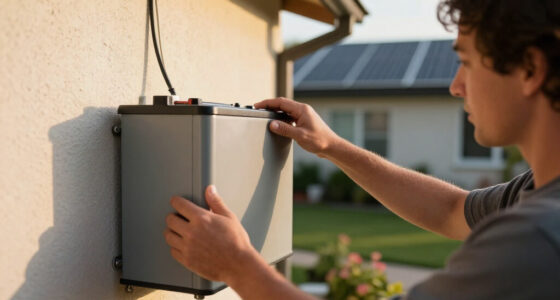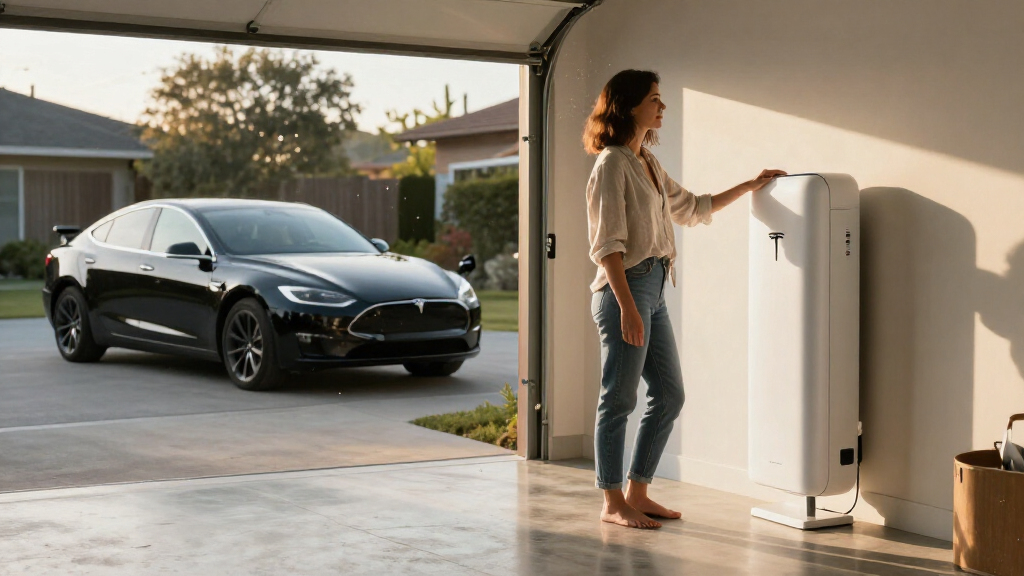

Choosing the best residential energy storage systems requires balancing capacity, installation complexity, and future scalability. My top overall pick is the Anker SOLIX E10 because it offers a seamless, all-in-one whole-home backup solution that integrates directly with existing panel setups without complex wiring. For those seeking a high-capacity, modular foundation for solar expansion, the ECO-WORTHY Cubix100 stands out for its robust rack design and expandability. Meanwhile, the EF ECOFLOW TITAN serves well for users who need portable power flexibility alongside home integration. The primary tradeoff in this category is between ease of installation and cost per kilowatt-hour; pre-assembled systems save labor but cost more upfront, while DIY battery banks offer better value but require technical know-how. Continue reading to see which system matches your specific power needs and budget.

Get backup power and energy gear delivered free with Prime
- Fast, free delivery on millions of items
- Prime Video, Amazon Music and more included
- Member-only deals all year
Key Takeaways
- LiFePO4 chemistry is now standard for residential storage, offering superior cycle life and safety compared to older lead-acid or NMC lithium options.
- Hybrid inverters are the key differentiator for seamless grid and solar integration, reducing the need for separate charge controllers in many new setups.
- Modular rack systems provide the best long-term value by allowing users to start with smaller capacities and expand as needs grow, avoiding over-provisioning.
- All-in-one units simplify installation but often limit customization; DIY enthusiasts may prefer separate battery and inverter combinations for greater control.
- Active battery management systems (BMS) are non-negotiable for large banks, ensuring cell balancing and protecting against thermal runaway in high-capacity setups.
| HumsiENK 48V 628Ah LiFePO₄ Battery with Bluetooth, Active Balancing, 200A BMS and LCD |  | Best for Maximum Single-Battery Capacity | Chemistry: LiFePO₄ | Nominal voltage: 48V | Capacity: 628Ah | VIEW LATEST PRICE | See Our Full Breakdown |
| EF ECOFLOW TITAN 5017Wh 7200W Power Station with Smart Home Panel 10 |  | Best for Managed Circuit Backup | Battery chemistry: Lithium iron phosphate (LFP) | Capacity: 5,017Wh | Continuous output: 7,200W | VIEW LATEST PRICE | See Our Full Breakdown |
| ECO-WORTHY Powermega 51.2V 314Ah LiFePO4 Battery, 16.07kWh |  | Best for Certified, Expandable Battery Storage | Battery type: LiFePO₄ | Voltage: 51.2V (48V nominal) | Capacity: 314Ah | VIEW LATEST PRICE | See Our Full Breakdown |
| Dawnice 51.2V 410Ah 21kWh LiFePO4 Battery with 10kW Hybrid Inverter |  | Best Battery-and-Inverter Bundle | Battery chemistry: LiFePO₄ | Battery voltage and capacity: 51.2V; 410Ah | Battery energy: 21kWh | VIEW LATEST PRICE | See Our Full Breakdown |
| ECO-WORTHY Cubix100 48V 600Ah LiFePO4 Battery System with RACK6 V3 Cabinet |  | Best for Rack-Based, Expandable Storage | Battery chemistry: LiFePO₄ | System voltage: 51.2V DC | System capacity: 600Ah | VIEW LATEST PRICE | See Our Full Breakdown |
| ECO-WORTHY PowerMega 48V 314Ah LiFePO4 Energy Storage System with 10kW Hybrid Inverter |  | Best Integrated High-Output System | Battery chemistry: LiFePO4 | Battery voltage and capacity: 51.2V, 314Ah | Usable energy: 16.1kWh | VIEW LATEST PRICE | See Our Full Breakdown |
| ECO-WORTHY 48V Home Backup Power System with 10,240Wh LiFePO4 Batteries and 5,000W Inverter |  | Best for Expandable Entry-Level Builds | Battery chemistry and configuration: LiFePO4; two 51.2V 100Ah batteries | Total battery capacity: 10,240Wh | Inverter output: 5,000W | VIEW LATEST PRICE | See Our Full Breakdown |
| SUNGOLDPOWER CoreX 5 Elite 51.2V 100Ah Wall-Mounted Lithium-Ion Battery |  | Best Compact Add-On Battery | Battery chemistry and cells: Lithium-ion; EVE Energy cells | Nominal voltage and capacity: 51.2V, 100Ah | Maximum power: 5,120W | VIEW LATEST PRICE | See Our Full Breakdown |
| KEEPNOWN PowerUltra 48V 314Ah LiFePO4 Battery with 16.07kWh Capacity |  | Best for Large Modular Battery Banks | Chemistry: LiFePO4 | Nominal voltage and capacity: 48V nominal (model listed as 51.2V), 314Ah | Energy capacity: 16.07kWh | VIEW LATEST PRICE | See Our Full Breakdown |
| AOUSK 48V 314Ah LiFePO4 Battery, 16.08 kWh |  | Best for Multi-Protocol Inverter Matching | Battery chemistry: LiFePO4 | Nominal voltage and capacity: 51.2V, 314Ah | Energy capacity: 16.08kWh | VIEW LATEST PRICE | See Our Full Breakdown |
| ECO-WORTHY Cubix100 48V 600Ah LiFePO4 Server Rack Battery System, 6-Pack |  | Best for High-Capacity Modular Storage | Battery chemistry: LiFePO₄ | Battery count: 6 | Voltage per battery: 51.2V | VIEW LATEST PRICE | See Our Full Breakdown |
| ECO-WORTHY 10,000W Off-Grid Solar Panel Kit with 48V Battery |  | Best Complete Off-Grid Solar Package | Continuous inverter output: 10,000W | Peak inverter output: 20,000W | Output voltage: 120V or 120V/240V split phase | VIEW LATEST PRICE | See Our Full Breakdown |
| Anker SOLIX E10 Whole-Home Backup Power System with Smart Inlet Box and Two B6000 Batteries |  | Best for Expandable Outdoor Whole-Home Backup | Battery chemistry: LFP | Initial battery capacity: 12 kWh | Maximum expandable capacity: 30 kWh | VIEW LATEST PRICE | See Our Full Breakdown |
| residential energy storage system | Battery chemistry |
|---|---|
| HumsiENK 48V 628Ah LiFePO₄ Bat | — |
| EF ECOFLOW TITAN 5017Wh 7200W | Lithium iron phosphate (LFP) |
| ECO-WORTHY Powermega 51.2V 314 | — |
| Dawnice 51.2V 410Ah 21kWh LiFe | LiFePO₄ |
| ECO-WORTHY Cubix100 48V 600Ah | LiFePO₄ |
| ECO-WORTHY PowerMega 48V 314Ah | LiFePO4 |
| ECO-WORTHY 48V Home Backup Pow | — |
| SUNGOLDPOWER CoreX 5 Elite 51. | — |
| KEEPNOWN PowerUltra 48V 314Ah | — |
| AOUSK 48V 314Ah LiFePO4 Batter | LiFePO4 |
| ECO-WORTHY Cubix100 48V 600Ah | LiFePO₄ |
| ECO-WORTHY 10,000W Off-Grid So | — |
| Anker SOLIX E10 Whole-Home Bac | LFP |
More Details on Our Top Picks
HumsiENK 48V 628Ah LiFePO₄ Battery with Bluetooth, Active Balancing, 200A BMS and LCD
For buyers who want substantial storage in one battery, the HumsiENK’s 32.15kWh capacity is the standout here. It exceeds the single-unit capacity of the ECO-WORTHY Powermega 16.07kWh battery and approaches the ECO-WORTHY Cubix100 system’s 30.72kWh, without relying on a six-battery package. Its 10.24kW continuous output, 200A BMS, and 3A active balancing suit larger backup loads, while Bluetooth, an LCD, and RS485, CAN, and RS232 connections offer several ways to monitor and integrate it. The tradeoff is scale: this wall-mount battery needs substantial space and suitable installation equipment, and freight delivery requires truck access. Its five-year warranty is also shorter than the 10-year warranty listed for the Powermega and Cubix100.
Pros:- 32.15kWh of storage in a single battery system.
- 10.24kW continuous power and a 200A BMS for substantial backup loads.
- Bluetooth app, built-in LCD, and RS485, CAN, and RS232 interfaces.
- 3A active balancing and listed cycle life of over 6,000 cycles at 80% DoD.
Cons:- Large capacity calls for substantial space and suitable installation equipment.
- Freight delivery requires an address that can accommodate a truck.
- Five-year warranty is shorter than the 10-year terms listed for the ECO-WORTHY Powermega and Cubix100.
Best for: Homeowners building a high-capacity 48V backup system who have room, appropriate installation support, and a compatible inverter.
Not ideal for: Buyers with limited installation space, difficult freight access, or a preference for a longer stated warranty.
- Chemistry:LiFePO₄
- Nominal voltage:48V
- Capacity:628Ah
- Energy storage:32.15kWh
- Continuous power:10.24kW
- BMS current:200A
- Monitoring and communications:Bluetooth app, built-in LCD, RS485, CAN, RS232
- Mounting and warranty:Wall mount; 5 years
Our verdict“Choose the HumsiENK if you want more than 30kWh from one battery system and can accommodate its installation and freight needs.”
EF ECOFLOW TITAN 5017Wh 7200W Power Station with Smart Home Panel 10
The TITAN pairs a 5,017Wh LFP power station with a Smart Home Panel 10, making it the most integrated circuit-backup choice in this group. Its 7,200W split-phase output can serve 120V and 240V loads, while the panel lets homeowners designate up to 10 circuits rather than connect appliances one by one. That setup is more turnkey than the standalone HumsiENK or ECO-WORTHY Powermega batteries, which need a compatible inverter and system design. Capacity is expandable to 30kWh, but the base unit starts well below those batteries’ storage, so longer outages may call for expansion. The unit weighs 119lb, limiting portability, and the panel covers only 10 circuits. A 20ms UPS transfer time and app energy management add control, but buyers should confirm that the circuit limit fits their backup plan.
Pros:- Smart Home Panel 10 supports backup for up to 10 selected circuits.
- 7,200W 120V/240V split-phase output serves a range of household loads.
- Expandable from 5,017Wh to 30kWh with additional batteries.
- Supports solar, AC, and generator charging, with app-based energy management.
Cons:- Base capacity is much lower than the HumsiENK and ECO-WORTHY Cubix100 systems.
- The Smart Home Panel limits backup coverage to 10 circuits.
- At 119lb, the power station is difficult to move.
Best for: Homeowners who want a managed backup setup for selected household circuits, with the option to add capacity later.
Not ideal for: Buyers seeking high storage capacity out of the box or backup for more than 10 circuits without a different system arrangement.
- Battery chemistry:Lithium iron phosphate (LFP)
- Capacity:5,017Wh
- Continuous output:7,200W
- Output voltage:120V/240V
- Expandable capacity:Up to 30kWh
- Smart Home Panel:Backup for up to 10 circuits
- Charging inputs:AC, solar, and generator
- UPS transfer time and weight:20ms; 119lb
Our verdict“Pick the TITAN if circuit-level backup and an included home panel matter more than large storage capacity at the outset.”
ECO-WORTHY Powermega 51.2V 314Ah LiFePO4 Battery, 16.07kWh
The Powermega is a strong fit for buyers who want a UL 1973-certified battery they can expand as their storage needs grow. Its 16.07kWh capacity is a more manageable starting point than the 30.72kWh ECO-WORTHY Cubix100 package or the 32.15kWh HumsiENK, and up to 15 units can be connected in parallel. A 7-inch touchscreen, Wi-Fi, Bluetooth, RS485, and CAN give owners several monitoring and inverter-communication options. The 200A active-balancing BMS, two-pole breaker, and aerosol fire-suppression modules add protective features that are not specified for every battery in this roundup. The compromise is a large, pallet-shipped unit with no dimensions or weight supplied in the product data, making space planning and delivery preparation harder. It also needs a compatible inverter; unlike the Dawnice bundle, it does not include one.
Pros:- UL 1973 certification and a listed 10-year warranty.
- 16.07kWh capacity with parallel expansion support for up to 15 units.
- 200A active-balancing BMS, two-pole circuit breaker, and aerosol fire-suppression modules.
- 7-inch touchscreen plus Wi-Fi, Bluetooth, RS485, and CAN connectivity.
Cons:- Battery-only package requires a compatible inverter.
- Pallet delivery by truck requires suitable delivery access.
- Product data does not state dimensions or weight, complicating installation planning.
Best for: Homeowners who want a certified battery with room to expand over time and have a compatible inverter or a separate inverter plan.
Not ideal for: Buyers who need an all-in-one battery-and-inverter package or need confirmed dimensions and weight before planning delivery and installation.
- Battery type:LiFePO₄
- Voltage:51.2V (48V nominal)
- Capacity:314Ah
- Energy capacity:16.07kWh
- BMS current:200A
- Certification:UL 1973
- Parallel expansion:Up to 15 units
- Display and connectivity:7-inch HD touchscreen; Wi-Fi, Bluetooth, RS485, CAN
Our verdict“Choose the Powermega if certification, monitoring, and staged capacity expansion matter more than getting an inverter in the same package.”
Dawnice 51.2V 410Ah 21kWh LiFePO4 Battery with 10kW Hybrid Inverter
Unlike the battery-only HumsiENK and ECO-WORTHY Powermega, the Dawnice includes a 21kWh LiFePO₄ battery and 10kW hybrid inverter in one package. That pairing gives buyers a clearer starting point for a solar and backup system, with inverter inputs for PV, grid, generator, and battery and 120V/240V AC output. Its listed maximum power of 10,240W is suited to substantial household loads, while app monitoring and inverter Wi-Fi make system data accessible. The tradeoff is flexibility: the product data lists parallel operation for up to three inverter units, fewer than the Powermega’s 15-unit battery expansion path, and its recommended 150A charging current is below its 200A maximum discharge current. Buyers who already own a compatible inverter may prefer a standalone battery instead of paying for a bundled component.
Pros:- Combines a 21kWh battery with a 10kW pure sine wave hybrid inverter.
- Supports PV, grid, generator, and battery inputs.
- Provides 120V/240V AC output and lists maximum power of 10,240W.
- App monitoring, inverter Wi-Fi, and parallel operation for up to three inverter units.
Cons:- Recommended charging current is 150A, below the 200A maximum discharge current.
- Parallel operation is limited to up to three inverter units.
- The bundled inverter is less useful to buyers who already own a compatible unit.
Best for: Homeowners assembling a solar-ready backup system who want a substantial battery and hybrid inverter supplied together.
Not ideal for: Buyers who already have an inverter, need a battery-only upgrade, or want a broader stated parallel expansion path.
- Battery chemistry:LiFePO₄
- Battery voltage and capacity:51.2V; 410Ah
- Battery energy:21kWh
- Maximum power:10,240W
- Maximum discharge current:200A
- Recommended charging current:150A
- Inverter:10kW pure sine wave hybrid
- AC output and inputs:120V/240V; PV, grid, generator, and battery
Our verdict“Choose the Dawnice when you want a 21kWh battery and hybrid inverter together rather than sourcing a battery and inverter separately.”
ECO-WORTHY Cubix100 48V 600Ah LiFePO4 Battery System with RACK6 V3 Cabinet
The Cubix100 is built for a different installation style from the wall-mount HumsiENK: it groups six rack-compatible batteries in an enclosed cabinet, providing 30.72kWh as a preconfigured system. Its 600Ah capacity and included cables, grounding wires, terminal covers, and cabinet make it a substantial package for planned home backup or off-grid installations. The system supports up to 32 parallel units, giving it a broader stated expansion path than the Dawnice inverter bundle, and CAN/RS485 plus Bluetooth and Wi-Fi support monitoring and inverter communication. The tradeoff is physical scale: the complete system weighs 636lb, so placement and handling require serious planning. Its closed-loop communications and inspection readiness also depend on inverter compatibility. Compared with the Powermega, it offers much more storage in the supplied system, but less flexibility for buyers who want to start with one battery.
Pros:- Six-battery configuration provides 30.72kWh of storage.
- Supports parallel connection of up to 32 units.
- Includes an enclosed cabinet, cables, grounding wires, and terminal covers.
- CAN and RS485 communications plus Bluetooth and Wi-Fi monitoring; listed ETL UL9540 DC, UL1973, and CEC certifications.
Cons:- Complete system weighs 636lb, making placement and handling demanding.
- Closed-loop communication and inspection readiness depend on inverter compatibility.
- Cabinet-based installation requires appropriate space and setup planning.
Best for: Homeowners planning a fixed rack or cabinet installation who want high starting capacity and a stated path to large parallel expansion.
Not ideal for: Buyers who need a lightweight or easily relocated system, lack room for a cabinet, or have not confirmed inverter compatibility.
- Battery chemistry:LiFePO₄
- System voltage:51.2V DC
- System capacity:600Ah
- Energy capacity:30.72kWh
- Battery configuration:6 × 48V 100Ah batteries
- Maximum parallel units:32
- Communications and monitoring:CAN, RS485, Bluetooth, Wi-Fi
- Dimensions and weight:20.09 × 19.02 × 5.63 in; 636lb
- Certifications and warranty:ETL UL9540 DC, UL1973, CEC listed; 10 years
Our verdict“Choose the Cubix100 if you want a large, cabinet-based battery bank with extensive parallel expansion and can plan around its weight.”
ECO-WORTHY PowerMega 48V 314Ah LiFePO4 Energy Storage System with 10kW Hybrid Inverter
For buyers who want a battery and inverter in one package, the ECO-WORTHY PowerMega pairs 16.1kWh of usable energy with a 10kW hybrid inverter. That output gives it more headroom for larger household loads than the ECO-WORTHY 5,000W kit, while its 120V and 240V outputs suit a wider range of home circuits. The battery also brings an active-balancing BMS, built-in breaker, and aerosol fire suppression, alongside Wi-Fi, Bluetooth, and an LCD for monitoring.
The tradeoff is that this is a substantial installation, not a plug-and-play backup unit. The single-battery package lacks parallel connection cables, and delivery requires truck access. I’d choose it over a battery-only option like the KEEPNOWN PowerUltra when the included inverter and 240V split-phase output matter; buyers with an existing inverter may prefer a standalone battery instead.
Pros:- Combines 16.1kWh usable energy with a 10kW hybrid inverter.
- Provides both 120V single-phase and 240V split-phase output.
- Includes an active-balancing BMS, built-in breaker, and aerosol fire suppression.
- Offers Wi-Fi, Bluetooth, LCD monitoring, and RS485, CAN, and RS232 communication.
Cons:- The single-battery package does not include parallel connection cables.
- Truck-freight delivery requires an address with suitable truck access.
Best for: Homeowners building an off-grid or solar-backed system who need 240V output, substantial storage, and a 10kW inverter in one package.
Not ideal for: Buyers seeking a quick, portable backup setup or those who already own a compatible inverter and want only a battery.
- Battery chemistry:LiFePO4
- Battery voltage and capacity:51.2V, 314Ah
- Usable energy:16.1kWh
- Inverter output:10,000W
- Output voltage:120V single-phase and 240V split-phase
- Cycle life:9,000+ cycles at 80% depth of discharge
- Monitoring and communications:Wi-Fi, Bluetooth, LCD, RS485, CAN, and RS232
- Safety features:Active-balancing BMS, built-in circuit breaker, aerosol fire suppression, and buzzer alarm
- Warranty and certifications:10 years; UL 1973 and FCC
Our verdict“Choose this integrated system if you need substantial home storage and 240V output without sourcing a separate inverter.”
ECO-WORTHY 48V Home Backup Power System with 10,240Wh LiFePO4 Batteries and 5,000W Inverter
This kit is a practical starting point for a home backup system: it includes two 51.2V 100Ah batteries, a 5,000W pure sine wave inverter, and an integrated 100A MPPT controller. The 10.24kWh storage capacity is less than the ECO-WORTHY PowerMega’s 16.1kWh, and its stated inverter output is lower, so it fits a more modest load plan. Its strength is the expansion path: the setup can grow to as many as six inverters and 32 batteries, with listed system limits of 30kW AC output and 163.84kWh of storage.
That flexibility suits buyers who want to start with backup essentials and scale later. It is not a lightweight or simple-to-move package at 236.9 lb, and the components ship separately. Compared with the battery-only SUNGOLDPOWER CoreX 5 Elite, this kit includes the inverter and charge controller, but it requires more space and installation planning.
Pros:- Includes two LiFePO4 batteries, a 5,000W inverter, and a 100A MPPT controller.
- Supports Bluetooth and Wi-Fi battery monitoring through the ECO-WORTHY app.
- Allows expansion to six inverters and 32 batteries.
- Pure sine wave output suits compatible household equipment.
Cons:- The listed 5,000W inverter output is lower than the 10,000W ECO-WORTHY PowerMega.
- The complete kit weighs 236.9 lb and needs a planned installation location.
- The items ship separately, so deliveries may arrive at different times.
Best for: Homeowners starting an off-grid or solar backup installation who want batteries and an inverter now, with room to expand later.
Not ideal for: Buyers who need high inverter output from the outset, a compact setup, or a single shipment that arrives as one assembled unit.
- Battery chemistry and configuration:LiFePO4; two 51.2V 100Ah batteries
- Total battery capacity:10,240Wh
- Inverter output:5,000W
- Peak output power:10,000W
- MPPT controller:100A
- PV input voltage range:120–500V DC
- Expansion limit:Up to 6 inverters and 32 batteries
- Maximum expanded system:30kW AC output and 163.84kWh storage
- Weight:236.9 lb
Our verdict“Pick this kit if you want an expandable system with an included inverter and MPPT controller and can plan around its weight and multi-part delivery.”
SUNGOLDPOWER CoreX 5 Elite 51.2V 100Ah Wall-Mounted Lithium-Ion Battery
The SUNGOLDPOWER CoreX 5 Elite is the most compact battery choice in this group, with a wall-mountable form measuring 22.05 × 18.9 × 5.39 inches. Its 51.2V, 100Ah capacity provides 5.12kWh, making it better suited to a modular home system than to replacing a larger single battery such as the KEEPNOWN PowerUltra. The EVE cells, 100A BMS with cell balancing, and LCD, Wi-Fi, and Bluetooth monitoring give owners several ways to check system status. CAN and RS485 support integration with compatible inverters.
Its main advantage is flexibility of placement and expansion: up to 15 units can be connected in parallel. The tradeoff is that this is a battery, not a complete storage system; buyers must provide a compatible inverter and installation. At 105.8 lb, wall mounting also calls for suitable support and help with positioning. Its stated cycle-life claim is 80% capacity after 5,000 cycles at 100% depth of discharge.
Pros:- Compact wall-mountable dimensions allow more placement options than the large floor-standing batteries.
- Uses EVE cells with a 100A BMS and cell balancing.
- Provides LCD, Wi-Fi, and Bluetooth monitoring.
- Supports CAN and RS485 communication and parallel connection of up to 15 units.
Cons:- A compatible inverter and installation setup are required; neither is included.
- At 105.8 lb, mounting and positioning need adequate support and planning.
- Its 5.12kWh capacity is much smaller than the 16.07kWh KEEPNOWN PowerUltra.
Best for: Homeowners with a compatible inverter who want a wall-mounted battery that can be added in stages to a residential storage system.
Not ideal for: Buyers who need a complete battery-and-inverter package or want high storage capacity from one battery.
- Battery chemistry and cells:Lithium-ion; EVE Energy cells
- Nominal voltage and capacity:51.2V, 100Ah
- Maximum power:5,120W
- BMS current:100A
- Cycle-life claim:80% capacity after 5,000 cycles at 100% depth of discharge
- Monitoring and communication:LCD, Wi-Fi, Bluetooth, CAN, and RS485
- Parallel connection:Up to 15 units
- Dimensions and weight:22.05 × 18.9 × 5.39 in; 105.8 lb
- Warranty:10 years
Our verdict“Choose the CoreX 5 Elite when compact, expandable battery storage matters more than getting an inverter and large capacity in one purchase.”
KEEPNOWN PowerUltra 48V 314Ah LiFePO4 Battery with 16.07kWh Capacity
With 16.07kWh in one LiFePO4 battery, the KEEPNOWN PowerUltra offers far more storage per unit than the 5.12kWh SUNGOLDPOWER CoreX 5 Elite. It is aimed at homeowners building a substantial battery bank: up to 15 units can connect in parallel, and RS485, CAN, and RS232 give installers several communication options for compatible equipment. Its IP65-rated enclosure, 200A smart BMS, external dual-pole DC breaker, and built-in aerosol fire suppression add layers of protection, while a touchscreen, Wi-Fi, and Bluetooth provide local and remote monitoring.
Casters and a handle help with positioning, but they do not make a 288.81 lb battery easy to move. This is not a complete system: a compatible inverter or charger and professional installation planning remain part of the job. Compared with the ECO-WORTHY PowerMega, it provides similar battery-scale storage but does not include the 10kW hybrid inverter.
Pros:- Provides 16.07kWh of storage in one LiFePO4 battery.
- Supports parallel connection of up to 15 batteries.
- Combines an IP65 enclosure, 200A smart BMS, external dual-pole DC breaker, and aerosol fire suppression.
- Offers touchscreen, Bluetooth, Wi-Fi, RS485, CAN, and RS232 monitoring or communication.
Cons:- The 288.81 lb unit requires careful freight delivery and positioning despite its casters and handle.
- A compatible inverter and charging equipment are not included.
- It does not provide the integrated 10kW inverter included with the ECO-WORTHY PowerMega.
Best for: Homeowners and installers building a high-capacity, expandable battery bank who already have or plan to source a compatible inverter and charging equipment.
Not ideal for: Buyers looking for an all-in-one battery and inverter kit, or households without a suitable freight delivery and installation plan.
- Chemistry:LiFePO4
- Nominal voltage and capacity:48V nominal (model listed as 51.2V), 314Ah
- Energy capacity:16.07kWh
- BMS and enclosure:200A smart BMS; IP65-rated enclosure
- Cycle-life claim:8,000+ cycles at 80% depth of discharge
- Parallel expansion:Up to 15 batteries
- Monitoring and communication:7-inch HD touchscreen, Bluetooth, Wi-Fi, RS485, CAN, and RS232
- Dimensions and weight:33.54 × 20.04 × 10.83 in; 288.81 lb
- Warranty:10 years
Our verdict“Choose the PowerUltra for a large, expandable battery bank when you already have a plan for compatible inverter and charging equipment.”
AOUSK 48V 314Ah LiFePO4 Battery, 16.08 kWh
The AOUSK battery is a 16.08kWh standalone LiFePO4 unit for buyers who want large storage and need several ways to connect with an inverter. Its RS485 and CAN interfaces support integration with many compatible systems, while RS232, Bluetooth, Wi-Fi, and a built-in display add monitoring choices. Compared with the KEEPNOWN PowerUltra, it offers almost the same stated capacity and the same 15-unit parallel limit, but its listed warranty is shorter and its cycle-life claim is lower: up to 6,000 cycles at 80% state of health.
A 200A BMS, six-layer protection, and breakers on both positive and negative poles are useful safeguards for a substantial battery. Handles and wheels assist positioning, though the unit still weighs 291 lb. Like the SUNGOLDPOWER CoreX 5 Elite, this is a battery rather than a complete system, so the inverter, charging equipment, and installation must be arranged separately.
Pros:- Supplies 16.08kWh of LiFePO4 storage in one battery.
- Includes a 200A BMS with six-layer protection and breakers on both poles.
- Supports RS485, CAN, RS232, Bluetooth, and Wi-Fi monitoring or communication.
- Allows up to 15 units in parallel, with handles and wheels to assist positioning.
Cons:- The 291 lb battery requires a suitable delivery and installation plan.
- A compatible inverter and charging equipment are not included.
- The listed five-year warranty is shorter than the 10-year warranty on the KEEPNOWN PowerUltra.
Best for: Homeowners with a compatible inverter who want a single high-capacity battery, broad communication options, and a path to a larger parallel bank.
Not ideal for: Buyers seeking an included inverter, a lightweight installation, or a longer warranty than the five years listed.
- Battery chemistry:LiFePO4
- Nominal voltage and capacity:51.2V, 314Ah
- Energy capacity:16.08kWh
- BMS current and protection:200A; six-layer protection and breakers on both poles
- Cycle-life claim:Up to 6,000 cycles at 80% state of health
- Communication and monitoring:RS485, CAN, RS232, Bluetooth, Wi-Fi, and built-in display
- Parallel connection:Up to 15 units
- Dimensions and weight:20.08 × 10.87 × 33.54 in; 291 lb
- Warranty:5 years
Our verdict“Pick AOUSK if you need a large standalone battery with broad inverter communication options and can accept its weight and five-year warranty.”
ECO-WORTHY Cubix100 48V 600Ah LiFePO4 Server Rack Battery System, 6-Pack
For buyers who want substantial reserve capacity from batteries they can expand, this six-pack offers 30.72 kWh of LiFePO₄ storage and support for as many as 32 parallel units. That gives it more starting capacity than the ECO-WORTHY PowerMega 51.2V 314Ah, while CAN/RS485 connections make integration with compatible inverters possible. Bluetooth and Wi-Fi monitoring add convenient visibility into battery status. The tradeoff is that this is a battery bank, not a complete backup system: buyers still need a compatible inverter and a separate rack. It also ships in multiple packages, which may arrive at different times. I’d rank it for large off-grid or whole-home projects where modular capacity matters more than a turnkey installation.
Pros:- Six batteries provide 30.72 kWh of combined storage.
- Supports expansion to as many as 32 parallel units.
- CAN/RS485 communication and Bluetooth/Wi-Fi monitoring support system integration and battery visibility.
- Listed with UL9540, UL1973, and CEC certifications.
Cons:- Rack is not included, adding a separate equipment and installation requirement.
- A compatible inverter is needed to deliver household backup power.
- The batteries may arrive in separate packages at different times.
Best for: Homeowners and off-grid property owners planning a large 48V battery bank with a compatible inverter and room to expand.
Not ideal for: Buyers seeking a ready-to-install backup package; this set excludes both the rack and inverter.
- Battery chemistry:LiFePO₄
- Battery count:6
- Voltage per battery:51.2V
- Capacity per battery:100Ah
- Combined energy capacity:30.72 kWh
- Communication:CAN and RS485
- Wireless monitoring:Bluetooth and Wi-Fi via ECO-WORTHY app
- Maximum expanded capacity:163.8 kWh
- Warranty:10-year limited warranty
Our verdict“Choose this six-battery set for a high-capacity, expandable storage bank if you already plan to source the rack and compatible inverter separately.”
ECO-WORTHY 10,000W Off-Grid Solar Panel Kit with 48V Battery
This kit is aimed at buyers who want the main parts of an off-grid system in one package: panels, a 10 kW split-phase inverter, and a 48V battery storing about 16.1 kWh. Its 120V/240V output is a practical fit for household circuits, and the included panels spare buyers from sourcing modules separately. Compared with the ECO-WORTHY PowerMega 48V 314Ah system, this package explicitly includes solar panels, but its 2,950W array may not refill the battery quickly or fully under ordinary conditions; the stated daily generation of up to 11.8 kWh depends on optimal conditions. The large components also require suitable pallet delivery, and professional installation is recommended. I’d pick it for off-grid projects where an integrated panel-and-inverter package matters more than matching array size closely to storage.
Pros:- Package includes five panels, inverter, battery, and cables.
- 10 kW inverter provides 120V or 120V/240V split-phase output.
- Battery includes a display, Bluetooth and Wi-Fi connectivity, wheels, and handles.
- Inverter supports multiple battery chemistries and can operate without a battery.
Cons:- The 2,950W panel array may produce less energy than the battery can store.
- Large components ship on a pallet and require a delivery location suitable for truck delivery.
- Professional installation is recommended; inexperienced installation can create safety and performance risks.
Best for: Off-grid homeowners who want panels, a split-phase inverter, and a substantial battery supplied together and can arrange professional installation.
Not ideal for: DIY beginners without electrical installation experience, or households that need solar generation sized to reliably refill the full battery in limited sun.
- Continuous inverter output:10,000W
- Peak inverter output:20,000W
- Output voltage:120V or 120V/240V split phase
- Solar panels:5 × 590W monocrystalline panels
- Total panel capacity:2,950W
- Battery:48V 314Ah LiFePO₄
- Battery energy capacity:16.076 kWh
- Estimated daily solar generation:Up to 11.8 kWh under optimal conditions
- Monitoring and connectivity:7-inch display, Bluetooth, Wi-Fi, and PC connectivity
Our verdict“Choose this package for an off-grid build where bundled panels and split-phase output are useful, and plan for professional installation and realistic solar recharge expectations.”
Anker SOLIX E10 Whole-Home Backup Power System with Smart Inlet Box and Two B6000 Batteries
The SOLIX E10 is the most integrated whole-home backup option in this batch: it combines a power module, two battery modules, and a Smart Inlet Box, with 7.6 kW continuous output and up to 10 kW peak output. Its 12 kWh starting capacity can grow to 30 kWh, giving buyers a path to add storage rather than committing to a larger bank immediately. Compared with the ECO-WORTHY Cubix100 six-pack, the Anker is a more packaged residential backup system and is rated for outdoor installation, while the Cubix100 starts with much more storage and allows broader parallel expansion. The Anker’s tradeoffs are its lower initial capacity and a five-year warranty on the E10 module, shorter than the 10-year Smart Inlet Box warranty. Installation may still call for professional help.
Pros:- Includes the power module, two battery modules, and Smart Inlet Box.
- Expandable storage grows from 12 kWh to as much as 30 kWh.
- Outdoor-rated design with NEMA 4 and 3R ratings and a stated operating range of -4°F to 131°F.
- Supports solar charging and compatibility with existing solar systems and a compatible Smart Generator.
Cons:- Initial 12 kWh capacity is lower than the 30.72 kWh in the ECO-WORTHY Cubix100 six-pack.
- The E10 module has a five-year warranty, while the Smart Inlet Box warranty is 10 years.
- Professional installation may be needed despite the described plug-in setup.
Best for: Homeowners who want an outdoor-capable whole-home backup system with a defined installation package and the option to add battery capacity later.
Not ideal for: Buyers who need more than 12 kWh of storage immediately or want the longest stated warranty to apply to every system component.
- Battery chemistry:LFP
- Initial battery capacity:12 kWh
- Maximum expandable capacity:30 kWh
- Continuous output:7.6 kW
- Maximum output:10 kW
- Solar input:9 kW per unit
- Mounting options:Wall or floor
- Operating temperature:-4°F to 131°F
- Warranty:5 years for E10; 10 years for Smart Inlet Box
Our verdict“Choose the E10 if you value an outdoor-capable, packaged backup system that can grow over time more than maximum storage capacity out of the box.”
How We Picked
I evaluated these systems based on four primary criteria: energy capacity and scalability, integration ease, build quality, and total cost of ownership. Capacity was measured in usable kilowatt-hours, accounting for depth of discharge limits and inverter efficiency losses. I prioritized systems with LiFePO4 chemistry due to their proven longevity and safety profile in residential environments. Integration ease focused on whether the system required specialized electricians for grid-tie connections or if it offered plug-and-play simplicity for backup scenarios. Build quality assessments looked at enclosure durability, BMS sophistication, and warranty support. Finally, I weighed the upfront cost against long-term value, considering expansion capabilities and maintenance requirements.
The ranking logic favors versatility and reliability over raw specifications. A system with slightly lower peak power but better solar integration and a simpler interface ranks higher than a high-power DIY kit that requires advanced electrical expertise. I also considered the availability of support resources, as complex systems fail without proper documentation or customer service. Products that offered clear pathways for future expansion, such as adding more battery modules or upgrading inverters, received a boost in the final order.
| residential energy storage system | Battery chemistry |
|---|---|
| HumsiENK 48V 628Ah LiFePO₄ Bat | — |
| EF ECOFLOW TITAN 5017Wh 7200W | Lithium iron phosphate (LFP) |
| ECO-WORTHY Powermega 51.2V 314 | — |
| Dawnice 51.2V 410Ah 21kWh LiFe | LiFePO₄ |
| ECO-WORTHY Cubix100 48V 600Ah | LiFePO₄ |
| ECO-WORTHY PowerMega 48V 314Ah | LiFePO4 |
| ECO-WORTHY 48V Home Backup Pow | — |
| SUNGOLDPOWER CoreX 5 Elite 51. | — |
| KEEPNOWN PowerUltra 48V 314Ah | — |
| AOUSK 48V 314Ah LiFePO4 Batter | LiFePO4 |
| ECO-WORTHY Cubix100 48V 600Ah | LiFePO₄ |
| ECO-WORTHY 10,000W Off-Grid So | — |
| Anker SOLIX E10 Whole-Home Bac | LFP |
Factors to Consider When Choosing Best Residential Energy Storage Systems
Selecting a home energy storage system goes beyond comparing battery capacities. You must align the technology with your home’s electrical infrastructure, your solar generation profile, and your local utility policies. Here are the critical factors that determine which system will actually work for your situation.
Chemistry and Cycle Life Expectations
Most modern residential systems use Lithium Iron Phosphate (LiFePO4) cells, which offer a significantly longer lifespan than traditional lead-acid batteries. When evaluating specs, look for a cycle life rating of at least 4,000 to 6,000 cycles at 80% depth of discharge. This translates to 10-15 years of daily use before capacity degradation becomes noticeable. Avoid systems that do not explicitly state their chemistry and cycle ratings, as this often indicates lower-grade cells or recycled materials. Understanding this metric helps you calculate the true cost per year of usage, rather than just the sticker price.
Inverter Compatibility and Power Output
Your battery is only as useful as the inverter that converts its DC power to AC power for your home. Determine if you need a hybrid inverter, which manages both solar input and battery charging, or if you already have a compatible grid-tie inverter. Peak power output matters most for starting heavy loads like air conditioners or well pumps, while continuous power output dictates how many appliances you can run simultaneously. Mismatching these components can lead to system shutdowns during critical outages. Ensure the inverter’s surge rating exceeds the startup requirements of your largest appliances by at least 20%.
Scalability and Modular Design
Energy needs change over time, especially if you plan to add electric vehicles or expand your solar array. Modular systems allow you to add battery units incrementally, whereas fixed-capacity units require a complete replacement when you outgrow them. Look for systems that support parallel connections, allowing multiple battery packs to communicate and balance collectively. This feature prevents the inefficiencies of isolated power sources. If you anticipate growing your energy footprint, investing in a scalable rack-mounted system often yields better long-term value than purchasing a single, large-capacity unit.
Installation Complexity and Safety Certifications
Some systems are designed for DIY installation with plug-and-play connections, while others require a licensed electrician for hardwiring into your main panel. Check for safety certifications like UL 9540 or UL 9540A, which verify fire safety and thermal runaway protection. These certifications are often mandatory for insurance coverage and permitting in many jurisdictions. DIY kits may save money upfront but carry higher risk if wiring errors occur. Always verify local electrical codes before committing to a complex installation to avoid fines or insurance claim denials.
Warranty Terms and Degradation Rates
A standard warranty in this category is typically 5 to 10 years, but the fine print regarding capacity retention is critical. Some warranties guarantee 80% capacity after 10 years, while others may only guarantee 60%. Pay attention to whether the warranty covers labor for repairs or just parts replacement. A system with a longer warranty but poor customer support may leave you stranded during a failure. Compare the annualized cost of ownership by factoring in potential replacement costs after the warranty expires, especially for high-cycle applications.
Frequently Asked Questions
Can I use a residential energy storage system without solar panels?
Yes, many systems function independently as grid-charging backup units. You can charge the batteries during off-peak hours when electricity rates are lower and use that stored energy during peak hours or outages. This strategy, known as time-of-use arbitrage, can reduce electricity bills even without solar generation. However, the return on investment depends heavily on the spread between peak and off-peak rates in your area. Ensure the system includes a timer or smart scheduling feature to automate this charging process efficiently.
How do I determine the right battery capacity for my home?
Start by calculating your critical load, which includes only the devices you must keep running during an outage, such as refrigerators, lights, and Wi-Fi routers. Multiply their wattage by the number of hours you want to run them to get your required watt-hours. Add a 20% buffer for inverter inefficiencies and unexpected usage. For whole-home backup, you need significantly more capacity, often exceeding 20kWh. Most residential systems list their usable capacity, which is lower than their total rated capacity, so always check the depth of discharge specification.
Is it safe to install LiFePO4 batteries indoors?
LiFePO4 chemistry is inherently more stable and less prone to thermal runaway than other lithium-ion variants, making it safer for indoor installation. However, proper ventilation is still recommended to dissipate any heat generated during high-current charging or discharging. Most modern residential units come with built-in thermal management systems and fire-retardant enclosures that meet strict safety standards. Always install the system in a cool, dry area away from direct sunlight and combustible materials. If the manufacturer specifies outdoor installation only, do not attempt to move it indoors without verifying local code compliance.
What is the difference between a hybrid inverter and a standard backup inverter?
A hybrid inverter integrates the functions of a solar charge controller, a grid-tie inverter, and a battery inverter into a single unit. This simplifies wiring and allows for seamless switching between solar, grid, and battery power. A standard backup inverter typically only converts battery DC power to AC power and may require a separate solar charge controller if you have panels. Hybrid inverters offer greater flexibility and efficiency for solar integration but often come at a higher upfront cost. If you do not have solar panels now but plan to add them later, a hybrid inverter saves you from replacing equipment down the line.
Do these systems require regular maintenance?
Most modern LiFePO4 systems are maintenance-free compared to lead-acid batteries, which require watering and terminal cleaning. However, you should periodically check the Battery Management System (BMS) logs via an app or display to monitor cell voltage balance and health. Keep the ventilation fans and filters clean to prevent overheating. Software updates may also be released to improve efficiency or add features, so keeping the system connected to Wi-Fi is beneficial. Physical maintenance is minimal, but regular monitoring helps catch potential issues before they lead to system failure.
Conclusion
Selecting the right energy storage system depends on your technical comfort level and long-term goals. For those seeking a premium, hassle-free whole-home solution, the Anker SOLIX E10 offers the best balance of capacity and ease of use. If you are a DIY enthusiast looking for maximum value and customization, the ECO-WORTHY Cubix100 rack system provides a robust, expandable foundation. Beginners or those with limited space should consider the EF ECOFLOW TITAN for its versatility and user-friendly interface. Finally, for budget-conscious buyers needing basic backup power, the HumsiENK or AOUSK LiFePO4 banks offer solid performance if paired with a compatible inverter. Match the system’s scalability and installation requirements to your current needs and future plans to make a wise investment.
Fall Picks

Arlo Essential Wireless Security Camera 2K (3rd Gen) – 3-Cam Kit with Yard Sign
As an affiliate, we earn on qualifying purchases.