
Get backup power and energy gear delivered free with Prime
- Fast, free delivery on millions of items
- Prime Video, Amazon Music and more included
- Member-only deals all year
Smart Thermostat
A smart thermostat is the command center for your home’s climate control, automating temperature adjustments to save energy when you are away or asleep. Many homeowners make the mistake of buying a unit that is incompatible with their existing HVAC system, particularly if they have a heat pump or older wiring. It is crucial to verify voltage requirements and wire configurations before purchasing to avoid costly installation errors or system damage. When selecting a model, look for seamless integration with your preferred smart home ecosystem and robust learning algorithms that adapt to your schedule. Poor connectivity or a lack of geofencing features can lead to inefficient heating and cooling cycles. Ensure the device supports the specific C-wire requirements of your furnace or air handler, or choose a kit that includes a power adapter if necessary. Proper placement is equally important for accurate readings. Avoid installing the thermostat near heat sources, direct sunlight, or drafty areas, as these factors can skew temperature sensors and cause the system to run inefficiently. A well-placed, compatible smart thermostat ensures your HVAC system operates only when needed, maximizing comfort while minimizing unnecessary energy consumption throughout the year.What to look for:
- Compatibility with your specific HVAC system type
- Built-in C-wire adapter or clear wiring guide
- Geofencing and multi-sensor support capabilities
- Intuitive app interface and smart home integration
- Clear display visibility from a distance
Honeywell Home ElitePRO S1200 Wi-Fi Smart Thermostat with Wireless Room Sensor
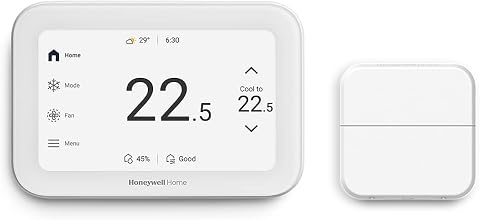
This 24V touchscreen smart thermostat supports a range of residential and light-commercial HVAC systems, including heat pumps, conventional systems, dual-fuel setups, and fan coils. It includes a wireless RedLINK room sensor and provides indoor humidity, VOC, and estimated CO₂ monitoring, with video streaming from compatible First Alert and Ring doorbells.
Pros:
- Includes a wireless room sensor that measures temperature, humidity, and motion.
- Supports a broad range of residential and light-commercial HVAC systems.
- 5-inch touchscreen and Wi-Fi connectivity support touch, app, and voice control.
- Monitors indoor humidity, VOC, and estimated CO₂ and can control up to two IAQ devices.
Cons:
- Requires a C-wire and 24V power.
- Compatible doorbell is sold separately.
Best for: Users wanting reliable automation
Not ideal for: Complex multi-zone systems
Bottom line: This thermostat offers robust automation and reliable connectivity for standard residential HVAC systems.
Air Sealing Kit
Air sealing is often the most cost-effective upgrade for improving comfort and efficiency, addressing invisible drafts that force your HVAC system to work harder. Homeowners frequently underestimate the volume of air leakage around windows and doors, leading to uneven temperatures and higher bills. Selecting the wrong seal type can result in gaps that allow moisture intrusion or make windows difficult to close, negating any potential energy savings. When choosing a weatherstrip, measure the gap width and depth precisely to ensure a tight fit without compressing the material too aggressively. Different profiles, such as bulb, V-strip, or foam, suit different gap sizes and movement types. Using a generic strip for a specific application often leads to premature wear or inadequate sealing, especially on high-traffic doors or sliding windows. Installation requires clean, dry surfaces for proper adhesion, so take time to prepare the area thoroughly. Check that the seal does not obstruct locks, latches, or window mechanisms. A correctly installed air sealing kit creates a continuous thermal barrier, reducing drafts and preventing conditioned air from escaping, which directly lowers the workload on your heating and cooling equipment.What to look for:
- Correct profile shape for your specific gap
- Durable adhesive backing for long-term hold
- Compression set resistance for lasting seal
- Easy-cut flexibility for custom lengths
- Color options that blend with trim
Window Weatherstrip Seal 1/4" Bulb Bubble Kerf Mount – 4 Colors & 6 Length Optio

This weatherstrip seal is made in the USA from high-quality thermoplastic elastomer (TPE). It features a 1/4" bulb diameter, suitable for various applications, available in multiple lengths and colors to match different needs.
Pros:
- Made from high-quality OEM+ TPE material
- Available in multiple colors and lengths for customization
- Easy to install with standard kerf dimensions
Cons:
- Limited to specific kerf dimensions (3/16" deep, 1/8" wide)
- Only available in certain sizes and colors
- No detailed user reviews on durability
Best for: Older windows with visible gaps
Not ideal for: Newly installed tight seals
Bottom line: This kit provides versatile sealing options for various window and door gaps.
Attic Insulation
Attic insulation is critical for maintaining consistent indoor temperatures, as heat rises and escapes through the roof if not properly contained. Many DIYers choose insulation with an insufficient R-value for their climate zone, resulting in continued energy loss. It is essential to check local building codes and recommended R-values to ensure the material you buy will actually improve your home’s thermal envelope significantly. When purchasing, consider the ease of installation and safety precautions required. Batts must fit snugly between joists without compression, which reduces their insulating effectiveness. Look for products with kraft facing that acts as a vapor retarder, but ensure it is installed on the correct side to prevent moisture buildup within the walls or roof assembly. Proper depth is key to achieving the rated R-value. Measure your existing insulation depth and compare it to the product’s compressed thickness specifications. Overfilling can block ventilation pathways, leading to ice dams or mold, while underfilling leaves thermal bridges. Selecting the right density and facing ensures a safe, effective barrier that keeps your home comfortable year-round.What to look for:
- R-value appropriate for your climate zone
- Kraft facing for vapor barrier protection
- Consistent thickness for proper R-value
- Eco-friendly materials with low VOCs
- Easy-cut flexibility for custom fits
Owens Corning EcoTouch R-49 Kraft-Faced Fiberglass Insulation, 10 Bags, 480 Sq.

This flexible fiberglass blanket insulation has a kraft vapor retarder and is designed for thermal and sound insulation. The 10-bag package covers 480 square feet, with each batt measuring 24 by 48 inches and 16 inches thick.
Pros:
- Provides thermal and acoustical control
- Designed to resist settling and slumping in wall cavities
- Kraft facing acts as a vapor retarder
- Compression packaging supports job-site handling and installation
Cons:
- Kraft facing must not be left exposed and can burn
- Must be kept away from recessed lights unless they are insulation-contact rated
Best for: Homes with thin attic insulation
Not ideal for: Tight ceiling spaces
Bottom line: This insulation provides high R-value coverage for significant thermal improvement.
LED Light Bulbs
Switching to smart LED bulbs reduces energy consumption dramatically while offering control over lighting schedules and brightness. A common mistake is buying bulbs that do not match the fixture’s socket type or color temperature preferences, leading to harsh or dim lighting. Ensure the bulbs are compatible with your existing dimmer switches or smart home hubs to avoid flickering or connectivity issues. Look for bulbs with adjustable color temperatures to suit different rooms and times of day. Warm light is ideal for relaxation, while cooler tones aid focus. Poor quality LEDs may have low color rendering indexes, making colors look unnatural. Verify the lumen output matches your needs, as wattage is no longer a reliable indicator of brightness in LED technology. Installation is straightforward, but grouping bulbs by room helps manage settings efficiently. Check for app stability and firmware update support to ensure long-term reliability. Choosing the right smart LEDs enhances ambiance and reduces waste, providing a simple yet impactful upgrade that pays for itself through lower electricity bills and longer bulb lifespan.What to look for:
- Adjustable color temperature range
- High lumen output for adequate brightness
- Compatibility with existing smart hubs
- Energy Star certification for efficiency
- Long lifespan rating in hours
Philips Hue Essential Smart LED A19 Bulbs, 4-Pack

These dimmable, full-color A19 smart bulbs provide adjustable white light from 2200K to 6500K and millions of color options. Control them through the Hue app or with Alexa, Google Assistant, and Apple Home; adding a Hue Bridge unlocks additional features.
Pros:
- Offers millions of colors and adjustable white light
- Dimmable through the Hue app
- Works with Alexa, Google Assistant, and Apple Home
- Can be expanded with a Hue Bridge and other Hue products
Cons:
- A Hue Bridge is needed for additional features
- Designed for indoor use
Best for: Users with smart home systems
Not ideal for: Enclosed fixture applications
Bottom line: These bulbs offer versatile color control and reliable smart integration.
Energy Monitor
An energy monitor provides real-time data on household consumption, helping identify wasteful appliances and patterns. Many users install monitors incorrectly, placing sensors on the wrong circuits or failing to calibrate them, which leads to inaccurate data. Proper installation requires access to the electrical panel and a clear understanding of circuit mapping to ensure each sensor corresponds to the correct load. Choose a monitor with enough sensors to cover your major appliances and circuits. Look for features like historical data tracking and alerts for abnormal usage spikes. A lack of detailed breakdowns by device can limit the utility of the data, so ensure the software provides actionable insights rather than just raw numbers. Placement of the main unit should be within Wi-Fi range of the router for consistent connectivity. Verify that the current sensors fit over the bus bars in your panel without forcing them, which could damage the equipment or create safety hazards. Accurate monitoring empowers you to make informed decisions about appliance usage and potential upgrades.What to look for:
- Number of circuit sensors included
- Real-time data visualization capabilities
- Easy installation process for panels
- Detailed appliance usage breakdowns
- Reliable Wi-Fi connectivity stability
Emporia Vue 3 Home Energy Monitor with 16 Circuit Sensors

The Emporia Vue 3 is a UL-certified home energy monitor that installs directly in your circuit panel using clamp-on sensors to track real-time electricity usage. It supports solar and net metering, allowing you to monitor individual appliances and automate energy management via the Emporia Energy app to reduce costs.
Pros:
- UL and CE certified for safety
- Highly accurate real-time monitoring with ±2% accuracy
- Includes 16 branch sensors for detailed appliance tracking
- Supports solar and net metering integration
Cons:
- Requires 2.4 GHz Wi-Fi connection
- Real-time 1-second data is only visible when the app is actively open
- Installation requires access to the home circuit panel
Best for: Data-driven efficiency seekers
Not ideal for: Renters without panel access
Bottom line: This monitor offers comprehensive circuit-level tracking for precise energy management.
Window Insulation Film
Window insulation film creates an invisible thermal barrier, reducing heat loss in winter and solar gain in summer. Homeowners often apply film incorrectly, leaving air bubbles or wrinkles that distort visibility and reduce effectiveness. Proper installation requires a clean window surface and careful smoothing to ensure a tight seal against the frame, maximizing the insulating air pocket. Select a film size that comfortably covers the entire window pane plus a margin for adhesion. Check if the kit includes tape or a shrink tunnel for a secure fit. Low-quality films may yellow over time or peel prematurely, so look for durable materials with clear instructions for removal without residue. This upgrade is particularly effective for single-pane or older windows that cannot be replaced. Ensure the film does not obstruct emergency exits or lock mechanisms. By sealing the window surface, you create a buffer zone that reduces condensation and drafts, enhancing comfort and lowering heating costs during colder months without permanent modifications.What to look for:
- Clear visibility without distortion
- Easy application with minimal bubbles
- Durable tape for secure sealing
- Residue-free removal capability
- Size options for various window types
Duck Brand Max Strength Window Insulation Kit – 84" x 120" (2 Pack) – Clear

The Duck Brand Max Strength Window Insulation Kit provides a heavy‑duty, puncture‑resistant shrink film that creates an airtight seal to block drafts and reduce heating costs. Installation is simple—just apply the clear film, cut to size with scissors, and use a hair dryer to shrink it; no measuring required.
Pros:
- Heavy‑duty, puncture‑resistant film twice as thick as standard kits.
- Easy, no‑measure installation with scissors and a hair dryer.
- Crystal‑clear visibility after application.
- Removes easily at the end of the season.
Cons:
- Requires a hair dryer and scissors for proper installation.
- Designed for indoor use only; may not adhere well to textured surfaces.
Best for: Older single-pane windows
Not ideal for: Historic or delicate frames
Bottom line: This kit provides an affordable, temporary thermal barrier for leaky windows.