
The best home electrification products in this roundup pair everyday smart plugs with monitors that show where household electricity goes. I name the Emporia Vue 3 best overall for circuit-level visibility, while the Linkind Matter Smart Plug stands out for cross-platform control and the GHome Smart Plug Mini for simple, app-based scheduling. The main choice is between controlling individual devices cheaply and investing in a more detailed view of whole-home or circuit energy use. Smart-home compatibility, installation effort, and how much energy data you will actually use all affect the right pick. Read on for the full comparison and guidance on matching each option to your home.

Get backup power and energy gear delivered free with Prime
- Fast, free delivery on millions of items
- Prime Video, Amazon Music and more included
- Member-only deals all year
Key Takeaways
- The Emporia Vue 3 is the roundup’s best overall pick for buyers who want a broad, circuit-by-circuit view rather than control of just one outlet.
- The Refoss EM16P is the monitor to compare against Emporia if open API access and Home Assistant integration matter more than a familiar, guided ecosystem.
- The Linkind Matter Smart Plug offers the clearest smart-home flexibility among the plug picks, while Matter support is not a feature of every product in the lineup.
- The GHome Smart Plug Mini is a straightforward entry point for basic app and voice control, but its 2.4GHz-only Wi-Fi requirement may affect setup.
- A night light or a four-pack is useful only when it fits the room and device plan; neither feature substitutes for checking outlet clearance, network needs, or electrical compatibility.
| Govee Smart Plug, Wi-Fi Outlet, 4-Pack |  | Best Overall for Straightforward Appliance Control | Pack size: 4 smart plugs | Model: B5081 | Connectivity: Bluetooth and 2.4 GHz Wi-Fi; no 5 GHz support | VIEW LATEST PRICE | See Our Full Breakdown |
| GHome Smart Plug Mini (4 Pack), WiFi Smart Outlet with Timer and App Control | 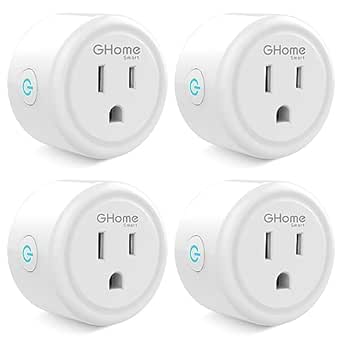 | Best Compact Pick for Crowded Outlets | Pack size: 4 plugs | Connectivity: 2.4 GHz Wi-Fi and Bluetooth | Voltage: 120 V | VIEW LATEST PRICE | See Our Full Breakdown |
| Linkind Matter Smart Plug, 4-Pack | 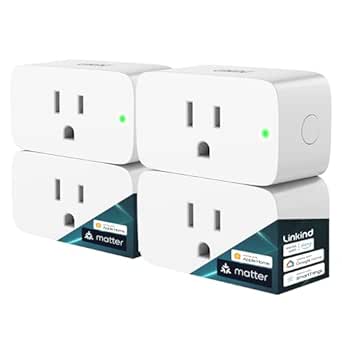 | Best for Multi-Platform Smart Homes | Pack size: 4 plugs | Model: LC09003256 | Connectivity: Matter and 2.4 GHz Wi-Fi | VIEW LATEST PRICE | See Our Full Breakdown |
| Linkind Matter Smart Plug with Night Light, 4-Pack |  | Best for Hallways and Nighttime Lighting | Pack size: 4 plugs | Connectivity: Matter and 2.4 GHz Wi-Fi | Network requirement: IPv6 | VIEW LATEST PRICE | See Our Full Breakdown |
| GHome Smart Wi-Fi Plug with App and Voice Control, 4-Pack | 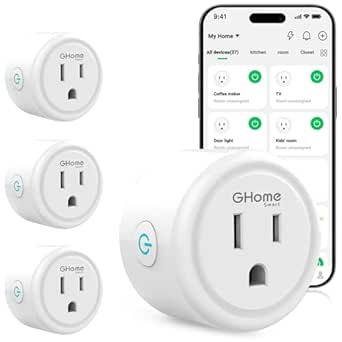 | Best for Flexible App Choice | Pack size: 4 plugs | Model: WP3 | Connectivity: 2.4 GHz Wi-Fi | VIEW LATEST PRICE | See Our Full Breakdown |
| Refoss EM16P Smart Home Energy Monitor with Open API and Home Assistant Integration |  | Best for Local Control and Solar Automation | Model: EM16P | Main sensors: 2 x 200A current transformers | Branch sensors: 16 x 60A current transformers | VIEW LATEST PRICE | See Our Full Breakdown |
| Emporia Vue 3 Home Energy Monitor with 16 Circuit Sensors |  | Best for App-Based Whole-Home Monitoring | Model: EMV3A-2P-16 | Included branch sensors: 16 x 50A | Supported systems: Single phase, single-split phase, and 2-wire systems | VIEW LATEST PRICE | See Our Full Breakdown |
| home electrification product | Connectivity | Pack size | Model | Certifications |
|---|---|---|---|---|
| Govee Smart Plug | Bluetooth and 2.4 GHz Wi-Fi; no 5 GHz support | 4 smart plugs | B5081 | ETL and FCC |
| GHome Smart Plug Mini | 2.4 GHz Wi-Fi and Bluetooth | 4 plugs | — | ETL and FCC |
| Linkind Matter Smart Plug | Matter and 2.4 GHz Wi-Fi | 4 plugs | LC09003256 | — |
| Linkind Matter Smart Plug with | Matter and 2.4 GHz Wi-Fi | 4 plugs | — | FCC and ETL |
| GHome Smart Wi-Fi Plug with Ap | 2.4 GHz Wi-Fi | 4 plugs | WP3 | ETL and FCC |
| Refoss EM16P Smart Home Energy | Wi-Fi, MQTT, Open API, built-in web UI | — | EM16P | — |
| Emporia Vue 3 Home Energy Moni | 2.4 GHz Wi-Fi with internet connection | — | EMV3A-2P-16 | UL and CE listed |
More Details on Our Top Picks
Govee Smart Plug, Wi-Fi Outlet, 4-Pack
I’d pick the Govee Smart Plug 4-Pack for households that want familiar app and voice control without adding a hub. Its combination of Bluetooth and 2.4 GHz Wi-Fi offers another setup and control path compared with the Wi-Fi-only GHome Smart Wi-Fi Plug, while schedules and group control make routine lamps or small appliances easier to manage. It also works with both Alexa and Google Assistant, so it suits homes that have already chosen either ecosystem. The tradeoff is that it does not support 5 GHz Wi-Fi, and the supplied product details conflict on whether the current rating is 10 A or 11 A. I’d verify the rating before connecting a load; buyers who want a stated 15 A rating and broader platform support should compare it with the Linkind Matter Smart Plug.
Pros:- Works with Amazon Alexa and Google Assistant
- Supports schedules, remote operation, and group control
- Bluetooth and 2.4 GHz Wi-Fi connectivity
- Compact plugs need no hub
Cons:- Does not support 5 GHz Wi-Fi
- Product details give conflicting 10 A and 11 A current ratings
Best for: Households seeking a four-plug starter set for lamps and other compatible appliances, with Alexa or Google Assistant and no hub.
Not ideal for: Buyers with only a 5 GHz Wi-Fi network, or anyone who needs an unambiguous higher amperage rating for the intended device.
- Pack size:4 smart plugs
- Model:B5081
- Connectivity:Bluetooth and 2.4 GHz Wi-Fi; no 5 GHz support
- Voice assistants:Amazon Alexa and Google Assistant
- Voltage:120 V
- Listed amperage:Conflicting product details: 10 A and 11 A
- Plug type:Type B
- Certifications:ETL and FCC
Our verdict“Choose this Govee pack for accessible, hub-free control of compatible household appliances, but confirm its current rating before use.”
GHome Smart Plug Mini (4 Pack), WiFi Smart Outlet with Timer and App Control
The GHome Smart Plug Mini is the most clearly specified compact choice here: its listed 2 × 2 × 1-inch dimensions are useful when plugs sit close together or behind furniture. Like the Govee four-pack, it provides app control, schedules, group operation, and compatibility with Alexa and Google Assistant; its auto-off timer adds a handy option for devices that should not stay on indefinitely. Unlike the Linkind Matter Smart Plug, though, it does not offer Matter-based access across a broader range of platforms. Setup also starts in the GHome app before voice assistant linking, so it is not the most direct choice for someone hoping to configure everything from a smart-home hub. Its 10 A, 1200 W limit is another reason to check appliance requirements first.
Pros:- Small listed dimensions suit tight outlet locations
- Supports Alexa and Google Assistant
- Offers schedules, auto-off timers, and group control
- ETL- and FCC-certified
Cons:- Requires a 2.4 GHz Wi-Fi network
- Initial setup must be completed in the GHome app before assistant linking
- Rated for 10 A and 1200 W, below the listed limits of the Linkind Matter Smart Plug
Best for: Apartment dwellers and homeowners fitting smart plugs into crowded outlet strips or tight spaces, with compatible loads up to the stated limit.
Not ideal for: Buyers who want Matter platform flexibility, 5 GHz Wi-Fi support, or plug setup that bypasses the GHome app.
- Pack size:4 plugs
- Connectivity:2.4 GHz Wi-Fi and Bluetooth
- Voltage:120 V
- Current and power:10 A; 1200 W
- Dimensions:2 × 2 × 1 in
- Plug type:Type B
- Material:Polycarbonate
- Certifications:ETL and FCC
Our verdict“Pick the GHome Mini when outlet clearance and simple Alexa or Google control matter more than Matter compatibility or a higher stated load rating.”
Linkind Matter Smart Plug, 4-Pack
I rank the Linkind Matter Smart Plug highest for households that want one outlet accessory to work across several smart-home ecosystems. It supports Apple Home, Alexa, Google Home, and SmartThings, a wider platform mix than either Govee or GHome’s assistant-focused plugs. Its stated 15 A and 1800 W capacity also exceeds the 10 A, 1200 W rating listed for the GHome Smart Plug Mini, though buyers still need to match the plug to the appliance and circuit. After setup, local Matter control can continue without an internet connection, which may suit homes built around a compatible controller. That flexibility comes with added setup conditions: some platforms need a Matter hub or controller, and the plug requires 2.4 GHz Wi-Fi plus IPv6. I’d skip it if a basic app-and-voice setup is all you need.
Pros:- Supports Apple Home, Alexa, Google Home, and SmartThings
- Matter can provide local control after setup
- Rated up to 15 A and 1800 W
- Includes short-circuit and overload protection
Cons:- Some smart-home platforms require a Matter hub or controller
- Requires 2.4 GHz Wi-Fi and an IPv6 network
Best for: Smart-home households using Apple Home, SmartThings, or multiple assistant platforms that want Matter support and a stated 15 A rating.
Not ideal for: Buyers without a compatible Matter controller for their chosen platform, or anyone whose network lacks 2.4 GHz Wi-Fi and IPv6.
- Pack size:4 plugs
- Model:LC09003256
- Connectivity:Matter and 2.4 GHz Wi-Fi
- Network requirement:IPv6
- Maximum current:15 A
- Maximum power:1800 W
- Plug type:Type A
- Safety features:Short-circuit and overload protection
Our verdict“Choose Linkind’s Matter plug for wider smart-home platform support and local control, provided your network and controller meet its requirements.”
Linkind Matter Smart Plug with Night Light, 4-Pack
This Linkind model pairs a remotely controlled outlet with an adjustable 30-lumen night light, giving it a distinct household job that the other smart plugs here do not fill. The dusk-to-dawn sensor can handle routine nighttime lighting, while schedules and app control add flexibility for connected appliances. Compared with the standard Linkind Matter Smart Plug, it gives up the simple outlet-only design in favor of a built-in light; its listed 15 A and 1800 W capacity is the same, but there is more functionality to configure. Apple Home, Alexa, Google Home, and SmartThings support requires a Matter-certified controller; the AiDot app offers hub-free control. That makes setup less straightforward than the Govee pack for buyers who only want basic voice control. It also relies on 2.4 GHz Wi-Fi.
Pros:- Combines an outlet with an adjustable 30-lumen night light
- Dusk-to-dawn sensing automates nighttime illumination
- Listed compatibility includes Apple Home, Alexa, Google Home, and SmartThings
- Compact design is described as leaving adjacent outlets accessible
Cons:- Smart-home platform control requires a Matter-certified controller
- Supports 2.4 GHz Wi-Fi only
- The added light may be unnecessary for buyers seeking a basic plug like the Govee Smart Plug
Best for: Households wanting a smart outlet and adjustable automatic night light in a hallway, bedroom, or other dim passage.
Not ideal for: Buyers who need a plain outlet without an integrated light, or who want platform control but do not have a Matter-certified controller.
- Pack size:4 plugs
- Connectivity:Matter and 2.4 GHz Wi-Fi
- Network requirement:IPv6
- Smart-home compatibility:Apple Home, Alexa, Google Home, and SmartThings
- Hub requirement:Matter-certified controller for smart-home platforms; AiDot app supports hub-free control
- Night light:30 lm; adjustable brightness from 1–100%
- Night light control:Dusk-to-dawn auto-sensing
- Certifications:FCC and ETL
Our verdict“Choose this Linkind pack when you want scheduled appliance control and automatic night lighting from the same outlet accessory.”
GHome Smart Wi-Fi Plug with App and Voice Control, 4-Pack
The GHome Smart Wi-Fi Plug 4-Pack makes the most sense for buyers who want several familiar app options: it supports GHome, Smart Life, and Tuya, as well as Alexa and Google Assistant. That is a different advantage from the GHome Smart Plug Mini, whose strongest case is its specifically listed compact dimensions; this model’s appeal is app flexibility and grouped control. Schedules and timers can reduce repetitive switching for compatible appliances, and no hub is required. The tradeoff is a setup flow that starts in the GHome app before linking to Alexa or Google, so having alternatives like Smart Life or Tuya does not remove that initial step. Its stated 1200 W maximum is also lower than the 1800 W listed for either Linkind Matter plug, and it only connects to 2.4 GHz Wi-Fi.
Pros:- Compatible with GHome, Smart Life, and Tuya apps
- Works with Alexa and Google Assistant
- Supports schedules, timers, and grouped control
- Four plugs included; no hub required
Cons:- Requires 2.4 GHz Wi-Fi
- Initial setup must go through the GHome app
- Maximum stated power is 1200 W, below the Linkind Matter plugs’ 1800 W rating
Best for: Alexa or Google households that want four hub-free plugs and the option to manage them through GHome, Smart Life, or Tuya.
Not ideal for: Buyers needing Matter support, 5 GHz Wi-Fi, or a stated power capacity above 1200 W.
- Pack size:4 plugs
- Model:WP3
- Connectivity:2.4 GHz Wi-Fi
- Compatible apps:GHome, Smart Life, and Tuya
- Voice assistants:Alexa and Google Assistant
- Operating voltage:120 V
- Maximum wattage:1200 W
- Dimensions:2.1 × 2.1 × 1.1 in
- Certifications:ETL and FCC
Our verdict“Choose this GHome pack if multiple app options and hub-free Alexa or Google control matter more than Matter support or a higher power rating.”
Refoss EM16P Smart Home Energy Monitor with Open API and Home Assistant Integration
The Refoss EM16P is the stronger fit for homeowners who want circuit-level energy data without sending it through a cloud service. Its local operation, native Home Assistant integration, MQTT, and Open API give technically confident users more control than the Emporia Vue 3, which depends on an internet connection and its app. Two main sensors and up to 16 branch sensors also suit detailed panel monitoring, while the stated ±1% accuracy across much of its operating range can help make automation decisions more precise.
The tradeoff is setup: installing multiple current transformers and making use of the API calls for electrical and home-automation know-how. Solar households may use its monitoring to coordinate appliance schedules with available generation, but buyers seeking a simpler app-led setup may prefer the Emporia. Compared with smart plugs such as Linkind’s Matter models, the EM16P monitors circuits at the panel rather than just individual plugged-in devices.
Pros:- Operates locally without requiring cloud services, keeping monitoring data on the home network.
- Native Home Assistant integration, MQTT, Open API, and built-in web interface support flexible automations.
- Includes two 200A main sensors and 16 branch sensors for broad panel coverage.
- Stated ±1% accuracy across most of the listed sensor ranges supports detailed monitoring.
Cons:- Installing multiple current transformers requires care and familiarity with electrical panels.
- Making full use of the API and automation features takes technical setup.
- Accuracy is listed as ±2% at low current.
Best for: Solar homeowners and Home Assistant users who want private, circuit-level monitoring and are comfortable working with panel sensors and automation setup.
Not ideal for: Buyers who want a quick app-based setup, do not want to work around electrical panels, or only need to track a few plug-in appliances.
- Model:EM16P
- Main sensors:2 x 200A current transformers
- Branch sensors:16 x 60A current transformers
- Accuracy:±1% (200A: 2–200A; 60A: 1–60A); ±2% at low current
- Connectivity:Wi-Fi, MQTT, Open API, built-in web UI
- Integration:Native Home Assistant and OpenClaw AI
- Certification:ETL certified; UL 61010 compliant
- Dimensions and weight:4.5 x 3.5 x 1.1 inches; 4.24 pounds
- Warranty:2 years
Our verdict“Choose the Refoss EM16P if local privacy, Home Assistant control, and solar-aware circuit monitoring matter more than a simpler internet-connected setup.”
Emporia Vue 3 Home Energy Monitor with 16 Circuit Sensors
The Emporia Vue 3 is a practical pick for homeowners who want whole-home and individual-circuit readings through a dedicated app, including support for solar and net metering. Its 16 included branch sensors cover many circuits without requiring a separate sensor purchase for each one, and support for several listed system types gives it broader panel compatibility than a monitor built around one setup. UL and CE listing also provide clear certification information for buyers comparing panel-mounted equipment.
Compared with the Refoss EM16P, the Vue 3 favors an app-and-internet workflow over local control and open automation options; it also lists ±2% sensor accuracy rather than the Refoss’s ±1% across much of its range. The Emporia is the more straightforward choice for buyers who want app access, but it requires 2.4 GHz Wi-Fi and internet. Some supported configurations need an additional 200A sensor, and its one-year warranty is shorter than Refoss’s two years. Unlike smart plugs in this roundup, it monitors circuits from the panel.
Pros:- Tracks whole-home and individual-circuit electricity use in real time.
- Supports solar and net-metering monitoring through the Emporia app.
- Includes 16 branch sensors for monitoring multiple circuits.
- UL and CE listed and supports several stated electrical system types.
Cons:- Requires 2.4 GHz Wi-Fi and an internet connection.
- Sensor accuracy is listed as ±2%, less precise than the Refoss EM16P’s stated ±1% across much of its range.
- An additional 200A sensor is sold separately for some supported systems, and the warranty is one year.
Best for: Homeowners who want app-based whole-home and circuit monitoring, including solar or net-metering data, and have reliable 2.4 GHz Wi-Fi.
Not ideal for: Buyers who require cloud-independent monitoring, want native Home Assistant control, or have a supported setup that needs a 200A sensor they do not plan to purchase separately.
- Model:EMV3A-2P-16
- Included branch sensors:16 x 50A
- Supported systems:Single phase, single-split phase, and 2-wire systems
- Connectivity:2.4 GHz Wi-Fi with internet connection
- Sensor accuracy:±2%
- Certifications:UL and CE listed
- Dimensions and weight:10 x 5 x 5 inches; 4.99 pounds
- Warranty:1 year
Our verdict“Choose the Emporia Vue 3 if you want app-based monitoring for many circuits and solar data, and are comfortable relying on internet-connected service.”
How We Picked
I compared the seven products by the job they do, rather than treating smart plugs and panel monitors as interchangeable. For plugs, I focused on setup requirements, scheduling and voice-control options, Matter support where listed, pack usefulness, and practical fit around neighboring outlets. For monitors, I weighed the scope of energy visibility, integration options, installation demands, and how much technical confidence a buyer may need. I also considered maintenance and whether the product offers useful insight beyond switching a device on and off.
The ranking puts the Emporia Vue 3 first because its 16 circuit sensors give it the broadest stated view of household use, a stronger foundation for electrification decisions than outlet control alone. The Refoss EM16P follows for technically minded users who value an open API and Home Assistant integration. Among the plugs, Linkind’s Matter model leads for compatibility potential, while the GHome Mini earns a beginner-friendly role; the other plug variants serve narrower needs such as a built-in night light or familiar app-and-voice control. These rankings reflect product scope and stated capabilities, not a claim that every home will benefit from monitoring or automation.
| home electrification product | Model | Certifications |
|---|---|---|
| Govee Smart Plug | B5081 | ETL and FCC |
| GHome Smart Plug Mini | — | ETL and FCC |
| Linkind Matter Smart Plug | LC09003256 | — |
| Linkind Matter Smart Plug with | — | FCC and ETL |
| GHome Smart Wi-Fi Plug with Ap | WP3 | ETL and FCC |
| Refoss EM16P Smart Home Energy | EM16P | — |
| Emporia Vue 3 Home Energy Moni | EMV3A-2P-16 | UL and CE listed |
Factors to Consider When Choosing Best Home Electrification Products
Before choosing, decide whether you want to control loads, understand energy use, or do both. A plug can automate a compatible device, but it cannot show what every circuit in the home consumes; a panel monitor offers a broader view, with more installation and setup complexity. These factors can help you spend effort on the part of electrification that will change your decisions.
Start With the Decision You Want Energy Data to Support
Energy data is most useful when it can change a household decision, such as identifying a high-use circuit or checking how consumption shifts after a new appliance is installed. If you only need a lamp or small device to follow a schedule, a smart plug may be enough. A whole-panel monitor gives a wider view, but the extra detail can go unused if you do not plan to review it or act on what it shows. Before buying, write down one or two questions you want answered. That keeps you from paying in setup effort for data that will not affect your choices.
Check Electrical Fit Before Adding Smart Plugs
Smart plugs are not a universal way to electrify every appliance. Check the device’s electrical requirements and the plug’s supported load information before connecting anything, especially equipment with high power draw, motors, or heating elements. Also measure the outlet area: a bulky adapter can block a neighboring receptacle, while a four-pack may be excessive if only one device needs automation. A plug controls power at an outlet; it does not replace a correctly sized circuit or professional electrical work. When the intended device is not suitable for outlet-level control, choose another approach rather than forcing a fit.
Match Connectivity to Your Existing Smart-Home Setup
Compatibility claims can hide meaningful differences in setup and long-term flexibility. The GHome Smart Plug Mini specifies 2.4GHz Wi-Fi, so check that your router and setup process can accommodate it before purchase. Matter support, as listed for the Linkind plug, may make it easier to connect across compatible platforms, but the rest of your smart-home system still needs to support the standard. Voice control can be convenient for occasional switching, while app schedules are more useful for repeat routines. Avoid choosing by ecosystem label alone; confirm the exact hub, app, and network requirements you plan to use.
Think Through Monitor Installation and Household Roles
A panel monitor is a different commitment from plugging in an outlet accessory. Circuit-level sensors require access to the electrical panel, so check the installation instructions and determine whether qualified help is appropriate for your home and local rules. The Refoss EM16P’s open API and Home Assistant integration favor users comfortable managing integrations; Emporia’s 16 circuit sensors speak to buyers seeking broad circuit coverage. Panel labeling, spare space, and the way circuits are divided can affect how useful readings are. Do not assume a monitor can identify every appliance automatically or replace an electrician’s assessment.
Pay for Features You Will Use, Not Just More Features
More sensors, integrations, and outlets can add value only when they support a real household need. Choose a multi-pack when several devices need independent schedules or control, not simply because more plugs seem future-proof. A built-in night light can suit a hallway or bedroom outlet, but it is a room-specific convenience rather than an energy-management feature. Open integrations matter most if you expect to build automations or use Home Assistant; otherwise, they may add setup work without changing daily use. Compare the time and attention a feature asks of you alongside its technical capability.
Frequently Asked Questions
Should I buy a home energy monitor or smart plugs first?
Choose based on whether your first goal is measurement or control. A monitor is the better starting point if you want to see usage across circuits and use that information to guide later upgrades. Smart plugs make more sense when you already know which compatible devices you want to schedule or switch remotely. They measure or control only at the outlet level, so they do not provide the same whole-panel view. If your goal is uncertain, start with the smallest tool that can answer a specific question rather than buying both categories at once.
Can a smart plug tell me how much my whole house uses?
No; a smart plug applies to the device connected through that outlet, not the rest of the home’s circuits. It can support control of a suitable plugged-in device, while a panel monitor is designed to provide broader circuit-level visibility. Even a panel monitor’s data depends on correct installation and circuit identification. If you need a whole-home view, do not treat a collection of plugs as a substitute for a monitor. If you only need to manage a few individual devices, plugs may be the simpler fit.
Does Matter support mean the Linkind plug will work with every smart-home system?
Matter support can improve interoperability, but it does not guarantee that every system or feature will work in every setup. Check whether your chosen platform supports Matter devices and whether a compatible controller or hub is needed. Some controls may also depend on the platform or app rather than the plug alone. Confirm the product’s current compatibility details before buying, especially if you rely on a particular voice assistant or automation. The Linkind Matter plug is the lineup’s clearest choice for cross-platform flexibility, but your existing setup still matters.
Do I need an electrician to install a circuit-level energy monitor?
Panel monitors involve access to the electrical panel, so installation is not comparable to plugging in a smart outlet. The right approach depends on the product instructions, your comfort and training, the panel layout, and local requirements. If you are unsure about safe panel work or cannot identify the relevant circuits, hire a qualified electrician. Ask about installation and circuit labeling before choosing a monitor, since the hardware’s stated sensor count does not remove those practical steps. Never work inside a panel if you are not qualified to do so.
Which product makes the most sense if my Wi-Fi is 5GHz-only?
The GHome Smart Plug Mini is listed as 2.4GHz-only, so it may not suit a network that cannot provide a compatible 2.4GHz connection. Check your router settings before purchase; some routers support both bands even when a phone normally uses 5GHz. Do not assume that Matter support removes every Wi-Fi or setup requirement for the Linkind model, either. Review each product’s current network specifications and any hub requirements. If the network cannot meet a product’s stated needs, select a compatible option rather than expecting an app setting to solve it.
Conclusion
For the best overall, I would choose the Emporia Vue 3 if circuit-level visibility is the main goal and panel installation is workable. The best premium-style choice for technical flexibility is the Refoss EM16P for buyers who value an open API and Home Assistant integration. For best value in basic control, the GHome Smart Plug Mini suits households that want simple app scheduling and voice control, while the Linkind Matter plug is my pick for buyers prioritizing smart-home compatibility. The best option for beginners is a plug rather than a panel monitor; start with the GHome Mini if its Wi-Fi requirement fits, or choose Linkind if Matter support is more useful to your setup. For a specific bedside or hallway need, the Linkind Matter Smart Plug with Night Light adds a built-in light, while readers who need broad energy visibility should favor a monitor over any plug pack.
Columbus Day / Indigenous Peoples' Day Picks
long weekend sales
As an affiliate, we earn on qualifying purchases.