When selecting the best home battery energy storage systems, the Anker SOLIX E10 stands out as the best overall pick for its seamless plug-and-play installation and modern aesthetics, making it ideal for households that want backup power without complex electrical work. For those with advanced technical skills seeking maximum capacity, the ECO-WORTHY Cubix100 48V 400Ah LiFePO4 Server Rack Battery offers superior scalability and cost-efficiency per kilowatt-hour. The primary tradeoff in this category lies between turnkey simplicity and modular flexibility; pre-assembled units like the Anker offer ease of use but limit customization, whereas rack-mounted batteries require inverters and professional wiring but allow for virtually unlimited expansion. Continue reading to understand which system aligns with your home’s electrical infrastructure and backup goals.

Get backup power and energy gear delivered free with Prime
- Fast, free delivery on millions of items
- Prime Video, Amazon Music and more included
- Member-only deals all year
Key Takeaways
- Modular LiFePO4 rack batteries offer the best cost-per-kWh but require separate inverters and professional installation.
- All-in-one portable units like the Anker SOLIX E10 prioritize ease of installation over maximum capacity.
- LiFePO4 chemistry is the only viable option for residential storage due to its safety and 6,000+ cycle lifespan.
- Scalability is a critical differentiator; rack systems allow adding batteries over time, while fixed units are static.
- Integration with existing solar inverters is often the deciding factor between compatible rack batteries and standalone portable systems.
| ECO-WORTHY Cubix100 51.2V 200Ah LiFePO4 Server Rack Battery (2-Pack) |  | Best Expandable Two-Battery Starter | Chemistry: LiFePO4 | Voltage: 51.2 V | Listed capacity: 200Ah total (2 × 100Ah); product information contains conflicting capacity details | VIEW LATEST PRICE | See Our Full Breakdown |
| ECO-WORTHY 10 kW Off-Grid Solar Panel Kit with 48V 314Ah Battery |  | Best Complete Off-Grid Package | Solar panels: 5 × 590W; 2,950W total | Listed daily generation: Up to 11.8 kWh under optimal conditions | Inverter output: 10,000W continuous; 20,000W peak | VIEW LATEST PRICE | See Our Full Breakdown |
| AOUSK 48V 314Ah LiFePO4 Lithium Battery, 16.07 kWh |  | Best Large Standalone Battery | Chemistry: LiFePO₄ | Nominal voltage: 51.2 V | Capacity: 314Ah | VIEW LATEST PRICE | See Our Full Breakdown |
| ECO-WORTHY Cubix100 48V 400Ah LiFePO4 Server Rack Battery, 4-Pack |  | Best High-Capacity Rack Bank | Chemistry: LiFePO₄ | Battery count: 4 | Voltage: 51.2 V per battery | VIEW LATEST PRICE | See Our Full Breakdown |
| ECO-WORTHY Cubix100 48V 100Ah LiFePO4 Server Rack Battery |  | Best Single-Battery Entry Point | Chemistry: LiFePO₄ | Voltage: 51.2 V | Capacity: 100Ah | VIEW LATEST PRICE | See Our Full Breakdown |
| Anker SOLIX E10 Whole-Home Backup Power System with Power Dock, 6 kWh |  | Best for Whole-Home Backup Integration | Battery capacity: 6 kWh; expandable to 90 kWh | Continuous output: 7.6 kW | Solar input: Up to 9 kW per unit | VIEW LATEST PRICE | See Our Full Breakdown |
| ECO-WORTHY Powermega 48V 314Ah LiFePO4 Battery, 2-Pack |  | Best for Expandable High-Capacity Battery Banks | Package: 2 batteries | Energy: 16.07 kWh per battery | Voltage: 51.2 V nominal, 48 V class | VIEW LATEST PRICE | See Our Full Breakdown |
| ECO-WORTHY Solar Panel and LiFePO4 Battery Backup System, 10 kW |  | Best Complete Solar-and-Storage Package | Solar panels: 6 × 590 W N-type panels | Battery capacity: 2 × 48 V, 314 Ah LiFePO4 batteries | Usable energy: 30 kWh+ | VIEW LATEST PRICE | See Our Full Breakdown |
| home battery energy storage system | Warranty | Chemistry | Voltage | Communication |
|---|---|---|---|---|
| ECO-WORTHY Cubix100 51.2V 200A | 10-year limited warranty | LiFePO4 | 51.2 V | CAN, RS485, Bluetooth, and Wi-Fi |
| ECO-WORTHY 10 kW Off-Grid Sola | — | — | — | — |
| AOUSK 48V 314Ah LiFePO4 Lithiu | 5 years | LiFePO₄ | — | RS485, CAN, RS232, Bluetooth, and Wi-Fi |
| ECO-WORTHY Cubix100 48V 400Ah | Conflicting product data: 3-year listing and 10-year limited warranty mention | LiFePO₄ | 51.2 V per battery | CAN, RS485, Bluetooth, and Wi-Fi |
| ECO-WORTHY Cubix100 48V 100Ah | 10-year limited warranty | LiFePO₄ | 51.2 V | CAN and RS485 |
| Anker SOLIX E10 Whole-Home Bac | 5 years for E10; 10 years for Power Dock | — | — | — |
| ECO-WORTHY Powermega 48V 314Ah | 10 years | — | 51.2 V nominal, 48 V class | — |
| ECO-WORTHY Solar Panel and LiF | — | — | — | — |
More Details on Our Top Picks
ECO-WORTHY Cubix100 51.2V 200Ah LiFePO4 Server Rack Battery (2-Pack)
I’d choose this two-battery set for a home system that needs more storage than a single rack battery but leaves room to grow. Its CAN/RS485 communication supports connection to compatible inverters, while Bluetooth and Wi-Fi monitoring give owners a way to check battery status. The stated capacity needs careful verification: the title says 200Ah, but product information also describes a 48V 100Ah battery, so I would confirm the included capacity with the seller before designing a system around it.
Compared with the four-battery Cubix100 400Ah pack, this set is a lighter, smaller commitment, but it provides less storage. It can also expand to as many as 32 parallel units, though compatibility and installation still matter. The 206-pound total weight and potential for split deliveries make planning placement and receiving the order part of the job.
Pros:- LiFePO4 chemistry is suited to repeated home storage use
- CAN and RS485 support communication with compatible inverters
- Bluetooth and Wi-Fi provide battery monitoring options
- Supports parallel expansion up to 32 units
Cons:- Capacity information conflicts between the 200Ah title and 100Ah battery description
- The two-battery set weighs 206 lb
- Batteries may arrive in separate packages at different times
Best for: Home solar or off-grid buyers who want a rack-style two-battery setup and expect to expand after confirming the actual delivered capacity.
Not ideal for: Buyers who need a clearly documented capacity for immediate backup planning or cannot manage a heavy installation and possible multi-package delivery.
- Chemistry:LiFePO4
- Voltage:51.2 V
- Listed capacity:200Ah total (2 × 100Ah); product information contains conflicting capacity details
- Communication:CAN, RS485, Bluetooth, and Wi-Fi
- Maximum parallel units:32
- Certifications:UL9540, UL1973, and CEC listed
- Weight:206 lb
- Warranty:10-year limited warranty
Our verdict“Choose this set for a scalable rack-battery start, but verify the delivered capacity before sizing your backup system.”
ECO-WORTHY 10 kW Off-Grid Solar Panel Kit with 48V 314Ah Battery
I’d put this kit on the shortlist for buyers who want the main parts of an off-grid system together rather than selecting panels, inverter, and battery separately. It pairs a 16.076 kWh LiFePO₄ battery with a 10,000W split-phase inverter and five solar panels, giving the package a broad starting point for household loads. The 120V/240V output is useful for homes with both standard circuits and compatible 240V equipment; the listed generation of up to 11.8 kWh per day depends on optimal conditions.
Compared with the standalone AOUSK 48V 314Ah battery, this is a more complete system, but it also means more installation coordination and less freedom to choose every component. Professional installation is recommended, and truck-and-pallet delivery calls for suitable access. Its five panels total 2,950W, so buyers should match expected solar production and household demand rather than assume the inverter’s full output will always be available.
Pros:- Combines solar panels, inverter, battery, and cables in one kit
- 16.076 kWh LiFePO₄ battery capacity
- 10,000W continuous inverter output with 120V/240V split-phase support
- Battery and inverter support parallel expansion
Cons:- Professional installation is recommended
- Palletized truck delivery requires suitable site access
- Actual solar generation depends on conditions and is not guaranteed by the listed maximum
Best for: Off-grid homeowners who want panels, a split-phase inverter, and substantial battery storage in one coordinated kit and can arrange professional installation.
Not ideal for: Buyers who already own an inverter or panels, need a simple plug-in backup, or lack access for palletized truck delivery.
- Solar panels:5 × 590W; 2,950W total
- Listed daily generation:Up to 11.8 kWh under optimal conditions
- Inverter output:10,000W continuous; 20,000W peak
- Output voltage:120V or 120V/240V split phase
- Battery:48V 314Ah LiFePO₄
- Battery energy capacity:16.076 kWh
- Battery management system:PACE 200A BMS
- Battery expansion:Up to 15 units in parallel
Our verdict“Pick this kit if you want a substantial off-grid system supplied as a coordinated package and are prepared for professional installation.”
AOUSK 48V 314Ah LiFePO4 Lithium Battery, 16.07 kWh
This battery suits buyers who already have a compatible inverter and want a large storage block without buying a full solar kit. Its 16.07 kWh capacity is comparable to the battery included in the ECO-WORTHY 10 kW off-grid kit, but here you can pair the battery with equipment you already own. Monitoring is unusually flexible for a standalone unit, with a display, app, PC access, and RS485/CAN connections for compatible inverters.
The tradeoff is installation: at 291 lb, it is not a battery to move casually, even with its wheels and handles. The stated cycle life is up to 6,000 cycles at 80% state of health, while the warranty is five years—shorter than the 10-year limited warranty listed for the single ECO-WORTHY Cubix100. I’d check inverter compatibility and plan the route to its final location before ordering.
Pros:- Provides 16.07 kWh of storage in one battery
- 200A BMS, dual breakers, and six-layer protection
- Display, app, and PC monitoring with several communication interfaces
- Wheels and handles assist with positioning
Cons:- Heavy at 291 lb and still requires careful placement
- Requires inverter compatibility and suitable system installation
- Five-year warranty is shorter than the 10-year limited warranty listed for the single ECO-WORTHY Cubix100
Best for: Homeowners with an existing compatible inverter who need a large single battery bank for solar storage, backup, or off-grid use.
Not ideal for: Buyers seeking a lightweight or plug-and-play backup, or anyone without a confirmed inverter match and a workable installation plan.
- Chemistry:LiFePO₄
- Nominal voltage:51.2 V
- Capacity:314Ah
- Energy storage:16.07 kWh
- Cycle life:Up to 6,000 cycles at 80% state of health
- Communication:RS485, CAN, RS232, Bluetooth, and Wi-Fi
- Parallel connection:Up to 15 units
- Weight:291 lb
- Warranty:5 years
Our verdict“Choose this battery when you need substantial standalone storage and have the compatible inverter and installation plan to support it.”
ECO-WORTHY Cubix100 48V 400Ah LiFePO4 Server Rack Battery, 4-Pack
For a buyer prioritizing substantial storage in a modular rack format, this four-battery Cubix100 pack offers 20.48 kWh total capacity from four 51.2V, 100Ah batteries. That gives it more stated storage than the two-battery Cubix100 set and the standalone AOUSK 16.07 kWh battery, making it a better fit for longer backup needs or larger off-grid systems—provided the inverter and installation can handle the bank.
CAN/RS485 communication and Bluetooth/Wi-Fi monitoring help with system integration and status checks, while parallel expansion to 32 units leaves room to add capacity. I would verify the warranty before buying: the product data lists a three-year warranty in one place and a 10-year limited warranty in another. This is also a heavier, more involved purchase than a single battery, and packages may arrive separately.
Pros:- Four batteries provide 20.48 kWh of total storage
- CAN and RS485 support communication with compatible inverters
- Bluetooth and Wi-Fi enable battery monitoring
- Supports parallel expansion up to 32 units and includes installation accessories
Cons:- Warranty information conflicts between a three-year listing and a 10-year limited warranty mention
- Four batteries require more space and installation planning than a single battery
- Inverter communication and expansion depend on system compatibility
Best for: Homeowners building a larger rack-based solar or off-grid system who need more stored energy than a single 16.07 kWh battery provides.
Not ideal for: Buyers with limited space, modest backup needs, or a preference for a clearly stated warranty and simple one-unit installation.
- Chemistry:LiFePO₄
- Battery count:4
- Voltage:51.2 V per battery
- Capacity:100Ah per battery; 400Ah total
- Total energy:20.48 kWh
- Communication:CAN, RS485, Bluetooth, and Wi-Fi
- Expansion:Up to 32 units in parallel
- Certifications:UL9540, UL1973, and CEC listed
- Warranty:Conflicting product data: 3-year listing and 10-year limited warranty mention
Our verdict“Choose this four-pack for a large, expandable rack battery bank, but confirm warranty terms and inverter compatibility before committing.”
ECO-WORTHY Cubix100 48V 100Ah LiFePO4 Server Rack Battery
This single Cubix100 is a practical starting point for buyers assembling a 48V home storage system one battery at a time. Its 5.12 kWh capacity is far below the four-battery Cubix100’s 20.48 kWh, but the smaller unit lets an owner begin with less storage and add compatible batteries later, up to 32 in parallel. Bluetooth and Wi-Fi monitoring make routine status checks easier, and CAN/RS485 can link it with compatible inverter equipment.
That modular approach still needs planning: 103 lb is heavy for one person to position, and the rack-mounted format calls for suitable space and system setup. Compared with the two-battery Cubix100 set, this is the simpler way to start, though it provides less capacity out of the box. I’d confirm inverter compatibility and allow for the physical weight before choosing it for a backup circuit plan.
Pros:- 5.12 kWh capacity in a single rack-mountable battery
- Bluetooth and Wi-Fi support battery monitoring
- CAN and RS485 communication for compatible systems
- Can expand in parallel up to 32 units
Cons:- 103 lb weight makes installation and positioning difficult
- One battery provides less storage than the two- and four-battery Cubix100 packs
- Requires suitable rack space and compatible system setup
Best for: Home solar owners who want to start with one rack battery and add compatible storage as their backup needs grow.
Not ideal for: Households needing substantial backup capacity immediately, or buyers without rack space, lifting help, and a compatible inverter setup.
- Chemistry:LiFePO₄
- Voltage:51.2 V
- Capacity:100Ah
- Energy:5,120 Wh
- Communication:CAN and RS485
- Connectivity:Bluetooth and Wi-Fi
- Maximum parallel units:32
- Weight:103 lb
- Warranty:10-year limited warranty
Our verdict“Pick this single battery for a modular start to home storage, but choose a larger bank if you need substantial backup capacity now.”
Anker SOLIX E10 Whole-Home Backup Power System with Power Dock, 6 kWh
I’d choose the Anker SOLIX E10 for a home that needs a purpose-built connection to its electrical panel, not just a large standalone battery. Its Power Dock supports up to 200A coverage, while automatic switchover in 20 ms or less helps keep an outage from becoming a manual changeover task. It also accepts up to 9 kW of solar input per unit and can expand from 6 kWh to 90 kWh, giving owners room to build capacity over time.
The tradeoff is the starting capacity: 6 kWh is modest beside the 16.07 kWh per battery in the ECO-WORTHY Powermega 48V 314Ah 2-Pack. The E10 is a better fit for integrated backup and incremental expansion; the Powermega is stronger for buyers assembling a high-capacity battery bank. Professional installation may also be needed, so this is less suited to a plug-and-play setup.
Pros:- Power Dock offers up to 200A coverage for whole-home backup integration.
- Capacity can expand from 6 kWh to 90 kWh.
- Accepts up to 9 kW of solar input per unit.
- Weatherproof E10 and Power Dock support outdoor installation.
Cons:- The included 6 kWh capacity may be limiting without additional batteries.
- Professional installation may be needed for Power Dock and home-panel integration.
- The E10 warranty is 5 years, shorter than the Power Dock’s 10-year warranty.
Best for: Homeowners who want a professionally installed, panel-connected backup system with fast automatic switchover and the option to expand storage later.
Not ideal for: Buyers who need substantial battery capacity immediately or want a DIY battery bank without installation planning; the base unit stores 6 kWh and whole-home integration may require professional work.
- Battery capacity:6 kWh; expandable to 90 kWh
- Continuous output:7.6 kW
- Solar input:Up to 9 kW per unit
- Automatic switchover:20 ms or less
- Power Dock coverage:Up to 200A
- Battery chemistry:LFP
- Operating temperature:-4°F to 131°F
- Warranty:5 years for E10; 10 years for Power Dock
Our verdict“Choose the E10 if panel-connected backup and a clear expansion path matter more than getting a large battery capacity in the initial setup.”
ECO-WORTHY Powermega 48V 314Ah LiFePO4 Battery, 2-Pack
For buyers who already have—or are planning—a compatible inverter system, I’d shortlist the ECO-WORTHY Powermega 2-Pack for its substantial stored energy: 16.07 kWh per battery, or about 32.14 kWh across the pair. Its 200A smart BMS with active cell balancing, UL 1973 certification, and aerosol fire suppression make the battery package more safety- and monitoring-focused than a bare storage module. A touchscreen, wireless monitoring, and RS485, CAN, and RS232 ports also give system builders several ways to check status and connect equipment.
Unlike the Anker SOLIX E10, the Powermega is a battery pair rather than a panel-connected whole-home system with a Power Dock, so buyers must plan for compatible power electronics and installation. Its parallel support can scale to 15 units, reaching up to 241 kWh, which offers a larger-build path than the E10’s stated 90 kWh expansion ceiling. The downside is the logistics: these are large batteries shipped on a pallet, and delivery requires a location that can accommodate truck freight.
Pros:- Two batteries provide about 32.14 kWh of rated energy combined.
- 200A smart BMS includes active cell balancing.
- UL 1973 certification and aerosol fire suppression add specified safety features.
- Parallel expansion supports up to 15 units, with up to 241 kWh listed capacity.
Cons:- Requires compatible inverter and system components rather than providing a complete backup installation.
- Large, heavy batteries require space and planning for placement.
- Palletized truck delivery requires an address able to receive freight.
Best for: Off-grid homeowners and solar-system builders who need a large LiFePO4 battery bank, have compatible inverter equipment, and can receive palletized freight.
Not ideal for: Homeowners seeking a ready-to-connect whole-home backup system or those without space, equipment, or delivery access for large batteries.
- Package:2 batteries
- Energy:16.07 kWh per battery
- Voltage:51.2 V nominal, 48 V class
- Capacity:314 Ah per battery
- Battery chemistry:LiFePO4
- BMS:200A smart BMS with active cell balancing
- Certification:UL 1973
- Parallel expansion:Up to 15 units; up to 241 kWh
- Warranty:10 years
Our verdict“Pick the Powermega pair if your priority is building a large, expandable battery bank and you can supply the compatible inverter system around it.”
ECO-WORTHY Solar Panel and LiFePO4 Battery Backup System, 10 kW
I’d put this ECO-WORTHY 10 kW system on the list for buyers who want panels, batteries, and a hybrid inverter in one package rather than piecing together a battery bank. The kit pairs six 590 W solar panels with two 48 V, 314 Ah LiFePO4 batteries and a 10 kW inverter. Its listed 30 kWh+ usable energy and 120 V/240 V output make it suited to larger backup or off-grid plans, while app monitoring and an LCD offer multiple ways to check system status.
Compared with the ECO-WORTHY Powermega 2-Pack, this package adds solar panels and a 10 kW hybrid inverter, reducing the separate equipment a buyer must source. That convenience comes with a larger shipping and installation footprint: the panels are nearly 90 inches long, and the system ships by palletized truck. The inverter’s exterior version is shipped at random, so buyers with a specific installation environment should confirm suitability before ordering. The stated 30 kWh+ capacity is substantial, but this is a major system, not a compact backup unit.
Pros:- Includes six solar panels, two LiFePO4 batteries, a 10 kW hybrid inverter, and cables.
- Lists more than 30 kWh of usable energy for backup or off-grid use.
- Provides 120 V and 240 V output.
- Supports Bluetooth, Wi-Fi, LCD monitoring, and RS485, CAN, and RS232 communication.
Cons:- Panels, batteries, and inverter create a large installation and storage footprint.
- Palletized truck shipping requires freight-delivery planning.
- The inverter exterior version is shipped at random.
Best for: Homeowners planning an off-grid or substantial backup installation who want solar panels, batteries, and a hybrid inverter supplied together.
Not ideal for: Buyers with limited installation space, a small backup requirement, or a need to choose a specific inverter exterior version before shipment.
- Solar panels:6 × 590 W N-type panels
- Battery capacity:2 × 48 V, 314 Ah LiFePO4 batteries
- Usable energy:30 kWh+
- Inverter:10 kW hybrid
- Output voltage:120 V and 240 V
- MPPT tracking efficiency:99.9%
- Battery cycle life:9,000+ cycles at 80% DoD
- Monitoring:Bluetooth, Wi-Fi, and LCD screen
- Panel dimensions:89.68 × 44.65 × 1.18 in
Our verdict“Choose this package if you want a substantial solar-and-storage system supplied together and have the space and delivery access for a large installation.”
How We Picked
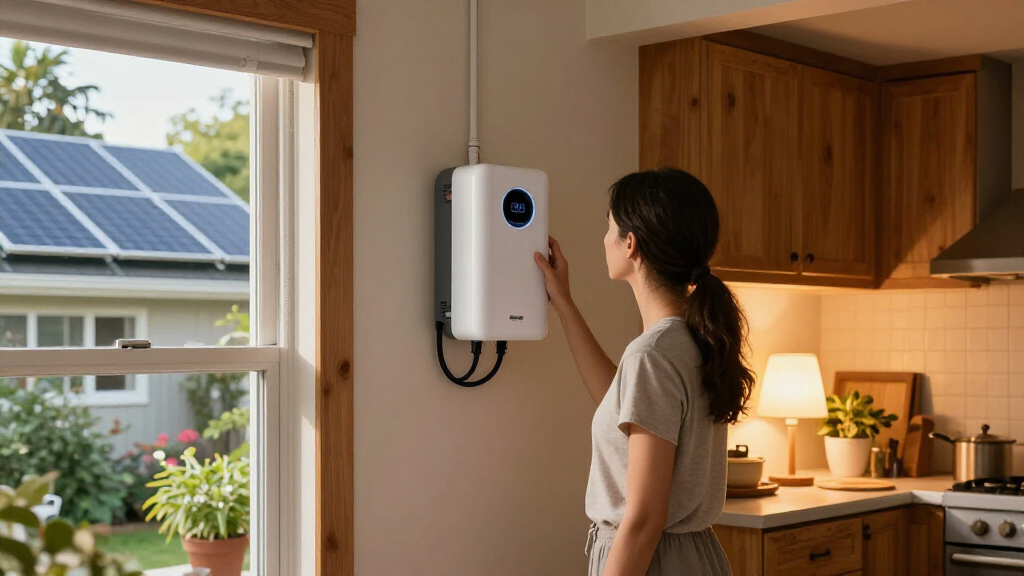
I evaluated these systems based on three core pillars: energy density, integration complexity, and long-term durability. First, I assessed the usable capacity and cycle life ratings, prioritizing Lithium Iron Phosphate (LiFePO4) chemistry for its safety profile and longevity compared to older NMC alternatives. Second, I analyzed the installation requirements, distinguishing between systems that require a licensed electrician and those designed for user-friendly setup. This distinction is vital because the hidden cost of labor and additional components (like inverters) often exceeds the price of the battery itself for modular systems. Finally, I considered the scalability of each option, favoring solutions that allow homeowners to expand their storage capacity as their energy needs or solar array size grows. Products that lacked clear compatibility with standard hybrid inverters or offered poor software integration were ranked lower, regardless of their raw specifications.
| home battery energy storage system | Chemistry | Communication |
|---|---|---|
| ECO-WORTHY Cubix100 51.2V 200A | LiFePO4 | CAN, RS485, Bluetooth, and Wi-Fi |
| ECO-WORTHY 10 kW Off-Grid Sola | — | — |
| AOUSK 48V 314Ah LiFePO4 Lithiu | LiFePO₄ | RS485, CAN, RS232, Bluetooth, and Wi-Fi |
| ECO-WORTHY Cubix100 48V 400Ah | LiFePO₄ | CAN, RS485, Bluetooth, and Wi-Fi |
| ECO-WORTHY Cubix100 48V 100Ah | LiFePO₄ | CAN and RS485 |
| Anker SOLIX E10 Whole-Home Bac | — | — |
| ECO-WORTHY Powermega 48V 314Ah | — | — |
| ECO-WORTHY Solar Panel and LiF | — | — |
Factors to Consider When Choosing Best Home Battery Energy Storage Systems
Choosing a home battery is not just about picking the biggest number; it is about matching the technology to your home’s existing infrastructure and your willingness to manage the system.Chemistry Matters: Why LiFePO4 Dominates
While Lithium-ion NMC (Nickel Manganese Cobalt) batteries offer higher energy density, they are rarely the best choice for stationary home storage. LiFePO4 (Lithium Iron Phosphate) batteries, found in most picks on this list, are heavier but offer significantly better thermal stability and safety. They can be charged to 100% daily without degrading rapidly, whereas NMC cells often require limiting charge to 80-90% to preserve lifespan. For a home that needs reliable backup during outages, the longer cycle life (often 6,000+ cycles vs. 2,000-3,000 for NMC) and reduced fire risk make LiFePO4 the superior long-term investment, even if it requires more floor or rack space.Integrated vs. Modular Systems
This is the most significant decision point. Integrated systems (like the Anker SOLIX E10) come with the inverter, battery, and software in a single package. They are easier to install and monitor but are limited by their fixed capacity. Modular systems (like the ECO-WORTHY rack batteries) are just the battery cells. You must pair them with a separate hybrid inverter (such as Victron, Growatt, or Sol-Ark). This approach requires more technical knowledge and labor but allows you to scale capacity incrementally. If you plan to expand your solar array in the future, a modular system prevents you from having to replace the entire battery unit when you need more storage.The Hidden Cost of Installation
A $2,000 battery does not equal a $2,000 system. For modular rack batteries, you must budget for a hybrid inverter, disconnect switches, cabling, and potentially a sub-panel. Furthermore, local electrical codes often require a licensed electrician to perform the final connection to your main panel, which can add $1,000 to $3,000 to the project. Integrated units often bypass some of these costs if they are portable or designed for plug-in backup circuits, though permanent installation still requires professional oversight. Always request a full system quote, not just a battery price, to avoid budget overruns.Scalability and Future-Proofing
Your energy needs will likely grow as you add electric vehicles, heat pumps, or more solar panels. Scalability refers to how easily you can add more battery capacity later. Rack-mounted systems are highly scalable; you can typically add another 48V module to the existing rack and reconfigure the settings. Integrated units are static; once you buy them, that is your capacity. If you are unsure about your final energy needs, starting with a smaller modular setup allows you to add capacity in phases, spreading the cost over several years without wasting money on unused capacity upfront.Software and Monitoring Integration
A battery is only as good as your ability to monitor it. Look for systems that offer real-time data access via a mobile app or web portal. You need to know state-of-charge, load consumption, and solar generation at a glance. Premium integrated units often have polished software that integrates with smart home hubs, allowing for automated load shedding during outages. DIY modular batteries may rely on the inverter’s software or require third-party monitoring dongles, which can be less intuitive. If you value a seamless user experience, prioritize systems with robust, native software ecosystems.Frequently Asked Questions
Can I connect a 48V rack battery directly to my existing solar inverter?
It depends entirely on the inverter model. Most modern hybrid inverters are designed to communicate with specific battery brands via CAN bus or RS485 protocols. Before purchasing a 48V rack battery like the ECO-WORTHY Cubix100, you must verify that your inverter is on the battery manufacturer’s compatibility list. If the communication protocols do not match, the inverter will not recognize the battery’s state of charge or health, potentially leading to overcharging or deep discharging that damages the cells. Incompatibility requires purchasing a different inverter or a specialized gateway, which adds significant cost.How much backup power do I actually need for my home?
To calculate your needs, list the essential circuits you want to keep running during an outage, such as the refrigerator, Wi-Fi, lights, and a medical device. Add their wattage together to get your total load. For example, if your essential load is 1,500 watts and you want 8 hours of backup, you need 12 kWh of usable capacity. Since you cannot discharge LiFePO4 batteries to 0% (usually 80-90% is safe), you should aim for a system with at least 15 kWh total capacity. Many homeowners underestimate this, buying too little storage and finding their backup lasts only a few hours.Is it safe to install these batteries in a garage or outdoor enclosure?
LiFePO4 batteries are chemically stable and non-flammable under normal conditions, making them safer than older lithium-ion types. However, they are sensitive to extreme temperatures. Most rack batteries have built-in Battery Management Systems (BMS) that include heating elements to allow charging in freezing temperatures, but discharging in extreme heat can degrade lifespan. Always check the operating temperature range. If you live in a climate with temperatures below 32°F or above 100°F, you may need to install the battery in a conditioned space or use an enclosure with active climate control to maintain optimal performance and longevity.Why are rack-mounted batteries cheaper than integrated units if they require more components?
Rack-mounted batteries benefit from economies of scale in cell manufacturing and lack the expensive integrated inverter and sophisticated software layer found in all-in-one units. The cost savings come from being a component part rather than a finished product. However, the total system cost often converges once you add the necessary inverter, cabling, and installation labor. The ‘cheaper’ price tag is misleading if you do not already own a compatible hybrid inverter. For those who already have solar with a compatible inverter, adding rack batteries is the most cost-effective way to add storage.Do I need a sub-panel for my home battery system?
A critical sub-panel (also called a backup panel) is highly recommended for most residential installations. It allows you to isolate specific circuits that will be powered by the battery during an outage. Without a sub-panel, the battery might try to power the entire house, which can exceed its output capacity and trip breakers. A sub-panel lets you manually or automatically switch only essential loads to battery power, ensuring the system runs efficiently and does not overload. Most professional installers will require a sub-panel for code compliance and safe operation.Conclusion
Choosing the best home battery energy storage systems ultimately depends on your existing infrastructure and technical comfort level. For beginners and renters who want immediate backup power without electrical work, the Anker SOLIX E10 is the best overall pick due to its plug-and-play design. If you are an advanced DIYer or have an existing solar inverter, the ECO-WORTHY Cubix100 48V 400Ah LiFePO4 Server Rack Battery offers the best value and scalability, provided you are prepared for the installation complexity. For those seeking a complete off-grid or heavy-duty backup solution, the ECO-WORTHY 10 kW Off-Grid Solar Panel Kit provides a robust, all-in-one foundation. Evaluate your current electrical setup, define your essential load requirements, and choose the system that aligns with your long-term energy strategy.
As an affiliate, we earn on qualifying purchases.Halloween Picks
halloween