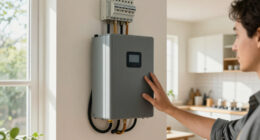
This checklist is for homeowners who want to review everyday electrical safety and identify where a qualified electrician may be needed. It covers several kinds of protection, testing tools, and safety equipment, with product picks only where provided. Electrical safety depends on choosing equipment that matches the home and having it installed or checked appropriately.

Get backup power and energy gear delivered free with Prime
- Fast, free delivery on millions of items
- Prime Video, Amazon Music and more included
- Member-only deals all year
The sections follow the listed topics: surge protection, arc-fault protection, ground-fault outlets, voltage testing, smoke and carbon monoxide alarms, and panel lockout. Some entries include a named product; others offer general guidance without a product pick. Use each section to understand the role of that item and what details to confirm.
Before buying, check the device’s specifications against your electrical system, installation location, and intended use. Product names alone do not confirm compatibility or suitability. For panel work, breaker changes, or uncertainty about wiring, consult a qualified electrician. Treat this checklist as a starting point for a careful review, not a substitute for professional assessment.
Whole-Home Surge Protector
A whole-home surge protector is the checklist’s dedicated option for surge protection at the electrical panel. The listed pick is the Siemens Boltshield FSPD140 Level 2 Whole-House Surge Protection Device. Before considering it, confirm the device’s installation requirements and compatibility with the specific panel and electrical system. Panel compatibility is essential, and the product name alone does not establish that it fits a particular home.
A common buying mistake is focusing only on the label “whole-house” or “Level 2” without checking the manufacturer’s specifications and installation instructions. Also confirm who will install it and whether the proposed location and connection method match those instructions. A homeowner should not assume that a product can be installed safely just because it is described for residential use. Ask an electrician to assess the panel and explain any additional requirements before purchase. Professional installation is the prudent path when the work involves the electrical panel, especially if the panel’s condition or configuration is unclear.
Keep the device documentation with other home electrical records, and make sure the person installing it can explain any status indicators or maintenance guidance in the manual. Choose based on verified fit and installation needs rather than the product title alone. Verify first with the panel details in hand.
What to look for:
- Confirm compatibility with the exact electrical panel and system.
- Review the manufacturer’s installation instructions and required connection details.
- Ask a qualified electrician to assess the panel and installation location.
- Check what indicators or maintenance guidance the product documentation describes.
- Keep product and installation documentation with home electrical records.
Siemens Boltshield FSPD140 Level 2 Whole-House Surge Protection Device, 140 kA,

This whole-house surge protection device is rated for 140 kA and protects against externally and internally generated surges. It has thermally protected MOVs, diagnostic monitoring, and a red status indicator with an audible alarm to signal when replacement is needed.
Pros:
- Provides 140 kA surge current protection for the whole home.
- Visual indicator and audible alarm signal when replacement is needed.
- Type 4 enclosure allows outdoor installation.
- Thermally protected MOVs and diagnostic monitoring.
Cons:
- Requires external parallel connection next to electrical gear.
- The audible alarm may be undesirable in some installation locations.
Best for: Homeowners whose electrician confirms panel compatibility and installation requirements.
Not ideal for: Anyone unable to verify fit or arrange appropriate panel installation.
Bottom line: Confirm panel fit and installation requirements with an electrician before choosing the Siemens Boltshield FSPD140.
Arc-Fault Circuit Breaker
An arc-fault circuit breaker is the advice-only entry in this checklist for reviewing circuit protection. Because no product is specified, use this slot to identify what is installed and whether a qualified electrician recommends an update for the home. Correct circuit fit matters: breaker type and compatibility depend on the panel and the circuit, so a general product description cannot establish what belongs in a particular installation.
A common mistake is selecting a breaker based only on amperage or appearance. The breaker must be approved for the panel, match the circuit requirements, and be installed according to applicable instructions. Another is treating a replacement as a simple swap without first diagnosing repeated trips or other concerns. Do not bypass a breaker or substitute a different type to stop it from tripping. Instead, record the panel information and the affected circuit, then ask an electrician to assess the cause and appropriate protection. Repeated trips call for investigation rather than a larger or different breaker selected by guesswork.
When discussing options, ask the electrician to explain compatibility, circuit coverage, and any relevant installation considerations in plain language. Keep notes on what was assessed and any recommended work. With no named pick for this section, the useful next step is a panel-specific assessment, not shopping from a generic list.
What to look for:
- Identify the panel make and model before discussing a breaker.
- Confirm the breaker is listed or approved for that specific panel.
- Match the breaker rating and type to the circuit requirements.
- Ask an electrician to investigate repeated trips before replacing a breaker.
- Have installation and circuit coverage confirmed by a qualified professional.
Ground Fault Outlet
A ground-fault outlet is the checklist’s named pick for the ground-fault protection slot: Amico 48 Pack GFCI Outlet 20 Amp, White, Weather Resistant. The product name identifies a 20-amp outlet and describes it as weather resistant, but those details alone do not confirm suitability for a specific location or wiring setup. Location and circuit should guide the compatibility check.
A common mistake is treating outlet replacement as a color or faceplate decision. Confirm the existing circuit, box, wiring, required protection, and whether the outlet is intended for an indoor or weather-exposed location. Check the product instructions for any location restrictions and installation requirements. A “48 Pack” may be more than one project needs; estimate quantities from the outlets actually being addressed, and avoid buying extras before confirming the plan. Correct wiring matters for operation, so have an electrician handle installation if you are not qualified or if the wiring is unclear.
For multiple outlets, ask whether the intended protection arrangement is appropriate for the circuits and locations involved. Do not assume every outlet in a home should be replaced with the same model, or that the product name guarantees code compliance in every setting. Confirm the rating and weather-related requirements with the manufacturer’s documentation and a qualified installer. Check each location before selecting a pack.
What to look for:
- Verify the outlet rating against the circuit and installation requirements.
- Confirm the intended location is suitable for this weather-resistant model.
- Check box size, wiring configuration, and manufacturer installation instructions.
- Estimate how many outlets the project actually requires before choosing a pack.
- Use a qualified electrician if wiring or protection arrangements are uncertain.
Amico 48 Pack GFCI Outlet 20 Amp, White, Weather Resistant

This pack includes 48 weather-resistant GFCI outlets designed for outdoor use. They feature a slim profile, tamper-resistant shutters, dual wiring options, and an LED indicator for safety and easy installation.
Pros:
- Weather-resistant design suitable for outdoor use
- Slim profile allows easier installation in tight spaces
- Tamper-resistant shutters enhance safety
- Includes LED indicator for status monitoring
Cons:
- Bulk purchase may be unnecessary for small projects
- Limited to 20A capacity, not suitable for higher power needs
Best for: Projects where the electrician confirms the 20-amp rating and location fit.
Not ideal for: Single-outlet needs or installations with unverified wiring and requirements.
Bottom line: Check circuit, location, and quantity before selecting the Amico 48-pack.
Voltage Tester
The voltage-testing pick is the Klein Tools MM320KIT Digital Multimeter Electrical Test Kit with Non-C. Its product name identifies a digital multimeter test kit, but does not provide enough information here to establish its measurement ranges, included accessories, or suitability for a particular task. Read the specifications and manual before relying on it for electrical work.
A common buying mistake is choosing a meter based on brand or kit wording alone, without confirming that its ratings and functions match the intended measurement. Check the documentation for supported measurements, input limits, probe and lead details, and any safety instructions. Ensure the included components are appropriate for the task, and inspect them for damage before use. A meter is only useful when the user understands how to set it and interpret the result. Use the manual and get qualified instruction if you are not experienced with electrical measurement.
Do not treat a voltage reading as proof that a circuit is safe to touch unless the tester and test method are appropriate and the result has been verified according to established safe-work procedures. Electrical panel and wiring work can expose users to hazardous energy. If the task involves opening a panel, testing unfamiliar wiring, or uncertainty about the reading, stop and contact an electrician. Know the limits of both the instrument and your training before use.
What to look for:
- Review measurement functions, ranges, and input limits in the manual.
- Confirm probes and leads are appropriate for the intended measurements.
- Check included kit components and inspect them for damage before use.
- Learn the meter’s settings and safety procedures before testing.
- Use an electrician for panel work or unfamiliar electrical measurements.
Klein Tools MM320KIT Digital Multimeter Electrical Test Kit with Non-Contact Vol

This versatile electrical test kit includes a digital multimeter, non-contact voltage tester, receptacle tester, carrying case, and batteries. It offers accurate measurements of voltage, current, resistance, and comprehensive testing features for various electrical tasks.
Pros:
- Comprehensive set with multiple testing tools
- Accurate measurements for various electrical tasks
- Built-in flashlight enhances visibility in low-light conditions
- Wiring problem detection improves safety
Cons:
- Complex for beginners due to multiple features
- Requires batteries for operation
- Some users may find the device bulky
Best for: Users who can verify the specifications and follow the meter’s manual.
Not ideal for: Anyone without the training to test electrical circuits safely.
Bottom line: Confirm the meter’s ratings and learn its safe use before relying on the Klein Tools kit.
Smoke and Carbon Monoxide Alarm
This advice-only section covers smoke and carbon monoxide alarms, with no named product pick. Start by identifying which alarms are already installed, where they are located, and whether their labels and instructions are readable. Alarm coverage should be reviewed against the manufacturer’s guidance and local requirements; this checklist does not specify a layout for a particular home.
A common mistake is buying a replacement based only on appearance or assuming every alarm uses the same power source, mounting arrangement, or interconnection method. Before choosing, check the existing unit’s model information, power requirements, installation instructions, and any compatibility notes for interconnected alarms. Also confirm whether the device is intended to detect smoke, carbon monoxide, or both. Device compatibility matters when replacing one unit in a connected system, and a product label alone may not answer every installation question.
Follow the alarm maker’s instructions for placement, installation, testing, and maintenance. Check the documentation for guidance on service life and replacement, and make sure household members know how to respond when an alarm sounds. If the correct location or system compatibility is uncertain, consult local fire-safety guidance or a qualified professional. This section offers no specific model, so base a purchase on documented requirements for the home and the selected alarm.
What to look for:
- Determine whether the needed device detects smoke, carbon monoxide, or both.
- Check power, mounting, and interconnection requirements for the existing system.
- Review the manufacturer’s placement, testing, and maintenance guidance.
- Confirm replacement and service-life information in the product documentation.
- Consult local guidance or a qualified professional if coverage is unclear.
Electrical Panel Lockout Kit
The panel lockout pick is the Electrical Lockout/Tagout Kit with Circuit Breaker Lockouts. The product name indicates a kit with circuit breaker lockouts, but it does not specify which breaker styles or panel configurations it fits. Fit must be confirmed against the actual equipment and the kit’s instructions before relying on it.
A common buying mistake is assuming that a kit labeled for circuit breakers works with every breaker or that attaching a lockout makes electrical work safe by itself. Review the included components, compatibility details, and manufacturer instructions, and compare them with the installed breaker style. Lockout/tagout procedures depend on the work, equipment, and the person responsible for it. Follow established procedures and do not treat the kit as a replacement for training, proper isolation, or verification that equipment is de-energized.
For household use, consider who will apply the lockout, what work it is meant to support, and whether the person doing the work understands the full safety procedure. If the panel or breaker type is unfamiliar, ask an electrician to identify the equipment and confirm suitability. Keep the instructions with the kit and inspect components before use. Select this pick only after confirming breaker compatibility and the procedure it will be used with.
What to look for:
- Confirm the kit fits the exact breaker style and panel configuration.
- Review included components and manufacturer instructions before use.
- Use lockout/tagout only as part of an established safety procedure.
- Ensure the person applying the lockout is trained for the work.
- Ask an electrician to identify unfamiliar breakers or confirm fit.
Electrical Lockout/Tagout Kit with Circuit Breaker Lockouts

This electrical lockout/tagout kit includes keyed-different safety padlocks, circuit breaker and plug lockouts, hasps, tags, nylon ties, and a portable storage bag. It is designed to help electricians and maintenance teams isolate equipment during service and maintenance tasks.
Pros:
- Includes a range of lockout devices and accessories
- Four uniquely keyed padlocks support personal lock control
- Portable bag helps organize and store the kit
Cons:
- Breaker lockout fit may vary across electrical panels
Best for: Users who can confirm the breaker fit and follow appropriate lockout procedures.
Not ideal for: Anyone treating a lockout device as a substitute for electrical safety training.
Bottom line: Verify breaker compatibility and procedure before relying on this lockout/tagout kit.
Put essential safety and compatibility checks first: identify the panel and circuits, review alarm coverage, and ask an electrician about panel-mounted protection or unclear wiring. Then select outlet, testing, or lockout equipment only after confirming that each item fits its intended location and use. Buy to a verified need, and check manuals before installation or testing.
You do not have to tackle every item at once. Start with the parts of the home you are reviewing, keep a note of unanswered questions, and bring those details to a qualified professional when needed. A careful, step-by-step review makes this checklist practical and easier to act on.