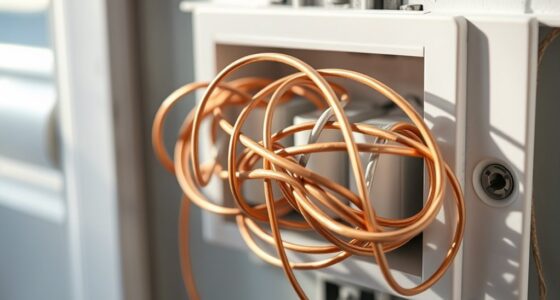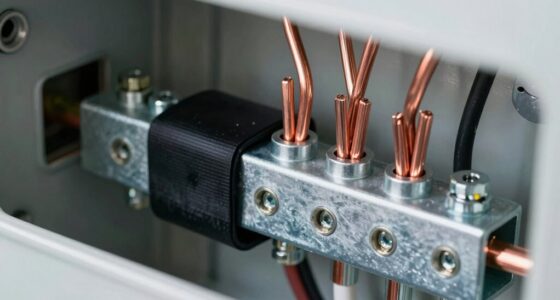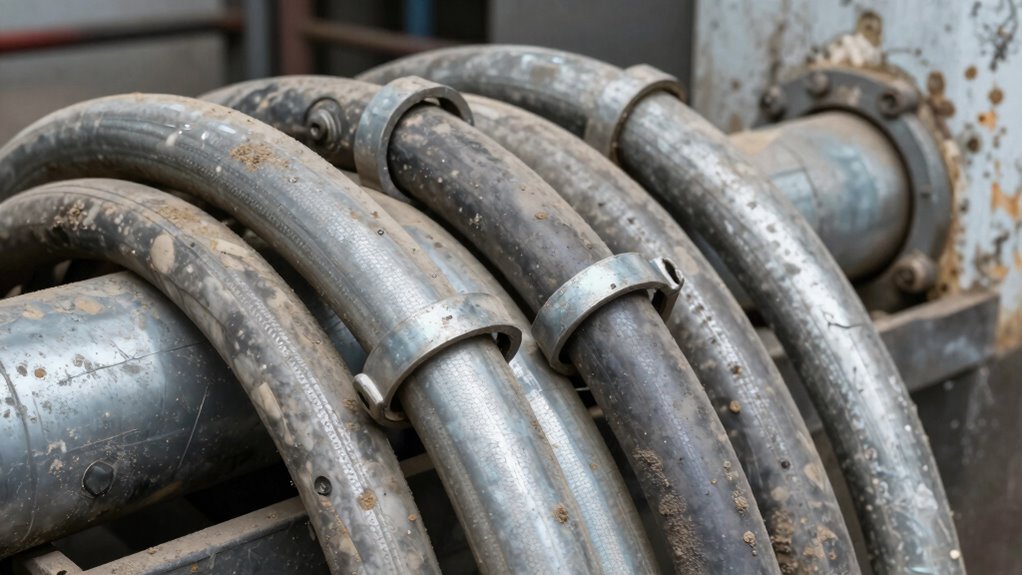

Conduits protect your wiring in tough environments by acting as a barrier against corrosion, physical damage, and extreme temperatures. They shield wires from moisture, chemicals, and salty air that can cause rust and failures. Plus, they defend against impacts, abrasion, and accidental contact that could harm the wiring. This guarantees your electrical system stays safe, reliable, and long-lasting. If you’d like to learn more about how different materials enhance protection, keep exploring!
Key Takeaways
- Conduit acts as a barrier against environmental elements like water, chemicals, and salty air, preventing corrosion of wiring.
- It provides thermal insulation, protecting wires from extreme temperatures, heat expansion, and freezing.
- Conduit offers physical protection from impact, abrasion, and mechanical damage in harsh environments.
- Proper material selection enhances durability and reduces environmental and indoor air quality risks.
- It simplifies maintenance, upgrades, and troubleshooting, ensuring safer and more reliable electrical systems.
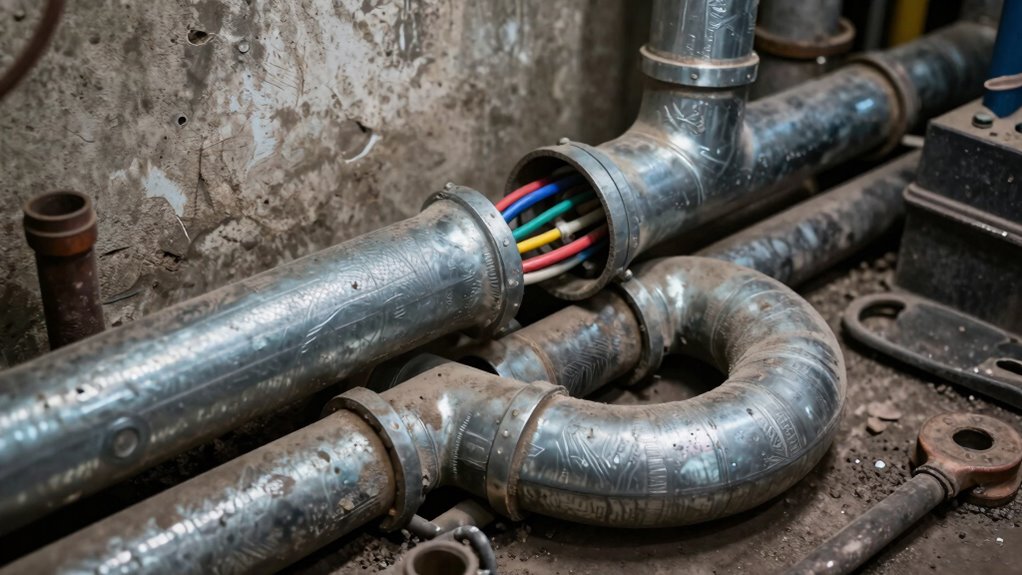
Conduit plays an essential role in safeguarding electrical wiring from damage and wear. When you’re working in tough environments—whether it’s outdoors, industrial settings, or areas prone to moisture—conduit acts as a protective barrier that guarantees your wiring remains intact and functional. One key way it does this is through its corrosion resistance. In harsh conditions, exposure to water, chemicals, or salty air can cause metal wires to corrode, weakening their integrity and risking failure. By encasing wiring within corrosion-resistant conduit, you prevent direct contact with these damaging elements. Materials like PVC, fiberglass, or coated metals are specifically designed to withstand such corrosive forces, extending the lifespan of your electrical system and reducing maintenance needs.
Aside from corrosion resistance, another essential benefit is thermal insulation. In environments with extreme temperatures—hot or cold—wiring can be vulnerable to heat expansion, contraction, or even freezing. Conduit helps regulate the temperature around your wires, providing a layer of thermal insulation that shields them from rapid temperature fluctuations. This insulation minimizes the risk of overheating, which can cause insulation breakdown or short circuits, and also prevents cold temperatures from making the wiring brittle. As a result, your electrical system remains safer and more reliable, even when exposed to challenging thermal conditions. Proper conduit material selection is crucial to ensure these protective qualities are maximized for your specific environment. Selecting the appropriate conduit material based on environmental factors ensures optimal environmental protection and longevity for your wiring system.
The physical protection offered by conduit is equally important. It guards your wiring from mechanical damage caused by impact, abrasion, or accidental contact with heavy machinery. This physical barrier ensures that the wires stay intact, avoiding costly repairs and potential safety hazards. Additionally, using conduit makes it easier to organize and access wiring for future upgrades or troubleshooting, saving you time and effort during maintenance. Proper conduit selection also involves understanding indoor air quality considerations, as certain materials can impact the environment and safety of the space. Choosing the right conduit material not only protects the wiring but can also contribute to a healthier indoor environment. Incorporating environmental factors into your conduit selection process can further enhance the durability and safety of your electrical system. Moreover, advancements in material technology continue to improve the performance and sustainability of conduits used in various environments.

Wocloer Liquid-Tight Conduit – 1/2inch 25 Foot Flexible Non Metallic Liquid Tight Electrical Conduit Kit, With 4 Straight and 3 90-Degree Conduit Connector Fittings.1/2" Dia
- Material: Antioxidant PVC for durability
- Length: 25 feet long
- Included Fittings: 4 straight, 3 90-degree connectors
As an affiliate, we earn on qualifying purchases.
As an affiliate, we earn on qualifying purchases.
Frequently Asked Questions
What Are the Best Types of Conduit for Extreme Temperatures?
For extreme temperatures, you should choose conduits with flexible shielding and fire-resistant materials. Metal conduits like aluminum or steel offer excellent thermal stability and durability, handling high heat or cold. For added protection, consider fire-resistant options that prevent damage and maintain integrity during fires. These types guarantee your wiring stays protected, even in harsh environments, offering both safety and longevity in challenging conditions.
How Does Conduit Resist Corrosion in Marine Environments?
You can rely on conduit with high corrosion resistance to protect wiring in marine environments. Materials like PVC, HDPE, or stainless steel are durable and resist saltwater, humidity, and other corrosive elements. These conduits prevent rust and deterioration, ensuring long-term safety and reliability. By choosing the right material, you enhance the durability of your wiring system, reducing maintenance and potential failures in tough marine conditions.
Are There Specific Conduit Standards for Underground Installations?
Yes, there are specific conduit standards for underground installations that you must follow. These standards ensure your conduit installation withstands soil pressure, moisture, and corrosion. When selecting conduit material, you should prioritize corrosion-resistant options like PVC or coated metal, especially for underground use. Adhering to these standards guarantees your wiring stays protected and reliable, even when buried deep beneath the surface, facing the harshest underground conditions.
How Often Should Conduit Be Inspected for Damage?
You should inspect your conduit regularly, ideally every 1 to 3 years, to catch any signs of conduit aging or damage early. Inspection frequency depends on environmental conditions—harsh environments may require more frequent checks. Look for corrosion, cracks, or displacement, and address issues promptly. Regular inspections guarantee your wiring stays protected, preventing potential failures and safety hazards caused by compromised conduit integrity over time.
Can Conduit Be Recycled or Reused After Installation?
When it comes to conduit, what’s old can become new again—like the saying, “One man’s trash is another man’s treasure.” You can recycle and reuse conduit, especially metal types, by inspecting it for damage and cleaning it thoroughly. Recycling options include sending it to scrap yards, while reuse strategies involve cutting it to size or repurposing it in other projects. This approach saves resources and extends its useful life.

Maxxima 3/4 in. x 25 ft. Galvanized Steel Flexible Electrical Conduit
- Material: Galvanized steel for durability
- Length: 25 feet long
- Diameter: 3/4 inch diameter
As an affiliate, we earn on qualifying purchases.
As an affiliate, we earn on qualifying purchases.
Conclusion
So, imagine your wiring brave enough to face a tornado, an earthquake, and a hurricane—all at once. That’s what conduit does! It’s like a superhero cape for your wires, shielding them from the harshest elements and ensuring they stay safe and sound. With conduit, your wiring isn’t just protected; it’s invincible, ready to conquer any environment. Trust me, once you see how tough and reliable it is, you’ll wonder how you ever lived without it!

25FT 1/2" NPT PVC Liquid Tight Conduit Kit UL 5 Straight 3 Angle Connector
- All-in-One Liquid-Tight Conduit Kit: Includes connectors and straps
- Corrosion and UV Resistant: Withstands oil, acid, alkali, UV, and chips
- Durable Outdoor Protection: Rated for 10+ years outdoor use
As an affiliate, we earn on qualifying purchases.
As an affiliate, we earn on qualifying purchases.

Liquid-Tight Conduit and Connector Kit 1/2 Inch 25 Ft
- Premium Liquid Tight Conduit: 1/2 inch flexible PVC, lightweight, smooth interior
- Corrosion and Weather Resistant: Resists water, oil, abrasion, and extreme temperatures
- Complete Installation Kit: Includes 25 ft conduit with fittings and connectors
As an affiliate, we earn on qualifying purchases.
As an affiliate, we earn on qualifying purchases.