To guarantee your dimmer switch works well, you need to match it with compatible bulbs, drivers, and controls. Choose LED bulbs labeled as dimmable and verify they’re compatible with your specific dimmer type—whether leading-edge or trailing-edge, designed mainly for electronic dimmers. Also, check the dimmer’s load rating and controls to prevent flickering, buzzing, or limited dimming. Continuing to explore these details will help you create a safe, smooth, and efficient lighting setup.
Key Takeaways
- Verify that LED bulbs are labeled as dimmable and compatible with your dimmer switch type (leading-edge or trailing-edge).
- Use LED-compatible dimmers designed for smooth operation with LED drivers to prevent flickering and buzzing.
- Match dimmer load ratings with the total wattage of connected LED bulbs to ensure proper functionality.
- Check if LED bulbs have built-in drivers optimized for specific dimmers to maintain performance and longevity.
- Consult compatibility guides or manufacturer recommendations to select the right combination of bulbs, drivers, and controls.
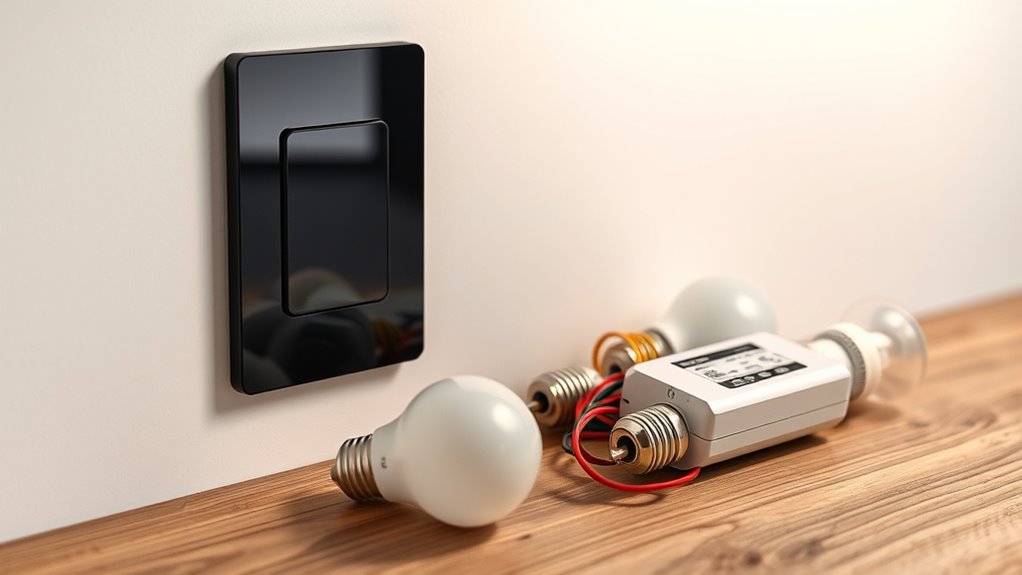
Are you unsure whether your dimmer switch will work with your existing lighting? The key to a smooth dimming experience lies in understanding the compatibility between your dimmer switch types and the LED bulb types you plan to use. Not all dimmer switches are created equal, and different LED bulbs have unique requirements. If you pick the wrong combination, you might experience flickering, buzzing, or limited dimming range. To avoid these issues, it’s essential to match the right dimmer switch types to your LED bulbs.
First, consider the variety of LED bulb types available. LEDs come in many forms—dimmable and non-dimmable, standard A19 bulbs, candle-shaped bulbs, or advanced LED modules. Dimmable LEDs are designed specifically for use with dimmers, but not all are compatible with every dimmer switch. Some LED bulbs feature built-in drivers optimized for certain dimmer types, so checking the packaging for compatibility is vital. Using non-dimmable LEDs with a dimmer switch will generally cause flickering or damage to the bulb, so always verify that the bulb is labeled as dimmable before installation.
Dimmable LEDs are designed for dimmers; always check packaging for compatibility before installation.
Next, you need to familiarize yourself with different dimmer switch types. Traditional incandescent dimmers often use leading-edge technology, which may work with older LED bulbs but can cause problems with newer, more sensitive LEDs. Modern LED-compatible dimmers, often called trailing-edge or electronic dimmers, are specifically designed to work with LED bulb types. These dimmers provide a smoother dimming experience, reduce flickering, and extend the lifespan of your bulbs. It’s also beneficial to choose a dimmer switch that offers a wide dimming range and smooth control, especially if you want precise lighting adjustments.
When selecting a dimmer switch type, pay attention to its load rating and compatibility with LED lighting. Some dimmers are rated for specific wattages and may not work well if your setup exceeds these limits. Also, check whether the dimmer is compatible with multiple LED bulb types—some dimmers are more versatile than others. If you’re installing multiple bulbs or different types of LEDs in the same circuit, ensure the dimmer switch can handle the combined load and is compatible with all bulb types present.
Additionally, understanding dimmer compatibility can help prevent common issues like flickering, buzzing, and limited dimming range, ensuring a seamless lighting experience.
Frequently Asked Questions
Can I Use LED Bulbs With Existing Incandescent Dimmers?
You can use LED bulbs with existing incandescent dimmers, but it depends on the LED compatibility and dimmer types. Many LED bulbs are designed to work with standard dimmers, but some may flicker or not dim smoothly. Check if your dimmer is compatible with LEDs; if it’s an older or incompatible type, you’ll likely need to upgrade to an LED-compatible dimmer for peak performance.
Do Smart Dimmers Support All Bulb Types?
Imagine installing a smart dimmer in your living room, but it flickers when you use LED bulbs. Smart dimmers don’t support all bulb types, as dimmer compatibility varies. For example, some smart dimmers work well with LED and incandescent bulbs but struggle with certain CFLs. Always check the manufacturer’s compatibility list to guarantee your bulb types work seamlessly with your smart dimmer, avoiding flickering and compatibility issues.
How Do I Troubleshoot Flickering Issues With Dimmer Switches?
If your dimmer switch flickers, start troubleshooting by checking for wiring issues, ensuring all connections are secure and correct. Incompatibility problems could also cause flickering, so verify that your bulbs are compatible with your dimmer. Replace any faulty bulbs, and if flickering persists, consider testing the switch with different bulbs or consulting a professional to rule out wiring errors or incompatible components.
Are There Specific Dimmers for Low-Voltage LED Systems?
Think of your low-voltage LED system as a delicate dance; you need a dimmer designed for the rhythm. Yes, there are specific dimmers for low-voltage LED systems that guarantee smooth dimming. Look for models with advanced dimming technology and clear low-voltage compatibility labels. These dimmers work seamlessly with your system, preventing flickering and ensuring reliable performance. Always check compatibility to keep your lighting dance flawless.
What Safety Precautions Should I Take When Upgrading Dimmers?
When upgrading dimmers, you should prioritize electrical safety by turning off power at the breaker before starting. Use a voltage tester to confirm the circuit’s de-energized status, preventing shocks. Carefully follow the manufacturer’s instructions, and verify all connections are secure. If you’re unsure, consult a professional. Regular circuit testing during installation helps catch potential issues early, keeping you safe throughout the upgrade process.
Conclusion
Don’t worry if you’re unsure about matching bulbs, drivers, and controls—doing your research makes all the difference. While it might seem complicated at first, taking the time to verify compatibility guarantees your dimmer system works smoothly and lasts longer. Trust me, investing a little effort now prevents frustrating flickers or dimming issues later. With the right setup, you’ll enjoy perfect lighting control that truly enhances your space—so go ahead, get started today!