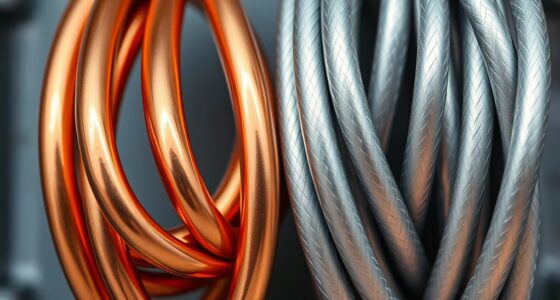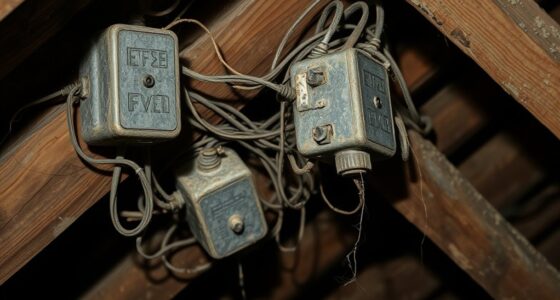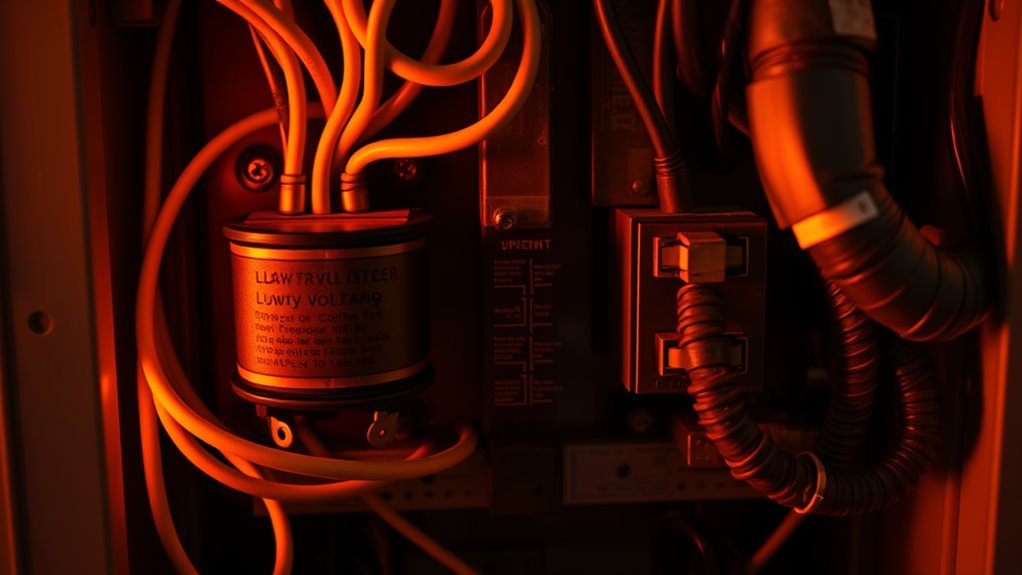

In wiring low-voltage lighting, you use a transformer to step down electrical current, which allows for more flexible placement, easier installation, and safer handling, especially around children or outdoors. In contrast, line-voltage systems connect directly to your main power, requiring careful routing, insulation, and safety precautions due to higher voltage and current, making installation more complex. Understanding these differences can help you choose the right setup—continue exploring to uncover more about wiring concepts for each system.
Key Takeaways
- Low-voltage wiring uses a transformer to step down standard voltage, enabling flexible and safer connections.
- Line-voltage wiring connects directly to mains power, requiring proper insulation and safety measures due to higher electrical risks.
- Low-voltage systems allow for easier routing around obstacles and more customization in fixture placement.
- Line-voltage wiring is straightforward but demands professional installation, especially outdoors or in complex setups.
- Proper wiring and connections are essential for safety and performance in both low- and line-voltage lighting systems.
When choosing lighting for your home or commercial space, understanding the differences between low-voltage and line-voltage lighting is essential. One of the key considerations is the wiring concept, which directly impacts safety and installation. Low-voltage lighting operates at a reduced voltage, typically around 12 or 24 volts, and requires a transformer to step down the standard line voltage. This transformer is a critical component that guarantees transformer safety, preventing electrical hazards and making the system safer to handle. Because the wiring runs at a lower voltage, it’s generally safer to work with, especially when installing fixtures in areas accessible to children or in outdoor spaces.
The wiring of low-voltage systems offers significant installation flexibility. Since the wiring is low voltage, you can often run it through tighter spaces or around obstacles more easily than with line-voltage wiring. This flexibility makes it ideal for accent lighting, landscape projects, and decorative fixtures. You can also connect multiple fixtures to a single transformer, which simplifies the wiring process and reduces the complexity of the setup. Because the transformer is usually located in a convenient, accessible spot, maintenance or adjustments are straightforward. The ability to run low-voltage wiring in more flexible configurations means you can customize your lighting layout more freely, adapting as your needs change. Additionally, advancements in lighting technology continue to improve the efficiency and safety of low-voltage systems, making them an increasingly popular choice for modern installations.
In contrast, line-voltage lighting operates directly at standard household voltage—usually 120 volts in North America or 230 volts elsewhere. This system does not require a transformer, which simplifies the wiring process but introduces different safety considerations. Since line-voltage wiring carries higher electrical current, it must be installed with proper precautions to avoid shock hazards. You’ll need to ensure that wiring is properly insulated, grounded, and protected, especially in damp or outdoor environments. The higher voltage also means that repairs or modifications should be handled by qualified professionals to maintain safety standards.
Frequently Asked Questions
Can I Upgrade My Existing Low-Voltage System to Line-Voltage?
Yes, you can upgrade your existing low-voltage system to line-voltage, but you’ll need to take into account transformer compatibility and wiring modifications. You must replace the transformer with a line-voltage compatible one and update the wiring to meet safety standards. It’s best to consult a professional electrician to ensure proper installation and compliance with electrical codes, avoiding potential hazards or damage to your system.
What Are the Safety Concerns With High-Voltage Wiring?
Think of high-voltage wiring like a lightning bolt—powerful but dangerous. You must prioritize grounding safety to prevent shocks, and guarantee proper insulation to avoid accidental contact or short circuits. Without proper precautions, high-voltage wiring risks electrocution, fires, and equipment damage. Always follow electrical codes, use appropriate materials, and consider professional installation to keep yourself safe, as ignoring these concerns can lead to severe consequences.
How Does Outdoor Weather Impact Low-Voltage Lighting Durability?
Outdoor weather can affect your low-voltage lighting’s durability by causing wear over time. To protect your lights, you should focus on weatherproofing and choosing fixtures with corrosion resistance. Properly sealed connections prevent moisture from entering, reducing damage from rain or snow. Regular maintenance and using high-quality, weather-resistant materials ensure your low-voltage lighting stays functional and looks great despite harsh weather conditions.
Are There Energy Efficiency Differences Between the Two Systems?
You’ll find that low-voltage lighting generally offers better energy savings because it consumes less power compared to line-voltage systems. This means you can reduce your overall power consumption while still achieving effective illumination. Line-voltage lighting might be brighter, but it often uses more energy. So, if energy efficiency is your goal, low-voltage systems are the smarter choice, helping you save on electricity bills and reduce environmental impact.
What Are the Typical Costs for Installing Each Lighting Type?
You’ll find that low-voltage lighting typically costs $100 to $300 per fixture for installation, while line-voltage systems range from $50 to $150. notably, the overall cost comparison shows that low-voltage setups often include higher installation expenses due to transformers and specialized wiring. If you’re on a budget, line-voltage lighting might be more affordable initially, but consider long-term maintenance and energy efficiency for a smarter investment.
Conclusion
Now that you’ve explored both low-voltage and line-voltage lighting, think of them as two different brushes in your toolbox—each painting a unique scene. Low-voltage offers delicate, detailed illumination like a gentle whisper, while line-voltage commands bold, expansive strokes like a roaring flame. Choosing the right one shapes your space’s atmosphere, turning your home into a canvas of comfort and style. With this knowledge, you’re ready to illuminate your world just the way you envision.