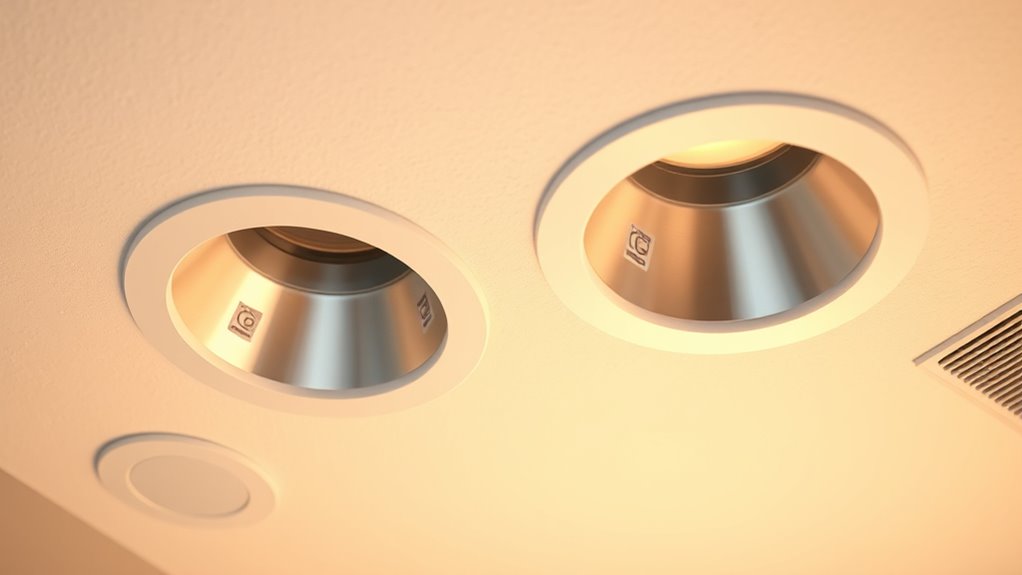
When installing recessed lighting, you need to choose between non-IC and IC-rated cans—IC-rated ones are designed for contact with insulation, preventing fire hazards. LED bulbs are popular because they produce less heat, making them safer and more energy-efficient. Proper heat management and spacing help avoid overheating and damage. Understanding these basics ensures your lighting is safe, effective, and looks great. Keep exploring to master the details behind ideal recessed lighting setup.
Key Takeaways
- Choose non-IC or IC-rated cans based on ceiling insulation to ensure safe contact and prevent overheating.
- LED bulbs are recommended for recessed fixtures due to lower heat output and energy efficiency.
- Proper installation involves turning off power, verifying wiring, and using compatible trims for a professional finish.
- Heat management is critical; IC-rated cans and LED bulbs help prevent insulation damage and fire risks.
- Even spacing (4-6 feet) and correct placement improve lighting coverage, safety, and aesthetic appeal.
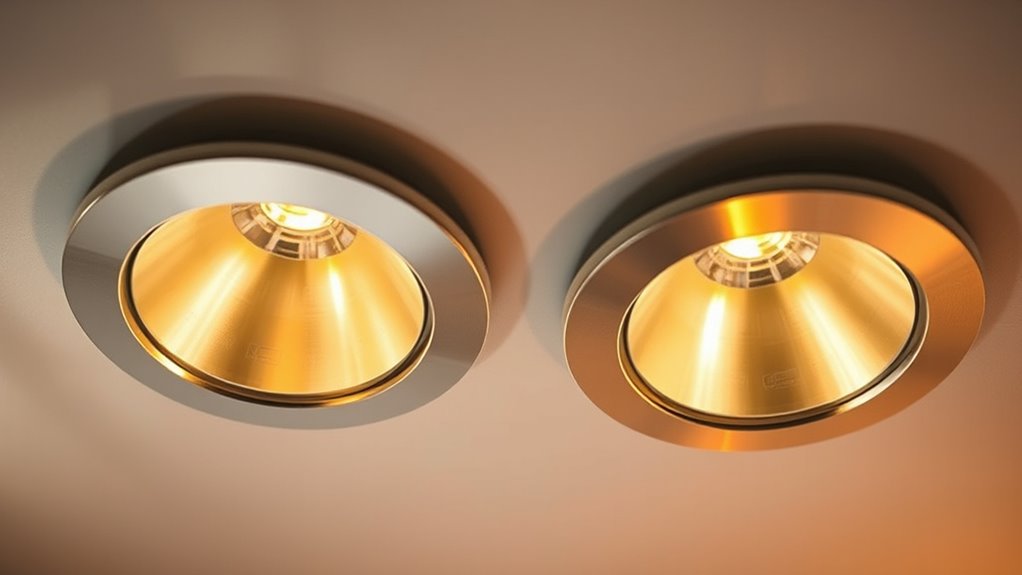
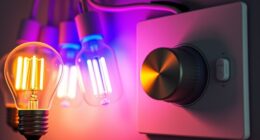
Have you ever wondered how to achieve a sleek, modern look in your home’s lighting? Recessed lighting can be the perfect solution, offering a clean, unobtrusive aesthetic that enhances any space. To get started, understanding the basics of recessed lighting—especially can types, IC ratings, and heat management—is essential. One of the first decisions you’ll make is choosing the right bulb types. LED bulbs are highly recommended because they are energy-efficient, produce less heat, and have a long lifespan. When selecting bulbs, consider the brightness you need, usually measured in lumens, and the color temperature to match the ambiance you desire. You’ll find that many recessed lights are compatible with a variety of bulb types, but checking the fixture’s specifications guarantees compatibility and safety. Installation tips are equally important; always turn off power before starting, and make sure your ceiling wiring is up to code. Use compatible trims and housings to achieve a professional look, and consider the placement of your cans to avoid shadows or uneven lighting. For best results, space your cans evenly, usually 4 to 6 feet apart, depending on the room size and ceiling height. Additionally, understanding Free Floating concepts can help you plan better lighting layouts that prevent shadows and improve overall illumination. When it comes to cans, selecting the right type is vital. There are two main kinds: non-IC and IC-rated cans. Non-IC cans are designed for non-insulated ceilings and require a gap for heat dissipation, so you should keep insulation away from them. IC-rated cans are built to be in contact with insulation, preventing the risk of overheating. Knowing this difference helps you avoid potential fire hazards and guarantees compliance with safety standards. Heat is a significant concern because recessed lights generate heat, especially with traditional bulbs, which can lead to insulation damage or fire risks if not managed properly. LEDs greatly reduce heat output, making them safer and more energy-efficient. If you’re using incandescent or halogen bulbs, pay close attention to the heat produced and ensure your cans have adequate ventilation. Proper installation and choosing cans with good heat dissipation features can make a big difference in safety and longevity.
Frequently Asked Questions
How Do I Choose the Right Size Recessed Light for My Room?
To choose the right size recessed light, consider your ceiling height and bulb wattage. For higher ceilings, opt for larger cans or more powerful bulbs to guarantee proper illumination. Smaller rooms or lower ceilings work well with smaller cans and lower wattage bulbs to avoid overwhelming the space. Measure your room accurately, and select a can size that provides even light distribution without creating harsh shadows or glare.
Can Recessed Lighting Be Installed in Sloped Ceilings?
Yes, you can install recessed lighting in sloped ceilings. Simply select fixtures designed for angled fixture installation, which accommodate the ceiling’s incline. When considering sloped ceiling considerations, choose adjustable or slope-compatible cans that allow the light to aim downward effectively. Proper planning guarantees even illumination and a sleek look, making your space brighter and more beautiful without the hassle of awkward angles or uneven lighting.
What Are the Latest Energy-Efficient Options for Recessed Lights?
You should consider upgrading to energy-efficient recessed lights, like LED fixtures, which consume less power and last longer. Smart bulbs are also a great option, allowing you to control brightness and color remotely. These upgrades help you reduce energy costs and enhance your lighting experience. Look for LED cans with good insulation contact (IC) ratings to guarantee safety and efficiency, making your space both eco-friendly and smart.
How Do I Prevent Glare From Recessed Lighting Fixtures?
To prevent glare from recessed lighting fixtures, focus on glare mitigation by choosing fixtures with proper trims and diffusers. Adjust the fixture positioning so the lights are directed away from your eyes and avoid placing them directly above seating areas. Additionally, select fixtures with lower beam angles to diffuse light more evenly, reducing harsh shadows and glare. Proper placement and fixture choices make a significant difference in creating comfortable, glare-free lighting.
Are There Specific Safety Codes for Recessed Lighting Installation?
Yes, there are safety codes for installing recessed lighting. You need to guarantee fire safety by using fixtures that meet local electrical codes, and verify insulation compatibility to prevent overheating. Always follow manufacturer instructions and check for IC-rated cans if installed in insulated ceilings. Proper installation reduces fire risks, ensures compliance, and maintains safe heat levels, safeguarding your home and loved ones.
Conclusion
Now that you understand the essentials of recessed lighting, you’re better equipped to choose the right cans, consider IC ratings, and manage heat. Remember, “A stitch in time saves nine”—investing a little effort now guarantees your lighting is safe and effective for years to come. With this knowledge, you can create a warm, inviting space while avoiding costly mistakes. Light up your home wisely and enjoy the cozy ambiance you’ve crafted.