Your space heater trips the breaker because it draws a continuous, high current load that exceeds your circuit’s capacity. Most household circuits can support only a limited wattage, and plugging in a heater that consumes more than this causes the breaker to trip for safety. Often, this happens when multiple devices share the same circuit. To prevent trips, verify your heater’s wattage matches your circuit and find out more about managing your electrical load effectively.
Key Takeaways
- Space heaters often draw more current than the circuit’s continuous load capacity, causing breaker trips.
- Continuous loads exceeding 80% of circuit capacity can trigger thermal overload protection in breakers.
- Many home circuits are not designed for sustained high wattage loads, leading to trips during prolonged heater use.
- Overloaded circuits due to continuous high wattage draw can cause overheating and safety hazards.
- Proper load management and ensuring circuits support continuous high wattage help prevent breaker trips.
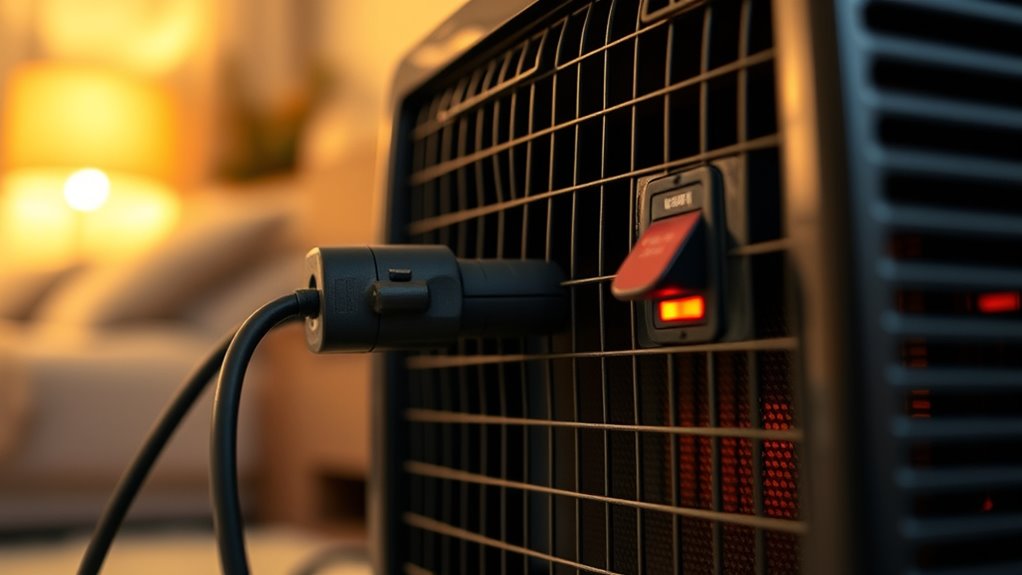
If your space heater keeps tripping the breaker, it can be frustrating and disruptive. The most common cause is that the heater is drawing more current than the circuit can handle. Every circuit has a limited capacity, known as circuit capacity, which determines how much electrical load it can safely support at one time. When you plug in a space heater that exceeds this limit, the breaker trips to prevent overheating and potential fire hazards. It’s essential to understand that breakers are designed to protect your home, and pushing them beyond their limits puts your safety at risk. To avoid this, you need to be aware of your circuit’s capacity and follow proper safety precautions.
Overloading circuits trips breakers; know your capacity and prioritize safety to keep your home protected.
First, you should identify the circuit your heater is plugged into. Many homes have dedicated circuits for large appliances or high-wattage devices. If your heater is on a shared circuit with other devices, the combined load might be too much for the breaker to handle. For example, if your heater consumes 1500 watts and other appliances on the same circuit are running simultaneously, the total load may surpass the circuit capacity, causing the breaker to trip. To prevent this, avoid plugging high-wattage devices into the same circuit or stagger their use. Using a circuit tester can help determine which outlets are on which circuits, so you can manage loads more effectively.
Next, always check the wattage rating of your space heater and compare it to the circuit’s capacity—usually rated at 15 or 20 amps. A typical 15-amp circuit can support up to 1800 watts, while a 20-amp circuit can handle up to 2400 watts. If your heater’s wattage is close to or exceeds these limits, you risk tripping the breaker. Consider plugging the heater into a dedicated outlet on a circuit with sufficient capacity or using a lower-wattage heater. Never attempt to bypass the breaker or modify the wiring, as this is dangerous and violates safety precautions.
Additionally, ensure your electrical system is in good condition. Loose wiring, outdated panels, or damaged outlets can cause intermittent trips and pose serious safety risks. If you experience frequent trips even when your heater is within the recommended capacity, it’s wise to consult an electrician. They can evaluate your home’s electrical system, verify circuit capacity, and recommend upgrades if necessary. Properly functioning circuit breakers are crucial for safety and can prevent overloads. Remember, safety precautions aren’t just about preventing inconvenience—they’re about protecting your home and loved ones from potential hazards. Managing your space heater’s load responsibly by understanding circuit capacity and adhering to safety precautions will keep you warm and safe during the colder months.
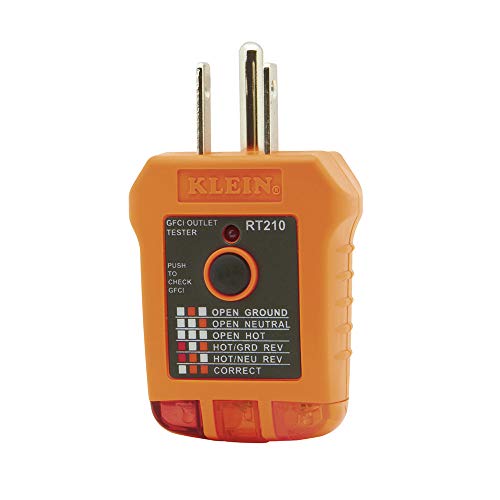
Klein Tools RT210 Outlet Tester, Receptacle Tester for GFCI / Standard North American AC Electrical Outlets, Detects Common Wiring Problems
EFFECTIVE GFCI WIRING PROBLEM DETECTION: GFCI Tester detects common wiring problems in standard and GFCI receptacles, ensuring electrical…
As an affiliate, we earn on qualifying purchases.
As an affiliate, we earn on qualifying purchases.
Frequently Asked Questions
Can Using Multiple Space Heaters Cause Breaker Trips?
Yes, using multiple space heaters can cause breaker trips. When you plug several heaters into extension cords or overload your electrical wiring, you increase the total current draw beyond what the circuit can handle. This triggers the breaker to trip as a safety measure. To avoid this, use properly rated outlets, avoid daisy chaining extension cords, and make certain your electrical system can support the combined load of multiple heaters.
Do Different Types of Space Heaters Impact Breaker Trips Differently?
Different types of space heaters impact breaker trips based on heater wattage and outlet compatibility. Heaters with higher wattage draw more power, increasing the risk of overload. Oil-filled radiators, ceramic heaters, and fan heaters differ in their power consumption, so choosing one compatible with your outlet prevents trips. Always check the wattage and confirm your outlet can handle the load to avoid circuit overloads and breaker trips.
How Does Room Size Affect Space Heater Load and Breaker Trips?
Room size directly affects your space heater’s load and breaker trips. A larger room requires more heat, increasing the heater’s wattage and the load on your circuit. Poor insulation and high ceiling height make it worse, forcing the heater to work harder. If your room is big, guarantee your circuit can handle the increased load, and consider improving insulation for better efficiency and to prevent breaker trips.
Are Certain Circuit Breakers More Prone to Tripping With Space Heaters?
Certain circuit breakers are more prone to tripping with space heaters because of their electrical infrastructure and appliance compatibility. Standard breakers may struggle with the continuous load of a space heater, especially if they’re not designed for high current. Look for breakers rated for higher amperage and make certain your space heater matches your electrical system’s capacity. Upgrading your breaker or using dedicated circuits can prevent frequent trips and keep your space safe.
What Safety Precautions Can Prevent Breaker Trips When Using Space Heaters?
Imagine you’re using a space heater that trips your breaker. To prevent this, always use surge protectors designed for high loads, and set your thermostat to avoid overheating. Avoid running the heater with other high-wattage appliances on the same circuit. Regularly check wiring and circuit capacity to guarantee safe operation. These precautions help reduce the chance of breaker trips and keep your space heater running smoothly.

GiveBest Portable Electric Space Heater with Thermostat, 1500W/750W Safe and Quiet Ceramic Heater Fan, Heat Up 200 Square Feet for Office Room Desk Indoor Use, Silver
2 in 1 heater fan: This ceramic heater offers dual heating modes (1500W/750W) plus a cool air fan,…
As an affiliate, we earn on qualifying purchases.
As an affiliate, we earn on qualifying purchases.
Conclusion
Just like a vigilant guardian guarding your home’s heart, your breaker keeps the flow of comfort steady, ensuring safety from unseen dangers. When your space heater trips the breaker, it’s a silent warning, a call to respect the delicate balance of power and responsibility. By understanding the rules and respecting the limits, you become the steward of your sanctuary, preventing chaos and keeping your warmth alive—hope and safety shining through the darkness, always ready to light your way.

Belkin 12-Outlet Surge Protector Power Strip w/ 12 AC Outlets & 8ft Flat Plug, UL-Listed Heavy-Duty Extension Cord for Home, Office, Travel, Computer, Laptop, Charger – 3,940 Joules of Protection
MULTI-OUTLET SURGE PROTECTOR: Power everything on your desk with a single compact multi outlet extension cord; 12 AC…
As an affiliate, we earn on qualifying purchases.
As an affiliate, we earn on qualifying purchases.

Ontel Handy Heater Turbo Wall Outlet Plug In Heater – Portable Indoor Ceramic Space Heater w/Adjustable Thermostat, 12-Hour Timer, Auto Shut Off, Quiet – Plug In Wall for Office, Bedroom, Camping
Compact & Powerful Plug In Heater: The Ontel Handy Heater Turbo is a small plug in space heater…
As an affiliate, we earn on qualifying purchases.
As an affiliate, we earn on qualifying purchases.