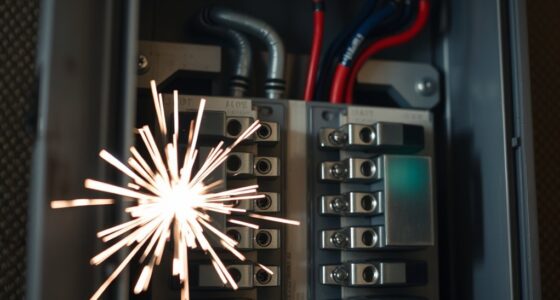
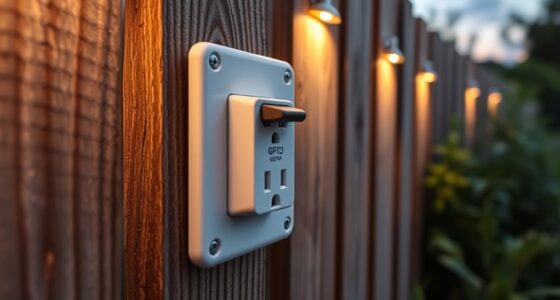
GFCIs and AFCIs serve different safety roles in your home’s wiring. GFCIs detect ground faults that could cause electric shocks and quickly shut off power to prevent harm. AFCIs identify dangerous arc faults that can ignite fires, cutting power before a blaze starts. Both are essential for thorough protection, but many people don’t realize their distinct functions. Keep exploring to understand how these devices work together to keep you safe.
Key Takeaways
- GFCIs detect ground faults to prevent electrical shocks, while AFCIs identify arcing faults to prevent fires.
- GFCIs respond instantly to current imbalances, stopping shocks; AFCIs trip during dangerous arcing conditions.
- GFCIs are essential in moisture-prone areas, whereas AFCIs are vital in living spaces and bedrooms for fire prevention.
- Both devices serve different safety functions and are not interchangeable, but combined they provide comprehensive protection.
- Proper installation, testing, and understanding of each device’s purpose are crucial for effective electrical safety.

ELEGRP GFCI Outlet 15 Amp, Self-Test GFI Electrical Outlet with Thinner Design, TR Tamper Resistant GFCI Receptacle, Ground Fault Circuit Interrupters with Wall Plate, UL Listed, Matte White, 1 Pack
- Dual Protection System: Twin solenoid and SCR for extended life
- Frequent Self-Test: Performs self-test every 5 seconds
- Fast Ground Fault Response: Cuts power in 0.025 seconds during faults
As an affiliate, we earn on qualifying purchases.
As an affiliate, we earn on qualifying purchases.
How GFCIs Detect Ground Faults and Why They Save Lives

Ground faults can occur unexpectedly when electrical current leaks from a circuit to the ground, posing a serious risk of shock or fire. That’s where ground fault detection comes into play. GFCIs are equipped with safety mechanisms that monitor the flow of electricity in real-time. When a ground fault occurs, the GFCI quickly detects any imbalance between the hot and neutral wires, often within milliseconds. This rapid response cuts off power before anyone gets hurt. These safety mechanisms are designed to protect you from dangerous shocks by shutting off electricity instantly. By continuously monitoring electrical currents, GFCIs provide reliable ground fault detection, making your home safer. Their quick action is what saves lives and prevents electrical fires caused by ground faults. Automation in safety technology continues to improve, further enhancing home electrical protection systems. Additionally, advancements in ground fault detection technology are making these devices even more responsive and dependable.

Square D – HOM120PDFC Homeline Plug-On Neutral 20 Amp Single-Pole Dual Function (CAFCI and GFCI) Circuit Breaker,
- Amperage and Pole: 20 Amp Single-Pole
- Functionality: Dual CAFCI and GFCI
- Installation: Faster, no pigtails
As an affiliate, we earn on qualifying purchases.
As an affiliate, we earn on qualifying purchases.
The Functionality of AFCIs in Preventing Electrical Fires

Arc Fault Circuit Interrupters (AFCIs) play a crucial role in preventing electrical fires by detecting dangerous electrical arcs before they can ignite nearby materials. When you have an AFCI installed, it continuously monitors your electrical wiring for arc faults—irregular, high-energy sparks caused by damaged or degraded wiring. Unlike standard circuit breakers, AFCIs identify the unique signature of arcing, which often occurs silently and can go unnoticed. Once an arc is detected, the AFCI quickly trips the circuit, cutting off power and preventing a potential fire. This proactive approach helps protect your home from fires caused by faulty wiring or damaged connections. By interrupting dangerous electrical activity early, AFCIs save lives and safeguard your property. Sizing and load‑planning tools ensure the AFCI is correctly matched to your home’s electrical demands, enhancing safety and performance. Staying informed about industry trends in AFCI technology can also help homeowners understand the evolving safety features that improve overall electrical protection. Additionally, understanding electrical wiring safety principles can further reduce risks associated with arc faults. Regular maintenance and inspections of your electrical system can detect early signs of wiring issues, further preventing potential hazards.

Eaton Type BR 15-Amp 1-Pole Dual Function AFCI/GFCI Circuit Breaker
- Dual Function Protection: AFCI and GFCI combined in one device
- Cost-Effective Installation: Reduces installation costs with single device
- Comprehensive Circuit Coverage: Protects entire circuit including home-runs
As an affiliate, we earn on qualifying purchases.
As an affiliate, we earn on qualifying purchases.
Key Locations and Installation Guidelines for GFCI and AFCI Devices

Knowing where to install GFCI and AFCI devices is essential for safety and code compliance. GFCIs are typically placed in areas with moisture, like bathrooms and kitchens, while AFCIs are installed in bedrooms and living spaces. Follow these guidelines to guarantee proper protection and meet electrical standards. A new sentence with electrical safety standards and the rest of the sentence. Additionally, understanding AI bifurcation can help professionals anticipate future safety challenges related to evolving electrical technologies.
GFCI Placement Areas
Where should GFCI and AFCI devices be installed to maximize safety? GFCI devices should be placed in areas prone to moisture and water exposure, such as outdoor outlets and bathroom circuits. These locations are at higher risk of electrical shock, so installing GFCIs here provides essential protection. For outdoor outlets, GFCIs prevent shocks from accidental contact with water or damp conditions. In bathrooms, they protect against electrical hazards from wet hands or splashes. Ensure GFCIs are installed where outlets are within six feet of a sink, tub, or shower. Proper placement reduces the risk of shock and keeps you safe during everyday activities. Additionally, understanding electrical safety standards can help ensure proper installation and compliance with local codes. Regular testing of GFCI devices is recommended to maintain their protective function, as proper maintenance is essential for safety. It is also important to consider installation procedures to guarantee these devices function correctly and provide maximum protection. Always follow local electrical codes and manufacturer instructions for correct installation. Proper device testing further enhances safety by confirming that GFCIs are functioning correctly over time. Incorporating advanced safety features can further enhance protection in critical areas.
AFCI Installation Zones
To maximize safety, you should install AFCI devices in areas where electrical fires are most likely to start, such as living rooms, bedrooms, and hallways. These zones are common locations for electrical wiring issues that can lead to fires. In bedrooms, outlets should be protected with AFCIs to prevent fires caused by faulty wiring or damaged cords. Similarly, outdoor receptacles should be AFCI protected if they are part of the same circuit, reducing fire risk from outdoor electrical equipment. Hallways and living rooms are high-traffic areas where electrical devices and cords are frequently used, making AFCI installation essential. Proper placement in these zones ensures you’re safeguarding your home against fires caused by wiring faults or arc faults in critical areas. Additionally, understanding the potential pitfalls in adopting new payment technologies can help ensure that safety standards are maintained during electrical upgrades and installations. Being aware of installation guidelines ensures that AFCI devices are correctly positioned to provide optimal protection and prevent unintended tripping or failure. Ensuring that proper wiring practices are followed during installation can further enhance safety and device reliability.
ELEGRP GFCI Outlet 15 Amp, Self-Test GFI Electrical Outlet with Thinner Design, TR Tamper Resistant GFCI Receptacle, Ground Fault Circuit Interrupters with Wall Plate, UL Listed, Matte White, 1 Pack
- Dual Protection System: Twin solenoid and SCR for extended life
- Frequent Self-Test: Performs self-test every 5 seconds
- Fast Ground Fault Response: Cuts power in 0.025 seconds during faults
As an affiliate, we earn on qualifying purchases.
As an affiliate, we earn on qualifying purchases.
Comparing the Protection Levels Offered by GFCIs and AFCIs

GFCIs and AFCIs serve different but equally important roles in protecting your electrical system. GFCIs detect resistance differences caused by ground faults, quickly shutting off power when they sense imbalance, which helps prevent shocks. AFCIs, on the other hand, monitor wiring for arcing faults that could ignite fires, providing a different kind of safety. Their testing procedures differ: GFCIs are tested with a simple button press to ensure proper functioning, while AFCIs require more thorough testing to verify arc detection capabilities. Both devices are designed to protect against specific hazards, but neither replaces the other. Understanding their protection levels can help you better decide where to install each device to maximize safety in your home. Additionally, regular testing and awareness of home security systems can improve overall safety and peace of mind. Incorporating preventive maintenance practices can further enhance the effectiveness of these safety devices, especially as research highlights the importance of continuous monitoring of AI behavior for safety in technological systems. Furthermore, staying informed about advancements in electrical safety technology can aid in making better choices for your home’s electrical safety upgrades.
Common Misconceptions About GFCI and AFCI Safety Features

Many homeowners assume that GFCIs and AFCIs offer overlapping protection or can be used interchangeably, but this isn’t accurate. A common ground fault myth is that GFCIs prevent all electrical hazards, which isn’t true—they’re designed to stop ground faults, not protect against arc faults. Circuit breaker confusion also arises, as some believe AFCIs function like standard circuit breakers; instead, they detect dangerous arcing. Remember:
- GFCIs protect against ground faults, preventing shock.
- AFCIs detect arc faults, reducing fire risk.
- Both devices serve different safety purposes.
- They aren’t interchangeable, and each should be installed where needed.
Understanding these distinctions helps you avoid misconceptions and ensures your home is properly protected against electrical hazards.
Why Both GFCIs and AFCIs Are Essential for Complete Home Electrical Safety

Since electrical hazards can take multiple forms, relying on only one safety device leaves your home vulnerable, making it essential to use both GFCIs and AFCIs. GFCIs protect against ground faults that cause shocks, while AFCIs prevent fires from arc faults. Together, they cover different risks, ensuring exhaustive safety. Integrating both devices into your home design not only reduces hazards but also enhances energy efficiency by preventing electrical damage that could lead to wasted power. For example, AFCIs help avoid fire risks from faulty wiring, and GFCIs safeguard against electrocution near water sources. Recognizing the different functions of these devices can further inform your safety measures and promote a comprehensive approach to electrical protection. Consider this table to understand their roles:
| Safety Feature | Protects Against | Ideal Locations | Energy Impact | Home Design Benefits |
|---|---|---|---|---|
| GFCI | Ground faults | Bathrooms, Kitchens | Prevents power waste | Safer, efficient spaces |
| AFCI | Arc faults | Living rooms, Bedrooms | Avoids electrical fires | Safer, code-compliant |
Additionally, understanding the fundamental differences between these devices can help homeowners make informed decisions about electrical safety. Recognizing the specific risks each device addresses can further enhance a homeowner’s ability to create a safer living environment.
Frequently Asked Questions
Can GFCIS or AFCIS Cause Nuisance Tripping in Homes?
Yes, GFCIs and AFCIs can cause nuisance tripping in your home. Faulty wiring or increased device sensitivity might trigger them unexpectedly. GFCIs detect small leakage currents, and AFCIs respond to arc faults, so if wiring is compromised or there’s a minor issue, they may trip unnecessarily. Regular inspections and proper installation help minimize nuisance trips, ensuring your safety without constant interruptions.
Are GFCIS and AFCIS Compatible With All Types of Electrical Systems?
You might worry about compatibility issues, but GFCIs and AFCIs are designed to meet electrical codes and work with most modern systems. They’re compatible with standard wiring, whether in homes or commercial buildings. However, older or specialized systems could have limitations. Always check manufacturer guidelines and consult an electrician to verify your GFCIs and AFCIs fit your electrical setup safely and effectively.
How Often Should GFCI and AFCI Devices Be Tested or Replaced?
You should test GFCI and AFCI devices monthly during your inspection schedule to guarantee they’re working properly. Replace GFCIs every 10 years and AFCIs every 20 years or if they trip frequently or show signs of damage. Regular testing and timely replacement help maintain safety, prevent electrical hazards, and ensure your system functions correctly. Keep track of these intervals to protect your home effectively.
Do GFCIS and AFCIS Protect Against All Electrical Hazards?
Imagine you’re using a hairdryer near a sink when a ground fault causes a shock; a GFCI trips, preventing injury. While GFCIs protect against ground faults and AFCIs detect arc faults, they don’t cover all electrical hazards like overloads or short circuits. You still need regular inspections and proper wiring to stay safe, but these devices markedly reduce risks from specific electrical faults.
Can Outdoor GFCI and AFCI Outlets Withstand Harsh Weather Conditions?
Outdoor GFCI and AFCI outlets are designed with weather resistance and outdoor durability in mind, so they can withstand harsh weather conditions like rain, snow, and extreme temperatures. They feature protective covers and rugged materials to prevent moisture intrusion and physical damage. However, it’s essential to guarantee they are properly installed and maintained, as prolonged exposure to severe weather can still affect their performance.
Conclusion
By understanding the essential roles of GFCIs and AFCIs, you protect your loved ones from potential hazards. Imagine a bathroom where a faulty appliance causes a ground fault; a GFCI quickly trips, preventing shock. Meanwhile, AFCIs can stop an unseen arc from sparking a fire in your living room wiring. Installing both devices ensures your home is a safer place—because a little prevention today can save lives tomorrow.