
Homes use single-phase power because it provides enough voltage and current for everyday needs like lighting, appliances, and small machines, all at a lower cost and simpler installation than three-phase systems. Single-phase setups are designed to handle typical household loads efficiently, making them more practical and affordable for residential use. If you’re curious about how this system works and why it’s standard, there’s more to discover about power distribution fundamentals.
Open a free Amazon Business account
Business pricing, bulk buying and tax-exempt orders.
As an affiliate, we earn on qualifying purchases.
Key Takeaways
- Homes typically use single-phase power because their electrical loads are lower and don’t require the capacity of three-phase systems.
- Single-phase systems are simpler and more cost-effective to install and maintain for residential electricity needs.
- Residential distribution networks are optimized for single-phase supply, making it practical and efficient for household use.
- Three-phase power provides continuous, balanced power suitable for heavy industrial equipment, which is unnecessary for homes.
- Using single-phase power reduces infrastructure complexity and costs, aligning with the lower demand of domestic electrical systems.
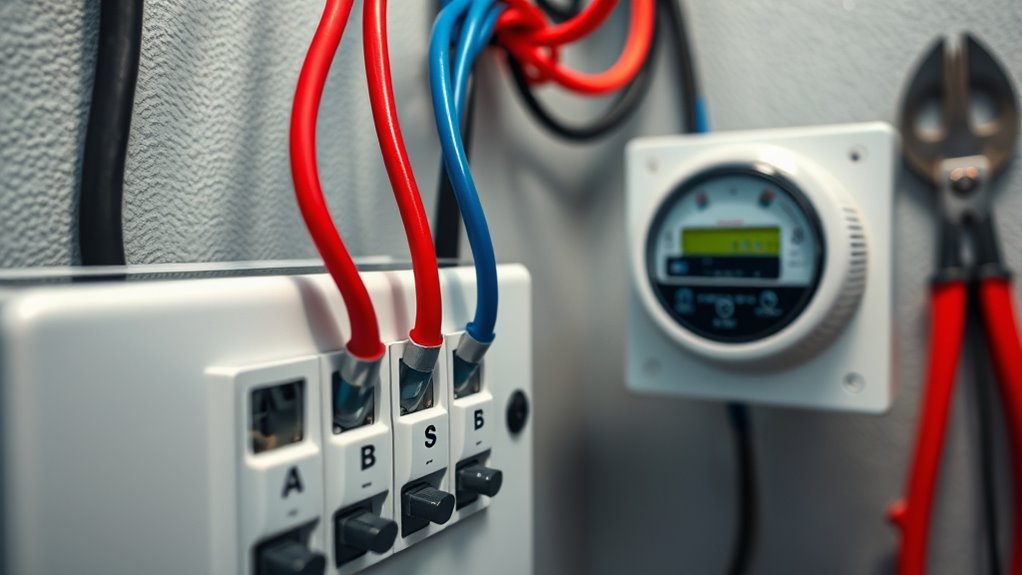
Have you ever wondered how large industries and power grids efficiently deliver electricity? It all comes down to power distribution systems designed to handle massive electrical loads safely and reliably. In these systems, three-phase power plays a vital role because it provides a steady, balanced supply of electricity that can support heavy machinery and extensive infrastructure. When it comes to homes, however, the setup is different. Most residential properties use single-phase power, which is simpler and more cost-effective for lower electrical loads. But why is that the case? Understanding the difference begins with grasping how power distribution works and why single-phase systems are enough for everyday household needs.
Power distribution involves transmitting electricity from generation plants through high-voltage lines, then stepping it down via transformers to a usable voltage level. At this stage, the electrical load—the amount of electricity a building consumes—is a key consideration. Large industries and commercial facilities require three-phase power because it can carry more load efficiently, reduce wiring costs, and provide a more stable power supply for heavy equipment. The three-phase system delivers power in three separate alternating currents, each offset in phase by 120 degrees. This arrangement ensures that the power flow remains constant, reducing pulsations and providing a smooth, continuous supply that’s essential for industrial processes.
Large industries require three-phase power for efficient, stable, and high-capacity electricity delivery.
For residential areas, the electrical load is considerably lower. Most homes only need enough power to run lighting, appliances, and small machinery. Installing a three-phase system in every house would be unnecessary and more costly, both in terms of infrastructure and maintenance. Instead, homes are supplied with single-phase power, which involves just one alternating current that’s sufficient for typical household use. Single-phase systems are simpler, requiring fewer conductors and transformers, which keeps costs down and installation straightforward. Additionally, cost-effectiveness makes single-phase power the practical choice for residential use.
The reason homes don’t need three-phase power boils down to the electrical load. Since household appliances and lighting don’t demand the high, steady power that factories or large commercial spaces do, a single-phase supply does the job efficiently. It provides enough voltage and current for everyday use without the complexities of balancing multiple phases. Moreover, the distribution network in residential areas is designed to handle these lower loads effectively, ensuring reliable service without the extra cost and complexity associated with three-phase systems. In essence, the choice of single-phase power in homes is a balance between capacity, cost, and practicality—making it the most suitable solution for everyday electrical needs.
As an affiliate, we earn on qualifying purchases.
Frequently Asked Questions
Can Single-Phase Power Support Large Industrial Machinery?
Single-phase power can’t support large industrial loads or heavy machinery effectively because it provides limited power distribution. Industrial equipment requires a three-phase system, which delivers higher power capacity and stability for heavy-duty operations. Using single-phase power for such machinery risks overheating, inefficiency, and potential damage. For industrial loads, switching to a three-phase system guarantees reliable, efficient power distribution, meeting the demands of large industrial machinery safely and effectively.
How Does Three-Phase Power Improve Energy Efficiency?
Imagine boosting your energy efficiency to the max—three-phase power makes that happen. It improves power factor and voltage stability, reducing energy waste and ensuring your system runs smoothly. With better power factor, less energy gets lost as heat, while stable voltage keeps equipment operating ideally. You’ll notice less downtime and lower energy bills, making your electrical system as efficient as a well-oiled machine.
Are There Homes With Three-Phase Electrical Systems?
Yes, some homes do have three-phase electrical systems, especially in commercial or industrial areas. Historically, three-phase power was developed to improve efficiency for large loads, but in residential wiring, single-phase systems are more common due to simpler installation and cost. If your property requires higher power, understanding the three-phase history helps you see why it’s used in specific applications, though most homes still rely on single-phase systems for everyday needs.
What Are the Costs Associated With Upgrading to Three-Phase Power?
Upgrading to three-phase power involves significant costs, including a thorough cost analysis of upgrade expenses. You’ll need to take into account the price of new transformers, wiring, and potentially upgrading your meter and electrical panel. Installation fees from your utility company also contribute to the total. While the initial investment can be high, the improved power capacity benefits large appliances or future expansion, making it a worthwhile consideration for some homeowners.
How Does Phase Imbalance Affect Household Appliances?
Phase imbalance can cause voltage fluctuations, leading to unstable power delivery to your household appliances. This instability stresses motors and electronic components, which can shorten their lifespan and cause frequent malfunctions. You might notice appliances running inefficiently or shutting down unexpectedly. To protect your investments, make sure your electrical system maintains balanced phases, promoting voltage stability and extending the lifespan of your appliances.
residential electrical wiring kit
As an affiliate, we earn on qualifying purchases.
As an affiliate, we earn on qualifying purchases.
Conclusion
Think of your home’s electrical system as a single-stream river—steady, reliable, and simple. Three-phase power is like a bustling, multi-lane highway designed for heavy traffic, which isn’t needed in everyday homes. Just as a calm stream supports your daily life without the chaos of a busy road, single-phase power keeps your home running smoothly and efficiently. So, while three-phase might be impressive, your home’s quiet, steady current is perfectly suited for your needs.
As an affiliate, we earn on qualifying purchases.
As an affiliate, we earn on qualifying purchases.
Evergreen bestsellers Picks
bestsellers
As an affiliate, we earn on qualifying purchases.