
Voltage drops over distance because electrical resistance in the wire causes energy loss, which reduces the voltage as current travels farther from the power source. Thinner and longer wires have higher resistance, leading to more significant voltage drops. How much voltage drops depends on the wire’s material, gauge, and length. If you want to keep voltage stable over long runs, choosing the right wire size is essential—discover more ways to minimize voltage loss below.
Key Takeaways
- Voltage drops due to resistance in the wire convert electrical energy into heat, reducing voltage as current travels further.
- Longer wire runs increase total resistance, causing greater voltage loss over distance.
- Thinner wires have higher resistance, leading to more significant voltage drops compared to thicker wires.
- Selecting appropriate wire gauge and material (like copper) minimizes voltage drop over extended distances.
- Calculating expected voltage drop helps determine the suitable wire size to maintain voltage levels within safe limits.
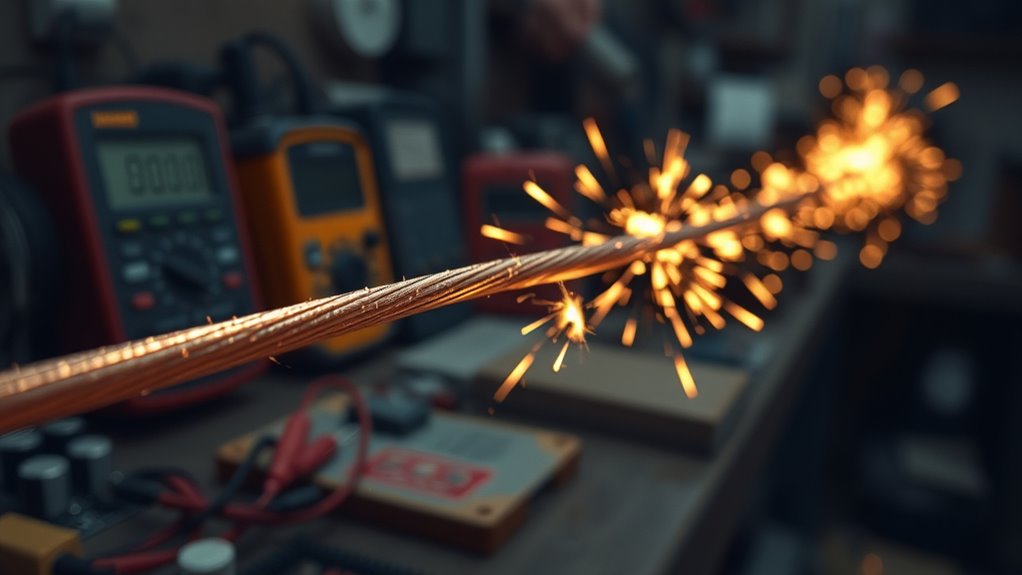
When electrical current travels through a wire, the voltage it carries can decrease over distance, a phenomenon known as voltage drop. This decrease occurs because the wire resists the flow of current, and this resistance causes some of the electrical energy to be lost as heat. The higher the resistance effects, the more important the voltage drop becomes. Resistance effects are influenced by several factors, but one of the most vital is the wire gauge, or thickness, of the conductor. Thinner wires have higher resistance, leading to greater voltage drops over the same distance, while thicker wires have lower resistance and better voltage retention.
Understanding how wire gauge impacts voltage drop helps you make better choices for your electrical systems. When you select a wire gauge, you’re fundamentally balancing cost, flexibility, and resistance. For longer runs, thicker wires (lower gauge numbers) are recommended because they minimize resistance effects. For example, a 14-gauge wire might be suitable for short circuits, but if you’re running power over a long distance, switching to a 10-gauge or 8-gauge wire can substantially reduce voltage drop. This is especially important in setups where maintaining voltage levels is essential, such as in lighting or sensitive electronic equipment.
Thicker wires reduce voltage drop over long distances, ensuring consistent power for sensitive equipment.
The resistance effects caused by a thinner wire increase with distance, meaning the voltage drop can become considerable if you don’t use an appropriate gauge. When you install wiring, keep in mind that the longer the run, the more resistance accumulates, and the more voltage you’ll lose. This could lead to dim lights, underperforming appliances, or even damage to sensitive electronics. To prevent these issues, calculating the expected voltage drop before installation helps you choose the right wire gauge and ensure your system operates efficiently and safely. Additionally, understanding the material of the wire, such as copper or aluminum, can help you optimize resistance effects for your specific application.
It’s also worth noting that resistance effects aren’t just about wire gauge; material plays a role too. Copper, for example, has lower resistance compared to aluminum, so it’s a better choice for minimizing voltage drop over long distances. However, the primary way you control resistance effects is by selecting the appropriate gauge based on the length of the wire run and the current load. If you ignore resistance effects and use a wire gauge that’s too thin, you risk losing too much voltage, which compromises performance and safety. That’s why understanding how resistance effects and wire gauge relate helps you design more reliable electrical systems that deliver consistent voltage throughout the entire run.
Frequently Asked Questions
How Can I Measure Voltage Drop Accurately at My Location?
To measure voltage drop accurately at your location, use proper measurement techniques with reliable testing devices like a digital multimeter. First, turn off power, then connect the multimeter probes across the conductor or device where you want to check. Turn the power back on and record the readings. Make sure your testing devices are calibrated and follow safety guidelines. This approach helps you get precise voltage drop measurements for better system analysis.
What Factors Influence Voltage Drop Besides Distance?
Besides distance, your voltage drop is influenced by conductor resistance and load current. Higher resistance in the conductor causes more voltage to be lost, especially under heavy load. As load current increases, voltage drop also rises because more energy is used to push current through the wire. Ensuring you use proper conductor sizes and materials can help minimize these factors, maintaining voltage levels for your electrical system.
Are There Standard Acceptable Voltage Drop Limits?
Think of your electrical system as a river flowing to your home. Standard acceptable voltage drop limits are like a gentle stream, usually 3% for feeders and 5% for branch circuits, ensuring smooth flow. Power line resistance and load balancing influence these limits, preventing excessive voltage loss. Staying within these standards keeps your appliances running efficiently and protects your wiring from undue stress.
How Does Wire Material Affect Voltage Drop?
Your wire material substantially affects voltage drop because different materials have varying conductivity. Copper, with high conductivity, offers low material resistance, minimizing voltage loss over distance. In contrast, aluminum has higher resistance, leading to more voltage drop. When selecting wire material, consider conductivity and resistance to guarantee efficient power transfer, especially over longer distances. Using high-quality copper wires helps maintain voltage levels and reduces energy losses in your electrical system.
Can Voltage Drop Cause Equipment Damage?
A stitch in time saves nine, so neglecting voltage drop can damage your equipment. Voltage drops can cause your devices to operate improperly or fail prematurely, especially if circuit protection isn’t adequate. Poor power quality due to voltage fluctuations stresses components, risking damage. By monitoring voltage levels and ensuring proper wiring, you protect your equipment and maintain ideal performance, preventing costly repairs down the line.
Conclusion
Understanding voltage drops is like watching a river slow as it travels downstream. The longer the wire, the more resistance it encounters, causing the voltage to drop. This is why keeping wires short or choosing thicker cables matters. By paying attention to these drops, you guarantee your electrical devices work efficiently, just like a well-maintained engine runs smoothly. So, remember, distance can sap power like a lazy river losing speed, but proper planning keeps your voltage steady and strong.