
A line connection is where you bring electrical power into a device, usually connected to the hot or “live” terminal, while the load connection directs that power out to outlets or appliances. Properly identifying and wiring these connections guarantees safe operation and prevents hazards like shocks or fires. If you want to understand how to distinguish between them and why it matters, there’s more valuable information to explore that can help you wire safely and effectively.

Get backup power and energy gear delivered free with Prime
- Fast, free delivery on millions of items
- Prime Video, Amazon Music and more included
- Member-only deals all year
Key Takeaways
- Line connection is where power enters a device, typically connected to the hot or “line” terminal.
- Load connection is where power exits to the next circuit component, linked to the “load” terminal.
- Proper wiring involves connecting line to the power source side and load to the device’s output side.
- Incorrectly swapping line and load wires can cause malfunction, safety hazards, or electrical shocks.
- Correct identification of line and load ensures safe, efficient operation and troubleshooting of electrical circuits.
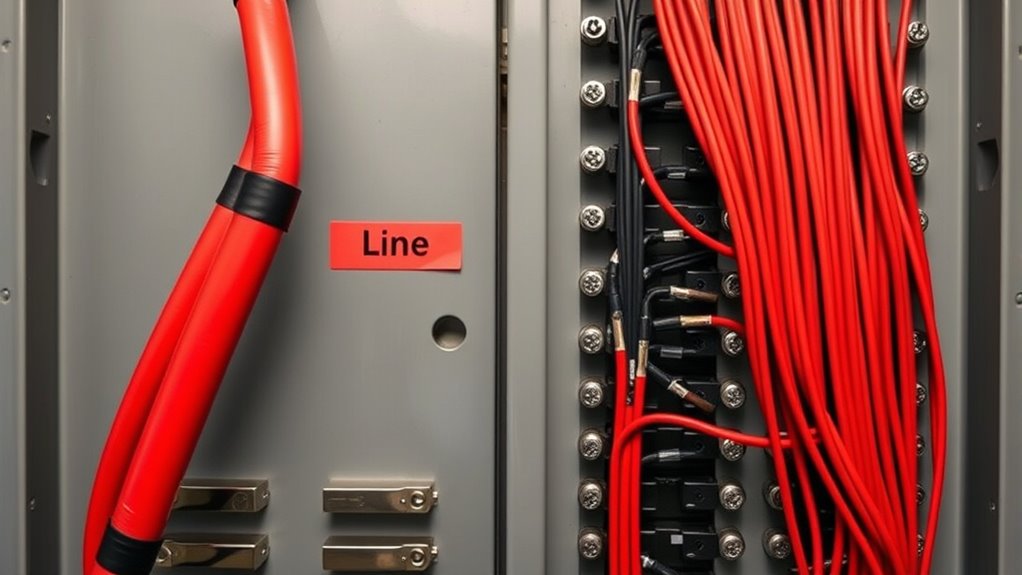
Understanding the difference between line and load connections is essential for anyone working with electrical circuits. It helps ensure your safety and the proper functioning of your electrical system. When you’re installing or troubleshooting a device like a breaker or switch, knowing which wire is which can prevent dangerous mistakes. For example, connecting the line wire incorrectly can lead to grounding safety hazards, increasing the risk of electric shock or fire. Properly identifying and connecting the line and load wires ensures that electricity flows where it should, and that your system operates safely and efficiently.
In most cases, the line connection is the point where power enters a device from the electrical supply. Think of it as the main highway bringing electricity into your system. The load connection, on the other hand, is where the power exits to go to the next part of the circuit—like a side street leading to other outlets or appliances. When wiring a switch or breaker, the line wire should be connected to the terminal marked “line” or “hot,” while the load wire connects to the terminal labeled “load.” If these are swapped, the device may not work correctly, and more importantly, you risk creating a shock hazard or compromising grounding safety.
Understanding these connections becomes especially important during circuit troubleshooting. If something isn’t working right, verifying that the line and load wires are correctly attached can save you time and prevent accidents. When troubleshooting, always turn off the power first, then use a tester to identify which wire is hot (live). Confirm that the line wire is consistently connected to the power source side, and the load wire is correctly routed to the outlet or device. Knowing how to identify the hot wire is crucial for safe wiring practices and proper circuit operation. Miswiring can lead to unexpected behavior, such as devices not turning on or off properly, or even creating a situation where parts of your circuit remain energized despite being turned off. This is why accurate identification and connection are key to safe circuit troubleshooting.
As an affiliate, we earn on qualifying purchases.
Frequently Asked Questions
How Can I Identify Line and Load Terminals on a Breaker?
You can identify line and load terminals on a breaker by looking for labels or markings usually near each terminal. The line terminal connects to the power source, so it’s typically marked “Line” or “L.” The load terminal connects to your circuit, often marked “Load” or “L1/L2.” Always prioritize grounding safety and verify breaker compatibility before installation. Proper identification prevents electrical hazards and keeps your system functioning safely and efficiently.
Are Line and Load Connections Interchangeable?
No, line and load connections aren’t interchangeable. In circuit design, wiring diagrams clearly show where each connection should go. Swapping them can cause electrical faults or safety hazards, as the breaker won’t function properly. Always follow the wiring diagram instructions carefully, ensuring that the line connection supplies power and the load connection directs power to the device. Proper wiring maintains safety and circuit integrity.
What Safety Precautions Are Necessary for Line/Load Wiring?
You must prioritize grounding safety and use proper wiring tools when working with line/load wiring. Always turn off power at the breaker before starting, test circuits to confirm they’re dead, and wear insulated gloves. Keep your workspace dry and clear of clutter to prevent accidents. Properly label wires to avoid confusion, and double-check connections. These precautions safeguard you from electric shocks and ensure safe, effective wiring.
Can I Convert a Load Side to Line Side?
You can’t convert a load side to a line side because it risks damaging your circuit protection and disrupting the wiring configuration. The line side supplies power, while the load side connects to devices. Switching them could cause overloads or shorts, jeopardizing safety. Always follow proper wiring diagrams and guarantee the correct side is used to maintain circuit integrity and safety standards.
What Are the Signs of Incorrect Line/Load Wiring?
Spotting signs of sloppy wiring can save you from serious safety issues. Look for inconsistent circuit labeling, sparks, or flickering lights, which signal incorrect line/load wiring. You might notice tripped breakers or malfunctioning safety equipment, indicating improper connections. Always double-check your wiring with a multimeter before working on circuits. Proper, precise wiring prevents problems, promotes safety, and guarantees your electrical system functions flawlessly, giving you peace of mind and protecting your property.
As an affiliate, we earn on qualifying purchases.
Conclusion
Understanding the difference between line and load connections is like steering a river’s currents—you need to know which way the flow goes. Think of the line as the mighty river’s source, fueling your electrical system, while the load is the boat riding on that water, powered by it. When you connect them correctly, your system flows smoothly, like a well-orchestrated dance. Get it right, and your electrical journey stays safe, bright, and trouble-free.
line load tester for electrical wiring
As an affiliate, we earn on qualifying purchases.
As an affiliate, we earn on qualifying purchases.
electrical wiring identification tools
As an affiliate, we earn on qualifying purchases.
As an affiliate, we earn on qualifying purchases.
Halloween Picks
halloween
As an affiliate, we earn on qualifying purchases.