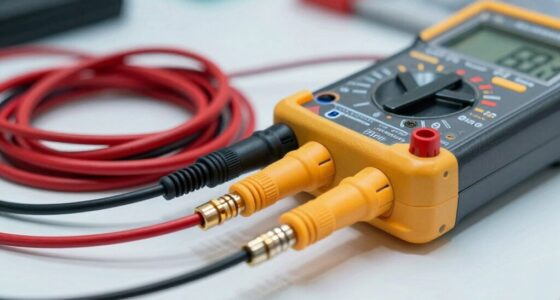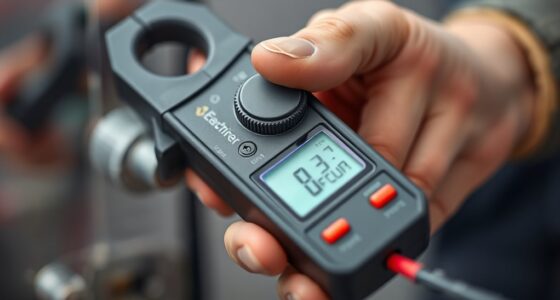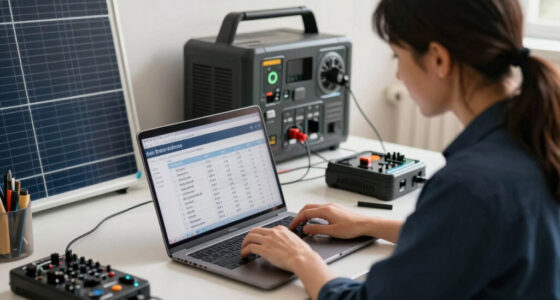
To guarantee your clamp meter’s accuracy, regularly calibrate it using certified reference standards or known current sources. Connect your device to the calibration tool and compare the readings against trusted benchmarks. If discrepancies appear, perform adjustments or send it to a professional for calibration. Consistent verification keeps your measurements reliable and safe. Keep in mind that proper calibration is essential for safety and precision. Read on to discover detailed steps to maintain trustworthiness in your tests.
Key Takeaways
- Use certified calibration sources or known standards to verify clamp meter accuracy regularly.
- Connect the meter to a calibrated current source and compare readings to known values.
- Perform multiple measurements to ensure consistency and identify any deviations beyond acceptable tolerances.
- Follow industry-standard calibration procedures and maintain detailed calibration records.
- Schedule routine calibration checks and send devices for professional calibration when necessary.
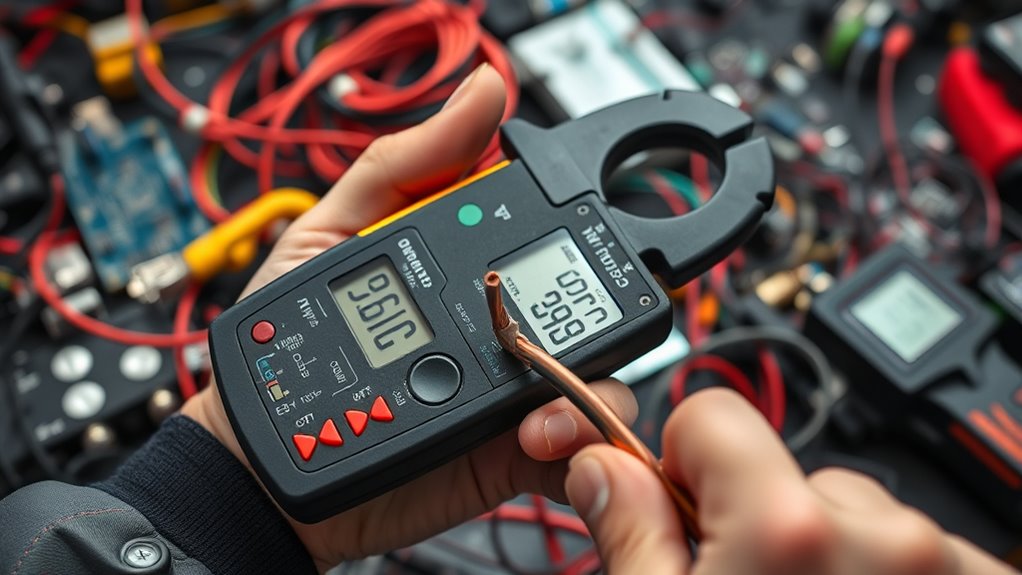
Calibrating your clamp meter is essential to guarantee accurate measurements and maintain safety during electrical work. When you rely on your clamp meter to assess current, voltage, or other electrical parameters, accuracy verification becomes a critical step. Without proper calibration, your readings might be off, leading to potential safety hazards or improper troubleshooting. The good news is that calibration tools are readily available and straightforward to use, allowing you to keep your device in top condition.
To start, you’ll need appropriate calibration tools designed specifically for your clamp meter. These tools often include reference sources or known standards that serve as benchmarks for measurement accuracy. Using these, you can compare your device’s readings against the known values, quickly identifying any discrepancies. Calibration tools come in various types—some are electronic calibration sources, while others are manual reference standards. Picking the right tools depends on your clamp meter’s specifications and the level of precision you require. Always ensure that your calibration tools are certified and maintained properly to avoid introducing errors during the verification process.
Use certified reference sources matching your clamp meter’s specifications for accurate calibration verification.
The process of accuracy verification involves setting up your clamp meter with the calibration tools and taking multiple readings. For example, if you’re testing current measurements, you’ll connect the meter to a known current source or a calibrated load. Observe the readings and compare them with the expected values provided by your calibration tools. If you notice any deviations beyond the acceptable tolerance, it indicates that your clamp meter needs calibration. In some cases, minor adjustments can be made directly on the device if it features calibration settings. In others, you might need to send it to a professional calibration service to ensure precision. Regular calibration checks should become part of your routine maintenance, especially if you frequently rely on your clamp meter for critical measurements. Over time, internal components can drift, affecting accuracy. By periodically verifying and calibrating your device, you prevent measurement errors before they become problematic. This is particularly important when working in environments with strict safety standards or when performing precise diagnostics. Additionally, understanding vetted calibration procedures helps ensure that your measurements remain trustworthy and compliant with industry standards.

KAIWEETS HT206D Digital Clamp Meter T-RMS 6000 Counts, Multimeter Voltage Tester Auto-ranging, Measures Current Voltage Temperature Capacitance Resistance Diodes Continuity Duty-Cycle (AC/DC Current)
- True-RMS Measurement: Accurately measures AC/DC parameters
- Wide Measurement Range: Measures current, voltage, temperature, capacitance, resistance, diodes, continuity, duty cycle
- Auto-Ranging Function: Simplifies measurement process
As an affiliate, we earn on qualifying purchases.
As an affiliate, we earn on qualifying purchases.
Frequently Asked Questions
How Often Should I Calibrate My Clamp Meter?
You should calibrate your clamp meter at least once a year or according to the manufacturer’s recommended calibration frequency. Regular calibration guarantees accurate readings and reliable measurements. Incorporate calibration into your maintenance schedule, especially if you use the meter frequently or in critical applications. Keep track of calibration dates and perform checks periodically between calibrations to maintain the meter’s precision and trustworthiness over time.
Can I Calibrate My Clamp Meter at Home?
Sure, you can try DIY calibration at home, but don’t expect perfect results. While it’s tempting to save money, professional calibration services guarantee accuracy and safety. Ironically, attempting to calibrate yourself might lead to more errors, making your readings less trustworthy. For the best precision, it’s worth investing in expert calibration. Trust the pros to keep your clamp meter reliable—your readings and safety depend on it.
What Tools Are Needed for Proper Calibration?
To properly calibrate your clamp meter, you’ll need calibration standards that match the expected measurement range and testing equipment like a known current source or a reference resistor. These tools help guarantee accuracy and reliability. Make sure your testing equipment is precise and compatible with your meter. Follow manufacturer instructions carefully, and use these calibration standards regularly to maintain trustworthy readings and ensure your clamp meter performs correctly.
How Do I Know if My Clamp Meter Needs Calibration?
If your clamp meter shows inconsistent or questionable readings, it likely needs calibration. Accuracy concerns arise when readings drift or don’t match expected values, especially over time. Check the manufacturer’s recommended calibration intervals, usually every 12 months, and perform calibration tests regularly. If you notice discrepancies, don’t delay—calibrating guarantees your measurements stay reliable, keeping your work precise and safe.
Are Calibration Services Expensive?
Calibration services can vary in cost depending on the device and provider, but generally, they’re affordable compared to the cost of inaccurate readings. You should consider the calibration frequency recommended by the manufacturer, which helps avoid unnecessary expenses. Doing regular calibrations guarantees your clamp meter stays accurate, saving you money in the long run by preventing faulty measurements and potential equipment damage. Always shop around for the best cost comparison options.
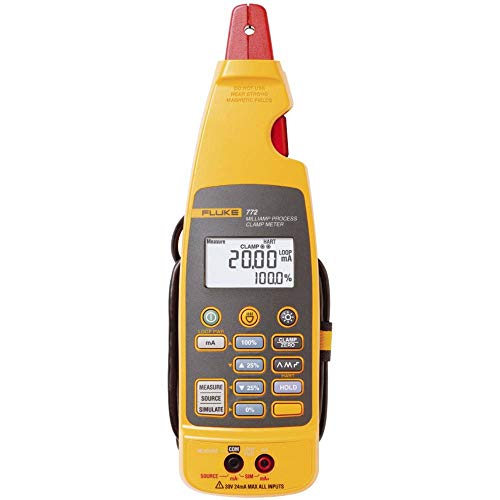
Fluke 772 11-Inch Milliamp Process Clamp Meter
- Calibration Certificate: NIST-traceable calibration included
- Quality Assurance: Meets manufacturer and quality standards
- Measurement Range: Measures up to 99.9 mA non-contact
As an affiliate, we earn on qualifying purchases.
As an affiliate, we earn on qualifying purchases.
Conclusion
Remember, a stitch in time saves nine. Regularly calibrating your clamp meter ensures your readings stay accurate and reliable, preventing costly mistakes down the line. Don’t wait until errors cause bigger problems—make calibration a routine part of your maintenance. By keeping your meter in top shape, you’ll work smarter, safer, and more confidently. Trust in your tools, and they’ll always trust in you. Stay vigilant, and your measurements will never let you down.
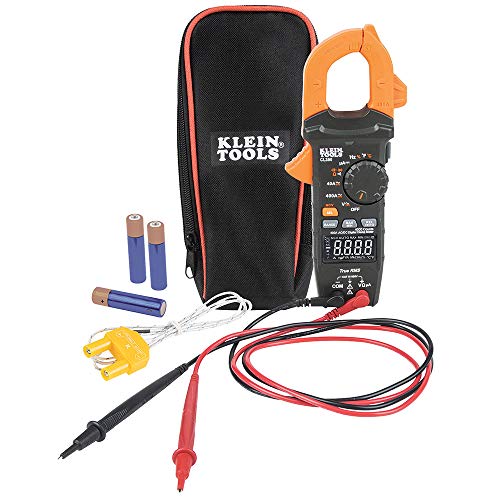
Klein Tools CL390 AC/DC Digital Clamp Meter, Auto-Ranging, 400 Amp, NCVT Tester, Hi-Viz LCD Display, TRMS, Continuity Resistance, Temperature and More
- Versatile Measurement Capabilities: Measures AC/DC current, voltage, resistance, and more
- Non-Contact Voltage Testing: Integrated NCVT for safe electrical testing
- High-Visibility LCD Display: Reverse-contrast screen for clear readings in all lighting
As an affiliate, we earn on qualifying purchases.
As an affiliate, we earn on qualifying purchases.

Fluke – 381CAL 381 Remote Display True-RMS AC/DC Clamp Meter with iFlex with a NIST-Traceable Calibration Certificate with Data.
- Display: Large backlit display with auto range
- Carrying Case: Soft carrying case included
- Measurement Accuracy: True-RMS AC/DC voltage and current
As an affiliate, we earn on qualifying purchases.
As an affiliate, we earn on qualifying purchases.