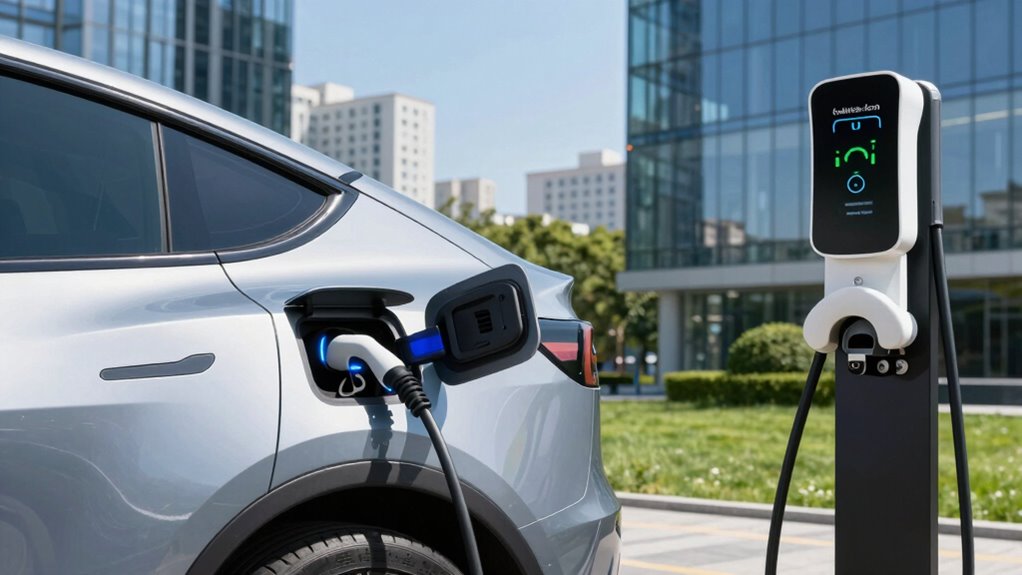

As a new EV owner, it’s important to understand that charging speeds vary greatly. Fast chargers (DC rapid chargers) can restore about 80% of your battery in 20-30 minutes, ideal for quick trips, while home chargers take several hours for a full charge. Your vehicle’s make and battery tech influence how fast you can charge. Staying informed about these differences helps you optimize your charging habits, and you’ll discover more tips to keep your battery healthy as you go.
Key Takeaways
- Fast chargers can replenish batteries to 80% in 20-30 minutes, ideal for quick top-ups during trips.
- Not all EVs support the highest charging speeds; check your vehicle’s specifications.
- Charging speed depends on battery technology, vehicle compatibility, and charger standards.
- Using rapid chargers frequently can impact battery health over time, but advances mitigate this risk.
- Infrastructure availability varies by location, making planning important for long-distance travel.
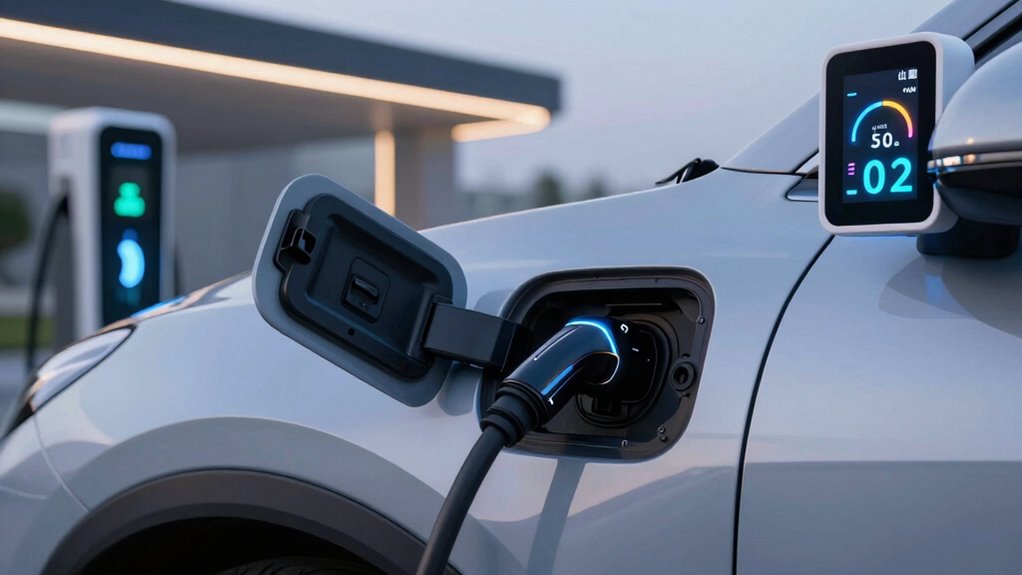
Have you ever wondered how quickly electric vehicle (EV) chargers can top off your battery? Understanding charging speeds is essential as a new EV owner, especially because it directly affects your daily routines and travel plans. The speed at which your vehicle charges depends heavily on the underlying battery technology and the available charging infrastructure. Modern battery tech has improved significantly, allowing for faster energy transfer and more efficient charging, but the type of charger you use makes a big difference too.
Fast-charging stations, often called DC fast chargers, can replenish your battery much quicker than standard Level 1 or Level 2 chargers. While a typical home charger might take several hours to fully charge your EV, a fast charger can do the same in as little as 20 to 30 minutes, providing roughly 80% of your battery capacity. This rapid charging is especially convenient for long trips or when you’re pressed for time. Yet, not all EVs and batteries support the highest charging speeds, so it’s good to check your vehicle’s specifications. Advances in battery technology, such as lithium-ion cells with higher thermal stability, have enabled these faster charging capabilities without compromising battery lifespan.
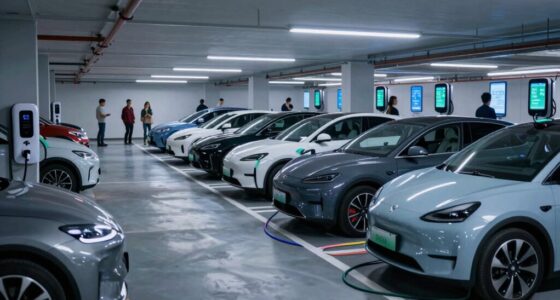
Charging infrastructure plays a critical role in how quickly you can top off your EV. Urban areas and highway corridors now feature an expanding network of high-speed charging stations, making long-distance travel more feasible. As these stations become more widespread, you’ll find it easier to plan trips without the anxiety of running out of range. That said, the availability and compatibility of charging stations can vary depending on where you are. Some chargers are designed for particular EV models or charging standards, so your ability to access rapid charging may depend on the infrastructure nearby. Additionally, the development of high-speed charging standards is helping to improve compatibility across different vehicle brands. It is also beneficial to understand how your vehicle’s battery management system interacts with fast chargers to optimize its lifespan. Knowing how charging speed impacts your vehicle can help you plan your charging stops more effectively. Furthermore, staying informed about the latest charging technology developments can ensure you get the most efficient charging experience.
If you’re new to EVs, keep in mind that your vehicle’s battery management system is designed to protect the battery’s health. It may slow down charging if the battery gets too hot or is nearly full, which is a normal safety feature. Also, frequent use of rapid chargers can, over time, influence the battery’s longevity, but technological improvements are continually mitigating this issue. As a new EV owner, understanding these fundamentals will help you optimize your charging habits, reduce range anxiety, and make the most of the growing charging infrastructure, ensuring your electric vehicle remains a reliable and efficient transportation choice.

FOCSPROD for NACS to CCS Adapter with Interlock, Max 500A 1000V Fast Charge for Tesla Supercharger Adapter, CCS1 Electric Vehicle Charger Compatible with Tesla Superchargers -UL 2252
- Compatibility Check Required: Verify vehicle compatibility before purchase
- Limited Vehicle Compatibility: Not compatible with several major brands
- Safety Certified Adapter: UL 2252 SGS certified for safety
As an affiliate, we earn on qualifying purchases.
As an affiliate, we earn on qualifying purchases.
Frequently Asked Questions
How Does Temperature Affect EV Charging Speeds?
Temperature considerably impacts your EV’s charging speeds because battery temperature affects charging efficiency. When your battery is too cold or too hot, it slows down charging to protect the cells, resulting in longer charging times. To optimize speed, keep your battery within the ideal temperature range, especially during fast charging. Preconditioning your battery or charging in moderate weather helps maintain ideal battery temperature, ensuring faster, more efficient charging sessions.
Do Charging Speeds Vary Between Different EV Models?
They say “don’t judge a book by its cover,” but with EVs, you should consider the model’s battery capacity and charging infrastructure. Charging speeds do vary between different EV models due to battery design and onboard charging capabilities. Some vehicles handle fast chargers better, while others may charge more slowly. Knowing your car’s specifications helps you plan better, ensuring you take advantage of the fastest charging options available.
Can Using Fast Chargers Reduce Battery Lifespan?
Using fast chargers can slightly accelerate battery degradation over time, but modern EV batteries are designed to handle frequent fast charging without significant harm. To protect your battery’s lifespan, avoid consistently using fast chargers and rely more on standard charging when possible. As the charging infrastructure improves, you’ll find more options for slow and fast charging, helping you balance convenience with battery health for longer-lasting performance.
Are There Any Safety Concerns With Rapid Charging?
Rapid charging is generally safe, but you should be aware of potential safety concerns. Make sure the charging station is reliable, as poor equipment can cause issues. Also, your EV’s battery thermal management system plays a vital role in safety; it keeps the battery cool during fast charging to prevent overheating. Always follow manufacturer guidelines and use reputable charging stations to minimize risks and guarantee safe, efficient charging.
How Do Charging Speeds Differ at Home Versus Public Stations?
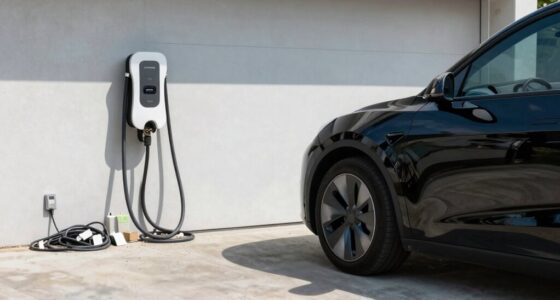
Imagine charging at home is like watering a plant slowly, giving it time to soak in nutrients, while public stations are like a quick splash to keep it alive. At home, charging speeds are slower but more accessible and cost-effective, often using Level 1 or 2 chargers. Public stations, especially fast chargers, boost your speed but may cost more and have limited accessibility, making planning key for efficient trips.

EVIQO Level 2 EV Charger J1772 40A NEMA 14-50 – 240V Wall Charging Station
- Universal Compatibility: Works with all North American EVs and PHEVs
- Tesla Compatibility: Supports Tesla with J1772-to-NACS adapter (sold separately)
- Secure Connector: Rubberized J1772 connector with metal latch
As an affiliate, we earn on qualifying purchases.
As an affiliate, we earn on qualifying purchases.
Conclusion
Now that you know the ins and outs of charging speeds, you’re better equipped to make informed decisions about your EV’s charging needs. Remember, patience is a virtue—especially when it comes to charging times. By understanding your options, you can optimize your charging routine and keep your EV ready to go when you need it. Stay informed, stay prepared, and enjoy the ride ahead with confidence. After all, slow and steady wins the race.
As an affiliate, we earn on qualifying purchases.
As an affiliate, we earn on qualifying purchases.