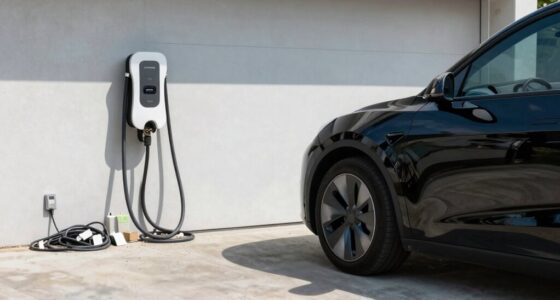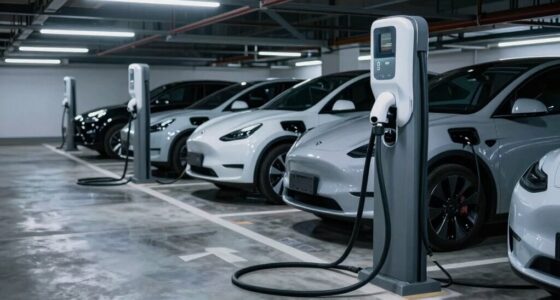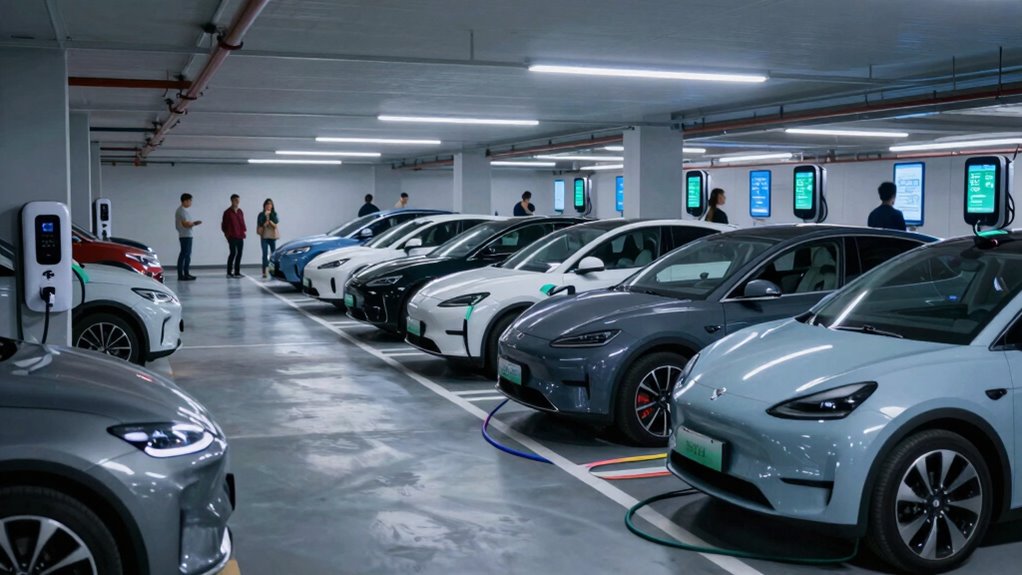

Apartment EV charging needs different planning because shared infrastructure and limited space make it tricky to install individual chargers. You must manage multiple users’ needs while preventing overloads during peak times. Smart systems, incentives, and community engagement help guarantee fair access and sustainability. Upgrading electrical capacity and coordinating with utility providers are also key. Want to discover how strategic planning creates reliable and equitable charging solutions for apartments? Keep exploring for more insights.

Get backup power and energy gear delivered free with Prime
- Fast, free delivery on millions of items
- Prime Video, Amazon Music and more included
- Member-only deals all year
Key Takeaways
- Shared infrastructure in apartments complicates equitable access and requires strategic management.
- Limited space restricts installation options, demanding tailored solutions for each property.
- Peak demand management is essential to prevent overloads and ensure reliable charging.
- Integrating smart systems and renewable energy enhances efficiency and sustainability.
- Planning must consider future growth and scalability to accommodate increasing EV adoption.
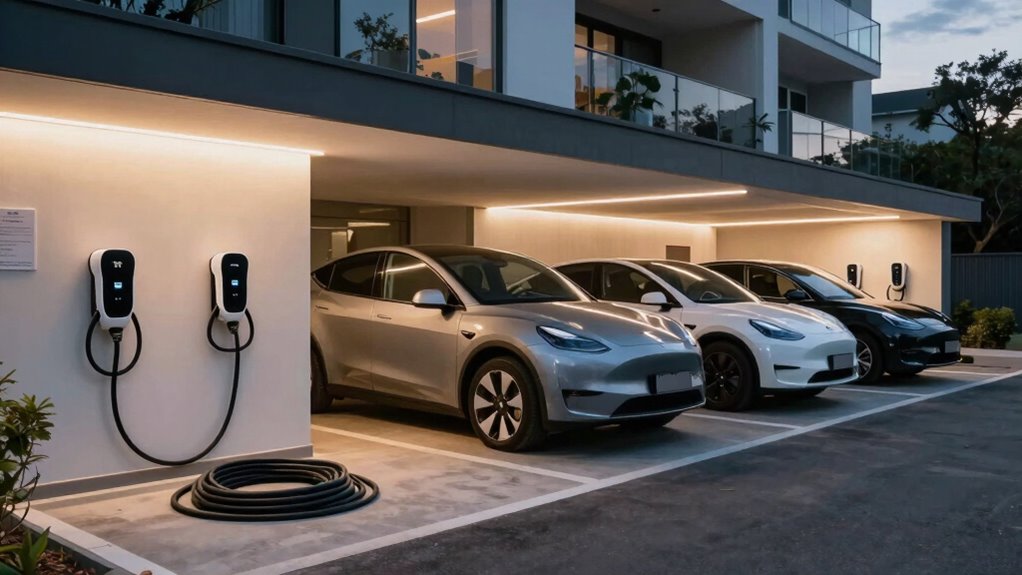
Are you wondering how to effectively plan for electric vehicle (EV) charging in apartment complexes? Managing EV charging in these environments isn’t as straightforward as installing a few chargers and letting residents plug in. Apartment complexes present unique challenges because of shared infrastructure, limited space, and the need to balance multiple users’ needs. To address these issues, you need a tailored approach that considers innovative technology and clear incentives. One essential element is integrating a smart grid system. A smart grid allows you to monitor and manage energy flow efficiently, preventing overloads and reducing energy costs. Instead of each resident charging independently, a smart grid coordinates charging times and power distribution, guaranteeing the infrastructure isn’t strained during peak hours. This system also provides real-time data, so you can identify usage patterns and optimize energy delivery, making the entire process more reliable and sustainable. Incorporating energy management strategies can further improve efficiency and reduce operational costs over time. Additionally, considering renewable energy sources like solar panels can complement the smart grid and further enhance sustainability. Introducing battery storage systems can also help store excess energy during low demand periods, ensuring a steady supply during peak times.
Alongside technology, user incentives play an indispensable role in encouraging responsible charging behaviors. If residents see tangible benefits—such as reduced electricity rates during off-peak hours or priority access during certain times—they’re more likely to embrace the charging system. Offering incentives can also promote fairness, guaranteeing that all residents have equitable access to charging stations. For example, implementing a reservation system or tiered pricing based on usage can help manage demand and avoid conflicts. Educating residents about the advantages of off-peak charging and how to use the smart grid efficiently can boost participation and reduce stress on the electrical system. Incorporating batteries and energy storage can further enhance the system’s capacity and resilience during peak demand periods. Proper planning and integration of these components ensure a resilient infrastructure that can adapt as EV adoption grows.
Planning for EV charging in apartment complexes requires foresight and strategic investment. You’ll need to evaluate the current electrical capacity and consider future growth, especially as EV adoption increases. Upgrading electrical infrastructure might be necessary, but doing so with a smart grid in mind ensures smoother integration. It’s also important to coordinate with utility providers and local regulations to align your plans with broader energy goals. Engaging residents early on, explaining the benefits of a well-planned charging system, and offering incentives will foster acceptance and active participation. Moreover, understanding the shared infrastructure limitations helps you develop more effective and realistic deployment strategies.
Ultimately, effective planning combines technology, incentives, and community engagement. By leveraging a smart grid system, you ensure a resilient and efficient charging network. Meanwhile, user incentives motivate residents to use charging stations responsibly, balancing demand and promoting sustainability. This all-encompassing approach helps you create a charging solution that’s fair, reliable, and future-proof, making EV adoption seamless and beneficial for everyone in the complex.
As an affiliate, we earn on qualifying purchases.
Frequently Asked Questions
How Do You Handle Multiple Residents Sharing a Single Charging Station?
You should establish clear shared parking and charging etiquette policies for residents using the single station. Implement a reservation system or time limits to guarantee fair access, and communicate these rules clearly. Encourage residents to respect each other’s time and usage, and consider installing signage or reminders. Regularly monitor the station to prevent disputes, fostering a cooperative environment where everyone understands the importance of sharing responsibly.
What Are the Cost Implications of Installing EV Chargers in Apartments?
The cost of installing EV chargers in apartments varies, but it’s often a significant investment. You’ll need to budget for equipment, electrical upgrades, and possibly hiring specialists. Remember, you’ll also cover electric utility fees and secure installation permits, which can add to expenses. Think of it as planting a seed today for future savings and sustainability, but be prepared for the upfront costs involved in making that vision a reality.
How Do Apartment Layouts Affect EV Charging Station Placement?
Your apartment layout influences EV charging station placement because you need to take into account parking allocation and signal interference. If parking spots are clustered, you can install chargers nearby, ensuring easy access. However, if signal interference from building materials is an issue, you may need to position chargers where signals are stronger, like near windows or exterior walls. Proper planning ensures efficient, reliable charging without disrupting residents or parking flow.
What Safety Considerations Are Unique to Apartment EV Chargers?
Think of safety considerations for apartment EV chargers like a tightrope walk—you must stay balanced. You need to guarantee proper electrical wiring to prevent overloads and potential fires. Fire safety is vital, so install smoke detectors nearby and use fire-resistant materials. Regular inspections help catch issues early. By prioritizing electrical wiring and fire safety, you create a secure charging environment, keeping residents safe and avoiding costly accidents.
How Can Property Managers Encourage EV Adoption Among Residents?
You can encourage EV adoption among residents by fostering community engagement and offering charging incentives. Organize informational events to educate residents on EV benefits and the convenience of charging stations. Provide incentives like discounted charging rates or priority access to charging spots for early adopters. Creating a supportive environment helps residents see the advantages, making them more likely to switch to electric vehicles and embrace sustainable living.
As an affiliate, we earn on qualifying purchases.
Conclusion
Just as Icarus’s wings faced challenges when reaching too close to the sun, your apartment’s EV charging plan must be carefully crafted to avoid pitfalls. Recognize that a tailored approach guarantees safety, efficiency, and future growth. By considering your unique environment, you build a foundation as sturdy as Daedalus’s labyrinth, guiding residents smoothly toward sustainable living. Thoughtful planning today keeps your community soaring without risking a fall, paving the way for a brighter, greener tomorrow.
As an affiliate, we earn on qualifying purchases.
As an affiliate, we earn on qualifying purchases.
Halloween Picks
halloween
As an affiliate, we earn on qualifying purchases.