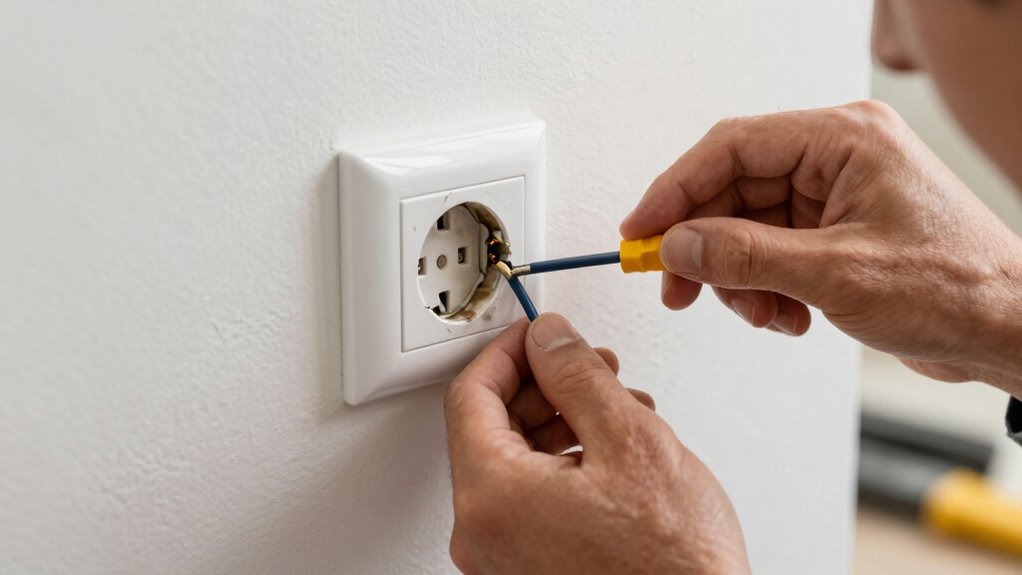

Replacing old outlets safely is vital to prevent electrical shocks and fires. Always turn off power at the breaker before starting, and follow proper wiring procedures. Use the right outlet for each location, like GFCI in moisture-prone areas, and make certain connections are tight and correct. If you’re unsure about handling complex wiring or local codes, consulting a licensed electrician is best. Keep your home safe—continue to explore how proper installation makes all the difference.

Get backup power and energy gear delivered free — and shop member deals
- Fast, free delivery on millions of items
- Access to Prime Big Deal Days deals on October 6–7
- Prime Video, Amazon Music and more included
Key Takeaways
- Always turn off the power at the breaker before replacing outlets to prevent electrical shocks.
- Ensure proper wiring connections according to manufacturer instructions and local electrical codes.
- Use appropriate outlet types, like GFCI or AFCI, for added safety in moisture-prone or high-risk areas.
- Conduct thorough testing and inspections after installation to confirm safety and proper functioning.
- Consult a licensed electrician if unsure about wiring or code compliance to ensure safe, compliant replacement.
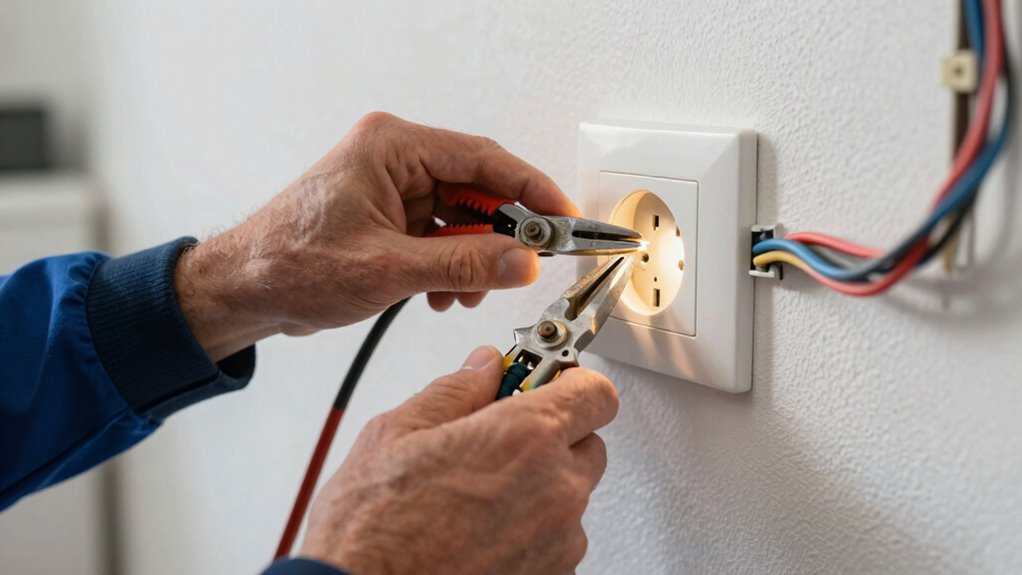
Old outlets can pose safety risks, especially if they’re damaged or outdated. Over time, wear and tear can cause exposed wiring or loose connections, increasing the chance of electrical shocks or fires. That’s why replacing old outlets isn’t just about modernizing your home—it’s a vital safety step. When you replace outlets, it’s essential to understand the electrical code requirements in your area. The electrical code sets safety standards that guarantee your outlets are installed properly and safely. Ignoring these standards can lead to hazards, or worse, code violations that could impact your home’s resale value or insurance coverage.
Replacing old outlets enhances safety and ensures compliance with electrical codes.
Different outlet types serve different functions, so choosing the right one is key. Standard outlets, like the traditional two-prong sockets, are common in older homes. However, modern outlets often include Ground Fault Circuit Interrupter (GFCI) outlets, which are designed to shut off power if they detect a ground fault—a sudden surge that could cause a shock. These are vital in areas prone to moisture, such as kitchens and bathrooms. Also, there are USB outlets that allow you to charge devices directly, and AFCI outlets that help prevent fires by detecting arc faults. Knowing which outlet types suit your needs guarantees safety and convenience.
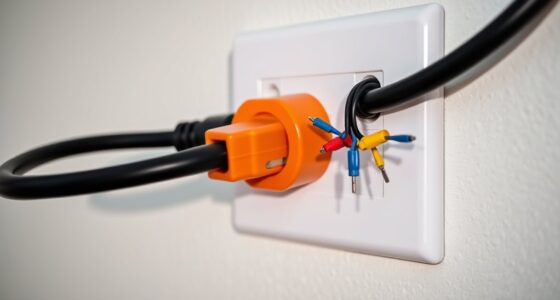
When you’re ready to replace an outlet, turning off the power at the circuit breaker is your first step. This keeps you safe from accidental shocks. Before removing the old outlet, take note of how the wires are connected—usually, black or red wires are hot, white wires are neutral, and green or bare copper wires are ground. Properly disconnect and then connect the new outlet, matching the wires to the terminals according to the manufacturer’s instructions and electrical code. Secure everything tightly to prevent loose connections, which can cause overheating. Additionally, understanding the importance of proper wiring connections can help prevent potential hazards. Using a voltage tester** before handling the wires adds an extra layer of safety. Conducting a comprehensive inspection of your wiring can help identify other potential issues that might need attention. Remember, following electrical safety standards** is crucial to ensuring a safe installation. Once installed, turn the power back on and test the outlet with a tester to guarantee it’s working correctly.
Replacing old outlets isn’t just a DIY project—it’s about protecting your home and loved ones. By understanding the electrical code, choosing the right outlet types, and following safety procedures, you safeguard your space. If you’re unsure about any step or dealing with complex wiring, it’s best to call a licensed electrician. They know the ins and outs of proper installation, ensuring that your new outlets are safe, functional, and compliant with all safety standards. In the end, a little effort now can prevent significant hazards later, giving you peace of mind in your home.
As an affiliate, we earn on qualifying purchases.
Frequently Asked Questions
Can I Replace Outlets Without Turning off the Main Breaker?
You should never replace outlets without turning off the main breaker because electrical safety is paramount. DIY installation without shutting off power risks electric shock or fire hazards. Always cut the power at the breaker box before working on outlets, even if they seem inactive. Prioritize safety, follow proper procedures, and if you’re unsure, consult a professional. This guarantees your work is safe and compliant with electrical standards.
What Tools Are Essential for Replacing Old Outlets?
Replacing old outlets is like assembling a puzzle—you need the right tools for safety and compatibility. You should have a screwdriver, voltage tester, needle-nose pliers, and wire strippers. These tools guarantee electrical safety and proper outlet compatibility, preventing shorts or shocks. Always turn off power at the breaker before starting, and double-check with a tester. This approach keeps your work safe, efficient, and ensures your new outlet functions flawlessly.
Are There Specific Outlets for Outdoor or Damp Areas?
Yes, there are specific outlets for outdoor or damp areas. You should use weatherproof covers and GFCI outlets to guarantee safety and durability. Weatherproof covers protect against moisture, while GFCI outlets cut off power if they detect a ground fault, preventing shocks. Installing these types of outlets in outdoor or damp locations helps keep your electrical system safe and compliant with electrical codes, giving you peace of mind.
How Do I Identify if an Outlet Is Grounded Properly?
Think of grounding like a safety net for your electrical system. To identify if an outlet is grounded properly, perform outlet testing with a tester or multimeter—insert the probes into the slots and check for a grounding indication. Grounding techniques guarantee safety by directing excess electricity away. If testing shows no grounding, don’t use the outlet until it’s correctly grounded, preventing potential shocks or fires.
What Are Common Signs an Outlet Needs Replacing?
You’ll notice outlet safety issues if it feels warm to touch, sparks when plugging in devices, or if it’s loose and doesn’t hold plugs securely. Frayed or damaged wiring, discoloration, or persistent tripping of circuit breakers also signal a need for replacement. Electrical codes require outlets to be properly grounded and in good condition, so replacing faulty outlets promptly guarantees safety and compliance, preventing potential electrical hazards.
outlet tester for electrical safety
As an affiliate, we earn on qualifying purchases.
As an affiliate, we earn on qualifying purchases.
Conclusion
Remember, replacing old outlets isn’t a task to take lightly—you’re the hero in your own safety story. Always turn off the power, double-check connections, and follow proper procedures. If you’re feeling like you’re stuck in a time warp, don’t hesitate to call in a professional. After all, safety doesn’t have to be a relic of the past. Stay vigilant, and your home will stay safe and sound—just like a well-guarded fortress from the days of knights!
As an affiliate, we earn on qualifying purchases.
As an affiliate, we earn on qualifying purchases.
Fall Picks
fall essentials
As an affiliate, we earn on qualifying purchases.